Exodus 35:29
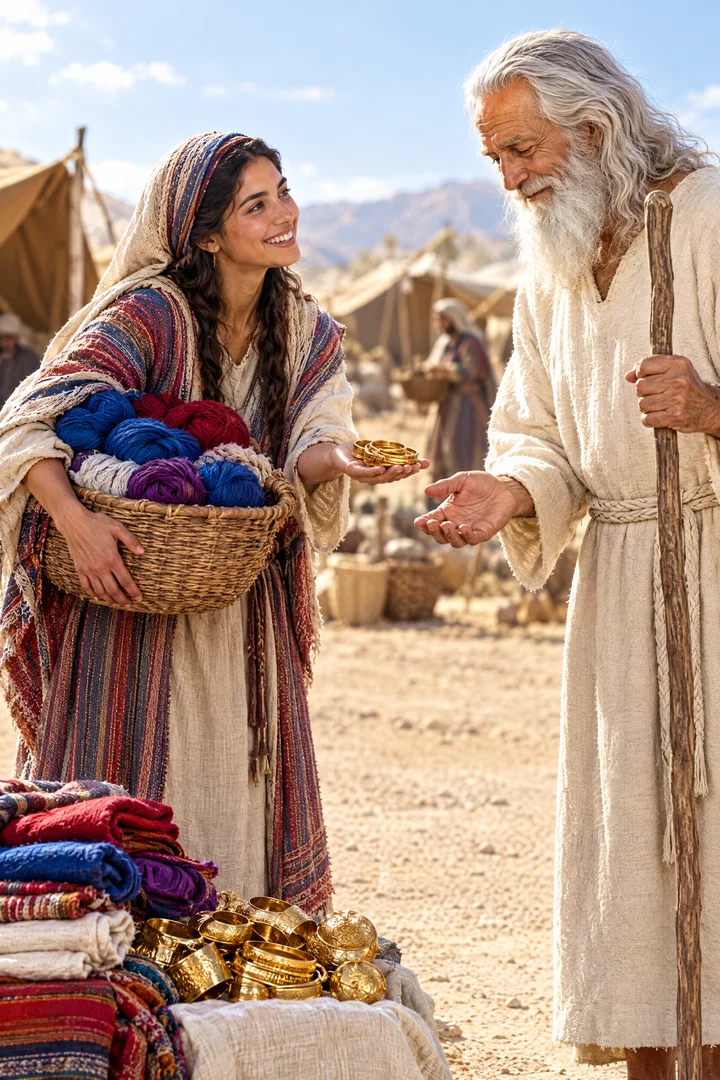
The children of Israel brought a willing offering unto the LORD, every man and woman, whose heart made them willing to bring for all manner of work, which the LORD had commanded to be made by the hand of Moses.
Translations
American King James Version, Webster Bible
The children of Israel brought a willing offering to the LORD, every man and woman, whose heart made them willing to bring for all manner of work, which the LORD had commanded to be made by the hand of Moses.
The children of Israel brought a willing offering unto the LORD, every man and woman, whose heart made them willing to bring for all manner of work, which the LORD had commanded to be made by the hand of Moses.
The children of Israel brought a willing offering unto the Lord, every man and woman, whose heart made them willing to bring for all manner of work, which the Lord had commanded to be made by the hand of Moses.
The children of Israel brought a freewill offering unto the LORD; every man and woman, whose heart made them willing to bring for all the work, which the LORD had commanded to be made by the hand of Moses.
The children of Israel brought a freewill-offering unto Jehovah; every man and woman, whose heart made them willing to bring for all the work, which Jehovah had commanded to be made by Moses.
every man and woman (whom their heart hath made willing to bring in for all the work which Jehovah commanded to be done by the hand of Moses) [of] the sons of Israel brought in a willing-offering to Jehovah.
The children of Israel brought a voluntary offering to Jehovah, every man and woman whose heart prompted them to bring for all manner of work, which Jehovah, by the hand of Moses, had commanded to be done.
[In the case of], every male and woman whose heart, made them willing, to bring in for any construction which, Yahweh had commanded them to make, by the hand of Moses, [in their case] did the sons of Israel bring in a free-will offering unto Yahweh.
Berean Standard Bible, Majority Standard Bible
So all the men and women of the Israelites whose hearts prompted them brought a freewill offering to the LORD for all the work that the LORD through Moses had commanded them to do.
The children of Israel brought a free will offering to the LORD; every man and woman whose heart made them willing to bring for all the work, which the LORD had commanded to be made by Moses.
The children of Israel, every man and woman, from the impulse of their hearts, gave their offerings freely to the Lord for the work which the Lord had given Moses orders to have done.
Euery man and woman of the children of Israel, whose hearts moued the willingly to bring for all the worke which the Lord had commanded the to make by the hand of Moses, brought a free offring to the Lord.
Douay-Rheims (Challoner revision)
All both men and women with devout mind offered gifts, that the works might be done which the Lord had commanded by the hand of Moses. All the children of Israel dedicated voluntary offerings to the Lord.
Pictures
Cross-references
- Exodus 36:5-7
And they spake unto Moses, saying, The people bring much more than enough for the service of the work, which the LORD commanded to make.
The people’s willing offerings exceed what the sanctuary work requires, so Moses stops further gifts.
- Exodus 25:2
Speak unto the children of Israel, that they bring me an offering: of every man that giveth it willingly with his heart ye shall take my offering.
God asks for voluntary gifts to build the sanctuary.
- 1 Chronicles 29:6-9
Then the chief of the fathers and princes of the tribes of Israel, and the captains of thousands and of hundreds, with the rulers of the king’s work, offered willingly,
temple also built by willing offering
- 2 Corinthians 9:7
Every man according as he purposeth in his heart, so let him give; not grudgingly, or of necessity: for God loveth a cheerful giver.
Both connect giving with a willing heart, not grudgingly or by compulsion.
- Exodus 25:8
And let them make me a sanctuary; that I may dwell among them.
The offerings provide a sanctuary for God to dwell among Israel.
- Exodus 31:1-6
And the LORD spake unto Moses, saying,
God equipped appointed workers with wisdom and skill for the tabernacle.
- 2 Corinthians 8:12
For if there be first a willing mind, it is accepted according to that a man hath, and not according to that he hath not.
A willing offering is accepted according to what a person has.
- Exodus 35:5
Take ye from among you an offering unto the LORD: whosoever is of a willing heart, let him bring it, an offering of the LORD; gold, and silver, and brass,
Moses calls for sanctuary gifts from willing hearts.
- Exodus 35:21-22
And they came, every one whose heart stirred him up, and every one whom his spirit made willing, and they brought the LORD’s offering to the work of the tabernacle of the congregation, and for all his service, and for the holy garments.
The people bring offerings willingly for the sanctuary work.
- Exodus 36:7
For the stuff they had was sufficient for all the work to make it, and too much.
The people’s gifts were so abundant that Moses stopped them.
- Exodus 12:35-36
And the children of Israel did according to the word of Moses; and they borrowed of the Egyptians jewels of silver, and jewels of gold, and raiment:
The Israelites had received the valuables they later offered.
- Ezra 2:68-69
And some of the chief of the fathers, when they came to the house of the LORD which is at Jerusalem, offered freely for the house of God to set it up in his place:
The people freely gave for rebuilding the temple.
- Mark 12:42-44
And there came a certain poor widow, and she threw in two mites, which make a farthing.
The widow gives willingly from her poverty, showing that little gifts receive the greatest reward.
- Hebrews 8:5
Who serve unto the example and shadow of heavenly things, as Moses was admonished of God when he was about to make the tabernacle: for, See, saith he, that thou make all things according to the pattern shewed to thee in the mount.
gives pattern Moses had to follow
- Nehemiah 7:70-72
And some of the chief of the fathers gave unto the work. The Tirshatha gave to the treasure a thousand drams of gold, fifty basons, five hundred and thirty priests’ garments.
The people willingly contributed materials and wealth toward the temple’s work.
Commentary
Each commentary is drawn from primary sources: the writings of Ellen G. White and Adventist pioneers and periodicals. Each commentary is separate. Its own words are not a quotation; follow the references to read the source passages.
Ellen G. White
18 sources
The verse describes Israel bringing willing offerings of valuables and skilled labor for every part of the tabernacle work commanded through Moses, with both men and women taking part from willing hearts.ST Sep 11, 1884ST Aug 5, 1875SG4 154.3 Only what is given freely and willingly is accepted, for sacrifice for God must be voluntary and never forced or pressed out of anyone.LC1 175.3PP 529.1GW92 268.4–269.1 Their giving was so cheerful and abundant that more was brought than could be used, until Moses had to command them to stop bringing offerings.ST Sep 11, 1884ST Aug 5, 1875LC1 175.3 The skill and exactness of the work was given by God to be used for His glory, requiring perfection in all service done for Him.Ms 97, 1899, par. 3–4Ms 109, 1899, par. 1–4 That same free and willing spirit remains the pattern for God's people now, who are to value sacred things highly, give generously of their best, and cooperate with God and one another in His work.ST Aug 5, 18751SP 270.11MR 337.2–338.2ST Mar 4, 1903ST Nov 2, 1915
Tabernacle Setting and Meaning
The verse belongs to the instructions for building the tabernacle, where the skill, genius and wisdom employed in the work were given by God and were to be used for His glory.Ms 97, 1899, par. 3–4 It shows the exactitude, skill, tact, wisdom and perfection required in the building of the earthly tabernacle, and that same perfection is required in every line of work done in His service, with all workers training their minds to do the very highest service and seeking mental strength to do everything according to the pattern shown to Moses in the mount.Ms 109, 1899, par. 1–4
The giving took place just after Israel left Egypt, when they were but a step from freedom back to slavery, with scanty means and small tents of their own.ST Aug 5, 1875 They did not plead to enlarge their own dwellings but put God's house first, and God gave the design they were to follow.ST Aug 5, 1875
Every man and woman whose heart made them willing brought for all the commanded work through Moses, with willing skilled labor and with gifts taken from their persons, including ornaments and jewelry, gold, silver, brass and ornamental work.ST Aug 5, 1875 Women skillfully made embroidery in silver and gold, and able craftsmen made the ark, the tabernacle and solid-gold vessels.SG4 154.3 The whole was done with cheerful and willing labor at a cost of more than a million dollars.ST Aug 5, 1875 Their gifts and labor were cheerful and so abundant without urging that more was brought than could be appropriated.ST Sep 11, 1884ST Aug 5, 1875LC1 175.3 Moses therefore had to proclaim that there was already enough and they must cease bringing offerings.ST Sep 11, 1884ST Aug 5, 1875LC1 175.3PP 529.11MR 337.2–338.2
Willing Giving and Application
The offerings for the tabernacle were voluntary free-will offerings from willing hearts, and only gifts given willingly from the heart are accepted.LC1 175.3PP 529.1AA 336.3–337.1ST2 47.1 Sacrifice for God's cause must be voluntary, not compelled or pressed, and pressed offerings are not accepted.LC1 175.3GW92 268.4–269.1ST2 47.1 The cause is to be carried forward only by willing offerings from every man and woman whose heart makes him willing.PP 529.1GW92 268.4–269.1
The tabernacle was a special object calling for free-will offerings beyond all systematic and regular donations.4T 467.1–2 This draft upon the people was made for their own good as well as to sustain His service.4T 467.1–2 The verse belongs to a system of gifts and offerings that taught the people to support God's service and care for the needy.AA 336.3–337.1
Means for God's commanded work are to be raised with no compulsion, no grand feast, no scenes of gaiety, dancing and general amusement, and no lotteries or anything profane.LC1 175.3 Responsibility must be left wholly upon each individual whether he will give much or little, and what he gives will be faithfully recorded.GW92 268.4–269.1 Ministers must therefore not be severe, draw upon any one man and press means from him, or denounce and throw overboard one who does not give as much as another thinks he should.GW92 268.4–269.1 They must be as patient and forbearing as the angels are, working in union with Jesus while Christ and angels watch the development of character and weigh moral worth, with the Lord bearing long with His erring people and giving them time until truth cuts off one idol after another and He reigns supreme in the hearts of His consecrated people.GW92 268.4–269.1
Their cheerful generosity in preparing the tabernacle is an example for God's people of zeal and devotion in preparing a place for worship.1SP 270.1ST Mar 4, 1903 Those who value God's presence should show zeal in proportion to how highly they value His blessings.1SP 270.1 Offerings should be given freely and in a measure that shows the value placed on sacred things, not grudgingly or merely to meet the least possible cost.ST Mar 4, 1903 Their labor and giving taught them to cooperate with God and with one another, pointing to cooperation in preparing God's temple in the soul.ST Nov 2, 1915
Their giving was a shared part in God's work in which all wanted a part in the blessing, and it was a blessing to those who took part.1MR 337.2–338.2Ms 9, 1909, par. 19–20 Christ can make people willing to give generously for God's work.Ms 100, 1899, par. 9–11 Giving is not a yearly gift merely but a freely presented weekly and monthly offering before the Lord, left to the people as a weekly, monthly, living test that develops character and manifests the true state of the heart.GW92 268.4–269.1
Everything connected with ministering before God is to be without flaw, so those advancing the work in its different lines are to give God the very best they have, that His service and worship will be an object lesson to the world of the perfection He requires.Ms 39, 1900, par. 8 Men are to return to God in freewill offerings the very best of what He has given them, gratefully acknowledging Him as Giver of all good and regarding nothing as too good to be devoted to His service.Ms 39, 1900, par. 8 They are to give freely to establish memorials of His goodness, because the largeness of His blessings shows the obligation to return to Him His own.Ms 39, 1900, par. 8
The same free, willing, anxious spirit is present now in hearts ready to aid the advancement of God's work, who when assured there is a work to be done and God calls for their means and hearty cooperation will need no urging.ST Aug 5, 1875 When means are needed He calls all the people to bring free-will offerings instead of supplying the means without asking sacrifice, even though gold and silver and all possessed, even souls and bodies, are His.1MR 337.2–338.2 The same blessing comes from returning to the Lord His own to purchase property for a school where youth are educated to work in harmony with God's mind and will and go forth as missionaries to fields in all parts of the world.1MR 337.2–338.2 Every soul should take an interest and act his part so that when the time for settlement comes and the deed is offered the money is ready.1MR 337.2–338.2
Sources
Pioneers and periodicals
43 sources
The verse records that when God directed the building of the wilderness sanctuary as His dwelling place among His people, every man and woman whose heart moved them brought what was needed for the work commanded through Moses.ST Jun 19, 1907RH Sep 14, 1916ST Aug 23, 1883ST Jan 27, 1909 Their gifts were voluntary freewill offerings given cheerfully from the heart rather than grudgingly or by compulsion, and their worth lay in the love and willingness behind them rather than in their amount.ST Sep 17, 1874RH Sep 14, 1916ST Aug 23, 1883ST Aug 23, 1883ST Sep 2, 1880 They gave cheerfully and abundantly out of scanty means in the wilderness, bringing gold and jewels and costly materials and skilled labor until more than enough was supplied and they had to be told to stop.ST Sep 11, 1884ST Aug 5, 1875ST Jun 24, 1880RH Aug 21, 1856ST Aug 23, 1883 God accepts only such free giving for His cause, requiring sacrifice from the heart that shows the value placed on sacred things and tests sincerity and love.ST Mar 21, 1911ST Jun 24, 1880ST Mar 4, 1903ST Dec 31, 1874RH Mar 4, 1873 That same willing spirit is God's plan for providing houses of worship and for sustaining special undertakings, missionary work, and publication work, and for building the temple of holiness in the heart.ST Jun 24, 1880RH Feb 16, 1905RH Jun 2, 1859RH Dec 30, 1915
Context in Exodus
The verse falls within the final six chapters of Exodus, which relate the preparation and fitting of the tabernacle.ST Oct 29, 1894ST Dec 10, 1896 It belongs to the very minute description in Exodus 25-40 of the sanctuary built in the days of Moses, which was to be made exactly according to the pattern shown in the mount.ST Oct 29, 1894ST Dec 10, 1896 The building and setting up of the sanctuary in Exodus 33-40 immediately followed the instruction concerning the sanctuary given in Exodus 25-31, after the events recorded in Exodus 19-32 inclusive.ST Dec 10, 1896
The verse belongs to the record of Israel carrying out God's instructions for building the sanctuary, including its ark and furnishings, as He had directed.ST Jun 19, 1907ST Jan 27, 1909ST Jan 31, 1911 It is part of the account of the sanctuary Israel erected in the wilderness at God's command and of its services.ST Jun 19, 1907ST Jan 27, 1909ST Jan 31, 1911 The sanctuary they supplied materials to build was God's dwelling place among His people.ST Jun 19, 1907ST Jun 4, 1885 It was the center of earthly worship, which revolved around the most holy place, where God's law rested beneath the mercy seat.ST Jun 19, 1907
The verse stands within the laws given through Moses, which include regulations about offerings as well as moral, ceremonial, health, and civil laws.
Sense of Willingness
Every man and every woman whose heart made willing brought a willing offering to the Lord for all manner of work which the Lord had commanded to be made by the hand of Moses, both sexes moved by heart to contribute what was needed for the tabernacle.RH Sep 14, 1916ST Aug 23, 1883ST Jun 4, 1885 The record belongs to the carrying out of God's instructions for building the sanctuary and its services, and the sanctuary thus supplied was God's dwelling place among His people, built from these freewill offerings.ST Jun 4, 1885ST Jan 31, 1911 This willing response made the work possible, for when hearts are stirred to give a difficult undertaking can be accomplished.
The offerings were voluntary, freewill gifts from the heart, given cheerfully rather than grudgingly or by compulsion.ST Sep 17, 1874ST Aug 23, 1883ST Aug 23, 1883RH Jun 23, 1874RH Nov 23, 1869 They were brought without needing to be coaxed, urged, or pressed, without compulsion and without repeated urging.ST Sep 17, 1874ST Aug 23, 1883RH Nov 23, 1869 Willingness is a necessary quality of giving to God in both the Old and New Testaments, and a willing mind gives the offering its spiritual value, while reluctance strips it of that willing character.ST Sep 2, 1880
These were voluntary gifts for the sanctuary's special needs, not a portion of the tithe.ST Aug 23, 1883 Gifts such as precious stones were brought by men and women whose hearts moved them for its construction, and not from the tithe.
The value of the gift lay in the love and willingness that moved the giver, not in its amount.RH Sep 14, 1916 Whether much or little it is to be given freely.ST Sep 2, 1880 An offering is accepted according to what a person has, and those who can do seemingly but little may receive the greatest reward.ST May 20, 1880 No one is responsible for talents not possessed, but only for what is possessed and for what can be done with divine aid, and no more.ST May 20, 1880
The willing spirit included offering services and skilled labor as well as materials, without first asking what pay would be received.RH May 27, 1902 Willing hands and willing labor supplied the materials and what was needed for every part of the work.ST Jun 24, 1880 The sanctuary's construction was thus supported by offerings of possessions, materials, and skilled work brought willingly from the heart in keeping with God's instructions for building it.ST Jun 24, 1880ST Feb 17, 1890
Israel's Abundant Example
The gifts and labor for the tabernacle were cheerful and abundant, so abundant that more was brought than the work could use or appropriate.ST Sep 11, 1884ST Jun 24, 1880ST Mar 21, 1911ST Sep 17, 1874RH Aug 21, 1856 Moses had to tell the people to stop bringing more and command them to desist, because the stuff was sufficient for all the work and too much.ST Sep 11, 1884ST Jun 24, 1880ST Mar 21, 1911ST Sep 17, 1874RH Aug 21, 1856
This giving came just after leaving Egypt, when Israel was but a step from freedom back to slavery.ST Aug 5, 1875 They had scanty means and small tents of their own, living in the wilderness with few possessions and little prospect of gaining more.ST Aug 5, 1875ST Aug 23, 1883 Yet they did not plead to enlarge their own dwellings but put God's house first and gladly gave a large share of their property.ST Aug 5, 1875ST Aug 23, 1883 Their willing gift returned to God what already belonged to Him, at a cost of more than a million dollars.ST Aug 5, 1875ST Aug 23, 1883
They took ornaments and jewelry from their persons into the treasury to beautify and enrich God's house.ST Aug 5, 1875 They brought from the most precious of their possessions gold and jewels and silver and brass and ornamental work and skilful handiwork and pure vessels and whatever was costly or beautiful.ST Aug 5, 1875RH Jun 2, 1859 Each soul did so because each was anxious to have an interest in what was erected for God.ST Aug 5, 1875
They engaged in building with zeal and readiness to sacrifice their treasures, and this willing response made the work possible.RH Aug 21, 1856 When people's hearts are stirred to give, a difficult undertaking can be accomplished. Their readiness exposes how far the present church is from that spirit of sacrifice, which has no reason to depart from her midst any more than the gifts of the Holy Ghost, though both have in great measure disappeared.RH Aug 21, 1856
The same free, willing, anxious spirit is present now in hearts ready to aid the advancement of God's work.ST Aug 5, 1875 When such are assured there is a work to be done and God calls for their means and hearty cooperation, they will need no urging.ST Aug 5, 1875
Doctrine of Sacred Giving
Free-will offerings sustained the cause of God and carried forward His special projects and important undertakings commanded through Moses, with men and women bringing willingly from the heart.ST Dec 31, 1874RH Mar 4, 1873RH Nov 15, 1870 Giving belongs to sacred service itself and stands joined to God's work and blessing.RH Dec 1, 1904
Such giving tested the sincerity and love of His people.ST Dec 31, 1874RH Mar 4, 1873RH Nov 15, 1870 It calls each person to examine whether he is in real heart communion with God and whether he is a willing giver for His sanctuary.RH Jan 27, 1916
The sanctuary called for costly materials and skilled work, yet God accepted only freewill offerings, requiring devotion to His work and sacrifice from the heart.ST Mar 21, 1911 Offerings are to be given freely and in a measure that shows the value placed on sacred things, not grudgingly nor merely to meet the least possible cost.ST Jun 24, 1880ST Mar 4, 1903 Giving reflects how highly sacred things are valued, and givers are blessed in proportion to that regard.ST Jun 24, 1880 Their labor and giving taught them to cooperate with God and with one another.ST Nov 2, 1915
God's work is a free-will offering just like the building of the tabernacle in the wilderness and the temple of Solomon.ST May 20, 1880 Every man and woman gives or withholds the talents at his disposal just as the heart feels its importance.ST May 20, 1880 The offering must be impelled by love to God and to neighbor and by no other motive power, for anything done from selfish feeling will not do.ST May 20, 1880 Those with the genuine motive are to go forward humbly in the name of the Lord, against whose word and work even the gates of hell cannot prevail.ST May 20, 1880
Application to Believers
God's plan for providing a building set apart for holding services is willing offerings from every man and woman whose heart makes them willing for the work the Lord has commanded, and studying that plan moves interested ones to bring offerings and donations sufficient to purchase the building, so the Lord blesses and directs the work, with every member also paying tithe.RH Feb 16, 1905 Those who value God's presence and sacred worship will give earnestly and liberally to prepare a place for worship, offering what is acceptable and the best they have, and they are blessed in proportion to that regard for sacred things.ST Jun 24, 1880 The same example applies to the building of college buildings as sacred work, where those who help should be moved by a desire to serve and not by wages as an inducement.RH May 27, 1902 Their willing spirit also led them to offer their services without first asking what pay they would receive, which is the pattern for willing service in God's work.RH May 27, 1902
The verse applies to inviting those who are able and willing to make freewill offerings to support the publication work, without asking money from the poor and without compelling or pressing anyone to give.RH Dec 20, 1864ST Mar 18, 1875 That spirit of willing giving causes rejoicing and is an encouraging sign, and faithfulness to pay vows so made brings great progress in light and truth and a share with the well-doers at last. With a system of benevolence and a spirit of sacrifice those willing offerings fully sustain the cause in all its branches and all its enterprises to spread light and truth and give light to the world without casting burdens upon any.ST Jun 4, 1874 Their contributions for the tabernacle provide a parallel for willing, generous gifts given to support missionary work, making the sanctuary's construction an example of dedicating earthly possessions to God's work.RH Jan 29, 1914RH Nov 26, 1903
When God directs His people to build, they should first seek the needed funds, trusting that God will move hearts to provide them.RH Dec 30, 1915 Their willing offerings helped provide everything needed beforehand and made it possible to complete the tabernacle without debt.RH Jul 17, 1913 The verse is applied as an example of sacrificial giving by women for God's work, giving even what people might have thought they needed.RH Sep 14, 1916 In Santiago believers gave jewelry they had been keeping, and their willing gifts were seen as evidence of God's Spirit at work.RH Jun 30, 1904 Nettie's freewill offering and other gifts brought from what people had earned express gratitude for blessings received through labor and encourage others to give.ST Apr 2, 1902
Christians today have to build no material temple, no tabernacle of costly wood and of rare and gorgeous workmanship, but each must dedicate to God a temple in the heart adorned with the beauty of holiness.RH Jun 2, 1859 Whoever performs the most acceptable service to God and humanity most beautifies that heart temple.RH Jun 2, 1859 He who stands firm in the hour of temptation brings from the quarry of trial and suffering granite to help form its beautiful proportions, while he whose heart throbs in continual sympathy with humanity, whose hand supports the falling and whose voice speaks brotherhood to the degraded, hangs up daily pictures that Christ Himself may look upon with delight.RH Jun 2, 1859 He who offers the prayer of faith with a broken and contrite spirit breaks bottles of exquisite perfume whose delicate odors fill the outer court and penetrate even to the holy of holies.RH Jun 2, 1859 Their labor and giving taught them to cooperate with God and with one another, and pointed to their cooperation in preparing God's temple in the soul.ST Nov 2, 1915
Sources