2 Kings 5:12
Are not Abana and Pharpar, rivers of Damascus, better than all the waters of Israel? may I not wash in them, and be clean? So he turned and went away in a rage.
Translations
American King James Version, King James Version, KJV Cambridge Paragraph Bible, Webster Bible
Are not Abana and Pharpar, rivers of Damascus, better than all the waters of Israel? may I not wash in them, and be clean? So he turned and went away in a rage.
Revised Version, American Standard Version
Are not Abanah and Pharpar, the rivers of Damascus, better than all the waters of Israel? may I not wash in them, and be clean? So he turned and went away in a rage.
Are not Abana and Pharpar, rivers of Damascus, better than all the waters of Israel? do I not wash in them and I have been clean?' and he turneth and goeth on in fury.
Are not the Abanah and the Pharpar, rivers of Damascus, better than all the waters of Israel? may I not wash in them and be clean? And he turned and went away in a rage.
Are not, Abanah and Pharpar, rivers of Damascus, better than all the waters of Israel? may I not bathe, in them, and be clean? So he turned, and went away in a rage.
Berean Standard Bible, Majority Standard Bible
Are not the Abanah and Pharpar, the rivers of Damascus, better than all the waters of Israel? Could I not have washed in them and been cleansed?” So he turned and went away in a rage.
Aren’t Abanah and Pharpar, the rivers of Damascus, better than all the waters of Israel? Couldn’t I wash in them and be clean?” So he turned and went away in a rage.
Are not Abana and Pharpar, rivers of Damascus, better than all the waters of Israel? may I not be washed in them and become clean? So turning, he went away in wrath.
Are not Abanah and Pharpar, riuers of Damascus, better then all the waters of Israel? may I not washe mee in them, and bee cleansed? so hee turned, and departed in displeasure.
Douay-Rheims (Challoner revision)
Are not the Abana, and the Pharphar, rivers of Damascus, better than all the waters of Israel, that I may wash in them, and be made clean? So as he turned, and was going away with indignation,
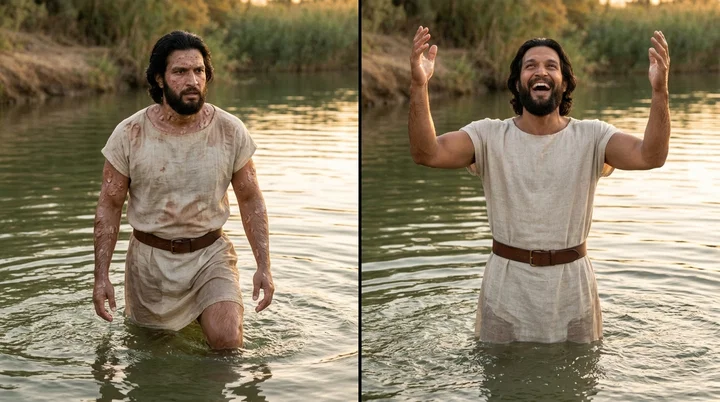
Pictures


Cross-references
- Luke 4:27
And many lepers were in Israel in the time of Eliseus the prophet; and none of them was cleansed, saving Naaman the Syrian.
Jesus cites Naaman as the only leper cleansed in Elisha’s time, rebuking Nazareth’s unbelief.
- 2 Kings 5:1-3
Now Naaman, captain of the host of the king of Syria, was a great man with his master, and honourable, because by him the LORD had given deliverance unto Syria: he was also a mighty man in valour, but he was a leper.
Introduces Naaman’s leprosy and the maid’s assurance that Elisha can heal him.
- John 9:7
And said unto him, Go, wash in the pool of Siloam, ( which is by interpretation, Sent.) He went his way therefore, and washed, and came seeing.
Both accounts tell of washing in a specified pool or river, with healing following.
- 2 Kings 5:3
And she said unto her mistress, Would God my lord were with the prophet that is in Samaria! for he would recover him of his leprosy.
The maiden tells Naaman’s household about the prophet who can heal him.
- 2 Kings 2:8-14
And Elijah took his mantle, and wrapped it together, and smote the waters, and they were divided hither and thither, so that they two went over on dry ground.
Elijah and Elisha divide the Jordan with Elijah’s mantle.
- Genesis 15:2
And Abram said, Lord GOD, what wilt thou give me, seeing I go childless, and the steward of my house is this Eliezer of Damascus?
both identify the historic city of Damascus
- Zechariah 13:1
In that day there shall be a fountain opened to the house of David and to the inhabitants of Jerusalem for sin and for uncleanness.
The promised fountain is presented as the spiritual cleansing Naaman’s washing illustrates.
- Luke 5:12-13
And it came to pass, when he was in a certain city, behold a man full of leprosy: who seeing Jesus fell on his face, and besought him, saying, Lord, if thou wilt, thou canst make me clean.
Jesus cleanses a leper, paralleling Naaman’s search for cleansing.
- 2 Kings 5:26-27
And he said unto him, Went not mine heart with thee, when the man turned again from his chariot to meet thee? Is it a time to receive money, and to receive garments, and oliveyards, and vineyards, and sheep, and oxen, and menservants, and maidservants?
Gehazi’s greed and deception bring Elisha’s judgment upon him.
Commentary
Each commentary is drawn from primary sources: the writings of Ellen G. White and Adventist pioneers and periodicals. Each commentary is separate. Its own words are not a quotation; follow the references to read the source passages.
Ellen G. White
22 sources
Naaman was a Syrian captain afflicted with loathsome leprosy who came to Elisha's house for healing at the faith of a captive Israelite maid.PK 244.2PK 2442T 309.2–310.1 Instead of the dramatic cure he expected, with the prophet standing and calling on God over him, he was told to bathe in the Jordan seven times.2T 309.2–310.1DA 262.4–264.2 He judged the pleasant rivers of Damascus better than all the waters of Israel and turned away in mortification and rage, because washing in them would have cost him no humility while obeying the appointed washing in the humble Jordan would humble his proud spirit.Lt 123, 1904, par. 37–40PK 246.5–249.32T 309.2–310.1 When his servants persuaded him his anger gave way to repentance and willing obedience, and by washing as directed he was made whole.PK 246.5–249.32T 309.2–310.1Lt 29, 1879, par. 8–9 As a heathen foreigner open to light he became the only leper cleansed in Elisha's time while unbelieving Israelites were left unhealed, which Jesus later cited to show God's favor given to a believing Gentile over privileged but unbelieving Israel.4RED 5.3–7.12SP 113.2–32SP 112.2–113.1LC1 53.2–54.1ST Jun 23, 1909
Naaman's Angry Objection
The verse belongs to the account of Naaman's leprosy and healing, when Naaman the Syrian captain and nobleman, diseased with loathsome leprosy, came to Elisha's house seeking healing.PK 244.2PK 2442T 309.2–310.1 He had been directed there through a little captive Israelite maid, who believed that God's power working through Elisha could heal him.PK 244.2MH 472.4–473.1 That sending shows that God brings men and women and youth to the very place toward which their feet have been directed because someone there needs divine help and guidance, and accepting and doing the duty that lies nearest is accepting God's choice of life-work.MH 472.4–473.1
Instead of meeting him in person, Elisha marked out the humble, specific course of bathing in the Jordan seven times.2T 309.2–310.1 Naaman had expected something altogether more dramatic and impressive, that the prophet would come out to him, stand, call on the name of the Lord his God, strike his hand over the place, and recover the leper.2T 309.2–310.1 His anger gave way only later when his servants persuaded him to obey, and then he was cleansed.DA 262.4–264.2
He judged the command beneath his dignity and too humble, holding that Abana and Pharpar, rivers of Damascus, were better than all the waters of Israel and that he could wash in them and be clean instead.Lt 123, 1904, par. 37–40PK 246.5–249.32T 309.2–310.1ST Feb 17, 1881Lt 29, 1879, par. 8–9 In mortification, disappointment, passion and rage he refused the prophet's instruction and turned and went away.Lt 123, 1904, par. 37–402T 309.2–310.1 His first indignant refusal shows pride and resistance to receiving the help offered, in contrast with the willingness that afterward brought cleansing.ST Feb 17, 1881Lt 29, 1879, par. 8–9
Abana and Pharpar were pleasant rivers, beautified by surrounding trees and groves where idols were placed and many flocked to worship idol gods.PK 246.5–249.32T 309.2–310.1 Washing in them would have cost him no humility, while following the specified direction to wash in the humble Jordan would humble his proud and lofty spirit.PK 246.5–249.32T 309.2–310.1
Humility and Willing Obedience
Naaman's outburst over the rivers of Damascus exposes pride, unbelief and resistance, a struggle to submit to God's plain appointed way because it did not match the impressive cure he wanted.PK 246.5–249.32SP 112.2–113.1LC1 56.1DA 262.4–264.2 He expected a dramatic act and judged a simple washing unworthy, preferring what seemed better to his own mind.2SP 112.2–113.1LC1 56.1DA 262.4–264.2 His refusal was not reasoned judgment but proud unbelief turning from the specified direction.PK 246.5–249.32SP 112.2–113.1LC1 56.1
When his servants persuaded him, his anger and indignant refusal gave way to repentance, and faith overcame pride.PK 246.5–249.3Lt 29, 1879, par. 8–9DA 262.4–264.2 Willing obedience to that direction brought the desired result, for he washed and was made whole.PK 246.5–249.32T 309.2–310.1DA 262.4–264.2 By following the instruction he received healing and a blessed life.2T 309.2–310.1Lt 29, 1879, par. 8–9
His cleansing when he accepted the help God offered shows that faithfulness to the light he had received prepared him to receive God's grace and to know the true God.DA 238.2–239.14RED 5.3–7.12SP 113.2–3 His need led him to receive help, and his experience brought him to greater understanding of divine truth.ST Feb 17, 18814RED 5.3–7.12SP 113.2–3 The lesson is to cease refusing small, humbling duties from pride and to condescend to be faithful in the littles, for neglecting things of small account makes great deficiency of character, and no one can perfect Christian character or please God without doing just as bid with willingness and pleasure.2T 309.2–310.1
Favor Beyond Israel
Naaman was a heathen Syrian foreigner who recognized his need for help and remained open to instruction, living faithfully up to the light he had received.SLP 229.1–230.24RED 5.3–7.12SP 113.2–3AA 416.2–417.1Ms 40, 1887, par. 8–11 Because he responded to the help offered him, he was counted more righteous and more worthy of God's favor than afflicted Israelites who enjoyed greater spiritual advantages yet failed to live by them.ST Feb 17, 1881SLP 229.1–230.2AA 416.2–417.1Ms 40, 1887, par. 8–11Ms 8, 1888, par. 9–14 Those with greater light rejected it through unbelief, rebellion and self-exaltation, while the foreigner received cleansing and favor.ST Feb 17, 1881SLP 229.1–230.2AA 416.2–417.1Ms 40, 1887, par. 8–11Ms 8, 1888, par. 9–14
He was the only leper cleansed in Elisha's time, while many lepers in Israel remained unhealed and received no such help.4RED 5.3–7.1LC1 53.2–54.1ST Jun 23, 1909DA 239.2–240.1Ms 8, 1888, par. 9–14 Their unbelief, rebellion, hard-heartedness, self-exaltation and misuse of privileges kept God from manifesting His power for them.4RED 5.3–7.12SP 113.2–3LC1 56.1ST Jun 23, 1909Ms 8, 1888, par. 9–14 Jesus cited Naaman's healing to show that God's power, blessing and favor were not limited to Israel but were given to Gentiles as well.2SP 112.2–113.1LC1 53.2–54.1ST Jun 23, 1909DA 239.2–240.1 A foreigner who had faith and was willing to receive instruction was healed and brought to know the true God and divine truth, while unbelieving Israelites were passed over, and this application provoked national pride among His hearers.4RED 5.3–7.12SP 113.2–32SP 112.2–113.1ST Jun 23, 1909DA 239.2–240.1
Christ held up this history as a terribly severe rebuke that opened corrupt lives and struck home wicked unbelief.LC1 56.1 It condemned those who would not believe because He came in meekness and lowliness, in poverty and sorrow, as a common man, and who would have no king unless attended by riches and splendor and a grand and imposing army.LC1 56.1 This earlier healing also explains why people with leprosy in Jesus' time had no known precedent for expecting such a cure.DA 262.4–264.2 Yet one leper gained hope from hearing of Jesus' works and sought Him, trusting that He could make him clean if He chose.DA 262.4–264.2
Sources
Pioneers and periodicals
80 sources
The verse belongs to the healing of Naaman the Syrian captain from fatal leprosy, when he resisted the prophet's simple direction to wash and judged it by human standards before he obeyed and was cleansed.ST Dec 7, 1904ST Aug 20, 1902ST May 15, 1884 It records his contempt for the Jordan in claiming the Abana and Pharpar of Damascus were better than all the waters of Israel and that he could wash in them and be clean, and his anger in turning away in a rage still unhealed.ST Oct 12, 1904ST Oct 12, 1904ST Aug 4, 1898ST Mar 22, 1899 His reaction shows pride wounded by the simplicity of the commanded means, expecting pomp and some great dramatic cure fitting his standing rather than an ordinary bathing, and setting worldly wisdom against implicit faith in God's word.ST Feb 11, 1889ST Feb 17, 1888ST Feb 11, 1889 The Jordan and its seven washings had no curative power in themselves and were no better than Abana and Pharpar except by God's appointment, for healing came from God through obedience to His word and not from the water as source.RH Apr 12, 1864RH May 6, 1858RH Jun 16, 1903 What seems better or just as good cannot substitute for doing exactly what God commanded, so putting a preferred river for the commanded river is disobedience of the same kind as putting Sunday for the Sabbath of the fourth commandment, and it illustrates resistance to the humble simplicity of the gospel, which is received by faith rather than by choosing a greater work of one's own.RH Nov 26, 1857ST Apr 19, 1910ST Apr 1, 1880RH Apr 12, 1864RH Jul 23, 1861
Words and Historical Setting
The verse belongs to the account of Naaman's healing from leprosy, in which he first resisted the prophet's simple instruction to wash and judged it by human standards before he accepted it and was cleansed through obedience.ST Dec 7, 1904ST Aug 20, 1902ST May 15, 1884 It records his angry comparison of the Jordan with the clear rivers of Damascus and his insistence that he could wash in those rivers and be clean, showing his hesitation to accept God's simple method of cleansing.ST Aug 20, 1902ST May 15, 1884 It records Naaman's contempt for the Jordan, declaring Abana and Pharpar of Damascus better than all the waters of Israel and insisting he could wash in them and be clean.ST Oct 12, 1904ST Oct 12, 1904ST Aug 4, 1898 It records his angry state of mind in that he turned and went away in a rage, turning away in anger because the prophet's directions displeased him.ST Oct 12, 1904ST Oct 12, 1904ST Nov 10, 1898 His response shows pride and resistance to the prophet's instruction and rejection of the appointed means of cleansing.ST Oct 12, 1904ST Aug 4, 1898RH Sep 3, 1908
Naaman was the Syrian captain, a great man and captain of the host of the king of Syria, afflicted with fatal, loathsome leprosy offering no human hope of recovery.RH Jul 23, 1872RH Oct 8, 1872ST Jun 7, 1910 He came to the prophet's door with horses and chariot and rich presents of silver and gold, expecting pomp and a dramatic display fitting his standing.RH Jul 23, 1872RH Oct 8, 1872 When he found nothing in the prophet's demeanor or in the means appointed to feed vanity or foster pride, being sent word without pomp or ceremony to go and wash in the Jordan seven times and be clean, he was greatly offended.RH Jul 23, 1872RH Oct 8, 1872 Abana and Pharpar are the rivers of Damascus, with Abana identified with the Barada running through the city and Pharpar running about three miles to the south, and Mount Hermon as the source region of the Pharpar.RH Sep 7, 1905RH Oct 27, 1874ST Jun 26, 1901 They were clear, pure, cool, swiftly flowing mountain streams whose source was near that of the Jordan, supplying homes, irrigation, gardens and fountains and making the city and plain remarkably fertile like the garden of Eden, an oasis of living green amid desert waste with desolate rocks to the northeast, Hermon to the southwest and desert waste to the east.RH Nov 26, 1857RH Jul 23, 1872RH Sep 7, 1905RH Oct 27, 1874 Their importance and abundance of water for homes and irrigation helps explain the preference for them, since he despised the Jewish stream and counted the rivers of his own country superior.RH Nov 26, 1857RH Sep 7, 1905
His rage was unreasonable, as his servants were able to lead him to recognize his folly, and he turned away still unhealed and would have remained leprous without their counsel.ST Nov 10, 1898ST May 31, 1877RH Sep 20, 1870 His servants reproved him with reason and persuaded him to give up his objection and obey the simple command, wisely urging him to follow the prophet's simple prescription.RH Sep 20, 1870RH Jan 22, 1867RH May 2, 1865 So he retraced his steps, washed in the Jordan, and was cleansed, being healed after obeying when he had expected a different response and a more impressive cure.ST Mar 22, 1899ST May 31, 1877 After that healing Elisha's renown spread throughout Syria and he became known to the Syrians.
Pride, Anger and Human Reasoning
Naaman's protest over Abana and Pharpar exposes pride, haughtiness and weakened faith, for the plain order to wash in the Jordan wounded his pride and offended him because it lacked display and special attention fitting his standing.ST Feb 11, 1889ST Feb 17, 1888ST Feb 11, 1889RH Jan 22, 1867 That offense nearly cost him the cleansing he sought and nearly left him a leper, and it warns that prideful rejection of plain counsel keeps people from blessing, that pride and grand expectations lead to rejecting clear simple duties, and that many lose eternal life by being too proud to accept humble conditions and to observe the simple commandments and ordinances of God.ST Feb 11, 1889ST Feb 11, 1889RH Jan 22, 1867RH Mar 19, 1867ST Oct 12, 1904
He came expecting a more dramatic and impressive cure as a great captain, with visible power, pomp and display, and bathing seemed too ordinary to him.ST Feb 17, 1888ST Sep 10, 1885RH Jan 22, 1867 He wanted some great thing instead of a simple direction, judged healing by his own preferred means, and preferred the rivers of Damascus while wanting to be healed without the effort and humility of dipping himself seven times.ST Sep 10, 1885RH Jan 22, 1867ST Sep 3, 1902 His anger at receiving only a simple prescription led him to turn away rather than obey the direction given for his cleansing.ST Sep 10, 1885RH Mar 19, 1867ST Sep 3, 1902
His reasoning set worldly wisdom and human judgment against implicit faith, judging God's instruction by human standards and counting obedience blind because clearer or better water seemed preferable.ST Aug 20, 1902ST Apr 19, 1910ST Feb 4, 1897ST Mar 25, 1897ST May 28, 1894 He thought the command foolish and unreasonable, and his angry comparison and departure show how human judgment can oppose a command from God.ST Aug 20, 1902ST Feb 4, 1897ST Mar 25, 1897ST May 28, 1894ST Dec 24, 1896 Human wisdom must not override God's command, faith accepts God's word as sufficient without an explanation satisfying human judgment, and the obedience God commands as He gives it, even when it looks blind, is necessary and far more pleasing to God.ST Apr 19, 1910ST Feb 4, 1897ST Mar 25, 1897ST May 28, 1894ST Dec 24, 1896
He was willing to do some notably conspicuous thing but despised an apparently small thing, scorning the plain command to wash and be clean and claiming the rivers of Damascus were better than all the waters of Israel.ST Aug 21, 1901ST Jan 28, 1875 The same spirit wants some great thing and sighs for distant opportunities of usefulness while despising small, near, everyday means close at hand.ST Aug 21, 1901ST Jan 28, 1875 Life is made up of little things, and daily consecration of these little things may bring great results as small scattered seeds bring great harvest, so there is no need to look beyond the everyday walk and path for means of usefulness, and obeying the small word that proves belief carries a far greater exercise of faith than a great sacrifice.ST Aug 21, 1901ST Jan 28, 1875 His leprosy and his rage also illustrate anger itself, for like leprosy caught from others, anger learned from elders can cling to a person after those who passed it on are gone.
Obedience, Faith and Healing Power
The Jordan possessed no special power to cure, and its seven washings had no curative virtue in themselves.RH Apr 12, 1864RH May 6, 1858RH Jun 16, 1903RH Apr 12, 1864 In themselves the rivers were just as suitable, and the Jordan was no better than Abana and Pharpar except for God's appointment of it.RH May 6, 1858RH Apr 12, 1864RH Jul 20, 1876 Washing in the Damascus waters would have brought the same result if the Lord had commanded it, for healing depended not on choosing water considered superior but on obeying the command to dip seven times in the Jordan.RH May 6, 1858RH Apr 12, 1864RH Jul 20, 1876 Healing came from God and His word, through the Lord's power with the word sent through His accredited prophet, while the water was only a means God used and not the source of healing power.RH Apr 12, 1864RH Jun 16, 1903ST Oct 17, 1895 Disappointed by the simple instruction to wash in the Jordan, Naaman argued that he could wash in the better rivers of Damascus and be clean, and turned away in anger with his focus mistakenly fixed on the water as the source of healing.RH Apr 12, 1864RH May 6, 1858RH Jun 16, 1903
Naaman had no claim on the promised healing before completing the precise condition of washing seven times in the Jordan, just as a sinner has no claim on pardon before complying with the conditions God requires.RH May 6, 1858 The washing was the required means through which healing came, and if he had refused to use the means provided he would not have been healed.RH May 6, 1858ST Feb 11, 1886 Relying on God while refusing available remedies and cooperation is presumption rather than faith.ST Feb 11, 1886RH Feb 12, 1901 Expecting God to restore health without human effort or response, and expecting miraculous healing while disregarding the conditions God gives and continuing in transgression, is mistaken.STRH Feb 12, 1901 God performs the miracle while people must do their part, applying the lesson to physical and spiritual health alike.RH Feb 12, 1901
The washing was an approved means even when its curative power was not apparent, demonstrating faith by an act of obedience.ST Feb 11, 1886ST Mar 5, 1902 Divine healing was accompanied by simple instruction obeyed, showing faith put into action.ST Feb 11, 1886ST Mar 5, 1902 God's power went with the word sent through Elisha to heal when Naaman dipped himself seven times in the Jordan.ST Oct 17, 1895 The cleansing came through the Lord's power as he followed the instruction given through Elisha as the Lord's accredited prophet.ST Oct 17, 1895 The presence of the Lord offered healing to lepers in Israel as well, but they were not healed because they did not receive that presence through the prophet.
Disobedience and angry departure left Naaman unhealed and unclean, still leprous, because disobedience brought no cleansing.RH Mar 4, 1902RH Mar 4, 1902ST Oct 22, 1902 His refusal to receive the word with meekness kept him unclean, and his objection that the rivers of Damascus were better changed nothing until he stopped resisting.RH Mar 4, 1902RH Mar 4, 1902ST Oct 22, 1902 When he finally obeyed the simple command he was cleansed, his flesh restored like that of a little child, with obedience to God's word proving essential though the Jordan and seven immersions had no special power in themselves.RH Mar 4, 1902RH Mar 4, 1902ST Oct 22, 1902 Though he first resisted because he thought the rivers of Damascus were better, his healing when he obeyed stands as the pattern of what God does for the leprous who trust Him.RH Mar 4, 1902
Elisha's dealings with Naaman show that faith does not demand a cure but leaves the question of healing or continued sickness with God.
Exact Obedience and Sabbath Doctrine
Naaman's protest that the rivers of Damascus were better and could cleanse just as well missed the real issue, which was not the quality of the water but obedience to the divine direction to wash in the Jordan.ST Apr 1, 1880RH Apr 12, 1864RH Jul 23, 1861RH Jul 20, 1876 The Jordan had no curing power in itself and was in itself no better than Abana and Pharpar, yet healing was given only through complying with the Lord's appointed command and not through a preferred substitute.RH Apr 12, 1864RH Jul 20, 1876RH Jul 31, 1866 To do a broadly similar act in another river or in a different way of applying the water would not fulfill the specific instruction to dip seven times in the Jordan, for God's command rather than human choice determines what obedience requires.RH Jul 23, 1861RH Jul 20, 1876RH Jul 31, 1866ST Mar 10, 1881 Accepting grace therefore meant laying aside anger, prideful objection and insistence on superior water, and following exactly what was commanded instead of setting personal will against it.RH Jul 23, 1861RH Jul 31, 1866ST Mar 10, 1881 Such substitution prevents receiving the promised blessing, since cleansing came only in accordance with the command of God.ST Apr 1, 1880RH Jul 23, 1872
Putting a favored river in place of the commanded river was disobedience of the same kind as putting another tree in place of the forbidden tree, strange fire in place of holy fire, and Sunday or the first day in place of the Sabbath commanded in the fourth commandment.RH Jul 31, 1866RH Jul 31, 1866ST Dec 18, 1893 Naaman despised what was Jewish, clung to his own way, wanted a river of his own country, and refused to stoop to a Jewish stream because he counted the clear and pure rivers of Damascus superior, though the Lord had directed washing in Jordan seven times.RH Nov 26, 1857ST Dec 18, 1893 The same spirit appears in modern objectors who say the first day is better than the old Jewish seventh day and plead custom and the work of redemption, while God has said the seventh day is the Sabbath He blessed, sanctified, set apart with its reason, and gave as a sign.RH Nov 26, 1857RH Jul 31, 1866 Resistance that would have left leprosy unhealed had servants not wisely urged compliance illustrates how people reject God's appointed way of cleansing from sin and of keeping the Sabbath, preferring their own judgment to what God specified.RH Sep 20, 1870RH Jul 31, 1866RH Jul 31, 1866 Obedience requires doing what was specified rather than replacing it with something similar merely because it is also water or seems better.RH Jul 31, 1866RH Jul 31, 1866ST Dec 18, 1893
Sincerity and doing a thing rightly in one's own chosen way is not enough when God has given a plain command about the particular thing to be done.RH Jul 23, 1872RH Jul 23, 1872 The same mistake says it makes no difference which day is kept if sincerely kept, whether the soul is mortal or immortal, whether the dead are conscious or unconscious between death and resurrection, or whether mere preparation for death suffices without heeding the time of the second advent.RH Jul 23, 1872 Safety is only in obeying Bible truth that the seventh day is the Sabbath with the reason it was set apart and that it is a sign between God and His people, that the dead rest and know nothing, and that watching means expecting the soon coming.RH Jul 23, 1872RH Jul 23, 1872 Those in error must discover the mistake and retrace their steps as speedily as Naaman retraced his, and build on the sure foundation of truth that alone will stand the final test, for Abana and Pharpar had their source near that of Jordan and were clear, cool, swiftly flowing mountain streams making their region like the garden of Eden, yet what seems better or just as good cannot substitute for doing exactly what God commanded.RH Jul 23, 1872RH Jul 23, 1872
Obedience as God gives it, even when it looks like blind obedience and the required act appears insignificant, foolish or unreasonable, is necessary and far more pleasing to God than setting worldly wisdom of a better way against implicit faith.ST Apr 19, 1910ST Oct 12, 1904ST Oct 24, 1900 Naaman counted simple compliance as blind and foolish, turned away in proud anger, and was healed only when he dipped seven times in the Jordan, showing that trusting God once His command is sure is the right course.ST Apr 19, 1910ST Oct 12, 1904ST Oct 24, 1900 That simple obedience carries full weight warns that many lose eternal life by being too proud to accept humble conditions and to observe the simple commandments and ordinances of God.ST Oct 12, 1904ST Oct 24, 1900RH Jan 20, 1853 The holy Sabbath draws so straight a line of simple obedience that many act the same way, refusing it and trying to climb up some other way, though keeping God's commandments and the faith of Jesus in the third angel's message is the appointed way of escape instead of ignoring His law and substituting a day He has not enjoined.ST Apr 19, 1910RH Jan 20, 1853
Salvation and Cleansing From Sin
Naaman's angry question exposes how hard it is to accept the simplicity of the gospel, for he resisted the humble, simple way of cleansing offered to him and wanted another way to heaven on his own conditions.ST May 7, 1894RH Nov 21, 1865 His pride and confidence in his own judgment led him to trust personal power and impressive religious acts instead of accepting God's appointed way, thinking the rivers of Damascus were better than the Jordan and could cleanse him just as well.RH Nov 21, 1865ST Oct 18, 1877 He preferred those rivers and thought he should be free to choose how to be cleansed, illustrating that cleansing from sin comes by humbly relying on God's provision rather than by choosing a supposedly greater or more difficult work to do for oneself.ST Oct 18, 1877ST Jul 7, 1909 His anger at the simple instruction kept him from the cleansing offered, showing that the simple remedy God provides, received by faith, is the way of salvation.ST May 7, 1894ST Jul 7, 1909
His objection reveals how pride obstructs acceptance of God's remedy for the cleansing of sin, for he expected a cure more fitting to his status with display and special attention and was offended by a remedy that seemed too simple.ST Feb 17, 1888 No splendid rite or costly offering can cleanse the soul from sin, and human methods such as education and environment cannot take the place of God's plan of salvation and the new birth.RH Jul 12, 1906 His leprosy made his greatness worthless, and obedience to God's command was the only way to become clean, which warns those whose outward standing conceals unholy lives that their spiritual malady cannot be cured unless the Great Physician heals them.RH Jul 12, 1906RH Apr 23, 1908 As he was cleansed when he obeyed, so sin is healed only through the gospel of Christ, not hidden or restrained by human means.RH Jul 12, 1906ST Jul 7, 1909
No washing in any earthly river could heal physical leprosy, and no earthly means can heal spiritual leprosy, for the power of God alone heals both.RH Jul 12, 1906ST Oct 12, 1904 The water was only a means God used and not the source of healing power, and his mistaken focus on the water itself missed that the Jordan was in itself no better than Abana and Pharpar except for God's appointment of it.RH Jun 16, 1903ST Oct 12, 1904 Many are willing to receive the Lord's benefits only if bestowed in a manner they dictate, so as not to mar pride or interfere with worldly interests and enjoyments.RH Oct 8, 1872 But if required to deny self, reform the life, and be governed by rules of pure morality, they manifest preference for an easier way congenial to the carnal mind, inventing some addition to or diminution from the straight testimony till religion is divested of vitality and moral principle.RH Oct 8, 1872
He came with horses and chariot and rich presents of silver and gold expecting pompous display fitting his high standing, and when he found nothing to feed vanity or foster pride he was greatly offended, proposed his own more congenial plan, and turned and went away in a rage.RH Oct 8, 1872 Jordan's flood, like Bethesda's pool and Siloam's stream, cannot in the heart seem half so good as Jesus' blood for leprosies of guilt and filth, for it is Jesus' blood, that crimson sea, that washes guilt away.RH Jan 21, 1858 The washing that restored Naaman stands beside Jesus' healing of the man born blind as a miracle involving washing and restoration, inviting attention to their similarities and differences.ST Nov 26, 1896 By contrast, even all the waters of the Jordan cannot cleanse wealth stained by sin through oppression, ungodly dealings, or the liquor trade, which remains morally unclean and brings a curse.ST Nov 2, 1882
Gentiles, Witness and Wider Scripture
Elisha had never healed a leper before Naaman came to him, so that cleansing stands as the only leprosy case he ever healed.ST Jul 13, 1904 The little captive maid who directed Naaman to the prophet had therefore never seen or heard of such a healing, and her confidence rested solely on faith in God's word and power to heal leprosy even without a precedent.ST Jul 13, 1904 Among the many lepers living in Israel in Elisha's time, Naaman the Syrian was the only one cleansed, as Jesus pointed out at Nazareth.ST Jun 23, 1909ST Feb 19, 1894 His case is thus the example of a foreigner receiving a prophet's help when Israel's lepers were not cleansed.ST Mar 22, 1899
That singling out of a Syrian shows God's saving work was not limited to Israel or to the Jews but reaches precious souls in every nation.ST Dec 23, 1889ST Jan 22, 1894 South Africa as a mission field illustrates the same truth that blessing extends beyond Israel.ST Dec 23, 1889 God does not favor one nation to the exclusion of others and does not distinguish between Jew and Gentile, for all receive salvation by faith, and Naaman was healed because he believed.ST Feb 19, 1894ST Nov 7, 1895 The Lord's presence through His accredited prophet offered healing to lepers in Israel as well, but they were not healed because they did not receive that presence through the prophet, having no faith.ST Feb 19, 1894 Israel's rejection of God's messengers and lack of faith cut its people off from blessing though healing was offered to them, while Naaman was favored because he had faith and was open to the light he had received.ST Jun 23, 1909
An Israelite captive girl's witness about the power of Israel's God brought healing to the Syrian captain and knowledge of God to Syria.RH Jun 10, 1902 His need as a heathen nobleman led him to receive help, be cleansed of leprosy, and come to greater understanding of divine truth.ST Feb 17, 1881 His first confidence in the rivers of Damascus and anger at the command to wash in the Jordan show how pride and unbelief keep people from accepting the help God offers, yet he was cleansed only after he responded to the light and help given to him.ST Feb 17, 1881ST Jun 16, 1887 His story therefore contrasts a heathen who responds to light with people of greater light who reject it, illustrating that such a one may receive God's favor while others refuse it.ST Feb 17, 1881 After his healing Naaman showed gratitude by offering a gift to Elisha, which Elisha refused.RH Sep 25, 1860 The command to bathe in the Jordan to be cured presents bathing in water and practical means as remedial agencies God may use in healing soul and body.ST Sep 21, 1915ST Dec 23, 1913
Sources