2 Kings 5:13
And his servants came near, and spake unto him, and said, My father, if the prophet had bid thee do some great thing, wouldest thou not have done it? how much rather then, when he saith to thee, Wash, and be clean?
Translations
And his servants came near, and spoke to him, and said, My father, if the prophet had bid you do some great thing, would you not have done it? how much rather then, when he says to you, Wash, and be clean?
King James Version, KJV Cambridge Paragraph Bible, Revised Version, American Standard Version
And his servants came near, and spake unto him, and said, My father, if the prophet had bid thee do some great thing, wouldest thou not have done it? how much rather then, when he saith to thee, Wash, and be clean?
And his servants came near, and spoke to him, and said, My father, if the prophet had bid thee do some great thing, wouldst thou not have done it? how much rather then, when he saith to thee, Wash, and be clean?
And his servants come nigh, and speak unto him, and say, 'My father, a great thing had the prophet spoken unto thee — dost thou not do [it]? and surely, when he hath said unto thee, Wash, and be clean.'
And his servants drew near, and spoke to him and said, My father, [ if] the prophet had bidden thee [ do some] great thing, wouldest thou not have done it? how much rather then, when he says to thee, Wash and be clean?
Then drew near his servants, and spake unto him, and said—My father! if, some great thing, the prophet had commanded thee, wouldst thou not have done it? then, how much rather, when he hath said unto thee, Bathe and be clean?
Berean Standard Bible, Majority Standard Bible
Naaman’s servants, however, approached him and said, “ My father, if the prophet had told you to do some great thing, would you not have done it? How much more, then, when he tells you, ‘ Wash and be cleansed’?”
His servants came near and spoke to him, and said, “ My father, if the prophet had asked you do some great thing, wouldn’t you have done it? How much rather then, when he says to you, ‘ Wash, and be clean’?”
Then his servants came to him and said, If the prophet had given you orders to do some great thing, would you not have done it? how much more then, when he says to you, Be washed and become clean?
But his seruants came, and spake vnto him, and sayd, Father, if the Prophet had commanded thee a great thing, wouldest thou not haue done it? howe much rather then, when hee sayth to thee, Wash and be cleane?
Douay-Rheims (Challoner revision)
His servants came to him, and said to him: Father, if the prophet had bid thee do some great thing, surely thou shouldst have done it: how much rather what he now hath said to thee: Wash, and thou shalt he clean?
Pictures
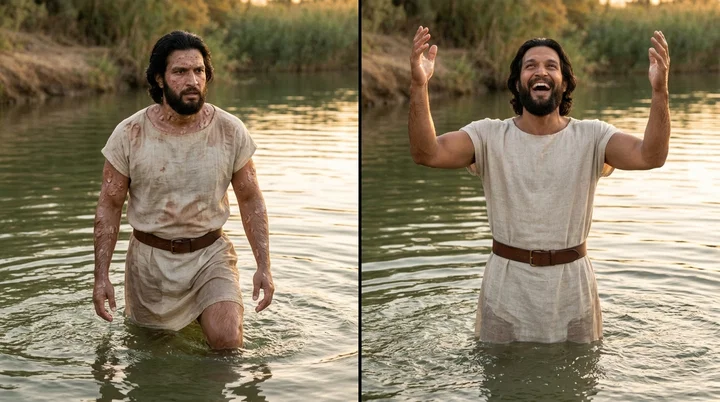
Cross-references
- Luke 4:27
And many lepers were in Israel in the time of Eliseus the prophet; and none of them was cleansed, saving Naaman the Syrian.
Jesus cites Naaman’s cleansing as an example of God’s favor to a Gentile amid Israel’s unbelief.
- John 9:7
And said unto him, Go, wash in the pool of Siloam, ( which is by interpretation, Sent.) He went his way therefore, and washed, and came seeing.
Both men were healed after obeying the instruction to wash.
- Zechariah 13:1
In that day there shall be a fountain opened to the house of David and to the inhabitants of Jerusalem for sin and for uncleanness.
The open fountain for sin and uncleanness parallels the cleansing offered through Christ.
- 2 Kings 5:2-3
And the Syrians had gone out by companies, and had brought away captive out of the land of Israel a little maid; and she waited on Naaman’s wife.
The captive maid points Naaman’s household to the prophet who can heal him.
- 2 Kings 5:20-27
But Gehazi, the servant of Elisha the man of God, said, Behold, my master hath spared Naaman this Syrian, in not receiving at his hands that which he brought: but, as the LORD liveth, I will run after him, and take somewhat of him.
Gehazi’s covetousness brings Naaman’s leprosy upon him.
- Matthew 8:2-3
And, behold, there came a leper and worshipped him, saying, Lord, if thou wilt, thou canst make me clean.
Jesus makes the leper clean when he asks to be cleansed.
- 2 Kings 2:8
And Elijah took his mantle, and wrapped it together, and smote the waters, and they were divided hither and thither, so that they two went over on dry ground.
same Jordan divided by Elijah
- 1 Samuel 15:22
And Samuel said, Hath the LORD as great delight in burnt offerings and sacrifices, as in obeying the voice of the LORD? Behold, to obey is better than sacrifice, and to hearken than the fat of rams.
Both teach obedience over conspicuous deeds.
- Joshua 3:15-17
And as they that bare the ark were come unto Jordan, and the feet of the priests that bare the ark were dipped in the brim of the water, (for Jordan overfloweth all his banks all the time of harvest,)
same Jordan stopped for the ark
- John 13:14-15
If I then, your Lord and Master, have washed your feet; ye also ought to wash one another’s feet.
Jesus gives foot-washing as an example to follow.
- Acts 22:16
And now why tarriest thou? arise, and be baptized, and wash away thy sins, calling on the name of the Lord.
Baptism is linked with washing away sins and receiving cleansing.
- 1 John 1:7
But if we walk in the light, as he is in the light, we have fellowship one with another, and the blood of Jesus Christ his Son cleanseth us from all sin.
Christ’s blood is the means of cleansing sinners.
Commentary
Each commentary is drawn from primary sources: the writings of Ellen G. White and Adventist pioneers and periodicals. Each commentary is separate. Its own words are not a quotation; follow the references to read the source passages.
Ellen G. White
20 sources
Naaman's servants came near and respectfully pressed him to lay aside his anger and pride and obey the prophet by washing and being clean, and their counsel led him to do it.Lt 123, 1904, par. 37–40PK 244PK 244.2 Their plea was that if he would have done some great, hard thing to be healed, he should much more obey a simple, easy washing rather than despise it for being ordinary.Lt 123, 1904, par. 37–40PK 244PK 244.2 He had at first refused in mortified pride and rage, expecting Elisha to come out and call on God and wave his hand over him, and preferring the grand rivers Abana and Pharpar where washing would have cost him no humility over the humble Jordan.2T 309.2–310.1 Humbling himself to wash where directed tested his faith and called for humility and repentance, and it brought him cleansing, wholeness and rich blessing that refusal would have forfeited.PK 246.5–249.32T 309.2–310.1Lt 29, 1879, par. 8–9 As a Syrian who lived by the light he had and opened his heart to instruction, he was cleansed and came to know the true God, while many lepers in Israel stayed uncleansed through unbelief and rejection of God's messengers, a history Jesus cited to show God's power reaching a receptive Gentile to the anger of Nazareth.DA 238.2–239.12SP 113.2–34RED 5.3–7.1LC1 56.1LC1 53.2–54.1
Servants Urge Humble Obedience
The servants came near and respectfully pressed Naaman to lay aside his anger and pride and obey the prophet's direction to wash and be clean, and their counsel moved him to follow it.Lt 123, 1904, par. 37–40PK 244PK 244.2 Their plea was that he would readily have undertaken some great, difficult or impressive task if it had been required for his healing.Lt 123, 1904, par. 37–40PK 244PK 244.2PK 246.5–249.3ST Feb 17, 1881 How much more, then, should he wash and be cleansed when told to do so, rather than rejecting a simple and easy command because it seemed too ordinary.Lt 123, 1904, par. 37–40PK 244PK 244.2PK 246.5–249.3ST Feb 17, 1881
He had at first refused in mortification, disappointment, passion and rage, because merely washing stumbled him as beneath his dignity.2T 309.2–310.1 He had expected Elisha to come out to him and stand and call on the name of the Lord his God and strike his hand over the place and recover the leper.2T 309.2–310.1 He preferred Abana and Pharpar, rivers of Damascus beautified by trees and groves where idols were placed and multitudes went to worship, where washing would have cost him no humility, unlike going to the humble river Jordan.2T 309.2–310.1
The required washing tested his faith while pride resisted the prophet's directions, and it called for humility and repentance.PK 246.5–249.32T 309.2–310.1Lt 29, 1879, par. 8–9 By humbling himself to follow the specific directions to wash in the Jordan he obtained the healing he sought.PK 246.5–249.32T 309.2–310.1Lt 29, 1879, par. 8–9 That obedience made him whole and brought a rich, holy blessing, whereas refusing altogether would have cost him that blessing.2T 309.2–310.1Lt 29, 1879, par. 8–9
Receptive Foreigner Receives Grace
Naaman was a Syrian, a heathen nobleman and captain who had lived faithfully by the convictions of right and the light he had received.DA 238.2–239.12SP 113.2–34RED 5.3–7.1SLP 229.1–230.2ST Feb 17, 1881 He recognized his need of help, opened his heart to instruction, became humble and willing to receive help, and acted on the light he had, and this made him ready to receive grace.2SP 113.2–34RED 5.3–7.1ST Feb 17, 1881ST Feb 17, 18812SP 112.2–113.1 In response he was cleansed of leprosy and enlightened in divine truth, coming to know the true God.DA 238.2–239.12SP 113.2–34RED 5.3–7.1ST Feb 17, 18812SP 112.2–113.1
In contrast, many lepers in Israel remained uncleansed because unbelief, misuse of privileges, rebellion, backsliding, and rejection of God's messengers kept them from receiving God's help and power.2SP 113.2–3SLP 229.1–230.2ST Feb 17, 18812SP 112.2–113.1AA 416.2–417.1 This remained true even when they professed godliness while living contrary to it and putting convenience and worldly honor before principle.2SP 113.2–3SLP 229.1–230.2ST Feb 17, 1881 His experience shows that God's blessings are received by those who respond faithfully to the light they have, not simply by belonging to Israel.DA 238.2–239.12SP 113.2–34RED 5.3–7.1 Those who live up to the light are more righteous and in a more favorable position before God than people given great light and spiritual advantages who do not live accordingly.2SP 113.2–3SLP 229.1–230.2ST Feb 17, 1881Ms 8, 1888, par. 9–14
God's power displayed through faithful prophets, men chosen by God to do a special and important work, is given especially to those who have hearts that can feel and faith that will grasp the evidences God is pleased to give.LC1 56.1 It is not given for the salvation of an unbelieving, hard-hearted people.LC1 56.1
Echoes in Christ's Ministry
Jesus cited this history to show that though many lepers were in Israel, Elisha cleansed Naaman the Syrian.LC1 56.1LC1 53.2–54.1ST Jun 23, 1909 His cleansing stands as an example of God's favor and power reaching beyond Israel to a receptive Gentile.LC1 56.1LC1 53.2–54.1ST Jun 23, 1909 While many in Israel received no such blessing because they rejected God's messengers, Naaman received it because he was receptive to the prophet.LC1 56.1ST Jun 23, 1909 The power displayed through faithful prophets, men chosen by God to do a special and important work, is given especially to those who have hearts that can feel and faith that will grasp the evidences God is pleased to give, and not for the salvation of an unbelieving, hard-hearted people.LC1 56.1
His mention of it angered the people of Nazareth.LC1 53.2–54.1 It met questionings about His coming in meekness and lowliness, in poverty and sorrow, as a common man.LC1 56.1 It served as a terribly severe rebuke opening corrupt lives and striking home the truth of wicked unbelief upon those who would have no one as king unless attended by riches and splendor and a grand and imposing army.LC1 56.1
Naaman's cleansing from leprosy through Elisha was the only earlier instance of such a healing.DA 262.4–264.2 No such work had been known since Elisha's day, which explains why the lepers who heard of Jesus did not dare expect Him to cleanse them.DA 262.4–264.2 The wider account shows God sending the little Israelite maiden to the help of Naaman the Syrian captain as His representative to one in need of divine help and guidance.MH 472.4–473.1
God has reasons for directing feet to a particular place, because at that very place there may be someone in need of the help that person can give.MH 472.4–473.1 He still sends men and women and youth today in the same way.MH 472.4–473.1 Following the specified directions of God humbles the proud and lofty spirit, and willing obedience brings the desired result, for Naaman washed and was made whole.2T 309.2–310.1 This applies to condescending to be faithful in the littles in order to perfect Christian character.2T 309.2–310.1
Sources
Pioneers and periodicals
91 sources
His servants came near and respectfully reasoned with their angry master that if he would have done some difficult great thing, he should much rather do the small washing commanded, and persuaded him to go down and dip seven times in the Jordan, whereupon his flesh was restored like that of a young man.ST Dec 7, 1904ST Oct 12, 1904ST Aug 4, 1898ST Feb 4, 1897RH Mar 4, 1902 The water itself and the dipping had no healing power, for no earthly river can cure bodily or spiritual leprosy, and he was healed only by the word and power of God when in faith he obeyed exactly what he was told.RH May 6, 1858ST Oct 22, 1902ST Oct 17, 1895 His leprosy pictures sin as an incurable malady with no human cure, and washing clean pictures purging of guilt and purification of heart through the fountain of Jesus' blood, received not by splendid rite or costly sacrifice but by trusting and obeying God's simple way of salvation through faith in the crucified and risen Christ.RH Jun 27, 1871ST May 7, 1894RH Jan 21, 1858 The power of the remedy lies in its simplicity, which offends pride because it requires no great deed, no price of money or influence and gives no recognition to rank, yet it is near to everyone so that smallest and poorest stand equal with the mightiest and must simply trust without waiting to understand the mystery or seeking to merit favor.ST Aug 21, 1901ST Feb 17, 1888RH Nov 10, 1859ST Aug 4, 1898ST Feb 17, 1888 Cleansing came only by doing exactly what God commands, for willingness to do some great thing and honest sincerity are not enough, and just as washing in Abana or Pharpar would not fulfill the command to wash in Jordan, so keeping a different day will not fulfill the command to keep the Lord's Sabbath, the particular seventh day He set apart.RH Jul 23, 1872ST Mar 10, 1881RH Jul 31, 1866RH Jul 31, 1866ST Apr 1, 1880 Naaman the Syrian, a Gentile outsider, was cleansed when many lepers in Israel were not, showing that God makes no distinction between Jew and Gentile but gives all equal opportunity by faith, while Israel's lepers were passed over because unbelief shut them off from the good offered through His accredited prophet.ST Jun 16, 1887ST Jun 23, 1909ST Mar 22, 1899ST Feb 19, 1894ST Feb 19, 1894
Narrative Setting and Servants
The verse belongs to the cure of Naaman the Syrian captain afflicted with leprosy, who came to Elisha to be healed and was told to wash seven times in the Jordan and be clean.ST Jul 7, 1909RH Jul 23, 1872ST Dec 23, 1913 He came with horses and chariot and rich presents of silver and gold, expecting healing suited to his standing, and after he was healed and his flesh was wholly restored and renewed like that of a young man he gratefully offered a present which was refused.ST Oct 3, 1878ST Jul 7, 1909RH Oct 8, 1872 He had judged Abana and Pharpar, rivers of Damascus, better than all the waters of Israel, for they were clear, cool, swiftly flowing mountain streams rising near the source of the Jordan and watering a pleasant country fertile and beautiful like the garden of Eden.RH Jul 23, 1872 The healing was set in motion after a captive Hebrew girl directed him to Israel to the prophet of the Lord.ST Jun 16, 1887
That little Israelite captive maid directed her Syrian master to the prophet in Samaria in simple faith in God's word and power, without having seen or heard of an earlier healing.ST May 27, 1913ST Jul 13, 1904 By her simple message about God's power to heal she made the true God known to her master and thereby helped bring about his healing.RH Jun 10, 1902RH Nov 19, 1908 The chapter is noted for that simple faith.ST May 27, 1913 Through her message Naaman was healed and brought to acknowledge Israel's God.RH Jun 10, 1902
The same Spirit who moved the Israelite maid-servant in Syria to tell of the prophet in Samaria moved the prophet to have Naaman sent to him.ST Oct 12, 1904 That Spirit-directed bringing of Naaman to Elisha was for more than bodily healing, so that Naaman and others through him might know that there is a prophet in Israel and through that knowledge find salvation.ST Oct 12, 1904 At that time Jehoram king of Israel was the son of Ahab and Jezebel and followed his parents too closely to be on friendly terms with God's prophet, and lived in constant dread of the king of Syria.ST Oct 12, 1904
Naaman turned away in rage from the plain direction, and his servants came near and respectfully reasoned with him, calling him My father.ST Oct 12, 1904ST Aug 4, 1898 They took a more reasonable view than their master, having faith that he was to be healed and being unwilling to lose the healing when the thing required was so small.ST Aug 4, 1898ST Oct 12, 1904 Their significant, wise questions made an argument whose force Naaman saw and which appealed to his better judgment.ST Oct 12, 1904ST Oct 12, 1904 Their counsel persuaded him to obey the simple requirement to wash for cleansing.ST Aug 4, 1898
The servants meekly reasoned with their angry master after he rejected the prophet's instruction, reminding him that he would have undertaken a difficult or impressive task and should all the more do what had been plainly commanded.RH May 2, 1865 Their reproof persuaded him to listen, showing that a superior can rightly receive correction from an inferior and that the wisdom of a reproof matters more than who gives it.RH May 2, 1865 Their counsel led him to try the seemingly insignificant remedy and to go down and dip seven times in Jordan and be made clean, and he emerged healed and cleansed, for humble obedience to the word brings the cleansing promised by God.ST Aug 4, 1898RH Mar 4, 1902
The account is treated as true history of Elisha's miracles rather than pious legends or myths.ST Jan 24, 1906 Naaman the Syrian was the only leper Elisha healed and the only leper cleansed in Elisha's time among many lepers in Israel.ST Jul 13, 1904 His coming to Elisha to be healed of leprosy further manifested the selfish disposition and real character of Gehazi.ST Jul 28, 1898 That healing made Elisha known to the Syrians and his renown spread throughout Syria.ST Oct 19, 1904
Simple Command Versus Great
The servants' plea turns on a contrast between a hard, impressive demand and an easy washing to become clean, urging that if a difficult task commanded by the prophet would readily have been undertaken, how much more should the small, easy instruction to wash be obeyed.ST Apr 28, 1909ST Oct 12, 1904ST Aug 4, 1898ST May 13, 1908 Their reasoning sets aside objection to the plain command and calls for trust and humble obedience to God's instruction rather than a humanly preferred alternative.ST Apr 28, 1909ST Oct 12, 1904ST Mar 25, 1897 It leads to following the instruction to wash in the Jordan and receiving cleansing, showing the value of heeding a simple word from God.ST Apr 28, 1909ST Oct 12, 1904
Men are ready to do some notably conspicuous great thing yet scorn an apparently small command, and that resistance exposes pride.RH Jun 27, 1871ST Aug 21, 1901 The small thing can carry a far greater exercise of faith than the great deed, for righteousness consists in obedience, which is the proof of believing God.RH Jun 27, 1871ST Aug 21, 1901 Naaman's leprosy pictures sin, and his healing points to salvation in which pride and self must die, the old self be put off and the new put on with the humility of a little child to enter God's kingdom.RH Jun 27, 1871
He held back because the cure was too simple and plain, with too little show and ostentation and no personal demonstration and attention from the prophet himself to suit his standing and importance.RH Jun 16, 1903ST Feb 17, 1888 There was nothing in the prophet's demeanor or in the simple means to feed his vanity, so his pride was offended and moved him to prefer the rivers of Damascus, Abana and Pharpar and to seek some other prescribed way to be cleansed.ST Feb 11, 1889ST Feb 17, 1888ST Feb 11, 1889 His pride and doubt were challenged by the simplicity of the command, and the servants' wise appeal exposed how pride can make a person reject a plain means of receiving God's help.ST Feb 11, 1889ST Feb 11, 1889ST Feb 11, 1889 Heeding their counsel to set aside anger and pride and to try the seemingly insignificant remedy brought healing when he washed seven times in the Jordan.ST Feb 11, 1889RH Jun 16, 1903ST Feb 11, 1889
Abana and Pharpar, rivers of Damascus, were judged better than all the waters of Israel, being clear, cool, swiftly flowing mountain streams rising near the source of the Jordan and watering a pleasant country fertile and beautiful like the garden of Eden.RH Jul 23, 1872 The Jordan's apparent insignificance did not limit God's power, for Naaman was healed when in faith he turned from anger toward the word and obeyed it.ST Aug 20, 1902RH Jul 23, 1872
The command seemed blind obedience while worldly wisdom dictated a better way, and God's remedy may seem foolish to human wisdom.ST Apr 19, 1910ST Dec 24, 1896ST May 28, 1894 Faith does not judge God's commands by whether they seem important or sensible but accepts and obeys His word, trusting and following His counsel to receive healing.ST Feb 11, 1889ST Dec 24, 1896ST May 28, 1894 The lesson is to be sure God commands it, and knowing that, to trust Him and obey with implicit faith rather than prefer human wisdom or a congenial invented plan.ST Apr 19, 1910ST May 28, 1894
Healing Through Obedient Faith
Naaman was healed when in faith he obeyed the word and washed, going down and dipping seven times in the Jordan as instructed, and his flesh was wholly restored and renewed like that of a young man.ST Dec 7, 1904ST Aug 4, 1898ST Feb 4, 1897ST Jul 7, 1909RH Mar 4, 1902 His servants took a more reasonable view than their angry master, coming near and respectfully reasoning that if he would have done some great thing commanded by the prophet he should much more obey the simple requirement to wash for cleansing, and their counsel persuaded him to try the remedy and be made clean.ST Dec 7, 1904ST Aug 4, 1898RH Mar 4, 1902 He obeyed the word and was cleansed, whereas disobedience had brought no cleansing.ST Dec 7, 1904RH Mar 4, 1902 His healing is an example of the Almighty’s power to save a leper.
The Jordan’s water itself did not heal him, and no washing in earth’s rivers has power to heal physical or spiritual leprosy.RH May 6, 1858ST Aug 4, 1898ST Oct 12, 1904 There was no special power in the muddy water or in dipping seven times; the only difference in Jordan’s waters was the command of God.ST Oct 22, 1902ST Oct 12, 1904 Healing came not from the water but from the Lord’s word and the power of God alone, and obedience to that word brought the blessing.RH May 6, 1858ST Oct 22, 1902ST Aug 4, 1898ST Oct 12, 1904 He should obey the condition given, however plain, and trust God to bring about the promised cleansing.RH May 6, 1858ST Aug 4, 1898
God’s word to Naaman came with power to heal him when he obeyed it, and he was healed as soon as he did so.ST Oct 17, 1895 The cure came through obeying the command, though it was simple rather than a great deed.ST Oct 17, 1895 He was required to use the means given through the prophet before he was healed, and he was not healed until he did what he had been told.ST Feb 11, 1886 Expecting recovery while refusing remedies available from God is presumption, not faith, and the episode sanctions using a means even in an incurable case though the means had no apparent power to cure.ST Feb 11, 1886
His obedient act showed simple faith in the prophet’s word, for God’s healing power works through simple obedience rather than a display of human power.ST Feb 4, 1897ST Mar 5, 1902 Even though he preferred the rivers of Damascus and questioned whether one dipping would be enough, he had to dip seven times in the Jordan.ST Feb 4, 1897 Obeying the instruction meant healing and life, while refusing it would have left him a leper until death.ST Feb 4, 1897 At first he expected God to heal him without effort or response from him, even though the healing required him to act on the simple instruction.RH Feb 12, 1901 God gives one law and one gospel to rich and poor, high and low, and Naaman’s rank entitled him to no special deference, for God blesses faith rather than status.ST Aug 4, 1898
Sin, Cleansing, and Salvation
Naaman's leprosy stands for sin, an incurable spiritual malady for which there is no human cure but which can be removed through faith.RH Jun 27, 1871 Receiving cleansing and salvation requires trusting and obeying God's simple appointed way rather than seeking a great emotional struggle or a difficult, impressive achievement.ST May 7, 1894ST Oct 18, 1877 Entering the kingdom requires pride and self to die, putting off the old self and putting on the new with the humility of a little child.RH Jun 27, 1871 God's way of cleansing from sin is to rely humbly and trustingly on the Lamb of God, rather than seeking a salvation earned by doing some great work.ST Oct 18, 1877
Washing and being made clean pictures the purging of guilt and the purification of the heart from sin. This cleansing is connected with the sufferings of the Son of God. What washes guilt and filth away is Jesus' blood, that crimson sea, the precious fountain of the Redeemer's blood and love.RH Jan 21, 1858 To it the sinner must repair with all wounds and pains, keep station near its side, wash and drink and abide, plunge in and be covered over with it and drink in its fullness, and not remove from the sacred streams until taken to their source above.RH Jan 21, 1858
No splendid rite or costly sacrifice can cleanse the soul from sin. Cleansing comes only through the fountain of Christ's blood, the new birth, and God's ordained way of salvation through faith in the crucified and risen Christ, not through human methods such as education and environment.RH Jul 12, 1906ST Sep 10, 1885 Those who trust their own powers or seek an impressive religious act to save them mistake the way, for earnest persistent seeking in God's way is necessary, as Naaman was not clean until he completed the seventh dip.ST Sep 10, 1885
The glory and power of God's remedy for the leprosy of sin lies in its simplicity, though that simplicity offends pride.ST Feb 17, 1888ST Feb 17, 1888 The chief obstruction to accepting cleansing is pride that takes offense at the gospel way because it is too simple and plain, with too little show and ostentation and no personal demonstration and attention to suit standing and importance, moving men to prefer other prescribed ways and other waters like Abana and Pharpar.ST Feb 17, 1888 It is altogether different from what the proud heart of the flesh craves, because it is obscure and unwitnessed, has no special demonstration, and gives no recognition to dignities.ST Feb 17, 1888 Yet this simplicity is its God-like feature: salvation is intelligible to all who are willing and not a strange intricate mysterious scheme, near to everyone and not remote, feasible and practical to all who hear with no great deed to do and no price of money or influence to pay, so that the smallest and poorest who have nothing stand equal with the mightiest and most opulent.ST Feb 17, 1888
Sinners must trust the simple thing Christ their Saviour prescribes instead of seeking a great work of their own.ST Aug 21, 1901RH Nov 10, 1859 Righteousness consists in obedience, which is the proof of believing God, even though the small thing commanded may carry a far greater exercise of faith than some notably conspicuous great thing men would readily do.ST Aug 21, 1901 The sinner must not wait to study out the mystery or understand how forgiveness for Christ's sake is offered, must not hope to merit the priceless favor or try to work out a justification, for that effort is forever vain, and must not question the freeness of the offer or its availability, but give full hearty simple trust, for there is no salvation and no justification except through Jesus Christ alone.RH Nov 10, 1859
Those who slight Christ's saving love and seek another way instead of accepting the gospel's way cannot be made whole.RH Nov 21, 1865 Those who receive the gospel must hear and obey the greater Prophet. Christ's followers must also bear the cross and follow his suffering path, which leads to God.
The way of salvation is the same for children and adults, and childhood simplicity is a pattern for Christians, since men resist the simple way because it seems too simple.ST Jul 16, 1885 The Old Testament lesson of Naaman hesitating at God's simple method of cleansing offers opportunity to find and teach Christ in the Old Testament.ST May 15, 1884 Obedience to God's command was the only way for Naaman to become clean, and the same need applies to those living unholy lives, whose spiritual malady cannot be cured unless the Great Physician heals them.RH Apr 23, 1908ST Jul 7, 1909 The remedy for sin is likewise a simple, pure, inexhaustible cleansing: come and be washed clean.ST Jul 7, 1909
Outsider Receives God's Mercy
Naaman the Syrian was a Gentile outsider who was cleansed of leprosy by washing in the Jordan at Elisha's word after his servants persuaded him to obey, when many lepers in Israel were not cleansed.ST Mar 22, 1899ST Feb 19, 1894ST Mar 22, 1899 Jesus cited his healing as the example of a Syrian receiving God's help while Israel was passed by.ST Mar 22, 1899ST Mar 22, 1899 His cleansing shows God's concern for people beyond Israel, that God blesses faith rather than status or nationality, and that He makes no distinction between Jew and Gentile but gives all an equal opportunity to receive salvation by faith.ST Feb 19, 1894ST Nov 7, 1895
Israel's lepers were passed over because unbelief shut them off from the good God offered and because they rejected God's messengers, while the Lord's power was present through His accredited prophet and they could have been cleansed if they had recognized and accepted that presence.ST Jun 16, 1887ST Jun 23, 1909 By contrast a heathen nobleman who recognized his need and acted on the light he had received was blessed, for God favors those who live up to the light they have and recognize their need, even when heathen, over people with greater light whose lives contradict their claims to godliness.ST Feb 17, 1881ST Jun 16, 1887 Naaman's humility and willingness to receive help made him ready to be cleansed from leprosy and to learn divine truth, and though a heathen he had lived faithfully by the light he had and felt his need of help, so he received both cleansing and enlightenment in divine truth.ST Feb 17, 1881ST Feb 17, 1881
Through the Israelite captive girl's simple message about God's power to heal, Naaman was healed and came to acknowledge Israel's God, vowing to worship Him alone, so his healing brought knowledge of God to Syria.RH Jun 10, 1902 The lesson God gave Israel through Naaman is that people beyond Israel could receive God's salvation and that Israel was meant to help bring that light to the world, illustrating that there are precious souls in every nation and that God's saving work was not limited to the Jews.ST Dec 23, 1889ST Jan 22, 1894 A foreigner thus welcomed Elisha's message when Israel rejected him, receiving healing by setting aside pride and obeying the simple instruction he would have replaced with some great deed.ST Sep 24, 1894
Exact Obedience in Daily Life
Cleansing came only by doing exactly what was commanded, because putting something that seems as good or better in its place is disobedience.RH Jul 23, 1872ST Mar 10, 1881 Willingness to undertake some great thing and honest sincerity are not enough, for grace offered by God is received by obeying His stated requirement rather than replacing it with a different action even when the substitute seems equivalent.RH Jul 23, 1872ST Mar 10, 1881 Naaman, captain of the host of the king of Syria and afflicted with a fatal and loathsome disease, came to Samaria to be cured and received the plain command to wash in Jordan seven times and be clean, then objected that Abana and Pharpar, rivers of Damascus, were better than all the waters of Israel and that washing in them should make him clean.RH Jul 23, 1872 Those rivers were clear, cool, swiftly flowing mountain streams rising near the source of the Jordan and watering a pleasant country fertile and beautiful like the garden of Eden, yet their superiority did not make them acceptable for the cleansing.RH Jul 23, 1872
He had to dip seven times in the Jordan, not in a river of his choosing, and his healing depended on obeying God's specific instruction.RH Jul 20, 1876ST Mar 3, 1909 His servants urged him to accept the simple instruction rather than reject it as beneath him or too ordinary, reasoning that if he would have done something difficult to be healed he should all the more wash as commanded.RH Jul 20, 1876ST Mar 3, 1909 His prompt change of course in discovering his mistake and speedily retracing his steps to obey the plain Thus saith the Lord shows that human reasoning that it makes no difference must give way to immediate obedience built on truth that will stand the final test.RH Jul 23, 1872
Just as washing in another river would not fulfill the command to wash in Jordan, keeping a different day would not fulfill the command to keep the Lord's Sabbath, the particular seventh day on which He rested and which He set apart.RH Jul 31, 1866RH Jul 31, 1866 Obedience means following the command as given, not replacing its specific requirement with a preferred substitute, and sincerity does not make substitution acceptable.RH Jul 31, 1866ST Apr 1, 1880 Believers should follow the Bible's clear teaching, God's specific command is not to be replaced by another day chosen for convenience, and obedience to His command is necessary to receive His blessing.ST Apr 1, 1880RH Jul 20, 1876 The seventh day — not an interchangeable day or any one-seventh portion of time — is the Sabbath because God rested on it and set it apart.RH Jul 31, 1866
The same exact-obedience lesson applies to keeping the seventh-day Sabbath instead of Sunday, to not ignoring God's Sabbaths or treating the holy as common, to believing the dead are at rest and know not anything instead of consciousness and immortality, and to expecting and believing that the Lord is soon coming in order to be watching.ST May 28, 1894RH Jul 23, 1872 It applies to heeding the third angel's message by patiently enduring trials and keeping God's commandments and the faith of Jesus, when many stumble at the holy Sabbath because it draws so straight a line and try to climb up some other way.RH Jan 20, 1853 It applies to receiving truth from its pure source instead of trying to patch or rebuild present truth with new works, the Jordan being contrasted with Abana and Pharpar.RH Jul 23, 1861 God's commands are not to be judged by whether they seem important or sensible, but faith accepts and obeys God's word.ST May 28, 1894
The verse warns against despising the day of small things and sighing for great opportunities of usefulness while neglecting duties close at hand.ST Jan 28, 1875RH Jan 20, 1853 Life is made up of little things, and daily consecration of these little things brings great results like small seeds scattered bringing a great harvest, so means of usefulness are found in the everyday walk and path.ST Jan 28, 1875 Small acts of missionary work should therefore be done willingly when great acts are not possible, rather than wanting a great work and despising simple duties.ST Jan 28, 1875
Men are ready to work for God when the work will be acknowledged by others, but have no eye to see nor heart to perform humble labors that only God sees, which reveals how little they realize the account they must render to God.RH God measures conduct by the spirit that prompts it, and He will one day honor and acknowledge humble acts done to honor Him and benefit men, but He will never acknowledge as done to Him what was wrought to gain the esteem of men.RH The lesson is not to stand idle waiting for some great thing worthy of doing, but to thank God for toil, care, and self-sacrifice that will not attract attention or inflate pride, and to render small duties great in His sight by performing them with reference to His approval.RH Such duties include putting saving light into the hands of those in darkness, relieving the needy and distressed by helping them help themselves, and forwarding the cause of Christ by example in patience, humility, and self-control.RH
A humble act of obedience to God's instruction can matter greatly even when it does not feel like a great deed, and such unassuming obedience done from a sense of duty without self-seeking is something God can use.ST Feb 3, 1904 A command should be obeyed even when it appears insignificant, and the foot-washing ordinance likewise commemorates Christ's humble life rather than merely displaying humility through a single act.ST Oct 24, 1900 The verse illustrates the need to obey plain duties rather than overlook them while imagining willingness to do something greater, for Naaman's pride and grand expectations made him resist the humble prescription until reasonable counsel led him to comply.RH Jan 22, 1867 It warns against rejecting a simple instruction because one expects something greater, and teaches not to let expectations, popularity, or others' opinions prevent accepting truth from God.RH Jun 7, 1870 Believers may likewise expect great service for God but instead be called to suffer for His sake.ST Nov 21, 1900
Applied to health, Naaman's example warns against expecting God to heal while continuing in transgression and making no effort to cooperate with Him.ST His healing illustrates faith in following God's direction in the treatment of disease. The bath in his case is grouped as a remedial agency with physical remedies and with the teaching that prayer is also a remedy, and in sickness the case should be committed to the great Healer of soul and body.ST Sep 21, 1915 Applied to health reform, people may willingly undertake a great sacrifice to prepare for translation, yet resist the daily self-denial and struggle with appetite that the reform requires.RH Jun 14, 1867 Delaying that work while expecting acceptance with bad habits is like Naaman's reluctance to follow a simple command.RH Jun 14, 1867 A simple remedy should not be dismissed merely because it seems too ordinary, for it may prove a great help when put to the test.RH Dec 17, 1903
Naaman faced leprosy as a terrible, incurable disease and had to live without hope of recovery.ST Jun 7, 1910 His example shows courage in accepting and bearing what could not be changed, and continuing to live by duty rather than relying on hope.ST Jun 7, 1910 Like leprosy, anger can cling on after the people who passed it on have gone.
Sources