John 9:7
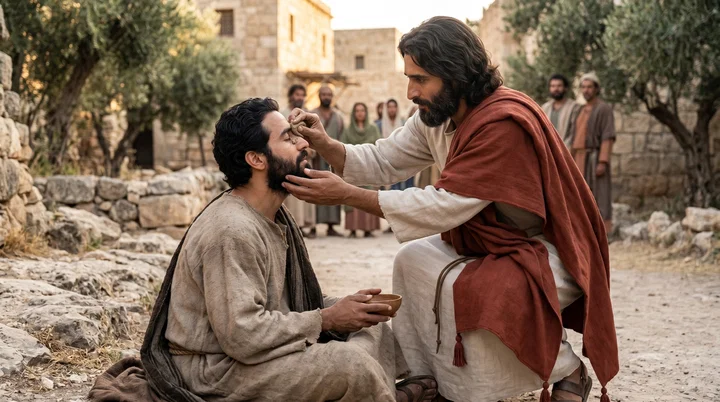
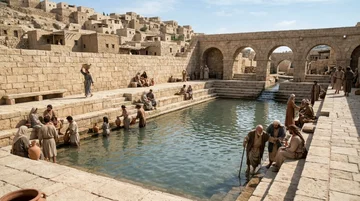
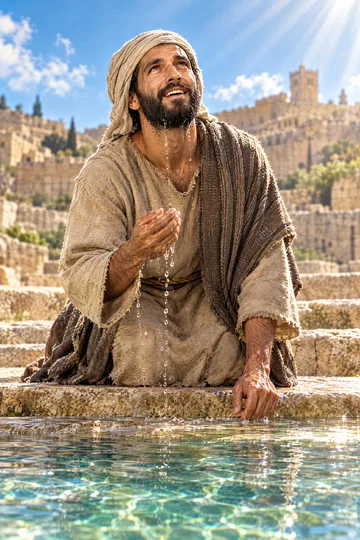
And said unto him, Go, wash in the pool of Siloam, ( which is by interpretation, Sent.) He went his way therefore, and washed, and came seeing.
Translations
And said to him, Go, wash in the pool of Siloam, (which is by interpretation, Sent.) He went his way therefore, and washed, and came seeing.
And said unto him, Go, wash in the pool of Siloam, ( which is by interpretation, Sent.) He went his way therefore, and washed, and came seeing.
and said unto him, Go, wash in the pool of Siloam, (which is by interpretation, Sent.) He went his way therefore, and washed, and came seeing.
And said to him, Go, wash in the pool of Siloam, (which is by interpretation, Sent.) He went therefore, and washed, and came seeing.
Revised Version, American Standard Version
and said unto him, Go, wash in the pool of Siloam ( which is by interpretation, Sent). He went away therefore, and washed, and came seeing.
'Go away, wash at the pool of Siloam,' which is, interpreted, Sent. He went away, therefore, and did wash, and came seeing;
And he said to him, Go, wash in the pool of Siloam, which is interpreted, Sent. He went therefore and washed, and came seeing.
and said unto him—Withdraw! wash in the pool of Siloam,—which is to be translated, Sent. He went away, therefore, and washed, and came, seeing.
Berean Standard Bible, Majority Standard Bible
Then He told him, “ Go, wash in the Pool of Siloam” ( which means “ Sent”). So the man went and washed, and came back seeing.
and said to him, “ Go, wash in the pool of Siloam” ( which means “ Sent”). So he went away, washed, and came back seeing.
And said to him, Go and make yourself clean in the bath of Siloam ( the sense of the name is, Sent). So he went away and, after washing, came back able to see.
And sayd vnto him, Go wash in the poole of Siloam (which is by interpretation, Sent.) He went his way therefore, and washed, and came againe seeing.
Douay-Rheims (Challoner revision)
And said to him: Go, wash in the pool of Siloe, which is interpreted, Sent. He went therefore, and washed, and he came seeing.
Pictures
Cross-references 20 of 22
- 2 Kings 5:10-14
And Elisha sent a messenger unto him, saying, Go and wash in Jordan seven times, and thy flesh shall come again to thee, and thou shalt be clean.
Naaman is told to wash in the Jordan and is healed.
- John 9:25
He answered and said, Whether he be a sinner or no, I know not: one thing I know, that, whereas I was blind, now I see.
The healed man testifies that he was blind and now sees.
- John 9:38
And he said, Lord, I believe. And he worshipped him.
The healed man believes in Jesus and worships him.
- John 9:14
And it was the sabbath day when Jesus made the clay, and opened his eyes.
Jesus heals the blind man on the Sabbath, prompting dispute among the Pharisees.
- John 9:24
Then again called they the man that was blind, and said unto him, Give God the praise: we know that this man is a sinner.
The Pharisees call Jesus a sinner and press the healed man to confess otherwise.
- John 9:11
He answered and said, A man that is called Jesus made clay, and anointed mine eyes, and said unto me, Go to the pool of Siloam, and wash: and I went and washed, and I received sight.
The man recounts washing in Siloam and receiving sight.
- John 9:1-3
And as Jesus passed by, he saw a man which was blind from his birth.
The man’s lifelong blindness becomes the setting for God’s works to be revealed.
- John 9:32-33
Since the world began was it not heard that any man opened the eyes of one that was born blind.
The healed man cites his miraculous sight as evidence that Jesus is from God.
- Mark 8:22-23
And he cometh to Bethsaida; and they bring a blind man unto him, and besought him to touch him.
Jesus uses a physical means to heal a blind man, as at Siloam.
- Revelation 3:18
I counsel thee to buy of me gold tried in the fire, that thou mayest be rich; and white raiment, that thou mayest be clothed, and that the shame of thy nakedness do not appear; and anoint thine eyes with eyesalve, that thou mayest see.
Christ’s offer to anoint blind eyes is illustrated by the blind man receiving sight.
- John 9:21
But by what means he now seeth, we know not; or who hath opened his eyes, we know not: he is of age; ask him: he shall speak for himself.
parents refuse to testify and leave witness to their son
- John 9:16
Therefore said some of the Pharisees, This man is not of God, because he keepeth not the sabbath day. Others said, How can a man that is a sinner do such miracles? And there was a division among them.
The healing prompted Pharisees to accuse Jesus of breaking the Sabbath.
- John 9:34
They answered and said unto him, Thou wast altogether born in sins, and dost thou teach us? And they cast him out.
The religious leaders cast out the man despite his healing.
- John 5:2-9
Now there is at Jerusalem by the sheep market a pool, which is called in the Hebrew tongue Bethesda, having five porches.
Bethesda’s healing pool contrasts with Christ’s cleansing at Siloam.
- John 9:3
Jesus answered, Neither hath this man sinned, nor his parents: but that the works of God should be made manifest in him.
The man’s blindness and healing reveal God’s works.
- John 10:21
Others said, These are not the words of him that hath a devil. Can a devil open the eyes of the blind?
Jesus’ healing of the blind is cited to refute the charge that he has a devil.
- Acts 9:18
And immediately there fell from his eyes as it had been scales: and he received sight forthwith, and arose, and was baptized.
Saul receives sight through Jesus’ power.
- John 11:37
And some of them said, Could not this man, which opened the eyes of the blind, have caused that even this man should not have died?
It recalls Jesus opening a blind man’s eyes.
- Luke 18:35-43
And it came to pass, that as he was come nigh unto Jericho, a certain blind man sat by the way side begging:
Jesus heals a blind man near Jericho.
- Matthew 9:27-30
And when Jesus departed thence, two blind men followed him, crying, and saying, Thou Son of David, have mercy on us.
Jesus heals blind men and restores their sight.
Commentary
Each commentary is drawn from primary sources: the writings of Ellen G. White and Adventist pioneers and periodicals. Each commentary is separate. Its own words are not a quotation; follow the references to read the source passages.
Ellen G. White
13 sources
Jesus laid clay on the eyes of a man blind from birth and sent him to wash in the pool of Siloam, which means Sent, and the man obeyed and came back seeing.GW 221.1DA 824.1CH 30.3DA 463DA 470.1–471.3 The clay and the water had no healing virtue in themselves; the cure came by Christ's power and mercy.GW 221.1DA 824.1CH 30.3 His blindness was not proof that he or his parents had sinned, but was made the occasion for God's works to be revealed in him as the light of the world bringing relief to those in darkness and suffering.DA 470.1–471.3ST Jul 19, 1905 The healing stands as convincing proof of Christ's divine mission and exposes the spiritual blindness and prejudice of those who refused to believe. It shows His tender compassion in seeking and saving a despised sufferer who did not yet know Him, until the man learned Him as the Son of God and worshiped Him.ST Nov 20, 1893ST May 8, 1907Lt 20, 1895, par. 1
Event and Setting
Jesus spread clay upon the blind man's eyes and told him to go wash in the pool of Siloam, and the man went his way, washed, and came back seeing.GW 221.1DA 824.1CH 30.3MH 233.1DA 470.1–471.3 The command required obedience at a distance, for he was sent to the pool to wash after the anointing rather than being healed on the spot.GW 221.1DA 824.1MH 233.1DA 463DA 470.1–471.3 The name Siloam means by interpretation Sent.DA 463DA 470.1–471.3
The man healed in this way had been blind from birth.DA 470.1–471.314MR 22.5Lt 20, 1895, par. 1 Jesus healed him as He was leaving the temple after declaring His divine identity.DA 470.1–471.314MR 22.5 He performed this healing on the Sabbath, and for that reason it became a point of dispute.DA 471.4–6
Divine Power and Purpose
The clay placed on the blind man's eyes and the water of the pool of Siloam where he was sent to wash possessed no curative virtue in themselves.GW 221.1DA 824.1MH 233.1DA 470.1–471.3Ms 18, 1898, par. 12 The cure came wholly through Christ's own power and mercy, exercised when the man obeyed the command to go and wash and returned seeing.GW 221.1DA 824.1CH 30.3MH 233.1DA 470.1–471.3 The anointing and washing were simple, natural means employed in the healing, while the instantaneous restoration of sight was wrought by the power of the Great Healer.GW 221.1DA 824.1CH 30.3MH 233.1Ms 18, 1898, par. 12
His blindness from birth was not proof that he or his parents had sinned, but became the occasion for God's works to be made manifest in him.DA 470.1–471.3 In healing him Christ revealed Himself as the light of the world, bringing sight to one in darkness.DA 470.1–471.3 That same relief of one in darkness and suffering reflects the Creator's work of redemption and restoration.DA 470.1–471.3ST Jul 19, 1905
The giving of sight in this way stands as convincing evidence of Christ's divine mission. The testimony of the healed man to what had been done for him laid bare the spiritual blindness and prejudice of the Pharisees who opposed Him.
Compassion and Healing Practice
The healing is an act of tender compassion for human suffering, seeking and saving a poor man who did not yet know his Healer.ST Nov 20, 1893ST May 8, 1907Lt 20, 1895, par. 1 He was among those whom the self-righteous Pharisees despised and treated with contempt, yet the compassionate Shepherd sought him out to restore his sight and save him.ST Nov 20, 1893ST May 8, 1907 The Lord was anxious to save such a despised wanderer, and His care reached one whom others counted unworthy.ST Nov 20, 1893ST May 8, 1907 The man learned who had healed him only afterward, when Jesus revealed Himself to him as the Son of God, and then he worshiped Him.Lt 20, 1895, par. 1
Christ anointed the blind man's eyes with clay and told him to go wash in the pool of Siloam, and the man obeyed and came back seeing.GW 221.1DA 824.1MH 233.1 The clay and the washing had no healing virtue in themselves, for the cure came instantaneously through Christ's power and the Great Healer's mercy, while the clay and water were simple, natural means He chose to use.GW 221.1DA 824.1CH 30.3MH 233.1Ms 18, 1898, par. 12 His use of such simple means supports the use of simple, natural remedies.GW 221.1DA 824.1MH 233.1 The obedience that brought sight illustrates that natural remedies may be used without relying on drug medication.CH 30.3 It also supports treating the delicate eyes with care and not applying drug remedies to them.Ms 18, 1898, par. 12
Sources
Pioneers and periodicals
92 sources
Jesus spread clay on the eyes of a man blind from birth and told him to go wash in the pool of Siloam, which means Sent, and the man went, washed, and came back seeing.ST Feb 22, 1899ST Feb 22, 1899RH Feb 11, 1862RH May 5, 1874RH Aug 27, 1901 Neither the clay nor the water had healing power in itself, but the power was in Christ alone answering faith, for His word gave sight.ST Oct 23, 1893ST Aug 8, 1900ST Oct 2, 1901ST Mar 8, 1905 The command was a test of faith that gave the man his part to do, and the blessing came only by doing exactly what was said, since washing elsewhere would have left him unhealed.ST Oct 2, 1901ST Mar 8, 1905RH Jul 20, 1876ST Sep 13, 1905RH Feb 23, 1905 Done on the Sabbath, the healing was a merciful act worthy of the day and not a breaking of it, relieving suffering and honoring God.RH Feb 11, 1862ST Jul 8, 1897RH May 5, 1874 The movement from blindness to sight pictures a sinner's passage from darkness to light, and Siloam, meaning Sent, points to Jesus the Sent One who opens blind eyes to see.ST Aug 8, 1900ST Jun 24, 1886ST Mar 8, 1905ST Mar 8, 1905ST May 16, 1911
Narrative and Setting
The verse belongs to the healing of a man blind from birth whose blindness was well attested.ST Mar 15, 1905 He was a poor beggar who had never seen the light of day or the beauties of creation and nature, who had never looked on his friends nor seen his mother's face.RH Nov 13, 1860ST May 16, 1911RH Jun 13, 1871 He sat begging in the porch of the temple, had never seen Jesus and knew Him only by name, and could not see Him making the clay.ST Dec 22, 1881RH Nov 13, 1860 Jesus first anointed the blind eyes with clay made with spittle, an outward ceremony the man afterward described simply as making clay and spreading it on his eyes.ST Dec 22, 1881RH May 5, 1874ST Nov 26, 1896 He then sent him to go and wash in the pool of Siloam in Jerusalem, and the man went, washed, and came back seeing.RH Feb 11, 1862RH Aug 27, 1901ST Nov 26, 1896ST May 17, 1905 This healing took place on the Sabbath through Christ's power in response to the man's faith and obedience.RH Feb 11, 1862RH Mar 30, 1876ST May 17, 1905
Siloam by interpretation means Sent.ST Feb 22, 1899ST Aug 8, 1900ST Feb 22, 1899ST Mar 8, 1905ST Nov 11, 1897 The man obeyed the command to wash there and returned able to see, receiving his sight.ST Feb 22, 1899ST Aug 8, 1900ST Feb 22, 1899ST Mar 8, 1905ST Mar 4, 1889 The pool of Siloam was one of the pools, cisterns, and reservoirs around Jerusalem that gave the city an abundant supply of water with full conveniences for its use.ST Apr 19, 1883 It was about fifty-three feet long and eighteen feet wide with water two or three feet deep despite partial damage.ST Mar 16, 1876 Washing there was a common habit together with stepping or being carried into Bethesda, and such pools show there was ample water and place for immersion when the three thousand were baptized.ST Apr 19, 1883 Baptisms around Jerusalem were performed in such pools because there are no running streams in that vicinity all the year round except channels formed for supplying the city with water, and baptism in a pool is as truly baptism as in a river, lake, or sea.
The healing took place on the Sabbath, provoked controversy and persecution, and divided the people with many believing.ST Mar 15, 1905ST May 19, 1909 It led to hostile semi-official examination that only established its reality beyond doubt.ST Dec 3, 1896 The healed man confessed Jesus as the Christ and as his Healer, and was cast out of the synagogue for believing.RH Oct 8, 1908ST Oct 18, 1905ST Feb 25, 1897 His lifelong blindness was not punishment for his own sin or his parents' sin but happened in the ordinary course of divine providence so that God's works might be made manifest in him and God's power, mercy, and compassion displayed.ST Oct 23, 1893ST Dec 22, 1881RH Jan 30, 1872 His suffering did not atone for sin but could lead him to Christ who heals body and soul, and the miracle with its circumstances is a most interesting, instructive, and profitable lesson to be carefully studied for salvation, edification, and the glory of God.ST Mar 8, 1899ST Dec 22, 1881
Faith and Obedience
The command to go and wash was a test of faith that gave the man a part in the healing and joined his effort with Jesus' word.ST Oct 2, 1901ST Mar 8, 1905ST Sep 13, 1905ST Feb 22, 1899 Neither the clay nor the washing as an ordinary remedy could heal, and the pool and washing did not supply or supplement the healing power, but God's power in His word answering faith in that word brought healing.ST Mar 8, 1905ST Sep 13, 1905ST Feb 22, 1899 The man's obedience showed his faith, and showed greater faith than that of the onlookers who regarded his blindness as God's judgment.ST Oct 2, 1901ST Feb 22, 1899 The clay had no healing power of its own, though it may have encouraged him to go and wash, while Siloam means sent and the pool symbolized Jesus, who was sent into the world to do God's work.ST Mar 8, 1905ST Sep 13, 1905
Jesus first gave the man reason to trust and then told him to act, giving him the chance to exercise that faith.ST Aug 8, 1900 The clay and water had no healing power in themselves but were means of awakening and strengthening his faith, and the action served to let faith live and grow.ST Aug 8, 1900ST Sep 13, 1905 The healing was a process that succeeds and illustrates faith growing one step at a time, with washing followed by sight.ST Aug 8, 1900ST Mar 8, 1905 It brought healing and sight that the man knew from experience even though he could not explain how touch and washing brought it about, and faith in this way brings healing and restores sight.ST Mar 8, 1905
Salvation requires voluntary cooperation with Jesus in saving what was lost, for the man born blind pictures the natural condition of all people.ST Mar 11, 1897 Jesus did His part by making clay and anointing the blind eyes, but the man had to do his part by going and washing, and through that obedience he came seeing.ST Mar 11, 1897ST Aug 12, 1889 No one is saved without willingly uniting with Jesus, and it is a privilege to cooperate with Him in the great plan of salvation, so that obedience to His instruction was necessary for receiving the blessing.ST Mar 11, 1897ST Aug 12, 1889 The washing was a means provided before the healing that had to be used, and refusing the provided means would have left him unhealed.ST Feb 11, 1886ST Feb 11, 1886 Using an available remedy is consistent with faith, while expecting healing after refusing such means is presumption.ST Feb 11, 1886
The blessing came only through doing exactly what was said without replacing it with another action.RH Jul 20, 1876RH Feb 23, 1905 Siloam had no natural virtue above other pools, and Bethesda could seem better because its waters were troubled and many had been healed there and it was more convenient, but washing in Bethesda instead of Siloam would have left him unhealed simply because he did not obey the specific command.RH Jul 20, 1876 Following the specific instruction mattered, for he could not replace washing with another action and presume the same result.RH Jul 20, 1876RH Feb 23, 1905 The act was a response to Jesus' word, not a healing power in the act itself, and substituting human reasoning, convenience, or a seemingly better way is disobedience that forfeits the blessing, just as substituting another day for the rest-day God specified forfeits His approbation.RH Jul 20, 1876RH Feb 23, 1905
Power and Means of Healing
The clay spread on the eyes and the water of Siloam had no healing virtue in themselves and neither supplied nor supplemented the healing power.ST Oct 23, 1893ST Aug 8, 1900ST Mar 8, 1905ST Sep 13, 1905 Sight came by the word of Jesus in answer to obedience, and by giving sight He became literally the light of day to the man, showing that light and life depend on Christ and that the healing virtue was in Christ alone.ST Oct 23, 1893ST Aug 8, 1900ST Mar 8, 1905ST Sep 13, 1905 The outward acts served to awaken and strengthen faith, giving the man a part in the healing by joining his effort to Jesus' word and letting faith live and grow.ST Aug 8, 1900ST Mar 8, 1905ST Sep 13, 1905 Jesus first gave reason to trust and then gave the chance to act, and the washing followed by sight graciously helps belief and encourages hope and confidence, while cleansing sinners and healing both bodily and spiritual blindness.ST Aug 8, 1900ST Sep 13, 1905
Giving sight to one born blind was a creative act displaying divine power and the direct energy of Jehovah, establishing Jesus' divine authority and showing Him to be a prophet.ST Jun 14, 1905 It is convincing evidence of His divine mission and of His identity as the promised Deliverer, confirmed by acts of mercy and by the opening of blind eyes.ST Feb 22, 1899RH Dec 8, 1859RH Nov 25, 1902 It proved He was not possessed with a devil and was not mad, for healing as re-creation can be wrought only by divine power creating anew, and is miraculous power from God.ST Jun 14, 1905 The restored light of day became personal evidence of that power in the healed man's testimony, which exposed spiritual blindness and prejudice.ST Jun 14, 1905
Christ's manner of healing is designed to teach valuable lessons for all time, for He could have healed without salve or water and can heal even one sick unto death from a distance.RH Jun 15, 1916ST Nov 29, 1910 Yet He used these simple agencies of nature within the reach of all to call attention to remedies often ignored, to meet weak faith, and to show that God can accomplish His purpose through means that seem poorly suited to it.RH Jun 15, 1916ST Nov 29, 1910ST Jul 29, 1886 He deals with different people in different ways and never works the same twice, and He blesses weak and simple things to open eyes through humble instrumentalities, as the whole way of salvation itself is extremely simple.ST Nov 29, 1910RH Apr 28, 1874ST Jul 29, 1886
By using a clay ointment and a bath in Siloam though He could have healed without these treatments, He sanctioned the use of suitable, simple remedies and remedial agencies.RH Dec 7, 1916RH Jun 15, 1916ST Sep 21, 1915 Everything human hands can do in sickness should be done and every agency of value employed, for healing may involve a practical action alongside divine power and God is not limited to one method.RH Dec 7, 1916RH Nov 30, 1916RH Jun 15, 1916ST Dec 23, 1913 It is no denial of faith to make use of these agencies, for faith is shown by works, and their use joined with divine power is sanctioned even when they have no curative quality in themselves.RH Jun 15, 1916 Jesus sometimes used this intermediate or indirect method, covering the eyes with an ointment of clay and sending the man to wash, and the clay possessed real medicinal value and restorative virtue, for He performs no senseless service.ST Jun 26, 1884ST Mar 31, 1898 A cure wrought through the employment of agencies is as truly a manifestation of divine power as a cure wrought directly, and so it forever settles that it is right in combating disease to employ means and agencies.ST Jun 26, 1884ST Mar 31, 1898
The healed man came to see, to walk firmly instead of with uncertain steps, radiant with new happiness and shouting praise to God. His healing is a mighty miracle proving Jesus of Nazareth is the Christ of God, leading some witnesses to believe and testify boldly while others reject it and plot His overthrow.
Sabbath Mercy and Law
The sending to wash in Siloam and the giving of sight that followed took place on the Sabbath, and it was a merciful act worthy of the Sabbath and its Lord, not a violation of the Sabbath.RH Feb 11, 1862RH May 5, 1874ST Sep 18, 1884 It relieved suffering and honored God, and it was not done carelessly or irreverently.RH May 5, 1874 It joined temple worship with helpful ministry. As such it refutes the charge that Jesus violated the Sabbath.RH May 5, 1874ST Sep 18, 1884
He healed on the Sabbath day in order to bring the question of proper Sabbath observance into prominence.ST Jul 8, 1897ST Sep 15, 1909 The act taught that works of necessity and mercy are more important than all the narrow traditions invented by selfish men. Sabbath-keeping is revealing God's idea of the Sabbath rather than conforming to the traditions of men, and Christ refused to be governed by human traditions about Sabbath observance.ST Jul 8, 1897 In this way He made the day an occasion for a merciful work and corrected false restrictions on what was lawful to do.ST Sep 15, 1909
The command was given on the Sabbath and fulfilled a double purpose of mercy: opening blind eyes and rebuking the Pharisees, whose superstitious exactions had made God's holy day a burden when God meant it to be holy, honorable, and a delight.ST May 22, 1901 It belonged to His work of taking human infirmities and destroying sin with all its physical and moral effects.ST May 22, 1901 It was one of the miracles around which the whole controversy gathered, chosen to raise the question of what is lawful to do on the Sabbath day and what constitutes proper Sabbath-keeping.ST Aug 20, 1896 God's work never ceases but is even greater upon the Sabbath, when His people leave usual employments and ask more favors, demand His special attention, crave His choicest blessings, and offer importunate prayers, and God does not wait for the Sabbath to pass before granting what is best; Heaven's work never ceases for a moment, and men should never rest from doing good.ST Aug 20, 1896 The Sabbath had become a curse through added human requirements, and Christ's act strips away those encumbrances to leave it standing upon its own holy dignity and to denounce narrow prejudice, restrictions, bigotry and traditions; the Son of man is Lord also of the Sabbath, and what He did on that day was in itself Sabbath-keeping.ST Aug 20, 1896 The healing set aside the Pharisees' mode of Sabbath-keeping while removing nothing of the sanctity of the seventh day, and it did not destroy one jot or one tittle of the law.
Jesus healed at once rather than waiting for the Sabbath to end, although the man's life was not in danger and he did not expect to be healed.ST Nov 11, 1897 He knew that healing the diseased on the Sabbath would be regarded as a breach of divine law, would shock the Pharisees, would run counter to the convictions of the great mass of the community, and would provoke the rulers.ST Nov 11, 1897ST Apr 14, 1881 No applications were made to Him, and much as they desired the benefit, the people shrank from bringing their diseased to be cured on the holy day, so He had only to do nothing to meet their prejudices.ST Apr 14, 1881 He did not choose to be silent and acquiescent but deliberately healed on the Sabbath.ST Apr 14, 1881
For that reason alone the Pharisees charged that He was not of God and was a sinner.ST Jul 8, 1897 They treated the work as Sabbath breaking. That work divided the people, and many believed. Yet the washing was part of the healing, not a violation of the Sabbath, and the claim that He could simply have said See instead is raised as an accusation, not affirmed.
Christ did nothing contrary to the law when He healed at Siloam on the Sabbath, but loosed and gave life to believers, with other cures on frequent Sabbaths afterward, so that many resorted to Him on Sabbath days. The law did not prohibit healing on the Sabbath. It commanded abstinence from every servile work, meaning all grasping after wealth by trading and other worldly business, while it exhorted attention to exercises of the soul in reflection and beneficial words for a neighbor. He did not make void but fulfilled the law by doing the work of the high priest, propitiating God for men, cleansing lepers, healing the sick, and suffering death so exiled man might go free from condemnation and return without fear to his inheritance.
Spiritual Sight and Symbolism
The passage from blindness to sight pictures a sinner's passage from the darkness of sin and ignorance to the light of Christian hope.ST Mar 8, 1905 That outward healing marked the beginning of spiritual sight, through which the man came to recognize and worship Christ.ST May 16, 1911 Christ brings healing for both bodily and spiritual blindness, cleansing sinners and making them see.ST Aug 8, 1900
Jesus as the great Physician extends His healing hand to men blinded by sin, a blindness into which all are born.ST Nov 11, 1913 Since light is seen and not heard or felt, blind sinners cannot save themselves, yet they may feel after Him. He waits to recognize the touch of faith and to open their eyes so they can see the light of life. This brings encouragement that anyone who has not yet found Him can find Him now.
The same work He did for the physically blind He does for the spiritually blind who come to Him, giving a heavenly anointing that heals defective moral vision.ST Apr 16, 1896 His creative power can open eyes blinded by sin, and without His touch none can recognize the beauty of God's works, the righteousness of God, and the humility and self-sacrifice of Christ.ST May 17, 1905 With anointed eyes they see light in God's light, know Christ as the light of the world, and discern moral worth by His light.ST Apr 16, 1896 They know His word as lamp and light to the path and His prophecies as light in a dark place, and with an eye single to God's glory they let in God's light and become children of light.ST Apr 16, 1896
Washing in Siloam is spiritual sight: the pool represents God's Word, whose truth enlightens those blinded by sin, error, and tradition.ST Apr 30, 1912 Washing means receiving that truth so it can free mind and spirit from error and from being controlled by creeds, confessions, loyalty to leaders, and church-building.ST Apr 30, 1912 As the Spirit's sword cuts through darkness, God's power enlightens the eyes and the Savior's works become manifest.ST Apr 30, 1912 Siloam is the hidden fountain sought by one sick with sin and sorrow and blind with the dust of years, and when the spring of truth is opened its water brings healing and an end to thirst.ST Jun 3, 1875
Siloam by interpretation means Sent, and points to Jesus the Sent One and Fountain of Life.ST Aug 8, 1900ST Mar 8, 1905 Its name recalled the water God sent in the wilderness and pointed to the true water of life sent into the world.ST Nov 26, 1896 Its water drawn during the Feast of Tabernacles symbolized the Spirit's outpouring of new life, while the healing itself pictures Christ restoring life and overcoming evil.ST Jun 24, 1886 The pool thus symbolized Jesus, who was sent into the world to do God's work, and the healing reflects the Creator's work of redemption and restoration.ST Jun 24, 1886ST Mar 8, 1905
The healing illustrates Christ's remedy for Laodicea's spiritual blindness, wrought by the power of God's Spirit.ST Jan 21, 1903 He would give spiritual sight so people could recognize the smallness of earthly things and the greatness of eternal things.ST Jan 21, 1903 Those whose eyes He opens come to see Him as the Lamb of God and perceive spiritual realities they had not understood before.RH Nov 6, 1860
Scripture Parallels and Application
God demands obedient action that tests faith without giving human reason apart from the conviction carried by the message itself. The command to wash in the pool of Siloam had no rational advantage over any other water, so asking why that pool was required is human reason questioning God. God gives general evidence sufficient for confidence in Him, but this particular command called for trust and obedience, standing with Jonah's message to Nineveh, Naaman's sevenfold dipping in Jordan, and the requirement to keep the seventh day rather than any other day as the weekly day of rest.
God is the same yesterday, today, and forever and is jealous for His honor, so when He speaks man must obey without changing or substituting.RH Jul 20, 1876 Christ anointed the blind man's eyes and commanded him to go wash in the pool of Siloam in particular, and he went and washed and came seeing because he obeyed that specific command.RH Jul 20, 1876RH Jul 20, 1876 Siloam had no natural virtue above other pools, and Bethesda could seem better because its waters were troubled and many had been healed there and it was more convenient, but washing in Bethesda instead of Siloam would have left him unhealed simply because he did not obey.RH Jul 20, 1876 God's healing and blessing come only through doing exactly what He says, and substituting human reasoning, convenience, or a seemingly better way is disobedience that forfeits the blessing, just as substituting another day for the rest-day God specified forfeits His approbation.RH Jul 20, 1876 When God commands keeping His rest-day, the seventh day set apart by His blessing, man may not keep the first day instead because it is more convenient, for to do so is like washing in another pool or dipping in another river, setting up human will in opposition to God's will instead of praying for God's will to be done.RH Jul 20, 1876
The healing of the man born blind is a picture of receiving light on the fourth commandment.ST Apr 21, 1881 Lifelong physical blindness until Jesus opened his eyes means spiritual blindness on the Sabbath until the third angel's message brings the commandments of God and the faith of Jesus.ST Apr 21, 1881 The change from blindness to sight gives the testimony whereas I was blind now I see applied to the Sabbath question, calls for openly acknowledging Christ in present truth, and calls for going forward rejoicing even when cut off by the church, leaving timid parents and opposing influences behind and leaning on Christ while counted worthy to suffer shame for His name.ST Apr 21, 1881 Siloam's stream cannot cleanse the deeper leprosy of sin; Jesus' blood alone washes away guilt and filth, and the soul is urged to remain close to this fountain of redeeming love.RH Jan 21, 1858
The account demonstrates Christ's power to heal and to forgive sins.ST Apr 10, 1893RH Apr 7, 1903ST Sep 28, 1904ST Aug 20, 1902 Jesus healing the person born blind by directing him to wash in Siloam, and after he obeyed he came back able to see, leads the healed person to trust and worship Him.ST Apr 10, 1893 The same pattern has been seen in a blind woman who washed after praying to Jesus and trusting Him to heal her as He had healed the man, making clay, washing, and trusting Jesus, and reported that her sight was restored.ST Sep 28, 1904RH Apr 7, 1903ST Aug 20, 1902 Her experience led her to believe in Him and praise Him as her healer and forgiver, showing trust in Him is not to be replaced by reliance on another support.ST Apr 10, 1893ST Aug 20, 1902RH Apr 7, 1903ST Aug 20, 1902
The healed man represents the true follower who with undaunted courage confesses his Healer before frowning religious leaders even at the cost of excommunication and being forsaken by father and mother.ST May 16, 1911 The command was given on the Sabbath and fulfilled a double purpose of mercy, and the Sabbath healing intensified bitter hatred and brought persecution not only against Jesus but against any who confessed that He was Christ, and this gave the healed man opportunity to show unusual faith and courage, declaring that whereas he was blind now he saw and that Jesus must be of God, even braving excommunication.ST May 22, 1901 His parents from fear of being disfellowshiped would only admit he was their son born blind and leave him to speak for himself, while he became a faithful follower despite being cast out of the synagogue, and Christ then sought him out so that he believed on Him and worshiped Him.ST May 16, 1911ST Oct 2, 1901 Refusing to acknowledge Jesus and His power to heal rather than displease religious leaders and be put out of the synagogue is fearing and serving men instead of fearing and obeying God, rejecting the one on whom eternal life depends.ST Nov 19, 1896
Jesus saw and helped one of the people most in need and often passed by as hopeless, a blind beggar and object of ministry to the poor.ST Feb 21, 1906ST Jun 14, 1905ST Aug 28, 1901 He was among the people the self-righteous Pharisees despised, yet the compassionate Shepherd compassionately sought and saved him, anxious to save him.ST Nov 20, 1893ST May 8, 1907 After the healed man was cast out and persecuted by men, Jesus returned and sought him out with personal care and taught him privately the highest truths of His Messiahship.RH Nov 13, 1860 His need called for work, and seeing a person in need is a sacred opportunity to act personally, lead people to Jesus, and not let distractions or delay lose a providentially brought occasion.ST Aug 28, 1901 His healing shows the Shepherd's care and the hope grace brings to the hopeless.ST Nov 20, 1893ST May 8, 1907RH Nov 13, 1860
The man's restored sight gives certainty of changed experience like knowing one was blind and now sees, illustrating how a person can be certain of acceptance with Christ.ST Nov 11, 1913RH Nov 9, 1911 The miracle was recorded to give doubting and hesitant people hope and assurance, for God graciously helps people believe His word, and the written account encourages hope and confidence.ST Aug 8, 1900ST Nov 11, 1913 The clay and water had no healing power in themselves but were means of awakening and strengthening faith, for Jesus first gave reason to trust then told him to act, giving him the chance to exercise that faith, and his washing was followed by sight.ST Aug 8, 1900 Physically following the route to Siloam does not itself give a person spiritual virtue or better standing with Heaven.ST Feb 16, 1915 An invalid who cannot draw water there can still be refreshed by the Living Fountain, stand in the light of the world, and serve others, showing physical helplessness does not prevent spiritual refreshment.ST Jul 31, 1884
Christ's opening of blind eyes reflects the Creator's work of redemption and restoration and brings relief to people in darkness and suffering as they obey His direction.ST Jul 19, 1905 This miracle is one example of His power to heal, set against His loving willingness to offer Himself on the cross.RH Jun 11, 1914
Sources