Genesis 15:2
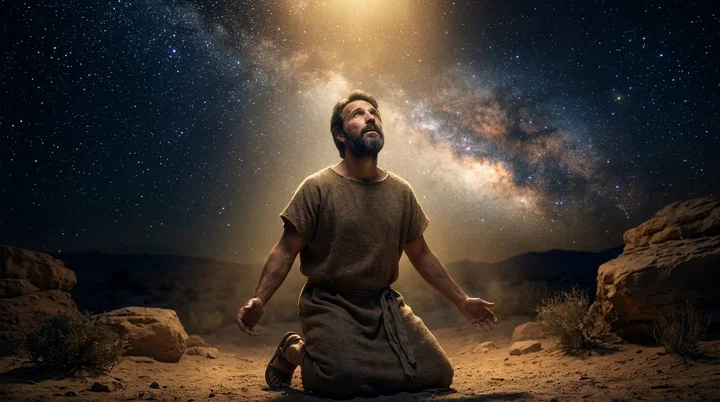
And Abram said, Lord GOD, what wilt thou give me, seeing I go childless, and the steward of my house is this Eliezer of Damascus?
Translations
And Abram said, LORD God, what will you give me, seeing I go childless, and the steward of my house is this Eliezer of Damascus?
And Abram said, Lord GOD, what wilt thou give me, seeing I go childless, and the steward of my house is this Eliezer of Damascus?
And Abram said, Lord God, what wilt thou give me, seeing I go childless, and the steward of my house is this Eliezer of Damascus?
And Abram said, LORD God, what wilt thou give me, seeing I go childless, and the steward of my house is this Eliezer of Damascus?
And Abram said, O Lord GOD, what wilt thou give me, seeing I go childless, and he that shall be possessor of my house is Dammesek Eliezer?
And Abram said, O Lord Jehovah, what wilt thou give me, seeing I go childless, and he that shall be possessor of my house is Eliezer of Damascus?
And Abram saith, 'Lord Jehovah, what dost Thou give to me, and I am going childless? and an acquired son in my house is Demmesek Eliezer.'
And Abram said, Lord Jehovah, what wilt thou give me? seeing I go childless, and the steward of my house is this Eliezer of Damascus.
And Abram said My Lord Yahweh, what canst thou give me, when, I, am going on childless,—and the heir of my house, is Eliezer, of Damascus,
Berean Standard Bible, Majority Standard Bible
But Abram replied, “ O Lord GOD, what can You give me, since I remain childless, and the heir of my house is Eliezer of Damascus?”
Abram said, “ Lord GOD, what will you give me, since I go childless, and he who will inherit my estate is Eliezer of Damascus?”
And Abram said, What will you give me? for I have no child and this Eliezer of Damascus will have all my wealth after me.
And Abram said, O Lord God, what wilt thou giue me, seeing I goe childlesse, and the steward of mine house is this Eliezer of Damascus?
Douay-Rheims (Challoner revision)
And Abram said: Lord God, what wilt thou give me? I shall go without children: and the son of the steward of my house is this Damascus Eliezer.
Pictures
Cross-references 20 of 40
- Genesis 16:1-4
Now Sarai Abram’s wife bare him no children: and she had an handmaid, an Egyptian, whose name was Hagar.
Sarai and Abram seek an heir through Hagar instead of waiting for the promised son.
- Genesis 13:14-16
And the LORD said unto Abram, after that Lot was separated from him, Lift up now thine eyes, and look from the place where thou art northward, and southward, and eastward, and westward:
The land and numerous descendants were promised, prompting Abram’s question about an heir.
- Genesis 21:1-3
And the LORD visited Sarah as he had said, and the LORD did unto Sarah as he had spoken.
Isaac is born as the child God promised Abraham.
- Genesis 15:13-16
And he said unto Abram, Know of a surety that thy seed shall be a stranger in a land that is not theirs, and shall serve them; and they shall afflict them four hundred years;
God foretells Abraham’s descendants’ affliction, deliverance, return, and his peaceful death.
- Romans 4:13
For the promise, that he should be the heir of the world, was not to Abraham, or to his seed, through the law, but through the righteousness of faith.
Abraham’s promised inheritance comes through faith, not the law.
- Genesis 15:17-18
And it came to pass, that, when the sun went down, and it was dark, behold a smoking furnace, and a burning lamp that passed between those pieces.
The divided sacrifice and divine lamp mark God’s covenant and confirm the land promise.
- Genesis 12:2-3
And I will make of thee a great nation, and I will bless thee, and make thy name great; and thou shalt be a blessing:
God promised Abram descendants and blessing for the earth.
- Nehemiah 9:8
And foundest his heart faithful before thee, and madest a covenant with him to give the land of the Canaanites, the Hittites, the Amorites, and the Perizzites, and the Jebusites, and the Girgashites, to give it, I say, to his seed, and hast performed thy words; for thou art righteous:
God’s covenant promised Canaan to Abraham’s descendants and affirmed his word.
- Galatians 3:29
And if ye be Christ’s, then are ye Abraham’s seed, and heirs according to the promise.
Those who belong to Christ are Abraham’s seed and heirs of the promise.
- Genesis 17:1-14
And when Abram was ninety years old and nine, the LORD appeared to Abram, and said unto him, I am the Almighty God; walk before me, and be thou perfect.
Continues the Abraham readings assigned for the week.
- Genesis 15:6
And he believed in the LORD; and he counted it to him for righteousness.
Abram believes the Lord’s promise, and his faith is counted as righteousness.
- Genesis 22:2
And he said, Take now thy son, thine only son Isaac, whom thou lovest, and get thee into the land of Moriah; and offer him there for a burnt offering upon one of the mountains which I will tell thee of.
The command to offer Isaac threatened the promise’s fulfillment through the promised heir.
- Acts 7:5
And he gave him none inheritance in it, no, not so much as to set his foot on: yet he promised that he would give it to him for a possession, and to his seed after him, when as yet he had no child.
The land was promised to Abraham and his seed when he had no child.
- Genesis 15:18
In the same day the LORD made a covenant with Abram, saying, Unto thy seed have I given this land, from the river of Egypt unto the great river, the river Euphrates:
God confirmed the land promise to Abram’s seed in a covenant.
- Genesis 15:9-11
And he said unto him, Take me an heifer of three years old, and a she goat of three years old, and a ram of three years old, and a turtledove, and a young pigeon.
Abraham prepares the covenant sacrifice and watches over it.
- Hebrews 11:8-10
By faith Abraham, when he was called to go out into a place which he should after receive for an inheritance, obeyed; and he went out, not knowing whither he went.
Abraham trusted God’s promise and looked ahead to what God would provide.
- Galatians 4:22-23
For it is written, that Abraham had two sons, the one by a bondmaid, the other by a freewoman.
Contrasts Abraham’s son born through human effort with the son born by promise.
- Genesis 17:16
And I will bless her, and give thee a son also of her: yea, I will bless her, and she shall be a mother of nations; kings of people shall be of her.
God says Sarah will bear the promised son.
- Galatians 3:16
Now to Abraham and his seed were the promises made. He saith not, And to seeds, as of many; but as of one, And to thy seed, which is Christ.
Identifies Christ as the seed to whom the promises were made.
- Romans 4:3
For what saith the scripture? Abraham believed God, and it was counted unto him for righteousness.
Abram’s belief in God’s promise is counted to him as righteousness.
Commentary
Each commentary is drawn from primary sources: the writings of Ellen G. White and Adventist pioneers and periodicals. Each commentary is separate. Its own words are not a quotation; follow the references to read the source passages.
Ellen G. White
4 sources
Abram was distressed and troubled that he remained childless with no child to inherit, and no child to inherit God's promise.ST Mar 27, 1879SG3 100.2–3PP 136.1–31SP 95.2–3 He asked God what He would give him while he remained in that childless state.ST Mar 27, 1879PP 136.1–3 The one standing to inherit his household and possessions was Eliezer of Damascus, the steward and trusted servant of his house.ST Mar 27, 1879SG3 100.2–3PP 136.1–3
Abram expected that Eliezer might become his heir.ST Mar 27, 1879SG3 100.2–3PP 136.1–3 He proposed that Eliezer become his heir by adoption.SG3 100.2–3PP 136.1–3 God answered that Eliezer would not be his heir, because Abram would have a son of his own who would be his heir.ST Mar 27, 1879SG3 100.2–3PP 136.1–3
The promise of a son tested whether Abram would trust God's power.1SP 95.2–3 Turning to Hagar to bring the promise about, by taking her as a wife, showed that Abraham and Sarah did not fully trust it.1SP 95.2–3
Sources
Pioneers and periodicals
45 sources
Abram, now old and still childless years after the seed was first promised, asks what God will give him when his steward Eliezer of Damascus, born in his house, stands as his apparent heir.ST Mar 27, 1879ST Feb 10, 1898RH Jun 5, 1900 God answers that Eliezer shall not be heir, but one coming forth out of his own body, his own flesh-and-bone offspring and not an adopted child.ST Mar 27, 1879ST Feb 10, 1898ST Sep 8, 1898 Though the son is not yet visible, Abram believes the promise of descendants as the stars, and God counts his faith to him for righteousness.RH Jun 5, 1900ST Jan 26, 1915RH Sep 14, 1911 The assurance belongs to the covenant in which God pledges the land to Abram's seed and confirms it by the smoking furnace and burning lamp, pledging His own life in the everlasting covenant in Christ.RH Jun 5, 1900RH Oct 25, 1853ST Feb 1, 1899 That covenant of promise to Abraham and his seed is Christ the promised Seed, bringing blessing to all families of the earth and an inheritance kept for the spiritual seed who share Abraham's faith, whether Jew or Gentile.RH Jun 5, 1900ST Dec 20, 1910RH Dec 11, 1866
Vision Setting and Terms
The setting is a night conversation in which Abram is brought outside to see the stars, given in vision concerning his descendants after his victory over the five kings.ST Jun 29, 1876RH Nov 2, 1869RH Aug 3, 1916 It is one of the Lord's appearances to Abraham in which the special promise made and confirmed to Abraham, Isaac and Jacob was given, with God speaking directly about heir and inheritance.ST Aug 21, 1879ST Dec 15, 1898ST Jul 16, 1902 In it Abraham asks for a token that he would actually inherit the land, and God answers by bidding him offer a certain sacrifice.ST Jun 29, 1876RH Nov 2, 1869ST Aug 21, 1879 When the vision ends he at once prepares and offers the sacrifice, and with no sign of acceptance at first he does not grow weary, say his action availed nothing, or give up in discouragement.ST Jun 29, 1876RH Nov 2, 1869 He watches the sacrifice the whole livelong day until the going down of the sun, when the desired token is granted, because what was entered upon was worth all it could cost and was sure to bring the wished-for result if waited long enough for the hand of God to appear.ST Jun 29, 1876RH Nov 2, 1869
The account belongs to God's call to Abram and his sojourn and trials of faith, with constant and remarkable evidences of God's overruling providence, within the period from B.C. 2247 to B.C. 1872.ST Jan 2, 1912 It belongs to Genesis 12 to 26, which records God's providential dealings with the family of Abraham as the chosen progenitor of the Seed.ST It is part of Genesis as a history of beginnings and a story of God's dealing with the Seed, continuing the line of Creation, the Fall, the promise of the Seed, and the Deluge.ST Genesis 12 to 15 presents Abraham as a man of faith and records tithing and the covenant, with covenant as the subject of Genesis 15 and the single word Covenant summing up its contents.RH Dec 28, 1916ST Aug 9, 1905 It stands at the Covenant stage beginning with his call in chapter twelve and following his sojourn in Egypt and his whole experience with Lot, and coming before circumcision, his doubting God in the experience with Hagar, Sodom, Isaac, the closing scenes of his life, and death.ST Aug 9, 1905
Eliezer of Damascus is the steward of Abram's house, born in his house, and the apparent heir while Abram goes childless with no seed given.RH Jun 5, 1900 The naming of him as from that city is an early biblical reference proving Damascus was already known in Abraham's time.RH Oct 27, 1874ST Jun 16, 1887 He was a devoted worshiper of the true God in Abraham's family, one of the souls gathered out of idolatry to the worship of the true God.ST Jul 26, 1910 Those souls were gotten in Haran by altar-building wherever he pitched his tent and by holy missionary life, and were multiplied in Canaan.ST Jul 26, 1910
Abram's Childless Question
Abram was already old and growing older, several years after seed was first mentioned, still with no child and no seed given, when he pleaded that he goes childless and pointed to Eliezer of Damascus, the steward born in his house, as his apparent heir in practice, asking what God will give him.ST Mar 27, 1879ST Feb 10, 1898RH Jun 5, 1900ST Jan 29, 1894ST Mar 2, 1915 His question was how the Lord's promise of a great posterity and a son could be fulfilled, since the household steward appeared to be the one who would inherit.ST Mar 27, 1879ST Feb 10, 1898ST Jan 29, 1894 The answer given to that concern was that Eliezer shall not be heir but one coming from his own body shall be heir, his own literal offspring and not an adopted child, confirmed when he was brought out to count the stars with the word so shall his seed be.ST Mar 27, 1879RH Jun 5, 1900ST Jan 29, 1894
He could not see how God's word not to fear and sure reward could satisfy him while he remained childless, because the earlier promise of all the land of Canaan to him and his seed after him required an heir.ST Sep 8, 1898ST Jan 26, 1915ST Jun 2, 1881 He could not see how the promise of offspring as the stars to bless all earth would be fulfilled through his own descendants, asking what would count as fulfilment while he had no child to inherit his house.ST Sep 8, 1898ST Jun 2, 1881ST Jun 2, 1881 The greatness of the promised possessions and house deepened his distress and sorrow at the thought of dying childless, for he prized children as heirs to a large inheritance and feared his estate falling to a stranger, and the vast extent of what was promised greatly added to his grief.ST Sep 8, 1898ST Jun 2, 1881 His childlessness and the delay of the promised offspring troubled him despite his recent victory over a powerful army, with fear of retaliation adding to his perplexity.ST Jan 26, 1915
He proposed a human solution by adoption and arrangement, expecting Eliezer to inherit and suggesting that fulfillment must come through his faithful servant rather than by God's own provision.ST Jan 20, 1898ST Jun 15, 1904ST Dec 11, 1901 He reasoned from a human standpoint and failed to see how the promised seed could be his own offspring, misunderstanding the promise that his seed would be numerous and that all the earth would be blessed in his Seed.GSAM 42.1ST Jun 15, 1904ST Dec 11, 1901 In this he did not trust God to give him a true heir of his own flesh and blood, and so failed his first test when the seed to bless the world was promised.GSAM 42.1ST Jun 15, 1904
Heir From His Body
Abram was already old and growing older, several years after seed was first mentioned, still with no child and no seed given, asking what would be given him seeing he goes childless while Eliezer of Damascus, the steward born in his house, stands as apparent heir.ST Mar 27, 1879ST Feb 10, 1898RH Jun 5, 1900 He could not see how the word not to fear and the sure reward, with the promise of all the land of Canaan to him and his seed after him and of offspring as the stars to bless all earth, could satisfy or be fulfilled while he remained childless.ST Feb 10, 1898ST Sep 8, 1898RH Jun 5, 1900 God answered that Eliezer shall not be heir, but one coming forth out of Abram's own bowels, his own flesh and bone and literal offspring, not an adopted child.ST Mar 27, 1879ST Sep 8, 1898RH Jun 5, 1900RH Oct 25, 1853ST Jan 29, 1894 Then He brought him outside to count the stars and said so shall his seed be, and promised the land as the God who brought him out of Ur of the Chaldees, and when Abram believed it was counted to him for righteousness.ST Feb 10, 1898RH Jun 5, 1900RH Oct 25, 1853 That assurance belongs to the covenant transaction in which God promises the land to Abram's seed and confirms the covenant by the smoking furnace and burning lamp.RH Jun 5, 1900RH Oct 25, 1853
The promised heir must be a true free-born son, not a bond-servant born in the house, for God expressly said the household servant Eliezer of Damascus could not be heir.ST Nov 21, 1900ST Mar 22, 1899 This was later clarified to mean that Sarah would bear the child, not that fulfillment must come through a servant by human arrangement.ST Sep 28, 1915ST Feb 12, 1894 Abram tried to fulfill the promise by his own act when he listened to Sarai instead of the Lord and took her Egyptian bondmaid Hagar, and Hagar bore Ishmael, but because his mother was a slave Ishmael could be nothing but a slave, so Abram gained nothing toward the promised heir and his plan to help the promise along led only to bondage and trouble.ST Nov 21, 1900ST Sep 28, 1915ST Mar 22, 1899 Afterward Isaac was born as the free child of promise who could inherit all that Abram had, proving the inheritance of righteousness comes by promise and not by works of the law.ST Nov 21, 1900
Abram's lament over going childless came from prizing children as heirs to a large inheritance, fearing death with no seed to perpetuate his name and house while his estate falls to a stranger born in his house, and the vast extent of the promised possession and greatness of the promised house greatly added to his sorrow and distress.ST Jun 2, 1881 That anguish over dying childless with the estate falling to a stranger measures the later severity of the command to offer Isaac.ST Jun 2, 1881RH Apr 8, 1875 For when commanded to offer Isaac, Abraham faced how the promise to Abraham and his seed could be fulfilled if Isaac were slain, how his name and house would be perpetuated, and who would be his heir.ST Jun 2, 1881 His proposing of his faithful servant Eliezer as heir showed weakness and unbelief, followed later by the further error of marrying Hagar, but through grace and the severe trial of offering Isaac his errors were canceled and he attained remarkable faith.RH Apr 8, 1875
Covenant and Coming Kingdom
Abram's childless plea stands inside the covenant transaction in which God assures him of a son as heir, promises the land to his seed, and confirms the covenant by the smoking furnace and burning lamp.RH Jun 5, 1900RH Oct 25, 1853 That covenant is sealed as a blood covenant with divided sacrifices and pledged by God's own life, made and confirmed in Christ as God's heavenly everlasting covenant, so that nothing promised can fail.RH Jun 5, 1900 It is one of several covenants included in the everlasting covenant in Christ, whose promise is life, salvation, and the kingdom.RH Jun 5, 1900ST Feb 1, 1899 The same new covenant of God's relation with men through the gospel for salvation began with enmity against Satan to destroy him, was renewed to Noah with the bow in the cloud as token, was renewed to Abraham by repeated promise and oath, and was finally confirmed by Christ Jesus upon the cross.ST Jun 4, 1902
The horror of great darkness and the smoking furnace shown in that vision foreshadow the iron furnace and bitter servitude of Egypt for Abraham's family.RH Dec 17, 1861 That sojourn would bring brief prosperity followed by long and terrible oppression.RH Dec 17, 1861 In refusing Eliezer as heir and declaring the heir would come from Abraham's own body, God began to reveal that the final work of the seed would not be immediately accomplished.GSAM 42.1
The promise of the land was made before Abraham had an heir, while he still had no child.RH Dec 11, 1866 It was not fulfilled in his lifetime, for Abraham died without receiving an inheritance there.RH Dec 11, 1866 Its peaceful possession remains a future hope for the faithful, belonging to the future kingdom when the earth is renewed and Abraham and the faithful are raised to receive their inheritance.RH Dec 11, 1866ST Nov 4, 1886
The covenant of promise to Abraham and his seed is Christ as the promised Seed, including blessing to all families of the earth, the land of promise as the world to come, and seed as the stars of heaven.RH Jun 5, 1900 It answers to Jerusalem which is above and the city with foundations.RH Jun 5, 1900 The promise concerning the seed was fulfilled to Israel, yet it has a broader meaning applying to the spiritual seed who share Abraham's faith, whether Jew or Gentile, circumcised or uncircumcised.RH Jun 5, 1900ST Sep 9, 1889 It belongs to Genesis 12 to 26 as God's providential dealings with Abraham as chosen progenitor of the Seed, continuing the history of beginnings through Creation, the Fall, the promise of the Seed, and the Deluge.ST The promise concerning the land and Abraham's inheritance extends to the whole world and belongs to Abraham and his spiritual children, those who are Christ's and heirs through faith, keeping the Promised Seed in view for the father of the faithful.ST Dec 20, 1910RH Dec 11, 1866ST Mar 2, 1915
Faith Learning to Trust
Abraham did not come at once to fullness of faith, but learned the lesson over and over through his call and sojourn and trials from B.C. 2247 to B.C. 1872.ST Jan 2, 1912ST Jan 26, 1915 His question about dying childless with Eliezer of Damascus as heir was wavering faith before the renewed promise, human weakness and temporary lack of faith concerning what God had promised to do.ST Sep 23, 1913 Reasoning from a human standpoint, he failed to see how the promised seed could be his own offspring and suggested that his household steward become the seed and heir.ST Jan 26, 1915GSAM 42.1 When God promised that his seed should be a blessing to the world, he did not trust God to give him a true heir for a world-blessing seed, and this was his first test of faith failed.GSAM 42.1 His childlessness and the delay of the promise troubled him despite his recent victory over a powerful army, with fear of retaliation adding to perplexity that the promised offspring had not come.ST Jan 2, 1912ST Jan 26, 1915
He was already old and growing older, several years after God first mentioned his seed, still with no child and with no seed given, so that his heir appeared to be Eliezer born in his house.RH Jun 5, 1900ST Jan 26, 1915RH Sep 14, 1911 God answered that Eliezer should not be heir but one coming forth out of his own bowels and body should be heir, then brought him outside to count the stars and said so should his seed be, promising the land as the God who brought him out of Ur of the Chaldees.RH Jun 5, 1900ST Jan 26, 1915GSAM 42.1 Despite childlessness and delay he believed that promise of descendants as numerous as the stars, resting on what God had promised before the promised son was visible.RH Jun 5, 1900ST Jan 26, 1915RH Sep 14, 1911 That faith was counted to him for righteousness.RH Jun 5, 1900ST Jan 26, 1915
That unbelief began a pattern of seeking fulfillment by his own device and attempting to do for himself in his own way what God had promised to do, an experience that illustrates the old and the new covenant.ST Sep 28, 1915ST Sep 23, 1913 Not yet believing God would bring the heir through Sarah, his plan to secure an heir by human means was not God's plan, and when he listened to Sarai instead of the Lord and took her Egyptian bondmaid Hagar, Hagar bore Ishmael.ST Nov 21, 1900ST Sep 28, 1915RH Apr 8, 1875 Because his mother was a slave Ishmael could be nothing but a slave, so Abraham gained nothing toward the promised heir, and the attempt to help the promise along through Hagar led to bondage and trouble.ST Nov 21, 1900ST Sep 28, 1915 Afterward Isaac was born as the free child of promise who could inherit all, proving the inheritance of righteousness comes by promise and not by works of the law, with his birth showing trust after proving.ST Nov 21, 1900RH Apr 8, 1875 Through God's grace and the severe trial of offering Isaac his errors, including proposing his faithful servant Eliezer as heir and later marrying Hagar, were canceled and he attained remarkable faith.ST Sep 23, 1913RH Apr 8, 1875 God kept proving him, not to see whether his faith was genuine and not to tempt him to evil, but so that Abraham himself would be blessed in the proving, his faith made more precious and himself made strong.
Christ Seen and Waited For
Abraham spoke aloud with the Lord Jesus Christ, the Son of God as the Angel of Jehovah, Jehovah's messenger of the covenant and the Voice of the eternal Father concerning his heir and inheritance before the time of Christ.ST Jun 3, 1908 By faith he became acquainted with Him, accepted Him as Saviour from sin and sinning, and entered into covenant relation with heaven.ST Jun 3, 1908 Through faith in the gift of the only-begotten Son he was afterward able to offer up Isaac.ST Jun 3, 1908 What Christ did for Abraham then gives hope now, because the same Christ lives and works in a larger way in the present time.ST Jun 3, 1908
Asking for a token that he would actually inherit the land, Abraham was bidden by God to offer a certain sacrifice in the night season when he had been brought outside to see the stars, and when the vision ended he at once prepared and offered the sacrifice.ST Jun 29, 1876RH Nov 2, 1869ST Aug 21, 1879 That command and direction to make offerings is the first record of this requirement, though Abraham had already built an altar to the Lord at least twice before, as Cain, Abel, and Noah had already offered sacrifices, and Genesis 22 again records Abraham instructed to make burnt offerings.RH Aug 17, 1876 This proves beyond doubt that from the very first God's children were carefully and thoroughly instructed not only in the moral law but in whatever was essential to right living, to worship, to atonement for sin, and in essential faith.RH Aug 17, 1876
No sign of acceptance appeared at first, yet having done his part Abraham did not grow weary, count his action as nothing, or give up in discouragement.ST Jun 29, 1876RH Nov 2, 1869 He killed the sacrifice and divided the pieces, watched it the whole livelong day, drove away the fowls that came to devour it, and waited for the hand of God to appear until the desired token was granted at the going down of the sun when it was dark, suffering at evening the agonies of the Egyptian bondage.ST Jun 29, 1876RH Nov 2, 1869ST Nov 8, 1899 True faith does its part and then waits for God's time, laying hold not on appearance but on the Word of God, and blessed are those who having done their part can wait upon God, because what was entered upon was worth all it could cost and was sure to bring the wished-for result if waited for long enough.ST Jun 29, 1876ST Nov 8, 1899
Prayer for a son because he goes childless has a set time of mercy, a time of life, answered at the appointed time when God said He would return.RH Jul 24, 1860 Secret promises animate prayer and providence expounds it, so that succeeding circumstances are to be watched as God speaking clearly by His works.RH Jul 24, 1860 Immediately after the most blessed and comprehensive promise ever made an horror of great darkness fell upon Abraham, yet such darkness following promise and communion is not uncommon and is no evidence that favor is forfeited, for the promise and communion came first to strengthen for the trial. God was in the darkness with Abraham and in the midst of it the promise was repeated, because darkness does not hide from Him, but night shines as day to Him, and darkness and light are both alike to Him.
Sources