Translations
American King James Version, King James Version, KJV Cambridge Paragraph Bible, Revised Version
The rich man had exceeding many flocks and herds:
The rich man had very numerous flocks and herds:
The rich man had exceeding many flocks and herds;
The rich hath flocks and herds very many;
The rich had very many flocks and herds;
The, rich, man had flocks and herds exceeding many;
Berean Standard Bible, Majority Standard Bible
The rich man had a great number of sheep and cattle,
The rich man had very many flocks and herds,
The man of wealth had great numbers of flocks and herds;
The rich man had exceeding many sheepe and oxen:
Douay-Rheims (Challoner revision)
The rich man had exceeding many sheep and oxen.
Pictures
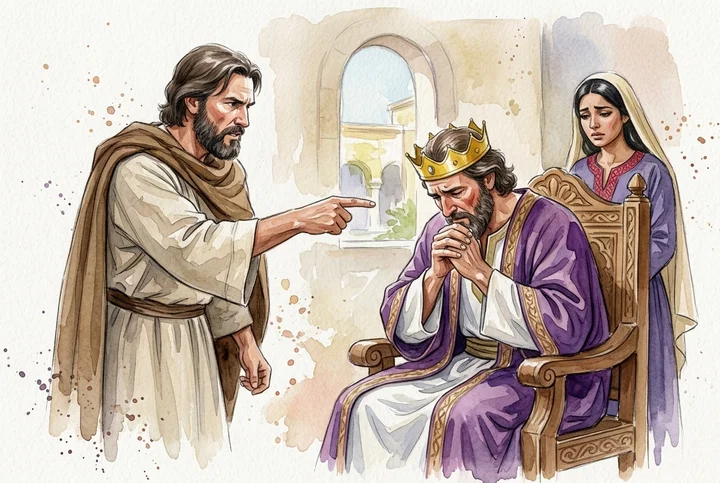
Cross-references
- 2 Samuel 12:7
And Nathan said to David, Thou art the man. Thus saith the LORD God of Israel, I anointed thee king over Israel, and I delivered thee out of the hand of Saul;
Nathan applies the parable to David, exposing his sin and prompting repentance.
- 2 Samuel 11:2-27
And it came to pass in an eveningtide, that David arose from off his bed, and walked upon the roof of the king’s house: and from the roof he saw a woman washing herself; and the woman was very beautiful to look upon.
David’s adultery and murder are the offenses Nathan rebukes and the wrongs that bring retribution.
Commentary
Each commentary is drawn from primary sources: the writings of Ellen G. White and Adventist pioneers and periodicals. Each commentary is separate. Its own words are not a quotation; follow the references to read the source passages.
Ellen G. White
18 sources
The rich man owned a very great abundance of flocks and herds.ST Aug 12, 1875SG4 86.2–87.121MR 144.2 That abundance stands against the poor man's single cherished lamb, making his sparing of his own store to take that lamb a pitiless wrong demanding redress and fourfold restoration.PP 720.5–721.221MR 144.221MR 169.1 The picture belongs to Nathan's parable sent by God to lay David's own course before him in taking Uriah's wife, until flashes of guilt became heart conviction and he passed sentence upon himself from his own lips.Lt 19a, 1875, par. 18–24ST Aug 12, 1875PP 720.5–721.21SP 380.2–381.2 Awakened as from a dream in which his sinful course had seemed passable, David did not excuse his sin but bowed in bitter repentance, and God forgave his sin and spared his life yet did not excuse him but punished him because he had given great occasion to the enemies of the Lord to blaspheme.Lt 19a, 1875, par. 18–241SP 378.1–379.15T 683.1 The calamity permitted to come upon him proves to after generations that however righteous and favored they once were, when the righteous turn from righteousness their past righteousness will not save them, and it lays upon God's watchmen the duty to faithfully reprove sin and not let it pass unreproved.1SP 378.1–379.1Lt 48, 1887, par. 23–24
Parable Words and Setting
The rich man had exceedingly many, very great and abundant flocks and herds, and that great abundance is established at the outset of the story.ST Aug 12, 1875SG4 86.2–87.121MR 144.221MR 169.1PK 75 His very great possessions in animals stand in contrast to the poor man's one cherished ewe lamb that grew up like a daughter.PP 720.5–721.221MR 144.221MR 169.1 He spared his own great store yet took the poor man's lamb to feed a traveler, and that pitiless wrong roused the sense of oppression demanding redress.PP 720.5–721.2 David himself declared the doer worthy to die and bound to restore fourfold because he had no pity.PP 720.5–721.2
The verse belongs to Nathan's figure, story, illustration and parable that pictured David's own course and set his case before him.Lt 19a, 1875, par. 18–24ST Aug 12, 18751SP 380.2–381.24MR 185.1–186.221MR 379.5–6 It exposed his crime in taking Uriah's wife and portrayed the seriousness and heinousness of his offense in living colors.1SP 378.1–379.1SG4 86.2–87.11SP 380.2–381.2Lt 74, 1886, par. 621MR 379.5–6 The detail of the many flocks and herds is not explained in itself but serves that larger exposure, leading David to pass sentence from his own lips upon himself.Lt 19a, 1875, par. 18–24ST Aug 12, 18751SP 380.2–381.24MR 185.1–186.2Lt 74, 1886, par. 6
Its setting is David's fall from a reign of judgment and justice in the case of Uriah and Bath-sheba.PP 719.2–31SP 378.1–379.1 He departed from God and used God-given kingly authority contrary to divine law to command Joab to set Uriah in the forefront of the hottest battle and retire from him that he might be smitten and die.PP 719.2–3 Joab gave allegiance to the king rather than to God and obeyed, though it became sin to obey.PP 719.2–3
Reproof That Convicts Sinners
The rich man's abundance belongs to a reproof sent by a just and impartial God to convict a transgressor of divine law.Lt 19a, 1875, par. 18–241SP 378.1–379.1 It was spoken not as a man's own words but as a messenger's word in God's name, saying in effect, Thus saith the Lord God to the ruling king.Lt 48, 1887, par. 23–24 The message was terrible in severity, yet it was delivered unflinchingly and with heaven-born wisdom.PP 720.5–721.2 It appealed to David as the divinely appointed guardian of his people's rights, engaging his sympathies and arousing his conscience while laying before him all the favors bestowed upon him in order to upbraid him for mercies abused and misapplied.PP 720.5–721.2Lt 48, 1887, par. 23–24
The method concealed a pointed rebuke beneath a story, setting David's own case before him in a figure.Lt 19a, 1875, par. 18–24DA 566.4–5 It used no sensational songs or humorous anecdotes.Lt 19a, 1875, par. 18–24 That veiled parable to David then became the example for a later parable spoken to Simon.DA 566.4–5
The illustration caused David to pass sentence from his own lips upon himself.Lt 19a, 1875, par. 18–24PP 720.5–721.24MR 185.1–186.2 He declared the doer worthy to die and bound to restore fourfold because he had shown no pity.PP 720.5–721.2 The rich man's great abundance was an essential part of that figure picturing David's own course.ST Aug 12, 1875 Flashes of guiltiness on conscience became settled heart conviction when he was told that he himself was the man.Lt 19a, 1875, par. 18–24Lt 48, 1887, par. 23–24DA 566.4–5
A faithful portrayal of a sinner's true state in this manner makes the sinner aware of sins and helps him put them away when the counsel is accepted meekly and humbly before God.5T 683.14T 14.3–15.1 Therefore those who are God's watchmen in responsible positions must faithfully discharge their God-given responsibility to reprove sin and not connive at it by letting it pass unreproved.Lt 48, 1887, par. 23–24 Though the work is unenviable and contrary to nature, neglect will leave them held accountable for the sins that exist and the evils resulting from them.Lt 48, 1887, par. 23–24
Repentance Forgiveness and Warning
The rebuke broke in upon David after he had been blinded and had excused his sinful course until his ways seemed passable, with one wrong step preparing the way for another, and awakened him as from a dream to feel his sin.1SP 378.1–379.1 Unlike Saul he did not excuse or palliate his sin, but with remorse and sincere grief and bitter repentance he bowed before the prophet, acknowledged his guilt, and humbled himself before God whose law he had broken.1SP 378.1–379.15T 683.11SP 380.2–381.24MR 185.1–186.221MR 379.5–6 In that humbling he relied for pardon on the efficacy of Christ's blood.Lt 19a, 1875, par. 18–244MR 185.1–186.2 His meek acceptance of the faithful portrayal of his true state made him aware of his sins and helped him put them away.5T 683.1
Because of his repentance and humble confession God forgave his sin, averted part of the threatened calamity, and spared his life.1SP 378.1–379.1 That forgiveness did not in any degree sanction, excuse, or justify him, but He punished him because he had given great occasion to the enemies of the Lord to blaspheme.1SP 378.1–379.1 The title man after God's own heart belonged to him only when he was pure and walking in counsel, not when he departed and stained his character and reputation by crime after turning from instruction.1SP 378.1–379.121MR 169.1 God's displeasure at his plurality of wives was shown by judgments, permitting evils to rise up against him from his own house.1SP 378.1–379.1
The terrible calamity permitted to come upon David stands to after generations as proof that God will surely punish the guilty in transgression of His commandments however righteous and favored they once were while following the Lord in purity of heart, for when the righteous turn from righteousness and do evil their past righteousness will not save them from the wrath of a just and holy God.1SP 378.1–379.1 The account is the Bible way of producing true and thorough conversion by heart work through the law and faith in the Redeemer, in contrast to excitement and feeling-based revivals.Lt 19a, 1875, par. 18–24 The rich man's taking despite already having abundant flocks and herds exposes his act as grasping injustice in taking what belonged to another, and thereby brings David's treatment of Uriah to light.Lt 57, 1897, par. 13–1621MR 169.1 That same abundance that contrasts with the single ewe lamb applies to those with buildings, machinery, and workers who took from the Southern field as the rich man took the lamb, diverting resources raised for that field and leaving the consequences to others.21MR 144.2
Sources
Pioneers and periodicals
35 sources
The verse describes the rich man in Nathan's parable as possessing exceeding many flocks and herds in sharp contrast to the poor man's single little ewe lamb.RH Sep 7, 1869ST Mar 31, 1881ST Jan 28, 1889ST Sep 10, 1896ST Apr 14, 1909 It belongs to the story the Lord commanded Nathan to speak as a close, cutting reproof to confront King David over his wrongdoing, made vivid to hold his attention so he listened without realizing it pictured his own course.ST Aug 12, 1875ST Mar 11, 1889ST Aug 19, 1880ST May 6, 1897ST Oct 10, 1911 The telling greatly kindled David's anger so that he condemned the rich man as worthy of death, thereby unwittingly pronouncing sentence against himself before the plain rebuke brought his guilt forcefully to his conscience to lead him to genuine repentance.ST Aug 12, 1875ST Mar 11, 1889RH Sep 7, 1869ST Jan 28, 1889RH Apr 3, 1879 What stood exposed was the enormity of his sin with Bathsheba, Uriah's wife, in adultery and the plot that brought Uriah's death, which God abhorred and condemned and by which David gave great occasion to His enemies to blaspheme.ST Nov 11, 1880RH Oct 12, 1869RH Jul 1, 1902RH Jan 15, 1861ST David accepted the reproof without discrediting the prophet, confessed and humbled himself in bitter and lasting repentance and was forgiven and made a more spiritual channel, yet retribution followed him through life and the whole history stands faithfully recorded without excuse to show God's abhorrence of the conduct.RH Sep 7, 1869ST Nov 11, 1880RH Sep 14, 1869RH Jul 27, 1869
Parable's Story and Method
The verse belongs to the parable the Lord commanded Nathan to speak to David, sent as God's close, cutting reproof to confront the king over his wrongdoing.ST Mar 11, 1889ST May 6, 1897ST Oct 10, 1911ST Aug 2, 1910 It describes the rich man in Nathan's story as having exceeding many, very many, abundant flocks and herds.RH Sep 7, 1869ST Mar 31, 1881ST Jan 28, 1889ST Sep 10, 1896ST Apr 14, 1909 That abundance stands in contrast to the poor man's single, one little ewe lamb, setting up the charge against David who had abundance but took what belonged to another.ST Sep 10, 1896ST Apr 14, 1909ST Mar 11, 1913ST Aug 26, 1875 The detail helps make the story vivid and hold attention, so that David listened to the narrative without realizing that it pictured his own course and concerned his own wrongdoing.ST Aug 12, 1875ST Aug 19, 1880ST Aug 19, 1880
The parable first exposed David indirectly through meaningful figures and illustration before plain reproof, as a pointed, wise personal rebuke that brought his wrongdoing forcefully to his conscience to lead him to recognize his guilt and to genuine repentance.RH Sep 7, 1869ST Jan 28, 1889RH Apr 3, 1879RH Jul 27, 1869RH Dec 22, 1868 Its comparison helped bring David to recognize his own guilt and brought him to heartfelt repentance.RH Jul 27, 1869ST Jun 9, 1881 The story greatly kindled David's anger so that he condemned the rich man and declared he should surely die, thereby unwittingly pronouncing sentence against himself and showing how a person may condemn another and pass judgment on himself.ST Aug 12, 1875ST Mar 11, 1889RH Apr 3, 1879ST Aug 19, 1880RH Jul 27, 1869 That self-condemnation drew from him the sentence he deserved.RH Apr 3, 1879RH Apr 1, 1873 The story illustrates how a holy man could confront a king openly and warn him with truths that powerful ministers would not dare to speak, and the king would often listen and heed the warning, an example likened to courageous clergy who rebuked wrongdoing.ST Nov 5, 1885RH Apr 23, 1872
David's Sin and Repentance
The parable exposed the enormity of David's sin in taking Uriah's wife Bathsheba, namely adultery and the plot that brought about Uriah's murder and death.ST Nov 11, 1880ST Jul 17, 1884ST Apr 17, 1907 That wrongdoing in the matter of Uriah was open and directly against God's command.ST Apr 17, 1907 God did not approve the adultery or the plot that led to Uriah's death, but abhorred and condemned the conduct and punished David.ST Nov 11, 1880 The confrontation belongs to the rebuke of David's crimes connected with Uriah's murder, which brought conviction of sin and confession, and it is remembered with the Day of Atonement and the hope that God could forgive and remove sin.RH Jan 15, 1861ST Jul 17, 1884 Even the sin of a king is faithfully revealed and rebuked rather than concealed.ST
David had been a great sinner who committed a great sin and deserved punishment for it.RH Jul 1, 1902 By his great wickedness in the case of Uriah he gave great occasion to the enemies of the Lord to blaspheme.RH Oct 12, 1869 The rebuke first exposed his wrong indirectly through the figures of the rich man with very many flocks and herds and the poor man's lamb, before plain reproof was spoken.RH Sep 7, 1869 David accepted the rebuke without trying to discredit the prophet, believed the prophetic reproof, submitted to God, confessed his sin, and humbly repented.RH Sep 7, 1869RH Sep 14, 1869ST Apr 17, 1907 That reproof was wisely aimed not merely to rebuke him but to lead him to genuine repentance and save him from ruin, and it brought him to heartfelt repentance in which, recognizing his guilt, he humbled himself before God, renounced his sin, and turned back to righteousness.RH Jul 27, 1869RH Dec 22, 1868RH Mar 27, 1913 His repentance was bitter and lasting, and he did not afterward repeat this sin against the marriage law.RH Feb 6, 1879
His great sin was forgiven, and he afterward prospered.RH Sep 14, 1869 He became a more spiritual channel for God's word to the people after accepting the reproof the Lord sent through Nathan.RH Sep 13, 1906 His experience of sin and repentance is the setting for his prayer for restored joy and a renewed spirit.ST Aug 19, 1886 The whole account belongs to the detailed history of a year of idleness and luxury that led to temptation, then adultery, the plot against Uriah, Nathan's reproof, David's repentance, and the Lord's forgiveness.
The close, cutting reproof exposes the enormous guilt of a king whose high position gave his sin of murder and adultery far-reaching influence, yet it shows the plan of salvation that cleanses the foulest sinner.ST May 6, 1897 That confrontation over Bathsheba and Uriah is connected with remembrance of the Day of Atonement and hope that God could forgive and remove sin.RH Jan 15, 1861 David's experience in Uriah's case leaves the sinner bowed beneath sorrow and disgrace, but hating and loathing that sin brings comfort, for Christ then sends the Comforter to dwell within.ST Apr 10, 1893 His pardon encourages transgressors to hope in God's mercy, so that he will be met by all who enter heaven, while those who use his fall to scoff at Scripture could themselves be saved if they repented instead of finding fault with God for pardoning him.ST May 6, 1897
Retribution followed David through the rest of his life, especially in his family, on account of his wrongdoing against Uriah.ST Mar 31, 1881 His whole subsequent history shows the judgments of the denunciation fully accomplished upon him, with terrible punishment.ST Nov 11, 1880RH Oct 12, 1869RH Feb 6, 1879 The transgression is not covered up or excused but is placed on record, showing God's abhorrence of the conduct, even though it was the sin of a king.ST Nov 11, 1880RH Oct 12, 1869ST David himself placed on record a most humble confession of his great transgression.RH Oct 12, 1869
Sources