2 Samuel 5:2
Also in time past, when Saul was king over us, thou wast he that leddest out and broughtest in Israel: and the LORD said to thee, Thou shalt feed my people Israel, and thou shalt be a captain over Israel.
Translations
Also in time past, when Saul was king over us, you were he that led out and brought in Israel: and the LORD said to you, You shall feed my people Israel, and you shall be a captain over Israel.
King James Version, Webster Bible
Also in time past, when Saul was king over us, thou wast he that leddest out and broughtest in Israel: and the LORD said to thee, Thou shalt feed my people Israel, and thou shalt be a captain over Israel.
Also in time past, when Saul was king over us, thou wast he that leddest out and broughtest in Israel: and the Lord said to thee, Thou shalt feed my people Israel, and thou shalt be a captain over Israel.
In times past, when Saul was king over us, it was thou that leddest out and broughtest in Israel: and the LORD said to thee, Thou shalt feed my people Israel, and thou shalt be prince over Israel.
In times past, when Saul was king over us, it was thou that leddest out and broughtest in Israel: and Jehovah said to thee, Thou shalt be shepherd of my people Israel, and thou shalt be prince over Israel.
also heretofore, in Saul's being king over us, thou hast been he who is bringing out and bringing in Israel, and Jehovah saith to thee, Thou dost feed My people Israel, and thou art for leader over Israel.'
Even aforetime, when Saul was king over us, thou wast he that leddest out and broughtest in Israel; and Jehovah said to thee, Thou shalt feed my people Israel, and thou shalt be prince over Israel.
Also, in time past, when Saul was king over us, thou, wast he that led out and brought in, Israel,—and Yahweh said to thee—Thou, shalt be shepherd unto my people, Israel, and, thou, shalt become leader over Israel.
Berean Standard Bible, Majority Standard Bible
Even in times past, while Saul was king over us, you were the one who led Israel out and brought them back. And to you the LORD said, ‘ You will shepherd My people Israel, and you will be ruler over them.’”
In times past, when Saul was king over us, it was you who led Israel out and in. The LORD said to you, ‘ You will be shepherd of my people Israel, and you will be prince over Israel.’”
In the past when Saul was king over us, it was you who went at the head of Israel when they went out or came in: and the Lord said to you, You are to be the keeper of my people Israel and their ruler.
And in time past when Saul was our King, thou leddest Israel in and out: and the Lord hath sayde to thee, Thou shalt feede my people Israel, and thou shalt be a captaine ouer Israel.
Douay-Rheims (Challoner revision)
Moreover yesterday also and the day before, when Saul was king over us, thou wast he that did lead out and bring in Israel: and the Lord said to thee: Thou shalt feed my people Israel, and thou shalt be prince over Israel.
Pictures
Cross-references
- 1 Chronicles 11:2
And moreover in time past, even when Saul was king, thou wast he that leddest out and broughtest in Israel: and the LORD thy God said unto thee, Thou shalt feed my people Israel, and thou shalt be ruler over my people Israel.
Israel recognizes David’s leadership and recalls the Lord’s charge to shepherd his people.
- 1 Samuel 16:13
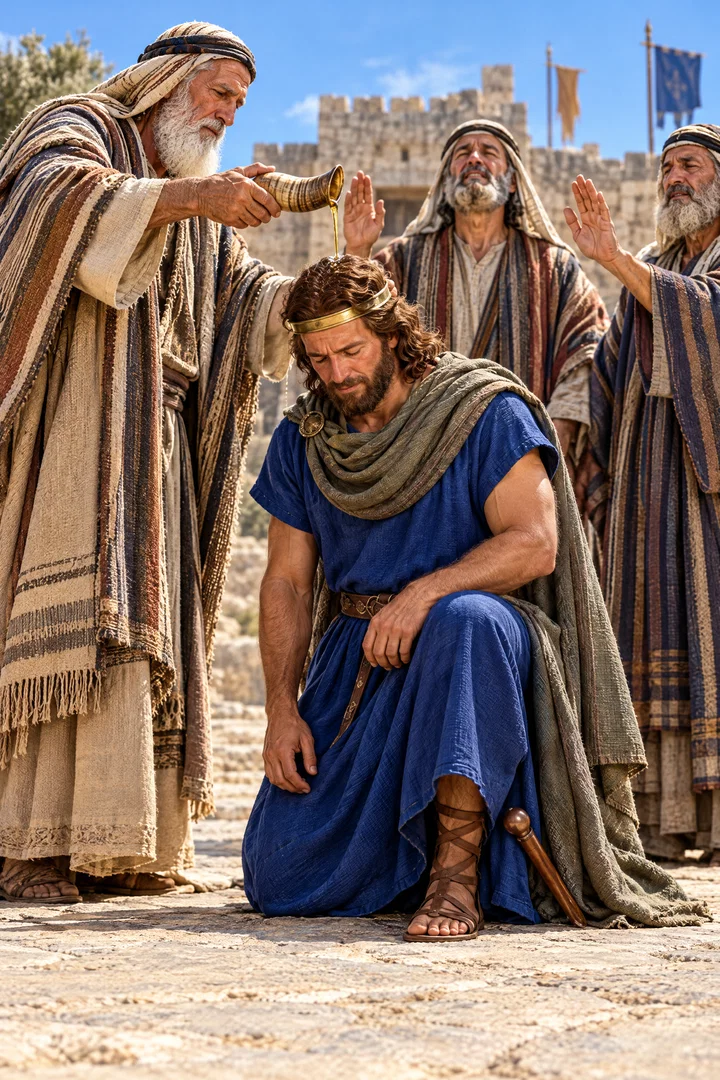
Then Samuel took the horn of oil, and anointed him in the midst of his brethren: and the Spirit of the LORD came upon David from that day forward. So Samuel rose up, and went to Ramah.
David was anointed king by the Lord’s prophet.
- 1 Chronicles 12:38
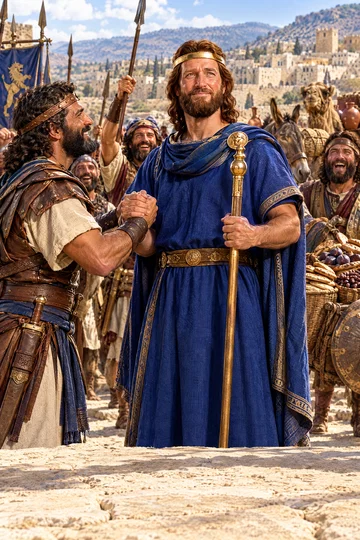
All these men of war, that could keep rank, came with a perfect heart to Hebron, to make David king over all Israel: and all the rest also of Israel were of one heart to make David king.
Israel gathers with one purpose to make David king.
- 2 Samuel 5:10
And David went on, and grew great, and the LORD God of hosts was with him.
David grew great as the Lord was with him.
- 1 Chronicles 14:2
And David perceived that the LORD had confirmed him king over Israel, for his kingdom was lifted up on high, because of his people Israel.
David recognizes that the Lord established him as king over Israel.
- 1 Chronicles 11:6
And David said, Whosoever smiteth the Jebusites first shall be chief and captain. So Joab the son of Zeruiah went first up, and was chief.
Gives the parallel account of taking Jerusalem after David became king.
- 1 Kings 11:36
And unto his son will I give one tribe, that David my servant may have a light alway before me in Jerusalem, the city which I have chosen me to put my name there.
Jerusalem is preserved as the center of David’s continuing rule.
- 2 Samuel 2:4
And the men of Judah came, and there they anointed David king over the house of Judah. And they told David, saying, That the men of Jabesh-gilead were they that buried Saul.
David is anointed king over Judah before the tribes recognize him at Hebron.
- 2 Samuel 4:1
And when Saul’s son heard that Abner was dead in Hebron, his hands were feeble, and all the Israelites were troubled.
Ishbosheth’s weakness and Israel’s distress preceded their recognition of David.
- 1 Samuel 17:45
Then said David to the Philistine, Thou comest to me with a sword, and with a spear, and with a shield: but I come to thee in the name of the LORD of hosts, the God of the armies of Israel, whom thou hast defied.
David declares his trust in God as he confronts Goliath.
- Micah 5:2
But thou, Beth-lehem Ephratah, though thou be little among the thousands of Judah, yet out of thee shall he come forth unto me that is to be ruler in Israel; whose goings forth have been from of old, from everlasting.
Both identify the ruler of Israel with shepherd leadership.
Commentary
Each commentary is drawn from primary sources: the writings of Ellen G. White and Adventist pioneers and periodicals. Each commentary is separate. Its own words are not a quotation; follow the references to read the source passages.
Ellen G. White
2 sources
The verse belongs to the time of David's return after Saul's death and his move to Hebron, where the tribes acknowledged his leadership and made him king over Israel.PP 697.1 It expresses Israel's recognition that even while Saul was still king over them, David was already the one who led them out and brought them in in war.PP 701.1–3 It records the Lord's appointment of David to feed or shepherd His people Israel and to serve as captain or ruler over them.PP 701.1–3 Spoken by the elders when David became king over all the tribes, these words affirmed God's choice, so that his rise to the throne fulfilled divine appointment rather than personal ambition.PP 701.1–3
Sources
Pioneers and periodicals
13 sources
In time past while Saul was still king, David had already guided and commanded Israel in its battles and undertakings, and the tribes cited that proven service as the reason they trusted him to lead the nation.ST Sep 30, 1889ST Jun 19, 1884ST Jun 25, 1896ST Jun 25, 1896 Coming to him at Hebron as their own kin, they declared their desire for him to rule, made a covenant with him, and accepted him as king over all Israel.ST Jun 19, 1884ST Sep 10, 1896 This was the final step of his rise after Saul, for he first ruled Judah while the northern tribes remained under Ishbosheth, and when Saul's house had fallen and Ishbosheth was assassinated leaving them without a ruler, they invited David and he was anointed again at Hebron as king in Saul's place.ST Jun 19, 1884RH Mar 30, 1916ST Apr 22, 1903 The Lord had earlier chosen and appointed him to shepherd and care for His people Israel and to be ruler, governor, and leader over them, so that his kingship was both caring for God's people and leading them.ST Jun 19, 1884ST Jun 25, 1896ST Jun 25, 1896 That appointment was a manifestation of God to him in supernatural direction and assistance, of the kind that is now unasked and unexpected for lack of faith, yet whoever has faith in God should exercise and cultivate it and may remove mountains.RH Aug 28, 1856
Words and Historical Setting
The words about leading out and bringing in mean that even while Saul was still king David had already guided and commanded the people and led them in battle and in all their campaigns and undertakings.ST Sep 30, 1889ST Jun 19, 1884ST Jun 25, 1896ST Sep 10, 1896ST The tribes remembered that leadership in battle under Saul.ST Sep 30, 1889ST Apr 22, 1903RH Nov 24, 1910 They acknowledged him as the one who had led Israel out and brought Israel in.ST Jun 25, 1896ST Jun 25, 1896ST Sep 10, 1896ST
That proven past service was an important reason they trusted his ability to lead the nation and chose him as king.ST Sep 30, 1889 His experience under Saul helped him understand what shepherd-care of the people required.ST Jun 25, 1896
They came to him as their own kin.ST Sep 10, 1896 They gathered at Hebron and proclaimed their desire for him to rule over them.ST Sep 10, 1896 They made a covenant with him and accepted him as king over all Israel.ST Jun 19, 1884
The verse belongs to the final step of his rise, when he became king over all Israel after Saul and was established as king after Saul.RH Mar 30, 1916ST Apr 22, 1903RH Mar 30, 1916 After Saul's death he first ruled Judah while the northern tribes remained under Ishbosheth.RH Mar 30, 1916 After the house of Saul had fallen and Ishbosheth was assassinated, leaving them without a ruler, they invited David to rule them.ST Jun 19, 1884RH Mar 30, 1916 He was then anointed and crowned again at Hebron as king in Saul's place.ST Apr 22, 1903RH Mar 30, 1916RH Nov 24, 1910
Divine Appointment and Application
The Lord had earlier chosen and appointed David to feed His people Israel and to be captain over them.ST Jun 19, 1884ST Jun 25, 1896ST Jun 25, 1896ST Sep 10, 1896ST To feed literally means to shepherd and care for Israel, and captain means ruler, governor, and leader.ST Jun 25, 1896ST Jun 25, 1896STRH Mar 30, 1916 His kingship was therefore both caring for God's people and leading them.ST Jun 19, 1884ST Jun 25, 1896ST Jun 25, 1896STRH Mar 30, 1916 The tribes acknowledged that appointment when they recalled how he had guided and commanded them even while Saul was king.ST Jun 19, 1884ST Jun 25, 1896ST Jun 25, 1896ST Sep 10, 1896ST
That appointment was one of God's manifestations to David, giving him supernatural direction and assistance.RH Aug 28, 1856 Such supernatural directions and assistances are not communicated now because they are not asked for, and they are not asked for because they are not expected.RH Aug 28, 1856 They are not expected because men lack faith, being under a refined spirit of atheism with no spiritual intercourse with their Maker.RH Aug 28, 1856 They fail to believe God sees all things and is everywhere, fail to suppose He concerns Himself with His creatures' affairs, fail to acknowledge Him in all their ways, and put their own wisdom, prudence, and strength in God's place.RH Aug 28, 1856 Whoever has faith in God should exercise and cultivate it and may remove mountains.RH Aug 28, 1856
The shepherd-and-governor role connects to the ruler promised to come from Bethlehem who would shepherd Israel.ST Dec 11, 1893 David was not followed at first by all Israel but was later accepted by all Israel and Judah.RH Feb 9, 1911 The Christian, though unpopular now, will likewise be followed and honored in the next age, so waiting patiently for that time is the lesson.RH Feb 9, 1911
Sources