2 Samuel 5:1
Then came all the tribes of Israel to David unto Hebron, and spake, saying, Behold, we are thy bone and thy flesh.
Translations
Then came all the tribes of Israel to David to Hebron, and spoke, saying, Behold, we are your bone and your flesh.
King James Version, KJV Cambridge Paragraph Bible, Revised Version, American Standard Version
Then came all the tribes of Israel to David unto Hebron, and spake, saying, Behold, we are thy bone and thy flesh.
Webster Bible, Darby Translation
Then came all the tribes of Israel to David to Hebron, and spoke, saying, Behold, we are thy bone and thy flesh.
And all the tribes of Israel come unto David, to Hebron, and speak, saying, 'Lo, we [are] thy bone and thy flesh;
Then came all the tribes of Israel unto David, in Hebron,—and spake, saying—Behold us! thy bone and thy flesh, we are.
Berean Standard Bible, Majority Standard Bible
Then all the tribes of Israel came to David at Hebron and said, “ Here we are, your own flesh and blood.
Then all the tribes of Israel came to David at Hebron and spoke, saying, “ Behold, we are your bone and your flesh.
Then all the tribes of Israel came to David in Hebron and said, Truly, we are your bone and your flesh.
Then came all the tribes of Israel to Dauid vnto Hebron, and said thus, Beholde, we are thy bones and thy flesh.
Douay-Rheims (Challoner revision)
Then all the tribes of Israel came to David in Hebron, saying: Behold we are thy bone and thy flesh.
Pictures
Cross-references
- 1 Chronicles 11:1-3
Then all Israel gathered themselves to David unto Hebron, saying, Behold, we are thy bone and thy flesh.
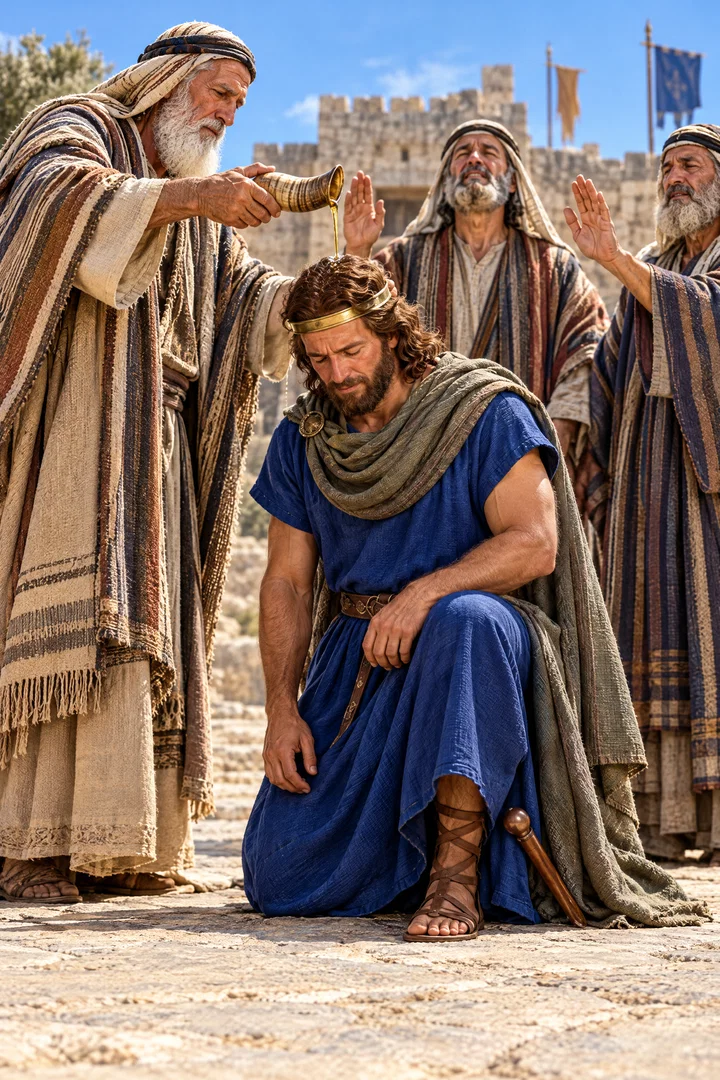
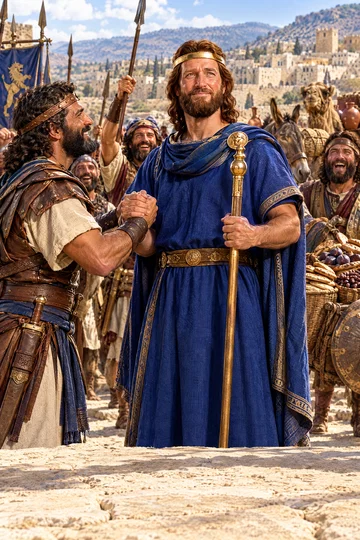
Israel’s tribes gather at Hebron, claim kinship with David, and make him king.
- 1 Chronicles 12:23-40
And these are the numbers of the bands that were ready armed to the war, and came to David to Hebron, to turn the kingdom of Saul to him, according to the word of the LORD.
Israel gathers to David at Hebron to establish his rule.
- 1 Samuel 16:11-13
And Samuel said unto Jesse, Are here all thy children? And he said, There remaineth yet the youngest, and, behold, he keepeth the sheep. And Samuel said unto Jesse, Send and fetch him: for we will not sit down till he come hither.
Samuel anoints David, whom God chose to be king.
- 2 Samuel 2:4
And the men of Judah came, and there they anointed David king over the house of Judah. And they told David, saying, That the men of Jabesh-gilead were they that buried Saul.
David is first anointed king over Judah at Hebron before all Israel comes to him.
- 2 Samuel 4:1
And when Saul’s son heard that Abner was dead in Hebron, his hands were feeble, and all the Israelites were troubled.
Ishbosheth’s weakness troubled Israel.
- 2 Samuel 4:5-6
And the sons of Rimmon the Beerothite, Rechab and Baanah, went, and came about the heat of the day to the house of Ish-bosheth, who lay on a bed at noon.
Ishbosheth’s guards killed him, leaving Israel without a ruler.
- Luke 1:32-33
He shall be great, and shall be called the Son of the Highest: and the Lord God shall give unto him the throne of his father David:
Jesus’ promised reign on David’s throne connects his kingship with David’s.
- 2 Samuel 5:10
And David went on, and grew great, and the LORD God of hosts was with him.
David grew great because the Lord was with him.
- 1 Chronicles 14:1-2
Now Hiram king of Tyre sent messengers to David, and timber of cedars, with masons and carpenters, to build him an house.
Records God’s confirmation of David as king over Israel.
Commentary
Each commentary is drawn from primary sources: the writings of Ellen G. White and Adventist pioneers and periodicals. Each commentary is separate. Its own words are not a quotation; follow the references to read the source passages.
Ellen G. White
1 source
After Ishbosheth's death the tribes of Israel came together to David at Hebron.PP 701.1–3 Their coming marked the end of divided rule and the gathering of all the tribes around the king at that place.PP 701.1–3 In addressing him they acknowledged their kinship with him as bone and flesh.PP 701.1–3 By that appeal they expressed their united desire for David to rule the whole nation, not Judah alone.PP 701.1–3
Sources
Pioneers and periodicals
11 sources
The word “Then” ties the coming of the tribes to what had just happened, marking their arrival as its consequence, for after Ish-bosheth’s death left them without a ruler all the tribes of Israel came to David at Hebron to make him king over all Israel.ST Sep 30, 1889ST Jun 19, 1884RH Mar 30, 1916 They came through their elders, representing 339,600 warriors.ST Jun 25, 1896 In saying they were his bone and his flesh they declared that he was one of their own people, sharing their Hebrew kinship and blood, affirming their shared bond with him as they gathered to unite under his reign and make him king over all Israel.ST Sep 30, 1889ST Jun 25, 1896ST Jun 25, 1896ST Sep 10, 1896ST That kinship acknowledged that he was their blood relation and also connected to Saul’s royal line by marriage, and it was the basis of their appeal for him to rule over them.ST Jun 25, 1896ST Sep 10, 1896STRH Nov 24, 1910 Their words begin the reasons for making him king, for his proven service as Saul’s military leader and his justice, unselfishness, and military strength had won them and gave them confidence he would advance their welfare, they remembered that God had chosen him as king before Saul died, and it had become evident that he was surely coming to the throne, so they made a league with him and acknowledged him as king over all Israel.ST Sep 30, 1889ST Jun 19, 1884ST Jun 25, 1896
The coming marks the point after David had ruled Judah at Hebron for about seven years when all Israel accepted him, beginning his reign over the whole kingdom, counted as his third anointing.ST Apr 22, 1903 It is also counted as his second coronation, this time as king of the whole nation.RH Mar 30, 1916 The surrounding passage shows God’s supernatural directions and assistances to David, and the same help can be communicated now to those who have faith in God, ask for it, expect it, and keep spiritual communion with their Maker as seeing all things, everywhere present, and concerned with his creatures.RH Aug 28, 1856 It is not received because it is not asked for, not asked for because it is not expected, and not expected because of lack of faith, when men put their own wisdom, prudence, and strength in the place of God Almighty instead of acknowledging Him in all their ways, and the remedy is to exercise and cultivate faith in God, which brings such help, even to removing mountains.RH Aug 28, 1856 David’s move from early rejection to the time when all Israel and Judah followed him illustrates the expectation that Christians who are unpopular and uninfluential now will be followed in the next age.RH Feb 9, 1911
Sources