Acts 18:2
And found a certain Jew named Aquila, born in Pontus, lately come from Italy, with his wife Priscilla; (because that Claudius had commanded all Jews to depart from Rome:) and came unto them.
Translations
And found a certain Jew named Aquila, born in Pontus, lately come from Italy, with his wife Priscilla; (because that Claudius had commanded all Jews to depart from Rome:) and came to them.
And found a certain Jew named Aquila, born in Pontus, lately come from Italy, with his wife Priscilla; (because that Claudius had commanded all Jews to depart from Rome:) and came unto them.
and found a certain Jew named Aquila, born in Pontus, lately come from Italy, with his wife Priscilla; (because that Claudius had commanded all Jews to depart from Rome:) and came unto them.
And found a certain Jew named Aquila, born in Pontus, lately come from Italy, with his wife Priscilla (because that Claudius had commanded all Jews to depart from Rome) and he came to them.
Revised Version, American Standard Version
And he found a certain Jew named Aquila, a man of Pontus by race, lately come from Italy, with his wife Priscilla, because Claudius had commanded all the Jews to depart from Rome: and he came unto them;
and having found a certain Jew, by name Aquilas, of Pontus by birth, lately come from Italy, and Priscilla his wife — because of Claudius having directed all the Jews to depart out of Rome — he came to them,
and finding a certain Jew by name Aquila, of Pontus by race, just come from Italy, and Priscilla his wife, ( because Claudius had ordered all the Jews to leave Rome,) came to them,
and, finding a certain Jew, by name Aquila, of Pontus by birth,—lately come from Italy, and Priscilla his wife, because Claudius had ordered all the Jews to be leaving Rome, he came unto them,
Berean Standard Bible, Majority Standard Bible
There he found a Jew named Aquila, a native of Pontus, who had recently come from Italy with his wife Priscilla because Claudius had ordered all the Jews to leave Rome. Paul went to visit them,
He found a certain Jew named Aquila, a man of Pontus by race, who had recently come from Italy with his wife Priscilla, because Claudius had commanded all the Jews to depart from Rome. He came to them,
And there he came across a certain Jew named Aquila, a man of Pontus by birth, who not long before had come from Italy with his wife Priscilla, because Claudius had given orders that all Jews were to go away from Rome: and he came to them;
And found a certaine Iewe named Aquila, borne in Pontus, lately come from Italie, and his wife Priscilla (because that Claudius had commanded all Iewes to depart from Rome) and he came vnto them.
Douay-Rheims (Challoner revision)
And finding a certain Jew, named Aquila, born in Pontus, lately come from Italy, with Priscilla his wife, ( because that Claudius had commanded all Jews to depart from Rome,) he came to them.
Pictures
Cross-references
- Romans 16:3-4
Greet Priscilla and Aquila my helpers in Christ Jesus:
Paul names Priscilla and Aquila as fellow workers who risked their lives for him.
- Acts 18:26
And he began to speak boldly in the synagogue: whom when Aquila and Priscilla had heard, they took him unto them, and expounded unto him the way of God more perfectly.
Aquila and Priscilla teach Apollos the way of God more fully.
- Acts 18:18-19
And Paul after this tarried there yet a good while, and then took his leave of the brethren, and sailed thence into Syria, and with him Priscilla and Aquila; having shorn his head in Cenchrea: for he had a vow.
Aquila and Priscilla later travel with Paul and are left at Ephesus.
- Acts 18:11
And he continued there a year and six months, teaching the word of God among them.
counted together as Sabbaths Paul kept and preached on
- Romans 16:4
Who have for my life laid down their own necks: unto whom not only I give thanks, but also all the churches of the Gentiles.
Priscilla and Aquila risked their lives for Paul.
- Romans 16:5
Likewise greet the church that is in their house. Salute my wellbeloved Epaenetus, who is the firstfruits of Achaia unto Christ.
Aquila and Priscilla hosted a church in their house.
Commentary
Each commentary is drawn from primary sources: the writings of Ellen G. White and Adventist pioneers and periodicals. Each commentary is separate. Its own words are not a quotation; follow the references to read the source passages.
Ellen G. White
23 sources
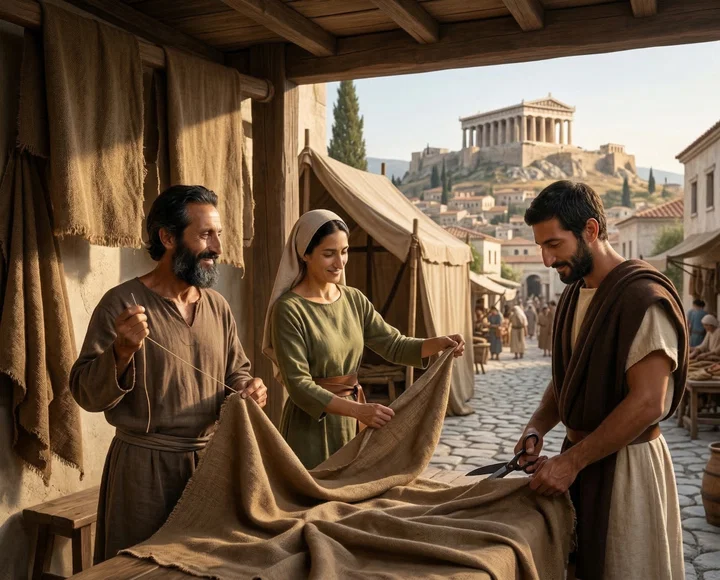
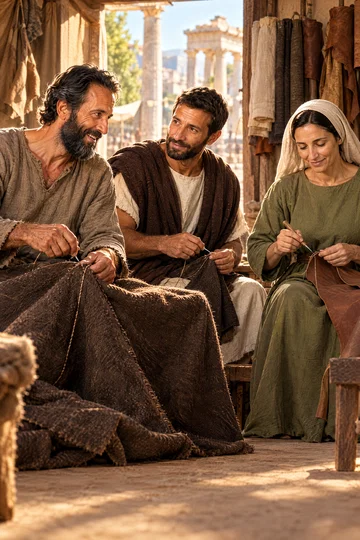
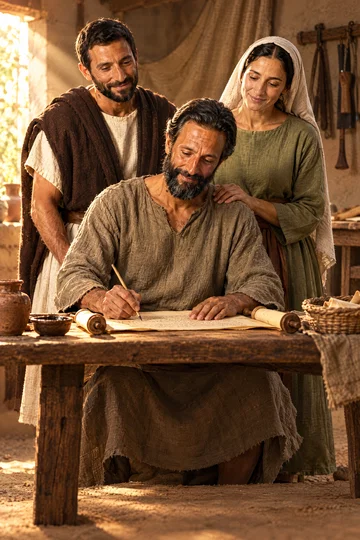
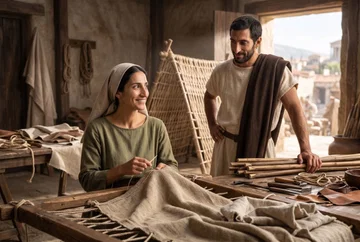
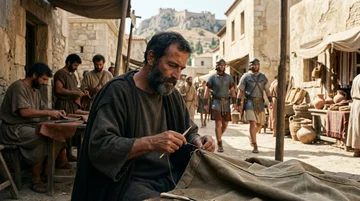
Paul found in Corinth Aquila, a Jew born in Pontus, newly come from Italy with his wife Priscilla because Claudius had commanded all Jews to depart from Rome.GW 234.3–235.1AA 349.2–350.1CE 61.1–3 Many of the expelled Jews settled in Corinth, a leading commercial city open to the whole empire yet given to idolatry, immorality and the pursuit of present pleasure.AA 243.3AA 243.1 Aquila and Priscilla were makers of tents, the same trade Paul had learned in his youth, and he stayed with them and worked with his hands at their trade.GW 234.3–235.1AA 349.2–350.1AA 350.2–3Ms 93, 1899, par. 4–5Ms 27, 1902, par. 10–11 By that labor he supported himself so as to be dependent on no one for food and clothing while he faithfully preached the gospel.AA 350.2–3ST Mar 27, 188419MR 25.1–2 Such manual work did not shame or lower his ministry, for while working he spoke the truth with undiminished fervor, instructed Aquila and Priscilla more perfectly, and made his daily labor itself preach the gospel.CE 61.1–319MR 25.1–2Ms 93, 1899, par. 4–5Ms 93, 1899, par. 6–8PP 593.3
Corinth and the Exiles
Corinth was a leading commercial city with access to the whole Roman Empire and a diverse population, which made it an important place to establish memorials for God and his truth.AA 243.1 At the same time it was dominated by idolatry and the worship of Venus, whose degrading rites accompanied widespread immorality and a preoccupation with immediate pleasure.AA 243.3 It was there that Paul met Aquila, a Jew born in Pontus, who had lately come from Italy to Corinth with his wife Priscilla because Claudius had commanded all Jews to depart from Rome.GW 234.3–235.1AA 349.2–350.1CE 61.1–3 Many of the expelled Jews settled in Corinth, and Aquila and Priscilla were among those who came there after leaving Rome, where Paul met them.SLP 99.1–2RH Dec 7, 1911
They had been driven from their home and settled in Corinth at a time of repeated seditions and insurrections, though they were innocent of wrongdoing and of the wrongs attributed to many of their people.8RED 61.2–3SLP 99.3–100.2ST Mar 27, 1884 About twenty years after the crucifixion there was in Rome a live, earnest, strong and zealous church for which the Lord worked.RH Mar 6, 1900Ms 95, 1899, par. 1–2 The envy and rage of the Jews stirred unbelieving residents to complain that the Christian Jews were disorderly and dangerous to the public good and kept setting strife in motion, so that the Christians were banished from Rome.RH Mar 6, 1900 Among those banished were Aquila and Priscilla, who went to Corinth and established a business as manufacturers of tents.RH Mar 6, 1900
Those who hold this fuller account teach that Aquila and Priscilla were Christian Jews banished from Rome with other Christians because they preached that Jesus was the Messiah.Ms 95, 1899, par. 1–2 The church in Rome was one for which the Lord worked and whose people angels protected, but the envy and rage of unbelieving Jews and residents, who complained that the Christian Jews were disorderly and dangerous to the public good and constantly stirred up strife, caused their expulsion.Ms 95, 1899, par. 1–2 Aquila and Priscilla feared God and sought to avoid the corrupting influences around them.AA 349.2–350.1 After living in Corinth as Jews they later became believers in Christ, earnest workers for Christ and distinguished believers, and Paul became acquainted with them and stayed with them.AA 349.2–350.1AA 243.2SLP 99.3–100.2ST Mar 27, 1884
Connected with this meeting, Paul labored in Corinth for a year and six months and raised up a flourishing church composed of Jews and Gentiles.7T 268.1Lt 96, 1902, par. 4–5 The Gentile converts were more numerous than the Jewish converts, and many were truly converted, brought from darkness into the light of the gospel.Lt 96, 1902, par. 4–5 This was because they were in a more favorable condition than the Jews to receive the truth, not being walled in by the maxims and traditions of priests and elders.Lt 96, 1902, par. 4–5 The lesson is that workers today are to make the world their field of labor rather than to work for the churches only.Lt 96, 1902, par. 4–5
Tentmaking and Gospel Ministry
Aquila and Priscilla were tentmakers by trade, the same trade as Paul, and when Paul met them in Corinth he stayed with them and worked with them at that trade, having solicited work from Aquila and joined them in manufacturing tents.GW 234.3–235.1AA 349.2–350.18RED 61.2–3SLP 99.3–100.2ST Mar 27, 1884 Alongside them he supported himself by tentmaking while faithfully preaching the gospel.AA 350.2–3ST Mar 27, 1884 Paul had learned tentmaking in his youth, even though he was educated and a diligent student at the feet of Gamaliel and able to match eloquence with eloquence and philosophy with philosophy.Ms 93, 1899, par. 4–5Ms 27, 1902, par. 10–11 This followed the Jewish custom, among wealthy and poor alike, of training sons and daughters to some useful employment and craft as an indispensable part of education alongside literary instruction, so that if adverse circumstances came they would not be dependent on others but would have ability to provide for their own necessities.Ms 93, 1899, par. 4–5
By working at tentmaking Paul and his companions obtained means for support and were not dependent on anyone for food and clothing, while the gospel was still preached with faithfulness.AA 350.2–3ST Mar 27, 188419MR 25.1–2Ms 93, 1899, par. 4–5 Earning a livelihood in this way did not lessen their honor, and labor with the hands was not shameful or lowering to the work of ministry.CE 61.1–3Ms 93, 1899, par. 6–8PP 593.3 This continued the practice in Israel, where self-support by tilling the soil or mechanical employment was not thought strange or degrading, where it was regarded a crime to let children grow up in ignorance of useful labor, and where every child was taught some trade by the command of God even if he was to be educated for holy office.PP 593.3 Manual work and preaching the Scriptures went together.Ms 93, 1899, par. 6–8
While working with his hands Paul communicated the great truth of the gospel with undiminished fervor and ability in speech, instructed Aquila and Priscilla more perfectly in the truth, and by working while preaching gave hearers a more thorough knowledge of Christ.19MR 25.1–2Ms 93, 1899, par. 4–5Ms 93, 1899, par. 6–8 The time spent making tents was not lost time but time kept in fellowship with Christ, used to give needed instruction in spiritual things and to educate believers in unity.Ms 97, 1899, par. 3–4 With Aquila and Priscilla he held praise and prayer meetings with fellow tentmakers associated with them in the work, so that their labor testified to the value of the truth and preached the gospel with hands as well as voice.Ms 97, 1899, par. 3–4 In tentmaking Paul was ingenious in designs and brought fresh methods into the work, and he set an example of diligence and thoroughness, diligent in business, fervent in spirit, serving the Lord.19MR 25.1–2Ms 97, 1899, par. 3–4 That example of self-support brought many to a knowledge of the truth.19MR 25.1–2
The tentmakers at Corinth were chosen as co-laborers with Christ in the work of salvation, sturdy toilers and humble working people from whom went forth a power that will be felt through all eternity.Ms 58, 1890, par. 17 Their example reproves dividing religion from business, and teaches that working men and women who bear responsibilities with faith and hope find that which is great and good in life.Ms 58, 1890, par. 17 It teaches ministers to engage in useful, profitable manual labor and to use ingenuity in planning and business to win souls and keep all their faculties healthy for thorough service to God.19MR 25.1–2 It teaches also that ordinary daily duties and small common work are not to be set aside in longing to do the impossible or something great, but faithfulness in little things prepares for usefulness in larger responsibilities, with the ladder climbed round after round from the lowest round and success coming through diligent, cheerful effort.Ms 27, 1902, par. 10–11
Sources
Pioneers and periodicals
74 sources
Paul found at Corinth a Jewish tentmaker named Aquila, born in Pontus, lately come from Italy with his wife Priscilla because Claudius had commanded all Jews to depart from Rome, and abode and worked with them at their common craft.RH Dec 7, 1911ST Jul 15, 1897RH Nov 23, 1916RH Apr 9, 1908RH Dec 9, 1915 Through the week he labored with his hands and every Sabbath reasoned and taught in the synagogue, persuading Jews and Greeks, continuing a year and six months in the founding of the Corinthian church.ST Mar 18, 1889ST Oct 31, 1906ST Jul 5, 1910ST Jul 7, 1909 The day he kept with them was the seventh-day Sabbath kept by Jews and Gentiles together, with no second Sabbath or Sunday-keeping introduced.ST Mar 18, 1889ST Sep 29, 1909RH May 5, 1874RH Sep 2, 1851 This proves the Sabbath still existed and remained perpetually obligatory long after Christ's death, kept by Paul for its own sake as Christian worship and not merely to accommodate the Jews.RH Feb 3, 1852RH Jun 24, 1852ST Dec 2, 1886RH Oct 13, 1874 Aquila and Priscilla became his helpers in Christ, self-supporting house-to-house workers and teachers, with Priscilla herself sharing publicly in the labor and in instructing believers such as Apollos.RH Apr 4, 1871RH Nov 28, 1912RH May 2, 1912RH Dec 2, 1862ST Jun 15, 1915
Identity and Meeting at Corinth
Acts 18:2 identifies Aquila as a Jew by birth born in Pontus who had lately come from Italy with his wife Priscilla, because Claudius had commanded all Jews to depart from Rome.ST Jul 15, 1897RH Nov 23, 1916ST Aug 8, 1906RH Jun 7, 1864ST Jul 15, 1897 Paul found them when he came to Corinth and came unto them and stayed with them, and they then joined him there in his missionary history.ST Jul 15, 1897RH Nov 23, 1916ST Jul 15, 1897ST Jan 28, 1903 Their meeting with Paul at Corinth and working with him in tentmaking belongs to the founding of the church at Corinth.ST Aug 8, 1906RH May 5, 1874ST Oct 24, 1911
Paul came to Aquila and Priscilla after leaving Athens and sought them out because they were of the same tentmaking craft, finding lodging and a common interest and opportunity for gospel work.ST Mar 18, 1889ST Apr 19, 1883RH May 5, 1874RH Nov 28, 1912 He abode with them as his hosts at Corinth, solicited work and joined with them in the trade, and dwelt and worked with them while preaching the gospel.RH Jun 5, 1860ST Apr 19, 1883RH May 5, 1874RH Nov 28, 1912 This staying and working together is the setting for his reasoning in the synagogue every Sabbath, where the Sabbath observed was the seventh-day Sabbath kept by the Jews, and for the beginning of the Corinthian church when some Jews and Greeks worshiping there became converts.ST Mar 18, 1889RH Jun 5, 1860ST Apr 19, 1883RH May 5, 1874 Aquila and Priscilla later used their faith to help others.RH Nov 28, 1912
The meeting occurred at Corinth before Silas and Timothy arrived from Macedonia, after Paul had stayed and worked at the same trade for a period of ministry there.ST Sep 27, 1883 This timing supports that Timothy had first joined Paul at Athens and been sent back to Thessalonica, so his later arrival in Corinth followed that mission.ST Sep 27, 1883 The Corinthian stay in which Paul met Aquila, a Jew from Pontus, and his wife Priscilla after they left Italy under the order of Claudius is dated to 52-54.ST Sep 27, 1883ST Oct 24, 1911
Expulsion Under Claudius
Claudius had commanded all Jews to depart from Rome, and Aquila and Priscilla had therefore left Italy and come to Corinth as Jewish refugees from that expulsion.RH Dec 7, 1911RH Apr 9, 1908RH Dec 9, 1915 Paul found lodging and work with them there, since Aquila and Paul shared the occupation of tentmaking.RH Dec 9, 1915 The verse thus illustrates a pagan ruler enforcing religious exclusion by decree.RH Apr 9, 1908
The expulsion came amid repeated seditions and insurrections when the Jews were driven from Rome.ST Mar 27, 1884 About twenty years after the crucifixion there was a live, earnest, strong and zealous church in Rome for which the Lord worked, and the envy and rage of the Jews stirred unbelieving residents to complain that the Christian Jews were disorderly and dangerous to the public good and to keep setting strife in motion, so that the Christians were banished from Rome.RH Mar 6, 1900 Among those banished were Aquila and Priscilla, who went to Corinth and established a business as manufacturers of tents, and when Paul came to Corinth he solicited work from them.RH Mar 6, 1900 They were innocent of the wrongs attributed to many Jews and later became distinguished believers in Christ.ST Mar 27, 1884
Years later the Jews had been allowed to return, and many were again living in Rome when Paul arrived. This illustrates how under Roman rule the Jews in Rome were at times commanded to depart from Rome and were subject to many humiliating conditions, with their real hardships coming later under papal power.ST Jul 29, 1908
Their displacement is given as an example of the exile suffered by early Christians.RH Apr 29, 1909 Their later familiarity with Paul makes them a likely source of his information about disagreements between Jewish and Gentile Christians in Rome.RH Apr 20, 1876
Sabbath Keeping Proved
At Corinth Paul joined Aquila in tentmaking and worked at that trade through the six working days, setting it aside to reason and teach in the synagogue every Sabbath and persuade both Jews and Greeks.ST Oct 31, 1906ST Jul 5, 1910ST Jan 18, 1905ST Dec 25, 1893RH Sep 2, 1851 In that Gentile city the Sabbath was his resting day and preaching day, a day of worship and religious meeting for Jews and Gentiles together.ST Jul 5, 1910ST Dec 25, 1893RH Sep 2, 1851 When he could no longer preach in the synagogue he taught in a nearby house without changing his practice.ST Oct 31, 1906 His custom there was to work six days and preach and teach on the Sabbath.ST Mar 18, 1889ST Jan 18, 1905
He continued there a year and six months teaching the word of God, reasoning in the synagogue every Sabbath, which is counted as 78 Sabbaths.ST Sep 26, 1911RH Feb 3, 1852RH Jun 24, 1852RH Oct 14, 1873 With the other Sabbath meetings in Acts this is reckoned as at least eighty-four Sabbath preachings by Paul as the apostle to the Gentiles, proving he observed the seventh-day Sabbath after the resurrection.ST Feb 25, 1913RH Feb 6, 1879 The Sabbath he observed was the seventh-day Sabbath, the same day kept by the Jews, and the Sabbaths of his day were the Jews' Sabbaths.ST Mar 18, 1889ST Sep 29, 1909 Jews, Gentiles, Greeks, Paul, and his Christian companions worshiped at the same time and place, with none keeping a second Sabbath or losing another workday, and many devout Greeks and Gentiles who kept the Sabbath with the Jews kept right on observing it as before after becoming Christians, so the Corinthian church began among people already worshiping on the Sabbath.RH May 5, 1874ST Jul 5, 1910ST Jul 8, 1880RH Sep 2, 1851RH Aug 10, 1869 Not one word speaks of stated or any worship by him on Sunday, which was likely one of the days he worked at his trade.RH Feb 3, 1852
This shows the Sabbath still in existence in the later part of the New Testament after Christ's death, about twenty-five years after the resurrection, proving neither His promise nor its fulfillment affected it and that He did not abolish it by His teaching nor by His death, and what His death did not abolish has never been abolished.ST Sep 26, 1911 It proves Christ and His apostles observed the seventh-day Sabbath made by God in Eden, that it remains perpetually obligatory and binding just as when spoken at Sinai, and that Christ's disciples and followers continued keeping the seventh day rather than the first day, so keeping the first day instead follows the traditions and commandments of men.ST Dec 2, 1886RH Oct 13, 1874ST Oct 19, 1904ST Sep 1, 1898ST Feb 25, 1913 The apostles kept the fourth commandment for its own sake as deliberate Christian worship and preaching, not merely in accommodation to the Jews, with no hint that Paul kept it out of condescension to the weakness of others.RH Jun 24, 1852RH Sep 2, 1851RH Oct 14, 1873 His constant Sabbath preaching is a far stronger warrant for keeping the seventh day than his preaching once on the first day is for keeping the first day, and the day on which he taught is called the Sabbath, proving he did not keep the first day as his Sabbath, did not approve or prefer Sunday, and did not introduce a new Sabbath day.RH Feb 3, 1852RH Jun 24, 1852RH Sep 2, 1851RH Jan 7, 1858RH Feb 3, 1916
Keeping the Sabbath at Corinth for a year and six months proves it is kept by the natural succession of day and night wherever a person is, not at the same absolute hours as Jerusalem, since Corinth lay about twelve degrees to more than fifteen degrees west of Jerusalem where the local day began about forty-eight minutes to an hour later, so if it could lawfully be kept at Corinth nearly an hour later than at Jerusalem it can be kept farther west still in America and at the North Pole as the earth's rotation brings the Sabbath to each location.RH Feb 28, 1856RH Feb 24, 1863RH May 26, 1853 By a different reading held by some, the Sabbath in Acts 18 could not have been a day between two Jewish Sabbaths and is identified instead as the first day of the week, when a large crowd gathered for Paul's preaching to Gentiles.RH Jan 23, 1866
Founding the Corinthian Church
Acts 18 belongs to the founding of the church at Corinth within Paul's work through Thessalonica, Berea, Athens, Corinth, Ephesus, and Troas.ST Jul 7, 1909ST Oct 24, 1911 It records Paul meeting Aquila, a Jew born in Pontus, and his wife Priscilla in Corinth after they had left Italy because Claudius had ordered the Jews to leave Rome.ST Oct 24, 1911RH Feb 27, 1908 Corinth was the place where he labored a year and six months to establish an apostolic church, wonderfully wrought by God, with the word of God triumphing notwithstanding persecution.ST Jul 7, 1909ST Oct 24, 1911RH Feb 27, 1908 That Corinthian stay is dated to 52-54.ST Oct 24, 1911
The beginning of the Corinthian church is connected with Aquila and Priscilla, with whom Paul stayed and worked, reasoning in the synagogue every Sabbath and persuading Jews and Greeks.RH May 5, 1874ST Jul 8, 1880RH Oct 14, 1873 Some Jews and Greeks who worshiped God in the synagogue became converts, so the church began among people already worshiping on the Sabbath.RH May 5, 1874ST Jul 8, 1880 Outside Judea at Corinth he found devout Greeks and Gentiles keeping the Sabbath together with the Jews, and many of these Gentiles became Christians and kept right on observing the Sabbath as before.RH Aug 10, 1869RH Oct 14, 1873 He continued there a year and six months teaching the word of God, and the church at Corinth was raised up through deliberate Christian worship and preaching.RH May 5, 1874RH Oct 14, 1873 That growth of Gentiles coming into the church shows the need for skilled missionary workmen in the home church to care for a growing church and to give direction in grave and important matters pertaining to the kingdom of God.ST Jun 16, 1898
After his experience in Athens, Paul moved to Corinth and began work among the Corinthians.RH Oct 3, 1907ST Oct 25, 1877RH Feb 7, 1871 At Corinth he labored and gathered a promising church, while his preaching to the idle and curious Athenians had brought no apparent success.ST Oct 25, 1877RH Feb 7, 1871 That visible success does not mean greater faithfulness in one place than the other, for he did his duty just as faithfully and acceptably in both places.ST Oct 25, 1877RH Feb 7, 1871 The minister's peculiar business is sowing the pure seed of the word, not securing results, for God alone must give the increase and God has never entrusted ministers with the sickle.ST Oct 25, 1877RH Feb 7, 1871
The setting illustrates carrying the gospel along routes of commercial intercourse, as its spread follows the movement of people and trade.
Helpers and Self-Supporting Workers
Aquila and Priscilla were helpers in Christ in the humble, subordinate, self-denying office of helps, distinct from apostles, prophets, evangelists and teachers.RH Apr 4, 1871 They owned a house at Corinth where they took Paul in when he came to them, so they were not of the poor class who gave themselves to the work of the Lord simply to make a living.RH Apr 4, 1871 They had given their lives to go from house to house and church to church privately counseling, advising, prayerfully instructing and nourishing young disciples and babes in Christ.RH Apr 4, 1871
As tentmakers and manufacturers of tents they established a business at Corinth after coming from Italy when the Jews were driven from Rome.ST Mar 27, 1884RH Mar 6, 1900 Paul became acquainted with them, abode with them, solicited work from Aquila, and worked with them in their trade to support himself by manual labor rather than seeking wealth from his ministry.ST Mar 27, 1884RH Mar 6, 1900RH Feb 4, 1862 He joined them in self-supporting tentmaking work while planting the church there, reasoning in the synagogue every Sabbath and persuading the Jews, with that labor ripening into the church at Corinth.ST Oct 20, 1914 They were self-supporting missionaries whom Paul instructed by preaching in the synagogue and in their home while he stayed and worked alongside them.RH Nov 17, 1904
Paul met them in Corinth where their shared tentmaking trade gave him common interest and opportunity to stay and work with them while preaching the gospel.RH Nov 28, 1912 They were among the Jewish converts he trained as faithful house-to-house Christian workers and sent to help open the work in Ephesus.RH May 2, 1912 They later risked their lives to protect him when the mob was furious, and their faithful defense of him earned them an honored record with God.ST Oct 30, 1884 They later used their faith to help others.RH Nov 28, 1912
Aquila stands among the many faithful, useful people who were not apostles, presented as an example of quiet and zealous service.RH Aug 19, 1862 His place in the work could be followed even by those unable to serve in Paul's sphere, showing that people can help advance the gospel without having Paul's particular gifts or role.ST Sep 16, 1875 Like Aquila and Priscilla as tentmakers who received the truth while remaining tied to their work and home, people unable to leave their responsibilities can still seek preparation to teach others.RH Jan 7, 1904 As a Jewish couple lately come from Italy after Claudius ordered the Jews to leave Rome, they serve as examples of people who can help in God's cause, at home or abroad, as directed.RH Mar 1, 1870
They were innocent of the wrongs attributed to many Jews amid the repeated seditions and insurrections that led to the banishment.ST Mar 27, 1884 They are identified as Jewish residents of Corinth with whom Paul became acquainted and stayed, who later became distinguished believers in Christ and earnest workers for Christ.ST Mar 27, 1884ST Apr 7, 1914
Women in Gospel Work
The verse names Priscilla as the wife of Aquila and introduces the couple together at Corinth.RH Dec 2, 1862 She is numbered among the women named in the New Testament records, showing the honor given to women and their conspicuous place in the worship, service, and early history of the church. With her husband she afterward helped explain the faith more fully to Apollos, as told alongside verse 26.RH Dec 2, 1862
Priscilla was united with her husband in the work of tentmaking, which proves that women as well as men had employment.RH Nov 13, 1900 She stands among the instances in all ages in which God has used women in a public capacity to His glory, showing that public service by women belongs to God's work.ST Feb 27, 1901 Aquila is identified as a Jew from Pontus lately come from Italy with his wife Priscilla, and together they were among Paul's notable helpers.ST Jun 15, 1915
With Aquila, Priscilla took part in teaching Apollos and helping explain the faith to him.RH Dec 2, 1862ST Jun 15, 1915 This is evidence that she publicly taught and labored in a public or semi-public capacity.ST Paul at times placed her name before her husband's, which supports that women may publicly teach and serve in the church under proper circumstances.ST Jun 15, 1915ST
Aquila was a Jew born in Pontus who observed the seventh-day Sabbath.ST Jul 15, 1897ST Jul 10, 1893ST Jul 10, 1893 He and Priscilla had come to Corinth from Italy because Claudius had commanded the Jews to depart from Rome.ST Jul 15, 1897ST Jul 10, 1893 Paul found them there and sought Aquila out because of their common tentmaking craft, abode and worked with them through the week, and devoted the Sabbath to religious teaching.ST Jul 15, 1897ST Jul 10, 1893ST Jul 10, 1893
The verse belongs to the account of Paul's work at Corinth where he helped establish the church.RH Jan 10, 1871 There he taught the word of God a year and six months, reasoned in the synagogue every Sabbath, and persuaded both Jews and Greeks while also working at his trade.ST Sep 29, 1909ST Jun 4, 1874 The Sabbaths he thus kept were the Jews' Sabbaths, and Acts 18:1-4 is counted among his recorded Sabbath meetings after the resurrection, proving that he regularly worshiped, kept the Sabbath, and preached on the Sabbath at Corinth to Jews and Gentiles.ST Sep 29, 1909RH Jul 20, 1911ST Apr 12, 1883RH Jan 10, 1871
Sources