Acts 19:25
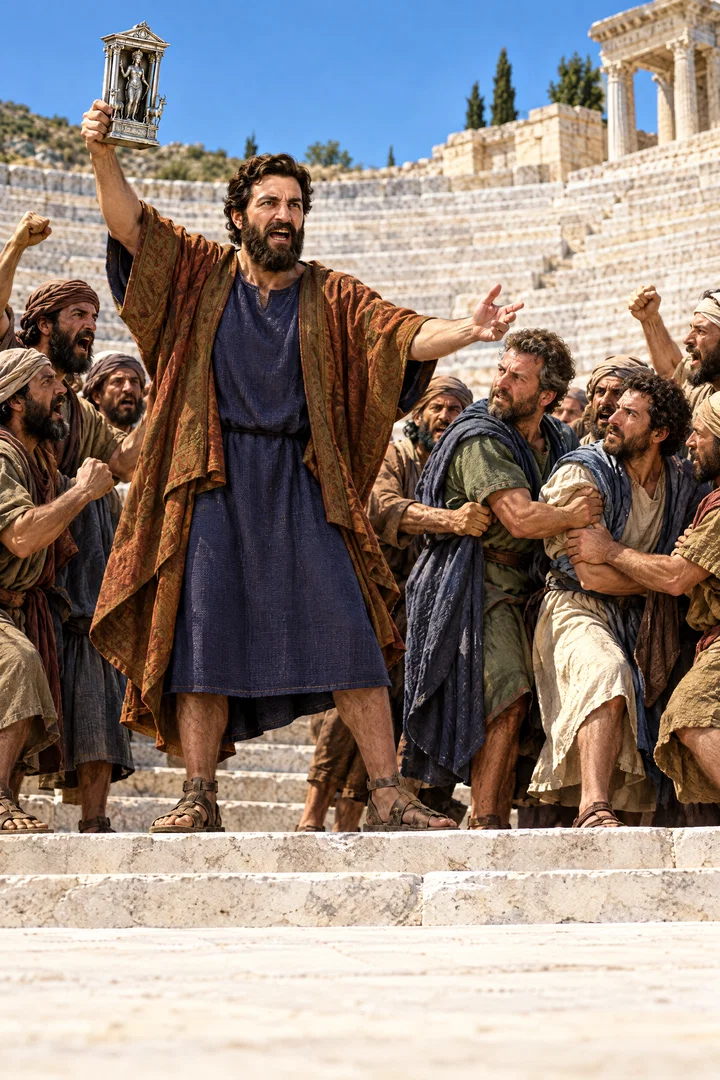
Whom he called together with the workmen of like occupation, and said, Sirs, ye know that by this craft we have our wealth.
Translations
Whom he called together with the workmen of like occupation, and said, Sirs, you know that by this craft we have our wealth.
Whom he called together with the workmen of like occupation, and said, Sirs, ye know that by this craft we have our wealth.
whom he called together with the workmen of like occupation, and said, Sirs, ye know that by this craft we have our wealth.
Whom he called together with the workmen of like occupation, and said, Sirs, ye know that by this craft we have our wealth:
Revised Version, American Standard Version
whom he gathered together, with the workmen of like occupation, and said, Sirs, ye know that by this business we have our wealth.
whom, having brought in a crowd together, and those who did work about such things, he said, 'Men, ye know that by this work we have our wealth;
whom having brought together, and those who wrought in such things, he said, Men, ye know that our well-living arises from this work,
gathering whom together, and them who in such things wrought, he said—Men! ye well know that, by this business, we have our prosperity;
Berean Standard Bible, Majority Standard Bible
Demetrius assembled the craftsmen, along with the workmen in related trades. “ Men,” he said, “ you know that this business is our source of prosperity.
whom he gathered together with the workmen of like occupation, and said, “Sirs, you know that by this business we have our wealth.
Whom he got together, with other workmen of the same trade, and said to them, Men, it is clear that from this business we get our wealth.
Whom he called together, with the workemen of like things, and saide, Syrs, ye knowe that by this craft we haue our goods:
Douay-Rheims (Challoner revision)
Whom he calling together, with the workmen of like occupation, said: Sirs, you know that our gain is by this trade;
Pictures
Cross-references
- Acts 19:35-41
And when the townclerk had appeased the people, he said, Ye men of Ephesus, what man is there that knoweth not how that the city of the Ephesians is a worshipper of the great goddess Diana, and of the image which fell down from Jupiter?
The town clerk calms the assembly and directs disputes to lawful process.
- 1 Corinthians 15:32
If after the manner of men I have fought with beasts at Ephesus, what advantageth it me, if the dead rise not? let us eat and drink; for to morrow we die.
Paul’s language about fighting beasts refers to his conflict at Ephesus.
- Acts 19:34
But when they knew that he was a Jew, all with one voice about the space of two hours cried out, Great is Diana of the Ephesians.
The crowd repeatedly cries out in praise of Diana.
Commentary
Each commentary is drawn from primary sources: the writings of Ellen G. White and Adventist pioneers and periodicals. Each commentary is separate. Its own words are not a quotation; follow the references to read the source passages.
Ellen G. White
9 sources
The setting is Ephesus, where the worship of Diana centered on a magnificent temple that held a large share of the wealth of Western Asia, giving the cult both religious and economic importance in the city.SLP 134.2–4 The verse belongs to the close of over three years of work centered in Ephesus that raised up a flourishing church and spread the gospel throughout the province of Asia among both Jews and Gentiles.AA 291.1–2 At that time Paul purposed to pass through Macedonia and Achaia to go to Jerusalem and afterward to see Rome, and he sent Timothy and Erastus into Macedonia while deciding himself to remain in Ephesus until after Pentecost, but the gathering of the craftsmen hastened his departure.AA 291.1–2
The craftsmen's complaint arose at the time of the yearly ceremonies at Ephesus in honor of Diana, which drew great numbers from all parts of the province with pomp and splendor.AA 291.3–292.1 An extensive and profitable business had grown up there from making and selling small silver shrines and images copied after the temple and image of Diana, and those in the industry found their gains diminishing.SLP 142.2AA 292.2–3SLP 142.1 Demetrius, a maker of silver shrines, called together the workmen of his trade and fellow craftsmen of like occupation to defend their livelihood, telling them that by this craft they had their wealth and prosperity and appealing to their shared financial interest.SLP 142.2RH Sep 14, 1911AA 292.2–3RH Sep 14, 1911SLP 142.1 His statement lays bare the economic interest at work, that their livelihood and prosperity depended on this craft.RH Sep 14, 1911RH Sep 14, 1911AA 295.1–2
Paul's labors and preaching had given heathen worship a telling blow by turning people from idol worship, causing a perceptible falling off in attendance at the national festival and in the enthusiasm of the worshipers.AA 291.3–292.1 His influence extended far beyond actual converts, so that many who had not openly accepted the new doctrines were enlightened to lose all confidence in their heathen gods.AA 291.3–292.1 This spread of the gospel threatened the image-making business and the income of pagan priests and artisans.SLP 142.2RH Sep 14, 1911AA 295.1–2SLP 142.1
The opposition to Paul was driven by danger to livelihood as well as by religious concern, as fear of losing that income drove the craftsmen to unite in blaming the unwelcome change on Paul's labors and to stir up hostility against him.SLP 142.2AA 292.2–3RH Sep 14, 1911AA 295.1–2 The company of believers meeting in the school of Tyrannus stood as an inharmonious note in the festive chorus and faced ridicule, reproach, and insult.AA 291.3–292.1
Sources
Pioneers and periodicals
34 sources
Demetrius was a silversmith who made silver shrines of Diana and called together the craftsmen of his own trade with workmen of like occupation, as head of an organized guild in which he had authority.ST Mar 4, 1903ST Feb 17, 1898 The shrines were small reproductions of the temple of Diana with the image within, bought by pilgrims and travelers, set up in homes as objects of household worship and often carried on the person as charms believed to avert dangers.ST Mar 4, 1903ST Aug 12, 1897 By this craft they had their wealth, for their trade in making images and models connected with Diana's worship supplied their riches and income.ST Mar 4, 1903ST Jun 9, 1898ST Aug 12, 1897 Paul's teaching that gods made with hands are no gods was turning away many in Ephesus and throughout Asia and threatened that business with disrepute and loss, so concern for trade moved Demetrius to oppose him while the appeal to protect Diana was used secondarily to rally the people.ST Jan 23, 1907ST Jul 1, 1880RH May 12, 1868ST Feb 17, 1898 When reform threatens a wrong, those who profit from it oppose it because their worldly interests are at stake, as when religious teachers whose salaries and established worship depend on popular traditions, and ministers whose positions were built around opposed teachings, resist truth lest their craft be in danger.RH May 12, 1868ST Jan 22, 1885RH Jul 28, 1859
Craft and Setting at Ephesus
Demetrius was a silversmith who made silver shrines of Diana, and he called together the craftsmen in his own trade with the workmen of like occupation to remind them that their wealth came from this business.ST Feb 17, 1898ST Aug 12, 1897 The gathering reflects an organized trade of at least craftsmen and workmen in which Demetrius had authority, and he was probably the head of the whole guild of image-makers.ST Mar 4, 1903 Their livelihood and riches depended on making images and models connected with Diana's worship.ST Mar 4, 1903
The shrines were small reproductions or models of the temple of Diana with the image within, made for homes, persons, travelers and merchants.ST Mar 4, 1903 They were purchased by pilgrims to the temple and set up in homes on return as objects of household worship, and the trade in them supplied the livelihood the craftsmen depended on.ST Aug 12, 1897 They were often made small enough to carry on the person as charms or amulets believed to avert diseases and other dangers.ST Aug 12, 1897
The setting is Ephesus in Paul's days, where the first missionary work met the opposition of Diana worship.ST Jul 29, 1897 The city was dominated by the great Temple of Diana or Artemis, and its magnificent temple was a source of civic pride and held a large share of Western Asia's wealth, which shows why work connected with that worship could be financially important.ST Jun 4, 1885ST Nov 29, 1910 Amid that worship Ephesus had a strong Christian church, and it provides the setting for the church addressed in Revelation.ST Nov 29, 1910
The Diana of the Ephesians worshiped in Paul's days was Semiramis, wife of Nimrod, worshiped under another name.ST Mar 4, 1913 Her worship belongs to the same cult and character as the queen of heaven and Venus and other such goddesses.ST Mar 4, 1913
The verse belongs to the insurrection, riot and tumult raised by Demetrius and his fellow craftsmen.RH Dec 3, 1867RH Dec 3, 1867 That uproar is cited as a possible source of danger to Paul, while Paul himself had little or no contention with the craftsmen and did not enter the theater.RH Dec 3, 1867 It is identified as the likely occasion for his figurative language about fighting beasts at Ephesus, meaning adversaries whose violence and fury resembled wild animals, not actual fighting of beasts in the arena.RH Dec 3, 1867
The episode places Paul's exclusive proclamation of Christ as the Way of Life against pagan religion as opposing ways, not partners in religious instruction.RH Jul 30, 1914ST Nov 13, 1893ST Aug 12, 1897 His teaching that gods made with hands are no gods was persuading and turning away many in Ephesus and throughout Asia, dethroning idols in hearts and threatening the business with disrepute.ST Mar 4, 1903ST Aug 12, 1897 The financial interest of the craftsmen whose livelihood depended on making objects associated with Diana's worship helped drive the disturbance against his preaching.ST Mar 17, 1887ST Nov 13, 1893 The crowd that gathered largely did not know why it had come and joined in the repeated cry praising Diana.ST Mar 17, 1887
Wealth-Driven Opposition to Paul
Demetrius gathered craftsmen whose work was connected with his own and reminded them in plain terms that their trade supplied their wealth.ST Mar 4, 1903ST Jun 9, 1898ST Aug 12, 1897ST Jul 24, 1893ST Oct 3, 1906 He called together fellow workers in the same trade and appealed to their shared livelihood, saying their business brought them riches and income.ST Mar 4, 1903ST Jun 9, 1898ST Aug 12, 1897ST Jan 23, 1896 Their livelihood was tied to making and selling silver shrines of Diana, so their wealth came from making shrines and images and models connected with her worship.ST Aug 12, 1897ST Jan 23, 1896ST Jul 24, 1893ST Oct 3, 1906 The spread of Paul's teaching threatened that wealth, and concern for their trade motivated opposition to Paul and his religion.RH Sep 14, 1911ST Jul 24, 1893ST Oct 3, 1906
The opposition was driven by self-interest, for the idol-making trade brought wealth and Paul's teaching threatened demand for idols.RH Sep 14, 1911ST Jan 23, 1907 Turning people from idolatry threatened the business with disrepute and loss, and the profitable trade in making images was endangered by the spread of the gospel.ST Jan 23, 1907ST Jul 1, 1880RH May 12, 1868 The danger extended to the income of pagan priests and artisans, and Demetrius warned that preaching threatened the trade that provided their wealth.ST Jul 1, 1880RH May 12, 1868 His statement reveals the economic interest behind the uproar, and his concern for trade led him to stir religious zeal against teaching that threatened both income and the worship connected with the business.RH Sep 14, 1911RH May 12, 1868 People who profit from religious traditions may in the same way resist truth when accepting it would cost them their livelihood.RH May 12, 1868
The appeal to protect Diana was secondary, used to rally the people to the cause of threatened gain. Devotion to Diana was tied to the income gained from her worship, since Christianity posed a threat to the business of those who profited from making and selling religious objects.ST Jan 23, 1907ST Feb 17, 1898 Economic interests can in this way stir opposition to the spread of the Bible and its teachings.ST Jul 1, 1880 The craftsmen refused to examine a message that could have made them wise unto salvation, because their opposition was driven by danger to their income.ST Jul 1, 1880
Wealth gained by an idolatrous craft must be given up in true conversion, as the believing Ephesians did by burning their books of magic and destroying valuable property rather than keeping it for profit.ST Dec 14, 1904 So must anyone possessed of idols act, like tearing out a planted opium field after yielding to Christ.ST Dec 14, 1904 Those already immersed may be re-baptized or re-immersed when they come into communion if the person desires it, and re-baptism is never demanded.ST Jul 6, 1904
Later Parallels and Applications
Reformers may expect that when reform threatens a wrong, those who profit from it will oppose the reform because their worldly interests are at stake, for the craftsmen at Ephesus depended on their trade for wealth.ST Jan 22, 1885 The same pattern holds for religious teachers who profit through salaries from popular traditions, since they stand to lose income if truth prevails and therefore stir up prejudice against it.RH May 12, 1868 Likewise religious leaders whose livelihood and established forms of worship are threatened by an opposing message stir up opposition when their craft is in danger, as Demetrius did.
Concern for livelihood troubles people when their work or interests are threatened, which explains why ministers opposed the Sabbath message that challenged what they had built their position around.RH Jul 28, 1859 People whose livelihood depended on a religious trade opposed the gospel when it threatened their wealth, as pagan priests and followers of Mahomet use their power to crush the gospel because it endangers their source of income.RH Aug 20, 1857 Vendors selling religious articles at Loreto are like the craftsmen of Ephesus, so that a preacher proclaiming the gospel there would provoke a similar uproar when the trade was threatened.ST Apr 1, 1886 Demetrius gathered fellow craftsmen and admitted their trade brought them wealth, and the modern Demetrius in Santiago likewise stirred up opposition because exposing purgatory and other Roman Catholic teachings threatened the traffic in souls.RH May 5, 1903
The craftsmen's livelihood was tied to making objects associated with Diana, so the spread of the gospel threatened their wealth and could provoke opposition, and the warning that the church party may keep their Diana means defenders of established religion in Guadaloupe may resist the gospel, yet an Ephesian church can still follow.RH Jul 30, 1908 Demetrius appealed to the workmen's shared livelihood and wealth from their trade, a parallel for how people whose income depends on drugs and patent medicines might protest if health reform reduced demand for those products.RH Aug 14, 1866 The money motive exposed when Paul's teaching that gods made with hands are no gods persuaded and turned away many in Ephesus and throughout Asia and threatened the business with disrepute is still at work when Sunday-closing demands are urged from fear that competitors who stay open will take trade.ST Mar 4, 1903 The verse belongs to the first missionary work at Ephesus where the worship of Diana opposed the gospel, and that worship would pass away, while lifeless formalism is equally bad.ST Jul 29, 1897
Sources