Acts 20:12
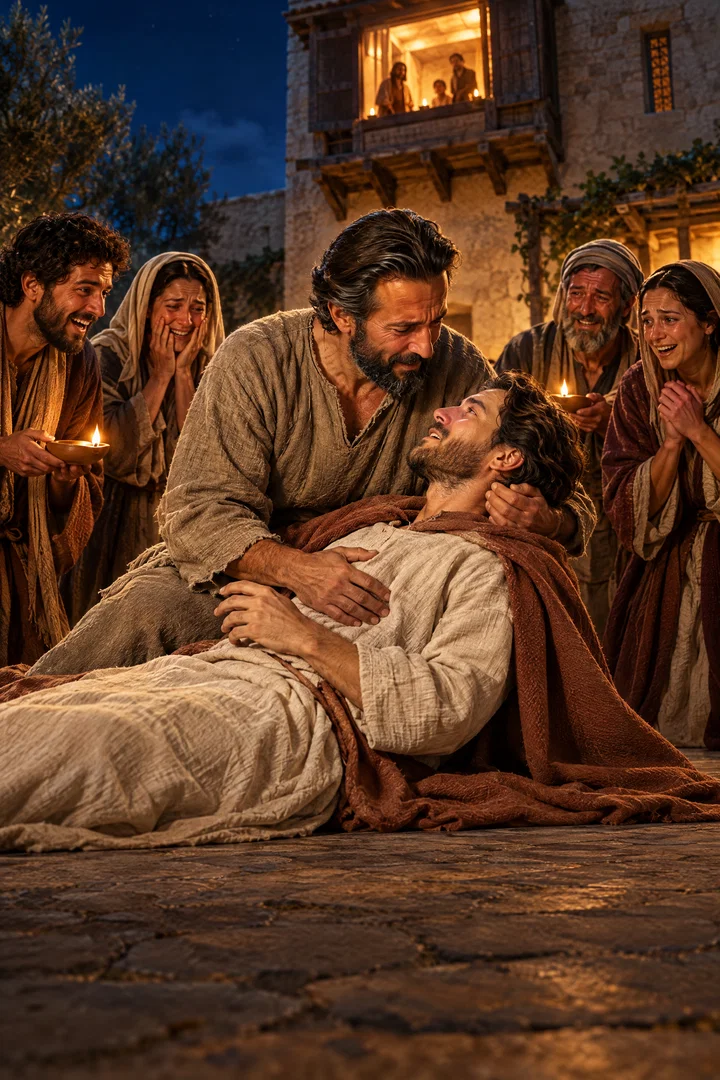
And they brought the young man alive, and were not a little comforted.
Translations
American King James Version, King James Version, KJV Cambridge Paragraph Bible, Webster Bible
And they brought the young man alive, and were not a little comforted.
Revised Version, American Standard Version
And they brought the lad alive, and were not a little comforted.
and they brought up the lad alive, and were comforted in no ordinary measure.
And they brought [ away] the boy alive, and were no little comforted.
And they brought the boy alive, and were comforted beyond measure.
Berean Standard Bible, Majority Standard Bible
And the people were greatly relieved to take the boy home alive.
They brought the boy in alive, and were greatly comforted.
And they took the boy in, living, and were greatly comforted.
And they brought the boye aliue, and they were not a litle comforted.
Douay-Rheims (Challoner revision)
And they brought the youth alive, and were not a little comforted.
Pictures
Cross-references
- Acts 20:7
And upon the first day of the week, when the disciples came together to break bread, Paul preached unto them, ready to depart on the morrow; and continued his speech until midnight.
The first-day Troas meeting frames the account of Eutychus’s restoration.
- 1 Kings 17:22-23
And the LORD heard the voice of Elijah; and the soul of the child came into him again, and he revived.
Elijah raises the widow’s son from the dead and returns him alive to his mother.
- 2 Kings 4:32-37
And when Elisha was come into the house, behold, the child was dead, and laid upon his bed.
Elisha raises the Shunammite’s son from the dead.
- Acts 9:40-41
But Peter put them all forth, and kneeled down, and prayed; and turning him to the body said, Tabitha, arise. And she opened her eyes: and when she saw Peter, she sat up.
Peter raises Tabitha from the dead and presents her alive.
- Acts 19:11-12
And God wrought special miracles by the hands of Paul:
Both show Paul’s miracle-working power.
- Acts 20:5-6
These going before tarried for us at Troas.
The travel sequence is used to locate the gathering at Troas.
- 2 Kings 13:20-21
And Elisha died, and they buried him. And the bands of the Moabites invaded the land at the coming in of the year.
A dead man revives when he touches Elisha’s bones.
- Luke 7:11-17
And it came to pass the day after, that he went into a city called Nain; and many of his disciples went with him, and much people.
Jesus raises the widow’s son at Nain.
Commentary
Each commentary is drawn from primary sources: the writings of Ellen G. White and Adventist pioneers and periodicals. Each commentary is separate. Its own words are not a quotation; follow the references to read the source passages.
Ellen G. White
1 source
Eutychus was fully restored to life after his fall from the window.SLP 196.4–197.1 He was brought back alive into the company of the believers gathered with Paul.SLP 196.4–197.1 His restoration greatly comforted all who had witnessed the accident.SLP 196.4–197.1
Sources
Pioneers and periodicals
63 sources
The young man who had fallen from the third-story window and been taken up dead was restored to life through Paul, who went down, embraced him and declared his life was in him, and was then brought alive into the company to their great comfort.ST May 27, 1875ST Sep 15, 1887ST Dec 11, 1884ST Feb 14, 1911ST Feb 24, 1898 This took place at Paul's farewell gathering at Troas, an all-night meeting in an upper chamber where the disciples came together to break bread and Paul preached until midnight and then talked until daybreak before departing.ST May 27, 1875ST Sep 15, 1887ST Feb 14, 1911 The night meeting belonged to the dark part of the first day of the week by evening-to-evening reckoning, that is Saturday night after the Sabbath was past, continuing past midnight until Sunday morning daybreak when Paul set out on foot for Assos.ST Jun 18, 1894RH May 1, 1900RH May 10, 1860RH Feb 7, 1916ST Jan 25, 1910 It was a one-time, occasional farewell meeting held at night because Paul was to depart on the morrow, not proof of regular first-day worship or a recurring Sunday observance.ST Jun 18, 1894ST Aug 21, 1893RH Jun 24, 1852 The use of the daylight of that same first day by Paul and his companions for hard travel and secular work proves it was treated as a common business day rather than sacred time, and the breaking of bread that night lays no requirement to meet on that day since the disciples broke bread daily and on other days.ST Aug 21, 1893ST Jan 25, 1910ST Dec 25, 1893ST Jan 13, 1881
Meeting at Troas
The verse belongs to Paul's farewell meeting at Troas, held at night in an upper chamber with many lights where the disciples came together to break bread.ST Sep 15, 1887ST Jul 22, 1897ST Feb 24, 1898ST Oct 5, 1882 Paul preached ready to depart on the morrow, continuing until midnight, and after coming up again he broke bread and ate and talked a long while even till break of day before departing.ST May 27, 1875ST Sep 15, 1887ST Jul 22, 1897ST Feb 24, 1898 The gathering was an all-night meeting that continued until daybreak, and its close is marked by the young man who fell from the window being brought back alive to the great comfort of those present.ST May 27, 1875ST Feb 14, 1911ST Jul 22, 1897ST Feb 24, 1898ST Oct 5, 1882
Paul interrupted his preaching to go down to the fallen young man and heal him, then returned to the gathering above.ST May 27, 1875ST Sep 15, 1887ST Jul 22, 1897 After going down and embracing him, he came up again and broke bread and ate.ST Sep 15, 1887ST Jul 22, 1897ST Feb 24, 1898ST Aug 21, 1893 The bread was broken between midnight and daybreak, and after the restoration Paul continued speaking until daybreak before departing on foot for Assos.ST Sep 15, 1887ST Jul 22, 1897ST Feb 24, 1898ST Aug 21, 1893 The miracle is the reason the gathering was recorded, taking place at a farewell meeting after Paul had been with the disciples the entire week and closed his Sabbath service with them, when he preached, went up with the disciples and broke bread, and preached again even until break of day.ST Oct 22, 1912
At break of day he departed on foot for Assos by the direct road of about twenty miles, as he had appointed to go afoot.ST Jul 22, 1897RH Dec 12, 1871ST Sep 15, 1887 His companions went before to ship and sailed to Assos to take him in there, sailing round Cape Lectum nearly twice as far and sailing on Sunday morning.ST Jul 22, 1897RH Dec 12, 1871ST Sep 15, 1887 When he met them at Assos they took him in and came to Mitylene, continuing his long journey of about nine hundred miles toward Jerusalem.ST Jul 22, 1897 On Sunday morning Paul walked on foot from Troas to Assos to join his companions who were sailing around the point of land, and the breaking of bread at that night meeting does not make the first day the Sabbath. Meeting in the daytime for perhaps two hours and refusing to journey on that day goes directly contrary to the terms of this example, in which in the daytime of that same first day he departed afoot on a long journey while his companions sailed.ST Sep 15, 1887
Paul had waited seven days at Troas after a slow voyage from Philippi so he could spend one Sabbath with the church.ST Feb 24, 1898 He then sent the ship on as soon as the Sabbath ended while he stayed for this farewell gathering in which the fallen young man was brought in alive to the great comfort of the believers.ST Feb 24, 1898 The verse says they and the disciples rather than we because Paul was alone with the Troas church.ST Feb 24, 1898 His traveling companions, including Luke, had already gone ahead by ship toward Assos to save time on the hurried journey to Jerusalem.ST Feb 24, 1898
Young Man Restored
The young man was Eutychus, who sat in a window of the upper chamber at Troas and, sinking into deep sleep while Paul preached long, fell down from the third loft or third story and was taken up dead.ST Sep 15, 1887ST Jul 22, 1897ST Feb 24, 1898 The fall came during the night farewell gathering when the disciples had come together to break bread with many lights, Paul preaching until midnight and ready to depart on the morrow.ST Sep 15, 1887ST Jul 22, 1897ST Feb 24, 1898 The accident interrupted the discourse, with the lad overcome with sleep during the long preaching.ST Sep 15, 1887ST Jul 22, 1897ST Aug 21, 1893
Paul interrupted his preaching and went down, fell on him and embraced him, and declared that his life was in him.ST Sep 15, 1887ST Jul 22, 1897ST Feb 24, 1898 By this he healed him and raised him from the dead, so that God's miraculous power worked through Paul to restore the dead to life.ST Sep 15, 1887ST Feb 24, 1898ST Oct 11, 1877ST Mar 18, 1889ST Jan 27, 1914 The healing took place after midnight and before going back up to the third-story room, and after coming up again Paul broke bread and ate and talked a long while even till break of day.ST Jul 22, 1897ST Feb 24, 1898ST Aug 21, 1893 The bread was thus broken between midnight and daybreak, with the restoration coming first and the breaking of bread following.ST Aug 21, 1893
They brought the young man alive into the company, presenting the lad alive to the believers.ST May 27, 1875ST Dec 11, 1884ST Feb 14, 1911ST Feb 24, 1898RH Feb 7, 1916 His return alive greatly comforted those present, who were not a little comforted and received great comfort from his restoration.ST May 27, 1875ST Dec 11, 1884ST Feb 14, 1911RH Feb 7, 1916ST Oct 11, 1877 The fall did not end in death but in restoration during that same night meeting, which then continued until daybreak before Paul departed.ST May 27, 1875ST Sep 15, 1887ST Feb 14, 1911 The event took place at a night meeting in Troas during a day of activity for Paul and his companions.ST Nov 8, 1905
The young man was doubtless a Greek, as his name resembles a word used in modern Greek.RH Apr 29, 1909 Discussion of his seeking air at a window questions claims that the room was both hot and close and, alternatively, large and airy.ST Jan 8, 1885
Timing of Gathering
The night gathering belonged to the dark part of the first day of the week by Bible evening-to-evening reckoning from sunset, that is Saturday night after the Sabbath was past.ST Jun 18, 1894RH May 1, 1900RH May 10, 1860RH Oct 28, 1915RH Jul 20, 1911 It was an all-night farewell meeting continuing past midnight until Sunday morning daybreak, with preaching until midnight and then talking until break of day before departing.RH May 1, 1900RH Oct 28, 1915RH Jun 24, 1852 The young man being brought alive and the great comfort this gave belong to that night gathering.RH Oct 28, 1915RH Jun 24, 1852 Depending on the method of reckoning time, the gathering began after the Sabbath and the bread was broken early Sunday sometime after midnight and before daybreak, or the breaking of bread occurred after midnight on Monday.ST Jan 25, 1910RH Jun 24, 1852ST Sep 15, 1887
The word morrow does not necessarily mean another day of the week but the next period of daylight, meaning Sunday morning when Paul departed to join the vessel at Assos.RH Dec 12, 1871 He went by the direct road of about twenty miles while the ship sailed round Cape Lectum nearly twice as far, sailing on Sunday morning.RH Dec 12, 1871 When Sunday morning came Paul set out on foot from Troas to Assos while his companions sailed, spending all the light part and daytime of that same first day in travel.RH May 10, 1860RH Feb 7, 1916ST Jan 25, 1910RH Jul 20, 1911RH Jan 1851 He left at daybreak on Sunday after the all-night meeting, and the restoration of Eutychus alive with the comfort it brought precedes that departure.RH Feb 7, 1916ST Jan 25, 1910 That Sunday journey from Troas to Assos was more than twenty times the Sabbath day's journey allowed by the Jews.ST Jan 29, 1902
Those who held a differing reckoning describe the meeting as held on the seventh-day Sabbath and continued over into part of the first day of the week, rather than as a first-day night meeting.ST Jan 30, 1896 One account identifies Paul's departure for Assos as taking place on the second day of the week, following the gathering on the first day.
No Sunday Sacredness
The gathering at Troas to which the bringing in of the young man alive belongs is the only religious meeting on the first day of the week recorded in the entire word of God, with no record of a meeting on that day before it, afterward, or by custom.ST Aug 21, 1893ST Dec 25, 1893ST Jul 18, 1878ST Jun 4, 1874RH Jan 23, 1866 It was an evening gathering held in the night and continued after midnight, not a daytime service.ST Dec 25, 1893ST Jul 18, 1878ST Jun 4, 1874 It was a single event at one church, and a single event does not establish a recurring Sunday observance.RH Jun 24, 1873
It was a one-time, occasional, accommodation farewell meeting held at night because Paul was to depart on the morrow and they would see his face no more, not proof of regular first-day worship or sacredness.ST Jun 18, 1894ST Aug 21, 1893RH Jun 24, 1852RH Oct 21, 1873RH Jan 23, 1866 The purpose met by mentioning the first day in this connection is to give positive proof that Sunday was not sacredly observed by the apostles and their colaborers.ST Aug 21, 1893 Depending on the method of reckoning time, the gathering began after the Sabbath and the bread was broken early Sunday, or the breaking of bread occurred after midnight on Monday, but in either case it describes a farewell before a journey, not a command or clear example of Sunday observance.RH Jun 24, 1852
The meeting, preaching, and breaking of bread do not establish the first day as a weekly holy day, a Sabbath, a Christian Sabbath, or a commanded day of rest and daytime worship in place of the fourth commandment.RH Jun 24, 1852ST Aug 23, 1883RH May 19, 1851RH Dec 23, 1851RH Nov 27, 1913 The breaking of bread at that night meeting does not make the first day the Sabbath to be kept, any more than breaking bread daily from house to house makes every day the Sabbath. Breaking of bread that night makes nothing holy and lays no requirement to meet and break bread on that day, since Jesus instituted it on Thursday evening and the disciples sometimes broke bread every day.ST Jan 13, 1881ST Jul 13, 1882ST Jul 22, 1897 The breaking of bread commemorated Christ's death, not his resurrection, and does not establish a customary first-day worship service or an ordinance sanctifying that day.ST Jul 13, 1882
The day is described as otherwise used for hard, toilsome labor, with Paul's companions in labor spending the entire twenty-four hours of that day in travel and Paul himself spending all the light part and all the daylight of the same day in the same business of travel.ST Aug 21, 1893ST Dec 25, 1893ST Jul 18, 1878 When Sunday morning came Paul set out on foot for Assos, showing that he and his companions did not treat the first day as sacred time.ST Jan 25, 1910 On Sunday morning Paul walked on foot from Troas to Assos to join his companions who were sailing around the point of land, and then continued his long journey of about nine hundred miles toward Jerusalem, which marks that day as a common business and traveling day.ST Aug 23, 1883 Paul's waiting till the Sabbath was past and then traveling on first-day morning proves he kept the ancient seventh-day Sabbath with sacred regard and did not regard the first day of the week as the Sabbath or Christian Sabbath, with morrow meaning the next period of daylight on Sunday morning when he departed to join the vessel at Assos by the direct road of about twenty miles while the ship sailed round Cape Lectum nearly twice as far.RH Dec 12, 1871
The first day remains a secular day with no sacred title, and meeting on a day does not make it a Sabbath, since the apostles met on other days also.ST Jan 30, 1896 The phrase means the first day of the week, not one of the sabbaths or first-day sabbath, and the early Christians never spoke of the first day as Sabbath, as a sacred or worship day, nor called it the Lord's day.ST Sep 23, 1897 The Lord's day is the day the Lord set apart, and the first day was never called the Lord's day till around A.D. 200.ST Sep 23, 1897 The account, which begins on the evening of the first day with the meeting continuing past midnight into Sunday and Paul taking his journey on Sunday morning, does not establish that the Lord's Supper was celebrated early in the evening.RH Jun 24, 1873 Those who held the differing view taught that the record of Paul preaching at Troas on the first day proves he held meetings on the first day, showing God must have sanctioned keeping the first day of the week though no precept commands it.RH Jan 2, 1866
Purpose and Lessons
The gathering at Troas is remembered because a young man fell and was miraculously brought back to life, to the great comfort of those present.ST Mar 30, 1882ST Mar 8, 1910ST Jul 22, 1897 The miracle is what makes the account notable and explains why it was recorded, not any teaching about a change of Sabbath or marking the first day as holy.ST Jul 22, 1897RH Mar 20, 1856 The breaking of bread that night made nothing holy, since the disciples broke bread daily and on other days, and Paul may have preached on other days during his week at Troas rather than establishing regular first-day meeting.ST Jul 22, 1897 By Bible reckoning where the day begins at sunset, the night meeting belonged to Saturday night after the Sabbath was past, and the daylight of the first day was spent by Paul in a twenty-mile walk to Assos while his companions sailed, proving it was treated as an ordinary day for work and travel.ST Jul 22, 1897
The verse belongs to Paul's experience at Troas in Acts 20:1-16, standing with his experiences at Thessalonica, at Berea, at Athens, at Corinth, at Ephesus, and his farewell talk to the elders of Ephesus.ST Jul 7, 1909 Together they show how wonderfully God wrought in all these places and how the word triumphed in every case notwithstanding persecution.ST Jul 7, 1909 Paul's night of ministry at Troas, preaching through the night and then traveling on foot to Assos the next morning, was strenuous missionary labor and sacrifice rather than vacation.ST Mar 18, 1889RH Dec 12, 1907 His long service and demanding journey show his determination to work thoroughly for the church before leaving.ST Mar 18, 1889RH Dec 12, 1907
Paul's farewell sermon in the upper chamber at Troas is an example of a message given to instruct and benefit its hearers rather than to win fame or display eloquence.STRH Feb 17, 1863ST Apr 5, 1877 Its circumstances differed from speeches and histories composed for fame or public praise.STRH Feb 17, 1863 Paul's preaching until midnight to a listening, drowsy company serves as a comparison for a long meeting that continued late into the night.ST May 6, 1886ST Dec 4, 1893 The long meeting at Troas lasted later than the meeting in Kaeo.ST May 6, 1886ST Dec 4, 1893
The young man sought air at a window during Paul's meeting and fell, and discussion of that circumstance questions claims that the room was both hot and close and, alternatively, large and airy.ST Jan 8, 1885 The only meeting on the first day of the week in the apostolic record that can enter the question of Sunday observance shows a meeting at night that lasted all night, not a daytime service.ST Sep 15, 1887ST Sep 15, 1887 Paul preached in the night until midnight and then talked a long while even till break of day, the bread was broken shortly after midnight, and in the daytime of that same first day he departed afoot on a long journey to Assos while his companions went before to ship and sailed to Assos as he had appointed.ST Sep 15, 1887ST Sep 15, 1887 Anyone treating this example as binding must follow all its details, not only the first-day meeting, and meeting in the daytime for perhaps two hours, breaking bread about midday, preaching half an hour to an hour in the daytime, and refusing to journey on that day goes directly contrary to its terms and cannot claim its authority.ST Sep 15, 1887ST Sep 15, 1887
Paul's raising the young man shows that raising the dead was not by itself proof that Jesus was the Messiah, since other people also performed this miracle through God's power.ST Jan 30, 1912ST Jan 28, 1889ST Mar 6, 1901 Eutychus restored to life after being raised from the dead is an exception to the general rule that the dead await resurrection.ST Jan 30, 1912ST Jan 28, 1889 His restoration is an example of someone whose life functions had ceased and then returned, yet who gave no account of conscious experience during death.RH Aug 24, 1905 The dead are therefore in a state of total unconsciousness.RH Aug 24, 1905 The miracle proves that true servants of God work miracles and healings by the gift of the Spirit, yet they do not advertise their power to work miracles or to heal.ST Jan 30, 1912ST Mar 6, 1901 They heal not according to their own will or desire, but according to the faith of the needy and as the Spirit indicates, for the gifts of the Spirit are divided and exercised not as man wills but as the Spirit wills.ST Mar 6, 1901
Sources