Acts 20:11
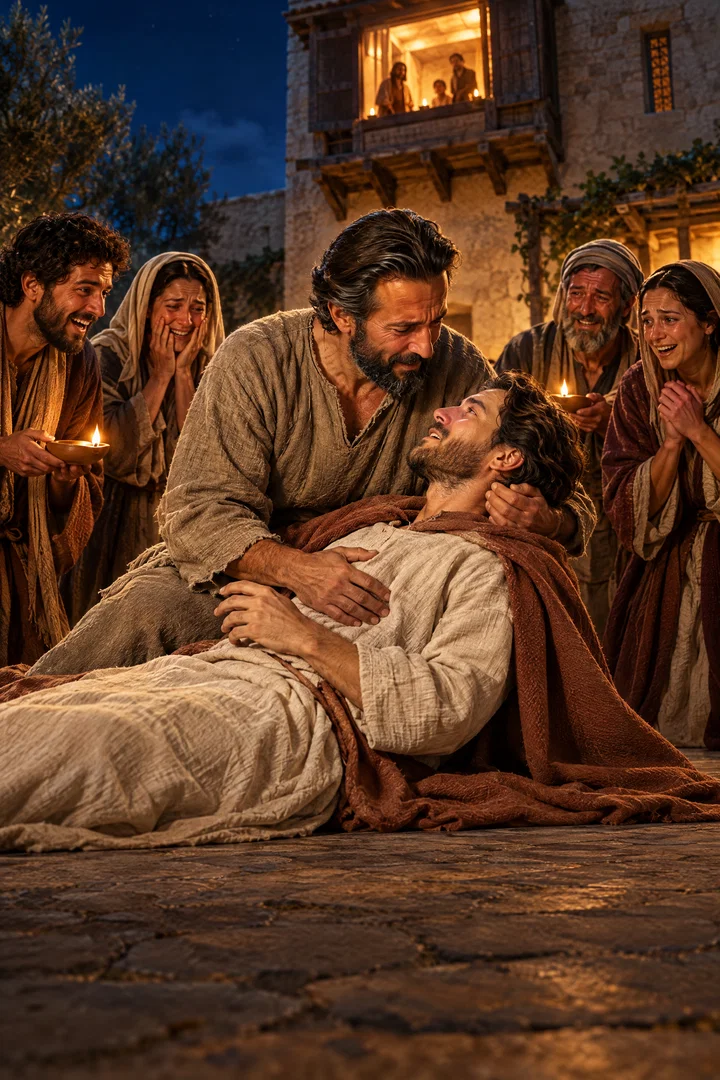
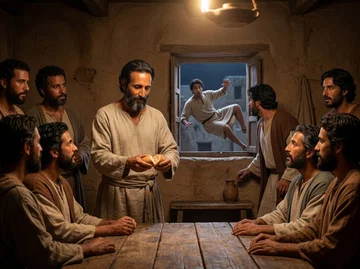
When he therefore was come up again, and had broken bread, and eaten, and talked a long while, even till break of day, so he departed.
Translations
American King James Version, King James Version, KJV Cambridge Paragraph Bible
When he therefore was come up again, and had broken bread, and eaten, and talked a long while, even till break of day, so he departed.
When he had come up again, and had broken bread, and eaten, and discoursed a long while, even till break of day, so he departed.
Revised Version, American Standard Version
And when he was gone up, and had broken the bread, and eaten, and had talked with them a long while, even till break of day, so he departed.
and having come up, and having broken bread, and having tasted, for a long time also having talked — till daylight, so he went forth,
And having gone up, and having broken the bread, and eaten, and having long spoken until daybreak, so he went away.
And, going up, and breaking the loaf, and tasting,—for a good while also conversing, until dawn, thus, he departed.
Berean Standard Bible, Majority Standard Bible
Then Paul went back upstairs, broke bread, and ate. And after speaking until daybreak, he departed.
When he had gone up, had broken bread and eaten, and had talked with them a long while, even until break of day, he departed.
And when he had gone up, and had taken the broken bread, he went on talking to them for a long time, even till dawn, and then he went away.
Then when Paul was come vp againe, and had broken bread, and eaten, hauing spoken a long while till the dawning of the day, hee so departed.
Douay-Rheims (Challoner revision)
Then going up, and breaking bread and tasting, and having talked a long time to them, until daylight, so he departed.
Pictures
Cross-references
- Acts 20:7
And upon the first day of the week, when the disciples came together to break bread, Paul preached unto them, ready to depart on the morrow; and continued his speech until midnight.
Describes the first-day gathering and bread-breaking that continued into the events of verse 11.
- Acts 2:46
And they, continuing daily with one accord in the temple, and breaking bread from house to house, did eat their meat with gladness and singleness of heart,
daily breaking of bread proves it makes no day holy
- 1 Corinthians 11:26
For as often as ye eat this bread, and drink this cup, ye do shew the Lord’s death till he come.
The breaking of bread is linked to proclaiming Christ’s death.
- Luke 24:35
And they told what things were done in the way, and how he was known of them in breaking of bread.
Both describe recognizing Jesus in the breaking of bread, a phrase also used for an ordinary meal.
- Matthew 26:26
And as they were eating, Jesus took bread, and blessed it, and brake it, and gave it to the disciples, and said, Take, eat; this is my body.
Jesus breaks bread at the Last Supper, where he institutes the ordinance.
- Acts 20:4-6
And there accompanied him into Asia Sopater of Berea; and of the Thessalonians, Aristarchus and Secundus; and Gaius of Derbe, and Timotheus; and of Asia, Tychicus and Trophimus.
Names Paul’s companions and recounts the company’s journey and stay at Troas.
- Acts 27:35
And when he had thus spoken, he took bread, and gave thanks to God in presence of them all: and when he had broken it, he began to eat.
Its wording is compared with the later eating in Acts 20:11.
- Acts 16:13
And on the sabbath we went out of the city by a river side, where prayer was wont to be made; and we sat down, and spake unto the women which resorted thither.
Contrasts repeated Sabbath meetings with a single first-day meeting.
- Acts 20:25
And now, behold, I know that ye all, among whom I have gone preaching the kingdom of God, shall see my face no more.
Marks the meeting as Paul’s farewell.
- Acts 20:6
And we sailed away from Philippi after the days of unleavened bread, and came unto them to Troas in five days; where we abode seven days.
The preceding account says Paul’s party had spent a week at Troas.
- Luke 22:19-20
And he took bread, and gave thanks, and brake it, and gave unto them, saying, This is my body which is given for you: this do in remembrance of me.
The institution of the bread and cup is connected with remembering Christ’s death.
- Luke 24:30
And it came to pass, as he sat at meat with them, he took bread, and blessed it, and brake, and gave to them.
Jesus was recognized while breaking bread at a meal.
- 1 Corinthians 11:23-24
For I have received of the Lord that which also I delivered unto you, That the Lord Jesus the same night in which he was betrayed took bread:
Christ institutes the breaking of bread in remembrance of him.
Commentary
Each commentary is drawn from primary sources: the writings of Ellen G. White and Adventist pioneers and periodicals. Each commentary is separate. Its own words are not a quotation; follow the references to read the source passages.
Ellen G. White
2 sources
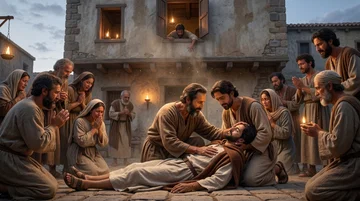
After Eutychus was restored to life, the believers went back up again to the upper room.SLP 196.4–197.1AA 391.2–3 There they united in partaking of the communion.SLP 196.4–197.1AA 391.2–3 Paul then continued to talk with them a long while, even until break of day, before he departed.SLP 196.4–197.1AA 391.2–3
Sources
Pioneers and periodicals
87 sources
After Eutychus fell from the third loft and was taken up dead and restored to life, Paul went back upstairs, broke bread and ate, and talked a long while until daybreak, then departed.ST May 27, 1875RH Mar 11, 1862ST Sep 15, 1887 The gathering was a special all-night farewell meeting because he was to leave in the morning, held with many lights in the upper chamber after waiting seven days at Troas on the voyage toward Jerusalem.ST Sep 15, 1887ST Apr 12, 1883ST Oct 23, 1884 By Bible reckoning from sunset to sunset the night meeting belonged to the first day of the week beginning Saturday evening, and his departure at daybreak was Sunday morning in the light part of the same day.ST May 27, 1875ST Feb 13, 1912ST Feb 14, 1911 The breaking of bread with eating together was an ordinary meal before parting, while those who held it to be the Lord's Supper held it in remembrance of Christ's death and not of His resurrection.ST May 27, 1875ST Oct 23, 1884RH May 10, 1860RH Jul 4, 1865ST Jan 20, 1909 At daybreak he spent the daylight of the first day in common travel and hard labor on foot from Troas to Assos while his companions sailed ahead, which shows the day treated as an ordinary working day with no precept for its sacredness or for a change of the Sabbath.ST Aug 21, 1893ST Feb 20, 1879ST Aug 21, 1893RH Mar 31, 1874ST Oct 17, 1878
Night Meeting at Troas
After Eutychus fell from the third loft and was taken up dead, Paul went down and restored him to life, then went back upstairs, broke bread and ate, and kept talking a long while with those present until daybreak, and then departed.ST May 27, 1875RH Mar 11, 1862ST Sep 15, 1887ST Nov 25, 1886ST Feb 13, 1912 The eating and all-night talking belonged to the first-day-of-the-week gathering when the disciples came together to break bread and Paul preached, with many lights in the upper chamber.ST Sep 15, 1887ST Nov 25, 1886 The meeting begun on the first day was a night meeting that continued through the night, and Paul continued speaking after his preaching and after the healing until daybreak before departing without resting.ST Nov 25, 1886ST Feb 13, 1912ST Aug 13, 1874 If the day was reckoned from sunset the disciples had met at the close of the Sabbath and Paul broke bread early on the first day, while if reckoned from midnight the breaking of bread occurred on Monday, and in either case the occasion did not establish Sunday as a Sabbath.ST Aug 13, 1874
The gathering was a special all-night farewell meeting because Paul was ready to depart on the morrow and did not expect to see them again, an unusual occasion rather than evidence that the first day was sacred.ST Sep 15, 1887ST Apr 12, 1883ST Oct 23, 1884ST Feb 20, 1879 After spending the Sabbath in religious exercises, Paul used the remaining time to warn, advise, encourage, counsel, instruct them personally, and solemnize his last meeting before leaving.ST Oct 23, 1884ST Feb 20, 1879 It was only an evening meeting of the kind that can be held on any day without making the day holy, marked by the raising of a dead young man, which is why it was recorded and not because of any sacredness in the day.ST Feb 20, 1879 The account is taken as a meeting held in the evening after the Sabbath during Paul's visit of seven days at Troas, connected with his departure the next day and not a stated weekly custom, and holding a religious meeting on the first day does not by itself establish that day as a weekly Sabbath.ST Jun 13, 1906 The breaking of bread at this meeting commemorated Christ's death and not his resurrection.ST May 27, 1875
By Bible sunset-to-sunset reckoning the night meeting belonged to the first day of the week, beginning on what is now called Saturday night after the Sabbath ended at sunset, and Paul's departure at daybreak was on Sunday morning in the light part of the same first day.ST May 27, 1875ST Feb 13, 1912ST Feb 14, 1911ST Jun 18, 1894RH May 10, 1860 The farewell meeting at Troas followed the Sabbath, and Paul resumed his journey and set out on foot on Sunday morning after the Sabbath had ended.ST Jun 18, 1894RH May 10, 1860RH Feb 27, 1872 His departure from the meeting is evidence that he observed the Sabbath but did not regard the first day as a Sabbath, and the verse is not evidence that the first day was kept as a Sabbath.ST Feb 14, 1911RH Feb 27, 1872 Breaking bread at Troas was a meal shared at this meeting, not an observance of a Christian Sabbath.RH May 10, 1860
The breaking of bread and eating took place after midnight between midnight and daybreak, after Paul had preached until midnight and healed Eutychus, so by modern midnight-to-midnight or Roman reckoning it fell on Monday morning, the second day, and not on Sunday.ST Aug 13, 1874RH Mar 31, 1874ST Jul 12, 1905 Counted by sunset reckoning it fell early Sunday morning at an evening meeting held at the close of the Sabbath with many lights because he was to depart in the morning, and counted by midnight reckoning it fell on Monday.RH Mar 31, 1874 The sequence compared with verse 7 places the breaking of bread after midnight in the third-story room after the young man who fell from the window was healed, followed by talking till break of day and then departure.ST Jul 12, 1905 The meeting's occurrence on Sunday, or the breaking of bread during it, does not by itself make Sunday a Sabbath.ST Jul 12, 1905
On one reading the evening meeting and the hours of the night belong to the first day of the week under the Roman reckoning of time, and Paul departed on the following day, Monday, so his journey did not take place on the Sabbath. The morrow means the next period of daylight on the same day of the week and not another weekday, and can refer generally to the next light part of the day rather than mark a day reckoned from midnight.ST Jan 11, 1905RH Dec 12, 1871RH May 17, 1860 The evening-before-morning order supports reckoning the day from sunset.RH Jun 17, 1873 The first day of the week extended past midnight, and day can mean the light portion of a twenty-four-hour period, with the coming of daylight marking the beginning of another such day.RH Dec 15, 1863 His departure at daybreak was therefore on first-day morning, Sunday morning, even though the gathering had begun on Saturday night, and supplies no evidence that the first day had sacred status.ST Jan 11, 1905RH Dec 12, 1871
The surrounding narrative chiefly occupies Acts 20, whose principal events occurred at two places.ST Jun 9, 1898 This eating and all-night talking was followed by bringing the young man in alive and by Paul going on foot while his companions sailed to Assos to take him in and go on to Mitylene.ST Sep 15, 1887 Paul then journeyed on foot to Assos, about twenty miles by the direct road across the peninsula, while the ship sailed nearly twice as far around Cape Lectum to join him there.RH Dec 12, 1871 The voyage was from Philippi toward Jerusalem and Syria after Paul and his company had waited seven days at Troas.ST Sep 15, 1887
Words for Bread and Talk
Breaking bread with the added eating was sharing a common meal together before parting, an ordinary meal or supper and not in itself the Lord's Supper.RH May 10, 1860RH Jul 4, 1865ST Jan 20, 1909RH Dec 11, 1860 After coming back upstairs from where Eutychus had been restored, Paul broke bread, ate, and continued speaking with the disciples until daybreak before departing.RH May 10, 1860RH Jul 4, 1865ST Jan 20, 1909RH Dec 11, 1860RH May 5, 1851 The meeting was held on what is now called Saturday night, the night following the Sabbath, because the first day of the week began at sunset, and Paul set out on foot on Sunday morning.RH May 10, 1860ST Jan 20, 1909RH May 5, 1851 The language of breaking bread and eating supports the distinction, with the reference to eating showing that breaking bread in Acts 20:7 meant an ordinary meal.RH Jul 4, 1865RH Dec 11, 1860 The meal was an ordinary supper connected with the gathering, so breaking bread there does not by itself show that the day was being honored as sacred or observed as a Christian Sabbath.RH May 10, 1860ST Jan 20, 1909
Breaking bread was also the Lord's Supper or communion in remembrance of Christ's death and sufferings, not a commemoration of his resurrection, fittingly solemnizing Paul's last meeting before leaving.ST May 27, 1875ST Mar 30, 1882RH Dec 12, 1871ST Jul 30, 1902 After going back upstairs following Eutychus's fall, Paul broke bread, ate, and talked with the disciples until daybreak, then departed, the occasion being connected with his imminent departure rather than a weekly first-day observance.ST May 27, 1875ST Oct 23, 1884ST Mar 30, 1882 The meeting is placed on Saturday night at the close of the Sabbath after Paul and his company had waited seven days on the voyage from Philippi toward Jerusalem and Syria, with Paul preaching continuously without cessation until midnight and then talking until break of day.ST May 27, 1875RH Dec 12, 1871ST Jul 30, 1902 The breaking of bread took place after midnight after Paul's sermon had closed with the fall of Eutychus, and was celebrated with the brethren because he was leaving and did not expect to see them again.ST Oct 23, 1884RH Dec 12, 1871ST Jul 30, 1902 After spending the Sabbath in religious exercises, Paul used the remaining time to warn, advise, encourage, counsel, and instruct them personally, and then resumed his journey on Sunday morning after the Sabbath had ended.ST May 27, 1875ST Oct 23, 1884
The breaking of bread may have been either the Lord's Supper or an ordinary meal, and even if it was the Lord's Supper it did not make the day holy or establish a recurring custom.ST Jan 20, 1909ST Sep 28, 1915ST Apr 13, 1904 It is understood as a shared meal before the travelers left, with breaking bread and then eating kept as the meal eaten together before parting.ST Jan 20, 1909ST Sep 28, 1915ST Apr 13, 1904 Even on that supposition it would not make the day holy, establish a custom, fix the ordinance to Sunday, confine it to a particular day or frequency, set a rule for other Christians, or show the day was sacred or kept as a Sabbath.ST Jan 20, 1909ST Sep 28, 1915 The gathering lasted through the night with departure on Sunday morning by that reckoning, and Paul departed to travel during the light part of Sunday.ST Apr 13, 1904 The earlier breaking of bread for which the disciples assembled is distinguished from the later eating after Paul's discourse, with breaking bread and then eating kept as two distinct acts, the same distinction kept at Jerusalem.RH Jun 24, 1873RH Mar 20, 1856 Its account of bread being broken and eaten at night and again after midnight shows that the practice was not confined to the evening but also occurred after midnight.RH Mar 20, 1856 The communion took place before Paul's discourse, while the meal after midnight is therefore treated as refreshment and ordinary food, not the Lord's Supper, and the Lord's Supper is not confined to any day of the week.RH Jun 24, 1873RH Mar 20, 1856
The word translated talked differs from the word for preaching in verse 7 and indicates social conversation and fellowship with the disciples through the night.ST Feb 24, 1898RH Jul 4, 1865ST Feb 24, 1898 After Paul went up again he broke bread and ate and talked with the disciples a long while even till break of day and then departed, so the company spent the rest of the night together in this closing meeting at Troas before his departure.ST Feb 24, 1898ST Feb 24, 1898RH Nov 25, 1858 The believers sharing bread and enjoying fellowship together in Christ at Troas provides the example for breaking bread after midnight.ST Feb 24, 1898RH Nov 25, 1858 The English word when has no corresponding adverb of time in the original, which reads literally having ascended and broken bread, parallel to verse 7, and implies no customary or stated weekly action.RH Dec 12, 1871 The form of expression neither implies customary action nor gives reason to consider the first day the stated day for worship and rest, giving no hint that meeting on the first day of the week was a customary act.RH Dec 12, 1871
Departure and Daybreak Journey
At daybreak Paul left Troas and spent the light part of the first day in ordinary travel and hard labor, walking on foot to Assos while his companions went ahead by ship and then continuing on by ship, which shows the day was treated as a common working traveling day and not kept as sacred.ST Aug 21, 1893ST Aug 21, 1893RH Mar 31, 1874ST Jan 25, 1910 After preaching until midnight and going down to restore the young man who fell from the window, he came back upstairs, broke bread and ate between midnight and daybreak, and talked until break of day before departing.ST Aug 21, 1893RH Mar 31, 1874ST Jan 25, 1910RH Oct 28, 1915 By Bible sunset-to-sunset reckoning the whole night meeting and all the daylight following until sundown belonged to the first day beginning Saturday evening after the Sabbath, while by present midnight-to-midnight reckoning the breaking of bread after midnight fell on Monday, the second day.ST Aug 21, 1893RH Mar 31, 1874 The meeting was an all-night farewell held Saturday night after the Sabbath at the close of the Sabbath with many lights because he was to depart in the morning, and breaking bread on that day does not make it a Sabbath or prove a change of the Sabbath.ST Aug 21, 1893RH Mar 31, 1874ST Jan 25, 1910RH Oct 28, 1915
The foot journey to Assos was about nineteen and one-half miles, after which without delay he sailed on about fifty miles toward Mitylene to meet the ship there.ST Aug 21, 1893 The foot journey to Assos was about twenty miles by the direct road across the peninsula, while the ship sailed nearly twice as far around Cape Lectum to join him there.ST Jan 20, 1909RH Dec 12, 1871ST Jul 22, 1897 The light part of that same first day was used as a common working day for travel, which would not have been done if the first day had been a Sabbath, and the meeting is recorded because of the miracle of raising the young man to life.ST Jan 20, 1909RH Dec 12, 1871ST Jul 22, 1897
The journey involved nineteen miles of toilsome foot travel from Troas to Assos on Sunday, with at least nineteen miles spent on the road in all-night preaching followed by the Sunday walk as strenuous labor and sacrifice rather than pleasant holiday rest.ST Mar 18, 1889ST Sep 2, 1886 He spent the whole of the first day from daybreak traveling, going seven miles on foot while the ship sailed about fourteen miles around the headland from Troas to Assos, then taking passage aboard, which proves the first day was not kept as holy.RH Sep 17, 1857 The journey from Troas to Assos was more than twenty times the distance of the Sabbath day's journey allowed by the Jews, showing travel and work were treated as lawful on Sunday with no difference for work between Sunday and other days apart from meeting for worship.ST Feb 24, 1898ST Aug 19, 1875ST Jan 29, 1902
To lose no further time after waiting seven days at Troas because the slow voyage from Philippi had kept him from the Sabbath he had planned with the church there, he had sent his traveling companions ahead by boat while he stayed for this farewell and then rejoined them on foot by the shorter land route, apparently because the ship's movements required it.ST Feb 24, 1898ST Aug 19, 1875 He waited until the Sabbath was past before traveling and resumed his journey Sunday morning after the Sabbath had ended, showing sacred regard for the seventh-day Sabbath of the fourth commandment and that he did not regard the first day as the Sabbath.ST May 27, 1875RH Dec 12, 1871RH Dec 12, 1871 The breaking of bread took place after midnight after the sermon had closed with the fall of Eutychus, the meeting beginning on the evening with which the first day begins and continuing through the night as an unusual farewell night meeting after the Sabbath to celebrate the Lord's death rather than a stated daytime meeting on Sunday or a weekly first-day observance.ST May 27, 1875RH Dec 12, 1871RH Dec 12, 1871
First Day Not Sacred
This is the only religious meeting upon the first day of the week recorded in the New Testament, the sole such meeting in Acts after belief in the resurrection connected with an apostle's name, and the seventh New Testament mention of the first day, describing one particular day marked by a notable miracle.ST Aug 21, 1893ST Feb 20, 1879ST Oct 17, 1878ST Jul 18, 1878ST Jun 4, 1874 It was an evening meeting that continued in the night after midnight, with breaking of bread in the night and talking a long while even till break of day, after which Paul departed to travel on foot during all the daylight of that same first day.ST Nov 25, 1886ST Nov 30, 1882ST Jul 18, 1878ST Jun 4, 1874RH Feb 6, 1879 There is no record of meeting on that day before or afterward, no statement that meeting on that day was custom, and no command, custom, or requirement to meet and break bread on that day.ST Feb 20, 1879ST Oct 17, 1878ST Jul 18, 1878ST Jun 4, 1874RH Feb 6, 1879 Paul's companions in labor spent the entire twenty-four hours of that day in travel, and Paul himself spent all the light part of the same day in the same business.ST Aug 21, 1893
It was only an evening night meeting of the kind that can be held on any day without making the day holy, not an ordinary daytime Sunday service or stated weekly service.ST Feb 20, 1879ST Aug 16, 1883ST Oct 17, 1878ST Nov 30, 1882ST Jul 18, 1878 It was not ordinary but a very uncommon all-night farewell accommodation occasion, lasting through the night until morning and until daybreak because Paul was to depart, marked by the raising of a dead young man.ST Nov 25, 1886ST Apr 12, 1883ST Feb 20, 1879ST Oct 17, 1878ST Nov 30, 1882 The gathering belonged to the night between what is now called Saturday and Sunday, a nighttime gathering rather than a daytime Sunday religious meeting or a change of the Sabbath.ST Nov 30, 1882
The first day is not called the Sabbath, the Lord's day, or by any sacred title, is never given Sabbatic honor, and is never given a sacred title but remains a secular day.ST Feb 20, 1879ST Oct 17, 1878RH Mar 31, 1859ST Aug 17, 1882ST Jan 30, 1896 The chapter gives no precept for sanctifying it, no evidence that the apostles sanctified it, and no requirement or customary practice of meeting or breaking bread on that day, against eighty-four Sabbaths Paul kept and preached on.ST Feb 20, 1879ST Oct 17, 1878ST Jul 18, 1878ST Jun 4, 1874ST Aug 17, 1882 Holding a religious meeting on the first day of the week does not by itself establish that the day was a weekly Sabbath, a holy day, a rest day, or a day to be kept.ST Jan 25, 1910ST Jun 13, 1906ST Oct 23, 1884ST Oct 23, 1884 Breaking bread on that day does not make it a Sabbath or prove a change of the Sabbath, any more than the daily breaking of bread from house to house makes every day the Sabbath, and meeting on other days also does not make them Sabbaths.ST Jan 25, 1910ST Oct 23, 1884ST Jan 30, 1896ST Jul 22, 1897 Its being held even in honor of Jesus' resurrection does not establish that the day should be devoted to rest from daily work.ST Oct 23, 1884
The verse gives no evidence that Sunday was sacredly observed, kept as a Sabbath, sanctified, established as a weekly holy day or regular meeting day, or should be observed, and furnishes no proof for first-day sacredness or a change of the Sabbath.ST Apr 12, 1883ST Aug 21, 1893ST Feb 20, 1879ST Jan 25, 1910ST Aug 16, 1883 Paul and the disciples did not regard the first day as a Sabbath, did not treat it as sacred time, and did not regularly meet on it or observe it as a sacred day.ST Jan 25, 1910ST Aug 16, 1883RH Dec 19, 1871ST Jan 20, 1909ST Aug 17, 1882 The remainder of that Sunday after the night meeting was used in a secular way, with the bread broken sometime between midnight and daybreak and Paul leaving on foot Sunday morning for Assos.ST Jan 25, 1910ST Jan 30, 1896 The meeting is mentioned not because of any sacredness in the day but because a dead man was raised and Eutychus's fall and miraculous restoration made the events especially noteworthy.ST Feb 20, 1879ST Oct 17, 1878ST Jan 20, 1909ST Jul 22, 1897 Its spanning Saturday night and Sunday morning, or Sunday evening and Monday morning by modern reckoning with the breaking of bread falling on Monday morning, does not by itself establish either day as holy.ST Feb 20, 1879ST Oct 23, 1884ST Oct 17, 1878ST Jan 20, 1909ST Jul 22, 1897
Custom and Communion Claims
The gathering at Troas has been taken as the custom of that church for breaking bread on the first day, with the seven-day stay ending in departure presented as evidence that the first day was their regular meeting day for that purpose.RH Jul 8, 1873RH Mar 20, 1856 On that reading the later breaking of bread and eating is distinguished from the earlier communal breaking as a first-day communion service followed by continued speaking, making the first day the regular day for the Lord's Supper.RH Jun 24, 1873RH Mar 20, 1856 Together with 1 Corinthians 16 this record has been treated as circumstantial evidence and precedent for regarding Sunday as a sacred day, and Paul's holding meetings on the first day has been treated as sanctioning the keeping of that day even where no precept commands it.RH Jul 8, 1873RH Jan 2, 1866 Yet even those who note this first-day custom distinguish Paul's preaching from necessary connection with the breaking of bread, hold that the Lord's Supper is not confined to any day of the week, and hold that the historian mentions this first-day service to give the setting for the recovery of Eutychus rather than to mark Sunday as the Sabbath.RH Mar 20, 1856
The breaking of bread at Troas does not prove a regular first-day communion rule, a customary Sunday observance, or that the ordinance is confined to a particular day or frequency, and nothing in the account fixes the ordinance to Sunday.RH Jun 24, 1873RH Mar 20, 1856ST Oct 22, 1912 The later eating is kept distinct from the earlier breaking, showing practice not confined to the evening but also occurring after midnight, and the solemn breaking has been understood as fittingly solemnizing Paul's last meeting before leaving rather than establishing a recurring custom.RH Jun 24, 1873RH Mar 20, 1856ST Oct 22, 1912 That evening occurrence is explained by Paul having been with them the whole week, having closed his Sabbath service with them, and being to depart on the morrow, after which he spent the rest of Sunday traveling toward Assos.ST Oct 22, 1912 The meeting is recorded because of the miracle of raising the young man, not to lay down a rule for other Christians.ST Oct 22, 1912
The account does not establish that the Lord's Supper was celebrated early in the evening, that the disciples met on that day before or afterward, that meeting on the first day was their custom, or that there is any requirement to meet and break bread on that day.RH Feb 6, 1879RH Dec 12, 1871RH Jun 24, 1873 It describes only a night meeting that began on the evening of the first day, continued past midnight after Eutychus was restored, and lasted in conversation until daybreak before Paul departed on Sunday morning.RH Feb 6, 1879RH Jun 24, 1873 The English when has no corresponding adverb of time in the original, which reads literally having ascended and broken bread in a form parallel to Acts 20:7, and neither expression implies customary or stated weekly action.RH Dec 12, 1871 For that reason the verse gives no hint that meeting on the first day was customary and no reason to consider the first day the stated day for worship and rest, proving that no stated custom of weekly first-day meetings existed during the period covered by Acts, with the narrative included because the fall and miraculous restoration made the events especially noteworthy.RH Dec 12, 1871
Whether time is counted the Roman way or the Jewish way, the breaking of bread and the journey fall on the same first day of the week, since the bread-breaking occurred between midnight and break of day after the evening discourse, followed by talking until dawn and then departure from Troas to Assos and on to Mitylene.RH Nov 29, 1853ST Aug 8, 1878 The meeting was a farewell gathering because Paul was ready to depart on the morrow, not a regular Sabbath service, and the phrase breaking of bread often means an ordinary meal rather than necessarily meaning the Lord's Supper.ST Aug 8, 1878 The verse says nothing about Sabbath-keeping and gives no sign of a custom of meeting on the first day for any purpose.ST Aug 8, 1878 Paul's unnecessary travel that day in laborious journeying therefore proves that the first day was not the Sabbath of the fourth commandment.RH Nov 29, 1853ST Aug 8, 1878
Miracle and Ministerial Example
The raising of Eutychus was a miracle performed through Paul by divine power, an exercise of the miracle-working gift of the Spirit showing God's power working in a distinctive way.ST Jan 27, 1914ST Oct 15, 1912ST Mar 6, 1901 It stands among the exceptional raisings from the dead, distinct from the general resurrection.ST Jan 28, 1889 The miracle was not done by Paul's own will or desire, and he never advertised power to work it, for true servants heal only as the Spirit indicates and according to the faith of the needy, as proved by the fact that the same Paul who raised the dead had to leave Trophimus sick at Miletus.ST Mar 6, 1901
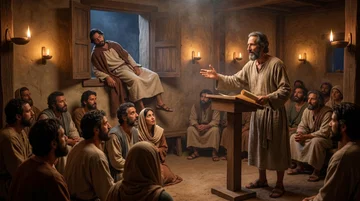
The account is an example of one revived after life had ceased, giving no report of consciousness during death.RH Aug 24, 1905 It gives no support for claims that the meeting room was hot and close or that Eutychus went to the window seeking ventilation.ST Jan 8, 1885 The setting was Paul preaching at Troas to a listening, drowsy company late at night until midnight, where a sleepy hearer fell from a window, and the incident did not prevent Paul from continuing his discourse after preaching at length.ST Jan 8, 1885ST Dec 4, 1893ST Oct 8, 1885
After coming back upstairs, Paul broke bread and ate, the breaking of bread being the Lord's Supper, and spoke with the believers for a long time until daybreak before departing and continuing his journey. The account illustrates his sustained, devoted labor and his effort to spend as much time as possible teaching and strengthening the church at Troas, preaching through the night.RH Dec 12, 1907 His example in that farewell labor among them was of one who was poor and had not coveted anyone's silver, gold, or clothing, but supported himself and his companions by working with his own hands.RH Nov 4, 1873
Meetings of several hours in length have apostolic example to support them in this unusually long farewell sermon in the upper chamber, where after the young man was restored Paul returned upstairs, ate, and continued speaking until daybreak before leaving.ST Apr 15, 1875RH Apr 8, 1875 That support holds only on extraordinary occasions, and such long meetings are not to be approved as a regular practice.RH Apr 8, 1875 The farewell sermon was spoken in its actual setting in the upper chamber at Troas, not composed to win applause or display eloquence.STRH Oct 10, 1865ST Apr 5, 1877 It was given to instruct and benefit its hearers, for God's glory and the world's moral good, not for the speaker's fame or display.STRH Oct 10, 1865ST Apr 5, 1877
The all-night preaching at Troas, breaking bread and talking until break of day, followed by departure on a nineteen-mile journey on foot from Troas to Assos, was strenuous labor and sacrifice, not a pleasant holiday rest or vacation for ministers.ST Mar 18, 1889 It provides an apostolic example of labor and travel on the first day of the week, supporting the right to work, travel, and visit on Sunday with no command forbidding it.ST Mar 18, 1889RH May 19, 1874ST Feb 10, 1887 The meeting that continued through the night until daybreak, until the travelers were ready to leave at dawn, provides the example for a meeting lasting nearly all night, as did the later meeting in Ulysses before the brethren left on their journeys.RH Aug 14, 1860RH Jun 18, 1901 The believers sharing bread and enjoying fellowship together in Christ at Troas provides the apostolic example for breaking bread after midnight.RH Nov 25, 1858
Sources