Acts 25:6
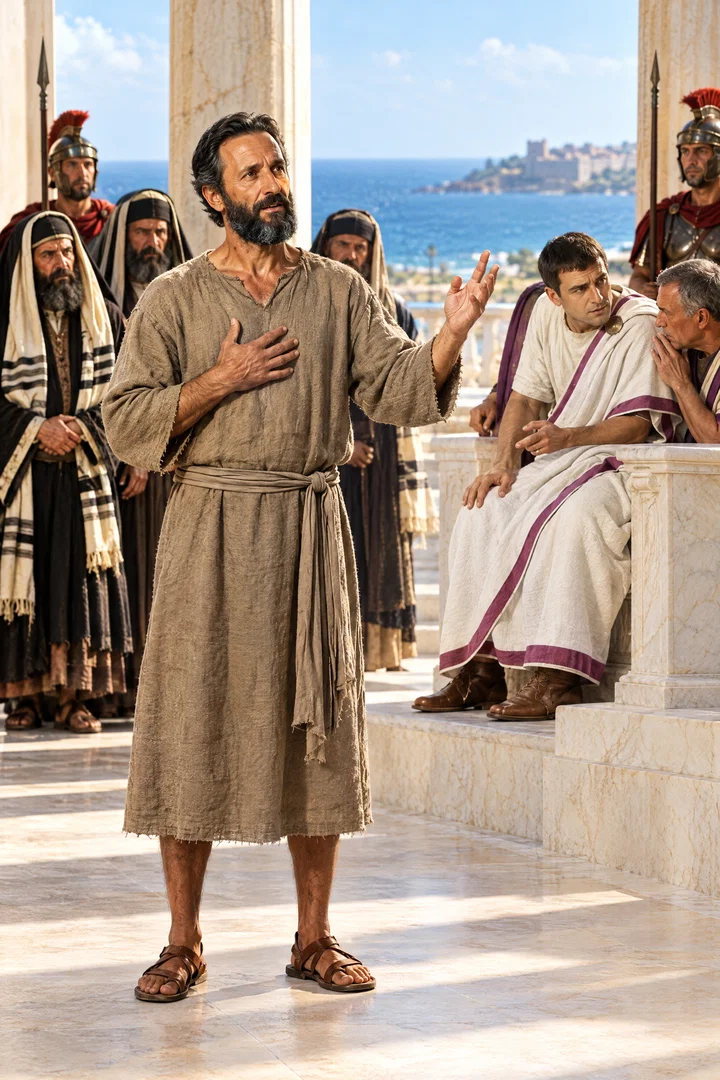
And when he had tarried among them more than ten days, he went down unto Cæsarea; and the next day sitting on the judgment seat commanded Paul to be brought.
Translations
And when he had tarried among them more than ten days, he went down to Caesarea; and the next day sitting on the judgment seat commanded Paul to be brought.
And when he had tarried among them more than ten days, he went down unto Cæsarea; and the next day sitting on the judgment seat commanded Paul to be brought.
And when he had tarried among them more than ten days, he went down unto Cesarea; and the next day sitting in the judgment seat, commanded Paul to be brought.
And when he had tarried among them more than ten days, he went down to Cesarea; and the next day sitting on the judgment-seat, commanded Paul to be brought.
And when he had tarried among them not more than eight or ten days, he went down unto Caesarea; and on the morrow he sat on the judgment-seat, and commanded Paul to be brought.
And when he had tarried among them not more than eight or ten days, he went down unto Cæsarea; and on the morrow he sat on the judgment-seat, and commanded Paul to be brought.
and having tarried among them more than ten days, having gone down to Caesarea, on the morrow having sat upon the tribunal, he commanded Paul to be brought;
And having remained among them not more than eight or ten days, he went down to Caesarea; and on the next day, having sat down on the judgment-seat, commanded Paul to be brought.
And, spending among them, not more than eight or ten days, he went down unto Caesarea; and, on the morrow, taking his place upon the judgment-seat, ordered Paul to be brought.
After spending no more than eight or ten days with them, Festus went down to Caesarea. The next day he sat on the judgment seat and ordered that Paul be brought in.
After spending more than ten days with them, Festus went down to Caesarea. The next day he sat on the judgment seat and ordered that Paul be brought in.
When he had stayed among them more than ten days, he went down to Caesarea, and on the next day he sat on the judgment seat, and commanded Paul to be brought.
And when he had been with them not more than eight or ten days, he went down to Caesarea; and on the day after, he took his place on the judge's seat, and sent for Paul.
Now when he had taried among them no more then ten dayes, hee went downe to Caesarea, and the next day sate in the iudgement seat, and commanded Paul to be brought.
Douay-Rheims (Challoner revision)
And having tarried among them no more than eight or ten days, he went down to Caesarea, and the next day he sat in the judgment seat; and commanded Paul to be brought.
Pictures
Cross-references
- Acts 25:11
For if I be an offender, or have committed any thing worthy of death, I refuse not to die: but if there be none of these things whereof these accuse me, no man may deliver me unto them. I appeal unto Cæsar.
Paul appeals from Festus’s tribunal to Caesar.
- Acts 24:27
But after two years Porcius Festus came into Felix’ room: and Felix, willing to shew the Jews a pleasure, left Paul bound.
Paul remained imprisoned at Caesarea for two years under Felix.
- Acts 26:1
Then Agrippa said unto Paul, Thou art permitted to speak for thyself. Then Paul stretched forth the hand, and answered for himself:
The events of Acts 25 lead to Paul's defense before Agrippa.
- Acts 23:12-15
And when it was day, certain of the Jews banded together, and bound themselves under a curse, saying that they would neither eat nor drink till they had killed Paul.
The Jewish leaders had previously conspired to kill Paul, as they planned to do again on the road to Jerusalem.
- Acts 25:16
To whom I answered, It is not the manner of the Romans to deliver any man to die, before that he which is accused have the accusers face to face, and have licence to answer for himself concerning the crime laid against him.
Roman procedure required the accused to face accusers and answer the charges.
Commentary
Each commentary is drawn from primary sources: the writings of Ellen G. White and Adventist pioneers and periodicals. Each commentary is separate. Its own words are not a quotation; follow the references to read the source passages.
Ellen G. White
8 sources
After his stay in Jerusalem Festus went down to Caesarea, and on the next day he sat on the judgment seat and commanded Paul to be brought before him.RH Nov 9, 1911ST May 22, 1884AA 428.1–429.2ST May 22, 1884ST May 22, 1884 The stay in Jerusalem lasted more than ten days.ST May 22, 1884 It is set forth as eight or ten days.ST May 22, 1884ST May 22, 1884 It was a short stay of only a few days.RH Nov 9, 1911AA 428.1–429.2RH Nov 9, 1911
The hearing was held at Caesarea rather than at Jerusalem.ST May 22, 1884AA 428.1–429.2ST May 22, 1884RH Nov 9, 1911 The Jewish leaders had sought to have Paul taken to Jerusalem so they could ambush and kill him on the way.ST May 22, 1884AA 428.1–429.2RH Nov 9, 1911 By holding to a fair trial at Caesarea despite their pressure, Festus preserved Paul's life for a time, protecting him and extending his ministry.ST May 22, 1884AA 428.1–429.2RH Nov 9, 1911
The Jewish accusers appeared themselves to press their charges with passionate clamor.ST May 22, 1884ST May 22, 1884SLP 248.1 They made many serious accusations, charging him with heresy, treason, and sacrilege, but offered no witnesses and could not prove them.RH Nov 9, 1911AA 428.1–429.2ST May 22, 1884 Paul remained calm and clearly and candidly exposed their claims as false.RH Nov 9, 1911AA 428.1–429.2ST May 22, 1884ST May 22, 1884SLP 248.1
Festus recognized that the dispute concerned Jewish belief and doctrine and that the charges, even if proved, did not warrant death or imprisonment.RH Nov 9, 1911ST May 22, 1884 Festus feared the reaction if he did not satisfy the Jews, fearing the uproar that would follow if he did not condemn Paul or hand him over.RH Nov 9, 1911ST May 22, 1884 The verse belongs to the account of Paul brought before Roman authority, showing him in chains and facing death under Nero yet standing for God's word despite the power of the Roman empire.ED 254.2–3
Sources
Pioneers and periodicals
13 sources
After succeeding Felix as governor of Judea about A.D. 60, Festus stayed among the Jewish leaders at Jerusalem eight or ten days, then went down to Caesarea and on the next day sat on the judgment seat and had Paul brought before him there rather than at Jerusalem.RH Nov 9, 1911ST May 22, 1884ST Oct 7, 1897ST May 15, 1884 The Jewish accusers then laid many grave charges against Paul of heresy, treason and sacrilege, but they offered no witnesses and could prove none of them.RH Nov 9, 1911ST May 22, 1884ST May 22, 1884 Paul remained calm and plainly showed their claims to be false, for the dispute concerned Jewish doctrine and even proved charges did not deserve death or imprisonment, yet Festus feared uproar if he did not satisfy the Jews.RH Nov 9, 1911ST May 22, 1884ST May 22, 1884 By holding the hearing at Caesarea instead of sending Paul to Jerusalem, the proceeding kept him from the plot to kill him on the way and thus spared his life and lengthened his ministry.ST May 22, 1884RH Nov 9, 1911 His being brought before the rulers belonged to God's purpose to place the truth before men of great influence, and before that tribunal he answered the accusations and appealed to Caesar, that is to the reigning emperor Nero, Augustus being his honorific title.ST May 22, 1884ST May 15, 1884ST Oct 12, 1904
Setting and Hearing
The word day here means an entire period of twenty-four hours embracing night and day, as in other New Testament texts where periods of days are specified or a succession of days is mentioned.RH Dec 12, 1871
The hearing belongs to the time when Festus had succeeded Felix in the government of the province of Judea as governor, around A.D. 60, about two years after the previous events, while Paul was still a prisoner at Caesarea.ST Oct 7, 1897ST May 15, 1884
The events of this chapter lead to Paul's defense before Agrippa and belong to the sequence of his appearances before Roman rulers.ST Oct 7, 1897
Festus tarried among the Jewish leaders at Jerusalem more than ten days before going down to Caesarea.ST May 22, 1884ST Aug 14, 1893ST Apr 28, 1898 That stay is also reckoned as eight or ten days, described as a few days and as a short stay.RH Nov 9, 1911ST May 22, 1884RH Nov 9, 1911
The next day after returning to Caesarea, Festus sat on the judgment seat or tribunal as judge and commanded Paul to be brought before him there rather than at Jerusalem.RH Nov 9, 1911ST May 22, 1884ST May 22, 1884ST Jun 9, 1898ST Aug 14, 1893 In doing so he promptly gave Paul's adversaries opportunity to accuse him.ST Apr 28, 1898
The bringing of Paul before the judgment seat is part of the events of chapter 25, which introduces two prominent men and belongs to the sequence of Paul's appearances before Roman rulers after he fell into the hands of the Romans, leading to his defense before Agrippa.ST Jun 9, 1898ST Oct 7, 1897
Before Festus's tribunal Paul answered the Jews' accusations and appealed to Caesar rather than to be tried by the Jews.ST May 15, 1884 Festus allowed the appeal but waited for the coming of King Agrippa and Bernice to hear Paul with him so that he would have something more definite to write to Caesar.
The Augustus referred to in the chapter's account of Paul's appeal was the reigning emperor Nero, not a personal name, for Augustus was an honorific title adopted by Octavianus and later used for Roman emperors, while Paul's appeal is stated as an appeal to Caesar.ST May 22, 1884
Accusations and Providence
The Jewish leaders themselves then laid many serious accusations against Paul, charging him with heresy, treason, and sacrilege.RH Nov 9, 1911ST May 22, 1884ST May 22, 1884 They could prove none of them and brought forward no witnesses.RH Nov 9, 1911ST May 22, 1884 Paul remained calm and clearly and plainly exposed their claims and charges as false.RH Nov 9, 1911ST May 22, 1884ST May 22, 1884
The dispute concerned Jewish beliefs and doctrine.RH Nov 9, 1911ST May 22, 1884 The charges, even if proved, did not warrant death or imprisonment.RH Nov 9, 1911ST May 22, 1884 Yet Festus feared the reaction and uproar if he did not satisfy the Jews, or if he did not condemn Paul or hand him over.RH Nov 9, 1911ST May 22, 1884
By keeping the trial at Caesarea rather than sending Paul to Jerusalem as the Jewish leaders had sought, the hearing preserved Paul from the plot to kill him on the way.ST May 22, 1884RH Nov 9, 1911 This decision protected his life and extended his ministry.RH Nov 9, 1911
Paul's being brought before the governors of Judea was part of God's plan of missionary work to set the truth before those of great influence.ST Oct 12, 1904 Their acceptance goes far toward a favorable impression upon the lower classes.ST Oct 12, 1904 God will have His name and truth brought to the attention of kings and others in authority, even if His children have to be forced through oppression or chastisement to bear the message.ST Oct 12, 1904
Sources