Acts 25:7
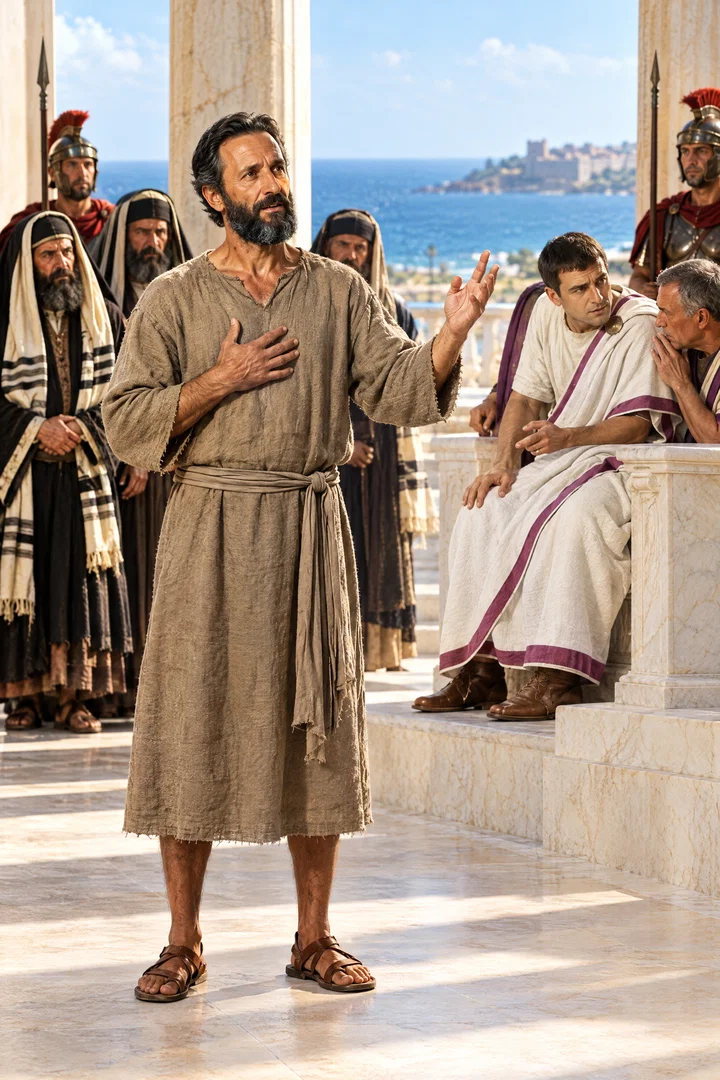
And when he was come, the Jews which came down from Jerusalem stood round about, and laid many and grievous complaints against Paul, which they could not prove.
Translations
American King James Version, King James Version, KJV Cambridge Paragraph Bible
And when he was come, the Jews which came down from Jerusalem stood round about, and laid many and grievous complaints against Paul, which they could not prove.
And when he had come, the Jews who came down from Jerusalem stood around, and laid many and grievous complaints against Paul, which they could not prove;
And when he was come, the Jews which had come down from Jerusalem stood round about him, bringing against him many and grievous charges, which they could not prove;
And when he was come, the Jews that had come down from Jerusalem stood round about him, bringing against him many and grievous charges which they could not prove;
and he having come, there stood round about the Jews who have come down from Jerusalem — many and weighty charges they are bringing against Paul, which they were not able to prove,
And when he was come, the Jews who were come down from Jerusalem stood round, bringing many and grievous charges which they were not able to prove:
And, when he presented himself, the Jews who, from Jerusalem, had come down, stood round about him, many and grievous charges, bringing against [him], which they were not able to prove,—
When Paul arrived, the Jews who had come down from Jerusalem stood around him, bringing many serious charges that they could not prove.
When Paul arrived, the Jews who had come down from Jerusalem stood around him, laying against Paul many serious charges that they could not prove.
When he had come, the Jews who had come down from Jerusalem stood around him, bringing against him many and grievous charges which they could not prove,
And when he came, the Jews who had come down from Jerusalem came round him, and made all sorts of serious statements against him, which were not supported by the facts.
And when hee was come, the Iewes which were come from Hierusalem, stoode about him and layd many and grieuous complaints against Paul, whereof they could make no plaine proofe,
Douay-Rheims (Challoner revision)
Who being brought, the Jews stood about him, who were come down from Jerusalem, objecting many and grievous causes, which they could not prove;
Pictures
Cross-references
- Acts 25:11
For if I be an offender, or have committed any thing worthy of death, I refuse not to die: but if there be none of these things whereof these accuse me, no man may deliver me unto them. I appeal unto Cæsar.
Paul appeals to Caesar after defending himself before Festus.
- Acts 6:13
And set up false witnesses, which said, This man ceaseth not to speak blasphemous words against this holy place, and the law:
False witnesses accused Stephen, as false accusations were brought against Paul.
- Acts 24:13
Neither can they prove the things whereof they now accuse me.
Paul’s accusers likewise could not prove their charges.
- Acts 25:1-3
Now when Festus was come into the province, after three days he ascended from Cæsarea to Jerusalem.
The Jews renewed their complaint and asked Festus to send Paul to Jerusalem.
- Acts 24:27
But after two years Porcius Festus came into Felix’ room: and Felix, willing to shew the Jews a pleasure, left Paul bound.
Paul had remained a prisoner at Caesarea for two years.
- Acts 26:19-23
Whereupon, O king Agrippa, I was not disobedient unto the heavenly vision:
Paul explains to Agrippa that his preaching led to the Jews’ accusations against him.
- Acts 25:21
But when Paul had appealed to be reserved unto the hearing of Augustus, I commanded him to be kept till I might send him to Cæsar.
The Jews neither spoke nor showed harm against Paul.
- Acts 25:16
To whom I answered, It is not the manner of the Romans to deliver any man to die, before that he which is accused have the accusers face to face, and have licence to answer for himself concerning the crime laid against him.
Festus states that an accused person must face the accusers and answer the charges.
- Acts 28:17
And it came to pass, that after three days Paul called the chief of the Jews together: and when they were come together, he said unto them, Men and brethren, though I have committed nothing against the people, or customs of our fathers, yet was I delivered prisoner from Jerusalem into the hands of the Romans.
Paul denies wrongdoing against the Jewish people or their customs.
- Acts 28:21
And they said unto him, We neither received letters out of Judæa concerning thee, neither any of the brethren that came shewed or spake any harm of thee.
The Jews in Rome say they received no report or accusation against Paul.
- John 18:29-30
Pilate then went out unto them, and said, What accusation bring ye against this man?
The accusers pressed their case against Jesus before a Roman ruler.
Commentary
Each commentary is drawn from primary sources: the writings of Ellen G. White and Adventist pioneers and periodicals. Each commentary is separate. Its own words are not a quotation; follow the references to read the source passages.
Ellen G. White
7 sources
When Paul came before Festus, the Jews and Jewish leaders who had come down from Jerusalem stood round about him in court at Caesarea.RH Nov 9, 1911ST May 22, 1884SLP 248.1 They laid many serious and grievous complaints against him, repeating their charges again and again.RH Nov 9, 1911AA 428.1–429.2ST May 22, 1884SLP 248.1ST May 22, 1884 The charges specified heresy, treason, and sacrilege, and the dispute concerned Jewish doctrines.SLP 248.2ST May 22, 1884
They could not prove the charges and produced no witnesses to support them.RH Nov 9, 1911AA 428.1–429.2ST May 22, 1884SLP 248.2ST May 22, 1884 Even if the charges had been proved, they did not warrant death or imprisonment.SLP 248.2 They presented the accusations themselves, without a lawyer.RH Nov 9, 1911AA 428.1–429.2SLP 248.1 They pressed their case in a scene of angry clamor.ST May 22, 1884SLP 248.1
Paul calmly, plainly, and candidly exposed their statements as false.RH Nov 9, 1911AA 428.1–429.2ST May 22, 1884SLP 248.1ST May 22, 1884 The verse belongs to the account of Paul facing opposition while in Roman custody, in chains and led to a criminal's death while Nero ruled a world empire.ED 254.2–3
Sources
Pioneers and periodicals
11 sources
This took place during the two years Paul was held prisoner at Caesarea, after Porcius Festus had replaced Felix as governor of Judea, and belongs to the account leading to his defense before Agrippa.ST Oct 7, 1897 After Festus succeeded Felix in the government of the province, Paul was brought before Festus. As soon as Festus opened his court and Paul was brought in, the Jews who had come down from Jerusalem stood round about him.RH Nov 9, 1911ST Apr 28, 1898 They laid many and grievous complaints against him, numerous serious accusations, which they could not prove.RH Nov 9, 1911RH Feb 3, 1852ST May 22, 1884ST May 15, 1884RH Jun 24, 1852
They presented the accusations themselves, without a lawyer.RH Nov 9, 1911 What they brought were repeated charges of heresy, treason, and sacrilege, made without witnesses and with angry clamor.RH Nov 9, 1911ST May 22, 1884ST May 22, 1884 Paul calmly, clearly and candidly defended himself before Festus and exposed the falsehood of the charges.RH Nov 9, 1911ST May 22, 1884ST May 22, 1884ST May 15, 1884 He appealed from the tribunal of Festus to Caesar rather than be tried by the Jews.ST May 15, 1884 Festus allowed the appeal, but waited for the coming of King Agrippa and Bernice to hear Paul with him, so that he might have something definite to write to Caesar.
In this setting the appeal to Augustus is an appeal to the Roman emperor, for Caesar was a title used for Roman emperors and Augustus was an honorific title rather than the emperor's personal name.ST May 22, 1884 The unproved complaints are proof that claims that Paul violated God's law, including the Sabbath commandment, lacked proof and were no ground for impeaching his character.RH Feb 3, 1852RH Jun 24, 1852 Inability to prove a charge does not establish that he broke the law.RH Jun 24, 1852 Moreover the charges brought by his accusers did not include breaking the Sabbath, which is evidence that he kept it.RH Apr 6, 1869
His being brought before the governors of Judea on his way to the emperor of Rome shows God's plan of missionary work to set the truth before those of great influence.ST Oct 12, 1904 If such men accept it, their endorsement goes far toward making a favorable impression upon the lower classes.ST Oct 12, 1904 The Lord will have His name and His truth brought to the attention of kings and others in authority, even if His children must be forced through oppression or chastisement to bear the message.ST Oct 12, 1904 So it was with the captive maid used to bring God's name to Naaman, with Joseph before the king of Egypt, with Daniel and others before Nebuchadnezzar and Darius and Cyrus, and with Luther before the dignitaries of Germany.ST Oct 12, 1904
Sources