Acts 27:16
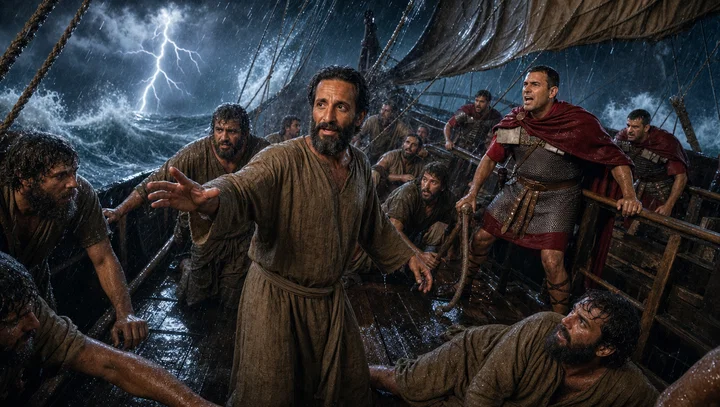
And running under a certain island which is called Clauda, we had much work to come by the boat:
Translations
American King James Version, King James Version, KJV Cambridge Paragraph Bible
And running under a certain island which is called Clauda, we had much work to come by the boat:
And running under a certain isle which is called Clauda, we had much work to come by the boat:
Revised Version, American Standard Version
And running under the lee of a small island called Cauda, we were able, with difficulty, to secure the boat:
and having run under a certain little isle, called Clauda, we were hardly able to become masters of the boat,
But running under the lee of a certain island called Clauda, we were with difficulty able to make ourselves masters of the boat;
And, running under the lee, of some small island, called Cauda, we were able, with difficulty, to make ourselves masters of the boat,—
Passing to the lee of a small island called Cauda, we barely managed to secure the lifeboat.
Passing to the lee of a small island called Clauda, we barely managed to secure the lifeboat.
Running under the lee of a small island called Clauda, we were able, with difficulty, to secure the boat.
And, sailing near the side of a small island named Cauda, we were able, though it was hard work, to make the ship's boat safe:
And we ran vnder a litle Yle named Clauda, and had much a doe to get the boat.
Douay-Rheims (Challoner revision)
And running under a certain island, that is called Cauda, we had much work to come by the boat.
Pictures
Cross-references
- Acts 28:11
And after three months we departed in a ship of Alexandria, which had wintered in the isle, whose sign was Castor and Pollux.
The same voyage continues after the island stay.
- Romans 1:10
Making request, if by any means now at length I might have a prosperous journey by the will of God to come unto you.
Paul’s prayed-for journey to Rome proceeded through hardship.
- Acts 27:20
And when neither sun nor stars in many days appeared, and no small tempest lay on us, all hope that we should be saved was then taken away.
The storm left the passengers without hope when neither sun nor stars appeared.
- Acts 27:31
Paul said to the centurion and to the soldiers, Except these abide in the ship, ye cannot be saved.
Paul warns the men to remain aboard the ship to be saved.
- Acts 27:24
Saying, Fear not, Paul; thou must be brought before Cæsar: and, lo, God hath given thee all them that sail with thee.
God promises Paul that everyone aboard will survive.
Commentary
Each commentary is drawn from primary sources: the writings of Ellen G. White and Adventist pioneers and periodicals. Each commentary is separate. Its own words are not a quotation; follow the references to read the source passages.
Ellen G. White
6 sources
This verse belongs to a time when sea travel was especially perilous, when sailors steered largely by the sun and stars, when warnings of storms made shipowners fear to venture into the open sea, and when for part of the year safe navigation was almost impossible.AA 439.2 It belongs to Paul's long and tedious voyage to Italy, endured as a prisoner in chains amid trying experiences.AA 439.3 That hardship was greatly lightened by the permitted companionship of Luke and Aristarchus, Aristarchus by choice sharing Paul's bondage as fellow prisoner in order to minister to him in his afflictions.AA 439.3
Driven by the storm, the ship came under the shelter of the small island of Clauda, passing close under it.SLP 265.1AA 441.3RH Nov 23, 1911EW 172.3 The island gave only brief shelter.AA 441.3RH Nov 23, 1911 There the sailors had much work and great difficulty bringing the boat aboard.SLP 265.1AA 441.3RH Nov 23, 1911EW 172.3
The boat was being towed behind as a lifeboat and was needed as a possible means of escape if the ship sank, but leaving it in tow risked its being smashed.SLP 265.1RH Nov 23, 1911 After securing the boat, the crew took precautions to strengthen the ship and prepare it to withstand and endure the tempest.SLP 265.1AA 441.3RH Nov 23, 1911 With those precautions taken, they had no refuge left and had to drift before the wind and waves.SLP 265.1
The sea journey served God's purpose, in that the crew and other Gentiles on board witnessed God's power through Paul, heard the name of Jesus, and some were converted through his teaching and miracles.EW 172.3
Sources
Pioneers and periodicals
25 sources
Paul was being carried as a chained prisoner toward Rome in Italy after his appeal to Caesar, with Luke beside him, late in the sailing season when winter weather made the voyage perilous.ST Mar 19, 1885ST Jun 12, 1884ST Mar 30, 1904 Caught by the tempestuous wind called Euraquilo so the ship could not face it, they were driven before the storm past Crete until they ran under the lee of the little island called Clauda or Cauda, which gave only brief and partial shelter.ST May 12, 1898ST May 12, 1898 There with much hard labor they secured the small boat normally towed behind the ship, bringing it aboard onto the deck to keep it from being smashed and to have it ready if the leaking, storm-strained vessel had to be abandoned.ST Dec 9, 1897ST May 12, 1898 What looked laborious and disastrous to men was in fact God's providential answer to his earnest prayer for a prosperous journey to Rome, for God sees differently than men and was carrying him toward his intended destination to further the gospel even as a prisoner in chains.ST Mar 30, 1904ST Oct 24, 1895ST Feb 25, 1889 A whole shipload of reckless people escaped death at sea because God's servant was on board, as Paul remained courageous when all hope was lost and cheered his discouraged companions, making the toilsome voyage an example of apostolic sacrifice and not a pleasant holiday rest.ST Jun 12, 1884ST Mar 18, 1889ST Jul 23, 1885ST Jul 21, 1909
Voyage Setting and Details
This moment belongs to Paul's storm-tossed voyage to Rome in Italy as a chained prisoner after his appeal to Caesar, made late in the sailing season when worsening winter weather made it perilous.ST Mar 19, 1885ST Jun 12, 1884ST Mar 30, 1904 Luke accompanied him on that last perilous voyage, the ship carrying prisoners was guarded by Roman soldiers, and the terrifying sea journey formed part of his patient labor and suffering in carrying the gospel, following three earlier shipwrecks he had already suffered.RH Apr 21, 1903ST Jun 19, 1884 The vessel and its passengers were in great danger, the people aboard lost hope, while Paul remained courageous and comforted them.ST Jun 12, 1884
The voyage began August 21 in A.D. 60 with wreck on Malta about November 1, after the tempestuous wind called Euraquilo caught the ship so it could not face the wind and was driven before it.ST May 12, 1898 Driven before the storm after passing Crete, and after a storm that broke over that part of the Mediterranean after passing Sicily and going out of sight of land, the ship ran under the lee of the small island called Clauda or Cauda.ST May 12, 1898ST Aug 21, 1893 The island and its weather-shore gave only brief and partial shelter, and the crew could not remain there long.RH Nov 23, 1911ST Mar 19, 1885
Under that shelter the crew with much difficulty secured the small boat, which was normally towed behind the ship, bringing it aboard and up onto the deck.ST Dec 9, 1897ST May 12, 1898ST May 12, 1898 This was done so it would be ready if the vessel sank or had to be abandoned and to keep it from being smashed, while the men were ready to take to the boats.RH Nov 23, 1911 The ship's huge mainsail and the force of the typhoon had strained its timbers and caused a serious leak, so they prepared the ship to endure the tempest.RH Nov 23, 1911 The chapter thus illustrates the peril and hardship of travel in Paul's time, with the crew's difficult effort to bring the boat under control in the ship's peril.ST Dec 8, 1887ST Jul 23, 1885
The account is historically reliable, which supports confidence in the truths connected with the biblical record.ST Jul 5, 1910 Its particulars of voyage and shipwreck are to be related together with the escape, where the party landed, and what took place after they landed on the way by land toward Rome, the story of the voyage ending with his reaching Italy and traveling by land toward Rome.ST May 28, 1885ST May 26, 1898 Tracing the course on the map adds interest to the narrative.
Providence and Deliverance in Peril
The securing of the boat under the lee of Clauda, also called Cauda, belonged to God's providence guiding Paul to Rome after his appeal to Caesar, carrying him toward his intended destination and allowing him missionary work along the way, and preparing the way for his better treatment at Rome and his release.ST Mar 30, 1904 That storm-driven hardship was God's answer to his earnest prayer for a prosperous journey by the will of God to visit Rome, and though to men it looked laborious and disastrous it was in fact prosperous.ST Oct 24, 1895 All things work together for good to them that love God, for God sees differently than men and knows far better how prayers should be answered, so what looks disastrous is prosperous when seen as God sees it, and Paul made no complaint about it.ST Oct 24, 1895 His arriving at last as a prisoner in chains rather than making the peaceful journey he had expected did not mean his prayer went unheard, for God brought him to Rome where his imprisonment furthered the gospel.ST Feb 25, 1889
The vessel and its passengers were in great danger and those aboard lost hope, while Paul remained courageous and comforted them.ST Jun 12, 1884ST Apr 29, 1903 A whole shipload of reckless and wicked people escaped death at sea because God's servant was on board, showing the Lord's marvelous working with His servant in the peril and difficult effort to bring the boat under control.ST Jul 23, 1885ST Jul 21, 1909 Though charged as a criminal yet guilty of no crime, a chained prisoner bound to Caesar's court and associated with sinners yet hating sin, his faith and courage in this great trial of shipwreck rose superior to every ill and cheered the hearts of his discouraged companions.ST Apr 29, 1903
The shipwreck is a New Testament divine deliverance that stands together with the Old Testament deliverance of Shadrach, Meshach, and Abednego in the fiery furnace, because the Old and New Testaments are one divine system and Christ is the product and perfection of Old Testament facts.ST Nov 25, 1889 During the voyage Paul acted as a sailor as well as a minister, giving practical directions to the people aboard, including the soldiers and the ship's company.RH Feb 4, 1915 When the great storm left the ship unmanageable and the crew struggling to keep it afloat, the men were ready to take to the boats, and he urged them to remain aboard.RH Feb 4, 1915
Example for Gospel Workers
Paul's trip to Rome was sacrifice and labor and suffering, not a pleasant holiday rest or vacation for clergymen, and it gives no justification for clerical holidays.ST Mar 18, 1889 The terrifying sea journey forms part of his patient labor and suffering while carrying the gospel. It stands together with his labor at Corinth and his night and day in the deep as an example of apostolic sacrifice that ministers of Christ should make much of to save souls instead of seeking political power.ST Mar 18, 1889
The difficulty appears as the ship passed under the island of Clauda, when the crew had much work to secure the boat, and the whole chapter illustrates the peril and hardship of travel in Paul's time.ST Dec 8, 1887 That storm broke over this part of the Mediterranean and wrecked his vessel after passing Sicily and going out of sight of land.ST Aug 21, 1901 In contrast is a calm voyage now, for the same Lord who said Peace, be still to the troubled Sea of Galilee speaks peace to the Great Sea so that in obedience it bears workers safely on its quiet, almost motionless bosom, knowing they do not have Paul's power of endurance.ST Aug 21, 1901
The waters between Crete and Clauda are part of Paul's voyage on the way east, so missionaries sailing that same stretch study his voyage there as an example for their own mission to India.ST Aug 21, 1901 His voyage was as a chained prisoner bound to Caesar's court at Rome, a man charged as a criminal yet guilty of no crime, associated with sinners yet hating sin.ST Apr 29, 1903 The shipwreck was one of the great trials of his life, and in it his faith and courage rose superior to every ill and cheered the hearts of his discouraged companions.ST Apr 29, 1903 It was not this great trial but the long, wearying journey in heavy chains afterward that told on his indomitable spirit and almost caused him to lose heart, a weakness of the flesh and not of the spirit.ST Apr 29, 1903
Sources