Acts 27:17
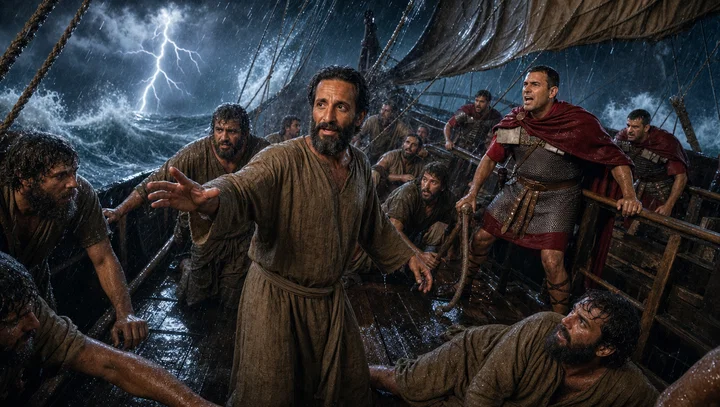
Which when they had taken up, they used helps, undergirding the ship; and, fearing lest they should fall into the quicksands, strake sail, and so were driven.
Translations
Which when they had taken up, they used helps, under girding the ship; and, fearing lest they should fall into the quicksands, struck sail, and so were driven.
Which when they had taken up, they used helps, undergirding the ship; and, fearing lest they should fall into the quicksands, strake sail, and so were driven.
which when they had taken up, they used helps, undergirding the ship; and fearing lest they should fall into the quicksands, strake sail, and so were driven.
Which when they had taken up, they used helps, undergirding the ship; and fearing lest they should fall into the quicksands, struck sail, and so were driven.
Revised Version, American Standard Version
and when they had hoisted it up, they used helps, under-girding the ship; and, fearing lest they should be cast upon the Syrtis, they lowered the gear, and so were driven.
which having taken up, they were using helps, undergirding the ship, and fearing lest they may fall on the quicksand, having let down the mast — so were borne on.
which having hoisted up, they used helps, frapping the ship; and fearing lest they should run into Syrtis and run aground, and having lowered the gear they were so driven.
which, hoisting up, they began to use, helps, under-girding the ship; and, fearing lest, on the sand-bank of Africa, they should run aground, lowering the gear, so, were they borne along.
Berean Standard Bible, Majority Standard Bible
After hoisting it up, the crew used ropes to undergird the ship. And fearing that they would run aground on the sandbars of Syrtis, they lowered the sea anchor and were driven along.
After they had hoisted it up, they used cables to help reinforce the ship. Fearing that they would run aground on the Syrtis sand bars, they lowered the sea anchor, and so were driven along.
And having got it up, they put cords under and round the ship; but fearing that they might be pushed on to the Syrtis, they let down the sails and so went running before the wind.
Which they tooke vp and vsed all helpe, vndergirding the ship, fearing least they should haue fallen into Syrtes, and they strake saile, and so were caried.
Douay-Rheims (Challoner revision)
Which being taken up, they used helps, undergirding the ship, and fearing lest they should fall into the quicksands, they let down the sail yard, and so were driven.
Pictures
Cross-references
- Acts 27:22-26
And now I exhort you to be of good cheer: for there shall be no loss of any man’s life among you, but of the ship.
Paul assures the sailors that everyone aboard will survive the shipwreck.
- Acts 27:1-2
And when it was determined that we should sail into Italy, they delivered Paul and certain other prisoners unto one named Julius, a centurion of Augustus’ band.
The passage refers to Paul’s perilous voyage to Rome.
- Acts 27:31
Paul said to the centurion and to the soldiers, Except these abide in the ship, ye cannot be saved.
The men must remain aboard to be saved.
- Acts 28:1
And when they were escaped, then they knew that the island was called Melita.
Continues the shipwreck narrative as the survivors reach Malta.
- Colossians 4:10
Aristarchus my fellowprisoner saluteth you, and Marcus, sister’s son to Barnabas, ( touching whom ye received commandments: if he come unto you, receive him;)
Aristarchus was Paul’s fellow prisoner and shared his voyage.
Commentary
Each commentary is drawn from primary sources: the writings of Ellen G. White and Adventist pioneers and periodicals. Each commentary is separate. Its own words are not a quotation; follow the references to read the source passages.
Ellen G. White
4 sources
Acts 27:17 belongs to a first-century sea voyage made perilous by limited navigation and storm danger.AA 439.2 Sailors of that time steered largely by the sun and stars, feared to enter the open sea when those guides were hidden and storms threatened, and faced seasons when safe navigation was almost impossible.AA 439.2 The strengthening and other precautions of the verse were taken while the ship had brief shelter near the island of Clauda.AA 441.3SLP 265.1
Those precautions included bringing the lifeboat aboard and strengthening and reinforcing the vessel to prepare it to withstand the tempest.AA 441.3SLP 265.1RH Nov 23, 1911 Because the vessel was being driven toward quicksands, the sailors lowered or struck the sail and let the ship be carried along by the wind.RH Nov 23, 1911 Beyond those efforts to secure and prepare the ship they could do nothing more than drift before the storm and wind, for the shelter of Clauda soon failed and they again faced the full force of the storm.AA 441.3SLP 265.1RH Nov 23, 1911
Sources
Pioneers and periodicals
28 sources
Paul was on a late-season, perilous prisoner voyage to Rome after his appeal to Caesar, a tedious winter journey that was dangerous and unlike what was expected yet still brought him to his destination.ST Mar 19, 1885ST Mar 30, 1904ST Dec 8, 1887 After running under the lee of Cauda the crew with difficulty hoisted the small boat aboard to prepare for the tempest.ST May 12, 1898ST May 12, 1898 They then undergirded the ship by passing strong ropes or chains beneath the hull and tightening them around its middle to hold it together, keep it afloat, and help it withstand strain and leaking.ST Oct 22, 1912 Fearing being driven onto the dreaded quicksands and shoals of the Syrtis, they lowered the gear and struck sail and were left to drift helplessly before the storm.ST Dec 9, 1897 What looked disastrous by human judgment was truly prosperous, for human power is weak against God's purposes and the shipload was spared because His servant Paul was aboard, comforted by an angel's message while the same Lord who rules the sea bore His workers safely.ST Jun 12, 1884ST Dec 9, 1897ST Oct 24, 1895ST Jul 23, 1885ST Jul 21, 1909
Voyage Setting and Seamanship
This moment belongs to Paul's late-season voyage to Italy and Rome as a prisoner after appealing to Caesar.ST Mar 19, 1885ST Mar 30, 1904 It was a tedious and perilous sea journey, a dangerous winter passage illustrating the dangers of travel in Paul's time.ST Dec 8, 1887ST Feb 16, 1915 It was Paul's last voyage, when a great tempest made the ship unmanageable and all feared being lost.RH Feb 4, 1915 The journey was not peaceful or as expected, yet it brought him to his destination and became part of how he reached it and carried out missionary work along the way.ST Mar 30, 1904ST Feb 25, 1889
The storm-tossed vessel carried Paul with other prisoners bound for Rome guarded by Roman soldiers.ST Aug 21, 1893ST Feb 16, 1915 Luke accompanied him on this last perilous voyage, with two companions in heart alongside.ST Jun 19, 1884 It was a shipload of reckless and wicked men.ST Jul 23, 1885 After leaving Crete a fierce storm struck, the great tempest made the vessel unmanageable, and all feared being lost.RH Feb 4, 1915ST Aug 21, 1893
After running under the lee of Cauda the crew with difficulty secured the small boat.ST May 12, 1898 They hoisted it up and brought the lifeboat aboard as part of preparing the ship for the tempest.RH Nov 23, 1911ST May 12, 1898 When it had been hoisted up, they used helps by undergirding the ship to keep the vessel afloat.ST May 12, 1898
Undergirding or frapping meant binding the ship with strong ropes, chains or other supports passed beneath the hull and tightened over the deck and around its middle to hold it together.ST Oct 22, 1912ST Mar 19, 1885ST Mar 19, 1885 This bracing from below strengthened the storm-battered hull, making the vessel better able to stand the strain of the tall mast with its great sail and decreasing her leaking. It was an ancient ship-saving method, an expedient successfully used by sailors since the day of Paul.ST Mar 19, 1885 Despite the undergirding the ship kept leaking.ST Mar 19, 1885
Fearing lest they should fall upon or be driven onto the quicksands, they acted to avoid the Syrtis.ST Dec 9, 1897ST May 12, 1898 That danger was the shoals and dreaded sandbanks of the Greater Syrtis in the Mediterranean.ST May 12, 1898ST Mar 19, 1885 They lowered the gear, struck sail and let down the sailing gear.ST May 12, 1898ST Oct 22, 1912ST May 12, 1898 So they were driven, left to drift helplessly before the storm and carried onward by the wind.ST Oct 22, 1912ST May 12, 1898
They then lowered the topsail and yard, set a storm sail, and rode out the storm as best they could.ST Mar 19, 1885 The crew later lightened the ship and threw overboard anything they could spare.ST Mar 19, 1885 The storm that broke over that part of the Mediterranean after passing through the Strait of Messina between Italy and Sicily and again passing out of sight of land wrecked the vessel.ST Aug 21, 1901 This fulfilled Paul's foretelling, given as he comforted those aboard and reported an angel's message, that the ship would be wrecked on an island but no one would die.ST Dec 9, 1897
Providence, Proof and Application
The day of distress itself is counted as the first day, the next day when the crew lightened the ship as the second, and the day after that when they cast the ship's tackling overboard as the third.RH Feb 7, 1871ST Feb 3, 1881RH Aug 12, 1875 This shows inclusive reckoning, in which the day an event begins is counted as day one in the sequence even when the sequence continues through later days.RH Feb 7, 1871ST Feb 3, 1881RH Aug 12, 1875
The peril of the ship and the hopelessness of those aboard show how weak human judgment and power are against the purposes of God.ST Jun 12, 1884 The danger of the quicksands, the striking of sail, and being driven helplessly looked disastrous by human judgment, yet the voyage to Rome in answer to prayer for a prosperous journey by the will of God was truly prosperous.ST Oct 24, 1895 God knows far better than men how prayers should be answered and makes all things work together for good to them that love Him, so what men call disastrous is prosperous when seen as God sees it and gives no cause for complaint or mourning.ST Oct 24, 1895
The shipload of reckless and wicked men escaped death at sea because God's servant Paul was aboard.ST Jul 23, 1885 This displays the Lord's marvelous working with him as he comforted those aboard, reported an angel's message, and foretold that the ship would be wrecked on an island but no life would be lost.ST Dec 9, 1897ST Jul 21, 1909 Satan was seeking to destroy Paul by the enraged sea, just as he had sought to destroy Christ and then His disciples on the sea, for the restless, raging, roaring, turbid, angry sea is not a symbol of comfort and strength though it has its useful lessons.ST Aug 27, 1896 The same Lord who said to the troubled Sea of Galilee, Peace be still, still rules the Great Sea and can speak peace to it and bear His called workers safely on its quiet bosom, even through storm and shipwreck after passing through the Strait of Messina between Italy and Sicily and again passing out of sight of land.ST Aug 21, 1901 The historical truth of this voyage and wreck, confirmed by study, supports the vital truths connected with it.ST Jul 5, 1910
The voyage and its dangers became part of the way Paul reached his desired destination and carried out missionary work along the way, enduring hardship while carrying the gospel and testifying of Christ on his terrifying sea journey to Rome as a prisoner after appealing to Caesar.ST Mar 30, 1904 The trip to Rome in Acts 27 and 28 was labor and sacrifice and suffering, not a holiday rest for clergymen, and to use it to justify vacations and holidays perverts its meaning.ST Mar 18, 1889 Its true use is as an example of the sacrifice of Christ and His apostles, which if followed would save souls without need of political power.ST Mar 18, 1889 Paul acted as sailor as well as minister, giving directions about the company, the soldiers, and the ship. In that weary, eventful journey in chains to Caesar's court, guarded by Roman soldiers with only two companions in heart, the stout ship carrying Paul and other prisoners bound for Rome was buffeted by wave, wind, and current and suffered shipwreck before landing its passengers at Puteoli, forty-three miles from Rome; though charged as a criminal yet guilty of no crime, associated with sinners yet hating sin, his sublime faith and courage rose superior to shipwreck, mad mobs, testimony before kings and courts, conspiracies of assassins, the viper bite, and threats to his life, and cheered discouraged companions until the long journey with heavy chains told on his indomitable spirit and his courage waned from weakness of the flesh, not of the spirit.ST Apr 29, 1903 The ship's crew taking practical steps to keep the vessel safe in the storm is a picture of the remnant church, which needs care and must be kept steady and properly balanced; the storm is no reason to abandon it, but the lesson is to remain aboard, support its officers and crew, and avoid discord that could lead others to leave.RH Feb 4, 1915
Sources