Acts 27:1
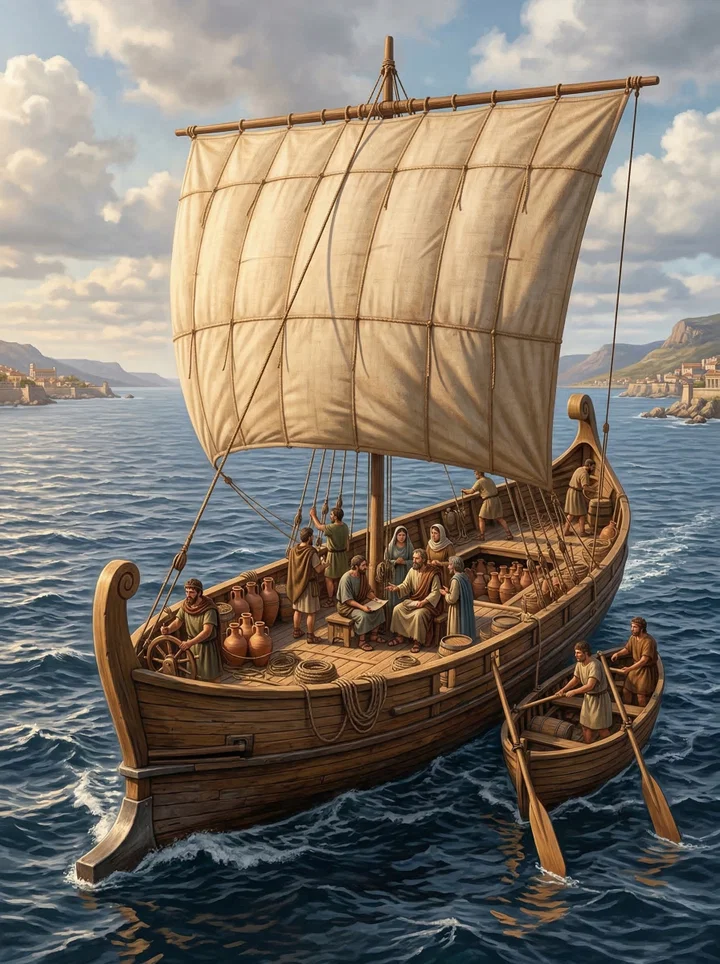
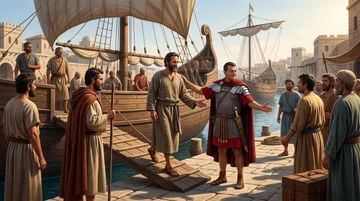
And when it was determined that we should sail into Italy, they delivered Paul and certain other prisoners unto one named Julius, a centurion of Augustus’ band.
Translations
And when it was determined that we should sail into Italy, they delivered Paul and certain other prisoners to one named Julius, a centurion of Augustus’ band.
King James Version, KJV Cambridge Paragraph Bible
And when it was determined that we should sail into Italy, they delivered Paul and certain other prisoners unto one named Julius, a centurion of Augustus’ band.
And when it was determined that we should sail into Italy, they delivered Paul and certain other prisoners to one named Julius, a centurion of Augustus' band.
Revised Version, American Standard Version
And when it was determined that we should sail for Italy, they delivered Paul and certain other prisoners to a centurion named Julius, of the Augustan band.
And when our sailing to Italy was determined, they were delivering up both Paul and certain others, prisoners, to a centurion, by name Julius, of the band of Sebastus,
But when it had been determined that we should sail to Italy, they delivered up Paul and certain other prisoners to a centurion, by name Julius, of Augustus' company.
Now, when it was determined that we should sail for Italy, they proceeded to deliver Paul, and certain other prisoners, unto a centurion by name Julius, of an Augustan band.
Berean Standard Bible, Majority Standard Bible
When it was decided that we would sail for Italy, Paul and some other prisoners were handed over to a centurion named Julius, who belonged to the Imperial Regiment.
When it was determined that we should sail for Italy, they delivered Paul and certain other prisoners to a centurion named Julius, of the Augustan band.
And when the decision had been made that we were to go by sea to Italy, they gave Paul and certain other prisoners into the care of a captain named Julius, of the Augustan band.
Now when it was concluded, that we should sayle into Italie, they deliuered both Paul, and certaine other prisoners vnto a Centurion named Iulius, of the band of Augustus.
Douay-Rheims (Challoner revision)
And when it was determined that he should sail into Italy, and that Paul, with the other prisoners, should be delivered to a centurion, named Julius, of the band Augusta,
Pictures
Cross-references
- Acts 28:16
And when we came to Rome, the centurion delivered the prisoners to the captain of the guard: but Paul was suffered to dwell by himself with a soldier that kept him.
The prisoners arrive in Rome, completing the voyage begun in Acts 27.
- Acts 25:11-12
For if I be an offender, or have committed any thing worthy of death, I refuse not to die: but if there be none of these things whereof these accuse me, no man may deliver me unto them. I appeal unto Cæsar.
Paul’s appeal to Caesar led to his voyage to Rome.
- Acts 23:11
And the night following the Lord stood by him, and said, Be of good cheer, Paul: for as thou hast testified of me in Jerusalem, so must thou bear witness also at Rome.
The Lord promised Paul would testify in Rome, and he is sent there.
- Acts 27:24
Saying, Fear not, Paul; thou must be brought before Cæsar: and, lo, God hath given thee all them that sail with thee.
God promises Paul will stand before Caesar and protects those sailing with him.
- Acts 28:14
Where we found brethren, and were desired to tarry with them seven days: and so we went toward Rome.
arrival in Italy completes the voyage
- Acts 28:15
And from thence, when the brethren heard of us, they came to meet us as far as Appii forum, and The three taverns: whom when Paul saw, he thanked God, and took courage.
Brethren meet Paul on the way and encourage him.
- Acts 25:21
But when Paul had appealed to be reserved unto the hearing of Augustus, I commanded him to be kept till I might send him to Cæsar.
Both texts connect Paul’s appeal to Caesar with Rome as the imperial seat.
- Acts 26:32
Then said Agrippa unto Festus, This man might have been set at liberty, if he had not appealed unto Cæsar.
Agrippa says Paul could have been freed if he had not appealed to Caesar.
- Acts 28:1-10
And when they were escaped, then they knew that the island was called Melita.
Continues the voyage and recounts events after the shipwreck.
- Acts 27:10
And said unto them, Sirs, I perceive that this voyage will be with hurt and much damage, not only of the lading and ship, but also of our lives.
Paul warned those on the voyage of danger ahead.
- Acts 27:13
And when the south wind blew softly, supposing that they had obtained their purpose, loosing thence, they sailed close by Crete.
The crew sailed when conditions seemed favorable, disregarding Paul’s warning.
- Colossians 4:10
Aristarchus my fellowprisoner saluteth you, and Marcus, sister’s son to Barnabas, ( touching whom ye received commandments: if he come unto you, receive him;)
Aristarchus, Paul’s voyage companion, is called his fellow prisoner.
- Acts 19:21
After these things were ended, Paul purposed in the spirit, when he had passed through Macedonia and Achaia, to go to Jerusalem, saying, After I have been there, I must also see Rome.
Paul resolved to go to Jerusalem and then see Rome.
Commentary
Each commentary is drawn from primary sources: the writings of Ellen G. White and Adventist pioneers and periodicals. Each commentary is separate. Its own words are not a quotation; follow the references to read the source passages.
Ellen G. White
6 sources
At last the long-awaited voyage to Italy, to Rome, opened, with Paul setting out as a prisoner after his appeal to Caesar.RH Nov 23, 1911AA 439.3AA 439.2EW 172.3SLP 252.3 With certain other prisoners he was handed over to one named Julius, a centurion of Augustus' band.RH Nov 23, 1911 The departure was held back until a suitable ship could be found and until the cases of the other prisoners who were to travel with him could be considered.SLP 252.3 That delay gave him opportunity to explain his faith before leading Jews and Gentiles and before Agrippa, the last of the Herods to bear the title of Jewish king.SLP 252.3
He boarded a ship of Adramyttium to sail along the coasts of Asia.RH Nov 23, 1911 He sailed as a prisoner in chains, accompanied by Luke and by Aristarchus, a Macedonian of Thessalonica.RH Nov 23, 1911AA 439.3SLP 282.1 Aristarchus shared his imprisonment by choice, so that he could care for him in his afflictions.AA 439.3 The voyage was his last, and it was long and trying, hard and dangerous and perilous.AA 439.3AA 439.2SLP 282.1
Sea travel at that time was especially difficult because sailors guided themselves largely by the sun and stars.AA 439.2 Storms or obscured skies therefore made shipowners afraid to venture into open water, and for part of the year sailing was almost impossible.AA 439.2 Yet the journey served God's purpose, so that the ship's crew and other Gentiles on board could witness God's power through him and hear about Jesus.EW 172.3 Some were converted through his teaching and miracles.EW 172.3
Sources
Pioneers and periodicals
23 sources
When it was determined that Paul should sail to Italy, he and certain other prisoners were delivered to Julius, a centurion of the Augustan cohort, to be taken to Rome to appear before Caesar after his appeal to Caesar following two years of imprisonment in Caesarea.RH Nov 23, 1911ST Mar 19, 1885ST Jul 13, 1882 The voyage began in late August when navigation was nearing its seasonal close, on a coasting merchant ship from Adramyttium sailing northward from Caesarea by the coasts of Asia.RH Nov 23, 1911ST Mar 19, 1885RH Jul 25, 1907 Luke and Aristarchus the Macedonian of Thessalonica accompanied Paul, and Julius was favorably disposed toward him while Roman soldiers guarded him and the other prisoners.RH Nov 23, 1911ST Jun 5, 1884ST Jun 19, 1884 The sending fulfilled the Lord's purpose and promise that he must stand before Caesar, with providence working through opposition to bring him to the destination he had long wished to reach.ST Mar 30, 1904ST Jun 5, 1884ST Apr 22, 1903 Though made in chains and looking disastrous and dangerous, the voyage was God's prosperous answer to Paul's prayer for a prosperous journey to Rome, and his imprisonment and journey gave him opportunity to testify of Christ before rulers and others in authority along the way.ST Mar 30, 1904ST Oct 24, 1895ST Dec 20, 1905ST Mar 18, 1889ST Feb 25, 1889
Setting and Voyage Details
When it was determined that Paul should sail to Italy, he and certain other prisoners awaiting the outcome of an appeal were delivered to Julius, a centurion of Augustus' band, called an Augustan cohort, to be conveyed to Rome to appear before Caesar after his appeal to Caesar.RH Nov 23, 1911ST Mar 19, 1885ST Jul 13, 1882ST May 12, 1898RH Feb 20, 1855 The sailing came after two years of imprisonment in Caesarea and after being carried into the castle to be examined by torture and declaring his Roman citizenship.RH Nov 23, 1911ST Mar 19, 1885RH Feb 20, 1855 He was held as a prisoner by the Roman government and placed in the custody of a centurion for the voyage to Italy under Roman guard, and the man who took charge of him for that journey is identified by name.ST Jul 13, 1882ST May 12, 1898ST Dec 20, 1905
The voyage began in late August, when ancient navigation was nearing its seasonal close, making delay increasingly perilous and each day's worsening uncertainty more urgent.ST Mar 19, 1885ST Aug 21, 1893 Julius secured passage on a coasting merchant ship from Adramyttium to sail by the coasts of Asia, beginning from Caesarea northward up the Mediterranean coast on a ship about to sail for Italy.RH Nov 23, 1911ST Mar 19, 1885ST Aug 21, 1893 The places named in the voyage through the Mediterranean were real locations that could be seen while traveling those same waters.RH Nov 23, 1911ST Mar 19, 1885RH Jul 25, 1907
Aristarchus, a Macedonian of Thessalonica, and Luke accompanied Paul as fellow workers, with Aristarchus later called his fellow prisoner in Rome.RH Nov 23, 1911ST Jun 5, 1884ST Jun 19, 1884 Julius was favorably disposed toward Paul, and the guards who kept him also protected him from likely attack from the Jews.ST Jun 5, 1884ST Feb 16, 1915 Roman legionaries guarded Paul and the other prisoners placed in the charge of Julius.RH Nov 23, 1911ST Jun 5, 1884ST Feb 16, 1915
Travel by sea at the time was tedious, perilous, terrifying, and dangerous as a winter voyage to Rome.ST Dec 8, 1887ST Feb 16, 1915 The full account beginning in the verse gives the particulars of the voyage and shipwreck, the escape of the whole party, where they landed, and what took place after they landed, ending in shipwreck after he had already suffered shipwreck three times.RH Apr 21, 1903ST Jul 21, 1909ST Jul 5, 1910 The whole shipload, though reckless and wicked men, escaped death because Paul, God's servant, was on board.ST Jul 23, 1885ST Jul 21, 1909 After camping together on an island for three months the soldiers were sometimes better friends to him than the Jewish rabbis.ST Jul 23, 1885ST Feb 16, 1915
Purpose and Gospel Witness
The sending to Italy fulfilled the Lord's earlier purpose to send Paul to Rome and the promise that he must stand before Caesar, as well as the promise of deliverance from the Jews, for the guards who kept him also protected him from likely attack.ST Mar 30, 1904ST Jun 5, 1884ST Apr 22, 1903 His appeal to Caesar led the authorities to send him to Rome as a prisoner, taking him toward the destination he had long wished to reach and giving him opportunities for missionary work along the way.ST Mar 30, 1904ST Jun 5, 1884 That sailing came after he was carried into the castle to be examined by torture, declared his Roman citizenship, and later appealed to Caesar, and the whole chain of events shows God's providence working through opposition to carry out His purpose of bringing Paul to Rome.ST Jun 5, 1884ST Apr 22, 1903
The voyage begun here was God's prosperous answer to Paul's earnest prayer for a prosperous journey by the will of God to visit Rome.ST Oct 24, 1895ST Feb 25, 1889 To most people the journey described looks not prosperous at all, but dangerous and made in chains rather than the prosperous, peaceful journey prayed for, yet it brought him to Rome and served God's purpose.ST Oct 24, 1895ST Feb 25, 1889 Paul makes no complaint over it, and it was truly prosperous because all things work together for good to them that love God.ST Oct 24, 1895 Things regarded as disastrous are prosperous when looked at as God looks at them, and God knows far better than men how prayers should be answered.ST Oct 24, 1895ST Feb 25, 1889
His imprisonment and journey as a prisoner gave him opportunities for missionary work along the way and to preach the gospel to people in positions of authority, including military commanders.ST Mar 30, 1904ST Dec 20, 1905 The terrifying voyage by sea to Rome was part of the patient toil, suffering, and imprisonment through which he testified of Christ before rulers.ST Dec 20, 1905ST Jul 21, 1909 The journey was part of his labors and sacrifices, not a holiday or vacation, and it shows the Lord's marvelous working with His servant.ST Mar 18, 1889ST Jul 21, 1909
Joined with Caesar's decree, Paul's appeal to Caesar, Agrippa's judgment that he could have been freed except for that appeal, the promise that he must stand before Caesar, and his arrival at Rome, the sending of a prisoner under Roman guard to Italy to appear before Caesar proves the throne of the Caesars and the seat of the imperial power that ruled the world at Christ's birth was at Rome in Italy.RH Feb 20, 1855 That Imperial Rome is the dragon of Revelation 12 whose seat is given to the beast of Revelation 13:2, so Rome is the seat of the beast and therefore cannot be the woman Babylon who sits upon the beast.RH Feb 20, 1855 The verse introduces Paul's voyage to Rome as a prisoner, handed over with other prisoners to Julius, a centurion, in a chapter that includes a shipwreck, and the verse and chapter provide no mention or accusation concerning the sanctification of the first day in place of the seventh.ST Jul 13, 1882
The verse begins the historical account of Paul's last perilous voyage to Italy ending in shipwreck, during which Luke accompanied him.ST Jun 19, 1884ST Jul 5, 1910 The book's description identifies his shipwreck as part of the apostles' story.ST Jun 19, 1884RH Oct 4, 1906 It belongs to the closing account of Acts, which tells of his arrival in Rome, his reception there, and his effort to reach his own people, but it does not tell of his last imprisonment and death.ST Oct 29, 1912 The voyage and shipwreck are presented as reliable historical facts whose truth supports the vital truths connected with them.ST Jul 5, 1910RH Oct 4, 1906
Sources