Acts 28:3
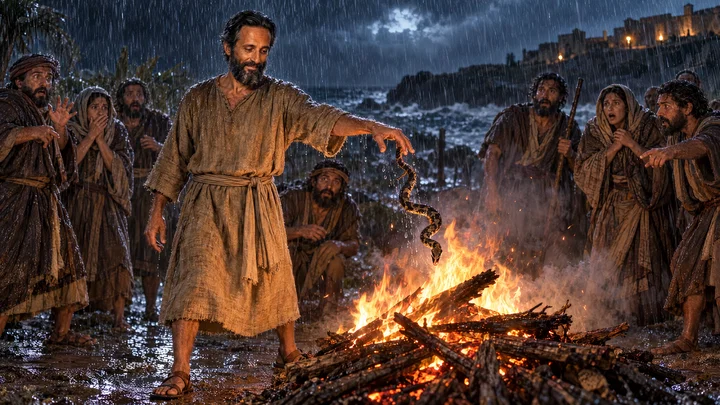
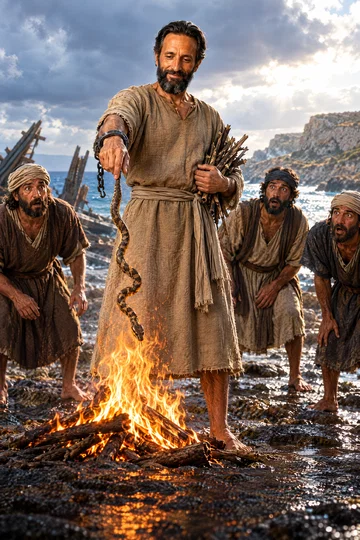
And when Paul had gathered a bundle of sticks, and laid them on the fire, there came a viper out of the heat, and fastened on his hand.
Translations
American King James Version, King James Version, KJV Cambridge Paragraph Bible, Webster Bible
And when Paul had gathered a bundle of sticks, and laid them on the fire, there came a viper out of the heat, and fastened on his hand.
But when Paul had gathered a bundle of sticks, and laid them on the fire, a viper came out by reason of the heat, and fastened on his hand.
But when Paul had gathered a bundle of sticks and laid them on the fire, a viper came out by reason of the heat, and fastened on his hand.
but Paul having gathered together a quantity of sticks, and having laid [them] upon the fire, a viper — out of the heat having come — did fasten on his hand.
And Paul having gathered a [ certain] quantity of sticks together in a bundle and laid [ it] on the fire, a viper coming out from the heat seized his hand.
But, when Paul had gathered a certain lot of firewood into a bundle, and laid it on the fire, a viper, by reason of the heat, coming forth, fastened on his hand.
Berean Standard Bible, Majority Standard Bible
Paul gathered a bundle of sticks, and as he laid them on the fire, a viper, driven out by the heat, fastened itself to his hand.
But when Paul had gathered a bundle of sticks and laid them on the fire, a viper came out because of the heat and fastened on his hand.
But when Paul had got some sticks together and put them on the fire, a snake came out, because of the heat, and gave him a bite on the hand.
And when Paul had gathered a nomber of stickes, and laid them on the fire, there came a viper out of the heate, and leapt on his hand.
Douay-Rheims (Challoner revision)
And when Paul had gathered together a bundle of sticks, and had laid them on the fire, a viper coming out of the heat, fastened on his hand.
Pictures
Cross-references
- Mark 16:18
They shall take up serpents; and if they drink any deadly thing, it shall not hurt them; they shall lay hands on the sick, and they shall recover.
Paul’s survival from the viper’s bite fulfills Jesus’ promise of protection from serpents.
- Acts 27:44
And the rest, some on boards, and some on broken pieces of the ship. And so it came to pass, that they escaped all safe to land.
Paul’s escape to land precedes the viper’s bite.
- Luke 10:19
Behold, I give unto you power to tread on serpents and scorpions, and over all the power of the enemy: and nothing shall by any means hurt you.
Paul’s immunity from the viper illustrates the promise of protection from serpents.
- Acts 27:22-25
And now I exhort you to be of good cheer: for there shall be no loss of any man’s life among you, but of the ship.
Paul’s survival on Malta follows the voyage in which God promised to preserve everyone aboard.
- Acts 27:29
Then fearing lest we should have fallen upon rocks, they cast four anchors out of the stern, and wished for the day.
Both form part of the same spiritualized shipwreck sermon.
Commentary
Each commentary is drawn from primary sources: the writings of Ellen G. White and Adventist pioneers and periodicals. Each commentary is separate. Its own words are not a quotation; follow the references to read the source passages.
Ellen G. White
8 sources
After the shipwreck on the barbarous island of Melita, Paul showed himself the most self-possessed and helpful man among the chilled survivors by gathering sticks and wood with his own hands to kindle a fire for their benefit.AA 445.2SLP 270.2RH Nov 30, 1911ST Nov 6, 1879 A deadly viper, revived by the heat, darted out and fastened on his hand, but he shook it off into the fire and suffered no harm despite its venom.AA 445.2SLP 270.2RH Nov 30, 1911ST Nov 6, 1879 The onlookers were filled with terror and first read the bite as proof that he was a murderer pursued by divine vengeance.AA 445.2SLP 270.2RH Nov 30, 1911ST Nov 6, 1879 When he remained unharmed they reversed their judgment and called him a god.SLP 270.2
He acted calmly because he implicitly trusted in God that it could not harm him.ST Nov 6, 1879 That calm reveals firm courage, hope and cheer in most discouraging circumstances, freedom from doubt, fear and despair, and confidence in God's ability and willingness to give grace and protection.ST Nov 6, 1879 His protection is the kind of danger from serpents covered by Jesus' promise that His followers would take up serpents without harm, by which miraculous signs and wonders made the testimony about Christ known and confirmed the apostles' witness.3SP 247.36RED 85.1–2
The voyage as a prisoner fulfilled God's special purpose that the ship's crew would witness His power through Paul and that the heathen would hear the name of Jesus.EW 172.3 Though bound, his work for Christ went forward, and his bonds became the means of spreading the knowledge of Christ and glorifying God.EW 172.3 The incident gave Paul influence that he used to lead the islanders toward the gospel, and many were converted through his teaching and by witnessing the miracles he wrought.SLP 270.2EW 172.3
The surrounding account shows heathen men who had no knowledge of God's written law and had never heard the name of Christ yet were kind to His servants and protected them at the risk of their own lives, revealing the working of God's Holy Spirit and divine power.COL 385.1 The Holy Spirit had implanted the grace of Christ in the savage heart and quickened sympathy contrary to nature and contrary to education.COL 385.1 The Light that enlightens every person coming into the world was shining in their souls to guide their feet to the kingdom of God if heeded.COL 385.1 Wherever there is an impulse of love and sympathy and the heart reaches out to bless and uplift others, the working of God's Holy Spirit is revealed.COL 385.1
Sources
Pioneers and periodicals
30 sources
After the shipwreck on Malta Paul himself gathered a bundle of sticks and laid them on the fire to relieve the chilled survivors, when a venomous viper revived by the heat darted out and fastened upon his hand with a bite naturally fatal.ST Oct 21, 1897ST Jun 19, 1884ST Oct 21, 1897ST Aug 28, 1898 He calmly shook it off back into the fire where it was consumed, and stood unharmed beside the flames.ST Apr 2, 1885ST Aug 28, 1898ST Jan 28, 1913 The native onlookers first judged the bite as proof that he was a murderer pursued by divine vengeance, then when he did not swell or fall dead they reversed their judgment and called him a god, which opened the way for the gospel.ST Apr 2, 1885ST Oct 21, 1897ST Aug 28, 1898 The deliverance fulfilled the Saviour's promise of protection from serpents and shows that God intervenes to preserve His messengers and all who trust Him amid deadly danger, though as an exceptional protection and not a pledge always to spare His servants.ST Oct 21, 1897ST Mar 20, 1893ST Oct 21, 1897RH Jul 8, 1909ST Nov 25, 1889 It teaches that sudden calamity is no certain proof of guilt or measure of standing with God, and sets the pattern of self-possessed, humble, practical service and fearless trust that ministers and believers are to follow.ST Jun 19, 1884RH May 18, 1869ST Oct 21, 1897ST Oct 21, 1897
Shipwreck Scene on Melita
On Malta, also called Melita, after the shipwreck Paul himself helped the chilled survivors by gathering a bundle of sticks for fuel and laying them on the fire, doing humble, menial physical work with his own hands to relieve their distress.RH Nov 30, 1911ST Nov 6, 1879ST Oct 21, 1897ST Oct 21, 1897ST Oct 21, 1897 He was the most self-possessed and helpful man among the passengers, and his willingness to take part in such lowly labor showed resourcefulness, practical care for himself and his companions, readiness to serve in whatever circumstances required, and the Christian spirit.ST Nov 6, 1879ST Jun 19, 1884ST Oct 21, 1897ST Oct 21, 1897 As he laid the sticks on with a half-frozen hand, a venomous viper revived and driven out by the heat darted from the bundle with a swift, coiling strike and fastened on his hand with a venom-loaded bite that under natural conditions meant certain death.ST Oct 21, 1897ST Apr 2, 1885ST Aug 28, 1898ST Jan 28, 1913 Paul calmly shook and hurled the viper back into the fire, where it burned to ash, and stood beside the fire unharmed, knowing it could not harm him because he implicitly trusted in God.RH Nov 30, 1911ST Nov 6, 1879ST Apr 2, 1885ST Aug 28, 1898ST Jan 28, 1913
The native onlookers, filled with terror, first took the bite as evidence that he was a murderer whom divine justice and vengeance would not let live even after escaping the sea.RH Nov 30, 1911ST Apr 2, 1885ST Jan 28, 1913ST Oct 21, 1897 When he did not swell or die suddenly and suffered no harm, they changed their judgment and called him a god.ST Aug 28, 1898ST Jan 28, 1913 The bite thus became the occasion for the islanders to witness God's protection of him, and the incident gave him influence that opened a way to turn their attention to the true God who protects His servants and to the gospel.ST Apr 2, 1885ST Oct 21, 1897ST Aug 28, 1898
The verse belongs to chapter 28 at the close of Acts, whose leading events took place in two places, and stands among the wonderful deliverances of Paul recorded from chapter 15 onward.ST Jun 9, 1898 It is part of his journey to Rome as a prisoner, a journey that brought him to his intended destination with missionary opportunities along the way, including three months on the island with the soldiers who guarded him, where his confinement spread his influence and his light reached throughout the Roman Empire.ST Mar 30, 1904ST Feb 16, 1915RH Mar 27, 1856 The shipwreck is placed at about November 1, A.D. 60.ST Oct 21, 1897 The bite was one of his great trials on the way to Rome in chains, alongside mad mobs, testimony and trials before kings and courts, conspiracies of assassins, shipwreck, and a fearful military tribunal, and like those great trials it did not discourage his soul but his sublime faith and courage rose superior to it and cheered discouraged companions, while his later waning of courage came not from such severe trials but from the long, wearying journey in heavy chains, a weakness of the flesh and not of the spirit, and on the island the Roman soldiers were often better friends to him than the Jewish rabbis.ST Feb 16, 1915ST Apr 29, 1903
Melita was a literal place where danger and snakes remained and not Heaven, since as soon as Paul landed a viper fastened on his hand, whereas Heaven is not a snaky place where arrivals are bitten.RH Sep 23, 1873RH Aug 18, 1874
God's Protective Promise
The bite on Melita fulfilled the Saviour's promise concerning protection from serpents.ST Oct 21, 1897ST Oct 21, 1897 After the shipwreck Paul did the humble work of gathering sticks for the fire, and when he laid them on it a viper driven out by the heat fastened on his hand.ST Oct 21, 1897ST Oct 21, 1897 The shipwreck is placed at about November 1, A.D. 60, and the deliverance on the island changed the people's view of him.ST Oct 21, 1897
It is the pattern for believers taking up serpents.RH Mar 19, 1901 Taking up serpents means not being taken up and ensnared by the devices of Satan the old serpent, but having discernment to recognize his deceptions, put them out of the way, and teach God's principles so thoroughly that others also discern the spirit of error.RH Mar 19, 1901 When a man has absolute immunity against the sting of the serpent of sin he also has a physical regeneration enabling him to resist a literal serpent's sting as readily as Paul did, who shook the deadly viper from his hand unharmed.RH Mar 19, 1901
A sudden calamity is no certain proof of guilt before God, and earthly condition is no sure index of standing with God.RH May 18, 1869 When Paul was bitten the onlookers at once judged that he was a wicked man whom divine vengeance would not let live, but their confident interpretation was wrong, for he suffered no harm.RH May 18, 1869 Calamities are ordered and directed by God for causes and reasons of His own, but it is not given to men to declare what those reasons are in a particular case, so such facts are to be studied and their meaning carefully and solemnly pondered with modesty, not used to prove rebellion against God.RH May 18, 1869
The deliverance shows God intervenes to preserve His messengers who carry His message and His chosen ambassadors and all who trust in Him even amid deadly danger.ST Mar 20, 1893RH Jul 8, 1909ST Jul 22, 1889 After a viper fastened on his hand Paul shook it off and suffered no harm from the poisonous bite.ST Mar 20, 1893RH Jul 8, 1909ST Nov 25, 1889ST Jul 22, 1889 This New Testament deliverance stands alongside Old Testament accounts of divine deliverance and demonstrates that God still works wondrously to help and protect, with such providential interventions not limited to Bible times.RH Jul 8, 1909ST Nov 25, 1889 It was on one occasion an exceptional act of divine protection, not a sign that He always spares His servants sickness or danger.
Prayer disarms vipers and poisons and protects from their effects, and the bite while gathering wood for the fire is an example of that power.ST Jul 8, 1913RH Aug 28, 1856RH Nov 27, 1913RH Aug 7, 1855 The viper's bite could not harm Paul, and the incident is cited as proof that prayer can disarm such danger.RH Aug 28, 1856RH Nov 27, 1913RH Aug 7, 1855
By allegory the island represents truth, and Paul's shaking off the viper represents error being unable to harm someone standing on that foundation.RH Sep 22, 1863 After the viper fastened on his hand the people watched, expecting him to swell and die suddenly, and when he did not they changed their judgment and called him a god.ST Nov 25, 1897 The episode illustrates how people may watch for the downfall of God's servants, yet have their expectation fail.ST Nov 25, 1897
Example for Service
After the shipwreck Paul himself gathered sticks for the fire, doing menial, humble physical work with his own hands to relieve the distress of the chilled company.ST Jun 19, 1884ST Oct 21, 1897ST Oct 21, 1897 His willingness to take part in that lowly labor showed resourcefulness and practical care for himself and his companions and readiness to serve in whatever circumstances required.ST Jun 19, 1884ST Oct 21, 1897ST Oct 21, 1897 In that moment he stood out as the most self-possessed and helpful man among the passengers, displaying the Christian spirit by helping with the practical work their need demanded.ST Nov 6, 1879ST Oct 21, 1897 As he laid what he had gathered on the fire, a viper driven out by the heat fastened on his hand, and the bite became the occasion for the onlookers to witness God's protection of him.ST Oct 21, 1897ST Oct 21, 1897
That gathering of sticks and laying them on the fire himself is the pattern for a minister, who should be willing to do humble, lowly, practical work like picking up sticks.ST Jun 1, 1882 Such a minister earns his own living and goes through fire and water, hardship and danger, for the good of others, in self-denying, energetic, unselfish service for the conversion of souls, with the hope that others will care for him in return.ST Jun 1, 1882 That holy, great-hearted service is what is needed for ministry.ST Jun 1, 1882 The same act illustrates how all can contribute what is needed to keep a shared source of warmth and encouragement going.
The work revealed firm courage, hope and cheer in most discouraging circumstances, with freedom from doubt, fear and despair, and implicit trust in God's ability and willingness to give grace and protection.ST Nov 6, 1879 When the deadly viper fastened on his hand and filled the onlookers with terror, he calmly shook it off, knowing it could not harm him because he trusted in God.ST Nov 6, 1879 That sublime faith and courage rose superior to the bite, which belonged among the great trials of his life on the way to Rome as a prisoner in chains, alongside mad mobs, testimony before kings and courts, conspiracies of assassins, shipwreck, and a fearful military tribunal, and like those great trials it did not discourage his soul but cheered the hearts of discouraged companions.ST Nov 6, 1879ST Apr 29, 1903 His later waning of courage came not from such severe trials but from the long, wearying journey in heavy chains, a weakness of the flesh and not of the spirit.ST Apr 29, 1903
Sources