Acts 28:2
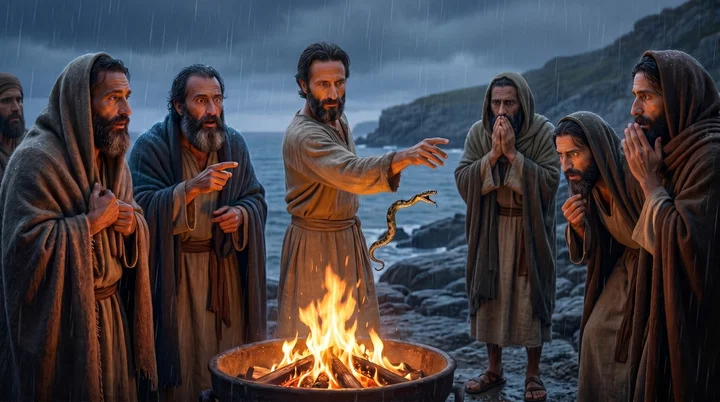
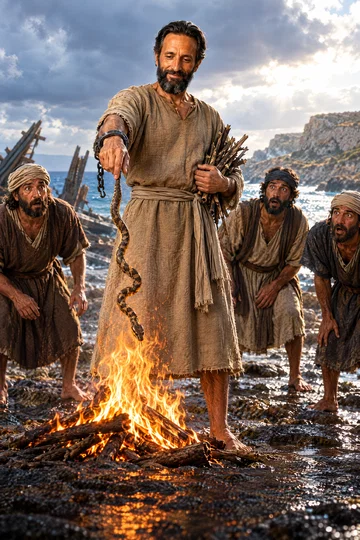
And the barbarous people shewed us no little kindness: for they kindled a fire, and received us every one, because of the present rain, and because of the cold.
Translations
American King James Version, Webster Bible
And the barbarous people showed us no little kindness: for they kindled a fire, and received us every one, because of the present rain, and because of the cold.
King James Version, KJV Cambridge Paragraph Bible
And the barbarous people shewed us no little kindness: for they kindled a fire, and received us every one, because of the present rain, and because of the cold.
And the barbarians shewed us no common kindness: for they kindled a fire, and received us all, because of the present rain, and because of the cold.
And the barbarians showed us no common kindness: for they kindled a fire, and received us all, because of the present rain, and because of the cold.
and the foreigners were shewing us no ordinary kindness, for having kindled a fire, they received us all, because of the pressing rain, and because of the cold;
But the barbarians shewed us no common kindness; for, having kindled a fire, they took us all in because of the rain that was falling and because of the cold.
And, the natives, began to shew us no common philanthropy; for, kindling a fire, they received us all, because of the rain that had set in, and because of the cold.
Berean Standard Bible, Majority Standard Bible
The islanders showed us extraordinary kindness. They kindled a fire and welcomed all of us because it was raining and cold.
The natives showed us uncommon kindness; for they kindled a fire and received us all, because of the present rain and because of the cold.
And the simple people living there were uncommonly kind to us, for they made a fire for us, and took us in, because it was raining and cold.
And the Barbarians shewed vs no litle kindnesse: for they kindled a fire, and receiued vs euery one, because of the present showre, and because of the colde.
Douay-Rheims (Challoner revision)
For kindling a fire, they refreshed us all, because of the present rain, and of the cold.
Pictures
Cross-references
- Acts 27
And when it was determined that we should sail into Italy, they delivered Paul and certain other prisoners unto one named Julius, a centurion of Augustus’ band.
The voyage and shipwreck precede Paul’s arrival in Melita.
- Acts 28:7-10
In the same quarters were possessions of the chief man of the island, whose name was Publius; who received us, and lodged us three days courteously.
The islanders’ welcome was followed by healing and provision.
- Acts 28:10
Who also honoured us with many honours; and when we departed, they laded us with such things as were necessary.
provision received on Malta
- 1 Corinthians 14:11
Therefore if I know not the meaning of the voice, I shall be unto him that speaketh a barbarian, and he that speaketh shall be a barbarian unto me.
Both use “barbarian” for someone whose language is unintelligible.
- Galatians 4:14
And my temptation which was in my flesh ye despised not, nor rejected; but received me as an angel of God, even as Christ Jesus.
The Galatians received Paul warmly, as the people of Melita welcomed him.
Commentary
Each commentary is drawn from primary sources: the writings of Ellen G. White and Adventist pioneers and periodicals. Each commentary is separate. Its own words are not a quotation; follow the references to read the source passages.
Ellen G. White
7 sources
The people of Malta, also called Melita, showed exceptional kindness to the shipwreck survivors by kindling a fire and receiving everyone because of the present rain and the cold.AA 445.2AA 439.2SLP 270.2RH Nov 30, 1911EW 172.3 The rain had drenched the survivors and the cold made them shiver and suffer, leaving them needing shelter and warmth.AA 439.2SLP 270.2RH Nov 30, 1911EW 172.3 That kindness was shown to everyone without exception, including the prisoners.AA 445.2 Paul himself took part in providing for the chilled company, gathering wood with his own hands for the fire, just as he had worked to save his fellow passengers from drowning.ST Nov 6, 1879
Though a prisoner on a barbarous island in discouraging circumstances after the shipwreck, Paul remained courteous, courageous, hopeful, cheerful, self-possessed and helpful.ST Nov 6, 1879 His calm helpfulness flowed from implicit trust in God and a healthy religious experience governed by love for Christ.ST Nov 6, 1879
Wherever there is love and sympathy and the heart reaches out to bless and uplift others, the working of God's Holy Spirit is revealed.COL 385.1 The islanders were in the depths of heathenism, with no knowledge of the written law of God and having never heard the name of Christ, yet they were kind to His servants and protected them at the risk of their own lives.COL 385.1 Their acts show the working of a divine power, with the Holy Spirit implanting the grace of Christ in the savage heart and quickening sympathies contrary to nature and education.COL 385.1 The universal divine light given to every person was shining in their souls, and if heeded it will guide their feet to the kingdom of God.COL 385.1
Sources
Pioneers and periodicals
14 sources
The islanders of Malta, called barbarous because their language was foreign to the Greeks and not because they were savage or cruel, showed unusual kindness to the shipwrecked company by kindling a fire and welcoming everyone to its warmth and shelter because rain was falling and the weather was cold.ST Apr 2, 1885ST Oct 21, 1897ST Jun 19, 1884 Their welcome is courtesy expressed in practical care for people in immediate need.ST Nov 6, 1879RH Dec 15, 1910 Paul himself showed that same courtesy with courage, hope and cheer in discouraging circumstances, for though a prisoner he was self-possessed and helpful, gathering wood with his own hands for the chilled company out of implicit trust in God and love of Christ.ST Nov 6, 1879 Hospitality like this was followed by great benefits, and it remains the pattern for kindness to travelers in hardship, whether in cold and rain or in welcome and food offered even by the poor.CO 73.4RH Nov 18, 1902RH Mar 26, 1908
Words and Historical Setting
The word rendered barbarous means foreigners, people whose language was unintelligible to the Greeks, not necessarily people who were savage or cruel.ST Apr 2, 1885ST Jun 19, 1884 The people so described were those of Malta, also called Melita, and they showed exceptional, unusual, no little kindness to the shipwrecked travelers.ST Apr 2, 1885ST Oct 21, 1897ST Jun 19, 1884CO 73.4RH Jul 25, 1907 Because rain was falling and the weather was cold, they kindled a fire and received every one of the company to its warmth and to shelter from the rain and cold, supplying the shelter and warmth that were needed.ST Apr 2, 1885ST Oct 21, 1897ST Jun 19, 1884CO 73.4RH Jul 25, 1907 Their action illustrates kindness to travelers in hardship and care for needs under cold, rainy conditions.RH Jul 25, 1907RH Nov 18, 1902
The present rain illustrates the Greek verb ephistemi in its sense of to be present, at hand and impending.ST Jan 14, 1913 In this sense it means to place upon, to stand by or near, to come suddenly upon, to come upon, to come near, and to impend.ST Jan 14, 1913 It further means to be instant, to be at hand, to be present, and to be pressing and urgent, and the same verb is used for the sudden coming of the judgments of God.ST Jan 14, 1913
The verse belongs to the completion of Paul's voyage to Rome after the shipwreck, as part of the account of his journey and of his experience in Melita during that completion.ST Dec 9, 1897ST Jul 13, 1882ST Mar 18, 1889ST Jul 21, 1909 The chapter containing it records also his arrival in Rome and his conference with the Jews there.ST Jul 13, 1882 As the last chapter of Acts, it tells of his imprisonment at Rome and the opportunity given him there to teach the Gospel, coming after the voyage to Rome, the shipwreck, and the Lord's marvelous working with His servant.ST Jul 21, 1909
Lesson and Doctrine
The people of Melita responded to Paul and his companions after their shipwreck with practical kindness, lighting a fire and welcoming everyone because of the rain and the cold, and their welcome stands as courtesy expressed through care for people in immediate need.RH Dec 15, 1910 Paul himself displayed that same courtesy with courage, hope and cheer in discouraging circumstances after shipwreck on a barbarous island.ST Nov 6, 1879 Though a prisoner, he remained self-possessed and helpful, working to save his fellow passengers from a watery grave and bringing wood with his own hands to kindle a fire for the benefit of the chilled, shipwrecked company.ST Nov 6, 1879 His calm helpfulness flowed from implicit trust in God and from a healthful religious experience governed by the love of Christ.ST Nov 6, 1879
Their hospitality in lighting a fire and receiving the travelers out of the rain and cold with unusual kindness was followed by great benefits.CO 73.4 His trip to Rome to which this welcome belongs exemplifies his labor and sacrifice, not a vacation.ST Mar 18, 1889 The chapter records his journey after the shipwreck, his arrival in Rome and his conference with the Jews there, and in it the sanctification of the first day was neither raised nor made an accusation against him.ST Jul 13, 1882
Hospitality Applied Today
The verse illustrates kindness to travelers in hardship, when strangers are welcomed and their immediate needs are cared for in cold and rainy conditions.RH Nov 18, 1902 That same warm hospitality and care for needs in cold, rainy conditions was received from brethren in Fiji.RH Nov 18, 1902 The people on Malta treated shipwrecked strangers with remarkable kindness and hospitality.RH Mar 26, 1908 The Santals are like them, because they too commonly welcome preachers with remarkable kindness and hospitality, offering a place to sit and sometimes sharing food despite their poverty.RH Mar 26, 1908
Sources