Acts 28:4
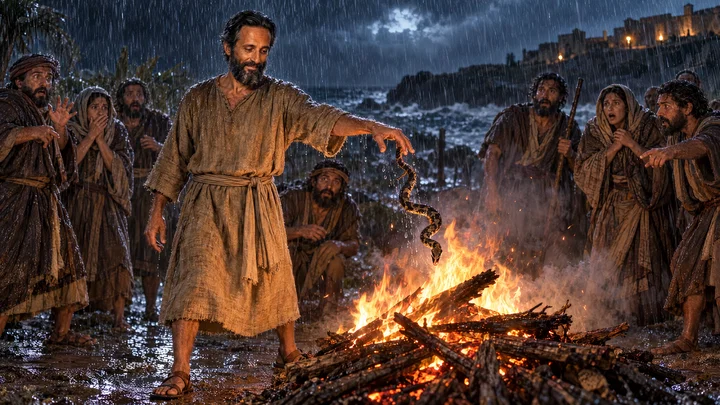
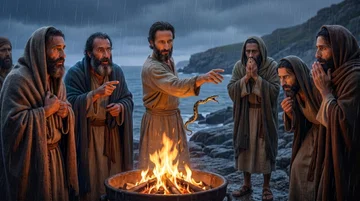
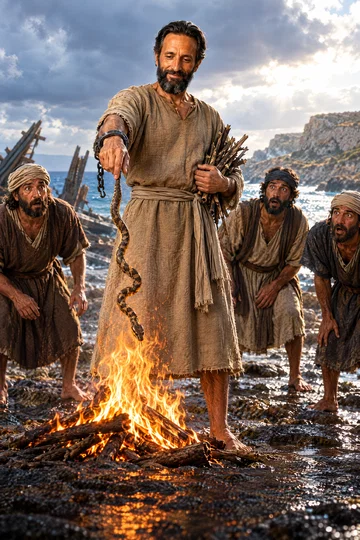
And when the barbarians saw the venomous beast hang on his hand, they said among themselves, No doubt this man is a murderer, whom, though he hath escaped the sea, yet vengeance suffereth not to live.
Translations
And when the barbarians saw the venomous beast hang on his hand, they said among themselves, No doubt this man is a murderer, whom, though he has escaped the sea, yet vengeance suffers not to live.
And when the barbarians saw the venomous beast hang on his hand, they said among themselves, No doubt this man is a murderer, whom, though he hath escaped the sea, yet vengeance suffereth not to live.
And when the barbarians saw the venomous beast hang on his hand, they said among themselves, No doubt this man is a murderer, whom, though he hath escaped the sea, yet Vengeance suffereth not to live.
And when the barbarians saw the animal hang on his hand, they said among themselves, No doubt this man is a murderer, whom, though he hath escaped the sea, yet vengeance suffereth not to live.
And when the barbarians saw the beast hanging from his hand, they said one to another, No doubt this man is a murderer, whom, though he hath escaped from the sea, yet Justice hath not suffered to live.
And when the barbarians saw the venomous creature hanging from his hand, they said one to another, No doubt this man is a murderer, whom, though he hath escaped from the sea, yet Justice hath not suffered to live.
And when the foreigners saw the beast hanging from his hand, they said unto one another, 'Certainly this man is a murderer, whom, having been saved out of the sea, the justice did not suffer to live;'
And when the barbarians saw the beast hanging from his hand, they said to one another, This man is certainly a murderer, whom, [ though] saved out of the sea, Nemesis has not allowed to live.
And, when the natives saw the brute hanging out from his hand, they began to say, one to another—Doubtless, this man is, a murderer, whom, though brought safely through out of the sea, Justice, hath not suffered, to live.
Berean Standard Bible, Majority Standard Bible
When the islanders saw the creature hanging from his hand, they said to one another, “ Surely this man is a murderer. Although he was saved from the sea, Justice has not allowed him to live.”
When the natives saw the creature hanging from his hand, they said to one another, “ No doubt this man is a murderer, whom, though he has escaped from the sea, yet Justice has not allowed to live.”
And when the people saw it hanging on his hand, they said to one another, Without doubt this man has put someone to death, and though he has got safely away from the sea, God will not let him go on living.
Nowe when ye Barbarians saw the worme hang on his hand, they said among themselues, This man surely is a murtherer, whom, though he hath escaped the sea, yet Vengeance hath not suffered to liue.
Douay-Rheims (Challoner revision)
And when the barbarians saw the beast hanging on his hand, they said one to another: Undoubtedly this man is a murderer, who though he hath escaped the sea, yet vengeance doth not suffer him to live.
Pictures
Cross-references
- Mark 16:18
They shall take up serpents; and if they drink any deadly thing, it shall not hurt them; they shall lay hands on the sick, and they shall recover.
Paul’s survival from the viper fulfills the promised protection from serpents.
- Acts 27:44
And the rest, some on boards, and some on broken pieces of the ship. And so it came to pass, that they escaped all safe to land.
Paul survives the shipwreck before the viper incident.
- Luke 10:19
Behold, I give unto you power to tread on serpents and scorpions, and over all the power of the enemy: and nothing shall by any means hurt you.
Paul’s immunity from the viper illustrates Jesus’ promise of protection from serpents.
- Acts 27:41
And falling into a place where two seas met, they ran the ship aground; and the forepart stuck fast, and remained unmoveable, but the hinder part was broken with the violence of the waves.
ship's wreck proves literal reading
- Acts 27:34
Wherefore I pray you to take some meat: for this is for your health: for there shall not an hair fall from the head of any of you.
promise of safety proves literal reading
- Acts 27:42
And the soldiers’ counsel was to kill the prisoners, lest any of them should swim out, and escape.
crew's murderous intent proves literal reading
- Acts 27:29
Then fearing lest we should have fallen upon rocks, they cast four anchors out of the stern, and wished for the day.
same voyage allegorized together
- Psalms 91:13
Thou shalt tread upon the lion and adder: the young lion and the dragon shalt thou trample under feet.
Speaks of safety from serpents.
- Acts 27:22-24
And now I exhort you to be of good cheer: for there shall be no loss of any man’s life among you, but of the ship.
Paul is assured that everyone aboard will survive the wreck.
Commentary
Each commentary is drawn from primary sources: the writings of Ellen G. White and Adventist pioneers and periodicals. Each commentary is separate. Its own words are not a quotation; follow the references to read the source passages.
Ellen G. White
9 sources
The verse belongs to the account of Paul's shipwreck and its aftermath, set in a time when sea travel was perilous and often unsafe during part of the year.AA 439.2 The people of Melita, the islanders who saw the venomous beast hanging on Paul's hand, said among themselves that he must be a murderer whom divine vengeance would not let live even though he had escaped the sea and the shipwreck.AA 445.2SLP 270.2RH Nov 30, 1911ST Nov 6, 1879 Their judgment rested on the belief that such a calamity or fate reveals guilt, that suffering of this kind proves the sufferer is guilty.AA 445.2SLP 270.2
Paul calmly shook the deadly viper off into the fire, trusting God and knowing it could not harm him.ST Nov 6, 1879 He suffered no harm from the bite, and that deliverance overturned their judgment against him.AA 445.2SLP 270.2RH Nov 30, 1911ST Nov 6, 1879 After seeing him remain unharmed they changed their minds and called him a god.AA 445.2
His survival fulfills Jesus' promise that His disciples and followers would take up serpents without being harmed, and the miracle was a sign accompanying the apostles' work and confirming their testimony about Christ.3SP 247.36RED 85.1–2 The episode served God's special purpose for Paul's journey upon the sea, so that the ship's crew would witness God's power through Paul and the heathen would hear the name of Jesus, and through his teaching and the miracles he worked there many were converted.EW 172.3
The men involved were heathen in darkness with no knowledge of God's written law who had never even heard the name of Christ, yet they were kind to His servants and protected them at the risk of their own lives.COL 385.1 Their kindness reveals the working of God's Holy Spirit and divine power, with the grace of Christ implanted in the savage heart to quicken sympathy contrary to nature and contrary to education.COL 385.1 The Light that lights every person was shining in their souls, and if heeded would guide their feet to the kingdom of God.COL 385.1
Sources
Pioneers and periodicals
29 sources
After his escape from the shipwreck the islanders of Melita saw the venomous viper fastened on Paul's hand and concluded among themselves that he must be a murderer whom divine justice would not allow to live though he had survived the sea.ST Oct 21, 1897ST Apr 2, 1885ST Dec 9, 1897 Their verdict rested on a heathen and superstitious notion that wrongdoing is punished in this life by death, and they knew Paul only as a prisoner in chains on his way to Rome.ST Oct 21, 1897ST Oct 21, 1897ST Feb 16, 1915ST Apr 29, 1903 They watched for him to swell and die, but when he shook the serpent back into the fire and stood unharmed they reversed their judgment and called him a god, showing the verse records their mistake and not his guilt.ST Oct 21, 1897ST Apr 2, 1885ST Aug 28, 1898ST Jan 28, 1913ST Nov 25, 1897 Their hasty conclusion warns against assuming that suffering proves guilt, since a calamity following an escape does not mark rebellion against God and outward condition is no certain index of standing in His sight.RH May 18, 1869 His calm deliverance from both sea and serpent's bite shows God's present power to protect and help those who trust and serve Him, even His messengers in deadly danger.ST Nov 6, 1879ST Nov 25, 1889RH Jul 8, 1909ST Jul 22, 1889
The Barbarians' Judgment
After the shipwreck Paul escaped to Malta or Melita, where the barbarians saw the venomous viper hang on his hand and said among themselves that he must be a murderer whom vengeance or divine Justice would not suffer to live, though he had escaped the sea.RH Nov 30, 1911ST Oct 21, 1897ST Apr 2, 1885ST Dec 9, 1897ST Oct 21, 1897 They took the bite as proof that divine vengeance had caught up with him despite his survival of the sea, as the punishment he had escaped at sea now finding him on land.RH Nov 30, 1911ST Apr 2, 1885ST Dec 9, 1897ST Aug 28, 1898 Their verdict reflected a heathen and superstitious belief that punishment for wrongdoing is carried out in this life, that the god of justice punishes murderers with death.ST Oct 21, 1897ST Oct 21, 1897 They knew him only as a prisoner, and read the deadly bite through that retributive expectation.ST Oct 21, 1897
The viper had leapt from the fire onto his half-frozen hand, and the rude islanders stared a while watching for him to swell and die.ST Jan 28, 1913ST Nov 25, 1897 When he stood unharmed beside the fire after hurling the serpent back into the flames where it burns to ash, they reversed their verdict and changed their view of him.ST Aug 28, 1898ST Jan 28, 1913ST Nov 25, 1897 Then they said he was a god, their expectation of death having failed.ST Jan 28, 1913ST Nov 25, 1897 The verse records their mistaken belief, not his guilt, and their judgment was overturned when the bite did him no harm and he suffered nothing.RH Nov 30, 1911ST Oct 21, 1897ST Apr 2, 1885ST Aug 28, 1898ST Oct 21, 1897
The bite came as soon as he landed on Melita, showing Melita was a literal snaky island.RH Sep 23, 1873RH Aug 18, 1874 It cannot mean Heaven, since Heaven is not a snaky place where arrivals are bitten.RH Sep 23, 1873RH Aug 18, 1874 The incident belongs to his journey as a prisoner in chains to Rome after shipwreck.ST Apr 29, 1903 It includes the three months he and the soldiers spent together on the island afterward.ST Feb 16, 1915ST Apr 29, 1903
Judging Suffering Rightly
The people of Malta saw Paul survive the shipwreck only to be bitten by a viper, and they read his troubles as proof of guilt, concluding that he was a murderer whom divine vengeance was overtaking though he had escaped the sea. Their reasoning illustrates how people wrongly assume that those who suffer deserve their misfortunes. Their hasty judgment drawn from a calamity following an escape was mistaken, as was proved when Paul suffered no harm.RH May 18, 1869 A calamity following an act therefore does not determine the act to have been rebellion against God, and a person's earthly condition is no certain index of standing in God's sight.RH May 18, 1869
Calamities are ordered and directed by God for His own reasons, which humans are not given to declare.RH May 18, 1869 Such facts are to be studied and solemnly pondered with modesty rather than interpreted with certainty to support a disputed religious claim.RH May 18, 1869 The final vindication of the righteous and the wicked belongs to the great Judgment day.RH May 18, 1869
Divine Protection and Application
Paul calmly shook the deadly viper into the fire, trusting God and knowing it could not harm him.ST Nov 6, 1879ST Nov 25, 1889 It was the one occasion in his life when he was miraculously preserved from a serpent's bite.ST Nov 6, 1879ST Nov 25, 1889 That preservation joined survival of the shipwreck and survival of the viper's bite together as miraculous deliverance.ST Nov 6, 1879ST Nov 25, 1889
The event shows God's present power to intervene and deliver and help those who trust in him, and his providential acts are not confined to Bible times.RH Jul 8, 1909ST Jul 22, 1889 The poisonous serpent could not harm Paul because God had chosen him as his ambassador, demonstrating God's power to protect those who trust and serve him.RH Jul 8, 1909ST Jul 22, 1889 The passage is an instance of prayer disarming vipers and poisons, for the poisonous viper fastened on Paul without overcoming him and he was bitten but not harmed.ST Jul 8, 1913RH Aug 28, 1856RH Nov 27, 1913RH Aug 7, 1855
Paul with the venomous beast hanging on his hand is a living example of the promise that believers shall take up serpents.RH Mar 19, 1901 There the serpent is Satan and his snares and the sting of sin, so shaking off the deadly viper unharmed means having absolute immunity against sin.RH Mar 19, 1901 That immunity comes through spiritual discernment that recognizes the deceptions of the enemy, puts them out of the way instead of being ensnared by them, and teaches God's principles so others can discern the spirit of error, joined with a physical regeneration that gives power to resist the effects of a literal serpent's sting.RH Mar 19, 1901 The incident likewise illustrates that God can protect messengers carrying his message through deadly dangers, so that like Paul they may pass unharmed through pestilence, wild beasts, and hostile people as they seek those willing to hear.RH Mar 19, 1901ST Mar 20, 1893 In allegory, Paul stands on an island representing truth and the viper represents error, which cannot harm him because he stands on that foundation.ST Mar 20, 1893RH Sep 22, 1863
The verse belongs to the account of Paul's journey to Rome, in which circumstances that delayed him ultimately brought him to his intended destination and gave him opportunities for missionary work along the way.ST Mar 30, 1904ST Mar 18, 1889RH Mar 27, 1856 That trip presents an example of labor and sacrifice rather than vacation.ST Mar 30, 1904ST Mar 18, 1889 Imprisoning him could not stop his influence, for his light would spread across the Roman Empire.ST Mar 30, 1904ST Mar 18, 1889RH Mar 27, 1856 The viper bite came upon him as a prisoner in chains after shipwreck on the way to Rome, and it was one of the great trials of his life, along with mad mobs, testimony before kings and courts, conspiracies of assassins, shipwreck, and the decision of a military tribunal over his life.ST Apr 29, 1903 In it his sublime faith and courage rose superior to the ill and cheered discouraged companions, showing that great trials do not generally discourage the Christian soul.ST Apr 29, 1903
Sources