2 Corinthians 3:7
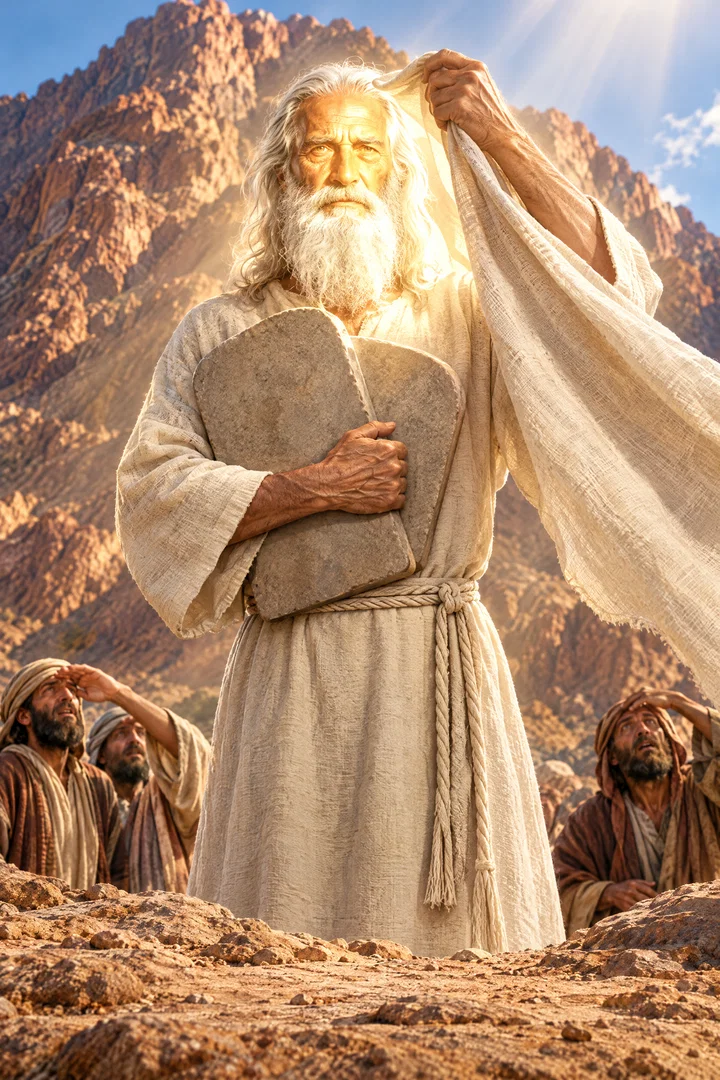
But if the ministration of death, written and engraven in stones, was glorious, so that the children of Israel could not stedfastly behold the face of Moses for the glory of his countenance; which glory was to be done away:
Translations
But if the ministration of death, written and engraved in stones, was glorious, so that the children of Israel could not steadfastly behold the face of Moses for the glory of his countenance; which glory was to be done away:
King James Version, KJV Cambridge Paragraph Bible
But if the ministration of death, written and engraven in stones, was glorious, so that the children of Israel could not stedfastly behold the face of Moses for the glory of his countenance; which glory was to be done away:
But if the ministration of death, written and engraven on stones, was glorious, so that the children of Israel could not steadfastly behold the face of Moses for the glory of his countenance; which glory was to be done away;
Revised Version, American Standard Version
But if the ministration of death, written, and engraven on stones, came with glory, so that the children of Israel could not look stedfastly upon the face of Moses for the glory of his face; which glory was passing away:
and if the ministration of the death, in letters, engraved in stones, came in glory, so that the sons of Israel were not able to look stedfastly to the face of Moses, because of the glory of his face — which was being made useless,
( But if the ministry of death, in letters, graven in stones, began with glory, so that the children of Israel could not fix their eyes on the face of Moses, on account of the glory of his face, [ a glory] which is annulled;
But, if, the ministry of death, in letters engraven in stones, was brought into existence with glory, so that the sons of Israel could not look steadfastly into the face of Moses, by reason of the glory of his face—which [glory] was to be done away,
Berean Standard Bible, Majority Standard Bible
Now if the ministry of death, which was engraved in letters on stone, came with such glory that the Israelites could not gaze at the face of Moses because of its fleeting glory,
But if the service of death, written engraved on stones, came with glory, so that the children of Israel could not look steadfastly on the face of Moses for the glory of his face, which was passing away,
For if the operation of the law, giving death, recorded in letters on stone, came with glory, so that the eyes of the children of Israel had to be turned away from the face of Moses because of its glory, a glory which was only for a time:
If then the ministration of death written with letters and ingrauen in stones, was glorious, so that the children of Israel coulde not beholde the face of Moses, for the glorie of his countenance (which glorie is done away.)
Douay-Rheims (Challoner revision)
Now if the ministration of death, engraven with letters upon stones, was glorious; so that the children of Israel could not steadfastly behold the face of Moses, for the glory of his countenance, which is made void:
Pictures
Cross-references 20 of 102
- Exodus 34:29-35
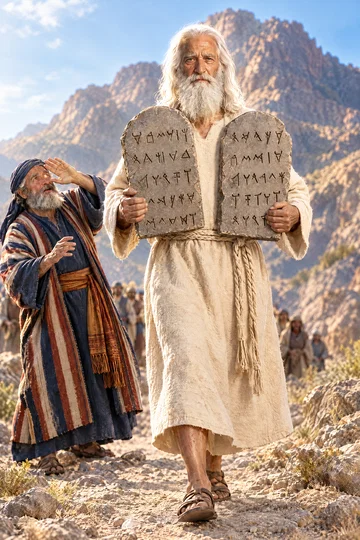
And it came to pass, when Moses came down from mount Sinai with the two tables of testimony in Moses’ hand, when he came down from the mount, that Moses wist not that the skin of his face shone while he talked with him.
Moses’ radiant face and Israel’s inability to look at him illustrate the glory described.
- Colossians 2:14
Blotting out the handwriting of ordinances that was against us, which was contrary to us, and took it out of the way, nailing it to his cross;
The handwriting of ordinances is described as taken out of the way and nailed to the cross.
- Hebrews 8:10
For this is the covenant that I will make with the house of Israel after those days, saith the Lord; I will put my laws into their mind, and write them in their hearts: and I will be to them a God, and they shall be to me a people:
Describes God writing his law in the heart under the new covenant.
- 2 Corinthians 3:13-14
And not as Moses, which put a vail over his face, that the children of Israel could not stedfastly look to the end of that which is abolished:
Moses’ veil hid the passing glory, while the veil is done away in Christ.
- Jeremiah 31:33
But this shall be the covenant that I will make with the house of Israel; After those days, saith the LORD, I will put my law in their inward parts, and write it in their hearts; and will be their God, and they shall be my people.
Promises God will write his law on the heart under the new covenant.
- 2 Corinthians 3:11
For if that which is done away was glorious, much more that which remaineth is glorious.
Contrasts the passing ministry and glory with the greater glory that remains.
- 2 Corinthians 3:3
Forasmuch as ye are manifestly declared to be the epistle of Christ ministered by us, written not with ink, but with the Spirit of the living God; not in tables of stone, but in fleshy tables of the heart.
Contrasts stone tablets with the Spirit writing God’s law on hearts.
- Romans 7:12
Wherefore the law is holy, and the commandment holy, and just, and good.
shows same law remains holy and good
- Exodus 20:1-17
And God spake all these words, saying,
The commandments written on stone include the Sabbath and brought condemnation.
- Exodus 31:18
And he gave unto Moses, when he had made an end of communing with him upon mount Sinai, two tables of testimony, tables of stone, written with the finger of God.
The covenant tablets were written by God on stone.
- 2 Corinthians 3:14
But their minds were blinded: for until this day remaineth the same vail untaken away in the reading of the old testament; which vail is done away in Christ.
The veil over Israel’s minds is done away in Christ.
- Romans 8:2
For the law of the Spirit of life in Christ Jesus hath made me free from the law of sin and death.
The passage names this as the law that replaced the former code.
- Hebrews 8:6
But now hath he obtained a more excellent ministry, by how much also he is the mediator of a better covenant, which was established upon better promises.
Christ’s more excellent ministry mediates the better covenant.
- Matthew 5:17-19
Think not that I am come to destroy the law, or the prophets: I am not come to destroy, but to fulfil.
Christ’s testimony is cited against the claim that the Decalogue was abolished.
- 2 Corinthians 3:17-18
Now the Lord is that Spirit: and where the Spirit of the Lord is, there is liberty.
The Spirit brings liberty and transforms beholders into the Lord’s image.
- Romans 7:10
And the commandment, which was ordained to life, I found to be unto death.
The commandment ordained for life became death to the sinner.
- Romans 4:15
Because the law worketh wrath: for where no law is, there is no transgression.
Both describe the law as bringing transgression and death.
- Ephesians 2:15
Having abolished in his flesh the enmity, even the law of commandments contained in ordinances; for to make in himself of twain one new man, so making peace;
Both texts describe the commandments contained in ordinances as abolished in Christ.
- Exodus 20:19
And they said unto Moses, Speak thou with us, and we will hear: but let not God speak with us, lest we die.
Israel fears hearing God and asks Moses to speak for them.
- Romans 3:19
Now we know that what things soever the law saith, it saith to them who are under the law: that every mouth may be stopped, and all the world may become guilty before God.
The law makes transgressors accountable and guilty before God.
Commentary
Each commentary is drawn from primary sources: the writings of Ellen G. White and Adventist pioneers and periodicals. Each commentary is separate. Its own words are not a quotation; follow the references to read the source passages.
Ellen G. White
18 sources
The ministration of death written and engraved in stones is the moral law of God given in awful grandeur from Sinai, glorious in its proclamation and in the brightness reflected on Moses' face when he came down from meeting with God.Lt 52, 1908, par. 9–1210MR 328.2ST Jul 10, 1893Ms 58, 1900, par. 9–13RH Apr 22, 1902 To all who break it the law brings condemnation and death, for it has no power in itself to pardon or save, leaving the transgressor under its curse with no hope apart from Christ.10MR 328.2Ms 58, 1900, par. 9–13Lt 15, 1895, par. 31–32 That glory was temporary and was to be done away, so Moses veiled his shining face because guilty Israel could not steadfastly behold it.Lt 52, 1908, par. 9–12ST Jul 10, 1893ST Aug 25, 1887 The passing away does not mean the Ten Commandments were abolished, for the enduring moral law remains to govern heaven and earth; what was abolished at Christ's death was the glorious ceremonial system of types and sacrifices that pointed to Him.ST Aug 25, 1887ST Jul 29, 1886Ms 58, 1900, par. 30–32ST Jul 29, 1886Ms 43, 1887, par. 2 If the ministration through types that were to pass away was glorious because Christ the sin-pardoning Saviour was revealed in them, much more glorious is the remaining ministration of the Spirit and of righteousness, giving liberty and transformation to all who with open face behold the unfading glory of God in Christ.Lt 52, 1908, par. 9–12Ms 58, 1900, par. 9–13ST Aug 25, 1887RH Apr 22, 1902Ms 58, 1900, par. 30–32
Ministration of Death Explained
The ministration of death written and engraven in stones is the moral law, the law of God and the precepts of Jehovah given in awful grandeur from Sinai.10MR 328.2Ms 58, 1900, par. 9–13RH Apr 22, 1902Ms 43, 1887, par. 2 To all who transgress it, it is condemnation and death, because it utters condemnation yet has in itself no power to pardon, redeem, save, or shield from penalty.10MR 328.2Ms 58, 1900, par. 9–13RH Apr 22, 1902Ms 58, 1900, par. 30–3210MR 330.1 The transgressor died without mercy, is arraigned and convicted before the heavenly council and condemned, is left under its curse in bondage and death with no hope of pardon without Christ and nothing in himself to save him, and not one statement of its precepts may be evaded, forgotten, or regarded indifferently.10MR 328.2Ms 58, 1900, par. 9–13Lt 15, 1895, par. 31–32RH Apr 22, 1902Ms 58, 1900, par. 30–32 The full penalty of the law will be executed upon the transgressor if he does not receive Christ.10MR 330.1 The law was ordained to life, so that those walking in harmony with its precepts receive the reward of obedience.RH Apr 22, 1902
The verse belongs to Paul's writing to the church at Corinth to settle their minds about the gospel of Christ against Judaizing teachers who caused trouble and dissensions.10MR 328.1 Those teachers continually presented the virtues of the law and ceremonies, exalting these above the gospel, and condemned Paul because he did not urge the ceremonies that typified Christ and were of no value since Christ's death.10MR 328.1 The ministration was glorious, and its proclamation and repetition on the holy mount was sacred and glorious.Lt 52, 1908, par. 9–1210MR 328.2Ms 58, 1900, par. 9–13 The glory was reflected on the face of Moses when he came down with the tables engraved by the finger of God after meeting with God, so brightly that because of their transgressions the children of Israel could not steadfastly behold it without pain, so that Moses covered his face with a veil.Lt 52, 1908, par. 9–1210MR 328.2Ms 58, 1900, par. 9–13ST Aug 25, 1887RH Apr 22, 1902
That glory was temporary and was to be done away, marking the Jewish age as a dimmer, preparatory age surpassed by the clearer glory of the Christian age when the Saviour prefigured in the offerings was revealed.Lt 52, 1908, par. 9–12ST Jul 10, 1893ST Aug 25, 1887ST Jul 29, 1886 It served as a lesser sign of the greater gospel glory revealed through Christ, giving way when its reality came to the far more glorious ministration of the Spirit and of righteousness which remains, with liberty and transformation for those who behold the glory of the Lord with open face.Lt 52, 1908, par. 9–12ST Aug 25, 1887 The face was covered so the transient glory would not shine forth to transgressors whose thoughts and affections were under Satan's control.Ms 58, 1900, par. 56–60
What Was Abolished
The passing of glory spoken of does not mean the moral law was abolished.ST Jul 29, 1886ST Jul 29, 1886Ms 43, 1887, par. 2 The glory that was to pass away was not the enduring moral law given to govern the family in heaven and on earth.ST Jul 29, 1886ST Jul 29, 1886 To apply the doing away to the Ten Commandments is blindness worked by Satan in order to make the moral law take the place of the law that was abolished.Ms 43, 1887, par. 2 What was to be abolished at the death of Christ as a sin offering was the ceremonial law and the sacrificial system with its rites and ceremonies.ST Aug 25, 1887ST Jul 29, 1886Ms 58, 1900, par. 30–32 Though glorious because it came from Christ and had a sacred, prophetic part pointing to Christ as the offering for sin, it was no longer to be observed after its purpose was fulfilled and was to lose force when its reality came.ST Aug 25, 1887ST Jul 29, 1886Ms 58, 1900, par. 30–32
The ceremonial law was connected with the moral law and shared glory with the ten moral precepts.Ms 58, 1900, par. 30–32RH Apr 22, 1902 The proclamation of the Ten Commandments displayed divine majesty and holiness and made the people afraid.Ms 58, 1900, par. 30–32RH Apr 22, 1902 Both laws bore the stamp of divinity, holiness, justice, and righteousness, so neither is a thunder-and-lightning law to be denounced and despised.Ms 58, 1900, par. 30–32RH Apr 22, 1902 Even after it was no longer to be observed, the ceremonial law was set forth in its true position and value, showing its place in the plan of redemption and its relation to the work of Christ.PP 367.2
Its glory lies in the solemn service of the sanctuary typifying grand truths to be revealed through successive generations.PP 367.2 The cloud of incense represented the righteousness of Christ that alone makes the sinner's prayer acceptable, the bleeding victim on the altar testified of a Redeemer to come, and the visible token of the divine presence shone from the holy of holies.PP 367.2 By these means faith was kept alive through ages of darkness and apostasy until the advent of the promised Messiah.PP 367.2 This change did not cancel God's law, for Christ did not destroy its claims, and the Father's commandments remain to be kept.ST Jul 29, 1886
Christ's Greater Remaining Glory
The law in itself is lusterless, with no glory of its own and no saving quality to pardon, redeem, save, or shield the transgressor from its penalty.RH Apr 22, 1902Ms 58, 1900, par. 30–3210MR 330.1 All its glory and significance come from Christ embodied in it as full of righteousness and truth, and from the promised Saviour revealed in the types and shadows connected with it, reflecting the holiness, justice, and righteousness of God and giving significance to the entire Jewish economy.RH Apr 22, 1902Ms 58, 1900, par. 30–3210MR 330.1
The radiance on Moses’ face came from seeing Christ as revealed in the law and seeing to the end of that which was to be abolished, when at Christ’s death type would meet antitype.Ms 58, 1900, par. 9–13RH Apr 22, 1902 While in the mount he was given both the tables of the law and the plan of salvation, beholding Christ’s sacrifice prefigured in all the types and symbols, with the slain lamb and the typical sacrifices pointing to the Lamb of God to take away sin.Ms 58, 1900, par. 9–13RH Apr 22, 1902PP 330.2–4 There Christ was revealed as the propitiation for sin, who took the curse of disobedience and the penalty of the law upon Himself and proffered His perfection of character in place of man’s sinfulness, so that obedient man through His merits can keep the moral law and be accepted.Ms 58, 1900, par. 9–13RH Apr 22, 1902Ms 58, 1900, par. 30–32 That seeing of the plan of salvation illuminated his face with heavenly light streaming from Calvary no less than from the glory of the law, shedding a halo upon the law that reveals its changeless and exalted character.RH Apr 22, 1902Ms 58, 1900, par. 30–32PP 330.2–4
If the ministration of death through types that were to be done away was glorious because Christ was revealed by them as the sin-pardoning Saviour, much more does the ministration of the Spirit and of righteousness which remains exceed in glory, as a lesser sign giving way to the greater gospel glory.Lt 52, 1908, par. 9–12Ms 58, 1900, par. 9–13ST Aug 25, 1887 Christ, the appointed mediator and sin-pardoning sacrifice, gives the life-giving, sanctifying Spirit through Himself to all who believe.Ms 58, 1900, par. 9–13Ms 58, 1900, par. 30–32RH Apr 22, 1902 Those who behold the glory of the Lord with open face receive liberty and transformation, and in contrast to Moses’ transient glory the glory of God in the face of Jesus Christ does not pass away but ever remains, so that all who look may live and have that glory reflected upon them.Lt 52, 1908, par. 9–12Ms 58, 1900, par. 30–32Ms 58, 1900, par. 56–60 The sacrificial system pointed to Christ the offering for sin, and when its reality came its anticipatory glory gave way to the greater glory of the ministry of the Spirit.ST Aug 25, 1887
The brightness on Moses was meant to impress Israel with the sacred, exalted character of God’s law and the glory of the gospel revealed through Christ.PP 330.2–4 It symbolized the glory of the dispensation in which Moses was the visible mediator, representing the one true Intercessor.PP 330.2–4 It illustrates the blessings that God’s commandment-keeping people receive through Christ’s mediation, testifying that the closer the communion with God and the clearer the knowledge of His requirements, the more fully people are conformed to the divine image and become partakers of the divine nature.PP 330.2–4
Moses was a type of Christ in veiling, for as Israel’s intercessor veiled his countenance because the people could not endure its glory, so Christ the divine Mediator veiled His divinity with humanity, humbling Himself and being made in the likeness of sinful flesh so He could gain access to men in their sinful state and lift up the fallen race.PP 330.2–4 As the glory reflected on Moses’ face from the law was veiled, likewise the glory of Christ’s ascension was hidden from human sight.6RED 92.1–3 The heavenly escort and the gates of heaven were veiled because witnessing their overwhelming glory would have made the disciples less able to return to earthly trials and carry out their mission faithfully.6RED 92.1–3
Christ our Righteousness sheds light and brightness and glory and joy into the law of God, so that every precept obeyed is an expressed promise.Ms 58, 1900, par. 56–60 Yet the full penalty of the law will be executed upon the transgressor if he does not receive Christ as his atoning sacrifice and his personal Saviour.10MR 330.1
Sources
Pioneers and periodicals
146 sources
The phrase written and engraven in stones identifies the Ten Commandments on the two tables, given when Moses came down from forty days communing with the Lord with his face shining so brightly that Israel could not steadfastly behold him and he put a veil over his face.RH Dec 3, 1914ST Jun 5, 1879RH Jun 18, 1901ST Aug 5, 1889ST Jul 14, 1914
Ministration means ministry or service connected with what was written on stone, and it is called death and condemnation because the holy law exposes sin and holds the transgressor under sentence of death while offering no pardon or life in itself.RH Dec 12, 1854ST Jan 21, 1886RH Jul 25, 1854ST Jun 5, 1879ST Oct 16, 1884
What was to be done away was that ministration with its fading glory and condemnation, not the Ten Commandments themselves, for law and ministration are distinct.RH Nov 2, 1911ST Aug 12, 1889RH Dec 12, 1854ST Dec 25, 1893ST Feb 13, 1912
Those who held the other teach that the verse abolishes the Sinaitic code and the Sabbath and gives place to another system.RH Mar 8, 1906RH Sep 16, 1852RH Mar 1, 1864
The former ministration, though truly glorious, is surpassed and eclipsed by the remaining ministration of the Spirit, righteousness and life, under which the same law is put in the mind and written in the heart with forgiveness and power to obey, as moon and stars fade before the rising sun.RH Dec 3, 1914ST Aug 12, 1889RH Jun 14, 1870ST Sep 25, 1893ST Jun 12, 1879
Words and Historical Setting
The words written and engraven in stones point to the Ten Commandments on the two stone tablets written by God's finger, not to the law later written on plastered stones at the altar on Mount Ebal or to laws written in a book.RH Jun 18, 1901ST Aug 5, 1889RH Oct 4, 1864RH Jan 29, 1861ST Oct 16, 1884 The priestly service itself was not engraved there, for the commandments alone were what stood upon the stone slabs.ST Oct 16, 1884ST Oct 16, 1884 The thing whose glory was passing was the ministration, the system of services and ordinances established through Moses, not the commandments themselves.RH Jun 18, 1901
The setting is what took place in Exodus 34, not Deuteronomy 27, when Moses came down from the mount after forty days and forty nights communing with the Lord with the two tables in his hands.ST Jun 5, 1879ST Oct 16, 1884RH Sep 6, 1864 His face shone with glory brought from the divine presence, so bright that the children of Israel could not look steadily upon him while he spoke to them.ST Jul 14, 1914RH Jan 29, 1861ST Jan 17, 1884 He therefore put a veil over his face while talking with them.ST Jun 5, 1879ST Oct 16, 1884ST Jan 17, 1884 Moses in this stands as representative head and first priest of the old covenant and its priesthood, in contrast with the priesthood of Christ.ST Jun 5, 1879ST Oct 16, 1884
Ministration renders the Greek diakonia and means ministry, service, attendance, office, or dealing out as in dealing out provisions.ST Jun 5, 1879ST Oct 16, 1884AUST May 31, 1920RH Dec 12, 1854 The phrasing is elliptical for the ministry connected with or concerning what was written on stone, since no ministerial service was itself engraved on the tablets.ST Mar 10, 1881AUST May 31, 1920RH May 1, 1913 That ministry belonged to the covenant whose written letter brought death, and its glory was seen in Moses the minister who served in connection with the law.ST Mar 10, 1881RH May 1, 1913 The glory was the splendour that flooded his person and face after talking with God and returning to converse with men after long separation, still pictured in the halo artists place round a hero.RH Dec 3, 1914RH Jun 14, 1870AUST May 31, 1920
That glory on Moses' face glistened and shone when he was with the Lord in the mount, and though glorious it was temporary and to be done away, eclipsed by the glory that excels.RH Dec 3, 1914RH Jun 14, 1870ST Mar 10, 1881ST Jan 21, 1886RH Feb 17, 1852 Grammatically the words which was to be done away connect specifically to glory, not to law.ST Mar 10, 1881RH Jul 8, 1852RH Dec 16, 1873 The veil Moses put over his face hid that temporary radiance and glory of his ministration as he brought down the holy law, not the tables of stone he held in his hand, which were never veiled.RH Dec 12, 1854RH Jul 8, 1852ST Aug 23, 1877RH Dec 16, 1873ST Jan 17, 1884 The abolished glory therefore pertained to the minister, proving the verse gives no direct testimony that the constitution itself was abolished.RH Jul 8, 1852RH Jul 8, 1852ST Aug 23, 1877
The giving stood within Israel's agreement at Sinai to obey God and keep His covenant, under which they would be His treasured people, kingdom of priests, and holy nation.ST Aug 5, 1889 It belonged to a religious system that included the sanctuary and its ordinances, and its promulgation and enforcement through Moses and his successors was accompanied by the appearance of angels and the cloud of glory.ST Jun 5, 1879ST Oct 16, 1884RH Jun 28, 1864 The wording grammatically connects the ministration with what was engraved on stones, which can at first suggest that the stone-written law, especially the Decalogue, is what would be done away.ST Oct 16, 1884ST Jun 5, 1879ST Jun 5, 1879 This is noted as an apparent difficulty.ST Oct 16, 1884ST Jun 5, 1879
Reason Called Death
It is called a ministration of death and condemnation because the holy, just, good and spiritual law exposes sin, convicts the sinner and makes him conscious of guilt, and holds the transgressor under its dominion and under sentence of death as long as he lives.RH Dec 12, 1854RH Jul 25, 1854RH Feb 17, 1852RH Dec 12, 1854ST Dec 5, 1892 Held only on stone tablets outside the heart, without the Spirit's liberating power, the letter alone brings condemnation, for sinful passions persist and the righteousness of the law is not fulfilled, and it offers in itself no pardon, relief, or life.ST Jan 21, 1886RH Jul 25, 1854ST Dec 16, 1897RH Dec 12, 1854ST Dec 5, 1892 Its service therefore revealed sin and condemnation but offered no pardon, its blessings depending on obedience which the people broke, so it could not supply the forgiveness and life the sinner needed.RH Dec 12, 1854ST Jan 21, 1886RH Feb 17, 1852
The word death is put by figure of speech for its cause, the effect standing for what produces it, for the law is called death because its penalty is death and its administration brings that penalty upon the transgressor.ST Jan 17, 1884ST Dec 16, 1897RH Mar 27, 1866RH Oct 21, 1873RH Sep 1, 1868 Nothing but the moral law was written on the stones, no ministration itself being engraven there, so the phrase names the service connected with what was written, which condemns men and puts them to death with no real pardon but pardon only in figure.ST Jan 17, 1884ST Jan 17, 1878RH Mar 27, 1866RH Sep 1, 1868 The commandments were ordained to give life to the obedient, but became death to those who broke them, and the law and its death penalty remain while the execution is reserved to God himself with time given to repent.ST Jan 17, 1878RH Mar 27, 1866RH Oct 21, 1873RH Sep 1, 1868
Its priests continually reminded the people of guilt and of sin's penalty, for sin forfeits life and atonement required the shedding of a substitute's blood, and its sacrifices represented that penalty by shed blood.ST Jan 21, 1886RH Jun 14, 1864ST Jan 21, 1886 Those animal sacrifices could remove transgression only in figure and not make a real atonement, for they could neither take sins away, nor remove enmity, nor make anyone perfect.ST Jan 21, 1886RH Jun 14, 1864RH Apr 16, 1861ST Aug 5, 1889 Since all had sinned and sin brings death, the earthly priests' work by itself left the people condemned to death and provided no means of forgiveness, so that a better covenant offering forgiveness was needed, while grace bringing salvation came through Jesus Christ.RH Apr 16, 1861RH Jun 18, 1914ST Aug 5, 1889
Under the former ministration open, willful violation brought prompt temporal punishment enforced by human ministers, judges, witnesses and the people, especially death by stoning, without exemption or pardon even for the repentant, because there was no atonement for such sinners under that system.RH Mar 21, 1865RH May 19, 1851RH Oct 7, 1851RH Jan 13, 1852 That stoning system with the other laws of Moses ended at the cross and within the seventieth week, giving way to a ministry that points the convicted sinner to Christ as a source of pardon, while God's law and its ultimate penalty of eternal death remain.RH Mar 21, 1865RH May 19, 1851RH Oct 7, 1851 What was done away was therefore this glorious Mosaic administration and its temporal execution by human ministers, now held in abeyance until God's own future judgment, to restrain transgression then and to offer pardon and life to those who repent and are reconciled now.RH Oct 21, 1873RH Mar 12, 1872RH Oct 7, 1851RH Jan 13, 1852
The same moral law works life in the obedient and death in the transgressor, life and justification to man in one condition and condemnation and death to him in the opposite position, because it holds the transgressor under condemnation and causes his death.RH Jul 25, 1854ST Nov 5, 1896ST Nov 5, 1896RH Jul 25, 1854 Its ministration of death, also called the ministration of condemnation, is the abnormal action of the divine law, literally written against every human being, working wrath where transgression exists and revealing the glory of God in righteous indignation, while its ministration of the Spirit, righteousness and life is the normal operation of the same moral law exemplified in Christ's perfect earthly life.ST Sep 12, 1895ST Nov 5, 1896ST Oct 3, 1895 This death-dealing administration springs not from God's creative act but from the act of sin setting the law's latent, eternal penal force to work, so that the transgressor forfeits all right to life and death springs spontaneously and justly from the violated law, yet it is temporary and can be set aside by Christ crucifying the flesh and removing the carnal veil from the heart, that with unveiled face the believer may behold Christ's righteousness and be changed into the same image by the Spirit working through the law unto freedom.ST Sep 12, 1895ST Nov 5, 1896ST Oct 3, 1895ST Nov 5, 1896
The ministry itself was glorious, not death itself, and its glory lay in the penalty falling not on the guilty sinner but on an innocent substitute, foreshadowing God's remedy, and in revealing righteous indignation against evil to secure happiness, keep supremacy over evil, and provide for the eradication of sin.RH Dec 15, 1910ST Sep 12, 1895RH Jun 14, 1870ST Oct 3, 1895 Jesus bore the law's condemnation though He did not deserve it, that believers might receive righteousness, and the gospel contrast is therefore between condemnation and pardon, not between law and no law.RH Dec 15, 1910RH Mar 12, 1872RH Jun 14, 1870 The penalty together with the regulations of the administrator's office was written in the book of the law while the endless commandments stood on stone, the administrator performing his office on the strength of the commandment, for a law without penalty for moral agents would be merely nominal, and Christ abolished temporal death for new violations when He arose from the tomb, so that now no temporal death authorized by God is inflicted and penitents are given space to repent, remit past sins through Jesus, and sin no more, while the impenitent remain subject to judgment.RH Mar 12, 1872RH Feb 14, 1854ST Mar 10, 1881
What Was Done Away
What was done away was the ministration itself, its dispensation and priestly service and fading glory, not the Ten Commandments or the moral law themselves, for law and ministration are distinct things.RH Nov 2, 1911ST Aug 12, 1889RH Dec 12, 1854ST Jan 17, 1884ST Mar 10, 1881 The wording distinguishes the service connected with the law from the law itself, since no service was literally graven on stones and nothing but the moral law was written there, and the ministration with its glory was replaced by a more glorious ministration while the law remained unchanged as the basis of both covenants.RH Nov 2, 1911ST Aug 12, 1889ST Jan 17, 1884 Grammatically it is the glory that was to pass away, the glory reflected on Moses' face which Israel could not steadfastly behold, and the veil hid that glory of the ministration rather than the stone tablets, so the Mosaic dispensation gives way to the Christian dispensation whose greater glory surpasses it.RH Dec 12, 1854ST Dec 25, 1893ST Mar 10, 1881 Under the former ministration everything was death and condemnation with no real pardon but pardon only in figure, while under the new Christ mediates forgiveness and writes the law in the heart to enable obedience, and the law remains as a blessed witness to the greater glory of Christ's righteousness resting on the one who sees Jesus by faith as Justifier.ST Aug 12, 1889ST Dec 25, 1893ST Jan 17, 1884
Those who used the verse otherwise taught that the Ten Commandments, the Sinaitic code, the old covenant, or the Sabbath were wholly abolished and ceased to bind, giving place to another system.RH Mar 8, 1906RH Sep 16, 1852RH Mar 1, 1864RH Mar 15, 1864RH Jul 8, 1852 In that use the verse is made the chief proof of abrogation: the law written on tables of stone is called the ministration of death and of condemnation, identified as the first covenant, abolished or done away in Christ in verses 7, 13, 14, so that annulling the covenant annuls the law.RH Mar 8, 1906RH Mar 15, 1864RH Apr 16, 1861 So applied, what was written on stone — the ten commands dealing with outward acts, the covenant made at Horeb — is no longer binding, in contrast with the new covenant's work on the heart, and therefore the whole law of Moses was abolished as well.RH Sep 16, 1852RH Mar 1, 1864RH Mar 15, 1864 Carried out, that inference would mean God abolished the first principles of His moral government and then established a new constitution without the Sabbath.RH Sep 16, 1852RH Jul 8, 1852 Against that inference stands the distinction that the ten commandments were God's covenant to be kept through generations, while the covenant made at Sinai was the agreement between God and Israel with promises and conditions which the people broke, so that because animal sacrifices could not take away sin a better covenant offering forgiveness was needed.ST Aug 12, 1889RH Apr 16, 1861
What passes away is condemnation and the glory of condemnation, which fades before the greater glory of justification, righteousness and life when sin is taken away.ST Dec 25, 1893ST Feb 13, 1912ST Sep 6, 1910ST Jun 19, 1907 The glory being done away is the glory of condemnation, not God's law written and engraved on stone: the law condemns sin, but those who accept Jesus have condemnation removed through justification, sin put away and the same law written in the heart.ST Dec 25, 1893ST Feb 13, 1912ST Jul 3, 1907 Received only as a written code or outward letter on stone, the law's service brings condemnation and death, as Israel received it in the letter and came under condemnation; Moses let God's Spirit remove that condemnation and write its principles in his heart, so that the glory on his face shone from within.ST Sep 6, 1910ST Jun 19, 1907ST Jul 3, 1907 Moses' shining face thus shows the glory of receiving the law in the Spirit, while Israel's inability to look at him and the veil point to unbelief and sin keeping them from seeing that sin could be put away.ST Jun 19, 1907ST Feb 4, 1897 Through faith in Jesus Christ the law becomes spirit and life, the Spirit's inward ministry writes the same law on the heart, and the greater glory of justification takes away condemnation and makes the sinner a child of God with righteousness, life and peace.ST Sep 6, 1910ST Jul 3, 1907
What was done away in administration was the human execution of the death penalty, now reserved to God Himself at the future judgment while sinners are given time to repent.ST Jan 17, 1878ST Jan 24, 1906RH May 19, 1851ST Nov 16, 1876 Death on the stones names the penalty caused by transgressing the commandments, and under the old dispensation punishment was often carried out soon by human officers and the people, the minister putting willful transgressors of the condemning law to death, especially by stoning without atonement for such sinners.ST Jan 17, 1878ST Jan 24, 1906RH May 19, 1851 That stoning system with the other laws of Moses ended at the cross, within the seventieth week, giving way to a ministry that points the convicted sinner to Christ as a source of pardon; the change is in the ministration, not in the divine law, whose rule of conduct and death penalty remain in force.ST Jan 24, 1906RH May 19, 1851RH Oct 7, 1851 What was covered by the veil was Moses' face, not the tables themselves, and the present ministration of that same law on stones is more glorious because human ministers now serve in the Spirit rather than executing temporal punishment.ST Jan 17, 1878ST Jan 24, 1906 Only He who is without sin may now first cast the stone, so God will do the work Himself instead of entrusting it to sinners, with eternal death as the ultimate penalty.RH May 19, 1851RH Oct 7, 1851ST Nov 16, 1876
What was done away was the stone form and outward letter alone, to be replaced by the same law written on fleshly tables of the heart.ST Feb 4, 1897ST Jan 16, 1907ST Apr 1, 1897RH Feb 14, 1854ST Jun 5, 1879 The ministration of death is the law outside the man, written only on tables of stone as it stood to unbelieving Israel of old: glorious, yet condemning them to death because they did not receive it, while Moses received the same law in his heart and Corinthian Christians receive it in their hearts through faith by the Spirit.ST Feb 4, 1897ST Apr 1, 1897ST Jun 5, 1879 The contrast is between effects — condemnation and death on one side, righteousness and life on the other — and between places of writing, on stone or in the heart, not between an old truth that kills and a new truth that gives life, for God's moral law knows no change and differs with different men solely because of their different attitudes to it.ST Jan 16, 1907ST Apr 1, 1897ST Jun 5, 1879 The letter of any truth kills when received only as letter, while the Spirit gives life through any truth of God, so the ten commandments remain as the basis of the promissory everlasting covenant once their stone form calling for the administration of death is done away.ST Feb 4, 1897ST Jan 16, 1907RH Feb 14, 1854
Two Ministrations Contrasted
The former service bound up with what was engraved on stone was truly glorious, though its glory was temporary and was to be abolished and pass away.RH Dec 3, 1914RH Jun 14, 1870ST Mar 10, 1881ST Jun 12, 1879 It is set over against the remaining service of the Spirit and of righteousness and life, which is rather glorious, exceeds it in glory, and remains when the other has passed.RH Dec 3, 1914RH Jun 14, 1870ST Jun 12, 1879 Its passing glory had no glory by reason of the glory that excels, being eclipsed as moon and stars fade before the rising sun.RH Dec 3, 1914ST Sep 25, 1893ST Oct 10, 1895 That former glory was the glory on the face of Moses when he had been with the Lord in the mount, his face glistening and shining so that Israel could not steadfastly behold him, so that he put a veil over his face.RH Dec 3, 1914RH Jun 14, 1870ST Mar 10, 1881ST Jun 12, 1879 What was written on stone was not itself the service but the law whose transgression condemned to death, with the sentence then executed by God's ministers of that dispensation, and Moses stood as its earthly head and representative in whom its glory was seen.ST Sep 25, 1893ST Jun 12, 1879ST Jun 12, 1879
Under the new and better covenant the same law is put in inward parts, in mind and heart, instead of being placed before men on tables of stone demanding obedience or death.ST Sep 25, 1893ST Jun 12, 1879ST Mar 26, 1894ST Jun 12, 1879ST Jun 19, 1907 This is done by the grace and power of Christ through the Spirit of God writing on fleshly tables of the heart, so that the righteousness of the law is fulfilled in those who walk after the Spirit.ST Sep 25, 1893ST Mar 26, 1894ST Jun 12, 1879 Past sin is taken away by the blood of the covenant and forgiven, the carnal mind which is enmity to the law is removed, sinners are reconciled and at peace with God, made free from the law of sin and death, and given converting power and power to obey.ST Aug 12, 1889ST Jun 12, 1879ST Mar 26, 1894ST Jun 12, 1879ST Jun 19, 1907 With open face beholding as in a glass the glory of the Lord, even the glory of God in the face of Jesus Christ, they are changed into the same image from glory to glory by the Spirit, made new creatures in whom Christ's character shines and in whom liberty is found.RH Dec 3, 1914ST Sep 25, 1893ST Jun 12, 1879 This belongs to able ministers of the new testament, not of the letter but of the spirit, whose sufficiency is of God and not of themselves, for the letter alone as mere outward form is dead in itself with no saving power, while the spirit gives life.RH Dec 3, 1914ST Sep 25, 1893ST Mar 26, 1894
Moses represents the old covenant and its priesthood, coming down after forty days and nights with the two tables as mediator and first priest of that service centered on the tables deposited in the ark.ST Jun 5, 1879ST Mar 26, 1894ST Oct 16, 1884ST Jun 12, 1879 The Aaronic priesthood shared in that same glorious service operating by means of the covenant engraved on stone, though the priestly service itself was not written on the stones.ST Jun 5, 1879ST Oct 16, 1884ST Sep 25, 1893 Over against it stands Christ as mediator between God and sinful men and as High Priest, enshrouded in far greater glory, ministering in the heavenly sanctuary before the ark of God and the ark of the testament where the ten commandments written by God's finger remain in their proper place.ST Jun 12, 1879RH Sep 2, 1852RH Jul 8, 1852RH Aug 12, 1873 The Jewish priestly service of the law was glorious with God's glory shining on Moses its chief representative, but that glory was to pass away before the greater glory of Christ and the gospel.RH Sep 2, 1852ST Sep 25, 1893RH Jul 8, 1852 The service of condemnation has thus given place to the service of righteousness because pardoning blood has been offered, while the condemning law remains.RH Sep 2, 1852RH Jul 8, 1852
Both services come from the same divine source for the same sinners to perfect the same holiness, belonging to one unfolding plan of salvation and differing in degree of light and glory across the two ages, not as teachings of opposite character.ST Jul 23, 1874RH Jan 20, 1874RH Aug 12, 1873ST Jul 23, 1874 Whatever is called ministration of death and ministration of condemnation is still called glorious, so it cannot be treated as bad or defective or opposed in nature to the gospel.ST Jul 23, 1874RH Jan 20, 1874ST Jul 23, 1874 The earlier typical system derived its glory and meaning from the Christian system grounded in the historical events of Christ's life, miracles, death and resurrection and His ministry in the heavenly sanctuary, and could not have existed apart from it.RH Jan 20, 1874RH Aug 12, 1873 The lesser glory is therefore compared with the greater within God's one plan, not contrasted as evil set against good.RH Jan 20, 1874RH Jan 20, 1874ST Jul 23, 1874
The brightness on Moses' face was God's righteousness and goodness resting on him in extraordinary manner visible to all, a type of that righteousness to be revealed by and through His people in all ages and especially the remnant.RH Apr 22, 1902RH Mar 21, 1907ST Dec 15, 1909 Of itself the law is lusterless, but the glory came from Christ embodied in it as full of righteousness and truth and from the promised Saviour revealed in the types and shadows, the gospel plan and meaning of the sacrificial offerings shown to Moses, including that only through Christ can man keep the moral law, that He became propitiation, proffered His perfection in place of man's sinfulness, took the curse, and was typified by the slain lamb.RH Apr 22, 1902ST Mar 14, 1878ST Dec 15, 1909 Moses saw the blinding glory without and received it within, so that for him sin and condemnation passed away in the light of God's righteousness because he received the word by faith as life and not merely as remembered law.RH Apr 22, 1902ST Dec 15, 1909 That glory reflected the light of Christ and the righteousness of Christ in the law, to be exceeded by the righteousness and glory to be given to do the last warning work, as the latter temple was more glorious than the former because of the presence of the Saviour.RH Apr 22, 1902RH Mar 21, 1907ST Oct 10, 1895 The condemning experience that brings deep conviction and sorrow is only the first experience in God's plan to save sinners and does not continue after faith lays hold of remission, giving way to the more glorious and permanent experience of peace like a river and everlasting joy.RH Jun 25, 1914ST Oct 10, 1895
The gospel service surpasses the former because mercy and Christ's atoning blood can reach the condemned sinner, spare the transgressor, and plead for repentance, pardon and life.RH Jul 8, 1852RH May 2, 1854RH Nov 25, 1852RH Jul 25, 1854 Where the old service of men exposed guilt and just condemnation without offering pardon or justification, the new offers forgiveness by a new and living way through a compassionate High Priest appointed to atone for transgressions of the holy law when men confess and forsake sin.RH Jul 8, 1852RH Aug 19, 1852RH Jul 25, 1854RH Dec 12, 1854 Its excelling glory gives the light of the knowledge of the glory of God in the face of Jesus Christ, veiled and temporary in the former but now unveiled and remaining.RH Jul 8, 1852RH May 2, 1854RH Jul 25, 1854
Law Perpetuity and Sabbath
The verse does not abolish the Sabbath and does not single it out, for the change is of ministration and not of law itself.RH Apr 12, 1864RH Mar 21, 1865ST Oct 24, 1878RH Jul 1, 1862 The glorious shining of Moses' face, which Israel could not steadfastly behold, belonged to the Mosaic administration of the Ten Commandments under which violation was enforced by death, and it was that ministration that was to pass away to give place to the still more glorious ministration of the Spirit.RH Apr 12, 1864RH Mar 21, 1865RH Jul 1, 1862 To apply the passing away to the stone-written commandments themselves would abolish all ten, so to keep nine as still binding while discarding the fourth is inconsistent.ST Oct 24, 1878RH Jul 1, 1862RH Mar 15, 1864 To use the doing away of the ministration of death to set aside Sabbath duty is a perversion and a pretext for silencing conviction when obedience threatens worldly interests. The law and its ministration are not the same, and the obligation to keep the Sabbath remains the same under the present ministration of the Spirit as under the former one.RH Mar 21, 1865RH Jul 1, 1862
What was passing away was the glory belonging to the ministration connected with stone, seen on the face of Moses, contrasted with the greater glory of the ministration of the Spirit and with the law on stone contrasted with the law in the heart, not a law in force contrasted with a law abolished.RH Oct 18, 1906ST Dec 15, 1909 The Decalogue remains holy and righteous and good, God's eternal constitution like Himself, staying in force until the end of the world, with not one tittle to fail though heaven and earth pass.RH Oct 18, 1906ST Dec 15, 1909 Faith does not make it void but establishes it, for the same Greek word rendered abolished here is rendered make void in Romans 3:31 where Paul answers God forbid, we establish the law.RH Jun 14, 1870RH Nov 21, 1865 Salvation is by grace through faith in Christ, yet that faith does not abolish the commandments, whose object in the gospel is to be placed within hearts, opposed only by the carnal heart.ST Dec 15, 1909 The claim that Christ enlarged a law that once took cognizance of the outward act only rests on a false rule, since the sixth and seventh and all the other commandments were always exceeding broad, reaching thoughts and motives, with hatred and covetousness always crimes as murder and idolatry are now named.RH Jul 22, 1852 To say nine were abolished while continuing in force and only the fourth was abolished outright treats the commandments as both abolished and still binding without Bible support.RH Aug 5, 1851RH Jul 22, 1852
The law is one thing and the ministration of the law is another, the law being the constitution of righteous principles and the ministration being the ordained powers carrying it into execution.RH Oct 21, 1851RH May 5, 1851RH Apr 29, 1862 The phrase written and engraven in stones identifies the Ten Commandments, but what was to be done away was the glory of Moses' countenance and what it illustrated, the ministration of condemnation and death.RH Oct 21, 1851RH May 5, 1851RH Apr 29, 1862RH Nov 1850 That ministration means the outward observances of Moses' law that enforced the Ten Commandments, condemned the transgressor, enforced the penalty of death, and could not take away sins nor give life and immortality.RH Oct 21, 1851RH May 5, 1851 It includes the added rites, priesthood, sacrifices, ceremonial shadows, Levitical rites, and ordinances written by Moses in a book as a schoolmaster to bring to Christ, distinct from the moral law written with the finger of God on two tables of stone.RH Oct 21, 1851RH Nov 1850RH Aug 5, 1851RH Feb 17, 1852 The commandments define sin while the ordinances point to the sacrifice for sin, and what was taken away was found in the book, not in the stone tablets.RH Apr 29, 1862RH Feb 17, 1852 That temporary ministration was done away in Christ while the Ten Commandments themselves remain as the royal law, now ministered in righteousness by the Spirit when put into the mind and written in the heart.RH Oct 21, 1851RH May 5, 1851RH Nov 1850 The veil done away in Christ is that Mosaic ministration blinding unbelieving Jews from seeing Christ as the end of typical services, and the liberty where the Spirit of the Lord is means freedom from that yoke of bondage under the better ministration of God's law.RH Oct 21, 1851
Its teaching belongs with Romans 3:31 on establishing the law, giving a direct denial that the law is abolished, since what is done away is the ministration of Moses and those who succeeded him.RH Jun 14, 1870RH Nov 21, 1865 It belongs with Colossians 2:14-17 and Matthew 5:18 and the identity of the Lawgiver in establishing the Sabbath and the nature and perpetuity of the law of God.RH May 21, 1857RH Sep 11, 1856RH Oct 2, 1856 The reference to the commandments does not make them the whole first covenant, for the Ten Commandments were God's covenant to be kept through generations, while the covenant made at Sinai was an agreement between God and Israel with promises and conditions.RH Apr 16, 1861 Since the people broke its conditions and animal sacrifices could not take away sin, a better covenant offering forgiveness was needed.RH Apr 16, 1861
Israel could not steadily look at Moses because in conscious guilt after worshiping the golden calf while he was in the mount, feeling still under divine displeasure, they could not endure the heavenly light that would have filled them with joy if they had been obedient.ST Mar 26, 1894 If it had not been for their sin the same glory shining from Moses' face would have been reflected from their own faces and that ministering would have been far more glorious.ST Mar 26, 1894 To unbelieving hearts that glory became condemnation and death, for God spoke His law and engraved it on stone in glory, but they saw only condemnation and sought to hide that glory.ST Oct 28, 1897ST Jun 19, 1907ST Oct 28, 1897 The veil over Moses' face represents unbelief and failure to see beyond the law's condemning glory to God's character and righteousness, sin on the heart, and blindness to Christ as the end of types.RH Oct 21, 1851ST Oct 28, 1897ST Jun 19, 1907 Moses' unveiled face before God typifies Christians ministering under the new covenant without that blindness, and Moses himself looked beyond condemnation to the justification God gives through His Son, so the glory of righteousness was reflected in his face.ST Oct 28, 1897ST Nov 21, 1911 The glory of condemnation sets up the greater glory of the ministering of the Spirit, and God intended the people to turn from sin and receive His glory, so that sin would be abolished, righteousness and justification would replace condemnation, and the law would be written in their hearts and loved.ST Mar 26, 1894ST May 12, 1909 The law exposes sin and leads people to Christ, where they find justification, regeneration, sanctification, and power for the law to be written on the heart, and then the law no longer condemns them but witnesses to the justification they receive through Christ.ST May 12, 1909ST Nov 21, 1911ST Oct 28, 1897 The veil is removed when the heart turns to the Lord, and the condemnation is removed only through belief in Jesus Christ.ST Jun 19, 1907ST May 12, 1909
Quoted phrases about the stone-written ministration of death as glorious and its glory as passing away are selectively removed from context to make the commandments appear abolished.RH Dec 23, 1851 The five Sabbath keepers in the dispute over the Newport preaching distinguished the moral law, including the Ten Commandments, from the ceremonial law and held that the commandments remained a holy, just, good, spiritual rule of life.ST Jan 15, 1880 They acknowledged that the law's demand to do and live was taken away, while obedience remained a duty because they lived.ST Jan 15, 1880 The covenant was the agreement concerning God's words, and it became void when the people broke their promise, not because the glorious law itself was the old covenant that passed away.RH Apr 16, 1861RH Jun 25, 1872 Breaking a commandment under Israel's sanctuary system called for a sacrifice that pointed to Christ, while grace that brings salvation came through Jesus Christ, the written law through Moses making sin abound by exposing transgression.RH Jun 18, 1914 The language about passing glory under the old dispensation of death contrasted with the dispensation of the Spirit does not establish that the seventh-day Sabbath was abolished.RH May 2, 1865RH Nov 7, 1871
Faith Heart and Life
The mere outward form of truth received only as a written code outside the heart is dead in itself and has no saving power to give life, but condemns the sinner to death because transgression brings guilt while human sin and its passions remain active within.ST Sep 25, 1893ST Sep 6, 1910ST Dec 5, 1892ST Jun 19, 1907ST Feb 15, 1899 What was engraved on stone was not the service itself but the law whose violation carried the sentence of death, once executed by appointed human ministers, and Israel coming under it in the letter felt only condemnation.ST Sep 25, 1893ST Sep 6, 1910ST Jun 19, 1907ST Jul 3, 1907 That condemning service was glorious, yet its glory was meant to fade and be eclipsed by the far greater power and glory that by grace puts that same law within the believer instead of setting it before him on stone demanding obedience or death.ST Sep 25, 1893ST Jun 19, 1907ST Jul 3, 1907ST Feb 15, 1899 Through faith in Jesus Christ the condemned sinner receives pardon and peace, condemnation is removed without removing the law, the law becomes spirit and life, and its righteousness is fulfilled in those who walk after the Spirit with the law written on the heart by the Spirit.ST Sep 25, 1893ST Sep 6, 1910ST Dec 5, 1892ST Jul 3, 1907ST Feb 15, 1899 The shining of Moses’ face showed what this inward reception means, for he let God remove condemnation and write the law’s principles within, so that the glory shone from within and not merely from stone without.ST Sep 6, 1910ST Mar 26, 1894ST Jun 19, 1907ST Nov 21, 1911
That glory was the brightness caught in long communion with the divine presence, unknown to Moses himself, so dazzling that conscious guilt after the golden calf could not steadily behold it, though obedient faces would have reflected it with joy and made that service far more glorious.RH Dec 3, 1914ST Mar 26, 1894ST Jun 12, 1879 Kept only in outward relation in the ark at the center of fleshly Israel it could bring only condemnation and death, yet its glory is real and stands in comparison, not in opposition, with the greater glory of righteousness by faith and life.ST Mar 26, 1894ST Mar 26, 1894ST Jun 12, 1879 Under the new covenant the same law is written by the Spirit in the mind and in the fleshly tables of the heart, past sin is taken away by covenant blood and forgiven, the carnal enmity is removed, and the reconciled are brought into still closer relation than the ark could give.ST Sep 6, 1910ST Mar 26, 1894ST Jun 12, 1879 Moses looked beyond condemnation to the justification God gives through His Son, and that righteousness was reflected in his face; so now those who accept Christ possess that glory far more than Moses did, for with open face beholding as in glass the glory of the Lord they are changed into the same image from glory to glory by the Spirit, made new creatures and made free from the law of sin and death.RH Dec 3, 1914ST Mar 26, 1894ST Jun 12, 1879ST Nov 21, 1911 Where the Spirit of the Lord is there is liberty, and this belongs to able ministers of the new testament, not of the letter but of the spirit, whose sufficiency is of God, for the letter kills but the spirit gives life, unto immortality and the earth made new.RH Dec 3, 1914
The work of exposing sin and cutting up self-righteous hope has glory and majesty, and recognizing it helps sinners see the still greater glory of the gospel that justifies.ST Feb 13, 1912ST Sep 27, 1910ST May 12, 1909 Israel saw condemnation in the shining face and feared, because unbelief kept them from seeing that sin could be put away; God intended them to turn from sin and receive His glory, so that sin would be abolished and righteousness and justification would replace condemnation, with the law written within and loved.ST Jul 3, 1907ST May 12, 1909 What passes away is therefore the glory of the outward ministry that brought the law and exposed sin, the glory of condemnation, not the law itself nor any truth of God’s word.ST Dec 25, 1893ST Feb 13, 1912ST Jul 3, 1907 After faith it gives way to the far more glorious and abiding experience of justification, regeneration, sanctification, and sonship, in which sin is put away, the same law is written in the heart, and the justified rest in Christ’s righteousness as witness to the greater glory.ST Dec 25, 1893ST Feb 13, 1912ST Jul 3, 1907ST May 12, 1909 Then condemnation and death give way to God’s righteousness, life and peace, to peace like a river and joy in the Holy Spirit.ST Sep 6, 1910ST Jul 3, 1907
The brightness on Moses’ face was a type of God’s righteousness and goodness to be revealed by and through His people in all ages, and especially in the remnant for the last warning work, a glory that will exceed what was seen on Moses as the latter temple exceeded the former by the Saviour’s presence.ST Jun 10, 1880RH Mar 21, 1907 It was also an object lesson of separation by sin, showing ancient and modern Israel the contrast between their character and a heart made right, for if their hearts had been right they would have taught the nations the true God, quickly finished the work, and entered the promised land.ST Mar 14, 1878RH Mar 21, 1907 The penetrating light of the holy, just and good law frightens violators yet proves joy to the loyal, and points to the atonement made necessary by violation of the Father’s law.ST Jun 10, 1880ST Mar 14, 1878 If the people could not bear the reflected glory on Moses, sinners who shrink from it cannot face Christ when He comes in His Father’s glory with angels to judge despisers of the commandments and those who trample His blood.ST Jun 10, 1880RH Mar 21, 1907 If instead Christ’s righteousness and the full measure of the Spirit cover God’s people, they will endure that brightness, the world will be warned, and they will enter the kingdom.ST Jun 10, 1880ST Mar 14, 1878RH Mar 21, 1907
The chapter belongs to wonderfully encouraging chapters, and its contrast concerns what was done away in Christ and the principles underlying God’s government, beginning the argument about the ministry of the Spirit that no longer knows men after the flesh.ST Nov 11, 1908ST Sep 1, 1909ST Aug 5, 1889ST Jan 16, 1893 Paul there first names the old covenant in contrasting the ministries of the old and new covenants, comparing ministers rather than opposite teachings.ST Nov 11, 1908ST Aug 5, 1889 The inward writing of the law in the believer’s heart at conversion by the Spirit under the Christian dispensation raises the question whether its complete requirements become known without consulting Scripture.RH Oct 14, 1873 From Sinai onward the covenant held only outwardly could bring from its beginning nothing but condemnation and wrath rather than free sons, leaving those who clung to it without Christ in bondage as slaves of death.RH Oct 14, 1873
Sources