Acts 8:37
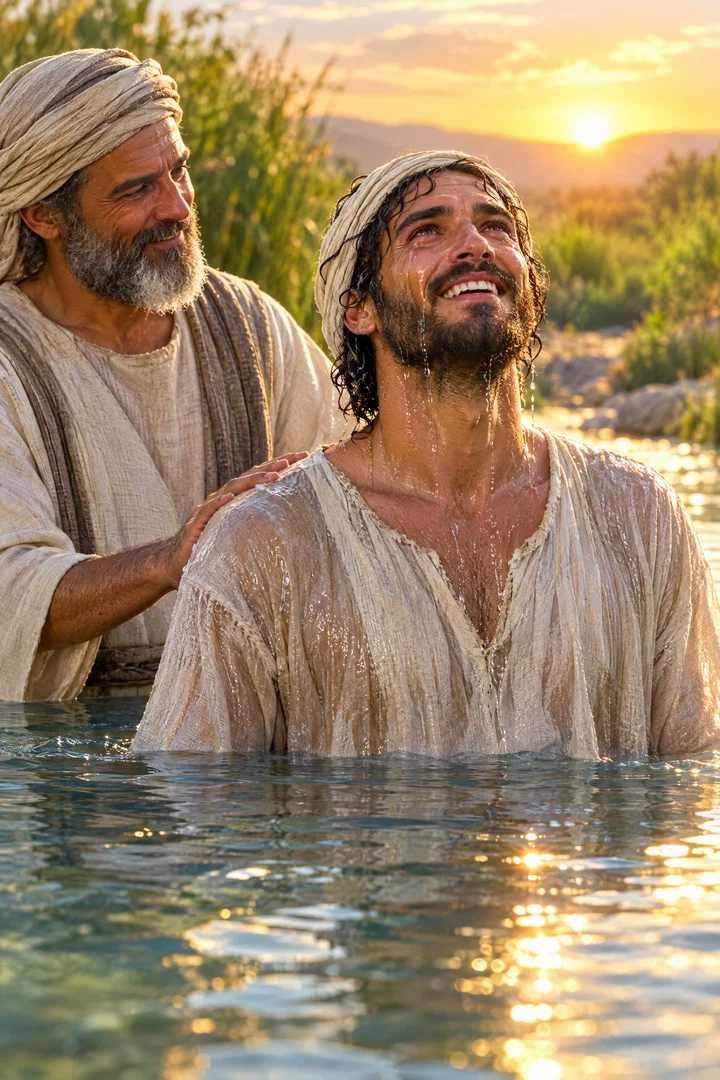
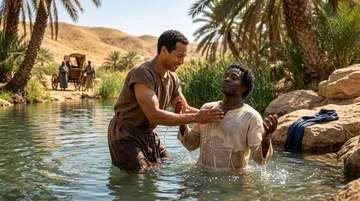
And Philip said, If thou believest with all thine heart, thou mayest. And he answered and said, I believe that Jesus Christ is the Son of God.
Translations
And Philip said, If you believe with all your heart, you may. And he answered and said, I believe that Jesus Christ is the Son of God.
King James Version, KJV Cambridge Paragraph Bible
And Philip said, If thou believest with all thine heart, thou mayest. And he answered and said, I believe that Jesus Christ is the Son of God.
And Philip said, If thou believest with all thy heart, thou mayest. And he answered and said, I believe that Jesus Christ is the Son of God.
[And Philip said, 'If thou dost believe out of all the heart, it is lawful;' and he answering said, 'I believe Jesus Christ to be the Son of God;']
[]
And Philippe said vnto him, If thou beleeuest with all thine heart, thou mayest. Then he answered, and saide, I beleeue that that Iesus Christ is that Sonne of God.
Douay-Rheims (Challoner revision)
And Philip said: If thou believest with all thy heart, thou mayest. And he answering, said: I believe that Jesus Christ is the Son of God.
Pictures
Cross-references 20 of 34
- Mark 16:16
He that believeth and is baptized shall be saved; but he that believeth not shall be damned.
Belief and baptism are joined in the promise of salvation.
- Acts 16:30-33
And brought them out, and said, Sirs, what must I do to be saved?
Both accounts connect believing in Jesus Christ with salvation and baptism.
- Romans 6:3-4
Know ye not, that so many of us as were baptized into Jesus Christ were baptized into his death?
Baptism signifies union with Christ’s death and resurrection and a new life.
- Matthew 28:19
Go ye therefore, and teach all nations, baptizing them in the name of the Father, and of the Son, and of the Holy Ghost:
Christ commands baptism as part of making disciples.
- Acts 2:38
Then Peter said unto them, Repent, and be baptized every one of you in the name of Jesus Christ for the remission of sins, and ye shall receive the gift of the Holy Ghost.
Both connect baptism with repentance and the response to faith.
- Isaiah 53:7-8
He was oppressed, and he was afflicted, yet he opened not his mouth: he is brought as a lamb to the slaughter, and as a sheep before her shearers is dumb, so he openeth not his mouth.
The suffering-servant prophecy prompts Philip to preach Jesus and the eunuch to confess faith.
- Galatians 3:27
For as many of you as have been baptized into Christ have put on Christ.
The eunuch’s baptism illustrates putting on Christ.
- Acts 8:12
But when they believed Philip preaching the things concerning the kingdom of God, and the name of Jesus Christ, they were baptized, both men and women.
People believe Philip’s preaching about Jesus and are baptized.
- Acts 8:30-31
And Philip ran thither to him, and heard him read the prophet Esaias, and said, Understandest thou what thou readest?
Philip asks whether the eunuch understands Scripture, and the eunuch asks for guidance.
- Acts 10:43-48
To him give all the prophets witness, that through his name whosoever believeth in him shall receive remission of sins.
Belief in Christ and forgiveness precede baptism.
- Acts 22:16
And now why tarriest thou? arise, and be baptized, and wash away thy sins, calling on the name of the Lord.
Ananias urges Saul to be baptized at once, calling on the Lord’s name as his sins are washed away.
- 1 Corinthians 15:3-4
For I delivered unto you first of all that which I also received, how that Christ died for our sins according to the scriptures;
Faith in Christ rests on his death, burial, and resurrection.
- John 3:16
For God so loved the world, that he gave his only begotten Son, that whosoever believeth in him should not perish, but have everlasting life.
Belief in Christ is connected with the promise of everlasting life.
- Romans 10:10
For with the heart man believeth unto righteousness; and with the mouth confession is made unto salvation.
Heart-belief and spoken confession are connected with righteousness and salvation.
- Acts 8:5
Then Philip went down to the city of Samaria, and preached Christ unto them.
Philip preaches Christ in the city, while the Ethiopian receives personal witness.
- Acts 21:8
And the next day we that were of Paul’s company departed, and came unto Cæsarea: and we entered into the house of Philip the evangelist, which was one of the seven; and abode with him.
Identifies Philip as the evangelist who questioned the Ethiopian’s belief.
- Isaiah 56:3-8
Neither let the son of the stranger, that hath joined himself to the LORD, speak, saying, The LORD hath utterly separated me from his people: neither let the eunuch say, Behold, I am a dry tree.
The eunuch’s admission reflects God’s promise to include eunuchs and foreigners among his people.
- 1 Peter 3:21
The like figure whereunto even baptism doth also now save us ( not the putting away of the filth of the flesh, but the answer of a good conscience toward God,) by the resurrection of Jesus Christ:
Baptism is connected with the answer of a good conscience toward God.
- John 20:21-22
Then said Jesus to them again, Peace be unto you: as my Father hath sent me, even so send I you.
Christ sends his disciples and gives them the Holy Spirit.
- Colossians 2:12
Buried with him in baptism, where in also ye are risen with him through the faith of the operation of God, who hath raised him from the dead.
Baptism symbolizes burial and resurrection with Christ.
Commentary
Each commentary is drawn from primary sources: the writings of Ellen G. White and Adventist pioneers and periodicals. Each commentary is separate. Its own words are not a quotation; follow the references to read the source passages.
Ellen G. White
28 sources
Believing with all the heart that Jesus Christ is the Son of God is the condition for baptism, and the Ethiopian meets it by confessing that faith and then being baptized.8T 57.5–58.4Lt 94a, 1909, par. 6–8Ms 46, 1900, par. 10–13 He is a man of great authority under Candace queen of the Ethiopians and in charge of all her treasure, who had come to Jerusalem to worship and was returning in his chariot reading Isaiah of one led as a sheep to the slaughter, with his mind led by the Spirit yet unable to understand, longing and praying for light and ready to receive the truth without letting high position keep him from the crucified One.Lt 94a, 1909, par. 6–8Ms 46, 1900, par. 10–13Ms 15, 1909, par. 23–26 Philip joins him, preaches Jesus from that scripture until his heart is enlightened to believe, and when they come to water the Ethiopian asks what hinders him, confesses his faith, and both go down into the water where Philip baptizes him, after which the Spirit catches Philip away and the eunuch goes on his way rejoicing as a believer.Lt 94a, 1909, par. 6–8Ms 46, 1900, par. 10–13Ms 15, 1909, par. 23–26 Angels who minister to heirs of salvation take notice of honest seekers and cooperate in their behalf, while the Holy Spirit leads the mind to the Scriptures and God directs Philip by a heavenly messenger to the desert way from Jerusalem to Gaza and by the Spirit to join the chariot, since heaven sends light through angels to His people and through His people to the world.Lt 94a, 1909, par. 6–8Ms 17, 1908, par. 14–17Ms 8, 1900, par. 4–8Ms 11, 1900, par. 9–12 The whole chapter of Acts 8 is the pattern for missionary work and the highest education, calling workers who are themselves converted and led by the Spirit to go even to neglected places for one soul, because one soul is more precious than all the wealth of the world.Ms 46, 1900, par. 10–13Ms 15, 1909, par. 23–26Lt 100, 1909, par. 6–13Ms 8, 1900, par. 4–8Lt 189, 1909, par. 19–20 Wholehearted belief qualifies a person for baptism at once without waiting to see whether faith will hold, for delay leaves the seeking mind in danger from evil agencies, while believing with all the heart brings the working of the Holy Spirit to form character after the divine similitude.Ms 13, 1909, par. 2–42MR 9.2Ms 11, 1900, par. 13
Condition and Its Setting
Believing with all the heart that Jesus Christ is the Son of God is the condition for being baptized, and the Ethiopian meets that condition by confessing that faith and then being baptized.8T 57.5–58.4Lt 94a, 1909, par. 6–8Ms 46, 1900, par. 10–13Ms 15, 1909, par. 23–26Ms 75, 1909, par. 17 No one is baptized without this personal wholehearted faith in Jesus as God's Son.Lt 94a, 1909, par. 6–8Ms 15, 1909, par. 23–26Ms 17, 1908, par. 14–17 When the Ethiopian heard and believed he asked what hindered his baptism, Philip answered that he might be baptized if he believed with his whole heart, the Ethiopian declared his faith in Jesus, and then both went down into the water where Philip baptized him.Lt 94a, 1909, par. 6–8Ms 46, 1900, par. 10–13Ms 75, 1909, par. 17Ms 17, 1908, par. 14–17
The one baptized is an Ethiopian eunuch, a man of great authority under Candace queen of the Ethiopians and in charge of all her treasure.Ms 46, 1900, par. 10–13Ms 15, 1909, par. 23–26 He had come to Jerusalem to worship and was journeying homeward in his chariot reading the Scriptures, including Isaiah and the prophecy of one led as a sheep to the slaughter.Ms 46, 1900, par. 10–13Ms 15, 1909, par. 23–26Ms 17, 1908, par. 14–17 His mind was led by the Spirit of God to study them, yet he could not understand their meaning, and he was longing and praying for light, seeking truth, ready to receive it, and drawn to the Saviour.Lt 94a, 1909, par. 6–8Ms 17, 1908, par. 14–17Ms 8, 1900, par. 4–8 He did not resist the light nor let high position keep him from accepting the crucified One, but with heart alive with interest and enlightened to believe he received what was opened to him.Ms 15, 1909, par. 23–26Ms 8, 1900, par. 4–8
Philip joined him in the chariot and preached Jesus beginning at that same scripture, explaining repentance toward God, faith in Christ as Savior, and baptism until the heart was enlightened to believe.Ms 46, 1900, par. 10–13Ms 15, 1909, par. 23–26Ms 8, 1900, par. 4–8ST Dec 5, 1878 When they came to water, to a stream, the Ethiopian asked what hindered his baptism, confessed his faith that Jesus Christ is the Son of God, and both went down into the water where Philip baptized him.Ms 46, 1900, par. 10–13Ms 15, 1909, par. 23–26Ms 75, 1909, par. 17Ms 17, 1908, par. 14–17Ms 8, 1900, par. 4–8 After they came up out of the water the Spirit of the Lord caught Philip away to another place so the eunuch saw him no more.Lt 94a, 1909, par. 6–8Ms 46, 1900, par. 10–13Ms 15, 1909, par. 23–26Ms 75, 1909, par. 17 The eunuch went on his way rejoicing as a believer in the truths of God's Word rather than dwelling on trials.Ms 46, 1900, par. 10–13Ms 15, 1909, par. 23–26Ms 75, 1909, par. 17Ms 17, 1908, par. 14–17Ms 126, 1902, par. 3–6
Wholehearted belief qualifies a person for baptism at once, so upon that declaration Philip went down with him into the water at once and baptized him immediately upon the confession.Ms 15, 1909, par. 23–26Ms 13, 1909, par. 2–4Ms 11, 1900, par. 13 He did not wait to see whether the Ethiopian would hold on to the faith but baptized him immediately, without leaving the inquiring mind hanging in the balance.Ms 13, 1909, par. 2–4Ms 11, 1900, par. 13 The confession is one of the steps requisite in conversion, showing that repentance and faith come before baptism.Ms 126, 1902, par. 3–6ST Dec 5, 1878GC 238.3 It calls for prompt, decisive acceptance and confession of Christ and obedience to duty, promptly accepting, confessing, obeying Him and answering the call of duty.ST Dec 5, 18783SP 304.3ST Dec 5, 18783SP 305.1
Heaven's Guidance Through Workers
Honest seekers for light are noticed by angels who minister to those who shall be heirs of salvation, who watch those seeking enlightenment, look on, and work in their behalf to instruct them.Lt 94a, 1909, par. 6–8Ms 8, 1900, par. 4–8Ms 11, 1900, par. 9–12Ms 13, 1909, par. 2–4 The Holy Spirit leads the seeker's mind to study the Scriptures, even when their meaning cannot be understood, and opens spiritual eyesight to hear and believe that Christ the Saviour of the world will pardon the transgression of all who believe on Him.Lt 94a, 1909, par. 6–8Ms 8, 1900, par. 4–8Ms 13, 1909, par. 2–4 So the Ethiopian traveler rode reading prophecy he could not comprehend, with his mind led by the Spirit of God, until the Lord sent Philip to meet him, open the Scripture to him, and preach Jesus from that same Scripture.Lt 94a, 1909, par. 6–8Ms 8, 1900, par. 4–8Ms 13, 1909, par. 2–4 When he heard and believed he asked what hindered his baptism, declared with his whole heart that Jesus Christ is the Son of God, went down with Philip into the water to be baptized, and after Philip was caught away by the Spirit went on his way rejoicing.Lt 94a, 1909, par. 6–8Ms 8, 1900, par. 4–8Ms 11, 1900, par. 9–12
God wonderfully works through angel, Spirit, and human teacher to bring a seeking soul to faith and immediate baptism.Ms 17, 1908, par. 14–17Ms 8, 1900, par. 4–8Ms 11, 1900, par. 9–12 A heavenly messenger directed Philip to arise and go toward the south unto the desert way from Jerusalem to Gaza, and by the Spirit he was told to join the chariot.Ms 11, 1900, par. 9–12Lt 5, 1895, par. 9–11 This shows heaven's close connection with earth, for heavenly messengers do not themselves preach the gospel, but God sends light through angels to His people and through His people to the world, the Holy Spirit guiding men and women who will be guided into positions where they can communicate the light received.Ms 8, 1900, par. 4–8Ms 11, 1900, par. 9–12AA 152.3 Angels lead and guide those who will be guided and led just as much today as then, and the Ethiopian, being ready to receive the truth and drawn to the Saviour without resisting, was found because an angel directed Philip to meet him.Ms 11, 1900, par. 9–12HMW 22.3–4
Those who read the Scriptures without understanding their import need someone who knows God to explain the Word to them, and the Ethiopian represents a large class who search the Scriptures yet are ignorant of their meaning.Lt 5, 1895, par. 9–118T 58.5Ms 158, 1899, par. 8–11 Philip represents missionaries who hear the voice of God, go where He sends them, and do personal work for even one soul, connecting with fellow men as God's instrumentality to win souls to Christ.Ms 11, 1900, par. 9–12Lt 5, 1895, par. 9–11 No one should step between the angels and one whom God is seeking to instruct, but should stand aside and let God work on human hearts, for God is able to work on hearts and lay upon them the burden of opening the Scriptures to the people.Lt 94a, 1909, par. 6–8Ms 11, 1900, par. 9–12
Missionary Pattern and Response
The whole chapter of Acts 8 is to be carefully studied as the pattern for missionary work and the highest education, needed in present work and to be given to physicians, gospel workers, teachers, and students in schools.Lt 100, 1909, par. 6–13Lt 189, 1909, par. 19–20 Belief with all the heart that Jesus Christ is the Son of God is required before baptism, as Philip stated the condition to the Ethiopian as a seeker after truth, received his confession of faith, then went down with him into the water and baptized him.Lt 100, 1909, par. 6–13 Workers must be truly converted, give themselves to God, and be baptized with the Holy Ghost so the Holy Spirit will cooperate with them, and then spread out and divide and subdivide to enter unworked cities instead of centering in a few places.Lt 189, 1909, par. 19–20
God teaches workers to be on watch and ready to help every case that comes to notice, for through such a convert the light of truth shines to the higher classes.Ms 46, 1900, par. 10–13 The setting is an Ethiopian nobleman, a man of great authority under Candace queen of the Ethiopians, journeying homeward from Jerusalem while studying the Scriptures, joined by Philip who sat with him in the chariot and opened the Scriptures to his understanding until with enlightened heart and mind he believed the message preached from the scripture about one led as a sheep to the slaughter.Ms 46, 1900, par. 10–13Ms 15, 1909, par. 23–26 When they came to water the eunuch asked what hindered his baptism, Philip required belief with all the heart before he might be baptized, the Ethiopian declared his belief that Jesus Christ is the Son of God, both went down into the water at once and Philip baptized him, then the Spirit of the Lord caught Philip away to another place while the nobleman went on his way rejoicing as a believer in the truths of God's Word.Ms 15, 1909, par. 23–26Ms 8, 1900, par. 4–8 Heavenly messengers do not themselves preach the gospel; God sends light through angels to His people and through His people to the world, the Holy Spirit guiding men and women who will be guided into positions where they can communicate the light received, showing that every soul is precious and calling for prompt conformity to God's will.Ms 8, 1900, par. 4–8 Philip was sent by angel and Spirit to one man returning and reading Isaiah without understanding, and he represents missionaries who hear the voice of God, go where He sends them, and do personal work for even one soul, which is the work God calls His people to do, since one soul to be saved is more precious than all the wealth of the world and stands as the pattern for servants led by the Holy Spirit to join themselves to single seeking souls in neglected places.Ms 15, 1909, par. 23–26Lt 5, 1895, par. 9–11 Workers are to be on watch and ready to help every case that comes to their notice, to be sent and supported to go to neglected and needy places and unworked cities for even one soul rather than centering in a few places, doing true home missionary labor, and reaching people with an advanced acquaintance with temperance principles opens doors to enter new fields.Lt 189, 1909, par. 19–204MR 135.2–136.2
God wants people to stand in that relation to Him that they can understand His voice when He speaks.Ms 75, 1909, par. 17 The traveler was reading the Scriptures in his chariot with his mind led by the Spirit of God to study them but could not understand their meaning, so the Lord sent Philip to meet him and open the Scripture to him, and when the Ethiopian heard and believed he asked what hindered his baptism and was told he might be baptized if he believed with his whole heart.Lt 94a, 1909, par. 6–8Ms 75, 1909, par. 17 God works through angels as ministering spirits to do a special work in the earth to instruct seekers, and no man should step between the angels and one whom God is seeking to instruct but should stand aside and let God work, for God is able to work on human hearts and lay upon them the burden of opening the Scriptures to the people.Lt 94a, 1909, par. 6–8 God's human agencies must be wholly consecrated, quick to discern their work, and as wise stewards take advantage of every circumstance to teach grace and draw men to Christ, while heavenly angels cooperate with human workers to win souls.Ms 11, 1900, par. 13
Through such a convert the light of truth shines to the higher classes, since one who is ready to receive the truth and is brought into it can carry it to others through influence.Ms 46, 1900, par. 10–13RH Mar 2, 1911 The Ethiopian was ready to receive the gospel after the Scriptures were explained to him, and wholehearted belief in Jesus Christ as the Son of God qualified him for baptism.AA 109.1–2 His conversion followed Philip's explanation of Scripture and brought him into the truth, and as a person of influence and an official he could carry that truth to others.RH Apr 20, 1905 Through the eunuch the light of truth was shining to the higher classes, showing that reaching people with an advanced acquaintance with temperance principles opens doors to enter new fields.4MR 135.2–136.2
Philip required immediate wholehearted belief in Jesus and then baptized at once without leaving the inquiring mind hanging in the balance.Ms 11, 1900, par. 13 Delay is dangerous because evil agencies wait for opportunity to interpose obstacles, confuse the mind seeking to understand Scripture, press in falsehoods, and divert it from truth so the Saviour might never be accepted.Ms 11, 1900, par. 13 Believing with all the heart brings the working of the Holy Spirit to form character after the divine similitude.2MR 9.2 Those so worked no longer hunger for cheap, earthly amusement and do not need the excitement of theaters and plays to pass time, because the grace of God is their helper and strength.2MR 9.2
Sources
Pioneers and periodicals
93 sources
Belief with all the heart that Jesus Christ is the Son of God is the condition that qualifies a person for baptism, and the spoken confession of that faith properly comes before being baptized.ST Sep 23, 1897ST Feb 17, 1898ST Mar 5, 1902 Baptism follows being taught, believing and gladly receiving the word, and is then administered at once without delay as the first obedient step of loyalty to Christ.ST Jan 17, 1878ST Jun 30, 1914RH Nov 12, 1914RH Nov 28, 1907 Because personal understanding and belief are required, an infant who cannot hear, receive and believe is not a proper subject for baptism.ST Dec 9, 1897ST May 13, 1897RH Mar 2, 1869 The baptism itself is by immersion in literal water, with both baptizer and candidate going down into and coming up out of an abundance of water, as the outward sign and seal of inward faith in Christ by which sins are remitted through His blood.ST Jun 1, 1882RH Sep 1, 1874ST Mar 23, 1915 That wholehearted belief is not mere assent but receiving Christ, trusting His righteousness to cover sin, and yielding to obey and grow into His likeness, and the confession that Jesus Christ is the Son of God is the whole creed of the gospel upon which the true church is built.ST Apr 9, 1912ST Jan 13, 1898ST Aug 5, 1913RH Sep 11, 1900
Text History and Setting
The confession of belief in Jesus Christ as the Son of God before baptism has been used as a basis for requiring personal confession of faith before baptism and as sufficient for church membership, yet the verse itself is not part of the original text of Acts.RH Mar 27, 1866ST Jul 21, 1881 The strongest Greek manuscripts and many ancient translations omit it, where it is included it appears in varying forms, and textual critics reject it as a later spurious addition.RH Mar 27, 1866ST Jul 21, 1881
The encounter stood on the desert road southwest of Jerusalem toward Gaza in the early summer of A.D. 37, as part of the account of the baptism of the Ethiopian.ST Jun 2, 1898ST May 20, 1880 The route called desert means uninhabited wilderness, not necessarily barren sand or an arid barren desert, and it passed through cultivable hills and valleys with springs and pools of water and an abundance of water by whatever route was taken, so that immersion was possible.ST May 20, 1880ST Jun 7, 1883 After Philip preached Jesus to the eunuch returning from worship at Jerusalem, the eunuch's question about what hindered baptism showed belief in the teaching, Philip stated wholehearted belief as what permits baptism, the eunuch made profession of faith in Jesus Christ as the Son of God, and both went down into the water where Philip baptized him.ST Jun 2, 1898
The Ethiopian was a nobleman of great authority under Candace with charge of all her treasure, an Abyssinian of the western Ethiopia divided from the eastern by the Red Sea, coming from a far country beyond the Red Sea.ST Feb 14, 1884RH Dec 17, 1901 He had heard of the true God and His temple, had come to Jerusalem to worship as a proselyte to the Jewish religion looking to the temple as the dwelling-place of God, taking a long step beyond the superstition of his native country yet still only a learner.RH Dec 17, 1901ST Jun 7, 1883 He was returning while earnestly reading and diligently searching Isaiah without understanding and with no meaning reaching his mind, though well informed, highly cultured, and beyond his native superstition, showing the duty to take the Bible on a journey and read by the way even beyond comprehension.ST Feb 14, 1884RH Dec 17, 1901ST Jun 7, 1883 His handling of the Scriptures shows the Abyssinians had already accepted the Hebrew Scriptures before receiving Christ through Philip, and his conversion is the beginning of the Abyssinian Christian faith held firmly ever since.
Philip who met him was not Philip the apostle but Philip the evangelist, one of the seven deacons of the church at Jerusalem before the dispersion, an active worker afterward at Samaria, Azotus and Caesarea where he made his home.CO 34.2ST Feb 14, 1884 He preached Jesus to the eunuch alone, beginning with the Scripture he was reading and wondering about and preaching from Isaiah's prophecy of the suffering servant.RH Nov 28, 1912ST Nov 14, 1906ST May 27, 1880 That preaching set forth Christ's mission, suffering and death to save fallen people, His death, burial and resurrection, His victory over sin and the grave, and the duty of water baptism as commanded under the gospel, distinct from the baptism of the Spirit.RH Feb 18, 1909ST Jan 17, 1878ST May 27, 1880 Though his office as deacon was largely temporal as assistant to elders and servant of the church, his bringing a hearer to confess faith in Jesus Christ as the Son of God shows that work does not exclude preaching when the Lord leads and opens the way.CO 34.2
The chapter belongs to the time after Stephen's martyrdom and the scattering of the disciples, when believers went among Samaritans and Gentiles preaching the word and the message passed beyond Jerusalem toward all nations.ST Jun 26, 1907ST Sep 2, 1913RH Jan 20, 1916 In A.D. 34 the gospel first went beyond the Jewish people to the nations, closing the 490 years cut off from the 2,300 days and marking the cutting off of the Jewish nation as God's special people.RH Feb 18, 1902ST Nov 28, 1895 That turning ended Israel's probation as a nation and the apostles' exclusive ministry to the Jews during the final three and one-half years of the seventy-week period, and began the gathering of Gentiles into the kingdom as Philip preached in Samaria and shared the gospel with the Ethiopian on the road to Gaza who received it.RH Feb 18, 1902ST Sep 2, 1913RH Jan 20, 1916
Faith Required for Baptism
Baptism may be administered when a person believes with all the heart that Jesus Christ is the Son of God, and wholehearted faith is the condition that qualifies for baptism and acceptance with God.ST Sep 23, 1897ST Feb 17, 1898ST Mar 5, 1902 When the one seeking baptism asks what hinders it, the answer is that he may be baptized if he believes with all his heart, and his profession of faith in Jesus Christ as the Son of God then leads directly to baptism.RH Dec 17, 1901 Even a stranger from a far country who has heard of the true God, come to worship, and accepted the gospel while returning and reading Isaiah is accepted by the Lord on that same confession after being taught Jesus from the Scripture.RH Dec 17, 1901
The spoken confession expresses that wholehearted belief and comes before baptism, showing belief in what was taught about Jesus, willingness to obey His requirements, and acknowledgment of Christ.ST Feb 17, 1898ST Mar 5, 1902RH Dec 17, 1901ST Jun 14, 1905 Such a confession is possible because the candidate has been properly taught what belief in Christ means, including His death, burial, and resurrection, and baptism is the outward act by which that instructed and convicted faith is shown.ST Feb 17, 1898ST Jan 17, 1878 Confessed from the heart, belief in Jesus Christ as the Son of God is what qualifies a person for baptism.ST Mar 5, 1902ST Jun 14, 1905
Baptism follows instruction, conviction, and glad reception of the word without delay.ST Jan 17, 1878 After receiving instruction the seeker desires baptism, asks what hinders him, professes personal faith in Christ, and is baptized at once at water along the highway as the interview ends, then goes on his way rejoicing.ST Jan 17, 1878RH Aug 22, 1907RH Jun 14, 1867 Believers are entitled to baptism as soon as they decide to walk in the Lord's ways, without waiting to test whether they will remain faithful and without delaying until they return to their home community.RH Nov 12, 1914RH Aug 22, 1907 Where there is enough water nothing hinders baptism once that confession is made, and daily reading of the Scriptures together with verses repeated and key words emphasized can bring a person to that belief and readiness.RH Nov 12, 1914
Baptism is for one who personally believes and confesses faith, not a substitute for that belief supplied by another act.ST Dec 9, 1897ST Nov 25, 1889ST Nov 13, 1879 Because an infant cannot understand God's Word, receive it, or believe, infants are not proper subjects of baptism, and infant baptism and infant dedication are to be rejected.ST May 13, 1897RH Mar 2, 1869ST Nov 25, 1889ST Nov 13, 1879ST Jul 19, 1883 To baptize infants disregards this plain direction that belief with all the heart is the express condition for being baptized, and baptism is lawful only when a person can receive the Word, repent, and believe, with no one having right to forbid water to such a one.ST May 13, 1897RH Mar 2, 1869
Readiness for baptism is tested by careful instruction, searching individual examination, repentance, and covenant to forsake former customs.ST Apr 9, 1912RH Jun 16, 1863RH Aug 18, 1868RH Jun 27, 1865RH Jun 14, 1867 Such faith trusts that Christ's righteousness covers sin and therefore leads to repentance, obedience to the word, and growth into likeness to Him, proving that true religion consists in believing and doing rather than in feeling.ST Apr 9, 1912RH Jun 16, 1863 Baptism does not require perfection nor prior mastery of creeds, but begins a life of learning Christ's ways; those who do not feel ready to live out all of God's truths should not offer themselves as candidates, while those found ready are baptized and added to believers.ST Apr 9, 1912RH Aug 18, 1868RH Jun 27, 1865 The single question asked of those coming forward may be whether they believe that Jesus Christ is the Son of God, with a simple affirmative answer accepted as sufficient and baptism following.RH Jun 27, 1865
Baptism is the first work after repentance and a foundational step in the Christian life.ST Jun 30, 1914 It follows hearing, believing, and accepting God's Word, and serves as an outward sign to unbelievers of the inward work wrought on the heart by the Holy Spirit.RH Jun 29, 1911RH Nov 28, 1907ST Oct 11, 1883 It stands as the unvarying badge of acceptance of and loyalty to Christ and His gospel, bears evidence of a good conscience toward God through faith in the Lord Jesus, and receives heaven's approbation for willing obedience, though as a rite it does not itself absolve from sin nor prevent sin.RH Jun 29, 1911ST Oct 11, 1883
How Baptism Is Performed
The water in the eunuch's baptism was literal water, not a figure for something else, and the outward act with water performed by a person belongs to the complete ordinance.ST Jun 1, 1882 Both Philip and the eunuch went down into the water and came up out of it, which requires an abundance of water and supports single immersion in an open stream.ST Mar 23, 1915ST Jun 13, 1878 The drinking water carried with the chariot and sufficient for sprinkling was not used, for true baptism needed much water rather than a few drops.ST Jun 7, 1883 The claim that Philip merely sprinkled him is rejected, and the account does not establish only a little roadside rill but refutes sprinkling.ST Feb 7, 1878 Baptism as administered in the apostolic period and long afterward was by immersion.ST Mar 23, 1915
Preaching Jesus included the duty of water baptism, for after hearing the gospel the eunuch requested baptism and was baptized.ST May 27, 1880 Water baptism was practiced by the church even when enjoying the fullness of the Spirit, proving it is not excluded by the one baptism and is not a needless added work.ST May 28, 1896 It remains the outward baptism that man performs under the gospel commission, distinct from the baptism of the Spirit as a commanded act rather than a promised spiritual gift.ST May 28, 1896ST May 27, 1880
The account of the conversion and baptism from Acts 8:26-40 gives no indication that hands were laid on the eunuch to confer the Holy Ghost, and its silence supports that this act was not a required part of baptism.ST Jan 1, 1885 The Holy Spirit came upon disciples after Peter and John laid hands on them in Acts 8, but this does not make laying on of hands a required condition for receiving the Spirit or for salvation.
Wholehearted belief that Jesus Christ is the Son of God is the essential qualification and accompanying confession for baptism.RH Sep 1, 1874 Baptism follows hearing, believing, and accepting God's Word and faith in Jesus as the promised Messiah, and upon that acceptance the eunuch was baptized.RH Jun 29, 1911 It is an act of faith and a public declaration that the believer has accepted Christ, belongs to Him, and is united with Him, serving as an outward sign to unbelievers of the inward work wrought on the heart by the Holy Spirit.ST Apr 3, 1893RH Jun 29, 1911 It serves as a sign or seal of faith in Christ's saving work, through which sins are remitted, bearing evidence of a good conscience toward God and receiving heaven's approbation for willing obedience.RH Sep 1, 1874RH Jun 29, 1911 The water itself does not take away sin, cleanse anyone from sin, produce regeneration, absolve from sin, or prevent sin, and only Christ's blood cleanses; baptism is not a human work that saves but an act of faith and a privilege.RH Sep 1, 1874ST Apr 3, 1893ST Feb 7, 1878RH Jun 29, 1911ST Oct 11, 1883
Philip taught baptism in his sermon to the eunuch, requiring belief with all the heart before baptism might take place.ST Oct 11, 1883 Baptism was invariably preached and invariably required and never long delayed after gladly receiving the word, standing as one of the conditions of salvation and as the unvarying badge of acceptance of and loyalty to Christ and His gospel.ST Oct 11, 1883 It was held in much higher esteem in the immediate teaching of the apostles than now, showing the inseparable connection between the gospel and baptism.ST Nov 8, 1883ST Oct 11, 1883
Gospel Carried to Nations
God cares for honest seekers after truth by sending workers out to meet them where they are.ST Feb 14, 1884RH Mar 13, 1913RH Sep 27, 1870ST Sep 13, 1905 The Spirit told Philip to go south toward the desert road and to join himself to the chariot, directing the individual worker where to go and sending the sower to ground already prepared.ST Oct 23, 1901RH May 30, 1907RH May 4, 1911 God knows where honest souls are who are earnestly studying the Scriptures without understanding, guides willing servants into contact with them at the right time, and gives human servants a share in communicating light by personal contact instead of working alone by the Holy Spirit or by angels.ST Oct 23, 1901ST Feb 14, 1884RH May 4, 1911 Those so instructed are always in harmony with the body of the church, and no man or group of men has right to send them here or there without their consent or to cut them off from Christ for not following a human decision unsanctioned by the Spirit, for God lives and is as willing to lead His people now as in the past.RH May 30, 1907 Unfolding the Word from Isaiah's prophecy of the suffering servant can bring light to one seeking understanding, and the one who receives that light, embraces it, and confesses Jesus Christ as the Son of God is led to eternal life and to immediate readiness to obey in baptism, since preaching Jesus includes teaching baptism and the mission would be incomplete without it.ST Feb 14, 1884RH Mar 13, 1913RH Sep 27, 1870ST Sep 13, 1905
The conversion stands as a prominent result and model of personal one-to-one ministry to be followed.RH Jan 7, 1915ST Jun 7, 1883RH Jun 20, 1912 Philip, though full of the Holy Ghost and wisdom and able to preach to a city congregation, left a large field of work for one man in the wilderness without hesitation, not knowing he would find even that one man, showing that preaching to a congregation of one is just as important as preaching to many.ST Jun 7, 1883ST Jan 22, 1902 If a minister preaches to many and only one is converted he has done no more than if he had preached to that one alone, and one person at a time may be brought to faith, confession of wholehearted belief, baptism, and obedience.RH Jan 7, 1915ST Jun 7, 1883RH Jul 4, 1907 Believers are to follow the example by reaching people through personal contact both at meetings and in house-to-house visitation, encouraging all by example as well as precept to engage in personal soul-saving effort for those who desire enlightenment.RH Jun 20, 1912RH May 4, 1911 Gospel workers must remain free to go on journeys of many miles to instruct one soul where the Spirit calls rather than be confined to human districts, for men with like passions, experiences, and environment are God's design for carrying help.ST Jan 22, 1902RH May 4, 1911
That one convert helped open a new continent to the gospel by carrying the good news of salvation through Christ south of Egypt to what is now Abyssinia and Ethiopia.ST Mar 11, 1897ST Sep 13, 1905ST Jan 22, 1902 He was the treasurer of Queen Candace, an Abyssinian of the western Ethiopia divided from the eastern by the Red Sea, whose handling of the Scriptures shows the Abyssinians had already accepted the Hebrew Scriptures before receiving Christ through Philip. His conversion is the beginning of the Abyssinian Christian faith held firmly ever since, and marks the possible beginning of the churches of Abyssinia and Ethiopia in Central Africa in the first part of the Christian era.RH May 13, 1862 Those churches kept the Old Testament rites together with the New Testament rites, kept the seventh-day Sabbath until the early part of the seventeenth century when they were brought under the rule of the pope, and were never subjected to the Roman pontiff.RH May 13, 1862RH Jun 10, 1873 God was as interested in the conversion of this Ethiopian as in that of any other person regardless of race, and through him preaching the word to those he met the Ethiopians heard the truth, accomplishing by the trip to the desert what a mission to Ethiopia would have done.ST Sep 13, 1905ST Jun 7, 1883
Hearing the gospel about Jesus, believing fully in Jesus as the Son of God, and being baptized brings joy.ST Aug 28, 1901 After Philip explained Christ's mission, suffering and death to save fallen people, including death, burial and resurrection and victory over sin and the grave, the Ethiopian accepted Him as Saviour, confessed faith, was baptized without delay, and went on his way rejoicing.RH Feb 18, 1909ST Jan 17, 1878 That rejoicing is happiness in salvation, forgiveness of sins, deliverance from sin, and new light received.RH Feb 18, 1909ST Aug 28, 1901ST Jun 7, 1883 Baptism was the outward act by which he showed that faith after instruction and conviction.ST Jan 17, 1878ST Oct 16, 1879
Wholehearted faith that Jesus is God's Son qualifies a person for baptism and acceptance with God, even an Ethiopian from a far country.RH Dec 17, 1901 The eunuch was a man of great authority under Candace with charge of all her treasure, who had heard of the true God and His temple and had come to Jerusalem to worship, and while returning and reading Isaiah Philip preached Jesus to him from that scripture.RH Dec 17, 1901 When they came to water he asked what hindered his baptism, Philip required belief with the whole heart, he declared his faith, and they both went down into the water where Philip baptized him.RH Dec 17, 1901 Though eunuchs had no part among the Jews under the old order, he was admitted to share in the privileges promised to God's people, proving that such strangers who heard, came to worship, and accepted the gospel are accepted by the Lord.RH Dec 17, 1901RH Oct 15, 1872
Confession of Jesus Christ
The confession declares that Jesus Christ is the Son of God, the promised Messiah and Saviour from sin.ST Dec 5, 1878RH Apr 20, 1905RH Feb 18, 1909RH Apr 18, 1871ST Oct 25, 1877 After Moses and the prophets were opened as fulfilled in Him, with His mission and His suffering and death to save fallen people and His victory over sin and the grave set forth, the hearer accepted the apostles' teaching, received Christ with gladness, and declared faith in Him as Saviour.ST Dec 5, 1878RH Apr 20, 1905RH Feb 18, 1909RH Jun 8, 1911 That declaration was made promptly and wholeheartedly before baptism, following the preaching about Jesus, as the answer required for baptism.ST Dec 5, 1878RH Apr 20, 1905ST Oct 25, 1877ST Mar 3, 1887 It was spoken when the prophecies of His sufferings were seen fulfilled, and it centered the whole conversion on belief that Jesus Christ is the Son of God.RH Apr 18, 1871RH Jun 8, 1911
That confession that Jesus Christ is the Son of God is the whole creed of the genuine gospel.RH Sep 11, 1900 It expresses the union of the divine and the human in Jesus of Nazareth, through which divinity dwells in human flesh, and it is the rock on which the true church is built.RH Sep 11, 1900 This faith is produced by seeing those prophecies of His sufferings fulfilled.RH Jun 8, 1911 Reading Isaiah 53 and Psalm 22 together with the closing acts recorded in the Gospels, from the manger in Bethlehem to the cross on Golgotha, shows that the first coming belongs to the foretold sufferings dictated by the Spirit of Christ, and every fulfilled prophecy evidences the divinity of its Author and the unfailing character of His Word.RH Jun 8, 1911
Believing with all the heart is individual, wholehearted exercise, not mere intellectual agreement.ST Jan 13, 1898ST Aug 5, 1913ST Apr 16, 1896ST Mar 3, 1887RH Apr 21, 1859 It means choosing and receiving Christ, trusting that His righteousness covers sin and therefore leads to repentance, yielding unreservedly to obey and to suffer if need be and to wait, and appropriating power in God's word like a trolley connecting the car to the live wire overhead.ST Apr 9, 1912ST Jan 13, 1898ST Apr 16, 1896 Such faith brings Christ as wisdom and righteousness and sanctification and redemption, gives liberty and life, looks to the cross where His blood was shed to take away sin, and carries the promise of everlasting life to the one who believes.ST Apr 9, 1912ST Jan 13, 1898ST Aug 5, 1913RH Apr 21, 1859 It does not require perfection, but begins a life of learning His ways and growing into likeness to Him, and a congregation of such believers forms a church according to simple Bible rules.ST Apr 9, 1912ST Apr 16, 1896
Faith is substantiated by obedience.ST Mar 5, 1902 Belief in Christ includes baptism into Christ, through which the believer puts on Christ, and baptism in water testifies to faith in Christ's burial and resurrection.ST Oct 31, 1900ST Mar 5, 1902 Wholehearted belief in Christ is therefore the prerequisite for baptism, not prior mastery of creeds or forms, expressing faith in Him as Saviour from sin.ST Oct 31, 1900ST Mar 5, 1902ST Mar 5, 1902 The preaching to the eunuch is given as an example in which faith of this kind preceded repentance, rather than repentance being presented as the first step.RH Jun 30, 1859
Obedience Sabbath and Service
The honesty of purpose in the confession appears in readiness to obey immediately upon learning duty.ST Dec 5, 1878ST Dec 5, 1878ST Feb 14, 1884 Preaching Jesus includes teaching baptism, so the mission to the eunuch would have been incomplete without that lesson, and having learned it he promptly accepted, confessed wholehearted belief that Jesus Christ is the Son of God, and was baptized.ST Dec 5, 1878ST Dec 5, 1878ST Feb 14, 1884 Answering the call of duty in this way means promptly accepting Christ, confessing Him, and obeying Him.ST Dec 5, 1878ST Dec 5, 1878 Those who do not feel ready to live out all of God's truths should not offer themselves as candidates for baptism, while those moved to be baptized may not yet be ready.RH Aug 18, 1868
Winning another to Christ is done through a winsome Christian life that expresses the holy gospel in lips and life.ST Apr 2, 1896 That life reflects the love and beauty of Christ's character and preaches as it walks, so that Christ mirrored in character, disposition, conduct, and temper draws others to Him.ST Apr 2, 1896 The eunuch's conversion itself came without a dramatic outward sign, through Scripture and explanation.RH Dec 30, 1915 He was a proselyte who had worshiped at Jerusalem, had taken a long step beyond the superstition of his native country, and was diligently searching the Scriptures while traveling though they conveyed no meaning to his mind.ST Jun 7, 1883 That shows the duty to take the Bible on a journey and read by the way, even portions beyond comprehension, because the Holy Spirit is ever ready to enlighten even when no evangelist is sent, and great light is missed through failure to study the word attentively.ST Jun 7, 1883RH Dec 17, 1903RH Apr 4, 1912
Reading alone is not enough, for understanding through guidance leads to faith and baptism, and one who was willing to do God's will received instruction when Philip was sent to him.ST Jun 7, 1883RH Apr 4, 1912ST Jun 24, 1880 If he had not been reading, Philip probably would not have been sent.ST Jun 7, 1883 One taught in this way can believe, be baptized, translate and spread the truth, and serve faithfully as a missionary worker until death.RH Nov 12, 1914ST Jun 24, 1880 Daily reading of the Scriptures together, with verses repeated and key words emphasized and without presenting arguments, can bring a person to wholehearted belief and readiness, so that every point of doctrine is taken in and nothing hinders baptism where there is enough water and he should be baptized at once.RH Nov 12, 1914
The eighth chapter of Acts gives no hint of a new Sabbath to the Samaritans or to the eunuch, though each would have needed it if one had yet been made, which shows no change of the Sabbath to the first day had been made up to that point.RH Nov 9, 1911RH Nov 21, 1871 The record does not state that not a single convert was commanded to keep the Sabbath, and it does not prove that converts were left uninstructed about the Sabbath.RH Nov 9, 1911 After his conversion the eunuch returned keeping the seventh-day Sabbath.RH Apr 18, 1871 His home was in Central Africa in the land later held by the Abyssinian churches, which kept the seventh-day Sabbath until the early part of the seventeenth century when they were brought under the rule of the pope.RH Apr 18, 1871RH Jun 10, 1873
Though Philip was a deacon, he preached the gospel and brought a hearer to confess faith in Jesus Christ as the Son of God.CO 34.2 The duties of deacons are largely temporal, as assistants to elders and servants of the church, but that work does not exclude a deacon from preaching the gospel when the Lord leads him and opens the way.CO 34.2 Faithfulness in the office of deacon brings great spiritual strength and great boldness in the faith which is in Christ Jesus.CO 34.2 The same chapter shows Simon the sorcerer wanting God's power for selfish purposes, and God does not give His power for such ends.RH Apr 7, 1868 Selfish motives, including seeking personal interests or reputation while advancing God's cause, can keep people from receiving more of the Spirit.RH Apr 7, 1868 Believing in God with all the heart is also a lesson in remaining cheerful and hopeful.RH Nov 12, 1872
Sources