Isaiah 56:3
Neither let the son of the stranger, that hath joined himself to the LORD, speak, saying, The LORD hath utterly separated me from his people: neither let the eunuch say, Behold, I am a dry tree.
Translations
Neither let the son of the stranger, that has joined himself to the LORD, speak, saying, The LORD has utterly separated me from his people: neither let the eunuch say, Behold, I am a dry tree.
King James Version, Webster Bible
Neither let the son of the stranger, that hath joined himself to the LORD, speak, saying, The LORD hath utterly separated me from his people: neither let the eunuch say, Behold, I am a dry tree.
Neither let the son of the stranger, that hath joined himself to the Lord, speak, saying,
The Lord hath utterly separated me from his people:
Neither let the eunuch say, Behold, I am a dry tree.Neither let the stranger, that hath joined himself to the LORD, speak, saying, The LORD will surely separate me from his people: neither let the eunuch say, Behold, I am a dry tree.
Neither let the foreigner, that hath joined himself to Jehovah, speak, saying, Jehovah will surely separate me from his people; neither let the eunuch say, Behold, I am a dry tree.
Nor speak let a son of the stranger, Who is joined unto Jehovah, saying: 'Jehovah doth certainly separate me from His people.' Nor say let the eunuch, 'Lo, I am a tree dried up,'
And let not the son of the alien, that hath joined himself to Jehovah, speak saying, Jehovah hath entirely separated me from his people; neither let the eunuch say, Behold, I am a dry tree;
And let not the son of the foreigner, who hath joined himself unto Yahweh, speak, saying, Yahweh, will separate, me from his people, Neither let the eunuch, say, Lo! I, am a tree dried up!
Berean Standard Bible, Majority Standard Bible
Let no foreigner who has joined himself to the LORD say,
“ The LORD will utterly exclude me from His people.”
And let the eunuch not say,
“ I am but a dry tree.”Let no foreigner who has joined himself to the LORD speak, saying,
“ The LORD will surely separate me from his people.”
Do not let the eunuch say, “ Behold, I am a dry tree.”And let not the man from a strange country, who has been joined to the Lord, say, The Lord will certainly put a division between me and his people: and let not the unsexed man say, See, I am a dry tree.
And let not the sonne of the stranger, which is ioyned to the Lord, speake and say, The Lord hath surely separate me from his people: neither let the Eunuch say, Beholde, I am a drye tree.
Douay-Rheims (Challoner revision)
And let not the son of the stranger, that adhereth to the Lord, speak, saying: The Lord will divide and separate me from his people. And let not the eunuch say: Behold I am a dry tree.
Pictures
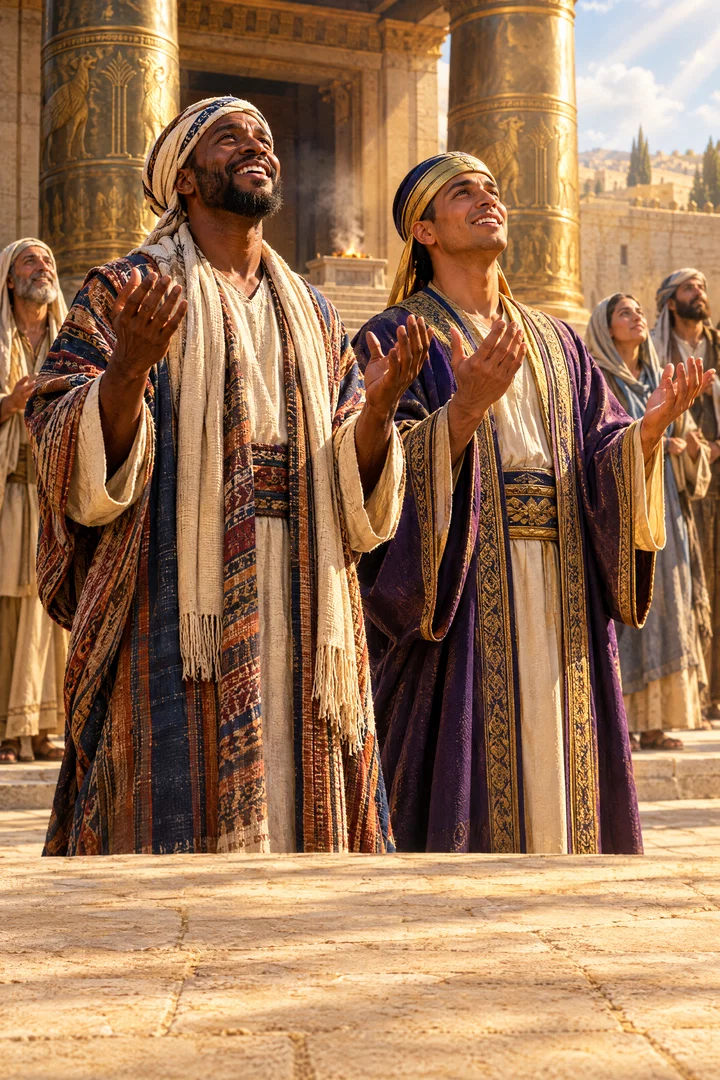
Cross-references 20 of 27
- Ephesians 2:11-12
Wherefore remember, that ye being in time past Gentiles in the flesh, who are called Uncircumcision by that which is called the Circumcision in the flesh made by hands;
Gentiles were strangers to Israel’s commonwealth and covenants, but are brought near through Christ.
- Exodus 12:48-49
And when a stranger shall sojourn with thee, and will keep the passover to the LORD, let all his males be circumcised, and then let him come near and keep it; and he shall be as one that is born in the land: for no uncircumcised person shall eat thereof.
A sojourner may join Israel’s worship under the same law.
- Isaiah 56:7
Even them will I bring to my holy mountain, and make them joyful in my house of prayer: their burnt offerings and their sacrifices shall be accepted upon mine altar; for mine house shall be called an house of prayer for all people.
The promise brings the stranger into God’s house of prayer for all people.
- Isaiah 56:8
The Lord GOD which gathereth the outcasts of Israel saith, Yet will I gather others to him, beside those that are gathered unto him.
God promises to gather others along with Israel’s outcasts.
- Ephesians 2:19
Now therefore ye are no more strangers and foreigners, but fellowcitizens with the saints, and of the household of God;
Formerly foreign people are welcomed as fellow citizens in God's household.
- John 10:16
And other sheep I have, which are not of this fold: them also I must bring, and they shall hear my voice; and there shall be one fold, and one shepherd.
Christ brings Gentiles outside the Jewish fold into one flock under one shepherd.
- Acts 8:26-39
And the angel of the Lord spake unto Philip, saying, Arise, and go toward the south unto the way that goeth down from Jerusalem unto Gaza, which is desert.
The Ethiopian eunuch’s welcome into the faith fulfills the promise that eunuchs would not be excluded.
- Mark 11:17
And he taught, saying unto them, Is it not written, My house shall be called of all nations the house of prayer? but ye have made it a den of thieves.
God’s house is intended as a house of prayer for all peoples.
- Romans 3:29
Is he the God of the Jews only? is he not also of the Gentiles? Yes, of the Gentiles also:
God is God of Gentiles as well as Jews.
- Galatians 3:29
And if ye be Christ’s, then are ye Abraham’s seed, and heirs according to the promise.
Those who belong to Christ are Abraham’s seed and heirs of the promise.
- Acts 10:34
Then Peter opened his mouth, and said, Of a truth I perceive that God is no respecter of persons:
God welcomes Gentiles without showing partiality.
- Isaiah 14:1
For the LORD will have mercy on Jacob, and will yet choose Israel, and set them in their own land: and the strangers shall be joined with them, and they shall cleave to the house of Jacob.
Strangers join themselves to Israel and are joined with them.
- Deuteronomy 23:1
He that is wounded in the stones, or hath his privy member cut off, shall not enter into the congregation of the LORD.
Contrasts exclusion with the assurance of admission.
- Numbers 15:15-16
One ordinance shall be both for you of the congregation, and also for the stranger that sojourneth with you, an ordinance for ever in your generations: as ye are, so shall the stranger be before the LORD.
The stranger is included under the same ordinance and law as the congregation.
- Romans 11:17
And if some of the branches be broken off, and thou, being a wild olive tree, wert graffed in among them, and with them partakest of the root and fatness of the olive tree;
Gentiles are joined to Israel’s covenant people.
- Ephesians 2:13
But now in Christ Jesus ye who sometimes were far off are made nigh by the blood of Christ.
Those once far off are brought near through Christ.
- 1 Kings 8:41-43
Moreover concerning a stranger, that is not of thy people Israel, but cometh out of a far country for thy name’s sake;
The stranger who joins himself to the LORD is welcomed when praying toward the house.
- Matthew 8:11
And I say unto you, That many shall come from the east and west, and shall sit down with Abraham, and Isaac, and Jacob, in the kingdom of heaven.
People from east and west join the patriarchs in God’s kingdom.
- Leviticus 19:34
But the stranger that dwelleth with you shall be unto you as one born among you, and thou shalt love him as thyself; for ye were strangers in the land of Egypt: I am the LORD your God.
Both forbid separating strangers who join the people of God.
- Romans 2:28-29
For he is not a Jew, which is one outwardly; neither is that circumcision, which is outward in the flesh:
Defines belonging to Israel by inward faith, not ancestry.
Commentary
Each commentary is drawn from primary sources: the writings of Ellen G. White and Adventist pioneers and periodicals. Each commentary is separate. Its own words are not a quotation; follow the references to read the source passages.
Ellen G. White
25 sources
Neither the foreigner who has joined himself to the Lord is to say that he is cut off from God's people, nor the eunuch to regard himself as fruitless, barren and without worth, hope or lasting place among them.SPBC 169.5–8RH Jun 23, 1904HSFM 231.1–2 To such faithful eunuchs God gives in His house a place and an everlasting name better than sons and daughters that shall not be cut off, and such strangers He brings to His holy mountain, makes joyful in His house of prayer, and accepts their offerings, for His house shall be a house of prayer for all people.SPBC 169.5–8RH Jun 23, 1904HSFM 231.1–21MR 311.1–312.1Ms 15, 1900, par. 8–9 This welcome belongs to those who do justice and judgment, keep the Sabbaths from polluting them, keep the hand from evil, choose what pleases Him, serve Him and love His name, and hold fast His covenant.SPBC 169.5–8RH Jun 23, 1904HSFM 231.1–2 It stands where salvation is near to come and righteousness to be revealed, and strangers and converts from other nations who yield themselves to God and keep His law are numbered among spiritual Israel and may fully unite with His people.PK 371.2–372.1RH Sep 24, 1903Lt 81, 1896, par. 4–5Lt 4, 1908, par. 18–21RH Jun 17, 1915 It is a message for the present to be given without delay to all who thirst and to those who have not yet heard, and it comforts those who might feel excluded, including the childless and those suffering hardship for loyalty to the truth, who may still serve as missionaries in caring for and teaching others.Ms 35, 1896, par. 23Lt 139, 1905, par. 7–12RH Sep 24, 1903Lt 366, 1907, par. 3Lt 263, 1903, par. 16–17
Outsiders Welcomed Into Worship
Neither is the foreigner who has bound himself to the Lord to speak as if the Lord has wholly separated him and cut him off from His people.SPBC 169.5–8RH Jun 23, 1904HSFM 231.1–2Ms 161, 1903, par. 10–11Lt 263, 1903, par. 12–15 Such a one is not shut out and not excluded, but is assured of belonging among God's people.RH Jun 23, 1904HSFM 231.1–2Ms 161, 1903, par. 10–11Lt 263, 1903, par. 12–15Ms 34, 1900, par. 46 Nor is the eunuch to speak as if he were a dry tree.SPBC 169.5–8RH Jun 23, 1904HSFM 231.1–2Ms 161, 1903, par. 10–11Lt 263, 1903, par. 12–15 That means he is not to count himself fruitless, barren, useless, without worth, without hope, without future, or without lasting place among God's people, and want of children and descendants does not deny his belonging.RH Jun 23, 1904HSFM 231.1–2Ms 34, 1900, par. 46Ms 15, 1900, par. 8–9Lt 139, 1905, par. 7–12 He is not fruitless or without a future in God's service, but has hope and a part in God's purposes.RH Jun 23, 1904Ms 161, 1903, par. 10–11Lt 263, 1903, par. 12–151MR 311.1–312.1Ms 43a, 1898, par. 9–12
This welcome rests on joining the Lord in obedient covenant life.SPBC 169.5–8Ms 161, 1903, par. 10–11Lt 263, 1903, par. 12–15Ms 15, 1900, par. 8–9Lt 139, 1905, par. 7–12 It is for those who keep God's Sabbaths and keep them from pollution, who choose the things that please Him, who take hold of and hold fast His covenant, who serve Him and love His name, who do justice and judgment, and who keep the hand from doing any evil.SPBC 169.5–8RH Jun 23, 1904HSFM 231.1–2Ms 161, 1903, par. 10–11Lt 263, 1903, par. 12–15 Sabbath keeping, choosing what pleases God, and holding fast the covenant are compatible with full belonging to His people.Ms 34, 1900, par. 461MR 311.1–312.1Ms 15, 1900, par. 8–9Ms 43a, 1898, par. 9–12Ms 29, 1910, par. 5–10 To the eunuchs who so keep, choose, and hold, God gives in His house and within His walls a place and an everlasting, enduring name.SPBC 169.5–8RH Jun 23, 1904HSFM 231.1–2Ms 161, 1903, par. 10–11Lt 263, 1903, par. 12–15 That name is better than sons and daughters could give, better than children, and it shall not be cut off.Ms 161, 1903, par. 10–11Lt 263, 1903, par. 12–15Ms 34, 1900, par. 46Ms 43a, 1898, par. 9–12Ms 29, 1910, par. 5–10
To the sons of the stranger who so serve and love the Lord and keep the Sabbath, God brings them to His holy mountain.1MR 311.1–312.1Ms 15, 1900, par. 8–9Lt 139, 1905, par. 7–12Ms 43a, 1898, par. 9–12Ms 29, 1910, par. 5–10 There He makes them joyful in His house of prayer and accepts their burnt offerings and sacrifices upon His altar.SPBC 169.5–8Ms 15, 1900, par. 8–9Lt 139, 1905, par. 7–12Ms 43a, 1898, par. 9–12Ms 29, 1910, par. 5–10 For His house shall be called a house of prayer for all people.SPBC 169.5–81MR 311.1–312.1Ms 15, 1900, par. 8–9Lt 139, 1905, par. 7–12Ms 43a, 1898, par. 9–12 As He gathers the outcasts of Israel, so He gathers others besides those already gathered, welcoming them into worship.SPBC 169.5–81MR 311.1–312.1Lt 139, 1905, par. 7–12Ms 43a, 1898, par. 9–12Ms 29, 1910, par. 5–10
Salvation Near for All
The refusal to let the joined stranger fear utter separation and the refusal to let the eunuch call himself a dry tree stand inside the call to keep justice and do judgment because salvation is near to come and righteousness to be revealed.RH Sep 24, 1903Lt 81, 1896, par. 4–5Lt 4, 1908, par. 18–21 Blessing rests on the man and the son of man who lays hold on that near salvation by keeping judgment and doing justice, by keeping the Sabbath from polluting it and keeping the hand from doing any evil.RH Sep 24, 1903Lt 81, 1896, par. 4–5Lt 4, 1908, par. 18–21 The same blessing rests on those who keep God's Sabbaths, choose the things that please Him, and take hold of His covenant, whether eunuchs who are promised in His house and within His walls a place and an everlasting name better than sons and daughters that shall not be cut off, or sons of the stranger who join themselves to the Lord to serve Him and love His name and are brought to His holy mountain to be made joyful in His house of prayer with offerings accepted on His altar, for His house shall be called a house of prayer for all people as He who gathers the outcasts of Israel gathers others besides those gathered.RH Sep 24, 1903Lt 81, 1896, par. 4–5Lt 4, 1908, par. 18–21
Strangers from other nations who join themselves to the Lord are not to think that God has separated them from His people.PK 371.2–372.1RH Jun 17, 1915 When such converts from heathen nations yield themselves to God and keep and observe His law, they are numbered among spiritual Israel, His church on earth.PK 371.2–372.1RH Jun 17, 1915 In that numbering they may fully unite with God's people.PK 371.2–372.1
The passage sets forth two parties and presses the hearer to belong to the party assured by God's Word of His love.Ms 122, 1909, par. 1–5
Present Mission and Comfort
The chapter is a message for the present time and for personal experience now, pressing what needs to be done in right lines because time is passing rapidly.Lt 366, 1907, par. 3Lt 263, 1903, par. 16–17 It is to be given without delay to all who thirst without money and without price and to people who have not yet heard the glad tidings of salvation.RH Sep 24, 1903Lt 263, 1903, par. 16–17 The urgency rests on the nearness of worldwide trouble and persecution over proclaiming the truth, which are right upon us.RH Sep 24, 1903
The larger section of Isaiah 50-58 is to be studied by leaders in the cause and by those connected with institutions.Lt 30, 1910, par. 6–7 In that setting the verse carries the Lord's reproof for disregard of the light given, for accepting only what men choose to accept without thorough consecration to God.Lt 30, 1910, par. 6–7 It also reproves neglect by those in high positions and great responsibilities who had great light to warn the people what is truth.Lt 30, 1910, par. 6–7 Heeding it by stopping all complaining and every evil work brings a manifestation of divine power in conviction and conversion of souls.Lt 30, 1910, par. 6–7
The verse calls God's people and workers to cooperate with Him in the great work to be done by the institutions established by His direction.Lt 81, 1896, par. 4–5Lt 4, 1908, par. 18–21 Not one worker is to be spared or separated, but all are to be drawn together in even cords in humble harmony to recover others.Lt 4, 1908, par. 18–21 He is dishonored when human principles with no sanction in His Word rule, when self and pride of opinion rule and give the enemy room to hinder the work.Lt 81, 1896, par. 4–5
The verse comforts and encourages all who might think themselves excluded, assuring the stranger joined to the Lord that he is not cut off from God's people and the eunuch that he is not a fruitless dry tree without worth, hope, or lasting place.Ms 35, 1896, par. 23Lt 139, 1905, par. 7–12Ms 71, 1911, par. 1–4Lt 45, 1900, par. 9–135MR 326.1–327.2 The chapter is to be read as relevant to caring for people loyal to God who suffer hardship for the truth, presenting an open door to meet with God and seek Him.Ms 71, 1911, par. 1–4Lt 45, 1900, par. 9–13 A woman who does not take a child into her care need not feel condemned, since God may have other work for her in teaching those who do not know Him to do His will.Ms 35, 1896, par. 23 Those who might have felt excluded can serve as missionaries caring for and educating children in their homes.Ms 131, 1909, par. 25 This is the grand and noble work of faithful shepherds and guardians of the flock, sharing their homes with orphan children left by Sabbathkeeping parents and laboring as co-laborers with Christ to educate struggling, ignorant, and poor souls rather than voluntarily tying their hands by the care of an infant.5MR 326.1–327.2
Sources
Pioneers and periodicals
84 sources
Neither the foreigner who has joined himself to the Lord to serve Him nor the eunuch is to think himself cut off from God's people or left as a fruitless tree without hope and without a future, for when they hold fast His covenant they are accepted among His people.RH Jun 23, 1904ST Jun 28, 1905ST Feb 7, 1900ST Feb 7, 1906RH Dec 17, 1901 Joining the Lord means taking hold of His covenant by keeping His Sabbath from polluting it, keeping the hand from evil, and choosing what pleases Him.RH Dec 31, 1857ST Feb 7, 1900ST Apr 24, 1893 The promise belongs wholly to the gospel dispensation, standing in the time when God's salvation is near to come and His righteousness to be revealed just before Christ comes in the closing years of probation.ST Feb 28, 1884ST Jun 28, 1905ST Aug 29, 1911ST Apr 8, 1889RH May 20, 1873 The Sabbath there is the seventh day blessed since creation, a universal institution for the whole human family in every nation and age and not for Jews only, unchangeable and still binding in the present dispensation.RH Dec 31, 1857ST Apr 24, 1893RH Jun 2, 1851ST Dec 11, 1879ST Jan 3, 1905 To such keepers God gives in His house a place and an everlasting name better than of sons and daughters, and He brings them to His holy mountain and makes them joyful in His house of prayer, which shall be a house of prayer for all people.ST Jun 11, 1894RH Dec 17, 1901ST Apr 24, 1893RH Jun 2, 1851ST Sep 26, 1906
Terms and Historical Setting
The son of the stranger who has joined himself to the Lord is the Gentile or foreigner, one not of Israel, who has joined himself to the Lord to serve Him, to love His name, to minister to Him and to be His servant.ST Jun 28, 1905RH Dec 31, 1857ST Aug 29, 1911ST Sep 24, 1894ST Jun 11, 1894 He is forbidden to say on the ground that the Sabbath is a Jewish institution that the Lord has utterly separated him from His people, for when he takes hold of the covenant and keeps the Sabbath he is numbered among His people and shares the promised welcome in the house of prayer for all people.ST Aug 29, 1911ST Jun 11, 1894ST Apr 8, 1889 The eunuch is the servant for whom keeping the Sabbath would seem harder than for others, and the word embraces also slaves and those who had no part among the Jews under the old order.ST Jun 28, 1905RH Dec 17, 1901RH Oct 15, 1872RH Dec 17, 1901 He is forbidden to say he is a dry tree, which is to regard himself as fruitless, childless, useless, without hope, without a future in God's service and without a lasting place among God's people.RH Jun 23, 1904RH Oct 15, 1908RH Dec 17, 1901ST Sep 26, 1906 The assurance to both rests on the same welcome, that those who keep God's Sabbaths, choose what pleases Him and hold fast His covenant receive a place and an enduring name in His house.RH Jun 23, 1904RH Oct 15, 1908RH Dec 17, 1901
Joining the Lord means taking hold of His covenant, keeping His Sabbath from polluting it, keeping the hand from doing evil, and choosing the things that please Him.RH Dec 31, 1857ST Feb 7, 1900ST Apr 24, 1893RH Jan 14, 1862RH Nov 15, 1853 It is by this joining through keeping the Sabbath from polluting it and taking hold of the covenant that the stranger is not separated from His people and the eunuch is not a dry tree, with access to God's holy mountain and joy in His house of prayer.RH Sep 24, 1903ST Feb 7, 1900ST Apr 24, 1893RH Nov 15, 1853 Isaiah, through whom the promise was given around 698 B.C., prophesied between 760 and 698 B.C., beginning as a young man in the reign of Uzziah and continuing through Jotham, Ahaz and Hezekiah, with tradition extending his prophesying into the reign of Manasseh by whom he was martyred.ST May 28, 1912ST Sep 10, 1896 Those were crucial times in Judah typical of the great days to come, he is called the Gospel prophet because no other Old Testament prophet speaks so much of the last days, the sufferings and work of Jesus Christ and the kingdom of glory to come, his name means Jehovah is salvation, and the book divides into chapters 1-39 and 40-66, placing this verse in the second division.ST May 28, 1912
The verse belongs to continual prophetic instruction given while Israel was a great settled nation in the promised land for more than 800 years, when God spoke through His prophets frequently calling attention to His holy Sabbath.RH Jan 14, 1862 That instruction was joined to strict laws and regulations guarding Sabbath observance on every hand, so that the day could not be forgotten or lost. Restoration to the land was conditional on observing the Lord's Sabbath even while the Hebrews were dispersed.RH Jan 14, 1862 Under the Mosaic law strangers and eunuchs were excluded from the full privileges of Israel, where circumcision and strict observance of the ceremonial law were the conditions for admission to the congregation.ST Feb 28, 1884 Those restrictions cease in the gospel dispensation, when the stranger who loves and obeys God enjoys the privileges that belonged exclusively to the chosen people, so that the prophecy could not be fulfilled during the Levitical priesthood.ST Feb 28, 1884ST Nov 19, 1902
Prophetic Time and Fulfillment
The prophecy reaches into both the former and the Christian dispensations, treating the Sabbath it enjoins as one and the same Sabbath throughout both, not a new Sabbath introduced after Christ's resurrection.ST Sep 24, 1894 The weight of testimony places it wholly in the Christian or gospel dispensation and the present Christian age.ST Feb 28, 1884ST Aug 29, 1911RH May 20, 1873RH May 20, 1873ST Jan 6, 1881 In that age the stranger joined to the Lord is the Gentile, who is not separated from God's people when he joins himself to the Lord to serve Him, love His name and be His servant, and the eunuch is not without hope or place among them.ST Feb 28, 1884ST Aug 29, 1911RH May 20, 1873 The test and promise of that inclusion is keeping the Sabbath from polluting it, keeping the hand from evil, choosing what pleases God and taking hold of His covenant, for the Lord wills converts in the Gospel age to keep the day then called the Sabbath and pronounces blessing on those who do so.ST Feb 28, 1884ST Aug 29, 1911ST Oct 15, 1902 The Sabbath thus carried into the gospel dispensation is recognized as the Creator's Sabbath, part of God's continuing moral law, not instituted anew for that dispensation.RH May 20, 1873
The verse stands in the time when God's salvation is near to come and His righteousness to be revealed.ST Jun 28, 1905ST Apr 8, 1889ST Jan 30, 1896RH Jun 2, 1851 That nearness is the closing years of probation just before Christ comes to bring redemption, raise the righteous dead, and reveal great salvation at the Second Advent, His righteousness being His holy law heralded to the world.ST Jun 28, 1905ST Apr 8, 1889RH Jun 2, 1851RH Jan 12, 1860 It is just prior to the supper of the great God, and belongs to a prophecy of a Sabbath reform and restoration in the last days just before the Lord comes and Christ is revealed from heaven.ST Jan 30, 1896RH Jun 2, 1851RH Jan 12, 1860 In that time God pleads with the stranger, the eunuch and the outcast to take hold of His everlasting covenant and live, forbidding the Gentile who has joined himself to the Lord to say he is separated from His people on the ground that the Sabbath is a Jewish institution.ST Jun 28, 1905ST Apr 8, 1889ST Jan 30, 1896 The foreigner who joins the Lord is assured he is not separated from God's people and the eunuch that he is not fruitless or excluded, but those who hold fast to the Sabbath and join themselves to the Lord are blessed, brought to God's holy mountain and made joyful in His house of prayer.ST Mar 15, 1910RH Jun 2, 1851RH Jan 12, 1860
The chapter predicts a last-day Sabbath reform rebuilding the breach in God's law and restoring Sabbath observance among His professed followers.ST Mar 15, 1910ST Jan 17, 1911ST Jul 30, 1894ST Aug 6, 1912 That reform comes after the set time given into the hand of the power that thought to change God's law has passed, restoring the keeping of God's commandments including the Sabbath as the memorial of creation and a sign of redemption.ST Jul 30, 1894ST Aug 6, 1912 With Isaiah 58 it completes the picture of the last-day reformation movement under the third angel's sealing message, in which genuinely sanctified believers are sealed for the heavenly kingdom with the seal of the living God, the true Sabbath as the sign, seal or mark of their sanctification, turning away their feet from trampling the long-downtrodden seal of God's law.RH Oct 22, 1914 In that message Gentiles and eunuchs share in taking hold of God's everlasting covenant of the gospel and keeping the Sabbath holy, and are welcomed to His holy mountain.ST Mar 15, 1910
In those last days blessing rests on those who turn, lay hold on the Sabbath and do the commandments, including the stranger joined to the Lord, the eunuch and the outcast.RH Jun 2, 1851RH Apr 17, 1866 Near the end there is to be a class who both keep and do the commandments of God, distinct from the faith of Jesus.RH Apr 17, 1866 The chapter runs on to the supper of the great God when the slain of the Lord lie unburied as food for beasts and birds at the battle of the great day, at which time the Lord's true watchmen see eye to eye while the blind watchmen who cannot understand or warn are exposed.RH Jun 2, 1851
Sabbath for All People
The blessing promised belongs to the whole human family, Gentile as well as Jew, for the man and son of man blessed for keeping the Sabbath from polluting it and keeping the hand from doing any evil means anyone who does this.RH Dec 31, 1857RH Jun 2, 1851RH Aug 10, 1869 The son of the stranger who has joined himself to the Lord is the Gentile who has joined himself to the Lord to serve Him, to love His name, to minister to Him and to be His servant, and every one who so keeps the Sabbath and takes hold of the covenant will be brought to the holy mountain and blessed.RH Dec 31, 1857RH Aug 10, 1869RH Nov 12, 1903 The Sabbath is therefore a universal institution for man in the gospel age, not a local institution for Jews only, whose blessings extend to all mankind, to every nation, condition, clime, country and age, as part of the great eternal purpose untouched by local claims of time or circumstance.RH Jun 2, 1851RH May 30, 1912RH Apr 16, 1861 It is for all people including Gentiles, and God wishes Gentiles to keep it because it was made for Gentiles as well as Jews, with the promise remaining for all who truly lay hold of it and keep it.RH Aug 10, 1869RH Nov 12, 1903RH Apr 16, 1861
The Sabbath so kept is the seventh day of the week blessed and sanctified by the Lord since the commencement of time and since creation, twenty-five hundred years before a Jew existed, as a memorial of creation concerning all nations equally, not the first day Sunday appointed by human agency.ST Apr 24, 1893ST Dec 11, 1879ST Jan 3, 1905 Its blessings and commands belong to that day and not to the first day of the week, for it is sanctified as the token of the covenant between Him and His children for all times, set apart not only for rest from labor but for reasoning, mental occupation and self-examination.ST Dec 11, 1879STRH Jun 24, 1873 Those strangers who keep it from polluting it and keep from evil and take hold of the covenant are not separated from His people and are not dry trees, but are accepted with Israel and brought to the holy mountain and made joyful in the house of prayer, which shall be called a house of prayer for all nations.ST Apr 24, 1893ST Dec 11, 1879ST Jan 3, 1905 Keeping Sunday while ignoring the Bible Sabbath transgresses the law of God and brings condemnation, while coming generations and brethren who love candid truth will recognize the true Sabbath and celebrate the same Sabbath together with Israel as the prophecy reaches fulfillment.ST Apr 24, 1893ST Dec 11, 1879
The seventh-day Sabbath with the rest of God's law is unchangeable and perpetual, made for man and congenial to the gospel, in one unbroken line from the Sabbath instituted in Paradise, guarded by the fourth commandment of the royal law, declared by Christ to be made for man with no jot of the law to pass, kept after the cross, and remaining in Paradise restored in the new earth.ST Mar 23, 1904RH Jan 1851RH May 20, 1873 It is recognized as the Creator's Sabbath, part of the continuing moral law and not instituted anew for the gospel dispensation, confirmed by the Spirit of Christ testifying through the prophets to command its keeping so that its continuing obligation stands without need of any newly discovered saying of Jesus.RH May 20, 1873RH Feb 3, 1852ST Aug 5, 1897 Though trodden down by the man of sin, it continues inseparably connected with human history and is now to be brought out and vindicated as the saints return toward Paradise, highly esteemed in God's own words and honored by His continuing works of providence in upholding creation and His continuing acts of mercy to the human family on that day.RH Jan 1851RH Feb 3, 1852 Therefore it is as binding on the nations today as when instituted six thousand years ago at creation, and its perpetuity remains unimpaired, so that to deny its claims denies the power of God and to honor the day honors the Lord of the Sabbath, Creator and Redeemer.RH May 30, 1912
Keeping the Sabbath from polluting it is the condition of sharing the promised blessing and the great salvation to be revealed at the Second Advent, with the promise to all who obey God, both Jews and Gentiles regardless of race or country, who receive an everlasting name that shall never be cut off and shall keep the Sabbath everlastingly.RH Jun 2, 1851ST Nov 10, 1914RH Nov 12, 1903 It describes a people and a work at a time when Sabbath keeping is a distinguishing mark of loyalty to God in preparation to meet the Lord at His coming, blended in a special message for that time, and a mark of loyalty by which Gentiles who join themselves to the Lord are included among His people and share in the covenant promises.ST Nov 10, 1914ST Dec 17, 1894RH Apr 17, 1866 Near the end there is to be a class who both keep and do the commandments of God, distinct from the faith of Jesus, with sufficient light given to those who are willing and obedient, and all who keep the Sabbath and hold fast to God will be welcomed into His house and given an enduring name even though they might otherwise fear exclusion.RH Apr 17, 1866RH Jun 18, 1861 Against this universal and creation-rooted reading, those who held the contrary taught that admission of the Gentile to Sabbath-keeping as a glorious promise to be realized in the new dispensation proves that under the old dispensation the Gentile had no such right or privilege and did not keep the Sabbath, and that the Sabbath was not given at creation for all mankind.RH Oct 15, 1872
Welcome and Promised Blessings
Neither the foreigner who has joined himself to the Lord to serve Him, love His name, minister to Him and be His servant, nor the eunuch, is to say that God has utterly separated him from His people or left him a dry tree.RH Jun 23, 1904ST Feb 7, 1900ST Feb 7, 1906RH Oct 15, 1908RH Jan 21, 1862 They are not cut off, shut out, rejected, excluded, fruitless, childless, useless, without hope or without a future in God's service, but are among His people and in His covenant when they keep His Sabbaths from polluting them, keep the hand from evil, choose what pleases Him and take hold of His covenant to live.RH Jun 23, 1904ST Feb 7, 1906RH Oct 15, 1908RH Jan 21, 1862RH May 12, 1863 This welcome belongs to a Sabbath-observing, commandment-keeping people gathered from all parts of the world in the last days, for the gathering is for all people.RH Dec 17, 1901RH Aug 3, 1911RH Jun 2, 1851
To such eunuchs and strangers, including slaves and those who had no part among the Jews under the old order, who keep His Sabbaths, choose what pleases Him and hold fast His covenant, God gives in His house and within His walls a place and a name better than of sons and of daughters, an everlasting name that shall not be cut off.RH Dec 17, 1901ST Apr 24, 1893RH Jun 2, 1851RH May 12, 1863ST Dec 2, 1913 That name endures in the immortal state with eternal endurance, and carries lifting above others even in temporal prosperity.RH Jun 2, 1851ST Dec 2, 1913ST Nov 10, 1914 It is promised to all who obey God, both Jews and Gentiles regardless of race, country, nation, condition or clime, and it consoles those reproached for keeping the Sabbath, since God's blessing and honor matter more than human applause or earthly titles.RH May 12, 1863ST Dec 2, 1913ST Nov 10, 1914
God will bring them to His holy mountain and make them joyful in His house of prayer, accepting their burnt offerings and sacrifices upon His altar, for His house shall be called a house of prayer for all people and all nations.ST Apr 24, 1893ST Sep 26, 1906ST Apr 6, 1915ST Dec 11, 1879RH Nov 25, 1915 Gentile believers who serve the Lord and keep the Sabbath from polluting it thus share fully in the Sabbath-keeping community and its promised welcome, with no sharp lines of national separation in His people.ST Jun 11, 1894ST Apr 6, 1915RH Nov 25, 1915 Strangers can keep that holy Sabbath condition in every land, and keeping it is essential to pleasing God and meeting His approval in His service.ST Apr 6, 1915ST Dec 11, 1879RH May 27, 1852
The promise gathers Israel's outcasts and others besides those already gathered, applying while Israel is dispersed among the nations and not limited to the promised land or to people living there.RH Oct 31, 1854RH May 27, 1852RH Apr 28, 1874ST Nov 10, 1914RH Jan 21, 1862 Those who keep the Sabbath holy while dispersed will be brought to God's holy mountain, and the promises will be fulfilled when people come from east and west to share in God's kingdom and receive refreshment.RH Oct 31, 1854RH Apr 28, 1874ST Nov 10, 1914RH Dec 31, 1861
Inclusion in Israel and Covenant
Strangers share in God's blessings by becoming part of Israel through faith in Christ, grafted in and numbered among spiritual Israel, His church on earth.RH Jun 17, 1915ST Sep 24, 1894ST Feb 28, 1911ST Apr 19, 1910ST Apr 30, 1894 The foreigner who joins himself to the Lord and takes hold of His Sabbath is not excluded from His people, and the eunuch need not regard himself as fruitless, useless, or cut off from blessing.ST Sep 24, 1894ST Feb 28, 1911ST Apr 19, 1910ST Apr 30, 1894 Christ's other sheep are the Gentiles, united under one Shepherd with believing Jews after the gospel goes first to the Jews.RH Jun 17, 1915ST Sep 24, 1894 Those who live by the light they receive and observe the Sabbath become Israelites by faith, and this is the hope of salvation.ST Sep 24, 1894ST Feb 28, 1911ST Apr 30, 1894
There is not one promise in all God's Word to the Gentile as a Gentile, but only as he joins himself to the Lord to minister to Him, to love His name and to be His servant, and thereby becomes part of the true Israel of God.ST Jan 3, 1905ST Apr 20, 1904ST May 16, 1911ST Sep 10, 1902 Gentiles receive God's promises only as they receive them through Israel, for the covenants are given to Israel and come to the Gentiles through the Jews.ST Jan 3, 1905ST Apr 20, 1904ST May 16, 1911 Birth mattered less to God than character, even when Gentiles had religious privileges under the old dispensation, and their former separation from Israel does not leave them without hope when they take hold of His covenant by faith and keep His Sabbath from profaning it.ST Jan 3, 1905ST Sep 10, 1902RH Oct 15, 1872 The Sabbath command is to all men and all nations because the Sabbath was made for man twenty-five hundred years before a Jew existed as a memorial of creation, and creation concerns all nations equally.ST Jan 3, 1905ST Apr 20, 1904
God designs no sharp lines of national separation in His people, for He is no respecter of persons and therefore no respecter of races, having just as much interest in the conversion of a colored man as in any white-skinned dignitary.RH Nov 25, 1915ST Sep 13, 1905 In the Lord's service Jews and Gentiles are not treated differently, but foreigners who serve the Lord and keep the Sabbath from profaning it share the same gracious promises given to Israel.RH Nov 25, 1915 The prophetic promises made to such as the Ethiopian eunuch, with the precious truths of the Bible and present openings for mental and moral improvement and attending providences by which God designs good for them, belong to colored people in America today as well as to the more favored.ST Sep 13, 1905 Danish-Norwegian foreigners who have joined the Lord are welcomed as fully belonging to His people, whom He will bring to His holy mountain and make joyful in His house of prayer, for His house shall be called a house of prayer for all people, while there remains a special work by Danes and Norwegians for the Danish-Norwegian nationality in North America.RH Nov 25, 1915
Taking hold of God's covenant means obeying the Ten Commandments written by God's finger, which are complete and cannot be added to, diminished, or changed.ST Sep 24, 1894RH May 3, 1860 That covenant is God's everlasting covenant of the gospel and part of the new covenant, remaining from the days of Adam and continuing forever.ST Sep 24, 1894ST Sep 10, 1902 The Sabbath shared by Israel and the stranger, including the eunuch, is its enduring sign between the Lord and His true people, identifying Him as Creator and Sanctifier and pointing to the spiritual rest found in Christ.ST Sep 24, 1894ST Mar 3, 1914ST May 21, 1896 It is given to those only who hallow it, Gentiles as well as Jews, as a memorial of creation, a sign of His power to sanctify and of redemption and sanctification, and a mark of loyalty to God.ST Dec 17, 1894ST Mar 3, 1914ST Sep 10, 1902 Sabbath observance is thus a witness of loyalty and part of the sealing of His servants, in contrast with the mark of the beast.ST Dec 17, 1894ST May 21, 1896
Obedience and Present Application
The prohibition against saying God has separated the stranger from His people assures one who has joined himself to the Lord that he is not cut off from fellowship and that God has accepted him.RH Jul 3, 1900 Even the eunuch who might regard himself as fruitless and without a lasting place is not left as a dry tree before God when he joins himself to the Lord.RH May 12, 1863 In the time when salvation is near and righteousness is to be revealed, Sabbath keepers are promised an everlasting name and a place in God's house.RH May 12, 1863 That promise consoles those reproached for keeping the Sabbath, since God's blessing and honor matter more than human applause or earthly titles.RH May 12, 1863
The same prohibition rebukes anxiety that tries to make it appear the Lord has separated His people from Him.RH Jul 29, 1858 It rebukes those who once saw the light of the three messages, the Sabbath, and the sanctuary in heaven, yet spread contradictory no-law and no-Sabbath views while still claiming to be Christians.RH Jul 29, 1858 The Sabbath blessing belongs to the whole human family, Gentile as well as Jew, to every man and son of man who keeps the Sabbath from polluting it, keeps his hand from doing any evil, and takes hold of God's covenant, and such will be brought to God's holy mountain and blessed.RH Dec 31, 1857 There is no promise of long life or anything good to Jew or Gentile for disobeying any one of God's commands, even the least, and there are threatenings against any, Jew or Gentile, who knowingly transgresses any commandment without repentance.RH Dec 31, 1857
The chapter is a prophetic admonition to honor the Sabbath after it had become so disregarded that the people had to be called back to it.ST The greatest blessings of the Bible belong to those who remember the Sabbath day to keep it holy, and being gathered to God's holy mountain is promised on condition of keeping the Sabbath, the Holy of the Lord.RH Oct 7, 1851RH Aug 19, 1851 Large promises are thus connected with obedience to it, and the importance of the Sabbath is established.RH Aug 19, 1851 Converted prophets continued to observe and teach it, no longer merely as natural people but living according to Christ's life.RH Jun 10, 1873 The Spirit of Christ testifying through the prophets commands Sabbath keeping and confirms its continuing obligation, so that no newly discovered saying of Jesus is needed to prove it.ST Aug 5, 1897 In these last days God is calling out a people to keep the whole law, including the Sabbath as Christ and the apostles regarded it, and the stranger who has joined himself to the Lord is included in that people and not separated from them.RH Dec 20, 1906
That promise belongs to God's work in saving men from the time it was given to the end of this age, and to a reformation on the Sabbath question that precedes the coming of the Lord.ST Nov 10, 1914 It is connected with the work of reformation and conversion that prepares people for the coming of the Lord, applied to those living near Christ's second coming.RH Jul 9, 1901 Sabbath keeping is there a distinguishing mark of loyalty to God in preparation to meet the Lord at His coming, blended in a special message for that time.ST Nov 10, 1914 The promise is to all who obey God, both Jews and Gentiles regardless of race or country, and those stranger foreigners who join themselves to the Lord receive an everlasting name that shall never be cut off and will keep the Sabbath everlastingly.ST Nov 10, 1914 Blessing rests on those who do justice, keep the Sabbath from polluting it, keep the hand from doing evil, keep God's Sabbaths, choose the things that please Him, and take hold of His covenant, and to such eunuchs and strangers God will give in His house and within His walls a place and a name better than of sons and of daughters, an everlasting name that shall not be cut off.RH Sep 24, 1903 Those strangers who keep the Sabbath from polluting it and take hold of God's covenant will be brought to His holy mountain and made joyful in His house of prayer, with their offerings accepted upon His altar, for His house shall be called a house of prayer for all people as He gathers the outcasts of Israel and others besides those already gathered.ST Nov 10, 1914 This is part of the earnest, fervent message to be given without delay to all who thirst without money and without price, because worldwide trouble and persecution over proclaiming the truth are right upon us.RH Sep 24, 1903
Sources