John 3:16
For God so loved the world, that he gave his only begotten Son, that whosoever believeth in him should not perish, but have everlasting life.
Translations
For God so loved the world, that he gave his only begotten Son, that whoever believes in him should not perish, but have everlasting life.
King James Version, KJV Cambridge Paragraph Bible
For God so loved the world, that he gave his only begotten Son, that whosoever believeth in him should not perish, but have everlasting life.
For God so loved the world, that he gave his only-begotten Son, that whoever believeth in him, should not perish, but have everlasting life.
Revised Version, American Standard Version
For God so loved the world, that he gave his only begotten Son, that whosoever believeth on him should not perish, but have eternal life.
for God did so love the world, that His Son — the only begotten — He gave, that every one who is believing in him may not perish, but may have life age-during.
For God so loved the world, that he gave his only-begotten Son, that whosoever believes on him may not perish, but have life eternal.
For God, so loved, the world, that, his Only Begotten Son, he gave,—that, whosoever believeth on him, might not perish, but have life age-abiding.
Berean Standard Bible, Majority Standard Bible
For God so loved the world that He gave His one and only Son, that everyone who believes in Him shall not perish but have eternal life.
For God so loved the world, that he gave his only born Son, that whoever believes in him should not perish, but have eternal life.
For God had such love for the world that he gave his only Son, so that whoever has faith in him may not come to destruction but have eternal life.
For God so loued the worlde, that hee hath giuen his onely begotten Sonne, that whosoeuer beleeueth in him, should not perish, but haue euerlasting life.
Douay-Rheims (Challoner revision)
For God so loved the world, as to give his only begotten Son; that whosoever believeth in him, may not perish, but may have life everlasting.
Pictures

Cross-references 20 of 338
- Romans 5:8
But God commendeth his love toward us, in that, while we were yet sinners, Christ died for us.
Christ’s death for sinners demonstrates God’s love.
- Romans 6:23
For the wages of sin is death; but the gift of God is eternal life through Jesus Christ our Lord.
Contrasts sin’s wages, death, with God’s gift of eternal life through Christ.
- Romans 8:32
He that spared not his own Son, but delivered him up for us all, how shall he not with him also freely give us all things?
God gave his Son and will freely give all things with him.
- 1 John 4:9-10
In this was manifested the love of God toward us, because that God sent his only begotten Son into the world, that we might live through him.
God’s love is shown by sending his Son to give life and atone for sin.
- John 3:36
He that believeth on the Son hath everlasting life: and he that believeth not the Son shall not see life; but the wrath of God abideth on him.
Belief in the Son brings everlasting life, while rejecting him leaves one under God’s wrath.
- Isaiah 53:5
But he was wounded for our transgressions, he was bruised for our iniquities: the chastisement of our peace was upon him; and with his stripes we are healed.
Christ bears humanity’s punishment for sin, and his wounds bring healing.
- John 1:29
The next day John seeth Jesus coming unto him, and saith, Behold the Lamb of God, which taketh away the sin of the world.
Jesus is the Lamb who takes away the world’s sin.
- Romans 3:25-26
Whom God hath set forth to be a propitiation through faith in his blood, to declare his righteousness for the remission of sins that are past, through the forbearance of God;
Christ’s sacrifice provides atonement, allowing God to justify believers while remaining just.
- 2 Corinthians 5:19
To wit, that God was in Christ, reconciling the world unto himself, not imputing their trespasses unto them; and hath committed unto us the word of reconciliation.
God in Christ reconciles the world to himself.
- Philippians 2:6-8
Who, being in the form of God, thought it not robbery to be equal with God:
God gave his Son, who took human form and humbled himself in obedience to death.
- 1 John 5:11-12
And this is the record, that God hath given to us eternal life, and this life is in his Son.
Eternal life is God’s gift in the Son, and those who have the Son have life.
- John 1:12
But as many as received him, to them gave he power to become the sons of God, even to them that believe on his name:
Receiving and believing in Christ gives people power to become God’s children.
- Numbers 21:8-9
And the LORD said unto Moses, Make thee a fiery serpent, and set it upon a pole: and it shall come to pass, that every one that is bitten, when he looketh upon it, shall live.
Looking at the raised serpent brought life, foreshadowing belief in Christ.
- 2 Corinthians 5:21
For he hath made him to be sin for us, who knew no sin; that we might be made the righteousness of God in him.
Christ bears sin so believers may receive God’s righteousness.
- Titus 2:14
Who gave himself for us, that he might redeem us from all iniquity, and purify unto himself a peculiar people, zealous of good works.
Christ gave himself to redeem people from iniquity and purify them.
- Revelation 22:17
And the Spirit and the bride say, Come. And let him that heareth say, Come. And let him that is athirst come. And whosoever will, let him take the water of life freely.
Both invite whoever will to receive life freely.
- 1 Peter 1:18-19
Forasmuch as ye know that ye were not redeemed with corruptible things, as silver and gold, from your vain conversation received by tradition from your fathers;
Christ’s precious blood is the price of redemption.
- 1 John 4:8
He that loveth not knoweth not God; for God is love.
God’s nature as love is expressed in giving his Son.
- 1 John 3:1
Behold, what manner of love the Father hath bestowed upon us, that we should be called the sons of God: therefore the world knoweth us not, because it knew him not.
The Father’s love is shown in making believers his children.
- 2 Corinthians 8:9
For ye know the grace of our Lord Jesus Christ, that, though he was rich, yet for your sakes he became poor, that ye through his poverty might be rich.
Christ became poor for humanity’s sake so people could become rich.
Commentary part 1 of 5
Each commentary is drawn from primary sources: the writings of Ellen G. White and Adventist pioneers and periodicals. Each commentary is separate. Its own words are not a quotation; follow the references to read the source passages.
Ellen G. White
283 sources
God so loved the world that He gave His only begotten Son so that everyone who believes in Him will not perish but have everlasting life.9T 254.1SPBC 189.4FE 429.3 That love is immeasurable, infinite and everlasting, embracing every person of every race and condition as personally as if there were no other, and it reached undeserving sinners and rebels while they were yet enemies.SPBC 189.4ST Feb 22, 18996T 273.1–2RH Oct 27, 1904 The Son given is divine and equal with the Father, yet in giving Him God gave all heaven with no reserve, sending Him to live in poverty and temptation without sin and to suffer as substitute and surety bearing guilt, curse and condemnation to uphold the law.9T 254.1FE 429.38T 208.2RH Mar 5, 1908Lt 17, 1893, par. 6–8 Believing is not mere assent but personal trust receiving Christ as one's own sin-pardoning Saviour, by which the sinner stands pardoned with Christ's obedience counted as his, joined to Christ as a son of God, and true faith works by love in repentance, surrender and obedience.FE 429.3Lt 148, 1901, par. 6–8Lt 42, 1896, par. 1 To perish is to come to nothing in eternal death under broken law, while everlasting life is God's free gift by grace through faith measuring with the life of God, bringing present peace and blessing and a probation to form character for glory.ST May 21, 1912Ms 162, 1903, par. 13ST Sep 15, 1909Ms 45, 1892, par. 1–3Lt 48, 1888, par. 23–24
Wording and Night Setting
For God so loved the world that He gave His only begotten Son, that whoever believes in Him should not perish but have everlasting life.9T 254.1SPBC 189.4FE 429.3GW 157.1 That giving was the fruit of a love already present, not a love created by the death of Christ, for while men were yet sinners and rebels He gave Jesus to bear their sins so that pardon might come to all who believe.SPBC 189.4 The only hope of the world was that One who knew no sin, One equal with God, should come to earth and live the law, proving in humanity that it could be kept, so that sinners might become partakers of the divine nature as obedient children of God.SPBC 189.4 Christ bore the punishment for the world's sins so that through repentance and faith sinners may receive His righteousness and stand uncondemned, His perfect obedience counted as theirs, even as they cooperate with divine power and strive to overcome.FE 429.3 His gift is unmistakable evidence of the Father's love and pledges that, having undertaken redemption, God will withhold nothing needed to complete it, and to fail to acknowledge that abundant grace is to lose what it offers.9T 254.1GW 157.1
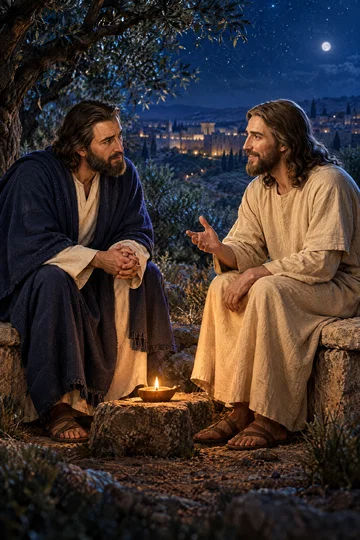
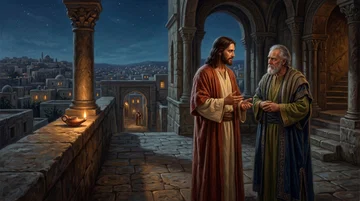
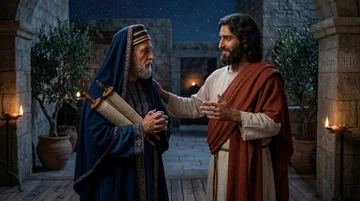
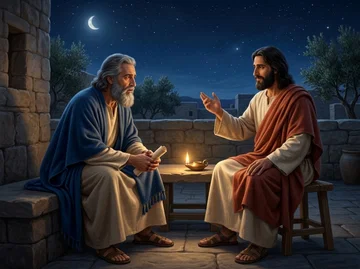
The words were spoken by Jesus to Nicodemus, a rabbi who came to Him by night after seeing His healing and teaching.ST Apr 15, 1886 They stand at the heart of His instruction that a person must be born again with a changed heart to see the kingdom, for natural traits, temperament and disposition must be transformed into Christ's likeness or none can enter heaven.Lt 55, 1895, par. 56–60Ms 62, 1910, par. 1–21MR 364.3–365.2 Believing in the lifted-up Son brings that regeneration of the soul and supplies the new heart needed to see God's kingdom, making the promise good news for the whole world.Lt 55, 1895, par. 56–60Lt 54, 1895, par. 50–54 In that answer the Son is set forth as the remedy for sin, faith in Him bringing salvation while rejection ends in perishing, and the call is to genuine change of heart rather than reliance on self or cherished faults, with the Son as Mediator enabling men to become sons and daughters of God.1MR 364.3–365.2Lt 180, 1902, par. 33–35
As Moses lifted up the serpent in the wilderness so that every bitten Israelite who looked would live, so the Son of Man must be lifted up, that whoever believes in Him should not perish but have eternal life.ST Jun 11, 1912Lt 223, 1905, par. 21–25Ms 82, 1905, par. 4–5Ms 3, 1909, par. 6–8Ms 53, 1905, par. 17 Believing is looking away from self and sin to the uplifted Saviour, receiving His testimony and trusting God's word, and as long as sinners look at themselves their wounds remain, but when they fasten their eyes upon Him as Healer of body and soul and Lamb who takes away sin they find hope, peace and life.ST Jun 11, 1912ST Apr 2, 1894 God sent His Son not to condemn the world but that the world through Him might be saved, so he who believes is not condemned while he who does not believe is condemned already for not believing in the name of the only begotten Son.ST Apr 2, 1894Lt 223, 1905, par. 21–25Ms 82, 1905, par. 4–5Ms 3, 1909, par. 6–8Ms 53, 1905, par. 17 That condemnation is that light has come into the world and men loved darkness rather than light because their deeds were evil, so everyone who does evil hates the light and will not come to it lest his deeds be reproved, while he who does truth comes to the light that his deeds may be shown to be wrought in God.Lt 223, 1905, par. 21–25Ms 82, 1905, par. 4–5Ms 3, 1909, par. 6–8Ms 53, 1905, par. 17Ms 62, 1910, par. 1–2
The message is laid out in distinct lines that set forth the terms of salvation plainly, alone enough to guide the soul and of greatest importance to every living soul and especially to those who counsel others.Lt 55, 1895, par. 56–60Lt 54, 1895, par. 50–54 It is expressed in simple, clear words that people of different backgrounds can understand and that cannot be misinterpreted, revealing God's love unto gratitude and softened hearts.Ms 2, 1892, par. 28–31 It is the message sinners need to hear, that Christ is their hope, whose power does not depend on learned proofs, eloquent speeches or elaborate arguments but on simple truth fitted to those who hunger for spiritual life.GW 155.1 It is to be used as Christ used it with Nicodemus, presenting new light and practical truth affirmatively without entering controversy, bringing awakened minds into contact with all light, since what is needed is not learning or argument but truth and a new heart.Lt 223, 1905, par. 21–25 So proclaimed as present glad tidings to a world cursed by sin, it declares that the Son came to bring light and life and free men from bondage, and that He will return in glory to receive those who have followed Him.STB 25.2
God's Boundless Universal Love
God's love in the verse is immeasurable, infinite, everlasting and beyond human comprehension, the most forcible expression of love for the human family, centered in the cross of Calvary whose full significance cannot be expressed in words or grasped by the mind.SPBC 189.4MH 423.2–424.18T 287.1Lt 55, 1895, par. 68 When humanity was deeply wicked and rebellion was at its height, God sent His Son to save rather than destroy, bringing relief to a helpless, ignorant race facing eternal ruin and loss. His gift is the fullest, complete evidence of love, with no greater gift and no reserve of grace, power or glory remaining to give, making His immeasurable love plain to all created beings. It is a love too great to measure, displayed when heaven was stirred with pity, and contemplating it uproots selfishness and leads to generosity, self-denial and willing service, so that even the most guilty transgressor can come and ask for pardon.Lt 55, 1895, par. 68
That love embraces the whole world and the whole fallen race, not merely a select few, for whosoever includes every person, parent and child.6T 273.1–2Ms 10, 1894, par. 19MR 235.1–3 It is for no particular nation, tribe, class or group, but reaches high and low, rich and poor, Jew and Gentile, of every race and condition, including those who seem degraded, hopeless or beyond help.RH Oct 27, 1904Lt 33, 1898, par. 19–207T 225.2 He gave His only begotten Son so that people may be saved through Him rather than condemned, intending them to be saved from their sins, with Christ's death purchasing humanity.6T 273.1–2 Whoever has living faith in a personal Saviour may escape perishing and receive everlasting life, and lacking that living faith leaves a person condemned, pointing to salvation from sin and not permission to disobey.Ms 10, 1894, par. 19MR 235.1–3
God loved undeserving sinners, enemies and rebels while they were yet sinners, loving people though hating their sin, and His mercy continues despite rebellion.Lt 72, 1890, par. 16–19Lt 24, 1895, par. 3Ms 84, 1894, par. 4 He loved the world even in its degradation under the curse, giving His only begotten Son so believers may have everlasting life rather than perish, because sinners cannot save themselves or atone for their errors and their hope is in the merits of Jesus Christ.Lt 24, 1895, par. 3ST Oct 10, 1900 This gift is the means of rescuing fallen people who cannot restore themselves, expressing a love greater than an earthly father's, measured by God's own power and character, with compassion and desire to restore His image in them.ST Feb 22, 1899 Though equal with God, Christ laid aside royal glory, took sinless human nature, and suffered as the just for the unjust, bearing sin's penalty as substitute and surety so that through His merits people may regain God's favor by returning to loyalty and obedience, a life-giving gift showing a love deeper and more enduring than parental love.Lt 17, 1893, par. 6–8
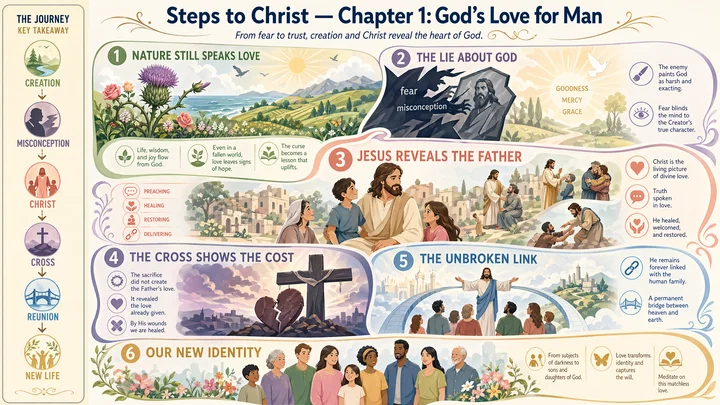
Christ's death did not create the Father's love or make Him willing to save or persuade Him to love people He otherwise hated; He already loved and gave His Son to sinners, and the Son reveals that pre-existing love.SPBC 189.4Lt 55, 1895, par. 68Lt 54, 1895, par. 63–64SC 13.2ST May 30, 1895 While men were still sinners and rebels against His law, God gave Jesus to bear their sins so pardon may come to all who believe, and Christ's death displays that love and makes it possible for mercy to pardon while justice is satisfied through a righteous substitute.Lt 55, 1895, par. 68ST May 30, 1895 The world's only hope was for One who knew no sin, One equal with God, to come and live the law, proving in humanity that it can be kept, so sinners might become partakers of the divine nature and thus obedient children of God.SPBC 189.4Lt 55, 1895, par. 68Lt 54, 1895, par. 63–64 God does not love because He gave His Son, but He gave His Son because He already loved so much, that people would believe in His tender love toward them, and in the pain Christ suffered in Gethsemane and on Calvary the Father Himself suffered also, in Christ paying the price of salvation.Ms 45, 1892, par. 1–3 Those who repent and believe may be pardoned through His merits, escape perishing and receive everlasting life, while those who refuse the crucified and risen Saviour are not cleared of guilt, for God is not willing that any shall perish but that whosoever will may come through Christ and live.SPBC 189.4ST May 30, 1895
The verse reveals God as tender, compassionate, merciful Father full of goodness and truth, correcting false pictures of Him as cold, heartless, severe, tyrannical or vindictive.Lt 72, 1890, par. 16–1913MR 243.2–244.1Ms 194, 1898, par. 3–5 His living connection with humanity in giving His only begotten Son gives reason to respect Him, showing Him as creator, benefactor and preserver, the Author of all good, able to fulfill His purpose in creating human beings.Ms 80, 1903, par. 12Ms 80, 1900, par. 6 Christ's compassion came from the Father's heart, bringing Him from heaven to take humanity upon Himself and moving Him to exceptional tenderness and sympathy toward fallen humanity.ST Aug 25, 1898 Contemplating the great plan of redemption discloses God's character: creation manifested His love, but giving Heaven's dearest gift to save a guilty and ruined race alone reveals the infinite depths of divine tenderness and compassion, upholding God's law and vindicating His justice while the believer in Jesus can be pardoned, with heavenly grace reaching the world through Christ.ST Jul 13, 190413MR 243.2–244.1
The greatness of the gift shows the worth God places on humanity, that every soul is precious, bought at infinite price and valued above all earthly wealth.RH Mar 5, 1908Lt 122, 1907, par. 10–13Ms 76a, 1900, par. 1Ms 90, 1894, par. 1 Jesus, heaven's richest gift, was given to pay the ransom for the human family, and when humanity was ready to perish God sent His spotless, sinless Son to die on the cross bearing human sins in His own body, to give opportunity to regain what was lost and to live unto God.Ms 76a, 1900, par. 1Ms 90, 1894, par. 1 No one is his own but belongs to the Lord by creation and redemption, and this infinite sacrifice joins people to God so Satan cannot hold anyone who accepts Christ as hope, life and personal Saviour.Ms 76a, 1900, par. 1Lt 98, 1893, par. 22–23 Christ, equal with the Father, laid aside His royal position and came as a human being through childhood, youth and adulthood in poverty and temptation, a gift immeasurably greater than any human offering, calling believers to value the Redeemer, truth and righteousness above earthly treasure.RH Mar 5, 1908 It is a treasure beyond gold or diamonds, bringing consolation and gladness now and eternal life to those who accept it, producing good deeds of greater worth, with life itself coming from God as Creator and source; those who refuse His offer, in which He gave all He had to give, will have no excuse in judgment.Lt 122, 1907, par. 10–13Ms 183, 1901, par. 1–2 God loves even the greatest sinner and the discouraged person tempted to think his sins have caused God to give him up and refuse pardon, but such thoughts are false temptation dishonoring God, for His thoughts and ways of mercy are far higher than human thoughts, and believing means truly receiving Christ and living His life, aiming to do His will and represent His character.Ms 76a, 1900, par. 1Lt 98, 1893, par. 22–23
Christ loves the world with an infinite love and gave His precious life as the Father's only begotten Son.STA 18.1–19.1
Son Given in Humanity
The Son given in the verse is fully divine, equal with the Father, the brightness of His glory and the express image of His person, in whom all fullness dwells.RH Mar 5, 1908Lt 17, 1893, par. 6–8Ms 31, 1907, par. 22SP 38.2STB 24.1 He was in the form of God, the beloved and only-begotten Son, one with God and full of grace and truth.Lt 42, 1896, par. 1Ms 143, 1906, par. 13–14CWP 4.1–2Ms 41, 1892, par. 13–16 His equality did not prevent His giving, for though equal He laid aside royal position, glory, homage, robe and crown to come to a world marred by sin and the curse.RH Mar 5, 1908Lt 17, 1893, par. 6–8Ms 31, 1907, par. 2ST Jul 22, 1913Lt 42, 1896, par. 1 The greatness of that condescension shows the gift to be immeasurably greater than any human offering, calling for the Redeemer, truth and righteousness to be valued above earthly treasure.RH Mar 5, 1908Lt 122, 1907, par. 10–13
In laying aside His status He took human nature without sin, took the form of a servant, and clothed divinity with humanity to reach, help and save fallen people.Lt 17, 1893, par. 6–82SP 38.2Lt 42, 1896, par. 1CWP 4.1–2Ms 115, 1902, par. 31 He came as a child in Bethlehem in poverty, lived through childhood, youth and adulthood, labored and suffered with humanity, and was tempted in all points as people are yet without sin.RH Mar 5, 1908Lt 42, 1896, par. 1Ms 143, 1906, par. 13–14Lt 59, 1896, par. 18–20Lt 144, 1907, par. 12–15 Though rich He became poor that believers might have eternal riches, though Maker of the world He emptied Himself so completely that He had nowhere to lay His head.STB 24.1Lt 144, 1907, par. 12–15 He became obedient even to death on the cross, enduring the most humiliating and agonizing death as the penalty of guilt so the sinner may stand guiltless and innocent.2SP 38.2Lt 59, 1896, par. 18–20Ms 115, 1902, par. 31 The word not in the promise matters, for it pledges escape from perishing to every individual who believes, giving each person individual value.Ms 143, 1906, par. 13–14
He was sent at the appointed time as heaven's Teacher, whose coming and work the prophets foretold and whose words carry supreme authority.ST Jun 24, 1897 He came as Example, Great Physician and Light of the world, living a perfect life, revealing the Father, living the law, sympathizing with weakness, and showing what people may become through Him.Lt 42, 1896, par. 1Ms 90, 1897, par. 6Ms 103, 1893, par. 5Ms 127, 1905, par. 14–15 His mission was to seek and save the perishing like a shepherd searching for a lost sheep, receiving sinners not from indifference to sin but to save the lost.ST May 28, 1912 That provision was heaven's means to restore God's moral image in humanity, reshape character damaged by disloyalty, and give power to overcome evil and become sons of God, though many have rejected it as worthless.Ms 90, 1897, par. 6Ms 103, 1893, par. 5Ms 127, 1905, par. 14–15
In giving the Son, all heaven was given with no reserve, the greatest and unspeakable gift beyond measure, with no greater gift or reserve of grace, power or glory remaining.9T 254.1Lt 122, 1907, par. 10–139T 59.3–4ST May 21, 1912 Having undertaken redemption, nothing needed to complete it will be withheld, and the gift brings consolation and gladness now with eternal life to those who accept it.9T 254.1Lt 122, 1907, par. 10–13 It is unmistakable evidence of love that makes immeasurable love plain to all created beings, reveals a tide of love greater than human gratitude, and brings full assurance of relief to a helpless race on the verge of eternal ruin under justice.9T 59.3–4RH Oct 3, 1907ST May 21, 1912 Contemplating it uproots selfishness and leads to generosity, self-denial, willing service and good deeds of greater worth than gold or diamonds, providing the pattern of liberality in which Christ gave Himself that others might be saved.Lt 122, 1907, par. 10–13RH Oct 3, 1907 Because heaven's best was given, even the most guilty transgressor can come and ask pardon, while refusal leaves no excuse in judgment.Lt 122, 1907, par. 10–13
The giving was not only to bear sins and die as sacrifice but to join the human family permanently, taking human nature to retain forever as pledge of unchanging peace.DA 25.3Ms 41, 1892, par. 13–16 He continues as Sacrifice, Advocate, Brother and Mediator, interceding for those who receive Him, introducing and presenting them to God as sons and daughters, and by His blood and merits giving them power to become members of the royal and heavenly family.STB 14.48T 177.4Ms 41, 1892, par. 13–16ST Aug 13, 19027MR 233.2–3 Through Him the human family is united to the family of heaven and bound to God in Christ who shares the throne, and sinners are restored to oneness with God, changed to the divine image, uplifted from ruin and made to reflect divine love.DA 25.3Ms 41, 1892, par. 13–167MR 233.2–3 The Father is satisfied with the atonement and glorified by the incarnation, life, death and mediation, showing His love for Christ by welcoming Christ's friends.STB 14.48T 177.4
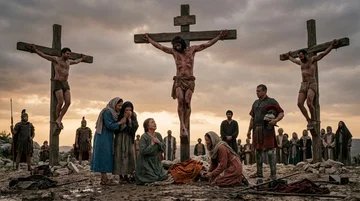
He who came on an embassage of mercy with a message of love was innocent, with no proof found against Him, yet He was not received.MYP 346.1Lt 79, 1900, par. 27–311MR 388.2–389.1RH Jan 23, 1900Ms 40, 1897, par. 16–18 He left His heavenly home for a sinful world where His purity and teachings were rejected, and He was given to a life of abuse, insult, mockery and rejection greater than any human can endure.MYP 346.1Lt 79, 1900, par. 27–311MR 388.2–389.1 He was scorned as a deceiver, hunted as a malefactor, betrayed and crucified as the worst of criminals by Jew and Gentile, priest and people, rulers, kings and governors, through the united working of Satan and evil angels with disloyal men resolved to put truth out of the world.RH Jan 23, 1900Ms 40, 1897, par. 16–18 The unfallen worlds and the heavenly universe of seraphim, cherubim and angels looked with amazement at that hatred, for by living the law in human nature He testified to them that rebellion against God and His law was without foundation and vindicated its immutability.RH Jan 23, 1900Ms 40, 1897, par. 16–18 Many witnesses of the crucifixion did not understand its meaning as God's love, though in it God in human flesh died to bring life and immortality to light, rose triumphant and ascended to make a home in heaven available to those who love and serve Him.MYP 346.1Ms 44, 1898, par. 3
Substitute Atoning Sacrifice
The innocent Just suffered for the unjust as substitute and surety, bearing the guilt, chastisement, curse, condemnation and wrath due to the world in order to uphold God's unchanging law and government.FE 429.38T 208.2STMW7 24.4Lt 255, 1903, par. 11Lt 17, 1893, par. 6–8 Because God loved the world He gave His Son, and Christ truly bore the punishment for the sins of the world so that whoever believes need not perish but may have everlasting life.FE 429.38T 208.2STMW7 24.4STE 25.4Lt 255, 1903, par. 11 The moment a sinner believes with repentance and faith he stands pardoned, innocent and uncondemned before God, because Christ bears his guilt and takes his punishment while His perfect obedience and righteousness are counted as the believer's.FE 429.3STMW7 24.4STE 25.4Lt 17, 1893, par. 6–8 Through that faith the sinner may receive His righteousness and become holy in character, yet must cooperate with divine power, strive to overcome sin, return to loyalty and obedience to the law, and thus stand complete in Christ.FE 429.3STMW7 24.4STE 25.4Lt 17, 1893, par. 6–8 Though equal with God, Christ laid aside royal glory, took sinless human nature, and came to a world marred by the curse to suffer as humanity's substitute and surety, and that life-giving gift is evidence of a love deeper and more enduring than parental love.Lt 255, 1903, par. 11Lt 17, 1893, par. 6–8
His blood paid the ransom price as propitiation for the sins of a guilty world, the only sufficient sacrifice that no angel or human could provide, securing pardon and another probation.Ms 82, 1900, par. 158T 25.3RH Nov 12, 1903RH Apr 16, 1901STGC 62.4 Love for the world moved God to leave nothing undone, to give His Son from the heavenly courts to die on Calvary, for only Christ could take away and remove the sin of the world.Ms 82, 1900, par. 15RH Apr 16, 1901STGC 62.4Ms 4, 1895, par. 4–5 Because humanity fell through sin and became subject to death, God's compassion provided relief at infinite cost, and apart from Christ the transgressor has no hope, for no human intercessor can provide salvation.Ms 82, 1900, par. 158T 25.3RH Nov 12, 1903 That death must not be in vain, but calls for simple faith, simple trust in God, and entire obedience to His requirements, since true faith works by love and purifies the soul.Ms 82, 1900, par. 15Ms 4, 1895, par. 4–5 God delights in the well-being and happiness of beings made in His image, and Christ's gift is the expression of that love.STGC 62.4
Through His life, death, resurrection and mediation sinners are reconciled, Satan is cast out, the barrier between humanity and God is removed, humanity is united to divinity and restored to God's moral image as partakers of the divine nature.SPBC 189.4Lt 55, 1895, par. 68Lt 54, 1895, par. 63–646T 236.1–238.1Ms 149, 1905, par. 9 God did not begin to love because Christ died, but while men were still sinners and rebels against His law He gave Jesus to bear their sins so that pardon may come to all who believe on Him.SPBC 189.4Lt 55, 1895, par. 68Lt 54, 1895, par. 63–64Ms 45, 1892, par. 1–3 The world's only hope was for One who knew no sin, One equal with God, to come to earth and live the law, proving in His humanity that the law can be kept, so that sinners might become obedient children of God.SPBC 189.4Lt 55, 1895, par. 68Lt 54, 1895, par. 63–64 Christ gave up His high command, took humanity upon Himself to stand at the head of the human race, made atonement for sin and secured redemption, and being lifted up He casts Satan out and becomes the center of the redeemed world drawing people back to loyalty.6T 236.1–238.1Ms 149, 1905, par. 9 He alone lifts lives and characters ruined by sin, restores in them God's lost image, reshapes character after His own divine character, and makes it possible to receive saving help, for God is not willing that any should perish but that whosoever will may come through Christ and live.SPBC 189.4Lt 55, 1895, par. 68Lt 54, 1895, par. 63–64Ms 149, 1905, par. 9Lt 21, 1893, par. 13–14
The Father suffered with the Son in Gethsemane and on Calvary, where Infinite Love paid redemption while the Son felt separation from the Father.Ms 45, 1892, par. 1–3Lt 100, 1911, par. 10–12ST Jan 27, 1898Lt 100, 1910, par. 10–11 God gave His well-beloved Son to die for sins, to suffer with and for humanity, and in Christ paid the price of salvation, so that to perish — to come to nothing — is set against everlasting life for whoever believes.Ms 45, 1892, par. 1–3ST Jan 27, 1898 Christ took upon Himself the penalty and punishment due to sinners, bore the sin of the whole world and died in the sinner's place, mocked and rejected by those He came to save.Ms 11, 1899, par. 25–26Lt 12, 1910, par. 10–11ST Jan 27, 1898 He took the cup of suffering as if He were the guilty one and drained it to the dregs, bearing the sin of the world to the bitter end, crying in agonized humiliation, My God, My God, why hast Thou forsaken Me, and still feels the consequences of continued sin as if He Himself were guilty.Lt 100, 1911, par. 10–12 In every pang of anguish are beheld the throes of paternal love, the Father Himself travailing in the greatness of His almighty love, a love revealed by the cross that no line can fathom and no measurement compute.Lt 100, 1911, par. 10–12 In His supreme agony when the mysterious cup trembled in His hand He was strengthened by a mighty angel to drink it with assurance of the Father's love, pointed to the open heavens and the souls that would be saved, assured that His Father is greater than Satan, that His death would utterly discomfit Satan, give the kingdoms of this world to the saints of the Most High, and let Him see of the travail of His soul and be satisfied in a multitude eternally saved.Lt 100, 1910, par. 10–11
Type met antitype in Him as the true Lamb and sin offering fulfilling sacrifices and Passover.ST Jan 2, 1893Ms 9, 1893, par. 22–24Ms 72, 1897, par. 8ST Apr 15, 1875Ms 72, 1901, par. 13 Christ, the maker of the law and the foundation of the whole Jewish economy, came in the image of God and by offering Himself rendered what justice required and made an ample sacrifice for all, because the broken law could not be changed to meet man in his fallen condition, being a transcript of God's character no more to be abolished than His throne.ST Jan 2, 1893Ms 9, 1893, par. 22–24 His offering was made at Passover and fulfilled the Jewish sacrifices, so that on the cross type met antitype in His death and the ceremonies connected with the temple services in types and shadows were taken away.Ms 9, 1893, par. 22–24Ms 72, 1897, par. 8Ms 72, 1901, par. 13 After His death sacrificial offerings have no moral efficacy, and the sacrificial system that kept people mindful of God and pointed forward to Christ as the perfect offering now points back to Him.ST Apr 15, 1875Ms 72, 1901, par. 13 Belief in the only begotten Son is the mark of blood on the doorposts, as every Christian must stain the doorposts and gather the children into the house so the destroying angel sees the acknowledgment of faith and passes by, and the Father's wrath fell upon the innocent Son whom He pronounced guilty so He may pass over the repentant sinner.Lt 16e, 1892, par. 38–40Ms 72, 1897, par. 8 Living in the day of increased light when type has met antitype, those who reject or neglect so great salvation will have no escape and will be without excuse.ST Jan 2, 1893
His sacrifice exposes sin as a tremendous evil, magnifies the law, defeats Satan's rebellion and vindicates God's character and government before the universe.6T 66.3Ms 77, 1893, par. 20–239T 44.3Ms 43a, 1894, par. 6–10Lt 15, 1898, par. 13–16 God could have removed sin by sweeping sinners from the earth, but instead gave His Son to save them, and the value of that costly sacrifice reveals how tremendous an evil sin is and how great is the value of salvation.6T 66.39T 44.3 The gift of the innocent, divine Christ to atone for sin shows how grave sin is and gives the guilty hope, life and pardon.Ms 77, 1893, par. 20–23 Christ gave His life to save humanity, and His coming into the world was part of His contest with Satan for its possession, to counterwork sin.Ms 43a, 1894, par. 6–10Lt 15, 1898, par. 13–16Lt 24, 1893, par. 3–4 Against the dishonor brought on God by sin and the lies of Satan, the verse sets the call to accept salvation rather than perish.Lt 24, 1893, par. 3–4
Believing Living Faith
Believing is looking away from self and sin to the uplifted Saviour, just as the bitten Israelites lived simply by looking at the brazen serpent Moses lifted on a pole because God said it.ST Jun 11, 1912ST Apr 2, 1894Ms 155, 1898, par. 5Ms 1, 1889, par. 28–32 As Moses lifted up the serpent in the wilderness so that everyone who looked would live, so the Son of Man must be lifted up so that whoever believes in Him should not perish but have eternal life, for God gave His Son to save the world, not to condemn it.ST Jun 11, 1912ST Apr 2, 1894Ms 155, 1898, par. 5Lt 98, 1893, par. 1–3 No great work is required, only the look of faith in obedience to God's word; those who look live, while those who stop to reason and argue die.Ms 1, 1889, par. 28–32Lt 98, 1893, par. 26–27 As long as sinners look at their sins and talk of their wretched condition their wounds remain, but when they take their eyes from themselves and fasten them upon Him their souls find hope and peace and everlasting life in answer to the call to look and live.ST Jun 11, 1912ST Apr 2, 1894 Christ speaks this now as certainly as He spoke healing to Israel in the wilderness, as the Healer of both body and soul and the Lamb who takes away the sin of the world.ST Jun 11, 1912ST Apr 2, 1894 The call is look and live through trust in the unseen, invisible God as helper, believing He died for you and His blood cleanses from all sin however grievous, without waiting to feel He is Saviour, and receiving the priceless gift instead of mourning in unbelief.Lt 98, 1893, par. 1–3Lt 98, 1893, par. 26–27 The only begotten Son so given in love is One equal with God, who accompanied Israel in the wilderness in the pillar of cloud by day and pillar of fire by night and did wondrous things for them despite their perversity and rebellion and murmuring, when they treated His care as common and failed to trust Him in hardship.Lt 98, 1893, par. 1–3
Saving faith is more than casual assent or merely acknowledging that Jesus is the Son of God; casual faith does not bring the blessing, and general belief by the whole world does no good without a personal hold.ST Oct 25, 1899Ms 24, 1895, par. 3–4 It must be a faith centered in Jesus that makes Christ a personal Saviour, by which a person knows Christ is my Saviour and can say He saves me, trusting God's word and Christ as the one who saves rather than relying on human advisers.ST Oct 25, 1899Ms 24, 1895, par. 3–4 It is accepting Christ as a personal, sin-pardoning Saviour, laying hold of His merits, coming to Him in humility, contrition and sincere repentance, which is essential for salvation of the soul and contains the whole science of salvation.Lt 148, 1901, par. 6–8Lt 42, 1896, par. 1Lt 206, 1908, par. 2–3 Whoever so comes receives pardon, has sins taken away and His righteousness imputed, with the Holy Spirit presenting the things of Christ to the earnest suppliant so that salvation is ensured, while faithlessness offers no virtue or hope.Lt 148, 1901, par. 6–8Lt 206, 1908, par. 2–3 Attending meeting and making effort to enjoy religion is not enough without this personal hold, for so much depends on taking God at His word.Lt 42, 1896, par. 1Ms 24, 1895, par. 3–4
The moment a sinner believes he stands pardoned and innocent, uncondemned before God, because Christ truly bore the punishment for the sins of the world and bears his guilt and takes his punishment.FE 429.3STMW7 24.4STE 25.4 Christ's perfect obedience is counted as the believer's, His righteousness and perfect obedience credited to sinners through repentance and faith, guilt borne by Christ, sins removed and righteousness imputed.FE 429.3STMW7 24.4STE 25.4Lt 148, 1901, par. 6–8 The promise is received by faith accepting the merits of that blood shed so sinners need not be destroyed but may live forever, for God has laid all power upon Christ to give help to everyone who breaks with Satan and acknowledges Christ as his only hope.Ms 8, 1914, par. 3 Through that faith the sinner becomes like Christ in holiness of character, yet he must cooperate with divine power and put forth human effort to subdue sin and stand complete in Christ.FE 429.3STMW7 24.4STE 25.4 The one who repents and accepts cannot be overcome but becomes a child of God by laying hold on the divine nature by faith, praying and believing, and when tempted and tried claiming the power Christ died to give and overcoming through His grace.Ms 117, 1908, par. 12–13
Through faith believers are joined to Christ and joined to eternal life, with Christ's life in him and his life hid with Christ in God, so that when Christ who is his life appears he will appear with Him in glory.Ms 21, 1895, par. 4–6 Believing in Christ means a living connection with God and laying hold of the merits of the crucified and risen Savior, the truth received in the heart bringing a decisive change, sanctifying life and character and bearing fruits of righteousness.Ms 1, 1889, par. 2–5 Those who receive this gift are sanctified, cleansed, and empowered to become God's children, receiving power to become sons of God by believing on His name; Christ removes sin's destructive tendencies and restores people to their intended relationship with God.Lt 42, 1896, par. 1Ms 176, 1902, par. 2–4 Upon the one who looks to Jesus as the author and finisher of faith Satan's temptations have no power, for Satan cannot cause to sin the one who accepts by faith the virtues of Christ who was tempted in all points yet without sin.Ms 117, 1908, par. 12–13 Every sinner must repent, believe in the power of Christ, and accept that power both to save and to keep from sin, and be thankful for the gift of Christ's example.Ms 117, 1908, par. 12–13
True belief works by love and purifies the soul, making religion the spiritual life and the consecration of a renewed heart, calling for simple faith, simple trust in God, and entire obedience to His requirements.Ms 4, 1895, par. 4–5 Believing includes repenting of sin and accepting Christ's gift and power: by faith in His divine nature the sinner becomes a child of God and can resist temptation and overcome through Christ's grace.Ms 117, 1908, par. 12–13 Accepting this free gift makes a person a partaker of Christ's righteousness and complete in Him, the Lord's love burning in the heart as converting power that transforms character and life and is the believer's first love.Ms 40, 1894, par. 15Ms 151, 1904, par. 5–9 Disobedience to God's law shows that a person has not accepted Christ's righteousness; a claim to sanctification that goes against God's plain commands is false, and such actions deny the Lord who bought them.Ms 40, 1894, par. 15 The gift was made so that people would be filled with divine love and kindness, to assure sinners that even sins of the greatest magnitude are forgiven when the transgressor seeks pardon and surrenders body, soul, and spirit to be transformed by grace and changed into God's likeness, and God claims entire affection in return, meeting the soul's deepest need for eternal welfare.Lt 79, 1900, par. 27–31
Its promise is the word of eternal life and gives sure assurance to those who take hold of the gospel by living faith; confidence in being God's child rests on this promise, not on changeable feelings or emotions.Ms 10, 1891Ms 10, 1891, par. 1–2 Belief in Christ brings life, power, grace, and salvation, and encouraging and speaking faith helps strengthen it, while speaking and fostering doubt deepens doubt.Ms 66, 1895, par. 6 All that is required is to take Jesus as personal Saviour, to come to Him just as one is, to give self to Him, and to grasp His promises by living faith without doubting that He will save now, proving Himself a personal friend to each sinner able to save to the uttermost all that come to Him.Lt 97, 1895, par. 54–55 The promise belongs to every individual, including the discouraged person tempted to believe his sins have caused God to give him up to the enemy and refuse him pardon; such thoughts are false, come from temptation, and dishonor God, to whom the sinner belongs by creation and redemption.Lt 98, 1893, par. 22–23 When Satan tries to fasten the burden of sin and guilt back after it has been cast at the foot of the cross where the Sin-bearer has taken it, reading the verse answers him, and looking away from self to the Lamb of God who takes away sin ends the controversy for that time, while relating doubts, unbelief, and horror of being lost cannot repulse Satan but pleases him who wants to make miserable.Lt 98, 1893, par. 29 The giving of the Son means He was wounded for transgressions, bruised for iniquities, chastised for peace, and with His stripes healing comes.Lt 98, 1893, par. 29
The intensity of the love God has for every soul in giving His only begotten Son so that whoever believes in Him will not perish but have everlasting life is discerned by following on to know the Lord step by step.Lt 211, 1905, par. 20–21Lt 225, 1905, par. 14–15 Many professed believers joined together in church capacity fail to do this because they do not have all the truth, are not obedient to all the commandments, and in many cases are backsliders.Lt 211, 1905, par. 20–21Lt 225, 1905, par. 14–15 Knowing Jesus Christ and the Father calls for a living connection with God and the grace that makes religious profession genuine, among the marvelous blessings expected by faithful, humble followers who continue to know the Lord.Ms 117, 1909, par. 36Lt 106, 1909, par. 15 True knowledge includes knowing what was done to make it possible to receive the knowledge of the truth: Christ gave His life so His righteousness might be imparted to unworthy people, purchasing them and cutting them loose from the enemy to give opportunity to obtain a knowledge of God, taking away sins and filling their place with the knowledge of the truth.Ms 62, 1901, par. 3–5 This personal experience must be obtained by all who enter through the gates into the City, best received by imparting to others the light received, with every soul called to account for how the light and time given to prepare for the mansions Christ is preparing are used.Ms 62, 1901, par. 3–5
Satan has interposed himself between sinful man and the living source of life and power after man fell through disobedience and severed his life from the life of God, so man of himself cannot appropriate the divine nature.Ms 48, 1895, par. 6 Without a vital connection with God man perverts every blessing and uses every gracious gift as a weapon against the Giver, and only as human beings receive Christ can God bless them, elevating them and placing them on vantage ground, Christ having stooped to take humanity so that through Him man might gain eternal life and in humanity defeated the purposes of the enemy.Ms 48, 1895, par. 6 Believing in Him means accepting Christ as a personal Saviour, and that decision enlists a person in the army of the Lord as a volunteer soldier of the cross, leaving the black banner of the power of darkness to stand under the blood-stained banner of Prince Emmanuel, with constant study to show oneself a faithful soldier.Ms 65, 1901, par. 2 Each person's responsibility is to believe in Christ; the presence of wrongdoers in the church is no excuse for refusing to believe.Ms 2, 1893, par. 7–8 God did not send His Son into the world to condemn the world but that the world through Him might be saved; he who believes is not condemned, but he who believes not is condemned already, the condemnation being that light has come and men love darkness rather than light because their deeds are evil, while he who does truth comes to the light so his deeds may be made manifest as wrought in God.Lt 211, 1905, par. 20–21
Perishing and Everlasting Life
To perish is to come to nothing, to fall into eternal death and hopeless ruin under the just penalty of a broken law, and the promise is that everyone who believes will be delivered from that doom and saved from ruin.Ms 45, 1892, par. 1–3RH May 28, 1901Lt 44, 1909, par. 13–14ST Dec 5, 1892ST Jun 13, 1900 The whole world has broken the law and stands as enemies with carnal minds at war against God, without strength to do any good thing, and the holy law as a moral mirror convicts of that evil state and hopeless distress.ST Dec 5, 1892 Yet God did not leave sinners in the distress into which sin plunged them, but He who was equal with God gave His life on Calvary, covering the soul as the Samaritan covered the wounded man who represents the lost race.ST Dec 5, 1892ST Jul 23, 1894 The gift came at the cost of the life of the spotless Son alone who could bear guilt, for He suffered with and for humanity in Gethsemane and on Calvary where the Father Himself suffered in Him and paid the price of salvation, a love at which angels wondered.Ms 45, 1892, par. 1–3Lt 44, 1909, par. 13–14 His suffering and death make it possible to avoid perishing, for He is the sacrifice provided for sinful people who had nothing to offer, the proof of immeasurable love, and those who repent and receive Him as personal Saviour are saved while those who refuse face eternal death.RH May 28, 1901ST Jun 13, 1900
Everlasting life is life that measures with the life of God Himself, lasting as long as His own life, an eternity of glory and bliss and immortality in His kingdom received as reward and inheritance.ST Sep 15, 1909Ms 2, 1893, par. 5Ms 116, 1909, par. 11–14Ms 43, 1894, par. 17–19Ms 192, 1907, par. 12–13 It is God's crowning gift in the plan of redemption, purchased by the infinite sacrifice of Jesus Christ who paid the price for the sins of the whole world to save from perdition and set feet on the Rock of ages.ST Sep 15, 1909Ms 2, 1893, par. 5RH Oct 22, 1908 Coming to Him gives that life, and to the question what shall be done to inherit eternal life the answer is to serve God with all the powers of the mind.Ms 2, 1893, par. 5 The invitation is to come as we are, ask for blessing, and receive life through faith in Him, for whoever entrusts a helpless soul to Jesus and believes in His merits will have faith that works by love and purifies the soul.Ms 116, 1909, par. 11–14Ms 192, 1907, par. 12–13 Believing is more than casual assent, for it is a living faith that connects to God, accepts Jesus as personal Saviour, and lays sins upon Him with trust that He takes them away.Ms 43, 1894, par. 17–19
Eternal life is God's free gift through His Son, received by grace through faith and not of ourselves, and even when dead in trespasses and sins God provided a way to raise believers to sit in heavenly places with Christ to show the exceeding riches of His grace in kindness in ages to come.Ms 162, 1903, par. 13Lt 33, 1895, par. 8–11Ms 16, 1895, par. 4–5 Cooperation with God as He works within does not pay for salvation or make it anything other than free, though living faith bears fruit, for belief in Christ is joined to a life whose genuineness is shown through self-denial and self-sacrifice for Christ and suffering people and no one enters heaven without such a life.Lt 33, 1895, par. 8–11Lt 41, 1890, par. 6–71MR 89.2 Heaven was purchased at infinite price, and Christ bore the penalty of the sins of the whole world to meet the law's demands, opening the fountain of life so fallen people may repent, accept a personal Saviour, confess and forsake sin, be pardoned and forgiven, and be guarded by angels from satanic delusions.Ms 162, 1903, par. 13Lt 41, 1890, par. 6–7Lt 248, 1906, par. 22 Believing on Jesus is working the works of God and gives worth to the soul, and those yoked with Him receive peace, comfort, hope and rest on a foundation that will not be swept away, while anyone who does not appreciate this kindness robs his soul of heaven's richest blessings.Ms 16, 1895, par. 4–5
The gift brings present blessings as well as future life, for through that one gift every other gift is imparted and daily the whole world receives blessing from God.COL 301.3–302.2Ms 70, 1896, par. 2–4STMW7 23.1 Every drop of rain, every ray of light shed on the unthankful race, and every leaf and flower and fruit testifies to long forbearance and great love, and by redemption no less than by creation the whole earth belongs to God as His vineyard though now in the hands of the usurper.COL 301.3–302.2 Life itself is a manifestation of that love, a talent committed to human care that is very costly in light of the Son's sacrifice, expressing God's ownership since people derive life from Him as Creator and Source of all life and belong to Him by creation and doubly by redemption as beings formed in His image for a higher life.Lt 164, 1900, par. 2–5 Accepting Jesus brings the blessings of life, health, friendship, reason and happiness, and calls to acknowledge His ownership, serve willingly, do duty toward God on whom depend life, health and the blessings of fields and herds, and share the knowledge of His love, justice, mercy and greatness with others.Lt 48, 1888, par. 23–24Lt 11, 1893, par. 5–7STMW7 23.1 God withheld nothing however dear or costly that was needed to give gift upon gift and open heaven's treasures, and everyday mercies are thus connected with the atoning sacrifice.Lt 48, 1888, par. 23–24Ms 70, 1896, par. 2–4
The gift grants probation, another opportunity and trial to return to loyalty, prove obedience, form character after the likeness of Christ, and find abundant entrance into the kingdom.ST May 21, 1912Ms 4, 1902, par. 24Ms 63, 1897, par. 25–2821MR 464.2 The race stood on the verge of eternal ruin under incensed justice, helpless and ignorant, and the Father gave the greatest gift in His power, pouring out heaven's treasures with such largeness that no reserve grace or power or glory remains, giving all opportunity, privilege and grace of the Spirit.ST May 21, 1912 Because justice is the foundation of His throne and the evidence of His love, He could not abolish the law which reveals His character, but carried out the penalty upon a substitute, His only begotten Son, giving Himself in His Son and in that gift giving all heaven as the only provision He could make.Ms 63, 1897, par. 25–28 The Son lifts guilt by standing under the condemnation of the Lawgiver and living the law in humanity to disprove the charge that man cannot keep it, so that through imputed righteousness all who receive Him by faith are made partakers of the divine nature and can show loyalty by keeping the law.Ms 63, 1897, par. 25–28 This infinite sacrifice for sinners to seek and save the lost was repeated during every moment of Christ's life as a man of sorrows, bearing the sin of the world to the bitter end and still feeling the consequences of continued sin, and at the judgment the lost will recognize the sacrifice at Calvary and the pure fellowship they refused and realize their loss too late.Ms 4, 1902, par. 24Lt 100, 1911, par. 10–12 The gift therefore calls redeemed free moral agents to live as loyal subjects rather than remain under sin's power, giving the whole heart in willing service to Him who died on Calvary's cross.ST May 21, 1912MYP 29.2–30.1
Whosoever includes every person, parents and children, for God gave His Son for the whole fallen world and not merely a select few, and whoever has living faith in a personal Saviour receives everlasting life while lacking that faith leaves a person condemned, which promise alone is enough to condemn.Ms 10, 1894, par. 19MR 235.1–3 God sent the Son to save and not to condemn, so believers are not condemned while unbelief leaves a person condemned already, because light has come and those who do evil love darkness rather than light and avoid it while those who do truth come to it that their deeds may be seen as wrought in God.Lt 296, 1904, par. 8–10 In Christ's death propitiation was made for every son and daughter of Adam, yet those who could lay sins on the Sin-bearer but choose to keep them refuse to come for life, and for them His death is in vain.Ms 87, 1903, par. 11–12 No human friend can pay the ransom, and the time will come when such will know they are forsaken and eternally lost, seeing too late what was lost with hearts filled with remorse and despair even while burning with hatred, in contrast to Christ who in suffering felt no remorse, despair or hatred.Ms 87, 1903, par. 11–12 Turning from Christ for worldly wealth or status rejects the great salvation placed within reach at infinite cost, fails to value what He has done, obstructs the flow of benevolence through human agents, and bears witness to contempt for His sacrifice, though sin has disturbed that flow for ages without cutting it off from earth.Ms 138, 1902, par. 5Lt 52, 1895, par. 4–5Lt 296, 1904, par. 8–10
God's care for those who love and fear Him is grounded in this gift of His only Son so that everyone who believes may escape perishing and receive everlasting life.Ms 12, 1898, par. 1 Through Christ all that was lost by yielding to Satan can be regained, salvation from the destroyer's power and restoration to God's image, and those who accept become God's children humbling themselves before Him as little children.JIOKP 37.2–3 Every person may join God's family, made possible by the beloved Son dying a shameful death, and people are called to prepare for that life by learning to do right.Ms 95, 1906, par. 65–77 God does not desire the sinner's death or want anyone to perish, but lovingly draws the sinner back that each person may have life through Jesus' death.SC 53.2–54.1 He desires all to receive eternal life through believing and obeying His word, for Christ came in human form to show what people may become through obedience, and His grace enables sharing in the divine nature and escape from the world's corruption.MWISDAP 10.1–3
Sources