Acts 9:3
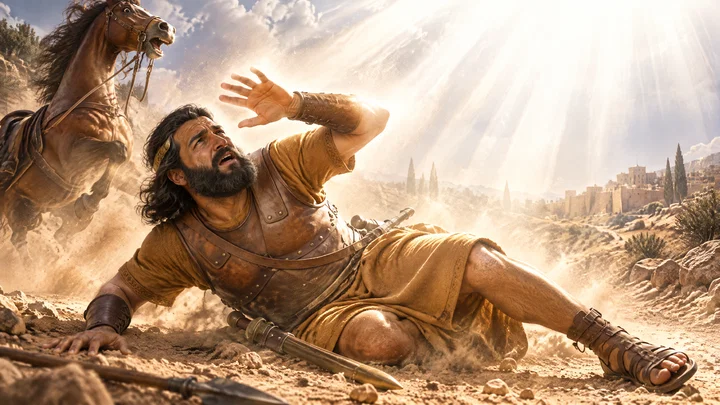
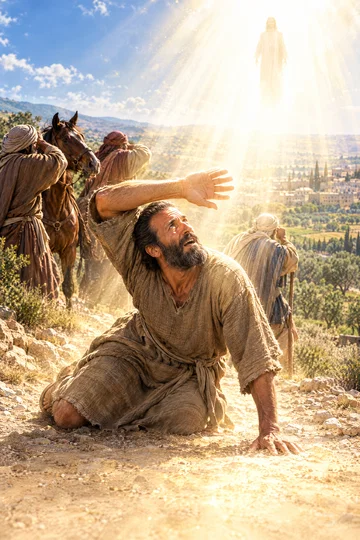
And as he journeyed, he came near Damascus: and suddenly there shined round about him a light from heaven:
Translations
American King James Version, King James Version, KJV Cambridge Paragraph Bible
And as he journeyed, he came near Damascus: and suddenly there shined round about him a light from heaven:
And as he journeyed, he came near Damascus: and suddenly there shined around him a light from heaven:
Revised Version, American Standard Version
And as he journeyed, it came to pass that he drew nigh unto Damascus: and suddenly there shone round about him a light out of heaven:
And in the going, he came nigh to Damascus, and suddenly there shone round about him a light from the heaven,
But as he was journeying, it came to pass that he drew near to Damascus; and suddenly there shone round about him a light out of heaven,
But, as he was journeying, it came to pass that he was drawing near unto Damascus, and, suddenly, there flashed around him a light out of heaven;
Berean Standard Bible, Majority Standard Bible
As Saul drew near to Damascus on his journey, suddenly a light from heaven flashed around him.
As he traveled, he got close to Damascus, and suddenly a light from the sky shone around him.
And while he was journeying, he came near Damascus; and suddenly he saw a light from heaven shining round him;
Now as he iourneyed, it came to passe that as he was come neere to Damascus, suddenly there shined rounde about him a light from heauen.
Douay-Rheims (Challoner revision)
And as he went on his journey, it came to pass that he drew nigh to Damascus; and suddenly a light from heaven shined round about him.
Pictures
Cross-references 20 of 60
- Acts 26:13-15
At midday, O king, I saw in the way a light from heaven, above the brightness of the sun, shining round about me and them which journeyed with me.
Paul recounts the heavenly light and his encounter with Jesus.
- Acts 22:6-8
And it came to pass, that, as I made my journey, and was come nigh unto Damascus about noon, suddenly there shone from heaven a great light round about me.
Paul recounts the heavenly light and his encounter with Jesus near Damascus.
- Acts 7:58-60
And cast him out of the city, and stoned him: and the witnesses laid down their clothes at a young man’s feet, whose name was Saul.
Saul witnessed Stephen’s death before his conversion.
- Acts 9:15
But the Lord said unto him, Go thy way: for he is a chosen vessel unto me, to bear my name before the Gentiles, and kings, and the children of Israel:
The Lord names Saul a chosen vessel after stopping him on the road.
- Acts 9:17
And Ananias went his way, and entered into the house; and putting his hands on him said, Brother Saul, the Lord, even Jesus, that appeared unto thee in the way as thou camest, hath sent me, that thou mightest receive thy sight, and be filled with the Holy Ghost.
both given as proof Jesus appeared to Paul
- Galatians 1:17
Neither went I up to Jerusalem to them which were apostles before me; but I went into Arabia, and returned again unto Damascus.
Paul says he went to Arabia after his conversion near Damascus.
- 1 Corinthians 15:8
And last of all he was seen of me also, as of one born out of due time.
Paul says the risen Christ appeared to him.
- Acts 8:1-4
And Saul was consenting unto his death. And at that time there was a great persecution against the church which was at Jerusalem; and they were all scattered abroad throughout the regions of Judæa and Samaria, except the apostles.
Saul persecuted the church, scattering believers who preached as they went.
- Acts 9:20
And straightway he preached Christ in the synagogues, that he is the Son of God.
After his encounter, Saul begins preaching Christ as the Son of God.
- 1 Corinthians 9:1
Am I not an apostle? am I not free? have I not seen Jesus Christ our Lord? are not ye my work in the Lord?
Paul cites having seen Jesus as evidence of his apostleship.
- Acts 7:56
And said, Behold, I see the heavens opened, and the Son of man standing on the right hand of God.
Stephen’s vision of the Son of Man returns to Saul’s mind during the revelation.
- Acts 26:9-11
I verily thought with myself, that I ought to do many things contrary to the name of Jesus of Nazareth.
Paul recalls opposing Jesus’ name and persecuting his followers before his conversion.
- Acts 22:14
And he said, The God of our fathers hath chosen thee, that thou shouldest know his will, and see that Just One, and shouldest hear the voice of his mouth.
Ananias says Saul was chosen to see the Righteous One.
- Acts 22:17-21
And it came to pass, that, when I was come again to Jerusalem, even while I prayed in the temple, I was in a trance;
Paul recounts the Jerusalem vision and his call to the Gentiles.
- Galatians 1:16
To reveal his Son in me, that I might preach him among the heathen; immediately I conferred not with flesh and blood:
Christ was revealed to Paul on the way, calling him to preach among the Gentiles.
- 1 Timothy 1:13
Who was before a blasphemer, and a persecutor, and injurious: but I obtained mercy, because I did it ignorantly in unbelief.
Paul recalls persecuting Christ’s followers in ignorance and obtaining mercy.
- Acts 26:15-16
And I said, Who art thou, Lord? And he said, I am Jesus whom thou persecutest.
Paul recounts Christ’s appearance and appointment of him as a witness.
- Galatians 1:13-14
For ye have heard of my conversation in time past in the Jews’ religion, how that beyond measure I persecuted the church of God, and wasted it:
Paul recalls his former life of persecuting the church and zeal for ancestral traditions before Damascus.
- Acts 9:27
But Barnabas took him, and brought him to the apostles, and declared unto them how he had seen the Lord in the way, and that he had spoken to him, and how he had preached boldly at Damascus in the name of Jesus.
Barnabas reports that Saul saw the Lord on the way to Damascus.
- Philippians 3:5-6
Circumcised the eighth day, of the stock of Israel, of the tribe of Benjamin, an Hebrew of the Hebrews; as touching the law, a Pharisee;
Paul recounts his Pharisaic standing and former zeal as a persecutor.
Commentary
Each commentary is drawn from primary sources: the writings of Ellen G. White and Adventist pioneers and periodicals. Each commentary is separate. Its own words are not a quotation; follow the references to read the source passages.
Ellen G. White
78 sources
As he neared Damascus at midday on a determined mission with the high priest's commission to seize believers for imprisonment and death, Saul was suddenly surrounded by a light from heaven.RH Mar 6, 1900Ms 46, 1899, par. 4–6AC1 38.2–37RED 38.2–3 The light was brighter than the midday sun, the glory of Jesus the crucified, risen and enthroned Messiah flashing around him and his companions and felling him to the earth.Ms 17, 1908, par. 18–28Ms 8, 1900, par. 2–3AC1 38.2–37RED 38.2–3SG1 90.1 In that revelation he learned that in persecuting Christ's followers he was persecuting Christ Himself, doing Satan's work while thinking he served God.Ms 46, 1899, par. 4–6AC1 38.2–3ST Jun 23, 1887 The glory convicted him of sin and guilt under the law, leaving him blind, helpless, humbled and abhorring himself until he cast himself on Jesus for pardon and spiritual sight.Ms 46, 1899, par. 4–6Ms 46, 1900, par. 16–213T 432.2AA 120.3–121.1Lt 54, 1874, par. 79–80 By overwhelming evidence he was turned from bitter persecutor to penitent believer and chief apostle to bear Christ's name to Jews and Gentiles, yet Christ sent him to Damascus to learn duty and receive sight and the Holy Ghost through Ananias and His organized church.Ms 95, 1899, par. 3–53T 432.2ED 65.3–43SP 320.1ST Apr 23, 1885
Journey Toward Damascus
As he journeyed he came near Damascus on a determined mission to find believers in Christ and seize them for trial and punishment in Jerusalem. RH Mar 6, 1900Ms 95, 1899, par. 3–5EW 166.1 He went to arrest any Christians he could find, to threaten and kill the Lord's disciples, to take men and women for imprisonment and death, exceedingly mad against them and breathing threatenings and slaughter. RH Mar 6, 1900Ms 46, 1899, par. 4–6Ms 8, 1900, par. 2–3Ms 95, 1899, par. 3–5 He acted with a commission from the high priest in full zeal and in the strength of manhood, expecting success, honor and applause in his career of persecution. RH Mar 6, 1900Ms 8, 1900, par. 2–3 His course was cut short when a sudden light from heaven shone round about him, drove away the evil angels accompanying him, felled him to the earth, left him physically blind, and opened his spiritual understanding to know God and Jesus Christ. RH Mar 6, 1900Ms 46, 1899, par. 4–6Ms 8, 1900, par. 2–3EW 166.1 By that revelation he saw that in persecuting Christ's followers he had persecuted Christ Himself. Ms 46, 1899, par. 4–6Ms 8, 1900, par. 2–3
He came near the city after a long journey, at midday looking over its fertile land, gardens, orchards and streams with his companions admiring the countryside. AC1 38.2–37RED 38.2–33SP 306.2–307.1 At the gate of Damascus the encounter reversed his course, for he who meant to arrive in power to seize believers saw the crucified and risen Christ who had died, risen and ascended to heaven. AC1 38.2–37RED 38.2–33SP 310.2–311.1AA 436.3 Instead of entering in power he entered blind, helpless and dependent on his companions, tortured by remorse and unsure what the Lord would do with him, under sentence of death. 3SP 310.2–311.1AA 436.3
He traveled with companions who were struck with terror by the light, which was brighter than the sun and overwhelmed them all. AC1 38.2–37RED 38.2–33SP 306.2–307.1SLP 22.2 Its intensity nearly blinded them, and they heard a voice but saw no one and could not understand what was happening. 7RED 38.2–3SLP 22.2 Saul himself fell to the ground, saw Jesus the Son of God identifying Himself, and heard Him speak face to face. AC1 38.2–37RED 38.2–3SLP 22.2 That sight remained imprinted on him, bringing a flood of light to his darkened mind to expose his ignorance and error that in opposing Christ's followers he was opposing Jesus and doing Satan's work while thinking he served God. AC1 38.2–33SP 306.2–307.1SLP 22.2
Light From Heaven
Suddenly, as he neared Damascus, a light from heaven flashed round about him and his companions, brighter than the sun and above the glory of the midday sun.AC1 38.2–37RED 38.2–3RH Mar 16, 19113SP 306.2–307.1 That light was the glory of Jesus, the crucified and risen Messiah, the Son of God revealing Himself to Saul.AC1 38.2–37RED 38.2–3RH Mar 16, 1911 Saul saw Jesus in the light and heard Him speak and identify Himself, while his companions were struck with terror, heard a voice but saw no one, were nearly blinded, and could not understand what was happening.AC1 38.2–37RED 38.2–3SLP 22.2 The shining came through close connection between heavenly agencies and men on earth.Ms 17, 1908, par. 18–28
The light felled him to the earth and drove away the evil angels surrounding and accompanying him.Ms 8, 1900, par. 2–3SG1 90.1EW 166.1 When the light was withdrawn he was left physically blind, so that instead of entering Damascus in power he entered blind, helpless, dependent on his companions, tortured by remorse.RH Mar 16, 1911RH Jun 3, 19023SP 310.2–311.1 The blindness was given that he might receive spiritual sight, with days and nights for reflection in which the law condemned his thoughts, words, and actions until, no longer seeing himself righteous but sinful, he abhorred himself in bitter remorse and cast himself hopeless and helpless on Jesus to pardon him and clothe him with righteousness.RH Jun 3, 1902 Its intensity terrified his companions, and the sight of the Son of God remained imprinted on Saul, while a lasting effect remained in his eyes as a mark of Christ's glory and sustaining grace.SLP 22.2
The shining was the Lord's own work, Christ as Commander of heaven intervening and bringing Saul directly into His presence.Ms 17, 1908, par. 18–28Ms 8, 1900, par. 2–3AA 120.3–121.13SP 313.1Ms 57, 1909, par. 7–9 Beholding the suffering brought upon His church by one exceedingly mad against believers and determined to seize men and women for imprisonment and death, He caused the light to shine suddenly to arrest Saul, stop him in his course, and convict him of sin.Ms 8, 1900, par. 2–3AA 120.3–121.1 All heaven is interested in the believing church of God, and in heaven there is an observer of all that is done who works to preserve His people and to open the way before His disciples who put their trust in Him.Ms 8, 1900, par. 2–3Ms 57, 1909, par. 7–9 This was Christ's own work of revelation and conviction, begun in the light and leaving Saul blind to prepare him afterward to learn God's will and duty from the appointed disciples and church.AA 120.3–121.13SP 313.1
Saul The Persecutor
Saul was educated by the most learned teachers of the age, taught by Gamaliel, and stood as a rabbi, statesman and member of the Sanhedrin.RH Mar 6, 1900Ms 95, 1899, par. 3–5 His early education had blinded him to the light and led him to oppose God's work.SLP 105.1 Yet on the road where Jesus revealed Himself to him, that learned and zealous persecutor who had consented to Stephen's death was chosen to preach His name, strengthen the disciples and take up the work Stephen had done.SG1 89.1
He was exceedingly zealous for the suppression of Christianity, acting a part in the stoning of Stephen and making havoc of the church by entering houses and committing men and women to prison.RH Mar 6, 1900Ms 95, 1899, par. 3–5 He blasphemed Christ's name and used every means in his power to make others blaspheme it.Lt 107, 1904, par. 7–14 He had joined those who rejected the gospel brought after the crucifixion in the power of the Holy Spirit, stoning Stephen, killing James, and imprisoning men and women.Ms 29, 1898, par. 14–15
He journeyed toward Damascus in mistaken zeal and in the strength of manhood, determined to find believers and seize them for trial and punishment. He acted conscientiously thinking he was doing God service, sending men and women to prison and to death while breathing threatenings and slaughter, doing it ignorantly in unbelief.Ms 46, 1900, par. 16–21 Unconverted he was used by Satan to hunt up souls to persecute, and the same satanic agencies that worked to crucify the Son of God work in unconverted men who use all their power against God's work.Lt 189, 1909, par. 21 He neared Damascus in proud satisfaction, expecting ostentation and applause for the honor given him by the high priest and for his zeal and penetration, determined his journey would end in success with a courageous and persevering spirit that quailed at no difficulty or danger.SLP 25.3–26.1 He questioned men, women and children about their own faith and that of their associates, entering houses with power to seize the inmates and send them as prisoners to Jerusalem to be condemned and punished without mercy.SLP 25.3–26.1 The light from heaven impressed upon him by the Spirit of God the knowledge of his cruel work in persecuting the saints, so that strict conscientiousness does not make him guiltless.Ms 46, 1899, par. 4–6Lt 54, 1874, par. 79–80 Great education and experience avail nothing unless they perfect the knowledge of the glory of God to exalt the Lord Jehovah and His only begotten Son, for conscience follows faith and is unsafe until enlightened, and the more conscientious a man is in error behind strong walls of prejudice, snared in error, the more dangerous his opposition becomes.Ms 46, 1900, par. 16–21Lt 189, 1909, par. 21Lt 54, 1874, par. 79–80
Christ Revealed In Glory
On the road near Damascus after His ascension Jesus Himself met Saul face to face in the light and talked with him, giving him firsthand knowledge and a personal view of the Saviour.AC1 38.2–37RED 38.2–3EW 167.1SG1 91.2 The One who appeared was the rejected, abused, condemned and crucified Saviour, risen from the dead, ascended to heaven and enthroned in divine glory.RH Mar 16, 1911ED 65.3–4AA 436.1 What Saul saw was the Son of God in the glory of the crucified and risen Messiah.AC1 38.2–3RH Mar 16, 1911EW 167.1
In that revelation Saul learned that in hunting Christ's followers he was persecuting Christ Himself in the person of His saints.Ms 46, 1899, par. 4–6AC1 38.2–3RH Mar 16, 1911 He had been opposing Jesus, the Redeemer of the world, and doing Satan's work while thinking he was serving God.AC1 38.2–3ST Jun 23, 18873SP 312.2–33SP 306.2–307.1
The light entered his darkened mind so that he recognized Jesus of Nazareth as the Christ, the Redeemer, the Son of God and the Prince of Life.ST Jun 23, 1887RH Mar 16, 1911EW 167.1SG1 91.2AA 436.1 He saw Him as the vindicator of truth and of God's law, the originator of the Jewish sacrificial system, the fulfiller of all prophecies in whom type met antitype, and the foundation of true religion from Adam's day.AA 120.2 He understood that the resurrection he had rejected was true, and his former ignorance and error stood exposed.RH Mar 16, 1911AA 120.2
Conviction Of Sin
The sudden light stopped Saul on his road to threaten and kill the disciples, striking him physically blind while opening his spiritual understanding to know God and Jesus Christ. Ms 46, 1899, par. 4–6AA 120.3–121.1AA 436.1 In that direct encounter Christ brought him into His own presence, halted his course, and by His own work convicted his mind and heart of sin and guilt. AA 120.3–121.13SP 312.2–3AA 120.2 The law showed him he was a sinner and transgressor, his thoughts, words and actions condemned, and the vision first filled him with terror at divine glory before it became a source of great consolation. 3T 432.2AA 436.1Lt 54, 1874, par. 79–80 He was left astonished, subdued, helpless, blind and humbled, abhorring himself in bitter remorse, hopeless and helpless until he cast himself on Jesus for pardon, righteousness and full and free forgiveness, beholding the loveliness of the divine character. AA 120.2AA 436.1Lt 54, 1874, par. 79–80 By persecuting the followers he had persecuted Christ Himself, and he recognized he had opposed Jesus the Redeemer of the world, the vindicator of God's law, the originator of the Jewish sacrificial system and the fulfiller of Israel's prophecies. Ms 46, 1899, par. 4–63SP 312.2–3AA 120.2
The light touched his spiritual vision to give spiritual sight through physical blindness, for his conscience had not condemned him until that light came. Lt 54, 1874, par. 79–80Ms 106, 1894, par. 1Lt 17, 1902, par. 17–20 He had been conscientiously serving God while breathing threatenings and slaughter, sending men and women to prison and death, doing it ignorantly in unbelief behind the conviction that he was doing God's work. Ms 46, 1900, par. 16–21Lt 54, 1874, par. 79–80Ms 106, 1894, par. 1 That strict conscientiousness did not make him guiltless, for conscience follows faith and it is not safe to always follow its dictates, and sincerity alone does not protect a man, since it makes a difference what he believes. Lt 54, 1874, par. 79–80Lt 17, 1902, par. 17–20Ms 106, 1894, par. 3 The glory struck him blind in order to teach that conscience must be enlightened before a person can correctly discern spiritual things, and that Christ comes to lighten every man that comes into the world so men may have a correct faith. Ms 106, 1894, par. 1Lt 17, 1902, par. 17–20Ms 106, 1894, par. 2 In that light he saw Jesus, whom in blindness he had counted an impostor, as the vindicator of truth, the fulfiller of all prophecies, the Author and Finisher of faith, and the foundation of all the religion of God's chosen people from Adam's day and of the entire system of sacrifices in whose death type met antitype, who came expressly to vindicate His Father's law and not to make it of none effect. AA 120.2Lt 54, 1874, par. 79–80 Sincere people living in error as conscientiously as he was, even those worshipping an idol sabbath while living up to the best light they have, can likewise be enlightened and obtain mercy and salvation rather than condemnation. Ms 46, 1900, par. 16–21Ms 106, 1894, par. 2 The more conscientious a man is in believing error the more dangerous he becomes in opposing truth, for belief in falsehood destroys interest in truth while men cling to false theories by pen and voice, yet when such a zealous opposer is converted he becomes as zealous and persevering in spreading truth as he was in opposing it, humbled, converted, guided by the Spirit of truth to the best and highest good. Lt 54, 1874, par. 79–80Ms 106, 1894, par. 2Ms 106, 1894, par. 3
Convicted, he died to sin in the light of the law he thought he had kept zealously, repented, turned from sin, trusted Christ as Saviour, had faith in Jesus, forsook his former ways and professed faith in Him. 3T 432.23SP 320.1Lt 54, 1874, par. 79–80 He was baptized, confessed to those he had intended to destroy, joined the people he had persecuted, and became a learner of the disciples he had meant to seize, becoming obedient to the claims of God's law. 3T 432.23T 431.2Lt 54, 1874, par. 79–80 His changed life led him to expect his former associates would also recognize their error, and he at once abandoned his former opposition to Christ. 3SP 320.17RED 51.4–52.1 The voice that spoke to him at his conversion continued as his trust and hope amid later opposition, as he changed from a bitter persecutor into one feeling remorse for his former life and pity for those still opposing the gospel. 3SP 320.1SLP 206.2–207.1
Stephen's faith, steadfastness, constancy, radiant and glorified appearance, and words had remained in Saul's memory and testified to the truth he had preached. 7RED 35.33SP 299.2AC1 35.3 That memory helped bring about his conversion after the martyrdom, contributing to the change wrought by the light. 3SP 299.2ST Dec 5, 1878SLP 19.2RH Feb 23, 1911 In this God turned the apparent triumph of wicked men into signal victory. 7RED 35.33SP 299.2
Conversion And Calling
The light near Damascus was a miraculous conversion by overwhelming evidence, not impulse or fanaticism, that stopped a determined enemy and bitter persecutor in his career of arresting Christians and turned him into a penitent believer, disciple, devoted minister and chief apostle.Ms 95, 1899, par. 3–5ED 65.3–4SLP 27.3SLP ix.1 Educated by the most learned teachers of the age under Gamaliel as rabbi, statesman and member of the Sanhedrin, he had been exceedingly zealous for the suppression of Christianity, acting a part in the stoning of Stephen and making havoc of the church by entering houses and committing men and women to prison.Ms 95, 1899, par. 3–53SP 320.1SLP 27.3 The vision of the crucified Christ convicted his mind and heart of sin, broke through pride and prejudice, ended that course of persecution, and changed him from persecutor into disciple and from teacher into learner.ED 65.3–43SP 320.1SLP 27.3SLP ix.1 Conquered in opposition and yielded to Christ, he forsook his former ways, professed faith in Jesus, united with the disciples he had hunted, and stood among the chief of the apostles as defender and herald of the gospel, so that his changed life proves God's transforming power and that grace can rescue even the hostile and contemptuous.Ms 95, 1899, par. 3–53SP 320.1SLP ix.1 His changed life and the circumstances of his conversion even led him at first to believe his former associates would also recognize their error and believe in Jesus.3SP 320.1
The revelation made plain to his mind the Saviour's mission and his own work to turn Jews and Gentiles from darkness to light and from Satan's power to God, to bear Christ's name to Gentiles, kings and Israel, to proclaim the once-hidden mystery, to call to repentance, and to show the difference between living faith and dead formalism.ST Apr 23, 1885SLP 63.3–65.13SP 370.3SLP 50.1–2ST Jun 26, 1879 The circumstances of his conversion prepared him to recognize and accept God's appointment to preach to the Gentiles, marking the spread of salvation beyond the Jews.ST Apr 23, 1885SLP 63.3–65.1SLP 50.1–2 His former confidence in hereditary piety, ceremonies and deeds of the law gave way to faith in Christ.3SP 370.3AA 228.1 After that light he still claimed to be one of the children of Abraham and kept the ten commandments in letter and in spirit as faithfully as before, but he knew the typical ceremonies must soon altogether cease because what they had shadowed forth had come to pass, with the light of the gospel shedding its glory upon the Jewish religion and giving a new significance to its ancient rites.3SP 370.3AA 228.1
The impression and assurance conveyed in the first part of his ministry never left him but bore on all his after life, giving him experience and personal knowledge of the Lord Jesus Christ so he could speak intelligently, a living abiding faith cultivating a sense of Christ's presence in all his works, strength received in prayer, and the character of a faithful soldier ever looking to his Captain for orders so that no piled-up obstacles made the work seem impossible.AC1 50.1–2Ms 114, 1897, par. 11 Jesus personally appeared to the once fierce persecutor, talked with him face to face on the way after the ascension, showed him the nature of His work in heaven, communed with him, established him in faith and bestowed wisdom and grace, and chose him as an apostle not by men but by God with a plain work among the Gentiles.AC1 53.1AC1 50.1–2 He was sent into comparative solitude in Arabia for communion with God, searching of heart, deepened repentance, and preparation by prayer and study for a work too great to undertake lightly, and there he sought God earnestly without resting until he knew for certain his repentance was accepted, his great sin pardoned, and Jesus would be with him with sustaining grace in his coming ministry.AC1 50.1–2Ms 114, 1897, par. 11 The light that blinded his eyes left a lasting effect in his eyes as a mark of Christ's glory and a reminder of that sustaining grace, and he afterward testified of seeing and speaking with Christ before kings and governors.7RED 50.3–51.1SLP 33.3–34.1AC1 50.1–2EW 172.3 Because Jesus had personally appeared to him, Peter and James, then the only apostles in Jerusalem, could no longer hesitate or withstand God but gave him the right hand of fellowship, and he became as much beloved and respected as he had formerly been feared and avoided, though at first he retired so that disciples heard only rumor and refused him as a deceiver until convinced.AC1 53.1
Church As Appointed Channel
The light that stopped Saul near Damascus began his conversion by bringing him directly into Christ's presence, stopping his course and convicting him of sin, with the law showing him that he was a sinner and transgressor.3T 432.2AA 120.3–121.115MR 130.3–5 Christ did the work of revelation and conviction Himself through heavenly glory, yet He deliberately stopped His direct work there and did not at once restore sight or teach the lessons of truth that must be learned.AA 120.3–121.13T 433.215MR 130.3–5 Instead He required Saul to ask what he must do and sent him on to Damascus to learn duty from the very disciples he had meant to destroy, becoming a learner of those he had persecuted.3T 432.23T 431.215MR 130.3–5 He was thus placed in communication with the organized and acknowledged church, which was appointed to teach the truth and instruct him in the Christian faith, showing that Christ works for salvation through the agents He has appointed and connects converts with the channel of His blessings.3T 433.23T 431.215MR 131.1–315MR 130.3–5 Ananias met him acting in Christ's name and authority, touching his eyes so he could see, laying hands on him, praying for him, and imparting the Holy Ghost.3T 433.2 In this Christ is the fountain and the church is the channel through which He communicates, and He sanctions no religious light or experience independent of His church.3T 433.215MR 130.3–5
The encounter proves that strict religion, joining the church, and baptism do not make a person a Christian without the new birth.12MR 51.1–2 Before the light Saul was very strict in carrying out his religion, a religious man but not a true Christian, with a carnal mind warring against God's law in enmity that is not subject to that holy law and cannot be subject unless thoroughly converted.12MR 51.1–2Lt 47, 1903, par. 23Ms 71, 1886, par. 4 When Christ revealed Himself and talked with him near Damascus, showing him that in persecuting the saints he was persecuting his Master, that revelation converted him from a religious man into a true Christian.12MR 51.1–2Lt 47, 1903, par. 2320MR 155.2 Ever after Christ was to him the chiefest among ten thousand and altogether lovely, supreme in love, and for that love he joined the sect he had despised and hated and received the same cruel treatment he had once helped inflict.12MR 51.1–2Lt 47, 1903, par. 2320MR 155.2 His thorough conversion is therefore the pattern of the change ministers need before doing God's work, since even the most unpromising yet honest opposer must be made new.4T 446.2Ms 71, 1886, par. 4
Warning And Hope Today
The sudden shining around Saul near Damascus was light from heaven flashing into the soul of a man snared in error, showing him his true condition and life until humbled and converted he accepted the truth and was guided by the Spirit of truth to the best and highest good.Ms 106, 1894, par. 2 That light was powerful evidence from God, brighter than argument, yet by itself it did not convert him and did not break the bewitching power of falsehood and the spell of the world's deception.2MR 34.3–35.3Lt 135, 1898, par. 6–10 Abundance of light and evidence piled upon evidence does not convert the soul when the sinner or backslider settles in disobedience and sin, so that the light shines in vain and even a thousandfold more light and conviction would accomplish nothing because sufficient evidence has already been given.2MR 34.3–35.3 Conversion comes only when the human agent inclines the heart to do God's will, accepts the light, arouses the energies of the will, acknowledges righteousness and truth, takes up God's service, and cooperates with the heavenly ministrations.2MR 34.3–35.3Lt 135, 1898, par. 6–10 God's purpose is to lighten every man and to lighten the world with the light of truth through human agents, human destiny in this life and the life to come depends on the character of faith, belief in falsehood destroys interest in truth while men cling to false theories and advocate them by pen and voice, and responsibility rests on those to whom God has revealed His plan of grace.Ms 106, 1894, par. 2
No persecutor or rejecter is beyond pardon upon repentance like Saul's, for even those who taunted Christ upon the cross and abused Him in the judgment hall would have been forgiven if they had repented as Saul did.Ms 29, 1898, par. 14–15 Saul had joined a nation that rejected the gospel brought after the crucifixion in the power of the Holy Spirit, stoning Stephen, killing James, and imprisoning men and women, breathing threatenings and slaughter, yet Christ stopped him near Damascus with sudden light from heaven and forgave him upon repentance.Ms 46, 1900, par. 16–21Ms 29, 1898, par. 14–15 He did it ignorantly in unbelief while conscientiously thinking he served the Lord, and his enlightenment means sincere people living in error, even those worshipping an idol sabbath while living up to the best light they have, can be enlightened and saved rather than piled with condemnation, and can obtain mercy.Ms 46, 1900, par. 16–21 His change from a determined enemy of the gospel to Paul the devoted minister shows that the grace of Christ can rescue even someone who appears hostile and contemptuous, that divine impressions could reach his heart even while he was a persecutor on the journey toward Damascus, and that Christ's mercy that met Saul cleanses, saves the helpless and makes complete.9T 238.5 Paul's conversion is the pattern for others, as for Farel turning from the religious tradition he had zealously defended and from fierce zeal and bondage to tradition to faith in Christ and the liberty of God's children.GC 213.2–214.1GC88 213.2–3
Divine impressions can still reach persecutors in midnight darkness, and believers should do good to haters, pray for persecutors, treat every opposer as honest, labor with melting love and humility without discouragement, and hide in God to break down bitter prejudice.9T 238.5 His conversion bore on all his after life and encouraged him as he worked on the side of Christ whom he once ridiculed and despised, and the assurance conveyed to him in the first part of his ministry he never forgot.Ms 114, 1897, par. 11 That abiding impression never lost its force but stayed ever with him, shaping how he understood and represented Christian life, character, humanity's duty to God, and the obligation due from man to God, and exalting him above every other apostle among believers in giving a correct representation of Christian character.20MR 344.2–345.1Lt 103, 1900, par. 19–22 It gave him experience and personal knowledge of the Lord Jesus Christ so he could speak intelligently, a living faith that cultivated a sense of Christ's presence in all his works, strength received in prayer, and the character of a faithful soldier ever looking to his Captain for orders, so no amount of piled-up obstacles made the work seem impossible because all things are possible to them that believe.Ms 114, 1897, par. 11 His conversion is therefore held up as the thorough conversion ministers need before doing God's work, his life is to be traced out together with the study of the life of Jesus Christ and the shame of the cross, and despite that exaltation he labored with his hands as a tentmaker, proving that manual labor cannot be degrading and is not inconsistent with true greatness and elevation of human and Christian character.4T 446.2Ms 91, 1910, par. 6Lt 103, 1900, par. 19–22
Sources
Pioneers and periodicals
108 sources
As he journeyed toward Damascus and came near the city, Saul was on a hostile mission with authority to find men and women of the Way and bring them bound to Jerusalem, still breathing threatenings and slaughter against the disciples.RH May 19, 1904 Suddenly there shined round about him a light from heaven, brighter than the sun even at midday, which was the glory of the Lord Jesus revealing himself as the crucified and risen Messiah.ST Jun 23, 1887ST Jul 18, 1900 It was a personal appearance of the risen Jesus after the ascension, counted among the post-resurrection appearances that made Saul a witness of the resurrection.ST Apr 13, 1882RH Aug 31, 1869RH Dec 7, 1869 The shining begins his miraculous conversion, turning Saul the persecutor into Paul the preacher and apostle to the Gentiles, the most remarkable conversion on record and perpetual evidence of Christianity's divine power.RH Nov 16, 1916ST Mar 11, 1897ST Jun 16, 1914 Christ convicted him by direct revelation yet sent him into the city to Ananias and fellow disciples for instruction and baptism, thus joining heavenly action to human agencies and honoring the organized church as the ordained channel of enlightenment.RH May 19, 1904ST Sep 30, 1908ST Mar 4, 1913
Journey Toward Damascus
As he journeyed he was on a hostile mission toward Damascus, carrying letters and authority to find any men or women of the Way and bring them bound to Jerusalem for trial and punishment, still breathing threatenings and slaughter against the disciples.RH May 19, 1904ST Mar 11, 1897ST Mar 26, 1902 Persecuting the followers was persecuting Christ Himself, so Christ broke in near the city to stop him, saving both those Saul meant to persecute and Saul himself.RH May 19, 1904ST Mar 11, 1897 As he drew near Damascus the journey was interrupted, for suddenly a light out of heaven shone round about him and felled him to the earth where he heard the voice of Jesus asking why he persecuted Him.ST Mar 26, 1902ST Feb 25, 1897
The journey was from Jerusalem toward Damascus, about 140 to 150 miles northeast, after about a week's travel, reaching in sight of the city at midday toward its fertile lands, gardens, orchards and streams.ST Mar 10, 1914ST Feb 25, 1897 He traveled in the strength of manhood with mistaken zeal, with pomp and servants and papers from the priests and rulers at Jerusalem giving him power to bind all who believed.RH Dec 16, 1915 He was a zealous Pharisee taught by Gamaliel, a rabbi and statesman and member of the Sanhedrin, very zealous for the suppression of Christianity, who had taken part in the stoning of Stephen and made havoc of the church by entering houses and committing men and women to prison.RH Mar 6, 1900 His traveling from Jerusalem on such an errand placed the encounter on a day other than the first day of the week, since he would otherwise have kept traveling over the Sabbath.ST Apr 13, 1882
He did not travel alone, for companions were with him on the road near Damascus when the dazzling heavenly light appeared around him and them.RH Mar 16, 1911ST Dec 12, 1878ST Oct 24, 1900 They saw the light and heard the voice but saw no one and did not distinguish the message, while Saul and those with him fell to the ground in fear.RH May 19, 1904ST Mar 26, 1902ST Dec 12, 1878 The light and voice struck Saul down and blinded him, and the glory was followed by darkness in which he calmly asked the Lord what he was to do.RH Mar 16, 1911ST Oct 24, 1900RH Jan 22, 1857 He was left blind and helpless when the brilliance was withdrawn, so that he must be led by the hand, going on to Damascus not in power but in blindness.RH Mar 16, 1911ST Mar 10, 1914RH Dec 16, 1915
Light From Heaven
Suddenly a light from heaven shone round about Saul and his companions as he came near Damascus, brighter than the sun even at midday.RH Mar 16, 1911ST Oct 24, 1900 The light was the glory of the Lord Jesus, the glorified Christ revealing himself as the crucified and risen Messiah.RH Mar 16, 1911ST Jul 18, 1900 This revelation brought light to a darkened mind, so that mistaken zeal against the church was turned toward obedience and preaching Jesus as Christ and Redeemer.ST Jun 23, 1887RH Mar 16, 1911 Though deeply zealous for his religion, Saul was unconverted and opposed to Jesus, and the glory struck him to the ground and blinded him because as an enemy he could not look upon it.ST Oct 24, 1900ST Jan 15, 1902 The event led into three days of darkness, isolation, self-abasement, fasting and prayer.ST Oct 24, 1900
The light was an objective real miracle, not sunstroke, feverish subjective delusion, or mere bracing of the will for moral endeavor.ST Apr 26, 1910ST May 19, 1909RH Jun 23, 1910 Explaining it as the effect of the sun denies a personal God and empties conversion of supernatural power.RH Jun 23, 1910 Its divine origin is proved by its instant turning of a persecutor into a preacher and a skeptic into an evangelical man who at once began to preach marvelously, a change sunstroke cannot produce.ST Apr 26, 1910ST May 19, 1909 The great good that has come out of Paul's experience likewise proves its divine origin and shows the need for more such conversions.RH Jun 23, 1910
The light and voice struck Saul down and blinded him, and glory was followed by darkness.RH Jan 22, 1857ST Mar 26, 1902 The dazzling brightness streamed down and rested on him visibly from heaven to earth at noonday just in sight of Damascus, throwing him to the ground because he could not withstand it.ST Mar 26, 1902 The light was the Lord's glory tempered to the occasion and need, for in his wicked state Saul could not have stayed alive before its full splendor but would have been brought to nothing; it was a personal visit from the Lord Jesus not to destroy but to convert him, as proved by the beseeching voice speaking from its midst.ST Mar 26, 1902 It made him physically blind so that he might receive spiritual sight, humbling him by exposing that while thinking he did God service he was persecuting Christ, condemning his thoughts, words and actions by the law until in abhorrence, remorse, hopelessness and helplessness he cast himself on Jesus alone for pardon and righteousness.RH Jun 3, 1902 The accompanying men also saw the light, though they did not distinguish the voice, illustrating how people may witness a heavenly sign and hear its sound without understanding its message while God's people recognize the voice and warning.RH Dec 18, 1900
The brightness blinded him so that when the vision ended he had to be led by the hand into Damascus and was three days without sight until Ananias laid hands on him and scales fell from his eyes.RH Nov 13, 1900 The glory left a permanent defect in his eyes, a lasting mark in the flesh that was his temptation in the flesh, obliging him afterward to write in exceptionally large letters to see his own writing and to employ an amanuensis for what God revealed.RH Nov 13, 1900RH Oct 8, 1901 In the midst of the overwhelming encounter he did not give way to terror but calmly asked the Lord what he was to do.RH Jan 22, 1857
The shining marked Jesus' personal appearance to Saul on the road after the ascension, distinct from his later public appearing to the world.RH Aug 31, 1869RH Dec 7, 1869 This appearance made Saul a personal witness to Christ's resurrection like the other apostles, a qualification he needed to be an apostle and the basis for his claim to apostleship and ministry received from heaven.RH Dec 7, 1869ST Mar 14, 1878ST Oct 17, 1895 It stands as Scripture proof of Jesus appearing in person to Paul after the resurrection, counted with the other post-resurrection appearances.ST Nov 24, 1898 It was Christ's last appearance to make his apostles witnesses of the resurrection, occurring on a day other than the first day of the week, for Saul's journey would otherwise have kept him traveling over the Sabbath, and therefore it does not show that Christ's manifestations sanctified the first day.ST Apr 13, 1882 Nor does it conflict with Christ's place at the Father's right hand, since his priestly presence there describes his honored station and work, not an unchanging physical posture or inability to appear elsewhere.ST Mar 14, 1878
Conversion Encounter Meaning
The shining near Damascus begins Saul's miraculous conversion, turning Saul the persecutor into Paul the preacher and advocate of Christ to all the world, the chief apostle and apostle to the Gentiles.ST Oct 25, 1905ST Mar 11, 1897ST Jun 16, 1914RH Dec 10, 1908RH Aug 31, 1905 It is one of the conversions that illustrates the power and divine origin of Christianity, presented as the most remarkable conversion on record and as perpetual evidence of its divine power.RH Nov 16, 1916ST Sep 29, 1909 Christ Himself breaks in with sudden brightness from above to stop Saul on the way with letters to arrest all who confessed Christ and bring them bound to Jerusalem, and by that same act saves both those Saul meant to persecute and Saul himself.ST Mar 11, 1897ST Jun 16, 1914RH Aug 31, 1905 There, while still intent on threatening Christians, he is converted and afterward himself endures persecution.ST Jun 16, 1914RH Aug 31, 1905
The revelation brings light to his darkened mind, exposing ignorance, error, sinfulness and wretched condition.ST Jun 23, 1887RH Mar 16, 1911ST Jan 22, 1885ST Dec 8, 1898 He learns that persecuting the saints is persecuting the Son of God, that persecuting followers is persecuting Jesus himself, and he recognizes himself as the chief of sinners condemned by the law.RH Mar 16, 1911RH Oct 27, 1868ST Apr 3, 1884ST Jan 22, 1885 He recognizes Jesus, whom he had persecuted, as Christ and Redeemer, the crucified and risen Messiah, vindicator of the law, originator and antitype of the Jewish sacrifices and fulfiller of prophecy.ST Jun 23, 1887RH Mar 16, 1911RH Oct 27, 1868 The glory comes with the voice asking why he persecutes Him and warning that resistance is hard, and heaven answers not with force but with love and appeal that breaks his heart.RH Mar 17, 1910 Trembling and astonished, pierced in soul, he falls, is humbled to helplessness, remorse, contrition and surrender, and asks what the Lord would have him do, turning mistaken zeal toward obedience and preaching Jesus.ST Jun 23, 1887RH Mar 17, 1910ST Jan 22, 1885
Stephen's faith, constancy, glorification and testimony remain in Saul's memory after Saul consented to his death and help bring about the conversion.ST Dec 5, 1878RH Feb 23, 1911ST Feb 4, 1897 Stephen's death makes a lasting impression whose part cannot be measured, yet it is fruit that after the light from heaven Saul becomes one of the staunchest defenders of the same truths Stephen had advocated.ST Dec 5, 1878ST Feb 4, 1897
The change is a thorough, complete and instantaneous miracle and new birth from above, not a partial work and not mere enrollment of the name on a church book counted as safety.ST Jul 7, 1909ST Dec 30, 1913 Its reality is proved by fruits, exposing as fearful delusion and opiate the practical religion that counts one safe once converted, a spell drunk in from childhood that still lingers even among those rescued from nominal churches and must be broken by arousing to full conversion. The outward signs of bright light and audible voice are unusually striking because he is especially resistant and called to an extraordinary work, yet the same elements of seeing the Lord, recognizing one's condition, humility and acceptance belong to every conversion even without such display.RH Dec 30, 1915ST Dec 8, 1898 The Spirit may lead through striking signs or without dramatic display, God calls different people in different ways, and the way of personal surrender to Jesus as Lord and Saviour is the one way open to all ages and classes, young and old, rich and poor, Jew and Gentile, repeated times without number.ST Sep 29, 1909RH Dec 30, 1915 Sanctification is the lifelong growth that follows this new birth.ST Jul 7, 1909
Blindness is followed by three days without sight and without eating or drinking in darkness, isolation, self-abasement, fasting, prayer and reflection.RH Oct 27, 1868ST Oct 24, 1900RH Nov 13, 1900 His prayer in that time is heard and answered before he is baptized.RH Aug 3, 1876 He is led by the hand helpless into the city and seeks instruction from God, and is sent to Ananias, on whom hands are laid for recovery of sight.ST Jan 22, 1885RH May 4, 1911RH Nov 13, 1900 Scales fall from his eyes, sight is restored, he is filled with the Holy Ghost, arises and is baptized, and straightway preaches Christ as the Son of God, showing how the law which is holy and just and good slays the violator so he dies to sin and then makes him alive unto God through Jesus Christ by repentance and faith.RH Oct 27, 1868 He spends his first three years in Arabia and Damascus before going to Jerusalem.RH Oct 27, 1868
Prophetic Timing Fulfilled
The light near Damascus falls at the close of the seventy weeks, the 490 years cut off from the 2300 days and ending in A.D. 34.ST Mar 2, 1882RH Sep 20, 1870RH Jan 7, 1858RH Dec 23, 1852RH Jul 28, 1863 That close comes in the autumn of A.D. 34, three and a half years after the crucifixion in the spring of A.D. 31 and three and a half years after the sixty-nine weeks ended in the autumn of A.D. 27, completing the seventieth week. It stands together with the martyrdom of Stephen, the formal rejection of the gospel by the Jewish Sanhedrin in persecuting the disciples, the scattering of the church, and the turning of the apostles from the Jews to the Gentiles.RH Sep 20, 1870RH Jan 7, 1858RH Dec 23, 1852RH Jul 28, 1863
The conversion itself begins a new era in the church in A.D. 35, the year after the seventy weeks or four hundred and ninety years ended in A.D. 34.RH Dec 23, 1852ST Mar 26, 1912ST Mar 18, 1889RH Dec 19, 1907ST Mar 26, 1912 On the road to Damascus Christ appeared to Saul personally in the light from heaven, after Stephen's martyrdom and after the Jewish leaders had rejected Christ by persecuting His disciples.RH Dec 23, 1852ST Mar 26, 1912ST Mar 18, 1889RH Dec 19, 1907 In that appearing He gave Saul his mission to the Gentiles, after the apostles turned from the Jews to the Gentiles.RH Dec 23, 1852ST Mar 18, 1889RH Dec 19, 1907ST Mar 26, 1912
The calling took place after consenting to Stephen's death and after Christ's ascension, so Paul was not converted before the ascension and did not preach Christ before he was called.RH Mar 23, 1869 It came about three years after the crucifixion, about A.D. 34, after the other apostles had spent three and a half years with Christ, with Paul learning Christ later and then being associated with the apostles.ST Feb 15, 1910RH May 26, 1853 This is the first account of Paul's conversion near Damascus, afterward repeated by him with the repeats recorded in Acts 22 and in Acts 26, and after becoming a Christian he spent his first three years in Arabia and Damascus before going to Jerusalem.ST Jun 9, 1898 His conversion was a change from transgressing God's law to keeping it, in which the law convinced him of sin and God forgave him for Christ's sake, joining him to Christ by faith so that the law's righteousness could be fulfilled in him.RH May 26, 1853
The conversion marked the opening of the gospel work among the Gentiles and Saul's commission as their apostle.ST Feb 22, 1883ST Jan 30, 1879 It belongs to the time after the termination and expiration of the seventy weeks when the Gentiles were called and admitted to equal privileges with the Hebrews, and when the apostles entered upon carrying out the commission to go into all the world and preach the gospel to every creature.RH Mar 4, 1862 The circumstances described in Acts 9:3-6 helped prepare his mind to accept God's appointment to preach to the Gentiles and to turn to that preaching.ST Apr 23, 1885ST Jun 12, 1879 Through the revelation of Christ on the road he understood the Saviour's mission and his own work of bringing Gentiles to faith, and he saw the difference between living faith and dead formalism.ST Jun 26, 1879
Apostleship and Church
Seeing the risen Lord near Damascus and being sent by him to preach made Saul a personal witness of the resurrection and grounded his claim to apostleship.RH Dec 7, 1869ST Mar 14, 1878ST Nov 24, 1898 That seeing of Jesus together with the commission to preach the gospel is the ground of his equality with the twelve, although Matthias had been numbered with the eleven to fill the place of Judas and complete the twelve.RH Jan 19, 1869 The appearance on the road became the basis for his ministry as received from heaven.ST Oct 17, 1895 He received the gospel and his sending directly from Jesus Christ himself and from God who raised him, not from any man, and a human messenger was sent to him only with a word from the Lord without making the gospel of human origin.ST Dec 1, 1898 Because the message came straight from the Lord he carried only what the Lord gave him, had no doubts about it, acted without seeking human approval or depending on any man or church to substantiate it, and that certainty was the secret of his boldness, a certainty that belongs to all Christ's servants when they recognize God's voice and receive the message fresh from him.ST Dec 1, 1898
Christ began the work by miraculous revelation and conviction that no man could supply, astonishing and subduing the learned teacher whose understanding had been bound by early education.RH Sep 2, 1909 When the light from heaven shone round about him as he journeyed with letters to arrest men and women of the Way and bring them bound to Jerusalem, still breathing threatenings and slaughter, he fell to the earth, heard Jesus say why he persecuted him, learned it was Jesus whom he persecuted, and trembling asked what the Lord would have him do.RH May 19, 1904 The Lord did not tell him his work directly but said to arise and go into the city where it would be told him what he must do, directing one so great and learned to receive guidance, instruction, baptism and restoration through Ananias and fellow disciples.RH May 19, 1904ST Mar 4, 1913RH Aug 24, 1916 In this heaven joins its action to human agencies and honors the organized church as the ordained channel of enlightenment, showing that the true object of the gospel is to draw men together to feel they are not complete in themselves but dependent on one another for counsel and help as different members of one body, so that no soul is born into the kingdom without travail on the part of another soul and no one man and no one angel can say a soul is there because of his own labor alone.RH May 19, 1904ST Sep 30, 1908ST Mar 4, 1913
The experience enforces the claims of God's law upon the conscience, for in passing from death unto life Paul as chief of sinners was slain by the covenant of ten commandments so that he died to sin, fully convicted that he was a sinner who must yield to all its claims by repentance toward God and faith in Jesus Christ, and then was made alive unto God through Jesus Christ, his praying, receiving sight, being filled with the Spirit, arising and being baptized, and straightway preaching Christ as Son of God showing how the law which is holy and just and good slays all under the gospel who violate its precepts and then makes them alive.RH Oct 27, 1868 The heavenly light that suddenly shone round about him showed him where he stood and corrected a conscience that had persecuted with as good a conscience as one traveling the road to heaven, revealing that God's word and the ten commandments cannot be altered and must be obeyed including the Sabbath.RH Apr 8, 1858 Sincerity does not make belief irrelevant, for when he believed Christians were wrong he persecuted them and when he learned the truth he strengthened them, motives believed right can still be wrong, and excuses based on family teaching or respected religious leaders are unfitting before the Lord, a lesson applied to refusing to keep the Sabbath.ST Jun 21, 1883 His baptism expressed faith in Christ's resurrection, yet the chapter gives no record that he observed a new Sabbath for that purpose and no indication that the first day had been sanctified.RH Nov 21, 1871ST Jun 1, 1882 This last appearance to constitute apostolic witnesses of the resurrection occurred on a day other than the first day, since his journey from Jerusalem would otherwise have kept him traveling over the Sabbath, and therefore it does not show that Christ's manifestations sanctified the first day.ST Apr 13, 1882
The heavenly light marked one of Jesus' manifestations to men after the ascension, distinct from his later public appearing to the world and distinct from the second appearing described in Hebrews as still future.RH Aug 31, 1869ST Mar 26, 1885 It gives a glimpse of the divine majesty in which Christ will be revealed when he returns, though the fullness of his glory will be revealed only at his second coming.ST Jan 19, 1915RH Apr 12, 1915 This personal appearing does not conflict with his place at the Father's right hand, for that priestly presence describes his honored station and work, not an unchanging physical posture or inability to appear elsewhere.ST Mar 14, 1878 His body is not different from the body he had when he left his disciples, but its true glory was veiled from mortal eyes because sinful people could not endure it, and the glorified will be able to see him as he is at his coming.
Scripture Connections Compared
The light that shone round about Saul near Damascus was Christ's glory, the same glory revealed when Jesus was transfigured and His divinity shone through His human form.ST Jul 18, 1900
Its overpowering effect was like that of the majestic personage who appeared to Daniel by the Hiddekel.RH Dec 20, 1870 Daniel alone saw the vision while the men with him felt a great quaking and fled to hide, and Paul and his companions likewise felt the shock of the heavenly presence on the way to Damascus.RH Dec 20, 1870 The likeness is in effect only, for the One who met Paul was the Lord Himself, while the one who met Daniel was not the Lord but an angel of no ordinary character, the angel Gabriel.RH Dec 20, 1870
As Isaiah had not seen himself truly until his eyes saw the King, so Saul of Tarsus had not seen himself in his true light before the heavenly vision near Damascus.ST Oct 6, 1898 Confronted by what he saw, Saul was brought to realize how far short he was of the perfect standard and how he shared the sinfulness of his surroundings.ST Oct 6, 1898 The conversion belongs to the life of the apostles after the life of Christ, beginning with the return from the Mount of Olives and the early mission.RH Oct 4, 1906 That apostolic story includes the experiences of Peter in prison and out, the conversion of Saul with his ministry and his shipwreck while going as a prisoner to Rome, and closes with John on Patmos.RH Oct 4, 1906 The first account of Paul's conversion near Damascus was afterward repeated by Paul himself, with the repeats recorded in Acts 22 and in Acts 26.ST Jun 9, 1898 After Stephen's martyrdom his conversion marks a turning point in the growing witness that continued beyond Jerusalem through Judea and Samaria and to the ends of the earth.RH Nov 22, 1906
Christian Life Application
Ministry must begin with a clear, conscious, personal connection with Christ, for seeing the Lord in the way awakens willingness to serve and a passion for souls.ST Jul 18, 1900RH Jul 30, 1914ST Mar 1, 1899 No belief in a system of doctrines or in the triumph of a cause can be substituted for faith in a personal Saviour seen as the forgiver of sins who speaks peace.RH Jul 13, 1911 Each person must see Jesus as the one who dwells in the life by the Spirit to purify purposes, subdue iniquities, and conform the character to the divine likeness, and only that personal knowledge fits a person to bring others to the same cleansing and blessing.RH Jul 13, 1911 Purity of heart conditions that vision of God, and doctrine alone cannot supply it.ST Jul 18, 1900RH Jul 13, 1911 Because Saul had been brought up a Pharisee and already knew the words of Scripture, the Spirit could use that foundation at his conversion so that when his eyes were opened he at once preached Christ with power and confounded opponents by proving Jesus is the Christ, having only to tell what he knew from having Christ in him.ST Jul 18, 1900
The vision from God enlightened his understanding to show the selfishness of his purposes and ambitions, the emptiness of worldly honor and riches, and the worth of a life devoted to God and the good of others with its eternal reward, leading him to give up prospects for worldly success and become obedient to the heavenly vision.RH Feb 25, 1915 In a few days after the Lord met him near the city he learned more than in all his earlier years.ST Mar 1, 1899 He was struck to the earth and blinded before he acknowledged Jesus as Messiah, illustrating how self-righteousness and independence from God in educated leaders obstruct acceptance of the gospel, yet after surrender he became a powerful apostle and defender of the faith.RH Dec 14, 1916 His natural force and ardor were not removed but redirected from evil to effective service under Christ's control.RH Jul 30, 1914RH Feb 25, 1915RH Dec 14, 1916
The light from heaven reveals God's supernatural power to intervene suddenly when deliverance seems least expected, arresting a persecutor in the midst of sin and turning him from his course.ST May 25, 1904RH Jun 16, 1863RH Jul 26, 1870 Saul was breathing threatenings and slaughter, trying to stamp out the cause by sword and prison and scattering believers, yet coming into direct touch with Him who bears the Name he was overcome, yielded, and became the great apostle to the Gentiles, showing power in the Name of Jesus to convert even His bitterest enemy.ST May 25, 1904 The sudden, exceptionally bright light checked his persecution and brought truth to his understanding, proving God can open the eyes and hearts of even a bitter persecutor to see and believe.ST Apr 4, 1906ST May 17, 1883RH Apr 24, 1913 Though this manifestation of divine power was not God's usual way of working, it stands as what He can do.RH Jul 26, 1870 Saul's honesty, unselfishness and zeal fitted him for the work to which he was called, but the special favor and grace received did not guarantee salvation apart from accepting and obeying the truth.ST May 17, 1883
Heaven did not answer persecution with force but with love and pathos and appeal, the glory shining around Saul on his mission of persecution with the voice of Jesus asking why he persecuted Him, identifying Himself and warning that resistance was hard, until that love broke Saul's heart and trembling and astonished he surrendered to ask what the Lord wanted him to do.RH Mar 17, 1910 That same revelation of divine love is the one power that breaks human hearts today, proving the gospel compels by love and not by force or fear, and it gives no warrant for human persecution even though Saul was struck down and left without sight.RH Mar 17, 1910ST Jan 1, 1894 Right there his plans were changed: journeying with great pomp, servants, and papers from priests and rulers to bind believers, he went on to Damascus not in power but in blindness, ready to work in harmony with God's plans, going to ask for prayer instead of to bind, receiving restoration of sight at intercession, being taught the gospel, receiving the Spirit, and becoming a great power in carrying it to the Gentiles.RH Dec 16, 1915 As his later going to Rome in chains opened palaces to the preaching of Jesus, so the overthrow of his plan was a blessing to him and to the gospel, showing what breaks human plans falls out rather to the furtherance of the gospel.RH Dec 16, 1915 Sudden pardon on the road illustrates how quickly justification comes through repentance and faith, while the recorded proofs of Jesus crucified, risen, exalted as Son of God at the Father's right hand are sufficient for others to believe without waiting for a vision or another miraculous manifestation.RH Nov 13, 1900
The arresting light was the beginning of Paul's Christian experience and life of service, though he had been religious before as a Pharisee, because his former religion did not embrace the truth about Christ and its fulfillment of God's promises.RH Jun 16, 1863ST Mar 30, 1888ST Jun 4, 1885 It was a startling revelation that began an abundance of revelations, showing God continued to communicate with the church through visions given to Saul and Ananias after the ascension.RH Jun 26, 1855ST Mar 30, 1888 By it the Spirit convicted him of sin so that he recognized Jesus as vindicator of the law, originator of the sacrificial system, fulfiller of its symbols, and fulfiller of prophecies about Israel's Redeemer.ST Mar 10, 1914 The same glorious light that struck Saul to the ground because he was not in harmony with it gave consolation to Stephen because he was in harmony with it, teaching that an unbeliever could not stand in God's presence even if permitted heaven, that salvation is impossible without perfect harmony with Christ, and that harmony comes by faith by which Enoch walked with God and was translated.ST Mar 26, 1902 From Damascus his triumphant journey continued to Rome despite weakness, opposition and imprisonment, holding firm conviction after discovering error, and calling others to go toward Jesus and stand by Him when rejected.ST Jun 4, 1885ST Aug 29, 1911ST Apr 11, 1911
Sources