Acts 7:58
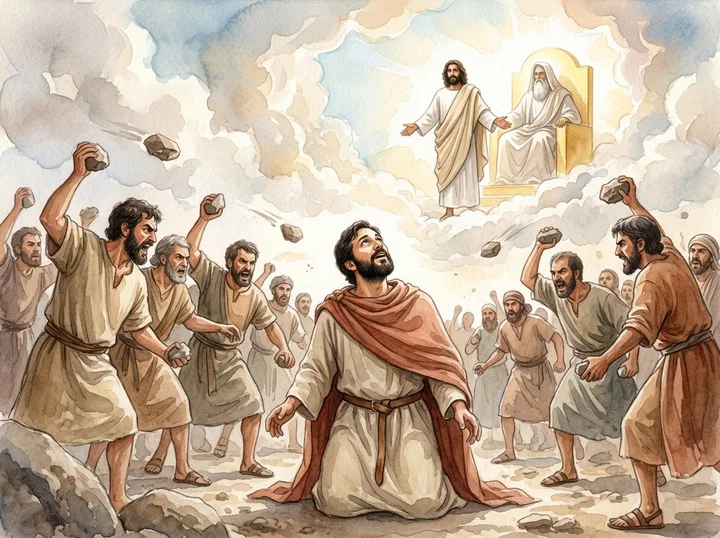
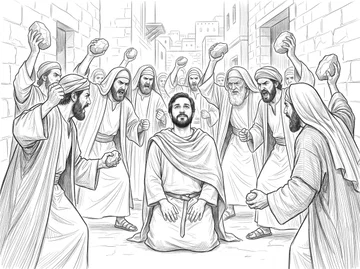
And cast him out of the city, and stoned him: and the witnesses laid down their clothes at a young man’s feet, whose name was Saul.
Translations
American King James Version, King James Version
And cast him out of the city, and stoned him: and the witnesses laid down their clothes at a young man’s feet, whose name was Saul.
and cast him out of the city, and stoned him: and the witnesses laid down their clothes at a young man’s feet, whose name was Saul.
And cast him out of the city, and stoned him: and the witnesses laid down their clothes at a young man's feet, whose name was Saul.
Revised Version, American Standard Version
and they cast him out of the city, and stoned him: and the witnesses laid down their garments at the feet of a young man named Saul.
and having cast him forth outside of the city, they were stoning [him] — and the witnesses did put down their garments at the feet of a young man called Saul —
and having cast [ him] out of the city, they stoned [ him]. And the witnesses laid aside their clothes at the feet of a young man called Saul.
And, thrusting him forth outside the city, proceeded to stone him. And, the witnesses, laid their garments at the feet of a young man named Saul.
Berean Standard Bible, Majority Standard Bible
They dragged him out of the city and began to stone him. Meanwhile the witnesses laid their garments at the feet of a young man named Saul.
They threw him out of the city and stoned him. The witnesses placed their garments at the feet of a young man named Saul.
Driving him out of the town and stoning him: and the witnesses put their clothing at the feet of a young man named Saul.
And cast him out of the citie, and stoned him: and the witnesses layd downe their clothes at a yong mans feete, named Saul.
Douay-Rheims (Challoner revision)
And casting him forth without the city, they stoned him; and the witnesses laid down their garments at the feet of a young man, whose name was Saul.
Pictures
Cross-references 20 of 48
- Acts 8:1
And Saul was consenting unto his death. And at that time there was a great persecution against the church which was at Jerusalem; and they were all scattered abroad throughout the regions of Judæa and Samaria, except the apostles.
Saul approved Stephen’s death, and persecution followed.
- Acts 9:1-6
And Saul, yet breathing out threatenings and slaughter against the disciples of the Lord, went unto the high priest,
Saul’s persecution of Jesus’ followers leads to his conversion and call.
- Acts 22:20
And when the blood of thy martyr Stephen was shed, I also was standing by, and consenting unto his death, and kept the raiment of them that slew him.
Paul recalls standing by and consenting to Stephen’s death.
- Acts 6:15
And all that sat in the council, looking stedfastly on him, saw his face as it had been the face of an angel.
Stephen’s face reflects heavenly glory before his testimony and stoning.
- Acts 9:4-5
And he fell to the earth, and heard a voice saying unto him, Saul, Saul, why persecutest thou me?
Jesus confronts Saul for persecuting him through his followers.
- Acts 14:19
And there came thither certain Jews from Antioch and Iconium, who persuaded the people, and, having stoned Paul, drew him out of the city, supposing he had been dead.
Paul is stoned and dragged outside the city, recalling Stephen’s stoning.
- Acts 8:4
Therefore they that were scattered abroad went every where preaching the word.
Scattered believers preached everywhere after Stephen’s martyrdom.
- Acts 8:3
As for Saul, he made havock of the church, entering into every house, and haling men and women committed them to prison.
Saul continues his attack on the church by seizing believers from their homes.
- Luke 23:34
Then said Jesus, Father, forgive them; for they know not what they do. And they parted his raiment, and cast lots.
Jesus and Stephen both prayed for those who killed them.
- 1 Timothy 1:13
Who was before a blasphemer, and a persecutor, and injurious: but I obtained mercy, because I did it ignorantly in unbelief.
Paul received mercy for persecuting in ignorance and unbelief.
- Acts 7:54
When they heard these things, they were cut to the heart, and they gnashed on him with their teeth.
Their anger and gnashing teeth led to Stephen’s stoning.
- Acts 9:15
But the Lord said unto him, Go thy way: for he is a chosen vessel unto me, to bear my name before the Gentiles, and kings, and the children of Israel:
Saul is chosen to carry Christ’s name to Gentiles, kings, and Israel.
- Acts 22:3
I am verily a man which am a Jew, born in Tarsus, a city in Cilicia, yet brought up in this city at the feet of Gamaliel, and taught according to the perfect manner of the law of the fathers, and was zealous toward God, as ye all are this day.
Saul’s Gamaliel schooling connects with his presence at Stephen’s stoning.
- Acts 6:5
And the saying pleased the whole multitude: and they chose Stephen, a man full of faith and of the Holy Ghost, and Philip, and Prochorus, and Nicanor, and Timon, and Parmenas, and Nicolas a proselyte of Antioch:
Stephen, chosen among the seven, is later stoned.
- Acts 6:10
And they were not able to resist the wisdom and the spirit by which he spake.
Stephen’s opponents could not resist his wisdom and spirit before stoning him.
- Acts 9:8-9
And Saul arose from the earth; and when his eyes were opened, he saw no man: but they led him by the hand, and brought him into Damascus.
Saul’s encounter with Jesus left him blind and fasting.
- Acts 7:51-52
Ye stiffnecked and uncircumcised in heart and ears, ye do always resist the Holy Ghost: as your fathers did, so do ye.
Stephen’s rebuke enraged his hearers and provoked the stoning.
- Deuteronomy 17:7
The hands of the witnesses shall be first upon him to put him to death, and afterward the hands of all the people. So thou shalt put the evil away from among you.
The witnesses cast the first stones.
- Acts 26:9
I verily thought with myself, that I ought to do many things contrary to the name of Jesus of Nazareth.
Saul recalls his efforts against Jesus’ followers.
- 2 Corinthians 11:25
Thrice was I beaten with rods, once was I stoned, thrice I suffered shipwreck, a night and a day I have been in the deep;
Paul lists being stoned among his sufferings for the truth.
Commentary
Each commentary is drawn from primary sources: the writings of Ellen G. White and Adventist pioneers and periodicals. Each commentary is separate. Its own words are not a quotation; follow the references to read the source passages.
Ellen G. White
64 sources
Stephen was driven out of Jerusalem and stoned to death there, while the witnesses who had accused him laid their garments at the feet of the young man Saul, who as accusing witnesses were required to cast the first stones.3SP 298.2–3ST Dec 5, 1878RH Feb 23, 1911 The killing was unlawful with no legal sentence passed, the Roman authorities bribed to make no investigation and secretly aiding the work.7RED 36.1SLP 20.1RH Feb 23, 1911 The young man Saul is Paul, a member of the Sanhedrin educated under Gamaliel, who had disputed with Stephen, consented to his death and took charge of the stoners' clothes though he did not throw the stones himself.SG1 88.2EW 165.2SG1 89.1SLP 221.2–223.1RH Mar 6, 1900 Stephen's radiant steadfastness in death shook Saul and stirred him with secret conviction that God was with him, yet he was persuaded by priests and rulers that Stephen was a blasphemer and became bitter in leading persecution against believers for faith in Jesus alone.3SP 305.2SLP 21.13SP 307.2–308.13SP 311.2 That memory returned with terrible clearness at his conversion near Damascus, leaving lifelong sorrow and remorse that turned the consenting persecutor into the chosen messenger who more than filled Stephen's place and defended the cause for which Stephen died.EW 165.2SLP 23.1AA 118.2–3
Stoning Outside the City
Stephen was cast and driven out of the city and stoned to death there, taken outside and killed by an enraged crowd in a furious rush.3SP 298.2–3RH Feb 23, 19113SP 299.1SG1 88.2AC1 35.1–2 The stoning was a most cruel death suffered in agony, inflicted after his testimony that he saw Christ standing at the right hand of God, which his hearers met by stopping their ears, crying out, and running upon him with one accord.ST Dec 5, 1878SLP 19.1SG1 88.2 His death and dying prayer did not defeat the gospel but convicted Saul, the persecuting Pharisee, who became a chosen messenger of Christ to Gentiles, kings, and Israel.
The witnesses who had accused him laid down their clothes at the feet of the young man Saul.3SP 298.2–3ST Dec 5, 1878RH Feb 23, 19113SP 299.1AC1 35.1–2 As accusing witnesses they were required to cast the first stones, throwing first after laying aside their garments.ST Dec 5, 1878RH Feb 23, 19113SP 299.1SLP 19.1AC1 35.1–2 Saul had taken an active and leading part in disputing with Stephen and consented to his death, witnessing the killing before him.3SP 298.2–3ST Dec 5, 1878RH Feb 23, 19113SP 299.1SG1 88.2
The killing was unlawful, with no legal sentence passed upon Stephen.7RED 36.1SLP 20.1RH Feb 23, 1911AC1 36.1ST Dec 5, 1878 The Roman authorities were bribed with large sums of money to make no investigation into his case.SLP 20.1AC1 36.1ST Dec 5, 1878AA 101.2 They made no special effort to stop the cruel work but secretly aided the Jews in order to conciliate them and secure their favor.SLP 20.1
The martyrdom took place at Jerusalem, where Stephen's blood witnessed for Christ.SLP 206.2–207.1 It was the city that had been the murderer of the prophets, that had rejected and slain the Son of God, and over which hung the threatenings of divine wrath.SLP 206.2–207.1 His witness and death there, bearing testimony and laying down his life with his face like an angel's, came after the gospel had first been preached in Jerusalem and the Holy Spirit had been poured out there, showing the abundant care and opportunity given to Israel.SLP 206.2–207.1ST Jan 6, 1909
Stephen's Character and Testimony
Stephen was the foremost of the seven deacons, a man of deep piety and broad faith.AA 97.1 He was a Jew by birth who spoke the Greek language and knew Greek customs and manners, and for that reason he preached in the synagogues of the Greek Jews, very active in the cause of Christ and bold in proclaiming his faith.AA 97.1 He was a student of the prophecies and learned in all matters of the law, speaking in the power of the Holy Spirit with a mouth and wisdom his adversaries could not gainsay nor resist, so that learned rabbis and doctors of the law who engaged him in public discussion were utterly defeated and unable to resist the wisdom and the spirit by which he spoke.AA 97.1 After the rulers failed to overcome his arguments he was brought before the Sanhedrin on the false charge by witnesses that he spoke against the temple and the law.AA 98.1–3 As he spoke about Christ and the prophecies and the temple the people became tumultuous, and the priest's tearing of his robe signaled that his voice would soon be silenced, which he recognized as his last testimony, abruptly concluding his address at a decisive moment and place.AA 100.13SP 297.2
His triumphant testimony was that he saw the heavens opened and the Son of man standing on the right hand of God, and his hearers understood its force yet refused it.Ms 22, 1900, par. 31–32Ms 11, 1900, par. 1–5AA 101.1 Being cut to the heart they gnashed on him with their teeth, then cried out with a loud voice and stopped their ears.Ms 22, 1900, par. 31–32Ms 11, 1900, par. 1–5SLP 19.1 Then with one accord they ran furiously upon him, priests and rulers beside themselves with anger like wild beasts together with an excited mob, to drag him out and kill him.ST Dec 5, 1878Ms 11, 1900, par. 1–5SLP 19.1AA 101.1 The enraged crowd drove him out of the city and stoned him, a most cruel death, in deliberate united murder for that witness to Jesus standing at the right hand of God.ST Dec 5, 1878Ms 22, 1900, par. 31–32Ms 11, 1900, par. 1–5EW 165.1 That act was hatred for Christ turned against His follower, worked by Satan in disobedient religious zealots in conflict with heaven.Ms 11, 1900, par. 1–5
He was not intimidated but calm, with his face shining with angelic light and heavenly glory like an angel's.SLP 19.1 The scene about him faded as the gates of heaven stood ajar and he saw the glory of God with Christ as if just risen from His throne standing ready to sustain His servant in martyrdom for His name.SLP 19.1 Dragged out of the judgment hall because the leaders could not answer his words of truth, they silenced his eloquence with stones rather than answering from the law and the prophets. While being stoned in cruel agony he called upon God, Lord Jesus receive my spirit, then kneeled down and cried with a loud voice, Lord lay not this sin to their charge, praying for his murderers, and then fell asleep.ST Dec 5, 1878Ms 22, 1900, par. 31–32SLP 19.1EW 165.1 His faith, steadfastness, constancy, glorification, the signet of God upon his face, and soul-reaching words remained in the memory of the beholders and testified to the truth he had proclaimed.SLP 19.2
He was the first Christian martyr, whose steadfast witness ended in death and sealed his testimony with his blood after the Holy Spirit had presented powerful evidence that Jesus was the Son of God.EW 173.3Ms 17, 1885, par. 12–13 He fell as a faithful and noble builder of Christ's church at his work by the hand of the enemy while doing God's work, showing the violent opposition faced by those who stood for the truth.Ms 17, 1885, par. 12–138RED 79.1–3SLP 157.1 His death did not stop the building, for stone after stone was still added and other workers took the place of those who fell, so the church increased in the midst of terrible persecution.8RED 79.1–3SLP 157.1
Saul's Presence and Part
The young man named Saul is Paul, afterward called Paul after his conversion on the way to Damascus to arrest Christians, when he united with the disciples and became among the chief of the apostles.RH Mar 6, 1900Ms 95, 1899, par. 3–5 At the time of the stoning he was educated by the most learned teachers of the age, taught by Gamaliel as rabbi and statesman.RH Mar 6, 1900Ms 95, 1899, par. 3–5 He was a member of the Jewish Sanhedrin by which Stephen was condemned, taking part in that condemnation.SLP 221.2–223.1RH Mar 6, 1900
Saul had taken an active and leading part in disputing with Stephen, using rabbinic learning and eloquence to argue against his teaching.3SP 298.2–3ST Dec 5, 1878RH Feb 23, 19113SP 299.1AC1 35.1–2 He was present at Stephen's trial and death with frenzied zeal, having failed with others to overcome Stephen's arguments before false charges were brought.3SP 298.2–3ST Dec 5, 1878RH Feb 23, 1911 The witnesses who had accused Stephen laid down their clothes at Saul's feet, as those witnesses were required to cast the first stones.ST Dec 5, 1878RH Feb 23, 19113SP 299.1
He consented to Stephen's death and took charge of and kept the clothes, or raiment, of those who stoned him, standing by when the blood of Stephen was shed.SG1 88.2EW 165.2SG1 98.13SP 322.2AC1 54.2 This keeping showed his complicity as a witness before whom the killing took place, though he himself did not throw the stones.EW 165.2SG1 89.1SG1 98.1 His presence at the stoning marks the beginning of a later reversal, in which Jesus chose this zealous persecutor as a preacher who would strengthen the disciples and more than fill Stephen's place.EW 165.2SG1 89.1
He was the instrument through whom the holy Stephen, Christ's martyr, was sacrificed, and through whom many other worthy saints were brought to death by cruel persecution.SLP 23.1 In this he imagined in zeal for the suppression of Christianity that he was serving God, resting his faith on the priests and rulers.SLP 23.1 Those rulers taught that the resurrection was an artificial fabrication, that Jesus was an impostor, and that Stephen's sermon was blasphemy, but in reality Saul in ignorance and error was doing the work of Satan.SLP 23.1
His part in the condemnation and death later helped win him election to the Sanhedrin.ST Dec 5, 1878 He had worked to secure the condemnation of the servant of Christ with settled conviction that those in holy office were right.SLP 221.2–223.1
Conviction Turning to Persecution
Stephen's death made a deep impression on all who witnessed it, and his faith and steadfastness and constancy, his radiant appearance and glorification with the signet of God upon his face, and his soul-reaching words remained in memory and testified to the truth he had proclaimed.7RED 35.3ST Dec 5, 1878AA 101.3SLP 19.2 That abiding testimony helped lead to Saul's conversion.7RED 35.3ST Dec 5, 1878AA 101.3 Saul himself could never efface it from memory.SLP 19.2
His triumphant death greatly stirred Saul's mind and shook his prejudice against believers.3SP 305.2SLP 21.1 The evidence of God's presence with Stephen as he faced death, the radiance of heaven upon him, and a power higher than earthly strength sustaining him stirred Saul to doubt whether his opposition to the followers of Jesus was right.3SP 311.2AA 112.2–113.1 He was angered by his own secret conviction that Stephen was honored of God at the very time he was dishonored of men.SLP 20.1RH Feb 23, 1911
Saul was then persuaded by the priests and rulers that Stephen was a blasphemer and his sermon blasphemy.3SP 305.2SLP 21.1 They taught that the resurrection was an artificial fabrication and that Jesus whom Stephen preached was an impostor.SLP 21.1 Having settled in his mind that those in holy office were right and resting his faith on them, Saul with decided mind and strong purpose became very bitter in opposition to Christianity.3SP 305.2SLP 21.1
He voluntarily took up persecuting believers and led the van in the persecution that followed without legal sentence.SLP 21.17RED 36.1 He hunted Christians down, seized them in their homes, had holy men dragged before councils, and delivered them up to the priests and rulers for imprisonment and death for no offense except faith in Jesus.3SP 305.2SLP 21.17RED 36.1SLP 20.1AC1 36.1 Through his actions many believers were put to death, breathing threatenings and slaughter and seeking letters to bind believers, and his zeal in carrying forward the persecution was a terror to the Christians in Jerusalem.3SP 307.2–308.1SLP 20.1
Guilt Remembered After Conversion
The light above the brightness of the sun that met Saul near Damascus brought the memory of Stephen's death by his consent and the truth of Stephen's sermon forcibly to his mind.SLP 23.1 In that clear but terrible light he saw Christ as having come in fulfillment of His mission, only to be rejected, abused, condemned and crucified by those He came to save, then risen from the dead and ascended into heaven.SLP 23.1 During three days of total blindness alone in the house of Judas without eating or drinking, in reflection, repentance and earnest prayer under remorse and conviction, he remembered Stephen with bitterness and saw in the martyrdom evidence that Stephen had been sustained by a power higher than earth.AA 118.2–3ST Dec 12, 1878 He saw his own guilt with horror in having been carried away by the malice and prejudice of the priests and rulers, in closing his eyes and ears against the most striking evidence, including the radiance of heaven on Stephen's face, and in relentlessly leading the van in persecuting believers in Christ.AA 118.2–3ST Dec 12, 1878 He had rested his faith on those in holy office who taught that the resurrection was an artificial fabrication, that Stephen's sermon was blasphemy and Jesus an impostor, and had imagined in zeal for suppression that he was serving God, when in ignorance and error he was doing the work of Satan, yet prophetic history now proved from Christ's rejection, crucifixion, resurrection and ascension that He was the promised Messiah.SLP 23.1AA 118.2–3
That cruel part left a stain that filled him with sorrow, shame, remorse and deep anxiety to wipe it out and make amends.AC1 54.17RED 54.1SLP 37.1 He became eager to vindicate the truth for which Stephen had died by boldly proclaiming Jesus as the Son of God, the same message Stephen had defended and the same cause for which Stephen died.3SP 322.1ST Dec 19, 1878SLP 36.3–43SP 321.2 The voice that had disputed with Stephen now defended that cause, and he lingered in Jerusalem unwilling to leave, anxious to labor longer for his Jewish brethren.AC1 54.1SLP 37.1SLP 36.3–4 He would willingly have yielded up his own life if by that means they might be brought to knowledge of the truth, and he regarded flight from Jerusalem as cowardice even when the same fury that burst upon Stephen was visited upon himself and the Jews laid plans to take his life.AC1 54.1SLP 37.1 He had to separate from his Jewish brethren after miscalculating their spirit, and though he longed to make amends by preaching in Jerusalem for a fearful account, God directed him to leave Jerusalem and carry his testimony to the Gentiles.AC1 54.13SP 322.2
His conversion turned the persecuting Pharisee who consented to Stephen's death, keeping the clothes of those who stoned him though not throwing stones himself, into a chosen messenger of Christ to Gentiles, kings and Israel.EW 165.2SG1 89.1 Jesus chose Saul, then a zealous persecutor, as a preacher who would strengthen the disciples and more than fill Stephen's place, taking up the work Stephen had begun.EW 165.2SG1 89.1 Stephen's death and dying prayer had convicted him, and despite the appearance that his enemies had triumphed, that death became the occasion of his conversion through whom thousands came to the gospel.Lt 10, 1879, par. 4–9
Later visits to Jerusalem brought the stoning scene vividly before him at the place of martyrdom where Stephen's blood witnessed for Christ.SLP 206.2–207.1 The spot recalled his former life in bitter prejudice and filled him with anxiety and remorse, raising whether he was going forward to a similar fate.SLP 206.2–207.1 It stood in the city that had been the murderer of the prophets, that had rejected and slain the Son of God and over which hung the threatenings of divine wrath.SLP 206.2–207.1 It kindled in him deepest pity for his deluded countrymen kindled with the same blind wrath that had once burned in his own heart.SLP 206.2–207.1
When he himself was violently stoned at Lystra by an enraged mob, bruised, battered and fainting until he felt his end had come, the martyrdom of Stephen with his own cruel part and guilt in it came vividly to his mind.AA 183.1–3SLP 60.2–33SP 366.1–28RED 23.2–25.1 As Stephen had been cast out of the city and stoned, so Paul fell to the ground apparently dead and was dragged insensible through the gates of the city and thrown outside beneath the walls.SLP 60.2–38RED 23.2–25.1 The later crowd dragging Paul from the temple to stone him, which would have stoned him if the murderous attack had not been interrupted, echoes that same stoning.SLP 215.1–216.3
Church Growth and Meaning
Stephen's death was part of the persecution of Christ's disciples for faithful witness to Jesus as the Son of God, and his steadfast witness ended in death and sealed his testimony with his blood.SG1 101.1EW 173.3 It was a deliberate, united murder for his triumphant testimony that Jesus stood at the right hand of God, which his hearers understood and refused by crying out, stopping their ears, and rushing upon him with one accord to drag him out of the city and stone him.Ms 11, 1900, par. 1–5 The act was hatred for Christ turned against His follower, worked by Satan in disobedient religious zealots in conflict with the army of heaven that commended its faithful witness, and the laying down of clothes at the feet of the young man Saul marks his presence and part in the martyrdom.Ms 11, 1900, par. 1–5 Though stoned for his faith, Stephen fell as a faithful builder of Christ's church at his work by the hand of the enemy, and despite the deaths of its builders and workers the church continued to grow, with other workers taking the place of those who fell and stone after stone added to the building.AA 596.3–597.28RED 79.1–3 His martyrdom belonged to the persecution that scattered the church and led Christians to proclaim the gospel beyond Jerusalem.7MR 362.1
Stephen's death is an example of God's servants bearing witness even when persecutors take their lives, for their bodies may be imprisoned or killed but their hope and eternal life cannot be taken away.Ms 16, 1895, par. 18 He was cast out of the city and stoned, yet the persecution did not defeat the gospel, for his death and dying prayer convicted Saul, the persecuting Pharisee, who became a chosen messenger of Christ to Gentiles, kings, and Israel. Stephen was driven outside the city and stoned while the witnesses placed their clothes at Saul's feet, linking that witness unto death with the conversion of the very man who guarded the garments.Ms 16, 1895, par. 18
Saul had taken part in the condemnation of Stephen by the Jewish Sanhedrin, himself a member of that council by which Stephen was condemned, and he had worked to secure the condemnation of the servant of Christ.SLP 221.2–223.1 When Paul afterward stood as a prisoner before the same Sanhedrin with the high priest, the memory of that scene came vividly before his mind.SLP 221.2–223.1 Many of those sitting as his judges were men he recognized as his former associates in the school of Gamaliel who had united with him in persecuting the disciples of Jesus, and they were now as eager to put Paul to death as they had been to destroy Stephen.SLP 221.2–223.1
Sources
Pioneers and periodicals
110 sources
Stephen was the first Christian to seal his witness to Christ with his blood, dragged outside Jerusalem and put to death by stoning.ST Oct 25, 1910ST Oct 8, 1912ST Feb 4, 1897ST Feb 4, 1897RH Nov 17, 1863 The witnesses who were to cast the first stones laid their garments at the feet of a young man named Saul, who was present and in charge of the clothing.RH Feb 23, 1911ST Mar 29, 1883RH Aug 27, 1901ST Mar 26, 1902ST Jan 22, 1885 Saul consented to the death and shared its guilt, yet the glory and prayer of Stephen deeply stirred him and helped prepare him for his conversion into Paul the apostle to the Gentiles.ST Dec 5, 1878ST Dec 12, 1878ST May 21, 1912 The stoning in A.D. 34 was the Sanhedrin's final rejection of the gospel at the close of the seventy weeks, when the time allotted to the Jews ended and the message began to go to the Gentiles.STST Sep 20, 1910ST Jun 26, 1907STRH May 7, 1872 Stephen fell asleep in death without awareness of time, to awake without delay at the resurrection as though entering heaven at once.RH Dec 22, 1868ST Jun 5, 1879RH Jun 16, 1874
First Martyrdom Outside City
Acts 7:58 records the first martyrdom in the early Christian church, when Stephen sealed his testimony to Christ with his blood.ST Oct 25, 1910ST Feb 14, 1884RH Dec 22, 1863 Stephen was one of the seven chosen to serve the church, full of grace and faith and power, who wrought great wonders and signs among the people and disputed with men of the synagogues.RH Aug 27, 1901ST Feb 4, 1897ST Mar 11, 1897RH Aug 24, 1916 Those opponents could not withstand the wisdom and Spirit with which he spoke, so he was seized on suborned false charges of speaking against Moses, God, the holy place and the law, and brought before the council.ST Feb 4, 1897ST Mar 11, 1897 He thus became the first martyr witness, honored with divine approval before his persecutors and steadfast under suffering for faith.ST Feb 14, 1884RH Dec 22, 1863RH Aug 24, 1916
He was cast out of the city, driven out of Jerusalem, and stoned to death outside it.ST Oct 8, 1912ST Feb 4, 1897RH Nov 17, 1863RH Aug 10, 1876ST Sep 10, 1894 The death was most cruel and suffered with agony.ST Dec 5, 1878 Stoning was the Jewish method of execution rather than crucifixion.ST Jun 1, 1915 His fate at being dragged outside the town and left wounded almost became Paul's later at Lystra.RH Aug 10, 1876
After Stephen declared that he saw the heavens opened and the Son of man standing at the right hand of God, priests and rulers beside themselves with anger acted like beasts of prey rather than human beings.ST Dec 5, 1878ST Mar 3, 1914 They stopped their ears so they would not hear his words, uttered loud cries, gnashed their teeth, and rushed furiously upon him with one accord.ST Dec 5, 1878ST Mar 3, 1914ST Sep 19, 1900 They dragged him from the judgment hall and drove him out of the city to kill him, silencing with stones the eloquence they could not answer from the law and the prophets even as his face shone with heavenly glory.ST Dec 5, 1878ST Mar 3, 1914RH Nov 29, 1853 This violent resentment rather than indifference shows how public preaching of truth with power can provoke fierce opposition.RH Nov 29, 1853
The killing was brutal murder rather than a lawful sentence, done in a furious rush with no legal sentence passed, the angry cry of a mob rather than the deliberate decision of a court.ST Dec 5, 1878ST Mar 3, 1914ST Feb 19, 1902 It was carried out on a false charge of blasphemy supported by two suborned witnesses, like Naboth's case where false witnesses and the legal penalty for blasphemy were used to serve an evil purpose.ST Aug 13, 1902ST Jul 14, 1898 The Jewish council had no authority to put anyone to death without sanction of the Roman governor, but emboldened by securing Christ's condemnation through intimidating the governor they disregarded that authority altogether.ST Feb 19, 1902 The Roman authorities had been bribed with large sums of money to make no investigation into the case.ST Mar 3, 1914
As required, the witnesses who had accused him cast the first stones.ST Dec 5, 1878RH Feb 23, 1911 They laid down their garments at the feet of a young man named Saul, an incident singled out as significant for identifying Saul's connection with the death.RH Feb 23, 1911RH Aug 27, 1901RH May 19, 1904ST Feb 4, 1897 The later crowd's throwing off garments and raging against Paul repeats the violent behavior of this scene.ST May 8, 1884
While the cruel work of stoning was being done Stephen prayed for his murderers like his divine Master, with a prayer similar to Christ's upon the cross.ST Dec 5, 1878ST Mar 11, 1897 Seeing heaven's glory and Jesus standing at God's right hand, he offered his life in God's cause.RH Mar 10, 1868 His appeal to receive his spirit meant trusting God to accept it as a sacrifice and to keep it unto eternal life.RH Mar 10, 1868
The disgraceful death of the devout and zealous Stephen at the hands of the ecclesiastical authorities took place in Jerusalem.RH Feb 10, 1863 Jerusalem was the metropolis of God's ancient people and the theater of sublime events where the most beloved and most detested characters were developed.RH Feb 10, 1863 It was also where Paul took his early lessons from Gamaliel.RH Feb 10, 1863
Saul Present at Stoning
Saul was a young man at this early period of his life, present at Stephen's trial before the Sanhedrin and at the stoning outside the city, where the witnesses left their clothes at his feet.ST Mar 29, 1883ST Jan 22, 1885ST Aug 30, 1883RH Feb 18, 1875 He watched the martyrdom and consented to Stephen's death, showing no pity or remorse, and his part in that death preceded his leadership of the persecution against the Christians in Jerusalem.ST Jan 22, 1885ST Aug 30, 1883 His connection to Stephen's death belonged to his former life as a persecutor, which he later recalled with shame, not pride.ST Aug 30, 1883 The verse gives an example of one associated with the stoning without necessarily doing the stoning himself.RH Feb 18, 1875
This is the first notice of Saul of Tarsus in connection with Stephen's martyrdom.ST Mar 26, 1902 His name means sought for, marking him as a favorite among his class, and he was made conspicuous by being put in charge of the outer garments of those who stoned Stephen to death.ST Mar 26, 1902 That trusted charge reflected the high standing he had won by surpassing devotion to Judaism and intense eagerness to uphold ancestral traditions from sincere motives, the same sincerity that commended him to the mercy of God.ST Mar 26, 1902 He is shown leading the group involved in Stephen's stoning, and though he participated in Stephen's murder, Jesus' blood made him a holy man.RH Jul 6, 1868
Saul had taken an active part in disputing with Stephen beforehand as one of the Cilicians, using rabbinic learning and eloquence against his teaching.RH Feb 23, 1911ST Feb 4, 1897 With high scholarship and zeal he took an active part among them in the condemnation, and his presence at the execution together with his zeal in the persecutions that followed shows he had held debate with Stephen beforehand.RH Feb 23, 1911ST Feb 4, 1897 Saul was a Roman citizen by birth yet a Jew by descent, looked to as an able and zealous defender of the ancient faith.ST Mar 10, 1914 Educated by the most learned teachers of the age under Gamaliel, a rabbi and statesman, his elevation to membership in the Sanhedrin council placed him in power among the Jewish leaders aroused by the success of the gospel, and his role in Stephen's death later helped win him election to the Sanhedrin.ST Mar 10, 1914ST Dec 5, 1878RH Mar 6, 1900 The Saul named there is Paul, whose career of persecution as one very zealous for the suppression of Christianity was stopped on the way to Damascus to arrest Christians, where he was converted, was called Paul, united with the disciples, and was among the chief of the apostles.RH Mar 6, 1900
Saul consented to Stephen's death, shared guilt in it, guarded the clothing, and stood by approving.ST May 21, 1912RH Oct 22, 1872ST Feb 20, 1907 Guilt for the stoning therefore belongs also to one who only approves and helps it, so that people today who favor religious opposition share guilt even if they say they threw no stones.RH Oct 22, 1872 His vote in favor was given with a good conscience, living fully up to the light he had, perfectly honest and sincere even while persecuting unto death, feeling no compunction or inward opposition to the work.ST Feb 20, 1907 He sincerely believed he zealously served God while in ignorance and unbelief doing Satan's work and fighting against God, religiously scrupulous and blameless in observance of the law yet fighting against God, and because he did it ignorantly in unbelief his murdering of Christians was pardoned.ST May 21, 1912ST Feb 20, 1907 Sincerity did not make his actions right, and the words on the Damascus road about kicking against the goad did not refer to his conscience but meant his enterprise to crush Christ was futile and would only harm himself the more.ST Feb 20, 1907
The striking evidences of God's presence with Stephen, with faith, constancy, glory and face shining, deeply stirred Saul's mind, left a lasting impression that could not be effaced, and led him to doubt the righteousness of the cause he had espoused against the followers of Jesus, leaving him perplexed.ST Dec 5, 1878ST Mar 10, 1914RH Feb 23, 1911 After severe inward trial he appealed to priests and rulers in whose wisdom he trusted, and their arguments convinced him that Stephen was a blasphemer, that Christ was an impostor, and that those in holy office were right.ST Mar 10, 1914 Having so decided he became very bitter in opposition to the doctrines of Jesus' disciples and active in causing holy men and women to be dragged before tribunals for faith in Jesus, arresting believers and handing them over for imprisonment and death.ST Mar 10, 1914RH Feb 23, 1911 This brought sadness and gloom on the newly organized church and caused many to flee Jerusalem, while Stephen's dying love did not then soften his heart.ST Mar 10, 1914ST Jan 22, 1885
Stephen's martyrdom and the faith, constancy, and glory visible in him contributed to Saul's conversion.ST Dec 5, 1878 When Jesus appeared to him near Damascus in light above the brightness of the sun, the memory of Stephen's death by his consent and the truth of Stephen's sermon were brought forcibly to his mind, revealing his folly and proving from prophetic history that the rejection, crucifixion, resurrection, and ascension of Jesus proved Him the promised Messiah. During three days of total blindness in Damascus, alone in the house of Judas without eating or drinking, in reflection, repentance and earnest prayer under remorse and conviction of punishment, he remembered Stephen with bitterness and saw in his martyrdom evidence that Stephen had been sustained by a power higher than earth.ST Dec 12, 1878 He saw his own guilt with horror in having been carried away by the malice and prejudice of the priests and rulers, in closing his eyes and ears against the most striking evidence, and in relentlessly leading the van in persecuting believers in Christ, resting his faith on priests and rulers who taught that the resurrection was an artificial fabrication and that Stephen's sermon was blasphemy, but in reality doing the work of Satan in ignorance and error.ST Dec 12, 1878 He had received light through Stephen's discourse and testimony and had not finally rejected it, showing that God had not given him up and that even someone who appears hardened or opposed to the truth may still be reached.ST Jul 18, 1900
Paul later remembered his part in standing by while Stephen was killed, consenting to his death and keeping the clothes of those who stoned him, with bitterness, anguish, shame, horror and guilt.ST Dec 19, 1878ST Mar 10, 1914ST Dec 12, 1878RH Mar 30, 1911 He was eager to vindicate the truth for which Stephen had died by proclaiming Jesus as the Son of God.ST Dec 19, 1878RH Mar 30, 1911 When he himself was stoned at Lystra, Stephen's death and the cruel part he had played on that occasion came vividly to his mind.ST May 7, 1885RH Aug 26, 1902 Remembering that he, the chief of sinners, had been saved by grace and had obtained help of God gave him sympathy for those who persecuted and reviled him, patience and love toward opposers of the truth, and courage to keep laboring for even the most violent sinners in darkness.RH Aug 26, 1902 He also remembered this scene and his own part in securing Stephen's condemnation when he stood before the same council whose members were now eager to put him to death.ST May 8, 1884
Saul as a young man at Stephen's stoning, with the witnesses laying their clothes at his feet, was engaged in a fleshly fight for religion as a persecutor breathing out threatenings and slaughter against the disciples and going to Damascus to persecute believers.RH Oct 28, 1902 That same Saul was transformed by grace into the Paul who fought the good fight of faith, finished the course, kept the faith, and suffered great things for Christ's name, proving the fight of faith is far different from the fight of the flesh because it suffers patiently for doing well with spiritual weapons rather than fighting with flesh.RH Oct 28, 1902 From holding the clothes of those who stoned Stephen and standing among his murderers in the place where self sought power, distinction, wealth, and honor, self gave way to the crucified and risen Saviour.RH Aug 5, 1862 From persecutor he became one who suffered persecution himself, and his later change into a Christian preacher made his testimony to Jesus especially striking.ST Jun 16, 1914ST Jan 29, 1885 Saul was among those who consented to Stephen's death; he later became the apostle Paul and endured persecution and suffering while serving Christ, and his part in the martyrdom was recalled with shame, not pride.ST Sep 19, 1900ST Aug 30, 1883
Close of Seventy Weeks
The stoning outside the city was the Jews' second rejection of Christ, this time through his servant Stephen, and it marked the end of the seventy weeks in A.D. 34.STSTST Sep 2, 1913RH Jan 7, 1858 The death is generally dated to that year, and specifically to autumn A.D. 34 in the final part and final half of the seventieth week.STST Sep 2, 1913ST Jul 17, 1901ST Nov 2, 1915 It was the Sanhedrin's formal rejection of the gospel, alongside the persecution of Christ's disciples, after which the people of God were no longer the Jews as a nation.STRH Jan 7, 1858
The martyrdom came in about autumn A.D. 34, three and one-half years after the crucifixion in spring A.D. 31, at the expiration of the 490-year period cut off for Daniel's people as the first great dispensational section of the 2300 days.ST Jul 17, 1901RH Nov 12, 1901 It closed seven years in which Christ confirmed the new covenant first by His own three-and-a-half-year ministry and then by His hearers, the remaining three and one-half years having been devoted to confirming the everlasting covenant among the first witnesses for the truth.ST Jul 17, 1901RH Nov 12, 1901 It marks the end of the remaining half of the final week of Daniel's seventy weeks, and the following year, A.D. 35, began a new era with Saul's conversion and his mission to the Gentiles, after the Jewish leaders rejected Christ by persecuting His disciples.ST Mar 26, 1912RH Nov 12, 1901
It was the Sanhedrin's formal and final rejection of the gospel of Christ and of the Holy Spirit's appeal, coming at the close of the seventy weeks allotted to the Jewish people.RH May 23, 1912ST Mar 2, 1882ST Dec 19, 1892 The gospel had first been preached in Jerusalem and the Holy Spirit poured out there, with Stephen bearing testimony and laying down his life with his face like an angel's, showing the abundant care and opportunity given to Israel.ST Jan 6, 1909RH May 7, 1872 Those who mocked the Spirit-filled preaching at Pentecost hardened until they stoned Stephen, a man full of the Holy Ghost killed for the truth, persecuted Peter, and sought Paul's death, growing in wickedness on the opposite path from believers who grew in grace.RH May 7, 1872ST Jan 13, 1898 At that time the Jews permanently rejected the gospel and judged themselves unworthy of everlasting life, filling up guilt and the cup of iniquity, and God gave them over as a people to unbelief and blindness of mind toward destruction.RH May 7, 1872ST Jan 13, 1898RH Nov 12, 1901 About forty years later the Romans destroyed Jerusalem and its temple, and about three million Jews perished.RH May 7, 1872
It stands at the turning point when the exclusive work for the Jews ceased, the definite time allotted to them closed, and the middle wall of partition between the Jews and the rest of the world was broken down.RH Oct 11, 1915ST Mar 2, 1882RH Nov 12, 1901 The murder in autumn A.D. 34 was a public expression of the Jews' rejection of Christ after rejecting the mercy offered through Him and the Holy Spirit's appeal by the Jewish council.ST Sep 20, 1910ST Oct 25, 1905RH May 23, 1912 A general persecution then dispersed Christians beyond Judea and drove many Jerusalem believers away, and the scattered church carried the message to people of other nations and toward all nations.STST Sep 20, 1910ST Jun 26, 1907ST Oct 25, 1905RH May 23, 1912 After this the gospel began to be preached to the Gentiles as it had not been before, with the word of God turning to the Gentiles, the apostles turning to the Gentiles, and Paul raised up as the apostle to the Gentiles, converted about the same time, soon afterward, and the following year.RH Oct 11, 1915STST Sep 2, 1913ST Dec 19, 1892RH Nov 12, 1901
Death as Unconscious Sleep
Stephen fell asleep in death while gazing upon heaven's glory, beholding Christ exalted in heaven at the moment he was stoned outside the city.RH Dec 22, 1868ST Jun 5, 1879RH Jun 16, 1874RH Oct 29, 1872 Because death is absolute unconsciousness, with no thoughts and no awareness or perception of time, the long period in the grave is to the dead person an utter blank, no more than a wink of the eye, like a moment.RH Dec 22, 1868ST Jun 5, 1879RH Jun 16, 1874RH Oct 29, 1872 When he awakes in the resurrection his next conscious experience will seem to follow that vision without delay and without a moment's interruption, as though he had entered Christ's glorious presence at once.ST Jun 5, 1879RH Jun 16, 1874RH Oct 29, 1872
If Christ came whenever a saint died, his presence at Stephen's martyrdom would have counted as the second advent, and every later saint's death would require another coming.RH Nov 17, 1863 Christ's second advent is therefore a single future event, not an appearance at each believer's death.RH Nov 17, 1863 Stephen belongs to the same body of Christ as Paul and Christians living at Christ's return, so Paul's use of we in 1 Corinthians 15:51 includes Stephen without implying that Christ would return during Paul's lifetime.ST Dec 12, 1892 Stephen's testimony is that the prophet Moses foretold is Jesus himself, the Restorer, the One like unto his brethren.
While the Pharisees stoned him, God gave Stephen a revelation of the saints' reward and the glories awaiting those who overcome.RH Mar 19, 1914 His glimpse of heaven's glories while still on earth shows heaven is worth praying for and speaking to the Saviour while patiently waiting for him to appear.RH Dec 11, 1866 The Spirit's fire and power manifested through Stephen is a later example of the heavenly glory accompanying God's messenger, strengthening the witness of God's earthly agents.ST May 3, 1910
The verse shows Stephen as the martyr and Saul as the persecutor, whose last exchange of glances on earth took place at the stoning outside the city.ST May 25, 1915 Saul the persecutor became the apostle Paul, who bore scars and chains and faced coming martyrdom yet looked with holy exultation to the moment of his Lord's appearing when his children in the gospel would stand by his side.ST May 25, 1915 In the heavenly kingdom Paul and Stephen, washed in the same blood as martyr and persecutor, trophies of the same love, will meet, embrace each other, and bow together at the Saviour's feet, illustrating the hope given by the coming of the Saviour of meeting the loved of earth again.ST May 25, 1915 Both are among the slain gazers into heaven, Stephen the slain one of the sun-gaze who looked steadfastly into heaven and Saul the young man present who became Paul with wounded eyes, who will arise at the sound of the trump to meet the Lord and be lifted where the saints have soared.ST Mar 25, 1903
Truth Rejected in Bigotry
God's word cuts to the heart, but hearers answer it in opposite ways.RH Apr 7, 1868 Those who heard Peter in Acts 2 were convicted of the same sin and asked what they should do, seeking repentance, while Stephen's hearers, after resisting much light, were cut to the heart yet were enraged, gnashed their teeth, stopped their ears, rushed upon him together, drove him out and killed him.RH Apr 7, 1868 The same message on Christ's crucifixion that converted through Peter stirred furious opposition through Stephen, showing that preaching with faith and power plainly exposing sin produces a response, whether conversion or anger.RH Apr 7, 1868RH Apr 2, 1861
To reject Stephen was to reject the testimony of God's Spirit and to choose darkness rather than light.ST Feb 21, 1906 Their violent end to his preaching shows prejudice shutting people off from truth and producing intolerance, and shows the gospel met with violent resentment rather than indifference.ST Aug 20, 1896 Religious learning and zeal did not keep his opponents from rejecting the gospel and persecuting its believers, as they drove him out of the city and stoned him with Saul present as the one at whose feet the witnesses laid their clothes.ST Jan 8, 1902
When disputants cannot resist the wisdom and the Spirit, they resort to anger and abuse.RH Oct 11, 1870 Driving Stephen outside the city and putting him to death with stones was the last resort of men on the wrong side of a religious controversy, proving a disputant cannot maintain his position yet is determined to hold it right or wrong.RH Oct 11, 1870 The same spirit was shown when chief priests and Pharisees answered the teachings of Jesus with the scourge, the thorny crown and the Roman cross, and that spirit is still in the world but never with those who love truth and are determined to follow it, for one contending for what he regards as truth with love of truth in his heart never needs to become angry or act in any way unworthy of a gentleman.RH Oct 11, 1870 Public opinion also helped cause his death by stoning.ST Jun 7, 1910
Stephen was judged worthy of death and stoned because his religious belief, teaching and practice were different from Judaism, with Saul consenting to his death and holding the clothes of those who stoned him.RH May 28, 1908 His death was religious intolerance violating the freedom of mind and soul from the jurisdiction of the state taught by Jesus.RH May 28, 1908 It was the religion of ceremony and form warring against the religion of the soul, using hatred, threatenings and slaughter with bodily instruments of oppression against those who chose to worship in accordance with belief, while the gospel gives freedom of soul even when the body is bruised by oppressive human laws, and Stephen paid with his life for exercising that gospel-given freedom of worship.RH May 28, 1908ST Jul 6, 1904 It stands in the same line as Christ crucified on Calvary and Paul stoned at Lystra and dragged out of the city, with each of the apostles meeting cruel death for teaching the principles of the kingdom of righteousness.RH May 28, 1908
The execution shows how religious bigotry turns into persecution when the church uses civil power to enforce its faith.ST Feb 12, 1902 That same spirit has recurred through church history, and civil protections for differing religious beliefs are at risk when religious authority gains control of law.ST Feb 12, 1902 To stone another for confessing Jesus whom the Jews had crucified and for worshiping God according to conscience, with Saul taking part, is to persecute Christ himself, because Christ identifies himself with his followers as his brethren.ST Feb 25, 1897 His sanction is never with the oppressor or persecutor even when the persecution is done in the name of Christ, a truth as true of religious persecution in the present day as it was then.ST Feb 25, 1897
The stoning was mob law, an evidence of decadence and lack of faith in God.ST Nov 11, 1897 It means men who did not believe refused to wait, took justice into their own hands, and put themselves in the place of God.ST Nov 11, 1897 It was always unreasonable and unjust, controlled by passion and sentiment and aimed at revenge rather than law or justice, and though mobs have executed wicked criminals, this killing shows mob law also slays the noblest of earth.ST Nov 11, 1897 Against such mob spirit, those who have faith in God can wait, knowing that in his final adjustment everything will be done right and every man shall receive the due reward of his deeds.ST Nov 11, 1897
Witness for Later Believers
Stephen sealed his testimony to Christ with his death and his blood, marking the beginning of the persecutions that followed Christ's resurrection.ST Nov 5, 1896 His death by stoning after being cast out of the city, witnessed by Saul, is an early example of the persecution of God's people begun soon after the resurrection, among the events by which Jerusalem's people filled up their guilt in persecuting God's messengers.ST Nov 5, 1896RH May 10, 1915 His suffering was an honored privilege, accompanied by a display of divine approval before his persecutors.ST Feb 14, 1884 What appeared disastrous to the early church became a radiant witness to the Christian faith, for his pure, unselfish character and his final moments revealed the divine power of Jesus' religion, encouraged believers, and served as a sure precursor of its eventual victory. His courageous heroism in martyrdom shows the disciples being led by a power beyond themselves.ST Jun 26, 1901
He remained confident in God while his enemies stoned him, with God as his shield even amid suffering, not as a promise that harm would never reach him.RH Oct 4, 1853 Being condemned to stoning made him a companion in suffering and a model for later Christians who endured the same fate.RH May 28, 1857 His courage and holy zeal as he stood before his persecutors make him the first martyr and an example of fearless protest against religious oppression.RH Jan 13, 1874 His fate in being taken outside the city and stoned almost became Paul's at Lystra, where Paul was dragged outside the town, wounded and left as though dead.RH Aug 10, 1876
He preached Christ before his accusers and did not seek favors or defend himself, showing that God's people may be brought before rulers so they can present the truth, trusting Christ to give them words through the Spirit.ST Oct 8, 1894 He was stoned because he was a Christian, because of his goodness, while he himself was at peace with all men and at variance with none.ST Oct 20, 1887 Sinful men resent anything that condemns their course and become foes to the godly man, so his death proves how Christ's sword comes even when Christians obey the commands to be gentle, patient, nonresistant, and loving to enemies and persecutors.ST Oct 20, 1887 His being stoned to death for faithfulness was a real trial, beside which complaints about slander, temptation, and wounded feelings are little trials.RH Mar 15, 1860 Believers should measure their troubles against his death, count afflictions light and not worth speaking of, and keep hearts open to peace and love in view of the eternal weight of glory in store for the righteous.RH Mar 15, 1860 His being put to death after the people could not resist the wisdom and spirit with which he spoke is a pattern for a future decree that those who refuse Sunday observance will be killed.ST Nov 2, 1915
Persecution in his martyrdom bore fruit for the church, for persecution can drive the insincere away and make the work of the sincere a powerful force for good.ST Feb 4, 1897 His stoning was one of the darkest days in history, yet it bore the choicest fruit to the glory of God and the good of man, because out of that day came Paul, the young man Saul at whose feet the witnesses laid their clothes, who had been ardent, brave, eloquent, and the hope of the early church. The mob's violence against him shows a spirit that remains active on earth, and only God's restraining power holds back the satanic passions of a maddened multitude.RH Sep 7, 1911 His being stoned by a hostile crowd with Saul present reflects the hostility Christ's followers may face in times of crisis, held back only by God's restraining of violent passions.ST Sep 19, 1911
The righteous witness driven out and stoned while the crowd rejects the truth represents the persecution faced by those who stand for justice, whose cause may be vindicated by later generations, and being stoned for faith belongs to steadfastness.ST Jul 9, 1912 His being driven outside the city and stoned while the witnesses left their clothes at Saul's feet is an example of persecution endured by God's servants.ST Sep 10, 1894 The blasphemy charged against him is connected with attributing the Spirit's work in him to the enemy, which Saul did ignorantly in unbelief and for which he later obtained mercy.ST Aug 19, 1913 His being cast out of the city and stoned while the witnesses laid their clothes at the feet of a young man named Saul is an example of the persecution and killing that Jesus foretold his disciples would face.RH Apr 29, 1909
Sources