Galatians 1:17
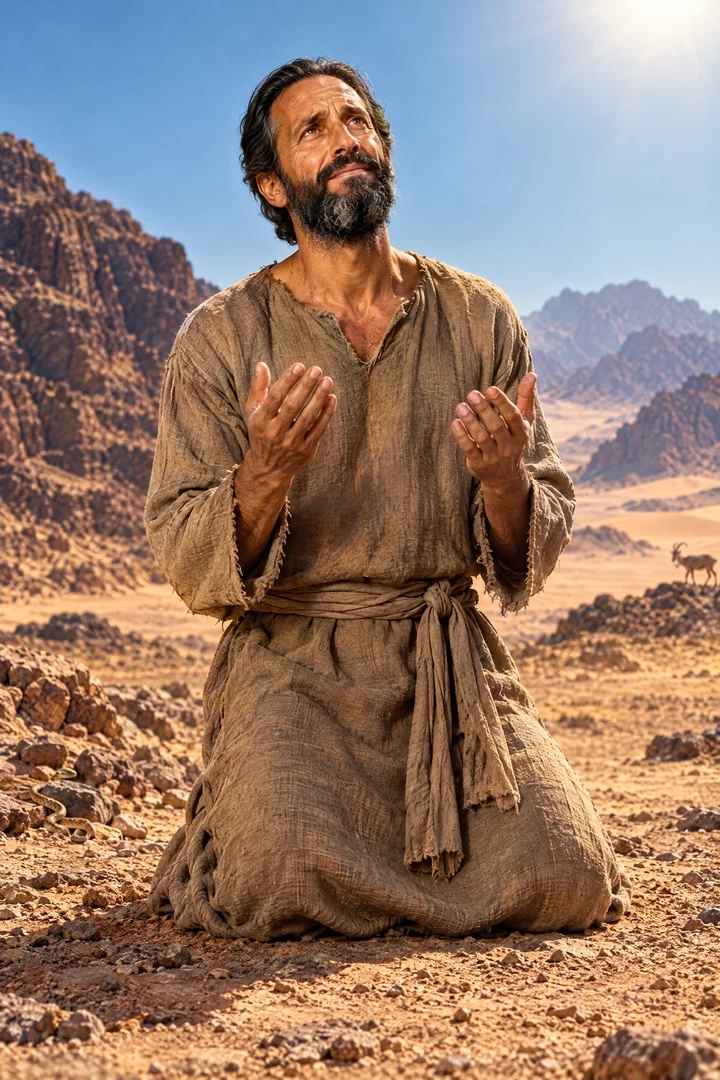
Neither went I up to Jerusalem to them which were apostles before me; but I went into Arabia, and returned again unto Damascus.
Translations
Neither went I up to Jerusalem to them which were apostles before me; but I went into Arabia, and returned again to Damascus.
Neither went I up to Jerusalem to them which were apostles before me; but I went into Arabia, and returned again unto Damascus.
neither went I up to Jerusalem to them which were apostles before me: but I went into Arabia, and returned again unto Damascus.
Neither did I go to Jerusalem to them who were apostles before me: but I went into Arabia, and returned again to Damascus.
neither went I up to Jerusalem to them which were apostles before me: but I went away into Arabia; and again I returned unto Damascus.
neither went I up to Jerusalem to them that were apostles before me: but I went away into Arabia; and again I returned unto Damascus.
nor did I go up to Jerusalem unto those who were apostles before me, but I went away to Arabia, and again returned to Damascus,
nor went I up to Jerusalem to those [ who were] apostles before me; but I went to Arabia, and again returned to Damascus.
Neither went I up unto Jerusalem unto them who, before me, were apostles,—but I went away into Arabia, and again returned unto Damascus.
Berean Standard Bible, Majority Standard Bible
nor did I go up to Jerusalem to the apostles who came before me, but I went into Arabia and later returned to Damascus.
nor did I go up to Jerusalem to those who were apostles before me, but I went away into Arabia. Then I returned to Damascus.
And I went not up to Jerusalem to those who were Apostles before me; but I went away into Arabia, and again I came back to Damascus.
Neither came I againe to Hierusalem to them which were Apostles before me, but I went into Arabia, and turned againe vnto Damascus.
Douay-Rheims (Challoner revision)
Neither went I to Jerusalem, to the apostles who were before me: but I went into Arabia, and again I returned to Damascus.
Pictures
Cross-references
- Acts 9:23-25
And after that many days were fulfilled, the Jews took counsel to kill him:
Paul’s preaching in Damascus led to a plot and his escape in a basket.
- Galatians 1:11-12
But I certify you, brethren, that the gospel which was preached of me is not after man.
Paul received the gospel through revelation from Jesus Christ, not human teaching.
- Acts 9:3-9
And as he journeyed, he came near Damascus: and suddenly there shined round about him a light from heaven:
Paul recounts his conversion and journey to Damascus after encountering the Lord and heavenly light.
- Acts 9:26-27
And when Saul was come to Jerusalem, he assayed to join himself to the disciples: but they were all afraid of him, and believed not that he was a disciple.
After returning from Arabia, Paul meets fearful disciples in Jerusalem, and Barnabas brings him to the apostles.
- 2 Corinthians 11:32-33
In Damascus the governor under Aretas the king kept the city of the Damascenes with a garrison, desirous to apprehend me:
Recounts Paul’s danger and escape from Damascus in a basket.
- Galatians 2:1
Then fourteen years after I went up again to Jerusalem with Barnabas, and took Titus with me also.
Dates Paul’s later Jerusalem visit fourteen years afterward.
- Acts 9:20
And straightway he preached Christ in the synagogues, that he is the Son of God.
Paul preached Jesus in Damascus before going to Arabia.
- Galatians 1:1
Paul, an apostle, ( not of men, neither by man, but by Jesus Christ, and God the Father, who raised him from the dead;)
Paul’s apostleship came from Christ, not from people.
- Galatians 2:9
And when James, Cephas, and John, who seemed to be pillars, perceived the grace that was given unto me, they gave to me and Barnabas the right hands of fellowship; that we should go unto the heathen, and they unto the circumcision.
The leaders give Paul the right hand of fellowship.
- Acts 9:15
But the Lord said unto him, Go thy way: for he is a chosen vessel unto me, to bear my name before the Gentiles, and kings, and the children of Israel:
Paul was chosen to carry Christ’s name to the Gentiles.
- Acts 26:15-17
And I said, Who art thou, Lord? And he said, I am Jesus whom thou persecutest.
Paul’s commission to the Gentiles began at his conversion.
- Acts 26:12
Whereupon as I went to Damascus with authority and commission from the chief priests,
Paul's former commission against believers
- Acts 9:22
But Saul increased the more in strength, and confounded the Jews which dwelt at Damascus, proving that this is very Christ.
Saul confounded the Jews at Damascus before leaving for Arabia.
- Acts 9:23
And after that many days were fulfilled, the Jews took counsel to kill him:
The plot to kill Saul follows his return to Damascus after many days.
- Galatians 1:21-22
Afterwards I came into the regions of Syria and Cilicia;
unknown to Judean churches shows no human teaching
- Galatians 2:6
But of these who seemed to be somewhat, ( whatsoever they were, it maketh no matter to me: God accepteth no man’s person:) for they who seemed to be somewhat in conference added nothing to me:
The recognized leaders added nothing to Paul’s message.
- Acts 9:21
But all that heard him were amazed, and said; Is not this he that destroyed them which called on this name in Jerusalem, and came hither for that intent, that he might bring them bound unto the chief priests?
amazement at Paul preaching in Damascus
- Acts 26:20
But shewed first unto them of Damascus, and at Jerusalem, and throughout all the coasts of Judæa, and then to the Gentiles, that they should repent and turn to God, and do works meet for repentance.
message Paul preached to hearers
- Acts 1:21-22
Wherefore of these men which have companied with us all the time that the Lord Jesus went in and out among us,
defines apostles as companions of Jesus
- Acts 15:1-35
And certain men which came down from Judæa taught the brethren, and said, Except ye be circumcised after the manner of Moses, ye cannot be saved.
Identifies the later visit as the apostles’ council, dated to A.D. 51.
Commentary
Each commentary is drawn from primary sources: the writings of Ellen G. White and Adventist pioneers and periodicals. Each commentary is separate. Its own words are not a quotation; follow the references to read the source passages.
Ellen G. White
16 sources
After his conversion Paul did not go up to Jerusalem to consult or learn from those who were apostles before him, but went into Arabia and afterward returned to Damascus.AA 128.2AA 124.3–125.1SLP 33.3–34.1 He left Damascus for Arabia after preaching Christ there only a short time, when fierce opposition stopped his work and put his life in danger, leaving for safety and retreat by God's direction and commission.AA 125.2–126.1AA 124.3–125.1AC1 50.1–2 In the desert solitude of Arabia, alone with God apart from others and the apostles, he gave himself to communion, prayer, study and meditation, reviewing his past, deepening his repentance, emptying his soul of prejudice and tradition, and studying the Scriptures stored in his memory with Christ as his teacher.AA 125.2–126.1AA 124.3–125.1SLP 33.3–34.1 There Jesus met with him and strengthened and established him in faith, wisdom and grace for his great work among the Gentiles as one chosen apostle by God and not by men, so that his preaching came not by instruction from men but by revelation from Jesus Christ.AA 125.2–126.1AA 124.3–125.1SLP 33.3–34.1AC1 50.1–2SLP 190.4–191.1 After returning to Damascus he preached boldly in Jesus' name until opponents plotted to kill him and he escaped by night lowered in a basket through the wall, while at Jerusalem the believers had heard only rumor of his change and feared and doubted him and would not receive him.AA 128.2RH Mar 30, 19113SP 320.2AC1 51.3–52.17RED 51.2
Journey After Conversion
After his conversion Paul did not go up to Jerusalem to consult or learn from the apostles who were before him, but went into Arabia and afterward returned to Damascus.AA 128.2SLP 33.3–34.1AC1 50.1–2ST Dec 19, 18783SP 318.2–3 He made no communication with the apostles at Jerusalem first, going from Damascus into Arabia and later returning to Damascus.AA 124.3–125.1SLP 33.3–34.1AC1 50.1–2ST Dec 19, 18783SP 318.2–3
He left Damascus for Arabia after preaching Christ there only a short time, when fierce opposition prevented him from continuing his work.AA 125.2–126.1AA 124.3–125.1RH Mar 30, 1911 His life was in peril and in danger, so he left for safety and a time of safe retreat.AA 124.3–125.1AC1 50.1–2ST Dec 19, 18783SP 318.2–3 He went by God's direction and commission, told by a messenger from heaven to leave for a time.AC1 50.1–2ST Dec 19, 1878RH Mar 30, 1911
His time in Arabia came before his return to Damascus and his later visit to Jerusalem.RH Mar 30, 1911SLP 190.4–191.1 After returning to Damascus he preached boldly in Jesus' name, and the Jews' plot to kill him led the disciples to lower him in a basket through the city wall.RH Mar 30, 1911 About three years after his conversion he went to Jerusalem chiefly to see Peter, and three years passed before he visited Jerusalem, where he stayed only fifteen days.RH Mar 30, 1911SLP 190.4–191.1
Preparation in Arabia
In the desert solitude of Arabia, apart from others and from the apostles, he was alone with God in communion, prayer, study, meditation and contemplation, making nature's solitudes a school.AA 124.3–125.1SLP 33.3–34.1AC1 50.1–2ST Dec 19, 18783SP 318.2–3 There he reviewed his past life, searched and examined his heart, deepened his repentance, emptied his soul of the prejudices and traditions that had shaped his life, and studied the Old Testament Scriptures stored in his memory with Christ as his teacher to learn of God and receive instruction from the Source of truth.AA 125.2–126.1AA 124.3–125.1AC1 50.1–2ST Dec 19, 18783SP 318.2–3 Through this seeking he was preparing for his work among the Gentiles, which felt too great and important for him as one chosen as an apostle not by men but by God.SLP 33.3–34.1AC1 50.1–2ST Dec 19, 18783SP 318.2–3
He sought God earnestly until he knew his repentance was accepted, his great sin pardoned, and Jesus would be with him and sustain him with constant grace in his coming ministry.AA 124.3–125.1SLP 33.3–34.1AC1 50.1–2ST Dec 19, 18783SP 318.2–3 He carried ever in his body the marks of Christ's glory in his eyes blinded by the heavenly light, while the days of darkness spent in solitude at Damascus were as years in his experience.AC1 50.1–2 In Arabia Jesus communed and met with him in close connection with heaven, strengthening and establishing him in faith and giving him wisdom and grace.AA 125.2–126.1SLP 33.3–34.1AC1 50.1–2ST Dec 19, 18783SP 318.2–3 His preaching therefore did not come from instruction by other people but from revelation by Jesus Christ.SLP 190.4–191.1
Preaching and Reception
After his time in Arabia Paul returned to Damascus and there preached boldly in the name of Jesus.AA 128.2RH Mar 30, 19117RED 51.2 His bold preaching roused such opposition that his enemies plotted to kill him and watched the gates of the city to seize him.RH Mar 30, 19117RED 51.2 To save his life the disciples took him by night and let him down in a basket through an opening in the city wall.RH Mar 30, 19117RED 51.2
Because he had withdrawn into Arabia, no definite word of him and little definite news of his change reached the disciples and believers at Jerusalem.3SP 320.2AC1 51.3–52.17RED 52.2SLP 35.3–36.1ST Dec 19, 1878 They had heard only a rumor of his wonderful change, and remembering his former persecutions they were slow to believe that he had truly become a follower of Jesus.3SP 320.2AC1 51.3–52.1SLP 35.3–36.1 They doubted the reports of his conversion and feared he was acting a part in order to deceive and destroy them.AC1 51.3–52.17RED 52.2ST Dec 19, 1878 When he afterward tried to join himself to the brethren as one of their number they would not receive him, and this rejection was to him a cause of great grief and disappointment.AC1 51.3–52.17RED 52.2
Sources
Pioneers and periodicals
47 sources
After his conversion he did not go up to Jerusalem to those who were already apostles, but withdrew into Arabia and then returned to Damascus, waiting three years before going up briefly to see Peter.ST Jul 18, 1900ST Jul 18, 1900ST Dec 8, 1898RH May 6, 1852 He stayed away so that his gospel and calling would stand as received directly from God by revelation of Jesus Christ, not by instruction or commission from men.RH Dec 25, 1900ST Dec 8, 1898RH Jan 9, 1855ST Jun 28, 1883 His time alone in the desert was his training in God's school, where in prayer, study, repentance and communion with Christ he was fitted for apostolic work.ST Dec 19, 1878RH Dec 7, 1911ST Jun 28, 1883ST Jan 22, 1885ST Mar 6, 1893 There he also began to carry the gospel he had received, making Arabia his first field before returning to Damascus.RH Apr 25, 1871RH Aug 20, 1908 Not conferring with flesh and blood therefore means obeying God's call at once without waiting for human counsel, approval or hindrance.RH Mar 5, 1901RH Dec 25, 1900ST Apr 18, 1911RH Dec 17, 1861RH Jun 5, 1860
Journey and Chronology
After his conversion God revealed His Son in him and called him to preach to the Gentiles, and he did not consult other people or go up to Jerusalem to the apostles who were before him, but went into Arabia and returned again to Damascus, only later visiting Jerusalem.ST Jul 18, 1900ST Jul 18, 1900RH May 6, 1852
The “many days” of Acts 9 cover three years, part of which was spent in Arabia before the return to Damascus and the later visit to Jerusalem.ST Jun 28, 1883ST Dec 8, 1898ST Jul 18, 1900
The verse does not say how long he was in Arabia, and this period belongs to the “many days” before the Jews plotted to kill him, though Acts gives no exact length for it.ST Jun 28, 1883ST Oct 7, 1897
During that interval he preached without seeing another apostle.ST Dec 8, 1898
He spent three years in Arabia and Damascus before going to Jerusalem to meet Peter and James, having gone into Arabia with the gospel he had received from God and then returned to Damascus rather than going immediately to work among the Jewish apostles.ST Dec 8, 1898
His visit to Jerusalem came only three years after his conversion, when he stayed fifteen days and saw only two apostles.ST Dec 8, 1898
His conversion is dated to A.D. 34, marking with Stephen’s death the end of the seventy weeks, with his visit to Jerusalem after three years used to fix that date.ST Mar 4, 1886
After returning to Damascus he preached boldly in Jesus’ name, and the Jews’ plot to kill him led the disciples to lower him in a basket through the city wall.RH Mar 30, 1911
About three years after his conversion he went to Jerusalem chiefly to see Peter.RH Mar 30, 1911
Because he had been away the believers had heard nothing definite about him, so they doubted reports of his conversion and feared he might be deceiving them.ST Dec 19, 1878
The verse belongs to the time when Saul is known by his Roman name Paul, meaning little, while Claudius Caesar rules Rome and Cuspius governs Judea, and its movements between Damascus and Arabia are to be followed on a map.ST Apr 15, 1897
It forms background to the first missionary journey to the Gentiles, which comes after about sixteen years of growth when the church sends out her first missionaries, matching Paul’s own account of his conversion in Galatians 1:13-24 with Acts 9:1-30.ST Apr 15, 1897
It belongs to the first chapter of Galatians that gives the background incidents for the meeting in Jerusalem fourteen years after his first visit and for the teaching of Galatians 2:6-10 that God shows no respect of persons in entrusting the gospel.
He spent his first time as a Christian in Arabia and Damascus before going to Jerusalem, with fourteen years then passing between that first visit to Jerusalem and his going up again to Jerusalem.
The verse fills in details that Acts leaves out without contradicting Acts, and his work among the Gentiles began before his declaration in Acts 18:6 that he would go to them.ST Jun 28, 1883RH Dec 19, 1871
Gospel Received Directly
When God called Paul by grace and revealed His Son in him to preach Christ among the Gentiles, Paul did not confer with flesh and blood or consult other people about his duty to answer that call.RH Dec 25, 1900ST Jun 28, 1883 His commission from God was direct and clear, so he needed no human counsel about the issue at stake and received no instruction from men.RH Dec 25, 1900ST Jun 28, 1883
He did not go up to Jerusalem to those who were apostles before him to receive instruction or his mission from them, but went into Arabia and returned again to Damascus, visiting Jerusalem only later.ST Dec 8, 1898RH Jan 9, 1855RH Jun 19, 1856 His gospel and call came from God through the direct revelation of Jesus Christ, not from human teachers or through human instruction or approval, and what he preached was revealed to him directly by Christ rather than taught to him by another person.ST Dec 8, 1898RH Jan 9, 1855RH Jun 10, 1875ST Sep 15, 1909 He therefore began preaching without needing to obtain the truth from the apostles or from the place where the gospel had first been proclaimed.ST Dec 8, 1898
His staying away from Jerusalem proves he was sent forth by Jesus Christ and God the Father as a true apostle equal with the other apostles.ST Jun 28, 1883ST Dec 8, 1898 The other apostles were men who had accompanied Jesus from the beginning of His ministry and were familiar with His teachings and practice, so Paul had to show the same direct commission and not a secondhand knowledge received from men.ST Jun 28, 1883 After three years he went up to Jerusalem only to see Peter, staying fifteen days, and saw no other apostle except James the Lord's brother, while remaining unknown by face to the churches of Judea during his time in Syria and Cilicia.ST Jun 28, 1883ST Dec 8, 1898 This establishes that his gospel and authority were not of men but by the revelation of Jesus Christ, that his calling and gospel did not depend on Peter or the other apostles, and that he was not dependent on other believers who might have influenced him.ST Apr 13, 1915ST Jun 28, 1883ST Dec 8, 1898ST Dec 15, 1898
His independent ministry did not mean opposition to the church.ST Nov 25, 1889 After three years he briefly visited Jerusalem, stayed with Peter, and was received and escorted by the believers, and his later effort to compare his teaching with the leaders and his agreement with the church show that his independence was consistent with being led by the Spirit.ST Nov 25, 1889
This proves the continuance of divine supervision of the gospel work.ST Jun 26, 1901 The Lord Himself personally appeared to Paul and personally directed his movements by superhuman power rather than by human leadership.ST Jun 26, 1901
Preparation in Arabia
Before beginning his public work he went into the desert alone with God for preparation and training in God's school, spending a season in quiet meditation, prayer, study and communion that equipped him for apostolic work and for teaching and managing the Lord's work.RH Dec 7, 1911ST Jun 28, 1883RH Feb 6, 1908 The solitude trained him more effectively than his earlier lessons at Gamaliel's feet, giving three more years of study and preparation despite that education.ST Mar 6, 1893RH Feb 6, 1908 The three-year period before he fully entered his ministry was thus time for study and communion with Christ.
In Arabia, away from the apostles, he examined his heart and deepened his repentance, struggling with remorse and seeking forgiveness, purity, faith and assurance that his sin was forgiven and that Christ would sustain him.ST Dec 19, 1878ST Jan 22, 1885 Jesus met with him, strengthened his faith, and gave him wisdom and grace.ST Dec 19, 1878 This preparation strengthened him for his later opposition to religious formalism.ST Jan 22, 1885
The visit was for receiving his knowledge of Christ directly from the Lord Himself by revelation rather than at second hand, and there he received at least some of those wonderful revelations.ST Jun 28, 1883ST Jun 28, 1883 In retirement he learned more than he had gained through his earlier education, showing that knowing God is the foundation of true knowledge.ST Mar 1, 1899
He left Damascus because his life was in danger, by God's direction, being told by a messenger from heaven to leave for a time.ST Dec 19, 1878RH Mar 30, 1911 In Arabia he found a safe retreat and temporary refuge before returning to Damascus.RH Mar 30, 1911
His time in Arabia was a period in which he had to learn patience before continuing his work of carrying the gospel. Like Moses in the wilderness learning to speak with God alone, he had to give up his own plans and learn to be led by the Lord before God could use his abilities in his work.RH Aug 31, 1916
He went into Arabia with the gospel he had received from God and preached salvation there, rather than going immediately to Jerusalem to work among the Jews or staying in Damascus to preach.RH Apr 25, 1871RH Aug 20, 1908RH Dec 19, 1865 His first experience of ministry was in Arabia as an unentered field before returning to Damascus and moving on to new fields, and he spent three years in those regions before going to Jerusalem to meet Peter and James.RH Aug 20, 1908ST Feb 3, 1881 Arabian Christians were later associated with that region and with a teaching about the soul and resurrection.RH Dec 19, 1865
By contrast, those who held the other view taught that he did not go to carry the gospel to the heathen in that region, since he was not yet set apart for the ministry to the Gentiles and the disciples did not yet fully comprehend that the gospel was to be preached to the Gentiles as well as to the Jews, so that even though his work among the Gentiles after ordination stirred feeling against him, he would not have been received if he had engaged in it before receiving his ordination.ST Jun 28, 1883
Obedience and Application
Paul's course teaches following Christ instead of conferring with human beings, even when the flesh trembles at what obedience will cost.RH Mar 5, 1901RH Dec 25, 1900ST Apr 18, 1911RH Dec 25, 1900 He acted without consulting human counsel, letting no family opinion, worldly interests, or concern for personal safety govern his response to God's call, satisfied that God's will alone was authority.RH Mar 5, 1901RH Dec 25, 1900 He went aside to escape all hindrance and to establish no rule of man over the work God had given him.RH Mar 5, 1901 He did not go up to Jerusalem to consult the apostles who had preceded him, but went into Arabia and returned again to Damascus.ST Apr 18, 1911RH Dec 25, 1900 He avoided consulting even fellow believers, so that no one could suppose he had received his gospel or his direction from men rather than directly from the Lord.RH Dec 25, 1900
When God's broad law strikes the heart like a sledgehammer, conferring not with flesh and blood means not delaying, not standing in indecision about duty, and not querying and questioning about this and that.RH Dec 17, 1861 It means not waiting for human approval but obeying immediately as soon as one is rationally convinced of what is right, moving out at once on the new light with strict attention to duty like a man.RH Dec 17, 1861RH Jun 5, 1860 That immediate obedience means beginning at once to keep the Sabbath and to walk in the light shown.RH Jun 5, 1860 When light on the commandments of God is seen, it means at once deciding in the heart to obey God rather than man, and by that course one comes to see and obey the third angel's message.RH Dec 4, 1860 God makes such a prompt obeyer a giant.RH Dec 17, 1861
The verse stands within the first chapter, whose truths must be received before passing on to the rest of the letter.RH Aug 28, 1900 Those truths are that the gospel comes by revelation of Jesus Christ, with God revealing His Son in the believer.RH Aug 28, 1900 Its power delivers from this present evil world and from ceremonialism and formalism.RH Aug 28, 1900
Saul of Tarsus hiding for a time in Arabia after his change and conversion on the road to Damascus answers to Saul of Gibeah hiding for a time in the stuff.RH Sep 3, 1901
Sources