Daniel 1:6
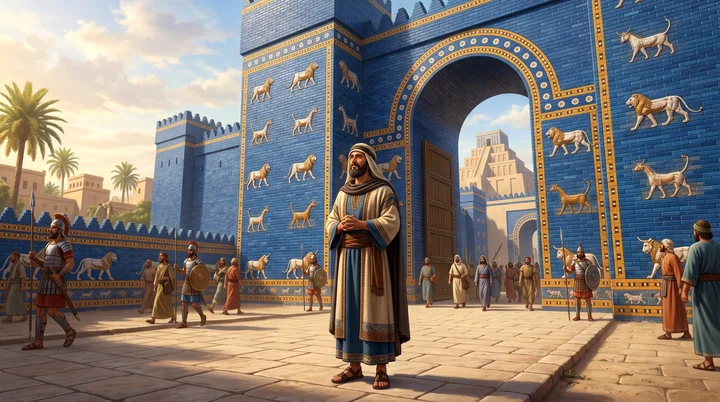
Now among these were of the children of Judah, Daniel, Hananiah, Mishael, and Azariah:
Translations
American King James Version, King James Version, KJV Cambridge Paragraph Bible, Webster Bible
Now among these were of the children of Judah, Daniel, Hananiah, Mishael, and Azariah:
Revised Version, American Standard Version
Now among these were, of the children of Judah, Daniel, Hananiah, Mishael, and Azariah.
And there are among them out of the sons of Judah, Daniel, Hananiah, Mishael, and Azariah,
Now among these were of the children of Judah, Daniel, Hananiah, Mishael, and Azariah.
Now there were, among them, out of the sons of Judah, Daniel, Hananiah, Mishael, and Azariah;
Berean Standard Bible, Majority Standard Bible
Among these young men were some from Judah: Daniel, Hananiah, Mishael, and Azariah.
Now among these of the children of Judah were Daniel, Hananiah, Mishael, and Azariah.
And among these there were, of the children of Judah, Daniel, Hananiah, Mishael, and Azariah.
Nowe among these were certeine of the children of Iudah, Daniel, Hananiah, Mishael and Azariah.
Douay-Rheims (Challoner revision)
Now there were among them of the children of Juda, Daniel, Ananias, Misael, and Azarias.
Pictures
Cross-references
- Daniel 1:17
As for these four children, God gave them knowledge and skill in all learning and wisdom: and Daniel had understanding in all visions and dreams.
God gave Daniel and his companions knowledge, skill, and wisdom.
- Daniel 1:20
And in all matters of wisdom and understanding, that the king enquired of them, he found them ten times better than all the magicians and astrologers that were in all his realm.
Their God-taught wisdom and understanding surpass the king’s other advisers.
- Daniel 1:12
Prove thy servants, I beseech thee, ten days; and let them give us pulse to eat, and water to drink.
their pulse and water diet
- Daniel 2:48
Then the king made Daniel a great man, and gave him many great gifts, and made him ruler over the whole province of Babylon, and chief of the governors over all the wise men of Babylon.
Daniel is made ruler under Babylon’s king.
- Isaiah 39:7
And of thy sons that shall issue from thee, which thou shalt beget, shall they take away; and they shall be eunuchs in the palace of the king of Babylon.
Foretells Hezekiah’s descendants being taken to Babylon and serving in the king’s palace.
- Daniel 1:1-2
In the third year of the reign of Jehoiakim king of Judah came Nebuchadnezzar king of Babylon unto Jerusalem, and besieged it.
Jerusalem’s defeat led to the deportation of Judah’s people to Babylon.
- Daniel 5:12
Forasmuch as an excellent spirit, and knowledge, and understanding, interpreting of dreams, and shewing of hard sentences, and dissolving of doubts, were found in the same Daniel, whom the king named Belteshazzar: now let Daniel be called, and he will shew the interpretation.
The queen identifies Belteshazzar as Daniel, whom the king had named.
- Daniel 2:17-18
Then Daniel went to his house, and made the thing known to Hananiah, Mishael, and Azariah, his companions:
Daniel and his companions seek God together for the dream’s revelation.
- 2 Kings 24:14-16
And he carried away all Jerusalem, and all the princes, and all the mighty men of valour, even ten thousand captives, and all the craftsmen and smiths: none remained, save the poorest sort of the people of the land.
Daniel’s captivity is part of Jerusalem’s deportation to Babylon.
- Ezekiel 14:20
Though Noah, Daniel, and Job, were in it, as I live, saith the Lord GOD, they shall deliver neither son nor daughter; they shall but deliver their own souls by their righteousness.
Daniel is named as an example of righteousness.
- Daniel 6:2
And over these three presidents; of whom Daniel was first: that the princes might give accounts unto them, and the king should have no damage.
Daniel serves effectively in high office under Medo-Persia.
- Jeremiah 25:11-12
And this whole land shall be a desolation, and an astonishment; and these nations shall serve the king of Babylon seventy years.
Jeremiah foretold Judah’s captivity and its duration.
- Daniel 1:19
And the king communed with them; and among them all was found none like Daniel, Hananiah, Mishael, and Azariah: therefore stood they before the king.
After their training, the young men stood before the king.
- Daniel 3:16-18
Shadrach, Meshach, and Abed-nego, answered and said to the king, O Nebuchadnezzar, we are not careful to answer thee in this matter.
Their shared faith led them to refuse to bow to the king’s image.
- Ezekiel 14:14
Though these three men, Noah, Daniel, and Job, were in it, they should deliver but their own souls by their righteousness, saith the Lord GOD.
Daniel is named as an exemplar of wisdom and righteousness.
- Daniel 6:13
Then answered they and said before the king, That Daniel, which is of the children of the captivity of Judah, regardeth not thee, O king, nor the decree that thou hast signed, but maketh his petition three times a day.
calls Daniel a captive of Judah
- Daniel 6:10
Now when Daniel knew that the writing was signed, he went into his house; and his windows being open in his chamber toward Jerusalem, he kneeled upon his knees three times a day, and prayed, and gave thanks before his God, as he did aforetime.
Daniel maintains prayerful fidelity under threat.
- Jeremiah 27:6-8
And now have I given all these lands into the hand of Nebuchadnezzar the king of Babylon, my servant; and the beasts of the field have I given him also to serve him.
Judah’s captivity took place under Nebuchadnezzar’s rule.
- Daniel 2:27-28
Daniel answered in the presence of the king, and said, The secret which the king hath demanded cannot the wise men, the astrologers, the magicians, the soothsayers, shew unto the king;
Daniel says God reveals the dream and its meaning.
- 2 Kings 20:18
And of thy sons that shall issue from thee, which thou shalt beget, shall they take away; and they shall be eunuchs in the palace of the king of Babylon.
Both texts concern the prophecy that Judah’s descendants would serve in Babylon.
Commentary
Each commentary is drawn from primary sources: the writings of Ellen G. White and Adventist pioneers and periodicals. Each commentary is separate. Its own words are not a quotation; follow the references to read the source passages.
Ellen G. White
54 sources
The verse names four youths — Daniel, Hananiah, Mishael and Azariah — as among the children of Judah, of the tribe of Judah, taken as captives to Babylon.HSFM 209.6–210.2Ms 33, 1909, par. 1–8Ms 175, 1898, par. 3–4 They were carried there at the beginning of the seventy years' captivity after Jerusalem was captured early in Jehoiakim's reign, being of royal descent and princely birth, well instructed and of fine form and mental promise.Ms 110, 1904, par. 5–6PK 479.1PK 480.1–2FE 77.2–3PK 428.1 They were selected to be taught the learning and tongue of the Chaldeans and nourished three years on the king's provision that they might stand before the king and serve in his court, placed there not by ambition but by God's providence.HSFM 209.6–210.2CTBH 25.5–26.2Ms 110, 1904, par. 5–6CTBH 26.3–27.2Ms 140, 1906, par. 19–20 Their Hebrew names of high significance were changed for gods of Babylon to familiarize them with idolatry, and their first decisive test was to refuse the king's meat offered to idols and his wine as unclean and harmful to health and clear thought, receiving pulse and water and proving healthier and wiser.CTBH 25.5–26.2Ms 71, 1910, par. 1Ms 110, 1904, par. 17–18PK 481.2 Trained at home to prize God's precepts, they remained true as steel to principle as His representatives to the heathen, and so afford the great illustration of temperance, integrity and courage for students and all who must stand for God under trial.CTBH 25.5–26.2CTBH 189.2PK 479.1Ms 35, 1890, par. 1Ms 140, 1906, par. 19–20
Names and Captivity Setting
The verse names four youths — Daniel, Hananiah, Mishael, and Azariah — as among those of the children of Judah, of the tribe of Judah, taken as Hebrew captives to Babylon.HSFM 209.6–210.2Ms 33, 1909, par. 1–8Ms 175, 1898, par. 3–4PK 476B.1Ms 132, 1901 They were among the captives selected for training in the learning and language of the Chaldeans for service in the Babylonian king's court, and their identity stands alongside their refusal of the king's food and wine, their temperance, and the wisdom and ability they displayed after training.HSFM 209.6–210.2Ms 33, 1909, par. 1–8BS 16.3–17.1 Their history shows that firm commitment to temperance in eating and drinking and abstinence from intoxicating drink and perverted appetite preserved their physical powers and strengthened their minds, and after a ten-day test they were found healthier in appearance and better in knowledge than the others.Ms 33, 1909, par. 1–8Ms 175, 1898, par. 3–4 As young men from Judah among the Israelites taken captive, Daniel already showed promise of the ability he would develop later, and they are presented as God's representatives called to honor Him and bring other nations the blessing of knowing Him.PK 476B.1BS 16.3–17.1
They were carried to Babylon at the beginning of the seventy years' captivity, after Nebuchadnezzar captured Jerusalem early in Jehoiakim's reign, when Babylon was the greatest kingdom in the world.PK 479.1PK 428.1Ms 13, 1900, par. 7–10 They were true as steel to principle, uncorrupted by selfishness, and determined to honor God at the loss of all things, never to compromise with idolaters but to bear their faith and their name as worshipers of the living God as a high honor in prosperity and adversity.PK 479.1 God permitted them to be taken captive so they could carry to the king and nobles of Babylon the knowledge of Him, the only true God, the Creator of the heavens and the earth, and their upbringing in homes that taught Scripture and obedience to its commands prepared them to remain faithful and to witness to the true God when their faith was tested in exile.PK 428.1Ms 13, 1900, par. 7–10 When tested, God's promises sustained them and Scripture guided them, and honoring God, they were honored by God.PK 479.1PK 428.1
They were of royal descent and princely birth, taken from their Jewish home, well instructed, of perfect form and fine mental qualities giving promise of usefulness in mind and body.Ms 110, 1904, par. 5–6PK 480.1–2FE 77.2–3Ms 2b, 1895, par. 19–20 Nebuchadnezzar selected them for training to serve in his court because they showed remarkable ability, and brought into the presence of the king their ability and qualifications were judged by the monarch himself, who took kindly to them, seeing independence with true courtesy and royal lineage.PK 480.1–2Ms 2b, 1895, par. 19–20 He flattered himself that change of country and associations and court life in that magnificent city would efface the impressions of early religious education, yet from childhood they had been brought up in Jerusalem in the knowledge of the true God and in the enjoyment of all its religious privileges, educated and trained until childhood lessons molded their characters after the divine similitude and principles of righteousness were vividly impressed upon their minds by the Holy Spirit.Ms 2b, 1895, par. 19–20 Daniel was about eighteen years old when brought into the heathen court setting, showing that young people can resist corruption and stand by principle amid worldly temptations.4T 569.1–570.1 Those who held that he was about fifteen or sixteen teach that the four youths jointly considered how to protect their physical and mental powers and remain faithful to God while in Babylon.Ms 122, 1897, par. 25–26
Daniel's name comes first because he strongly influenced the other three and served as their leader, and if he had failed to stand firmly for what was right or had indulged himself, they too would have failed and would not have been remembered as specially honored by God.4MR 129.1 Their Hebrew names were given by their parents as things of high value, with peculiar significance often standing for a trait of character.Ms 110, 1904, par. 17–18 Changing them to names referring to the worship of heathen deities was an underhanded attempt by the king to lead these worshipers of the true God to worship idols and to make them quickly familiar with the gods of Babylon.Ms 110, 1904, par. 17–18
Selection and Training for Court
Among these were Daniel, Hananiah, Mishael, and Azariah, youth of Judah chosen to be taught the learning and the tongue of the Chaldeans that they might stand in the king's palace in Babylon and serve in his court.HSFM 209.6–210.2CTBH 25.5–26.2 A daily provision of the king's meat and wine was appointed them, and they were to be nourished for three years so that at the end of that time they might stand before the king.CTBH 25.5–26.2Ms 110, 1904, par. 5–6 To fit them for that service they were placed under the instruction of the wise men of Babylon to become fluent in the Chaldean language.Ms 110, 1904, par. 5–6Ms 2b, 1895, par. 19–20 Brought into the presence of the king, their ability and qualifications were judged by the monarch himself, who took kindly to them, seeing independence with true courtesy and royal lineage and good instruction.Ms 2b, 1895, par. 19–20
They did not enter the king's court by pride or ambition but were placed there by God's wisdom.CTBH 26.3–27.2Ms 132, 1901, par. 1–2 As captives in a foreign land taken from their homes, their exile and their elevation were permitted by God for His purpose, that they might be true representatives of the religion He wanted shown, loyal to Him under any circumstances and consequences.CTBH 26.3–27.2Ms 140, 1906, par. 19–20Ms 132, 1901, par. 1–2
The king's dealing with them was insidious and gradual, not by imposing display of absolute power or open compulsion to renounce faith for idolatry.Ms 110, 1904, par. 5–6Ms 110, 1904, par. 7 His plan was to have them sit for three years at a table with idolaters, where daily observation of the display connected with charming, seductive heathen rites would familiarize them with idolatrous customs.Ms 110, 1904, par. 5–6Ms 110, 1904, par. 7 By that familiarity he hoped to induce them fully to apostatize and become one with the Babylonians in religion.Ms 110, 1904, par. 5–6Ms 110, 1904, par. 7
Their education for the king's court required diligent study and strenuous effort, for God's blessing did not replace their own will, action, and use of their abilities and opportunities.MYP 147.1SPBC 178.1Lt 55, 1895, par. 16–17 They did not treat the blessing of the Lord as a substitute for the taxing effort required of them, but discerned that through the grace of God their destiny depended upon their own will and action.SPBC 178.1Lt 55, 1895, par. 16–17 They brought all their ability to the work, and by close, severe taxation of their powers they made the most of their opportunities for study and labor.MYP 147.1SPBC 178.1Lt 55, 1895, par. 16–17
Temperance Test and Its Meaning
Their first decisive test in Babylon was whether to eat the king's food and drink his wine, for that provision had been offered to idols and partaking of it was treated as homage to Babylon's gods.PK 481.2Ms 122, 1897, par. 25–26 Loyalty to Jehovah forbade them to partake, and even to pretend to eat or drink would have denied their faith, aligned them with heathenism, and dishonored God's law.PK 481.2Ms 122, 1897, par. 25–26
They declined the wine because it could become a snare, and declined the luxuries of the king's table because that food included swine's flesh and other meats pronounced unclean by the law of Moses which Jews were forbidden to eat.CTBH 25.5–26.2Ms 122, 1897, par. 25–26 They refused the king's rich food and wine because they believed these would harm their health and cloud their minds, which they wanted to keep clear for learning, for serving God, and for representing true religion amid heathenism, since what they ate and drank affected their intelligence.Ms 71, 1910, par. 1Ms 132, 1901, par. 11
Daniel purposed in his heart not to defile himself, and they asked instead for simple fare of pulse and water.CTBH 25.5–26.2 After Daniel obtained a ten days' trial they were found far more healthy in appearance and better in knowledge than those who ate the king's dainties.CTBH 25.5–26.2Ms 33, 1909, par. 1–8 Pulse and water therefore continued thereafter as their food.CTBH 25.5–26.2
Faithful Witness in Babylon
Their presence in Babylon as captives from Judah was not accident but God's purpose that they should be His representatives there.PK 476B.1PK 479.18T 153.1–3 They were called to honor Him and to carry to heathen nations the blessing that comes through knowing Jehovah, the only true God, the Creator of the heavens and the earth.PK 476B.1PK 479.1Ms 13, 1900, par. 7–10 God permitted them to be taken when Babylon was the greatest kingdom in the world so that they might bring that knowledge to its king and nobles, and He permitted both their exile and their elevation for this end.Ms 140, 1906, par. 19–20Ms 13, 1900, par. 7–10 Those who place themselves in right relation with God and make the most of their opportunities are rewarded even as Daniel was, to whom with his companions God gave knowledge and skill in all learning and wisdom.8T 153.1–3Ms 13, 1900, par. 7–10
They were true as steel to principle, uncorrupted by selfishness, and determined to honor God at the loss of all things.PK 479.1 They guarded the religious instruction they had received, prayed for understanding, and resolved to resist temptation and remain true to the only true God rather than engage in idolatrous practices.Ms 35, 1890, par. 1Ms 35, 1890, par. 7 In warfare-taken captivity they planned to remain true to God's commandments and avoid every form of idolatry, putting into practice what their early education had taught.Ms 35, 1890, par. 1Ms 35, 1890, par. 7
They were never to compromise with idolaters but to bear their faith and their name as worshipers of the living God as a high honor.PK 479.16T 219.1–2CH 205.1–2 This they did in prosperity and in adversity, holding fast to their home training while instructed in Babylon and remaining faithful students, loyal to Jehovah under any circumstances and consequences.PK 479.1Ms 140, 1906, par. 19–206T 219.1–2 They honored God and lived in close connection with Him, and God honored them and gave them wisdom, knowledge, and understanding.8T 153.1–36T 219.1–2CH 205.1–2
Their captivity, together with the placing of the vessels of God's house in the temple of the Babylonish gods, was boastfully cited by the victors as evidence that Babylonian religion and customs were superior to those of the Hebrews.PK 479.2 That humiliation had been invited by Israel's departure from God, yet through that very humiliation God gave Babylon evidence of His supremacy, of the holiness of His requirements, and of the sure results of obedience.PK 479.2 That testimony He gave through those who were loyal to Him.PK 479.2
They did not enter the king's court by ambition but were placed there by God's wisdom.CTBH 26.3–27.2 In that setting they honored their early religious training and remained loyal to God's law despite danger, and through God's blessing gained strength, health, appearance, and intellectual ability.CTBH 26.3–27.2 Though captives in a foreign land, God did not allow the envy and hatred of their enemies to prevail against them.CTBH 26.3–27.22T 139.2
Early Training and Character
Daniel, Hananiah, Mishael, and Azariah had received a right education at home in Judah before the captivity separated them from family, where parents who feared God taught them to prize His precepts and made the Bible the study of their lives.Ms 140, 1906, par. 19–20Ms 110, 1904, par. 11 They held fast to that home training while being instructed in Babylon and remained faithful students, loyal to Jehovah under any circumstances and consequences.Ms 140, 1906, par. 19–20 Their upbringing in homes that taught Scripture and their obedience to its commands prepared them to remain faithful and to witness to the true God when their faith was tested in exile.PK 428.1
From childhood they had been brought up in Jerusalem in the knowledge of the true God and in the enjoyment of all its religious privileges, educated and trained until the lessons of childhood molded and fashioned their characters after the divine similitude.Ms 2b, 1895, par. 19–20Ms 62, 1901, par. 17–18 The principles of righteousness were vividly impressed upon their minds by the Holy Spirit.Ms 2b, 1895, par. 19–20 Before separation by captivity Daniel received the ancient Hebrew training in which home and school were one, with father and mother teaching God's requirements and God's dealings with His people.RH Oct 30, 1900 They associated thoughts of God with all daily life, recounted God's mighty works of deliverance with reverence, and impressed great truths of providence and the future life upon the young mind.RH Oct 30, 1900 By figures and symbols the lessons were illustrated and fixed in memory, initiating him from infancy into the mysteries, wisdom, and hopes of his fathers and guiding him to think beyond things seen and transitory to the unseen and eternal.RH Oct 30, 1900
From that education he came forth vigorous in body and mind, quick to perceive and strong to act, with the heart prepared like good ground for seed.FE 95.5–96.1RH Oct 30, 1900 His mind was trained to see God in revelation and in nature, in stars, trees, flowers, mountains, and brooks, and to respond to the voices of the prophets and to God's revelation.FE 95.5–96.1RH Oct 30, 1900 Early training from childhood to youth had acquainted them with God, storing the mind with pure, sound, honest principles and precious truths of the Word engraved upon the tablets of the soul, and this preserved them in test and trial when brought into captivity.Ms 56, 1895, par. 8 Truths only dimly comprehended in the past became essential in time of need, flashing like concealed treasure and newly discovered jewels revealing all their beauty, and when their faith was tested in exile God's promises sustained them and Scripture guided them.Ms 56, 1895, par. 8PK 428.1
Removed from their own land and its associations to be captives among the heathen, the principles they had received in youth were severely tested.Ms 2b, 1895, par. 19–20 Yet those who love and serve Him are never left to be the sport of temptation.Ms 2b, 1895, par. 19–20 Brought into the presence of the king, their ability and qualifications were judged by the monarch himself, who took kindly to them, seeing in them a spirit of independence and yet true courtesy and finding them of royal lineage and well instructed.Ms 2b, 1895, par. 19–20 He flattered himself that change of country and associations and the influence of court life in that magnificent city would efface the impressions made by their early religious education.Ms 2b, 1895, par. 19–20 Their early training shows what may be expected from youth in this day if every child receives the same attention, and it proves Christ is willing to reveal Himself to children when parents treat them as a sacred responsibility from God and teach them from babyhood to keep the commandments of God, to be obedient, and to form characters after the divine similitude.Ms 110, 1904, par. 11Ms 62, 1901, par. 17–18 It teaches that fathers and mothers are guardians of their little ones, so that if parents fail in duty and neglect their children, the sins of sons and daughters whose characters are defective will be charged to the parents as well as to the transgressors.Ms 110, 1904, par. 11
Lessons for Study and Life
The four named in the verse, Daniel, Hananiah, Mishael, and Azariah, afford the most comprehensive and forcible illustration of true temperance and its attendant blessings.CTBH 25.5–26.2 Their integrity and firmness exemplify courage to stand for principle, and Daniel is a holy man, a bold representative of pure hygiene whose history in the first chapter should be read.CTBH 189.2RH May 22, 1900Lt 42, 1900, par. 20 They were youths selected to be educated in the learning and the tongue of the Chaldeans that they might stand in the king's palace in Babylon, with a daily allowance of food and wine appointed from the king's table.CTBH 25.5–26.2 Daniel purposed in his heart not to defile himself with the portion of the king's meat nor with the wine, declining both the wine and the luxuries because that food included swine's flesh and other meats pronounced unclean by the law of Moses which Jews were forbidden to eat.CTBH 25.5–26.2 They asked for simple fare of pulse and water, and after a ten days' trial obtained by Daniel they were found far more healthy in appearance than those who ate the king's dainties, so pulse and water continued thereafter as their food.CTBH 25.5–26.2
Their history teaches students that self-denial in eating and drinking honors God and helps them excel in knowledge and brain power.Ms 93, 1910, par. 3–4 Their firm commitment to temperance preserved physical powers and strengthened minds, while their resolve to honor God accompanied growth in physical, mental, and spiritual understanding and usefulness.Ms 175, 1898, par. 3–4 Their strict temperance in refusing the king's wine and rich food kept clear minds to learn about God and the truth and to present these before the king and his associates, because what they ate and drank affected intelligence, and their course as students succeeded.Ms 71, 1910, par. 1 Their account shows that each person should purpose in the heart not to damage the powers of the mind, but to cherish them for the work appointed by the Lord.Ms 186, 1907, par. 38–41 The chapter gives valuable instruction that in school religious interest must be the first and highest study, that when hearts are drawn toward heavenly things words and actions testify of heavenly things in just that proportion, and that spiritual health of the soul creates a fragrant atmosphere.Ms 140, 1904, par. 8–9 Their endurance of the test is linked with later reception of help in explaining the king's dream.Ms 71, 1910, par. 5–6
Their recorded life presents an illustrious, holy, bright example of what people may become when united with the God of wisdom, encouraging those who must endure trial and temptation.BS 16.2 At about eighteen years old in a heathen setting Daniel remained loyal to God, showing that a young person can be tested and by standing firm to principle resist corruption, stand by principle amid worldly temptations, and become a pattern of integrity.4T 569.1–570.1SCE 23.1 His example in the Babylonian schools shows that education grounded in God's word and practical obedience to it can reveal heavenly wisdom above the learning of even the highest schools, and that amusements did not have the supremacy in his pursuit of education.STE 221.1 Their example shows that students can stay close to God through prayer, seek wisdom, guard religious instruction, resolve to resist temptation and remain true to the only true God rather than engage in idolatrous practices, and faithfully meet duties under both human and heavenly oversight.Ms 35, 1890, par. 1Ms 51, 1893, par. 33 They gave time to diligent work with willing hearts and ready minds rather than selfish aims or amusement, putting instruction into practice, a standard required of every scholar.Ms 51, 1893, par. 33Ms 35, 1890, par. 7
Daniel in Babylon is a pattern for speedy preparation for work, in that he did not devote years to continued study of one line of book-knowledge but entered upon the work for which he had studied, putting into practical use what he had learned under tutors and putting theory into practice.FE 350.1–351.1 His course means students should practice what they learn rather than re-enter study, seek heavenly direction, and make no move even on teachers' advice without humbly seeking wisdom from God and receiving His guidance and counsel.FE 350.1–351.1 He is the pattern for believers who enter worldly colleges and schools as students after becoming established, rooted and grounded in the truth with the Spirit, living out what they believe without sacrificing principle, respecting all rules and regulations, and depending on the power seen in a godly life more than on words spoken.4MR 51.1–53.1 He kept the living principles of truth including Sabbath observance and started no open controversies, yet in simple language told inquirers the simple story of truth as it is in Jesus and simple Bible doctrines, so the leaven worked, light shone forth, investigation was aroused, seeds of truth sprang up under the Holy Spirit to bear fruit, and souls were saved.4MR 51.1–53.1 They serve as an example for institutions, which are to be a witness to the world as they were, and those who place themselves in right relation with God and make the most of their opportunities will be rewarded even as Daniel was, to whom God gave knowledge and skill in all learning and wisdom.HPMMW 6.2–3Ms 13, 1900, par. 7–10 They were permitted to be taken captive when Babylon was the greatest kingdom in the world so they could carry to the king and nobles of Babylon the knowledge of Him, the only true God, the Creator of the heavens and the earth.Ms 13, 1900, par. 7–10
Sources
Pioneers and periodicals
81 sources
The verse names four young men of the tribe of Judah among the captives taken to Babylon, Daniel, Hananiah, Mishael and Azariah.ST Mar 2, 1882RH Feb 20, 1900 They were lads in their teens of royal seed and noble families, chosen by rigid tests for unblemished appearance and developed intellect to be trained three years in the learning and tongue of the Chaldeans to stand before the king.RH Feb 20, 1900RH Jun 4, 1908 They were carried away when Nebuchadnezzar first captured Jerusalem about 605 B.C. and set the vessels of God's house in his god's palace, at the beginning of the seventy years' sojourn.RH Aug 24, 1916ST Their Hebrew names honored the true God and His worship, and the king's giving them new names for Babylonian gods was meant to bind them to idolatry and make them forget Jehovah, yet they did not forget God.RH Jan 12, 1869ST Oct 21, 1908ST Nov 28, 1911 Their training is God's object-lesson setting His whole-person education beside Babylon's education at its best, for they purposed not to defile themselves with the king's meat and wine but stood the ten days' trial on pulse and water and were found healthier and wiser, placed there by providence to honor God and make Him known in a heathen court.ST Mar 2, 1882STST Jan 29, 1885RH Aug 7, 1866ST Nov 18, 1897
Four Youths Identified
Among these captives were four of the children of Judah, Daniel, Hananiah, Mishael, and Azariah.ST Mar 2, 1882RH Feb 20, 1900ST Dec 12, 1911RH Aug 24, 1916 They were young men of Judah brought to the king's court and placed there by providence to honor God and remain faithful to the laws of their fathers despite danger and temptation.ST Mar 2, 1882ST Dec 12, 1911ST Jul 24, 1901 They were part of the royal youths taken for service and training in Babylon, selected for royal standing and qualities and trained three years in Babylonian learning and language.RH Aug 24, 1916 Only these four names are known from the larger company chosen, though the total number chosen is unknown.RH Aug 24, 1916ST Jul 24, 1901
Children of Judah means of the tribe of Judah, while the wider company are called children of Israel as descendants of Jacob whose name was changed to Israel.RH Jun 4, 1908 The four were of royal seed and of the nobles, of leading families at Jerusalem, of royal standing and of royal form and bearing.RH Jun 4, 1908ST Nov 28, 1911ST May 13, 1886ST Jul 27, 1904 They were probably of the house of David, Daniel's lineage being described as royal, and his royal status and education did not prevent his mighty use by God.RH Jun 4, 1908RH Aug 24, 1916 They were selected from royal blood and nobles and from the royal household, carried from Jerusalem to Babylon among people who worshiped idols and far from family and home.RH Jun 4, 1908ST May 13, 1886ST Jul 27, 1904
They were children, lads in their teens, youths of tender age about fourteen when recommended and when education began.RH Feb 20, 1900RH Jun 4, 1908 That is just the age when surroundings have the most powerful influence upon conduct, when without a living principle within a person is swayed to and fro by the pressure of outward circumstances.RH Feb 20, 1900 They had passed rigid tests requiring the best physical appearance without blemish and well-favored, fit to stand before the haughty king.RH Feb 20, 1900RH Jun 4, 1908 They gave evidence of intellectual ability already well developed, with skill in all wisdom and knowledge and science and ability to learn the learning and tongue of the Chaldeans.RH Feb 20, 1900RH Jun 4, 1908
They were chosen by command to be trained for service in the palace, to be taught the learning and tongue of the Chaldeans that they might stand in the king's palace before the king.RH Jun 4, 1908 The king placed them in his universities, including Borsippa, for a three-year course of special training with nourishment to fit them as future servants, officers, ministers, counselors and ministers of government.RH Jun 4, 1908ST Nov 28, 1911ST Dec 2, 1897RH Jan 19, 1869 After three years under instruction in school they would become eligible to serve in the kingdom's affairs and were counted among Babylon's wise men.ST Dec 2, 1897RH Jan 19, 1869ST Apr 2, 1894 Daniel was their leader and spoke for the others, and they may have been cousins.ST May 13, 1886 The verse thus introduces his three faithful companions who shared his testing and remained steadfast to God, remembering that God was with them in Babylon as in Jerusalem and resolving to serve and obey Him wherever they were with only fear of doing wrong.ST May 13, 1886
Babylon and Captivity Setting
Daniel 1:6 stands in the opening that presents Babylon and her king.ST Nov 28, 1911 Babylon was one of the first great cities of antiquity, founded by Nimrod, and was the center and starting point of the civilization that afterward spread through Western Asia, where the earliest religious, scientific, and artistic traditions of present civilization were cradled.ST Nov 28, 1911 The origin of its name was the sin of its founders in rebelling against God, rejecting His law in peopling the earth, seeking their own glory and perpetuating their own name, declaring they would escape future deluges, concentrate their efforts, and become arbiters of men's destiny.ST Nov 28, 1911
Men called it Bab-il or Bab-ilu, the Gate of God or Gate of Heaven, expressing man's attempt to improve upon God's plan, to put man's work in place of God's free grace and Spirit, and to exalt the creature to the throne of the Creator.ST Nov 28, 1911 God called it Babel or Babylon, meaning confusion, because erecting other standards always leads to confusion; perverse men named the city what they hoped it would be, while God named rebellious human effort what it truly is.ST Nov 28, 1911 From that effort and false principle has sprung every false system of religion and every perversion of the true religion, which has cursed the nations and the world, put to death millions of the children of God, and made all the earth drunken so the nations are mad.ST Nov 28, 1911
At this time Babylon, no longer Hamitic but decidedly Shemitic, had risen again to ascendancy under Nabopolassar, appointed in B.C. 626 by the Assyrian emperor, arising from ancient ruins and former vassalage to proud Nineveh.ST Nov 28, 1911 Assyria had yielded to the united superior power of Media, Egypt, and Babylonia, and Nineveh fell as God had predicted.ST Nov 28, 1911 The kings of Babylon and Media had strengthened their mutual interests by marriage between the royal families.ST Nov 28, 1911 Nebuchadnezzar son of Nabopolassar was king, Babylon's greatest king, progressive and enlightened, without the vanity and cruelty of some ancient Assyrian monarchs, ruling from a city long the seat of ancient learning, associated with his father as joint ruler in B.C. 607, and his wife was Amyitis daughter of Cyaxares king of the Medes.ST Nov 28, 1911
Babylon was just beginning to crown herself with greater glory, with ancient public buildings and heathen temples repairing and new ones projected on a much larger scale.ST Nov 28, 1911 Egypt had bowed to defeat, wealthy Tyre was humbled, and Edom and Moab and Philistia had all passed under the rod of Nebuchadnezzar.ST Nov 28, 1911 From the days of Hammurabi, the Amraphel of Genesis 14:1, who had made Babylon great, the city had so continued in supremacy, the center of power, wealth, and culture.
The four were taken when Nebuchadnezzar first captured Jerusalem in B.C. 605, also dated 606 B.C. and about 607 B.C., at the beginning of the seventy years' sojourn in which Daniel lived the whole time in Babylon.RH Aug 24, 1916STST Nov 21, 1911RH Nov 19, 1857 He plundered its treasures, burned the city and its glorious temple, and set the vessels of God's house in his god's palace in proof of complete subjugation after Jerusalem fell.STST Nov 21, 1911 Daniel first appears among Judah's noble captives in the first year of Nebuchadnezzar, with Hananiah, Mishael, Azariah and several other companions taken captive and placed under special tutoring to educate him for a place in the council of the nation among the wise men, soon after the beginning of which captivity Nebuchadnezzar had his dream of the great image.RH Aug 24, 1916ST Aug 22, 1900
They were already in exile before Jerusalem and the temple were destroyed by Nebuchadnezzar around 588 B.C.ST Dec 3, 1894 They were nourished and instructed in the Babylonian king's palace, where their circumstances were more favorable than they would have been in Jerusalem amid its troubles, fed at the king's table and cared for by his most trusted servants. Daniel entered his appointed sphere after losing his earthly hopes and joys, served under Melzar, deputy of Ashpenaz, in Nebuchadnezzar's court, and was later exalted by God. The verse belongs to the record used to point to Babylon as a kingdom whose rulers sought guidance from magicians, astrologers, and sorcerers. The four were sent to school for three years and were counted among Babylon's wise men, their captivity beginning during the years Nebuchadnezzar ruled jointly with his father, with the later dating of his dream to his second year counting from the start of his sole reign.ST Dec 2, 1897
Meanings and Changing Names
The four Hebrew names given in the verse referred to the true God and His worship.RH Jan 12, 1869ST Nov 28, 1911RH Jun 4, 1908ST Jul 27, 1904ST Nov 20, 1893 Daniel means God is my Judge, God will judge, judge of God, God's judge, or one who judges in God's name.RH Jan 12, 1869ST Dec 1, 1909ST Nov 28, 1911RH Jun 4, 1908ST Jul 27, 1904 Hananiah means Gift of the Lord, graciously given of Jehovah, whom Jehovah graciously gave, The Lord is gracious, or Jehovah has graciously given.RH Jan 12, 1869ST Nov 28, 1911RH Jun 4, 1908ST Jul 27, 1904ST Sep 18, 1901 Mishael means He that is a strong God, who is that which God is, Who is what the Lord is, or Who is what God is.RH Jan 12, 1869ST Nov 28, 1911RH Jun 4, 1908ST Jul 27, 1904ST Sep 18, 1901 Azariah means Help of the Lord, helped of Jehovah, whom Jehovah aids, The Lord helps, or Jehovah helps.RH Jan 12, 1869ST Nov 28, 1911RH Jun 4, 1908ST Jul 27, 1904ST Sep 18, 1901
The next verse gives them new names associated with heathen gods and Babylonian religion — Belteshazzar, Shadrach, Meshach and Abednego.RH Jan 12, 1869ST Jul 27, 1904ST Nov 20, 1893ST Sep 18, 1901 Daniel was called Belteshazzar, meaning Bel favors.ST Jul 27, 1904ST Sep 18, 1901 Hananiah was called Shadrach, meaning circuit of the sun or royal one.ST Jul 27, 1904ST Sep 18, 1901 Mishael was called Meshach, meaning guest of the shah, properly ram, then the name of the sun-god of the Chaldeans.ST Jul 27, 1904ST Sep 18, 1901 Azariah was called Abednego, meaning servant of Nego or god Nebo.ST Jul 27, 1904ST Sep 18, 1901
The king changed their names to honor Babylonian gods or the king, to bind them to idolatry, to promote that religion, to draw them from worship of the true God to worship of false gods, and to weaken ties to their own people and make them forget Jehovah.RH Jan 12, 1869ST Oct 21, 1908ST Nov 28, 1911RH Jun 4, 1908ST Jul 27, 1904 Yet they did not forget God or their people.ST Nov 28, 1911RH Jun 4, 1908 They continued to use their familiar names among themselves, and Daniel's original name was remembered even after he was called Belteshazzar.RH Jun 4, 1908
Prophecy Fulfilled and Confirmed
Their carrying to Babylon as members of the royal family chosen for palace service fulfilled the word spoken to Hezekiah that his sons and descendants would be taken away as eunuchs in the palace of the king of Babylon.RH Jun 4, 1908ST Jan 13, 1888ST Aug 9, 1910ST Daniel, Hananiah, Mishael, and Azariah were of the royal seed taken when Jerusalem was first captured, plundered of its treasures, and brought into complete subjugation, and because Israel had utterly apostatized God made these faithful ones His light and center of illumination in heathen Babylon to promulgate His truth, with the book of Daniel as the divine record of that work shaped with divine foresight for later times.RH Jun 4, 1908STST Nov 21, 1911 The verse introduces Daniel with his three faithful companions who shared his testing and remained steadfast to God.
Daniel first appears among Judah's noble captives, probably of the house of David, in the first year of Nebuchadnezzar at the beginning of the seventy years of captivity dated to 606 B.C.RH Aug 24, 1916ST Dec 2, 1897 Their captivity began while Nebuchadnezzar still ruled jointly with his father, and the later dating of his dream to his second year counts from the start of his sole reign.ST Dec 2, 1897 Daniel prophesied from about 603 to 524 B.C., and the chapter titles place the beginning of his prophetic history at Judah's captivity.ST Aug 9, 1910ST May 24, 1910 Their biography is connected with the history of the four great prophetic nations.RH Sep 23, 1902
The book containing the verse belongs to Daniel's own time and not to a later date, written nearly six hundred years before Christ, partly in Hebrew and partly in Aramaic with narrative interspersed with prophecy.ST Dec 1, 1909ST Nov 17, 1914 It shows in a series of visions the world's career from Daniel's own time until God sets up His everlasting kingdom, foretelling the history of the world in outline for thousands of years to the end of its career and to the climax of the second coming of Christ.ST Dec 1, 1909ST Nov 17, 1914 Daniel lived and served amid Babylon's idolatry and later wrote prophecies pointing to Christ's second coming and the end of earthly dominion, and his wonderful life joined to clear exposition of the prophecies creates religious interest and further study.STST May 13, 1913 That true record about Babylon and the captives from Judah is confirmed by ancient discoveries, including the inscribed cylinder of Cyrus describing the capture of Babylon.RH May 13, 1909 The bringing to light of the records of old Babylon, Assyria, and Egypt fulfills the Word of God and silences unbelief and criticism.RH May 13, 1909
The opening seven verses introduce the captivity and begin the theme of the temple or sanctuary and its significance in the worship of God that runs through the first nine chapters in both the historic and the prophetic portions.RH Jul 15, 1902 Attention is therefore to be given not merely to names but to principles, namely the provision God has made to cleanse the conscience from dead works to serve the living God, and its personal lesson is learned by following that sanctuary theme.RH Jul 15, 1902 Daniel lived in Babylon with the Jewish captives during the whole of their seventy-year sojourn there in constant communion with God and jealous for His law, so he would have corrected his people had they been in danger of losing or forgetting the Sabbath. Therefore the weekly Sabbath was not lost during the Babylonish captivity, and these devoted children of God serving under an ancient pagan government stand as Sabbath keepers in contrast with modern governments facing the Sabbath question.ST Dec 3, 1902
Rival Systems of Education
The opening chapter is God's object-lesson in education, setting the world's schooling at its very best beside His schooling at its very worst and displaying the comparative results, so that all may heed the instruction and be taught of God.STSTST Jul 16, 1912 In that lesson God Himself is shown as Teacher, able to teach and instruct beyond all the great schools of the world.ST Jul 16, 1912ST Aug 9, 1910
God's plan is a life rather than a system, an education for the whole person — physical, mental, moral, and spiritual — that puts God first.STST Dec 5, 1911 It was manifested in the four youths from Judah in seemingly the most discouraging time of earth's history, when Judah was war-ravaged and famine-stricken and utterly defeated, surrounded by corruption and forbidden idolatry and apostasy, and when they were captives to an imperious, haughty nation, handicapped by perversions in backslidden Israel and hindered by the limitations and barriers of apostate, rebellious, ubiquitously idolatrous Babylon.STST Sep 25, 1901 At the same moment the worldly Babylonian system was showing at its best, in the very height of Babylon's prosperity, with the learning, opulence, and resources of a mighty empire at its back.ST The four were placed in competition with the brightest and best young men from Babylon and surrounding countries, many in number, fed at the king's table and cared for by the king's most trusted servants.ST
The remedy for defective education is a properly balanced religious education, in which religion to be of worth must possess the whole man and be a motive power in every act of his life.ST That means teaching the Bible as eternal, living truth and not as mere history of a people and a religion.ST Sep 25, 1901 Such teaching opens the mind Godward to see God's hand molding nations in history despite sin and working in nature despite the curse, to long for His creative and regenerative power and learn how to obtain it, and to count true worth above wealth, faithfulness above fame, ingenuousness above ingenuity, purity above mere power, character above coin, and serving God and mankind above being served and ruling.ST Sep 25, 1901 It produces men who excel in every branch of true science and every useful occupation.ST Sep 25, 1901
The Babylonian system placed over the four youths of Judah is the same in principle as the worldly educational system of today.ST Sep 25, 1901 It is a one-sided education that aims to develop the mental at the expense of the physical and spiritual by cramming, overstudy, long school hours and home study.ST Sep 25, 1901 That course wrecks children's nervous systems and destroys sleep, appetite, energy, health and ambition, breaking down thousands of children during the formative period of life when they should be storing up energy and have time for play.ST Sep 25, 1901
Yet the young Hebrews, living in a strange land under the most untoward circumstances, caring for themselves and subsisting on a simple vegetarian fare of pulse and water, surpassed all other students in knowledge and learning and excelled all the king's counselors in wisdom and understanding.STST Sep 25, 1901 Serving God and learning from Him is what prepared Daniel for wisdom and faithful service in Babylon and later under Medo-Persia, making him a faithful chief minister under Babylon's greatest monarch and again under the succeeding dynasty because he served God.ST Dec 12, 1911ST Sep 25, 1901
Their early years had been spent with godly mothers and hearing the prophet Jeremiah, even amid war, famine, defeat, corruption, and idolatry.STST Dec 12, 1911 Before captivity separated him from his fathers' home, Daniel had received the ancient Hebrew training in which home and school were one.RH Oct 30, 1900 Father and mother taught him God's requirements and God's dealings with His people, associated thoughts of God with all daily life, recounted God's mighty works of deliverance with reverence, and impressed on his young mind the great truths of God's providence and promises and the future life.RH Oct 30, 1900 By figures and symbols the lessons were illustrated and fixed in memory, initiating him from infancy into the mysteries, wisdom, and hopes of his fathers and guiding him to think beyond things seen and transitory to the unseen and eternal, to see God in revelation and in nature, in stars, trees, flowers, mountains, and brooks, and to respond to the voices of the prophets.RH Oct 30, 1900 From that education he came forth vigorous in body and mind, quick to perceive and strong to act, with the heart prepared like good ground for seed.RH Oct 30, 1900
The chapter was not written as mere history to satisfy curiosity about early life, nor only for the temperance lesson and record of noble purpose, though that lesson is precious.ST It was written for the learning of those who come after, those who live in the time of the end, that through patience and comfort of the Scriptures they might have hope.ST Its object-lesson is to be repeated in modern Babylon when parents return to God's method alone, unwarped by heathen or medieval tradition or by infidel science.STST Sep 25, 1901
Temperance Health and Principle
The four purposed in heart not to defile themselves with the king's appointed daily provision of meat and wine. They declined both the wine and the luxuries and dainties of the king's table because that food included swine's flesh and other meats pronounced unclean by the law of Moses which Jews were forbidden to eat. They requested simple fare of pulse and water and obtained a ten days' trial.ST Jan 29, 1885RH Aug 7, 1866 Their refusal of the king's meat rather than defile themselves was joined to a clear conscience.RH Aug 7, 1866
They understood the meat God created to be received with thanksgiving to be what He created for the human family in Eden before sickness and perverted appetite.RH Nov 17, 1874 That was every herb bearing seed and every tree with fruit yielding seed, not what was later permitted after the flood or under Moses.RH Nov 17, 1874 Therefore they refused the king's meat and desired pulse.RH Nov 17, 1874
At the end of the trial they were found far more healthy in appearance than those who partook of the king's dainties, so pulse and water thereafter continued as their food.ST Jan 29, 1885RH Aug 7, 1866 Their healthier appearance and condition showed that the Lord's rule for diet was effective, without the account requiring a miracle to explain the result.ST Jan 29, 1885 Abstaining from wine and other harmful things was followed by God's blessing, for they surpassed their companions in wisdom and understanding and were healthier in appearance.ST Jan 29, 1885RH Aug 7, 1866ST Aug 12, 1880
Living according to God's plan for diet supports both bodily health and intellectual vigor. Physical discipline and spiritual righteousness were two sides of receiving God's life and using it in service that glorifies Him.RH Sep 30, 1902 Temperate eating, regular meals, and simple food are necessary for physical health.ST Feb 13, 1896 Care of the body is not merely for personal comfort or to avoid sickness, but to preserve it for the most effective service to God, for wasting its powers on appetite or passion withholds service from God.RH Sep 30, 1902 Because they recognized God as their King and themselves as His servants, they used their God-given powers for His service, and God gave them exceptional knowledge and wisdom that made His glory visible to others.RH Sep 30, 1902
Their lives as young Hebrews who served in Babylon yet remained pure, upright, and uncontaminated by the empire's corruption exemplify sobriety, temperance, and righteousness. This stands in contrast to Belshazzar's drunkenness and debauchery. Their integrity and firmness exemplify the courage to stand for principle, and Daniel's example helps teach Christian temperance.RH May 22, 1900
The chapter's story has led some to expect health, strength, and greater gospel witness from conscientiously choosing a diet they believe right.RH Jul 21, 1904 The verse itself does not promise that a particular diet will benefit everyone or that God will override natural laws to make it do so.RH Jul 21, 1904
Daniel was a young captive in a strange city, where his first test was whether to partake of the king's food.ST Apr 14, 1909 His response showed tact in dealing with those over him, but he would not do what he knew was wrong and resolved not to yield to any known sin.ST Apr 14, 1909 His refusal to violate religious scruples by partaking of the king's meat shows he did not count the cost of right-doing, undeterred by the pomp and glory of the royal court.ST Nov 24, 1898 His rich qualities of character were manifested early, showing that principles of truth and integrity had been instilled from tender years, and he stands as one of few examples of real principle and integrity in bold relief against the prevailing wickedness of his time.ST Nov 24, 1898
Witness Mission and Example
Daniel, Hananiah, Mishael and Azariah were placed in the Babylonian court by God's providence, and their duty there was to honor God and remain faithful to the laws given to their fathers despite dangers and temptations.ST Mar 2, 1882ST Nov 18, 1897 They had already learned humility and consecration to God, so that their position in the court could let them influence others for God's cause and honor.ST Mar 2, 1882ST Nov 18, 1897 Though they suffered the national calamity brought on by Judah's long transgression, they remained loyal to God among the few faithful honored as messengers of the true God in Babylon, and theirs are the only experiences recorded.ST Nov 20, 1901RH Jun 11, 1908 They remained faithful to God's law, refusing the king's meat and wine despite temptation and personal danger, and became known for ability, trustworthiness and loyalty to God.ST Nov 20, 1901RH Jun 11, 1908
Their captivity followed Judah's failure to witness for God in prosperity, so that they would teach Babylon about God in adversity what could have been taught in peace.RH Feb 13, 1900 Israel had kept to itself the truth and blessings given to share with other nations, and God scattered the people among those nations so they would carry that truth to them.RH Feb 13, 1900 That scattering could thus make them a blessing, though free sharing would have been better for Israel and the world.RH Feb 13, 1900 Because Israel had utterly apostatized, God made these faithful ones His light and center of illumination on earth in heathen Babylon, purposing to use that great empire for the promulgation of His truth, with the book of Daniel as the divine record of that work shaped with divine foresight for later times.STST Nov 21, 1911ST Sep 4, 1901 Their presence marks the setting in which God established a center of spiritual light after Israel's apostasy, intending to use Babylon to spread His truth and provide lessons for later times.STST Nov 21, 1911ST Sep 4, 1901
Deprived of the benefits of religious worship, surrounded with outward evidences of idolatry, and placed under instruction for the service of a false religion, their position was a question of loyalty.RH Jun 4, 1908 The choice was whether to yield to Babylonish influences and accept the place of profit and power held out to them, or to remain true to the religion of their fathers and proclaim in Babylon the gospel which restores in the human soul the image of God marred by sin.RH Jun 4, 1908 Resisting the combined influences exercised upon them required strength of character, and their steadfastness to principle gives a lesson for today when worldly influence and the temptation to ease and luxury work against enduring missionary hardship.RH Jun 4, 1908 They were trained to stand before Babylon's king and make known in his own language the true God and His work among men.RH Sep 30, 1902ST Jul 30, 1902RH Jan 28, 1902 Because they recognized God as their King and themselves as His servants and used their powers for His service, God gave them exceptional knowledge and wisdom, making His glory visible to others, and He could use them as faithful servants to teach Nebuchadnezzar and through him bring knowledge of the true God to the world.RH Sep 30, 1902ST Jul 30, 1902RH Jan 28, 1902
The four were united in implicit faith, fasting and earnestly praying together for wisdom from above to reveal Nebuchadnezzar's dream and its interpretation.ST Jun 3, 1913 God answered them, and the revelation gave them increased confidence and great joy, bringing them into audience with God.ST Jun 3, 1913 Having shared that answer to prayer, they could never consent to bow to the golden image, for bowing would disobey the first two commandments, deny their experience, and wrong the Spirit of God.ST Jun 3, 1913 They remembered that God was with them in Babylon as in Jerusalem and resolved to serve and obey Him wherever they were, with no fear but that of doing wrong.ST May 13, 1886RH May 29, 1855 Living in a wicked place, seeing and hearing evil all around yet not wicked themselves, proved the grace of God was in them.ST May 13, 1886RH May 29, 1855
Daniel's youth amid the court's temptations makes his resistance to wrong and lifelong adherence to right especially admirable, and his example strengthens those facing trial and temptation.ST Nov 4, 1886RH Jun 13, 1912 He is an example for young people facing temptation that they may remain faithful and overcome, and his being chosen in youth as seer and statesman shows God calls youth to great and important service.ST Nov 4, 1886RH Jun 13, 1912 His early training to adhere to right prepared him for great responsibility, so that he remained a leading statesman through Babylon's fall to the Medes and Persians.ST Nov 4, 1886ST Jun 24, 1913 Their experience models God's servants sent to a powerful worldly city, to whom God can give the wisdom and excellent spirit He gave Daniel and his companions.RH Jun 22, 1911RH Dec 17, 1914RH Dec 20, 1906 While captive in Babylon Daniel let his light shine in a dark place, showing how believers can bear witness even in captivity, and his early life illustrates how Christian principles work in practical affairs and what God would have His workers be in the world's closing act.RH Dec 17, 1914RH May 18, 1905RH Dec 20, 1906
Their experience in Babylon illustrates the church's experience there, showing the indwelling presence of God guiding and ruling a life, with prophetic application to the church in Babylon.RH Sep 30, 1902 Daniel's royal birth among the youths selected for service shows God may choose a prophet from royal as well as humble or priestly ranks.RH Sep 30, 1902RH Aug 19, 1915 Their captivity exemplifies a time when the religious majority was wrong and faithfulness belonged to a few.STRH Sep 10, 1872 Daniel is a wonderful prophet with a remarkable life, and his life story joined to clear exposition of prophecy creates religious interest and further study.STRH Sep 10, 1872 Their presence among those selected for the king's court placed them to witness to true principles even when Babylon's religion, wisdom and diet appeared superior, and after three years of provision and training their standing before Nebuchadnezzar to serve him contrasts with his seated authority.RH Jun 2, 1904 The naming of Daniel, Hananiah, Mishael and Azariah as young men of the tribe of Judah taken to Babylon distinguishes the biblical Daniel from a different Hebrew named Daniel in an Egyptian papyrus.ST Apr 22, 1897
Sources