Exodus 5:9
Let there more work be laid upon the men, that they may labour therein; and let them not regard vain words.
Translations
Let there more work be laid on the men, that they may labor therein; and let them not regard vain words.
King James Version, KJV Cambridge Paragraph Bible
Let there more work be laid upon the men, that they may labour therein; and let them not regard vain words.
Let more work be laid upon the men, that they may labor therein: and let them not regard vain words.
Let heavier work be laid upon the men, that they may labour therein; and let them not regard lying words.
Let heavier work be laid upon the men, that they may labor therein; and let them not regard lying words.
let the service be heavy on the men, and let them work at it, and not be dazzled by lying words.'
Let them put heavier labour on the men, that they may be taken up with it, and not regard vain words.
The service must be made heavy on the men that they may labour on it,—and let them not pay regard to words of falsehood.
Berean Standard Bible, Majority Standard Bible
Make the work harder on the men so they will be occupied and pay no attention to these lies.”
Let heavier work be laid on the men, that they may labor in it. Don’t let them pay any attention to lying words.”
Give the men harder work, and see that they do it; let them not give attention to false words.
Lay more worke vpon the men, and cause them to do it, and let the not regard vaine words.
Douay-Rheims (Challoner revision)
Let them be oppressed, with works, and let them fulfill them: that they may not regard lying words.
Pictures
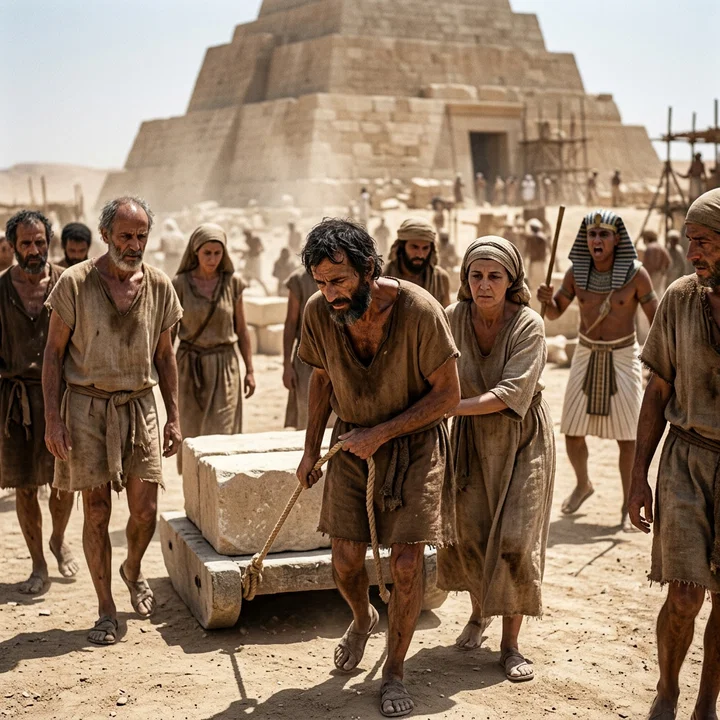
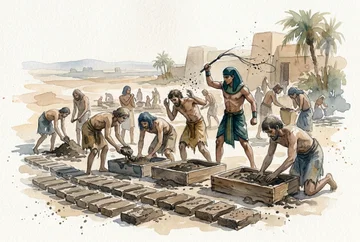
Cross-references
- Exodus 5:5
And Pharaoh said, Behold, the people of the land now are many, and ye make them rest from their burdens.
Pharaoh accuses Moses of making Israel rest, prompting increased labor.
- Exodus 1:13-14
And the Egyptians made the children of Israel to serve with rigour:
Describes the harsh Egyptian labor imposed on Israel.
- Exodus 5:1-2
And afterward Moses and Aaron went in, and told Pharaoh, Thus saith the LORD God of Israel, Let my people go, that they may hold a feast unto me in the wilderness.
Moses and Aaron ask Pharaoh to let Israel go and worship God.
- Exodus 5:18
Go therefore now, and work; for there shall no straw be given you, yet shall ye deliver the tale of bricks.
Pharaoh orders the Israelites to work without straw.
- Exodus 5:13
And the taskmasters hasted them, saying, Fulfil your works, your daily tasks, as when there was straw.
daily brick quota blocked Sabbath rest
Commentary
Each commentary is drawn from primary sources: the writings of Ellen G. White and Adventist pioneers and periodicals. Each commentary is separate. Its own words are not a quotation; follow the references to read the source passages.
Ellen G. White
15 sources
Pharaoh commanded heavier labor to be laid on Israel so that, weighed down with work, they would not listen to the call to go and worship God, which he dismissed as empty talk.1SP 177.1–180.1ST Mar 4, 1880Lt 92, 1902, par. 14–15 He cut off their straw for brickmaking while still demanding the full quota of bricks, turning their plea for worship into a charge of idleness and deepening their oppression to test their faith before deliverance.1SP 177.1–180.1ST Mar 4, 1880Lt 262, 1899, par. 2–5 By again and again making their labor harder and more exacting, his taskmasters pressed them even toward labor on the Sabbath, so that Sabbath observance was brought sharply before God's people in bondage until their deliverance brought them where they could keep all His precepts unhindered.PK 180.2RH Nov 6, 1913 Making bricks without straw thus stands for demanding hard work while withholding the means needed to do it, an unjust and needless burden that hampers the work, whether laid on missionaries, publishing workers, or others called to advance God's work with too few resources.Lt 92, 1902, par. 14–15Lt 140, 1898, par. 16Lt 2, 1899, par. 14–15Lt 119, 1902, par. 18–2421MR 359.6–360.1
Pharaoh's Command in Egypt
Pharaoh ordered more work to be laid upon the Israelites so that, burdened and occupied with labor, they would not heed or regard the appeal of Moses and Aaron to go and worship God, which he dismissed as vain and empty words.1SP 177.1–180.1ST Mar 4, 1880Lt 92, 1902, par. 14–15Lt 140, 1898, par. 1618MR 67.2–3 The same command is understood to have increased their hardship in order to keep them from heeding Moses' words.18MR 67.2–3Lt 119, 1902, par. 18–24 He withheld the supply of straw for brickmaking while still demanding the same number and quota of bricks, turning their request for worship into an accusation of idleness.ST Mar 4, 1880Lt 262, 1899, par. 2–5 His command deepened their oppression and tested their faith before their deliverance.1SP 177.1–180.1
By laying more work upon them each week, again and again making the conditions of labor harder and more exacting, the taskmasters attempted to force Israel to labor on the Sabbath, and this was an attack on Sabbath-keeping.PK 180.2RH Nov 6, 1913 The Sabbath institution was thus brought prominently before God's people while they were still in bondage at the time of the exodus.PK 180.2RH Nov 6, 1913 Their deliverance from bondage brought them to a place where they might observe unmolested all the precepts of Jehovah.PK 180.2RH Nov 6, 1913
Working Without Needed Resources
To make bricks without straw is to try to carry on demanding work while being denied the resources needed to do it.Lt 140, 1898, par. 1621MR 359.6–360.1 Pharaoh's order to lay more work on the men so they would labor in it and not regard vain words finds its picture here, in Israel required to keep up brickmaking when straw was withheld and the burden of labor was increased to keep them from heeding their plea.Lt 140, 1898, par. 1621MR 359.6–360.1
It is requiring missionaries to do their work without the facilities and means they need.Lt 92, 1902, par. 14–15 It is oppressive, unreasonable expectation, and it exposes the injustice of burdening workers while failing to recognize or fairly judge their labor.18MR 67.2–3 To withhold the resources needed for work while still requiring the work to proceed lays on a needless burden and hampers its completion.Lt 2, 1899, par. 14–15
The same image fits the Nashville publishing workers, who struggled to keep the work going under heavy burdens and without adequate means.Lt 119, 1902, par. 18–24 Having much work to do with too few resources feels like making bricks without straw, a task made harder because needed materials are lacking.Lt 23, 1905, par. 5 It is being told to go forward without the facilities or help needed.Ms 3, 1897, par. 22 So it shows how people advancing new work for God can be left without needed means yet still face demands to accomplish the work.21MR 359.4–5 To be deprived of straw for making bricks is to be denied necessary resources, yet despite such deprivation the work must continue.Lt 140, 1898, par. 8
Sources
Pioneers and periodicals
45 sources
Pharaoh ordered heavier labor to be laid on the men to keep them occupied in it so they would not heed what he dismissed as empty words, namely the message of Moses and Aaron to go and worship and sacrifice to God in the wilderness and be delivered from bondage.ST Jan 25, 1910ST Apr 22, 1913ST Feb 4, 1913 The same day he commanded that no more straw be given for brickmaking but that the people gather straw and stubble themselves, while still requiring the full tale of bricks without diminishment.ST Mar 4, 1880ST Aug 1, 1911ST Dec 28, 1888 The order was an attack on Sabbath-keeping, for Moses and Aaron were turning the people from their work to rest and observe the seventh-day Sabbath, and Pharaoh increased the weekly work to force labor on the Sabbath and bring that institution prominently before them while still in bondage.RH Nov 6, 1913ST Aug 1, 1911RH Mar 25, 1909RH Oct 29, 1914ST Oct 21, 1889 In that rigorous servitude Israel was in great measure prevented from practically keeping God's law and could not have kept the Sabbath even if desiring to, though God brought them out of the house of bondage to a place where they could obey and serve Him unmolested.ST Aug 1, 1911ST Oct 11, 1883RH Feb 3, 1852RH May 16, 1854 Inability under such force brings no guilt, but once those cruel conditions were swept away with their oppressors there remained no excuse for further disobedience.ST Mar 7, 1906RH Sep 9, 1862
Exodus Setting and Context
The verse belongs to the interviews of Moses with Pharaoh during the oppression of Israel in Egypt, before the plagues and before the departure. It is part of the first appearance before Pharaoh, which resulted in severer oppression of the children of Israel. That appearance came after God's call to Moses and before God's repetition of His promises. It also came before the plagues of waters turned to blood, frogs, lice, and flies, by which God showed that the gods of Egypt were vanity and that the God of Israel was the true God.
The verse stands in the history part of Exodus, chapters 1 to 18, which means the going out and tells the departure of Israel from Egypt.RH Jan 20, 1916 It belongs to the opening condition of Israel, grown more and mightier than the Egyptians yet in bitter bondage and oppression.RH Jan 20, 1916 It belongs also to the detailed story of their great deliverance into a nation with thorough organization, efficient leadership, a complete code of laws, and an established form of worship.RH Jan 20, 1916 It stands at the beginning of God's work of saving Israel, opposite the song of triumph on the farther side of the Red Sea where the host of Egypt was overthrown.ST Jan 30, 1912 In that place it sets the stage for God's mighty creative power manifest again in saving a nation as was never done for any nation.ST Jan 30, 1912
Egypt then ruled the world three and one-half millenniums ago as the greatest of all kingdoms in might and power and skill and wisdom in statecraft.ST Nov 14, 1906 It deified its river that fertilized its land and worshiped the sun from whom its kings took their title.ST Nov 14, 1906 At that time the descendants of Abraham were in Egypt, where Joseph the captive slave had taught Pharaoh to store grain in plenteous years and had instituted its land-laws with easy rental and taxes, and while his memory lived Egypt prospered and knew no oppression.ST Nov 14, 1906 The forced labor there assigned demanding daily tasks under overseers.RH Apr 23, 1908 The long and terrible oppression and bitter servitude of Israel in Egypt is called the iron furnace.RH Dec 17, 1861 It came after brief prosperity when the family of Abraham had gone down into Egypt, where they had to remain until the iniquity of the Amorites was full so they could possess the promised land.RH Dec 17, 1861 This servitude was foreshadowed to Abraham by the horror of great darkness and the smoking furnace.RH Dec 17, 1861
The oppression with its groans in the brick-kilns, set to work without material, was done by a people whose ancestor Joseph had been Egypt's saviour and deliverer, whom they quickly forgot. They also murdered his darling infants to keep their own iniquity from finding them out. Such ingratitude and cruelty from an enemy no man would have borne proves God's forbearance and leaves man without excuse.
Pharaoh's Increased Labor Order
Pharaoh ordered still more work to be laid upon the men, that they might labor in it and be kept occupied with it, and might not regard or heed what he called vain or empty words.ST Jan 25, 1910ST Apr 22, 1913ST Feb 4, 1913ST Apr 28, 1909RH Feb 3, 1852 The words so dismissed were the appeal and message of Moses and Aaron about going to worship God and sacrifice to Him in the wilderness and about deliverance, and the order shows his stubborn refusal to let the people go.ST Mar 4, 1880ST Jan 25, 1910ST Apr 22, 1913ST Feb 4, 1913ST Dec 28, 1888 The demand kept them from observing God's Sabbath while they were enslaved, and after their deliverance they were placed where they could keep it.ST Apr 28, 1909RH Apr 23, 1908RH Feb 3, 1852 The request to hold a feast to God in the wilderness was answered by this added burden, with insistence that they continue working rather than heed that call.ST Apr 22, 1913RH Apr 23, 1908ST Dec 28, 1888
The same day he commanded the taskmasters and officers to give no more straw for brickmaking as formerly, but to make the people gather straw and stubble themselves, while still requiring the full tale of bricks without diminishment.ST Mar 4, 1880ST Aug 1, 1911ST Dec 28, 1888RH Apr 23, 1908RH Jun 20, 1912 He charged that they were idle in crying to go and sacrifice to God, turning their request for worship into an accusation of idleness and intensifying their oppression.ST Mar 4, 1880ST Aug 1, 1911ST Dec 28, 1888 Moses and Aaron were turning the people away from their work and making them rest — Sabbatize — by teaching Sabbath observance, and Pharaoh's answer meant straw was no longer furnished while the same labor was demanded.ST Aug 1, 1911ST Apr 28, 1909RH Jun 20, 1912 Finally a fixed number of bricks was required every day with no deviation in the matter of a day in his day, so that keeping a Sabbath day became impossible and Sabbath rest appeared impossible, leaving servants in Egypt not allowed to keep the Sabbath and with no time for what was regarded as idleness or for planning resistance.ST Aug 1, 1911RH Jun 20, 1912 Withholding the straw, keeping the brick quota unchanged, and adding work to crush hope of liberty shows how oppression is used to discourage people seeking deliverance from bondage through faith in the power of the cross.RH Apr 23, 1908
Making bricks without straw did not mean making bricks with no material at all.RH Jan 25, 1906 It meant making the same number of bricks while gathering the straw for themselves instead of having it brought to hand, adding to their labor, and the phrase about labor without the materials needed serves as a warning against expecting people to accomplish impossible work.RH Jan 25, 1906ST Jan 30, 1912 Even Pharaoh as the embodiment of cruelty and oppression never commanded slaves to work with no material whatever, which would be commanding the impossible as the condition of life and welfare.RH Jan 25, 1906 The labor was on the treasure and storage cities of Pithom and Rameses under the Pharaoh identified as Rameses II, in building the city of Raamses, and it is historical fact from the bondage in Egypt.ST Oct 21, 1930RH Jun 25, 1901ST Aug 11, 1909 The people were forced to make bricks and were beaten by taskmasters, and the denial of religious privileges further intensified their revolt.ST Aug 11, 1909 Houses in Pithom have actually been found made with strawless bricks, with the name Raamses stamped on bricks used in ancient houses and pictures of slaves mixing straw and mud, exactly fitting the account, while bricks from Pithom generally contain straw and some are without it, consistent with making bricks when straw was withheld.RH Apr 23, 1908ST Oct 21, 1930
Sabbath Conflict in Egypt
Moses and Aaron were turning the people away from their work and making them rest — to Sabbatize — by teaching them to observe the Sabbath, and Pharaoh answered by laying heavier work upon them to stop that Sabbath-keeping.ST Aug 1, 1911ST Sep 10, 1896 The conflict arose when Israel attempted to keep the seventh-day Sabbath after becoming lax in its observance as part of the divine law through hard bondage, and the preparation for deliverance was the signal to return to observance of the Sabbath of the Lord.RH Oct 29, 1914ST Oct 21, 1889ST Oct 21, 1889 In this account the episode marks a Sabbath reform in Egypt that Pharaoh suppressed, responding to the call to worship God by ordering heavier labor so the people would be occupied and would not heed what he dismissed as empty words.ST Aug 1, 1911ST Sep 10, 1896 The dispute was not over keeping or not keeping the first day, for they were probably deprived of Sabbath observance in Egypt and the attempt concerned the seventh day.ST Oct 21, 1889ST Oct 21, 1889
As servants in Egypt Israel were not allowed to keep the Sabbath and were prevented from keeping it by severe bondage under Pharaoh, who denied knowledge of Jehovah and forced the people to labor to the utmost until their bitter suffering brought their cry to heaven.ST Aug 1, 1911RH Feb 3, 1852RH May 27, 1852 Straw was no longer furnished as formerly while the same labor was demanded, with Israel required to gather stubble instead, and finally a fixed number of bricks was required every day with no deviation in the matter of a day in his day, so that keeping a Sabbath day became impossible.ST Aug 1, 1911 The rigorous servitude and increased labor kept them in great measure from practically observing God's law, since acceptable worship includes obeying His law, and their state where they were left not subject to God's law was bondage and not liberty.ST Oct 11, 1883 They could not have kept the Sabbath even if they had desired to, though they might have kept the other nine commandments, so God delivered them with a mighty hand and brought them out where they could keep the Sabbath, into a land flowing with milk and honey to enjoy the privilege of obeying and serving Him, speaking His law audibly and giving it in lasting form to assist their liberty.ST Oct 11, 1883RH Feb 3, 1852RH May 16, 1854 Because of the attempt at Sabbath observance their oppressors laid more work upon them as added hardship, under which they murmured and complained most bitterly, but those cruel conditions were afterward swept away with their oppressors, leaving no excuse for further Sabbath disobedience.ST Mar 7, 1906RH May 27, 1852
Pharaoh's dismissal of the message as vain words expresses contempt for God and His law, ordering heavier labor so the Israelites would disregard Moses and Aaron's instruction to keep the Sabbath.RH Mar 25, 1909 His order to lay more work on Israel was meant to force them to labor on the Sabbath by increasing the amount of work required each week.RH Nov 6, 1913 The again and again harder and more exacting conditions of labor were an attack on Sabbath-keeping that brought the Sabbath institution prominently before God's people while they were still in bondage, before they were delivered to a place where they might observe unmolested all the precepts of Jehovah.RH Nov 6, 1913 By contrast, those who held otherwise taught that the account lists various causes of irritation between Pharaoh and his officers and the Hebrew slaves but contains no hint or statement of trouble over a sacred rest-day, giving various reasons for conflict but never indicating a dispute about Israel keeping one day and Egypt keeping another.ST Oct 21, 1889
Bondage Deliverance and Obedience
Israel in Egypt was left not subject to God's law, and that state was bondage and not liberty, because acceptable worship includes obeying His law.ST Oct 11, 1883 The rigorous servitude and the heavier work laid on when desire to worship God was expressed kept them in great measure from practically observing God's law.ST Oct 11, 1883 They were prevented from keeping the Sabbath in bondage, being kept occupied with labor so as not to regard the message of deliverance.RH Feb 3, 1852 They could not have kept the Sabbath even if they had desired to, though they might have kept the other nine commandments.RH May 16, 1854
God brought them out of the house of bondage with a mighty hand into a land flowing with milk and honey so they might enjoy the privilege of obeying and serving Him.ST Oct 11, 1883RH May 16, 1854 He spoke His law audibly to the whole multitude and gave it in lasting form to assist their liberty.ST Oct 11, 1883 Their deliverance placed them where they could keep the Sabbath, which is why they were then required to keep it.RH Feb 3, 1852RH May 16, 1854
More work was given to the Hebrews so they could not keep the Sabbath, and God did not hold them responsible for doing what they could not help.RH Sep 9, 1862 Inability to keep the Sabbath under force brings no guilt, and God was not honored by resisting unto death.RH Sep 9, 1862 Drafted Sabbath-keepers in the army who cannot keep the Sabbath stand in the same position.RH Sep 9, 1862
Israel in Egypt attempted Sabbath observance, and because of that attempt the oppressors laid more work upon them as added hardship, under which they murmured and complained most bitterly.ST Mar 7, 1906 Those cruel conditions were afterward swept away with their oppressors, leaving no excuse for further Sabbath disobedience.ST Mar 7, 1906
Israel prayed for deliverance from cruel bondage, and God answered by permitting Pharaoh to increase their work and tighten their bands until He broke them.RH Oct 27, 1874 God sometimes answers prayer by providential events that oppose what was asked.RH Oct 27, 1874 When He refuses the petition of His faithful people it is to give something infinitely better than that for which they prayed.RH Oct 27, 1874
The increased labor laid on the Hebrews was religious persecution by idolatrous Egyptians against those who worshiped the true God.RH Jun 8, 1916 It proves that he that is born after the flesh persecutes him that is born after the Spirit and that the wicked persecute the righteous.RH Jun 8, 1916
Monuments Confirm Brick Making
Chopped straw still visible in ancient Egyptian bricks confirms how the bricks described in the verse were made.RH Apr 23, 1908RH Nov 27, 1866 Bricks recovered from Pithom generally contain straw, while some are without it, which fits the demand that Israel keep making bricks after straw was withheld.RH Apr 23, 1908 The order to make the oppression still more rigorous by requiring bricks without straw is historical fact from the bondage in building Raamses.ST Oct 21, 1930 Houses in Pithom have actually been found built of strawless bricks, bricks used in ancient houses bear the stamp of the name Raamses, and pictures show slaves mixing straw and mud, exactly matching the brick-making account.ST Oct 21, 1930 The Hebrews were forced to build storehouses with bricks, some made with straw and most without it.ST Aug 12, 1913
Egyptian monuments picture slaves with Hebrew features making bricks in the same way Israel worked.ST Nov 20, 1884 Pithom, one of the two store cities Israel built, has been found bearing its own name on an inscription.ST Nov 20, 1884 Its chief buildings were great brick storehouses without windows or doors for preserving grain for war or famine.ST Nov 20, 1884 Egyptian kings record no miracles, because kings do not report their disasters.ST Nov 20, 1884 Yet Egyptian pictures and accounts and religious books illustrate the habits and customs and the land and people of the Nile behind the oppression.ST Nov 20, 1884
Lessons for Christian Life
The verse exposes close-fisted tyranny that piles onerous burdens on the oppressed and crowds out spiritual life, laying more work on brick-makers in haste for brick so they have no time to read or pray.RH May 17, 1860 The same Pharaoh spirit lives in modern hard masters who with cutting reproaches make rapacious demands for more work.RH May 17, 1860 Such treatment makes a bad servant, stirs up all his evil passions and sinks him lower than seemed possible, and through discouragement of mind afflicts his body until strength fails, arm trembles and knees grow weak.RH May 17, 1860 Holding Sabbath-keeping doctrines while practicing this oppression will only be a millstone to sink the oppressor in an ocean deep as eternity.RH May 17, 1860 God is to be entreated to pity the oppressed and speedily deliver them from their burdens, for there will soon be an end of this.RH May 17, 1860
Requiring the full tale of brick with no straw, leaving only stubble from the field to labor with, is the same taskmaster oppression laid by the great men of the American republic in upholding slavery.RH Sep 23, 1862 Those who vote for ambitious men who embrace slavery share that guilt and have forgotten their brother in bonds as bound with him.RH Sep 23, 1862 Unless humbled in sackcloth and repentance toward God they will meet a sure day of national punishment.RH Sep 23, 1862
The sighing and crying of Israel at work for Pharaoh under the lash of the taskmaster, with more work laid on yet no straw given for making bricks, stands opposite to working for God as Father.ST Sep 22, 1881 He guarantees strength, supplies all materials, fellowships with workers all the time they work, forgives blunders, and quickly in love accepts the work.ST Sep 22, 1881 His service is therefore perfect freedom, to be done cheerfully for the sheer joy of doing it even without heaven, crown, or reward hereafter.ST Sep 22, 1881 A hard master keeping servants on short allowance by requiring brick without straw, demanding increased labor without supplying what is needed to perform it, is the opposite of Christ's teaching.RH Mar 26, 1861 To judge Christ by the complaints of professing Christians would make Him such a master, whose commandments are most grievous, whose yoke is too heavy to be borne, who starves His children spiritually, and whose required service is beyond possibility of obedience even by any grace received in this life.RH Mar 26, 1861
Pharaoh's order to increase work so Israel would dismiss Moses' words as empty talk parallels the way Elijah's denunciation was dismissed as the prating of an overzealous enthusiast.RH Dec 4, 1913 Brick-making was the heavy main labor supported by straw-gathering, with making brick as the work of strong workmen and gathering straw as lighter work that sustains them.RH Jan 9, 1872 Those who by age and failing strength can no longer do the heavier part still have effective service by gathering straw for the workmen, staying up their hands, and speaking cheering words and encouragement in the different departments of the work.RH Jan 9, 1872 Pharaoh's response to Israel's desire for freedom and worship was to make slavery more oppressive by withholding straw, keeping the brick quota unchanged, and adding work to crush hope of liberty.RH Apr 23, 1908 That withholding of needed materials while ordering double work is counted as part of the wages owed for service in Egypt, and in the historical parallel oppression is used to discourage people seeking deliverance from bondage through faith in the power of the cross.RH Apr 23, 1908ST Mar 18, 1880
Sources