Exodus 5:8
And the tale of the bricks, which they did make heretofore, ye shall lay upon them; ye shall not diminish ought thereof: for they be idle; therefore they cry, saying, Let us go and sacrifice to our God.
Translations
And the tale of the bricks, which they did make heretofore, you shall lay on them; you shall not diminish any thereof: for they be idle; therefore they cry, saying, Let us go and sacrifice to our God.
And the tale of the bricks, which they did make heretofore, ye shall lay upon them; ye shall not diminish ought thereof: for they be idle; therefore they cry, saying, Let us go and sacrifice to our God.
And the tale of the bricks, which they did make heretofore, you shall lay upon them; you shall not diminish ought thereof: for they be idle; therefore they cry, saying, Let us go and sacrifice to our God.
And the number of the bricks which they made heretofore, ye shall lay upon them; ye shall not diminish aught thereof; for they are idle: therefore they cry, saying, Let us go and sacrifice to our God.
And the tale of the bricks, which they did make heretofore, ye shall lay upon them; ye shall not diminish aught thereof: for they be idle; therefore they cry, saying, Let us go and sacrifice to our God.
And the number of the bricks, which they did make heretofore, ye shall lay upon them; ye shall not diminish aught thereof: for they are idle; therefore they cry, saying, Let us go and sacrifice to our God.
and the proper quantity of the bricks which they are making heretofore ye do put on them, ye do not diminish from it, for they are remiss, therefore they are crying, saying, Let us go, let us sacrifice to our God;
And the number of the bricks they have made heretofore shall ye lay upon them: ye shall not diminish any of it, for they are idle; therefore they cry, saying, Let us go [ and] sacrifice to our God.
Nevertheless, the fixed number of bricks, which they have been making heretofore, shall ye lay upon them, ye shall not diminish therefrom,—for idle, they are, on this account, it is that they are making an outcry, saying, We must go our way, we must sacrifice to our God.
Berean Standard Bible, Majority Standard Bible
But require of them the same quota of bricks as before; do not reduce it. For they are lazy; that is why they are crying out, ‘ Let us go and sacrifice to our God.’
You shall require from them the number of the bricks which they made before. You shall not diminish anything of it, for they are idle. Therefore they cry, saying, ‘ Let’s go and sacrifice to our God.’
But see that they make the same number of bricks as before, and no less: for they have no love for work; and so they are crying out and saying, Let us go and make an offering to our God.
Notwithstanding lay vpon them the nober of bricke, which they made in time past, diminish nothing thereof: for they be idle, therefore they crie, saying, Let vs go to offer sacrifice vnto our God.
Douay-Rheims (Challoner revision)
And you shall lay upon them the task of bricks, which they did before, neither shall you diminish any thing thereof: for they are idle, and therefore they cry, saying: Let us go and sacrifice to our God.
Pictures
Cross-references
- Exodus 1:13-14
And the Egyptians made the children of Israel to serve with rigour:
Both describe Israel’s harsh brickmaking labor under Egyptian bondage.
- Exodus 5:1-3
And afterward Moses and Aaron went in, and told Pharaoh, Thus saith the LORD God of Israel, Let my people go, that they may hold a feast unto me in the wilderness.
Moses and Aaron ask Pharaoh to let Israel go worship God.
- Exodus 5:18
Go therefore now, and work; for there shall no straw be given you, yet shall ye deliver the tale of bricks.
Pharaoh insists on the unchanged brick quota without providing straw.
- Exodus 5:13-14
And the taskmasters hasted them, saying, Fulfil your works, your daily tasks, as when there was straw.
The daily brick quota continued without straw, and the Israelite officers were beaten for falling short.
- Exodus 5:20-21
And they met Moses and Aaron, who stood in the way, as they came forth from Pharaoh:
The officers confront Moses and Aaron, blaming them for their increased suffering under Pharaoh’s demands.
- Exodus 5:17
But he said, Ye are idle, ye are idle: therefore ye say, Let us go and do sacrifice to the LORD.
Pharaoh repeats the accusation that the Israelites are idle.
- Exodus 1:11
Therefore they did set over them taskmasters to afflict them with their burdens. And they built for Pharaoh treasure cities, Pithom and Raamses.
Both describe forced building of Raamses.
- Exodus 5:14-16
And the officers of the children of Israel, which Pharaoh’s taskmasters had set over them, were beaten, and demanded, Wherefore have ye not fulfilled your task in making brick both yesterday and to day, as heretofore?
The Hebrew officers protest beatings and an impossible brick quota.
- Exodus 5:4
And the king of Egypt said unto them, Wherefore do ye, Moses and Aaron, let the people from their works? get you unto your burdens.
both charge Moses and Aaron with stopping work
- Exodus 5:3
And they said, The God of the Hebrews hath met with us: let us go, we pray thee, three days’ journey into the desert, and sacrifice unto the LORD our God; lest he fall upon us with pestilence, or with the sword.
The requested journey to sacrifice motivates Pharaoh’s demand about the bricks.
- Acts 7:34
I have seen, I have seen the affliction of my people which is in Egypt, and I have heard their groaning, and am come down to deliver them. And now come, I will send thee into Egypt.
God hears Israel’s suffering in Egypt and comes to deliver them.
- Exodus 3:7
And the LORD said, I have surely seen the affliction of my people which are in Egypt, and have heard their cry by reason of their taskmasters; for I know their sorrows;
God saw Israel’s oppression in Egypt.
- 1 Kings 8:51
For they be thy people, and thine inheritance, which thou broughtest forth out of Egypt, from the midst of the furnace of iron:
Israel is described as brought out of Egypt, the iron furnace.
Commentary
Each commentary is drawn from primary sources: the writings of Ellen G. White and Adventist pioneers and periodicals. Each commentary is separate. Its own words are not a quotation; follow the references to read the source passages.
Ellen G. White
19 sources
Pharaoh gave this order the same day Moses and Aaron asked only to let Israel go a three days' journey into the wilderness to feast and sacrifice to the Lord, lest He fall upon them with pestilence or sword.SG3 197.11SP 177.1–180.1 He professed not to know the Lord and to owe Him no obedience, accused Moses and Aaron of making the people rest from their burdens, and commanded the taskmasters and Hebrew officers to withhold straw as before yet still require the full former number of sun-dried bricks without any decrease, so that the people scattered to gather stubble, failed to meet the quota, and were beaten.SG3 197.11SP 177.1–180.1PP 257.1 On the false charge that they were idle, he treated their cry to go and sacrifice to their God as mere pretext and proof of idleness to justify harder labor, acting in proud defiance because he would not acknowledge God and delighted to display his power over those he controlled.SG3 197.11SP 177.1–180.1PP 257.1SG3 238.2–239.1 By this confrontation the Lord purposed to make Pharaoh know His voice must be obeyed and to compel proud rulers to bow to Him as supreme, answering His oppressed people's prayers with mighty displays of power, while the increased affliction exposed that Israel expected deliverance without trial, had little faith, and was not yet willing to endure suffering until God wrought a glorious deliverance.SG3 197.11SP 177.1–180.1SG3 238.2–239.1 To be required to make brick without straw is therefore to be pressed to keep up the same production without the means needed to do it, an impossible burden showing that adequate materials, support, facilities, and workers are necessary, whether in the desperate effort to advance the Nashville publishing work or in missionaries sent out and told to advance while denied means and help.7T 235.4–236.1Lt 92, 1902, par. 14–15Lt 140, 1898, par. 1621MR 359.4–5Lt 2, 1899, par. 14–15
Pharaoh's Oppressive Decree
The decree was Pharaoh's same-day answer to the very modest request of Moses and Aaron to let Israel go only three days' journey into the desert or wilderness to hold a feast and sacrifice to the LORD God of Israel, lest He fall upon them with pestilence or with the sword.SG3 197.11SP 177.1–180.1 He haughtily refused, professed to be entirely ignorant of the LORD and under no obligation to obey His voice, accused Moses and Aaron of making the many people rest from their burdens, and commanded the same day the Egyptian taskmasters and their Hebrew officers responsible for the work to enforce the new rule, his heart becoming more unfeeling.SG3 197.11SP 177.1–180.1 No more straw was to be given for brickmaking as heretofore, but the people must go and gather scattered straw and stubble for themselves, while the same full tale of bricks they made heretofore was laid upon them without diminishing ought or any lessening.SG3 197.11SP 177.1–180.1PP 257.1ST Mar 4, 1880
The bricks were sun-dried earth mixed with straw, and having to search for stubble to replace it, the people could not meet the quota and were beaten.ST Mar 4, 1880 On the false charge that they were idle, Pharaoh treated their cry of Let us go and sacrifice to our God as a pretext and proof of idleness, and used that accusation to justify harsher labor.SG3 197.11SP 177.1–180.1PP 257.1ST Mar 4, 188021MR 359.4–5 He kept Israel's brick quota unchanged while withholding the straw they had previously been given, demanding the same production target despite denying what was needed to meet it.PP 257.1ST Mar 4, 188021MR 359.4–5Lt 119, 1902, par. 18–24 He acted because he would not acknowledge God and bow to His authority, delighting to show his power as ruler over those he could control, in proud defiance.SG3 197.1SG3 238.2–239.1
The demand to lay the full tale of bricks without diminishing it was part of an attempt by the taskmasters to force Israel to labor on the Sabbath by increasing the amount of work required each week, with the conditions of labor made harder and more exacting again and again.PK 180.2RH Nov 6, 1913 The Sabbath institution was thereby brought prominently before the people of God while still in bondage, at the time of the exodus.PK 180.2RH Nov 6, 1913 Their deliverance from bondage brought them to a place where they might observe unmolested all the precepts of Jehovah, including God's appointed rest day.PK 180.2RH Nov 6, 1913
Divine Purpose and Application
The confrontation was permitted so that Pharaoh would learn that the divine voice must be obeyed, that God is above all, and that proud rulers will be compelled to bow to His authority.SG3 197.11SP 177.1–180.1 Moses declared that the God whom Pharaoh pretended not to know would force him to yield to His claims and acknowledge Him as supreme ruler.SG3 238.2–239.1 That demand marked the time when God would answer the prayers of His oppressed people and bring them out of Egypt with mighty displays of power that would compel the Egyptians to acknowledge that the God of the Hebrews is above all gods.SG3 238.2–239.1
The increased labor exposed that the Hebrews expected deliverance from bondage without any particular trial of faith or suffering on their part.SG3 197.11SP 177.1–180.1 Some even preferred to remain with the Egyptians, they were not yet prepared to be delivered, they had but little faith, and they were unwilling to patiently suffer and perseveringly endure affliction until God worked for them a glorious deliverance.1SP 177.1–180.1
To make brick without straw is to be pressed to produce without the means needed, held to the same production target and former quota while denied the straw previously given and deprived of what is needed to meet it.7T 235.4–236.1Lt 140, 1898, par. 16Lt 2, 1899, par. 14–15Lt 83, 1897, par. 3–4Lt 23, 1905, par. 5 It is an impossible burden, showing that adequate means, materials, support, facilities, and workers are necessary to make progress.Lt 140, 1898, par. 16Lt 83, 1897, par. 3–4Lt 23, 1905, par. 5Lt 140, 1898, par. 8 The loss of resources is like Israel being denied straw for brickmaking while still held to its former quota.Lt 140, 1898, par. 8
That image fits the desperate effort to advance the work at Nashville without adequate resources.7T 235.4–236.1 It fits workers striving to advance the Nashville publishing house despite difficult conditions and burdens beyond their control.Lt 119, 1902, par. 18–24
The same hardship falls on missionary work burdened by lack of means while still expected to advance.21MR 359.4–521MR 359.6–360.1 Missionaries sent to foreign fields without the facilities and means needed face a similarly unreasonable demand.Lt 92, 1902, par. 14–15 New missionary work is perplexed by lack of support and by burdens imposed through others' decisions, and workers told to go but given no facilities or help illustrate the same hardship.Ms 3, 1897, par. 2221MR 359.6–360.1
The demand illustrates shortsighted ambition that expects work without providing the means to do it.18MR 67.2–3 It applies to leaders who crowd or oppress fellow workers, including expecting to advance work without the workers and means needed to do it.Lt 83, 1897, par. 3–418MR 67.2–3
Sources
Pioneers and periodicals
56 sources
Pharaoh ordered that Israel make the same daily number of bricks as before with nothing diminished, even though straw would no longer be supplied and they must gather stubble themselves while still meeting the quota under beating.ST Jan 25, 1910ST Feb 4, 1913ST Dec 28, 1888ST Mar 18, 1880 He gave the order the same day Moses and Aaron first asked for release to feast and sacrifice in the wilderness, charging that they were idle and that their cry to go and worship proved it, in order to lay heavier work on them and turn them from the message.ST Feb 4, 1913ST Apr 22, 1913RH Apr 23, 1908 The weight holds that the charge grew out of a conflict over rest, with Moses and Aaron teaching Sabbath observance and Pharaoh answering by withholding straw and fixing an unchangeable daily tale so that labor would fill every day and leave no day to keep.ST Aug 1, 1911ST Apr 28, 1909ST Jun 16, 1887ST Oct 31, 1906ST Jan 20, 1909 Those who held otherwise taught that the trouble between Pharaoh and the Hebrew slaves gives no hint of trouble over a sacred rest-day.ST Oct 21, 1889 The order stands at the opening of deliverance, when the whole power of Egypt was set against an oppressed people crying under bitter bondage, before God broke their bands and brought them where they could serve Him freely and keep all His precepts unmolested.RH Nov 6, 1913ST Jan 30, 1912ST Oct 11, 1883RH May 27, 1852RH Oct 27, 1874
Verse Wording and Context
Pharaoh ordered that the same tale of bricks made heretofore be laid upon Israel with nothing diminished, even though straw was no longer supplied, calling them idle and treating their cry to go and sacrifice to God as proof of it.ST Jan 25, 1910ST Mar 18, 1880 The order was given the same day Moses and Aaron first appeared before Pharaoh to ask release for a feast and sacrifice in the wilderness to worship God, and was directed to the taskmasters and officers to stop supplying straw yet require the same daily number while the people gathered straw themselves.ST Feb 4, 1913ST Dec 28, 1888 Its stated reason was that the people are idle, but the charge was false, for their treatment made it impossible to serve God properly so they needed to leave, and its purpose was to lay heavier work on them to crush their desire for liberty so they would keep laboring and pay no attention to Moses and Aaron's message.ST Apr 22, 1913ST Dec 28, 1888RH Apr 23, 1908 Pharaoh judged them idle because after Moses and Aaron came the people had to some extent ceased from work, which proves the coming and message had already interrupted their labor, and because he counted them idle he increased their task to the same tale without straw.ST Dec 28, 1888
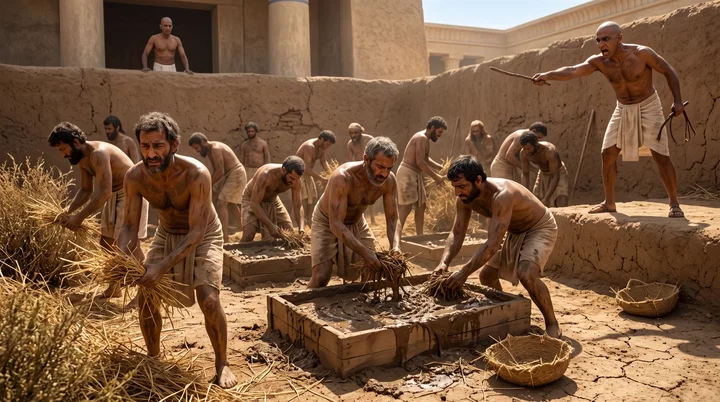
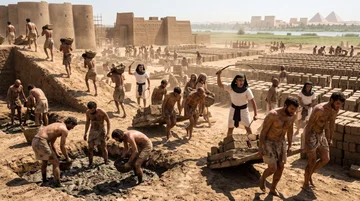
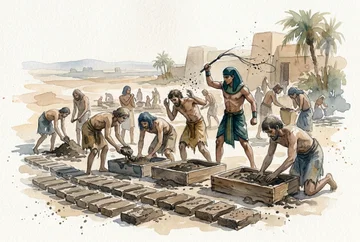
Bricks were sun-dried earth mixed with straw, and Israel had straw brought to them before, but now had to go into the fields and gather stubble left where grain was cut a little below the ear, while still making the same number through the day, which added to their burden so they could not meet the quota and were beaten.ST Mar 4, 1880RH Apr 22, 1858 Brickmaking involved digging and mixing clay, shaping it in the mould, taking bricks from the form and placing them in rows, and carrying them away to be dried, with the taskmaster with rod in hand overlooking the slaves at work.ST Mar 4, 1880RH Apr 22, 1858
The verse belongs to the history part of Exodus, chapters 1 to 18, in a book whose name means the going out, referring to Israel's departure from Egypt, showing Israel grown more and mightier than the Egyptians yet held in bitter bondage and oppression as part of the detailed story of their great deliverance and becoming a nation with thorough organization, efficient leadership, a complete code of laws, and an established form of worship centered on Moses rescued from Egyptian malice in infancy as chosen leader.RH Jan 20, 1916 It took place three and one-half millenniums ago when Egypt ruled the world as the greatest of the kingdoms of earth, acknowledged for might and power and skill and wisdom in statecraft, enriched by its river in its annual overflow which it deified as one of its gods, and worshiping the sun which produced food and gave its kings their title as representatives of the sun-god upon the throne of men.ST Nov 14, 1906 The descendants of the nomadic patriarch Abraham were among the peoples that sought supplies from Egypt's granaries, and only a few years before Joseph, a captive slave of the same people, had taught Pharaoh how to store grain in plenteous years to become rich in time of famine and had instituted a land-law whose rental and taxes combined were easy for the people.ST Nov 14, 1906 While Joseph was prime minister and as long as his memory lived among the rulers Egypt prospered and knew no oppression, with his laws governing and the country flourishing, but the verse belongs to the long and terrible oppression and bitter servitude that followed that brief prosperity, the iron furnace foreshadowed to Abraham by the horror of great darkness and the smoking furnace in vision.ST Nov 14, 1906RH Dec 17, 1861
Egypt and Archaeological Witness
Egyptian wall paintings show overseers threatening brickmaking gangs with the order not to be idle, matching Pharaoh's charge of idleness while the quota was kept full without straw, and the laborers depicted making bricks in that manner bear Hebrew features.ST Nov 20, 1884 Ancient Egyptian bricks still show chopped straw mixed through the mud, confirming how such bricks were made when straw was supplied.RH Nov 27, 1866 The chambers uncovered at Pithom preserve the change itself, with some bricks containing straw and others containing none.RH Apr 23, 1908ST Aug 7, 1901 Their lower courses were laid with straw while most of the work above was done without it, exactly as a demand for the same daily number with progressively less straw and then none would leave behind.ST Aug 7, 1901RH Aug 4, 1910
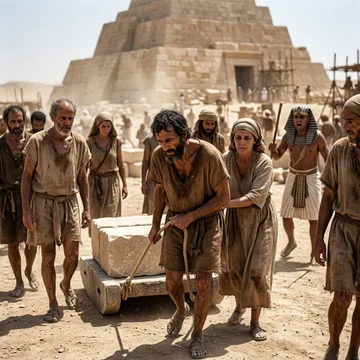
The finding of those Hebrew slave storehouses built partly with straw bricks and partly with strawless bricks confirms the setting of an unchanged quota after straw was withheld.ST Aug 12, 1913 Israel built Pharaoh's treasure or storage cities, including Raamses, and bricks stamped with the name Raamses remain in the houses of Pithom.ST Oct 21, 1930 Companion pictures show slaves mixing straw and mud for brickmaking, while houses at Pithom are built of strawless bricks that display labor continued without straw.ST Oct 21, 1930 Pithom was one of the two store cities raised by Israel in hard bondage in mortar and in brick in the land of Goshen, identified by its own name on an inscription.ST Nov 20, 1884RH Jun 25, 1901 It consisted chiefly of great windowless and doorless brick storehouses for holding grain against war or famine, a square town ringed by twenty-two-foot-thick walls and filled with vast storage chambers of brick laid with mortar in tiers with and without straw, built by Rameses II.ST Nov 20, 1884RH Jun 25, 1901
No Egyptian monument records the miracles attending this oppression, since kings do not inscribe their own disasters.ST Nov 20, 1884 Their pictures, stories, and religious books nevertheless illustrate the habits and customs of the land and people of the Nile that form the background of the account.ST Nov 20, 1884
Sabbath Conflict in Egypt
Moses and Aaron were teaching the people to observe the Sabbath and to rest on the seventh day in which no work is done, and Pharaoh's charge that they are idle has no other reason except that rest.ST Aug 1, 1911ST Jun 16, 1887 His complaint that they make the people rest means literally ceasing work, or sabbatizing, from their burdens, for rest means to sabbatize or keep Sabbath.ST Oct 31, 1906ST Jan 20, 1909 This exposes a conflict of authority between God and Pharaoh, for Moses and Aaron came with God's authority teaching rest, while Pharaoh refused to recognize that authority, denied knowing Jehovah, made burdens heavier and tasks harder, and would not let them serve God.ST Jun 16, 1887RH May 27, 1852
To prevent Sabbath keeping he increased labor by withholding straw and requiring Israel to gather stubble, then fixed an unchangeable daily number of bricks so that work filled every day and no day could be kept.ST Aug 1, 1911ST Apr 28, 1909 Israel had apparently been able to meet its quota in six days and keep the seventh day for holy rest, but Pharaoh treated that effort as idleness and made conditions harder and more exacting again and again to force labor on the Sabbath.RH Nov 6, 1913RH Jun 20, 1912 Through hard bondage Israel had become lax in Sabbath observance, and the preparation for deliverance was a signal to return to the Sabbath, so that the first thing the people did when Moses revived them was begin to observe it, showing Sabbath keeping in Egypt before Sinai and that every true reform carries God's people back to obedience.ST Oct 31, 1906RH Oct 29, 1914
The unchanged tale is therefore evidence that a Sabbath reform in Egypt through Moses was suppressed by Pharaoh, and that under that cruel increase of labor Israel murmured and complained most bitterly.ST Sep 10, 1896ST Mar 7, 1906 The conflict arose because Israel was attempting to keep the seventh-day Sabbath in asking to go and worship God, and they were probably and likely prevented from keeping it in Egypt.ST Oct 21, 1889ST Oct 21, 1889 Their worship request belongs within the Sabbath controversy, for Pharaoh treats the call to rest and worship as an excuse to avoid labor and answers it with harsher work, keeping the quota unchanged while ordering them to gather their own straw.RH Mar 25, 1909
Rigorous servitude largely prevented practical observance of the law, since acceptable worship includes obeying His law, and the oppressive labor made it impossible for bondmen to keep the Sabbath even if they desired, while they might have kept the other nine, which explains why they were afterward required to keep it after God brought them out with a mighty hand where they could keep it.ST Oct 11, 1883RH May 16, 1854 Their bondage controlled by taskmasters with increased brickmaking demands when they asked to worship prevented Sabbath keeping, and their inability under bondage explains why God enforced it after delivering them, and does not show that the Sabbath originated then.RH Feb 3, 1852RH May 27, 1852 Deliverance thereby brought the Sabbath institution prominently before God's people at the time of the exodus, and brought them where they might observe unmolested all the precepts of Jehovah including the appointed rest day.RH Nov 6, 1913 Those who held otherwise taught that the record of trouble between Pharaoh and his officers and the Hebrew slaves gives various causes of irritation with no hint or statement of trouble on account of a sacred rest-day.ST Oct 21, 1889
Bondage and Deliverance Teaching
Exodus 5:8 stands at the opening of Israel's deliverance, when Israel lay in oppression and bondage with the whole power of Egypt set against them, before God's mighty saving work that brought Israel in triumph beyond the Red Sea with Egypt's host overthrown, a saving work of creative power such as was never done in saving any nation.ST Jan 30, 1912 The people were then in severe bondage toiling under the monarch's control, and their cry rose to heaven because of bitter oppression until they cried unto God.RH May 27, 1852 That persecution of the Hebrews who worshiped the true God by idolatrous Egyptians shows that he that is born after the flesh persecutes him that is born after the Spirit, and that the wicked persecute the righteous.RH Jun 8, 1916
The oppression fell upon the children of Joseph who had saved Egypt as its deliverer, by a people who quickly forgot Joseph, and joined to the murder of infants to cover iniquity it manifests human ingratitude and cruelty borne with divine forbearance, leaving man without excuse. Pharaoh kept the brick quota unchanged after straw was withheld and forced Israel to gather it themselves, calling them idle for asking to go and sacrifice to God, and he used heavier labor to crush their desire for liberty.RH Apr 23, 1908 He required Israel to make bricks for the Egyptian treasure cities under beating taskmasters, and such oppression with denial of religious privileges helped drive them toward rebellion.RH Apr 23, 1908ST Aug 11, 1909 Lack of subjection to God's law was not liberty, for God calls Egypt the house of bondage, and He brought them out to give the privilege of obeying and serving Him in a land flowing with milk and honey, speaking His law to the whole multitude and giving it in lasting form to help them enjoy that liberty.ST Oct 11, 1883
God prepared Israel to leave by allowing heavier oppression while Moses was trained forty years in the wilderness, laying the same tale of bricks upon them without straw with no abatement in daily number, with more exacting and cruel taskmasters and more rigid enforcement of the decree to destroy the male children, until wretched cruelty, slavery, bondage and oppression brought despair and helplessness that drove them to pray for mercy, and then He sent Moses to lead them to promised Canaan.RH Nov 25, 1909 This proves that God rarely does much for His people without preceding suffering and heart anguish, and that great travail of soul comes before deliverance.RH Nov 25, 1909 God answered prayer for deliverance from cruel bondage by permitting Pharaoh to tighten their bands with the full tale undiminished until He broke them, showing that He sometimes answers by providences working against what was asked, and when He refuses the petition it is to give something infinitely better.RH Oct 27, 1874
Hundreds of years of slavery had unfitted Israel to comprehend God's salvation and the character He required, so after redeeming them with a mighty hand He gave a great multiple object-lesson by forms and rites comprehending the plan of salvation, instructing Moses to ask free-will offerings and commanding, let them make Me a sanctuary that I may dwell among them. The bitter servitude under the undiminished tale is the iron furnace foreshadowed to Abraham by the horror of great darkness and the smoking furnace in vision.RH Dec 17, 1861
Present Applications for Believers
Even in cruelty Pharaoh did not order bricks with no material at all, but kept the full tale upon Israel while withholding straw and adding to their labor by requiring them to gather it for themselves instead of having it brought to hand, which proves that the just and benevolent God who commands and necessitates labor must grant all a right to the necessary means and opportunity to labor, since to command labor while denying its only means would be cruel and unjust and impossible as the condition of life and welfare.RH Jan 25, 1906 To lay that full tale without diminution upon Christ, calling His people idle and requiring brick without straw on short allowance by saying His commandments are grievous and His yoke too heavy to be borne by any grace in this life, is opposite to His teaching, for such demanding of impossible service while withholding supply is the work of a hard master and cruel slaveholder.RH Mar 26, 1861 Sighing and crying under the lash with no straw given yet the full number demanded shows gloomy, joyless toil in bondage, and by contrast work for God as Father is to be done cheerfully, since He guarantees strength, supplies all materials, stays in fellowship with His workers while they work, forgives blunders, and accepts the work in quick love, His service being perfect freedom and sheer joy even without heaven or a future crown.ST Sep 22, 1881 Making the full tale without straw supplied pictures beginning and carrying on God's work without means in hand to do it without debt, and such desperate effort without provision departs from keeping out of debt and brings the work into difficulty and embarrassment by debt.RH Jul 31, 1913
Trying to do work without the materials required to do it means prospective ministers must not attempt to produce sermons and ministry without necessary preparation and supply.ST Jan 30, 1912 The brickmaking is a comparison for being expected to work without needed tools or conveniences to do work well, for undertaking a difficult task with inadequate resources, and for showing that entering active life without economy is worse than severe labor.ST Aug 28, 1879RH Jun 23, 1903ST Nov 27, 1879 Brickmaking has two parts, heavy brickmaking needing full strength and lighter straw-gathering that old men with failing strength can still do, so that in the wide harvest field each can work effectively by gathering straw, staying up workmen's hands, and giving cheering encouragement in different departments.RH Jan 9, 1872 As a hard, close-fisted tyrant in his hurry for brick giving brickmakers no time to read or pray, Pharaoh lives on in modern Pharaohs laying onerous burdens on the oppressed, which oppression is an ugly sin, so that those practicing it while holding Sabbath doctrines will find them only a millstone sinking them in an ocean deep as eternity, and God is to be entreated to pity the oppressed and speedily deliver them.RH May 17, 1860
The same taskmaster oppression requiring the full amount of brick with no straw but stubble from the field is repeated by great men of the republic in upholding slavery, and by voting for ambitious men embracing slavery the people share guilt and forget their brother in bonds as bound with him, and must grapple with the evil, be humbled in sackcloth, and pray for respite until God's servants are sealed to enjoy the kingdom of the Lord and His Christ.RH Sep 23, 1862 Being kept to the same tale without straw until crying to God means being turned out without provision or preparation and expected to sink or swim, survive or perish, as freed slaves after the civil war were turned out of old homes without education or experience to make a living under the gaze of the cold and indifferent or unfriendly with few true friends while struggling upward. Hebrews under forced bondage could not keep the Sabbath and God did not hold them responsible for what they could not help nor require resistance unto death, and drafted Sabbath-keepers forced into the army are in the same position, unable through compulsion and not held guilty.RH Sep 9, 1862
Sources