Ezra 10:2
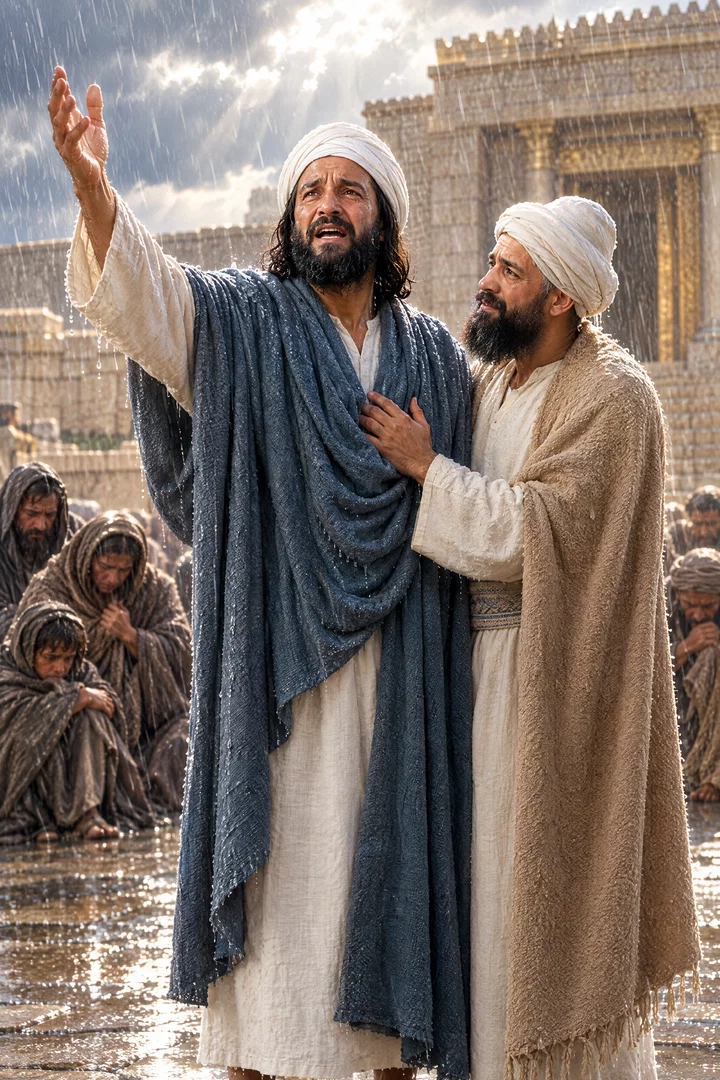
And Shechaniah the son of Jehiel, one of the sons of Elam, answered and said unto Ezra, We have trespassed against our God, and have taken strange wives of the people of the land: yet now there is hope in Israel concerning this thing.
Translations
And Shechaniah the son of Jehiel, one of the sons of Elam, answered and said to Ezra, We have trespassed against our God, and have taken strange wives of the people of the land: yet now there is hope in Israel concerning this thing.
King James Version, KJV Cambridge Paragraph Bible
And Shechaniah the son of Jehiel, one of the sons of Elam, answered and said unto Ezra, We have trespassed against our God, and have taken strange wives of the people of the land: yet now there is hope in Israel concerning this thing.
And Shechaniah the son of Jehiel, one of the sons of Elam, answered and said to Ezra, We have trespassed against our God, and have taken foreign wives of the people of the land: yet now there is hope in Israel concerning this thing.
And Shecaniah the son of Jehiel, one of the sons of Elam, answered and said unto Ezra, We have trespassed against our God, and have married strange women of the peoples of the land: yet now there is hope for Israel concerning this thing.
And Shecaniah the son of Jehiel, one of the sons of Elam, answered and said unto Ezra, We have trespassed against our God, and have married foreign women of the peoples of the land: yet now there is hope for Israel concerning this thing.
And Shechaniah son of Jehiel, of the sons of Elam, answereth and saith to Ezra, 'We — we have trespassed against our God, and we settle strange women of the peoples of the land; and now there is hope for Israel concerning this,
And Shechaniah the son of Jehiel, of the sons of Elam, answered and said to Ezra, We have acted unfaithfully toward our God, and have taken foreign wives of the peoples of the land; yet now there is hope for Israel concerning this thing.
Then responded Shecaniah son of Jehiel of the sons of Elam, and said unto Ezra, We, have been faithful with our God, and have married foreign women from among the peoples of the land,—yet, now, there is hope for Israel concerning this thing.
Berean Standard Bible, Majority Standard Bible
Then Shecaniah son of Jehiel, an Elamite, said to Ezra: “ We have been unfaithful to our God by marrying foreign women from the people of the land, yet in spite of this, there is hope for Israel.
Shecaniah the son of Jehiel, one of the sons of Elam, answered Ezra, “ We have trespassed against our God, and have married foreign women of the peoples of the land. Yet now there is hope for Israel concerning this thing.
And Shecaniah, the son of Jehiel, one of the sons of Elam, answering, said to Ezra, We have done evil against our God, and have taken as our wives strange women of the peoples of the land: but still there is hope for Israel in this question.
Then Shechaniah the sonne of Iehiel one of the sonnes of Elam answered, and sayd to Ezra, We haue trespassed against our God, and haue taken strange wiues of the people of the land, yet nowe there is hope in Israel concerning this.
Douay-Rheims (Challoner revision)
And Sechenias the son of Jehiel of the sons of Elam answered, and said to Esdras: We have sinned against our God, and have taken strange wives of the people of the land: and now if there be repentance in Israel concerning this,
Pictures
Cross-references
- Nehemiah 13:23-27
In those days also saw I Jews that had married wives of Ashdod, of Ammon, and of Moab:
Nehemiah’s reform also confronts Israelites’ marriages to foreign women.
- Deuteronomy 7:3-4
Neither shalt thou make marriages with them; thy daughter thou shalt not give unto his son, nor his daughter shalt thou take unto thy son.
Forbids intermarriage that could turn Israel from following God.
- Ezra 9:1-2
Now when these things were done, the princes came to me, saying, The people of Israel, and the priests, and the Levites, have not separated themselves from the people of the lands, doing according to their abominations, even of the Canaanites, the Hittites, the Perizzites, the Jebusites, the Ammonites, the Moabites, the Egyptians, and the Amorites.
Identifies marriages with surrounding peoples as Israel’s transgression.
- Exodus 34:16
And thou take of their daughters unto thy sons, and their daughters go a whoring after their gods, and make thy sons go a whoring after their gods.
Intermarriage with the peoples of the land could lead Israel into their worship.
- Joshua 23:12-13
Else if ye do in any wise go back, and cleave unto the remnant of these nations, even these that remain among you, and shall make marriages with them, and go in unto them, and they to you:
listed together as warning on marriage
- Judges 3:5-8
And the children of Israel dwelt among the Canaanites, Hittites, and Amorites, and Perizzites, and Hivites, and Jebusites:
listed together as warning on marriage
Commentary
Each commentary is drawn from primary sources: the writings of Ellen G. White and Adventist pioneers and periodicals. Each commentary is separate. Its own words are not a quotation; follow the references to read the source passages.
Ellen G. White
4 sources
Shechaniah, son of Jehiel, one of the sons of Elam, confessed on behalf of Israel that the people had trespassed against their God by taking strange wives from the peoples of the land.PK 622.2PK 622.3PK 622.1RH Feb 20, 1908 That intermarriage with women from the surrounding peoples was sin against God and contrary to His law.PK 622.2PK 622.3PK 622.1RH Feb 20, 1908 Yet even in that trespass there was hope in Israel concerning this thing, if the people would turn from their sin.PK 622.2PK 622.3PK 622.1RH Feb 20, 1908 The hope held out was not excuse but opportunity for repentance, that the wrong could still be set right.PK 622.2PK 622.3PK 622.1RH Feb 20, 1908
The confession marks the beginning of a reformation in which the people were led to turn from sin and obey God's law.PK 622.3 That hope called for repentance expressed in a covenant with God to forsake the sin.PK 622.2PK 622.1RH Feb 20, 1908 It required submitting to judgment and acting according to the law.PK 622.2PK 622.1RH Feb 20, 1908 Shechaniah urged Ezra to arise and lead the reform, and pledged the support of the people to stand with him and help him do it.PK 622.2RH Feb 20, 1908
Sources
Pioneers and periodicals
9 sources
Shechaniah's confession was spoken when the people gathered around Ezra after seeing his astonishment, shame, earnest humiliation, prayer and weeping over their deplorable moral condition in taking strange or foreign wives of the people of the land and otherwise mingling with the surrounding nations in forbidden alliances, from the rulers down, contrary to God's command.RH Feb 20, 1908RH Jul 13, 1869RH Oct 7, 1909ST May 7, 1902 It acknowledged that they had trespassed against God in marrying women of the surrounding peoples, yet declared that hope remained in Israel concerning this wrong.RH Feb 20, 1908RH Jul 13, 1869RH Oct 7, 1909ST May 7, 1902
That declaration means hope remains despite the trespass, even amid discouragement and trouble when sin has been committed and must be faced, because the wrong can be faced, addressed, and put right.RH Feb 20, 1908ST Jun 13, 1906RH Jul 13, 1869RH Oct 7, 1909ST Jun 18, 1902 That hope called for repentance and a covenant with God to forsake the sin and act according to the law.RH Feb 20, 1908ST May 7, 1902 Shechaniah urged Ezra to lead the reform, expressing encouragement and confidence that the work could be done, and the people pledged their support, weeping, confessing their sin, and wanting to retrace their steps.RH Feb 20, 1908RH Jul 13, 1869RH Oct 7, 1909
The covenant meant a regular course of practical separation, a general agreement to put away strange wives and their children and other heathen abominations. It was carried out by a committee inquiring into each individual case in a work occupying two full months. In the restoration under Ezra this revival brought backslidden people to separation from the heathen and from corruption and worldliness and to renewed union with God.RH Feb 7, 1907ST Jun 18, 1902
It brought them into a spiritual condition in which they could be taught the law and recognize the importance of rebuilding Jerusalem.RH Feb 7, 1907 The people could not be taught the law while remaining in that condition, so confession led to practical separation from the world before anything could be done to enlighten the church. Thorough preparation of heart, complete separation from the world, and determination to do His commandments are essential to a proper understanding of the law, since ignorance is the result of wickedness.
The verse gives God's counsel in love and mercy about marriage that must be carefully and prayerfully consulted and cheerfully obeyed.RH May 2, 1871 Marriage must be entered only in the Lord and only after studying its duties, so as to escape bitter anguish of heart, painful regret for long years, frequent disappointments, and repentance at once too soon and too late.RH May 2, 1871 The scene of Ezra's earnest seeking of God bringing a gathered company of men, women, and children to stand with him applies as an example of a willing response to a work that protects young people's spiritual interests.RH Sep 28, 1916
Sources