Ezra 4:3
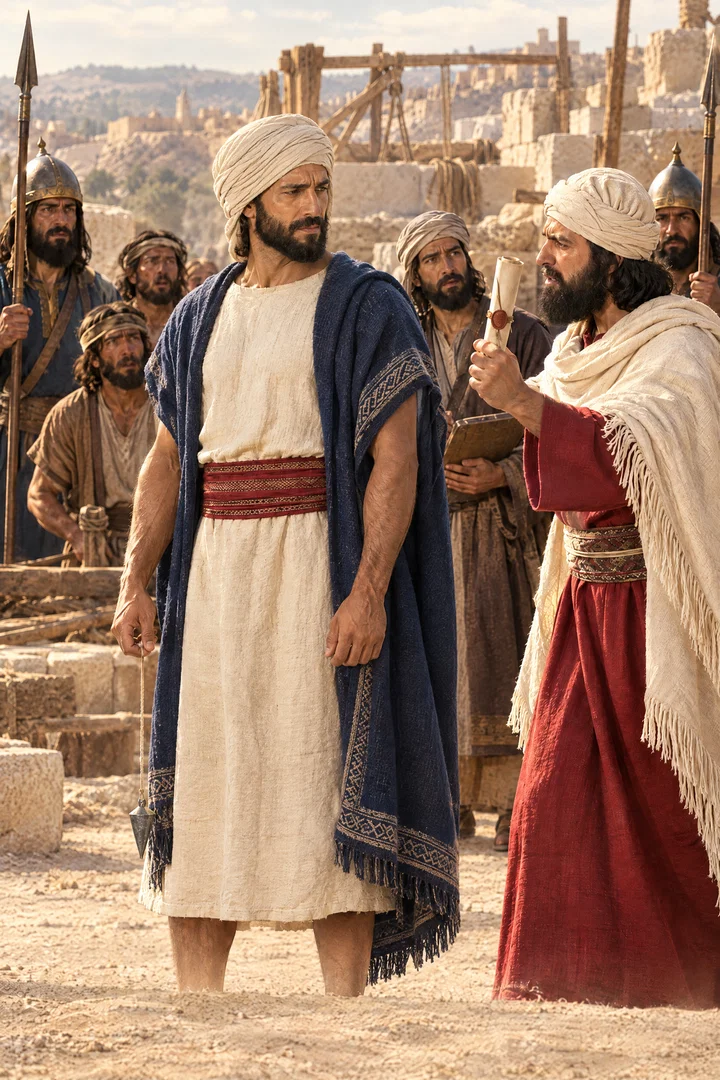
But Zerubbabel, and Jeshua, and the rest of the chief of the fathers of Israel, said unto them, Ye have nothing to do with us to build an house unto our God; but we ourselves together will build unto the LORD God of Israel, as king Cyrus the king of Persia hath commanded us.
Translations
But Zerubbabel, and Jeshua, and the rest of the chief of the fathers of Israel, said to them, You have nothing to do with us to build an house to our God; but we ourselves together will build to the LORD God of Israel, as king Cyrus the king of Persia has commanded us.
But Zerubbabel, and Jeshua, and the rest of the chief of the fathers of Israel, said unto them, Ye have nothing to do with us to build an house unto our God; but we ourselves together will build unto the LORD God of Israel, as king Cyrus the king of Persia hath commanded us.
But Zerubbabel, and Jeshua, and the rest of the chief of the fathers of Israel, said unto them, You have nothing to do with us to build a house unto our God; but we ourselves together will build unto the Lord God of Israel, as king Cyrus the king of Persia hath commanded us.
But Zerubbabel, and Jeshua, and the rest of the chief of the fathers of Israel, said to them, Ye have nothing to do with us to build a house to our God; but we ourselves together will build to the LORD God of Israel, as king Cyrus the king of Persia hath commanded us.
But Zerubbabel, and Jeshua, and the rest of the heads of fathers’ houses of Israel, said unto them, Ye have nothing to do with us to build an house unto our God; but we ourselves together will build unto the LORD, the God of Israel, as king Cyrus the king of Persia hath commanded us.
But Zerubbabel, and Jeshua, and the rest of the heads of fathers’ houses of Israel, said unto them, Ye have nothing to do with us in building a house unto our God; but we ourselves together will build unto Jehovah, the God of Israel, as king Cyrus the king of Persia hath commanded us.
And Zerubbabel saith to them, also Jeshua, and the rest of the heads of the fathers of Israel, 'Not for you, and for us, to build a house to our God; but we ourselves together do build to Jehovah God of Israel, as the king Cyrus, king of Persia, commanded us.'
But Zerubbabel and Jeshua and the rest of the chief fathers of Israel said to them, Ye have nothing to do with us to build a house to our God, but we alone will build to Jehovah the God of Israel, as king Cyrus, the king of Persia, has commanded us.
But Zerubbabel and Jeshua and the rest of the ancestral chiefs of Israel, said unto them, It pertaineth not to you and to us [in common], to build a house unto our God,—but, we ourselves together, will build unto Yahweh, God of Israel, even as King Cyrus, king of Persia, hath commanded us.
Berean Standard Bible, Majority Standard Bible
But Zerubbabel, Jeshua, and the other heads of the families of Israel replied, “ You have no part with us in building a house for our God, since we alone must build it for the LORD, the God of Israel, as Cyrus king of Persia has commanded us.”
But Zerubbabel, Jeshua, and the rest of the heads of fathers’ households of Israel said to them, “ You have nothing to do with us in building a house to our God; but we ourselves together will build to the LORD, the God of Israel, as King Cyrus the king of Persia has commanded us.”
But Zerubbabel and Jeshua and the rest of the heads of families in Israel said to them, You have no part with us in the building of a house for our God; we ourselves will do the work together for the Lord, the God of Israel, as Cyrus, king of Persia, has given us orders.
Then Zerubbabel, and Ieshua, and the rest of the chiefe fathers of Israel, sayde vnto them, It is not for you, but for vs to buyld the house vnto our God: for we our selues together wil buylde it vnto the Lord God of Israel, as king Cyrus the king of Persia hath commanded vs.
Douay-Rheims (Challoner revision)
But Zorobabel, and Josue, and the rest of the chief of the fathers of Israel said to them: You have nothing to do with us to build a house to our God, but we ourselves alone will build to the Lord our God, as Cyrus king of the Persians hath commanded us.
Pictures
Cross-references 20 of 28
- 2 Kings 17:24-33
And the king of Assyria brought men from Babylon, and from Cuthah, and from Ava, and from Hamath, and from Sepharvaim, and placed them in the cities of Samaria instead of the children of Israel: and they possessed Samaria, and dwelt in the cities thereof.
Describes the Samaritans’ origins and mixed worship.
- Ezra 5:1
Then the prophets, Haggai the prophet, and Zechariah the son of Iddo, prophesied unto the Jews that were in Judah and Jerusalem in the name of the God of Israel, even unto them.
Connects the rebuilding effort with Zerubbabel and Jeshua.
- Ezra 1:2
Thus saith Cyrus king of Persia, The LORD God of heaven hath given me all the kingdoms of the earth; and he hath charged me to build him an house at Jerusalem, which is in Judah.
Cyrus’s decree authorized the temple work.
- Haggai 1
In the second year of Darius the king, in the sixth month, in the first day of the month, came the word of the LORD by Haggai the prophet unto Zerubbabel the son of Shealtiel, governor of Judah, and to Joshua the son of Josedech, the high priest, saying,
Haggai urges the returned Jews to resume building the temple.
- Ezra 4:24
Then ceased the work of the house of God which is at Jerusalem. So it ceased unto the second year of the reign of Darius king of Persia.
The temple work ceased after the order to stop it.
- Haggai 2:3
Who is left among you that saw this house in her first glory? and how do ye see it now? is it not in your eyes in comparison of it as nothing?
Haggai describes the restored temple’s humble appearance compared with its former glory.
- Ezra 6:14
And the elders of the Jews builded, and they prospered through the prophesying of Haggai the prophet and Zechariah the son of Iddo. And they builded, and finished it, according to the commandment of the God of Israel, and according to the commandment of Cyrus, and Darius, and Artaxerxes king of Persia.
The rebuilding followed the Persian commands and the commandment of Israel’s God.
- Ezra 6:7-8
Let the work of this house of God alone; let the governor of the Jews and the elders of the Jews build this house of God in his place.
Darius orders the work to continue and removes the obstruction.
- Deuteronomy 7:2
And when the LORD thy God shall deliver them before thee; thou shalt smite them, and utterly destroy them; thou shalt make no covenant with them, nor shew mercy unto them:
Israel was forbidden to make covenants with the peoples around them.
- Ezra 6:15
And this house was finished on the third day of the month Adar, which was in the sixth year of the reign of Darius the king.
It records the temple’s completion.
- Nehemiah 4:8
And conspired all of them together to come and to fight against Jerusalem, and to hinder it.
Enemies conspire to hinder the Jews’ rebuilding work.
- Zechariah 4:9
The hands of Zerubbabel have laid the foundation of this house; his hands shall also finish it; and thou shalt know that the LORD of hosts hath sent me unto you.
Zerubbabel’s temple-building work is completed with the LORD’s help.
- Ezra 5:17
Now therefore, if it seem good to the king, let there be search made in the king’s treasure house, which is there at Babylon, whether it be so, that a decree was made of Cyrus the king to build this house of God at Jerusalem, and let the king send his pleasure to us concerning this matter.
Calls for a search for Cyrus’s original decree to rebuild the temple.
- Ezra 3:2
Then stood up Jeshua the son of Jozadak, and his brethren the priests, and Zerubbabel the son of Shealtiel, and his brethren, and builded the altar of the God of Israel, to offer burnt offerings thereon, as it is written in the law of Moses the man of God.
Names Zerubbabel and Jeshua in the restoration effort.
- Nehemiah 2:20
Then answered I them, and said unto them, The God of heaven, he will prosper us; therefore we his servants will arise and build: but ye have no portion, nor right, nor memorial, in Jerusalem.
Nehemiah rejects opponents as the restoration leaders did.
- Zechariah 4:6
Then he answered and spake unto me, saying, This is the word of the LORD unto Zerubbabel, saying, Not by might, nor by power, but by my spirit, saith the LORD of hosts.
The rebuilding work is accomplished by God’s Spirit, not human might.
- Ezra 3:8-10
Now in the second year of their coming unto the house of God at Jerusalem, in the second month, began Zerubbabel the son of Shealtiel, and Jeshua the son of Jozadak, and the remnant of their brethren the priests and the Levites, and all they that were come out of the captivity unto Jerusalem; and appointed the Levites, from twenty years old and upward, to set forward the work of the house of the LORD.
Describes the start of rebuilding the temple.
- Ezra 5:5
But the eye of their God was upon the elders of the Jews, that they could not cause them to cease, till the matter came to Darius: and then they returned answer by letter concerning this matter.
God watched over the builders so their enemies could not stop them.
- Psalms 127:1
Except the LORD build the house, they labour in vain that build it: except the LORD keep the city, the watchman waketh but in vain.
Only a house built by God prospers.
- Ezra 3:11-12
And they sang together by course in praising and giving thanks unto the LORD; because he is good, for his mercy endureth for ever toward Israel. And all the people shouted with a great shout, when they praised the LORD, because the foundation of the house of the LORD was laid.
Identifies the house-building work under discussion.
Commentary
Each commentary is drawn from primary sources: the writings of Ellen G. White and Adventist pioneers and periodicals. Each commentary is separate. Its own words are not a quotation; follow the references to read the source passages.
Ellen G. White
11 sources
Zerubbabel and Jeshua, with the rest of the chief of the fathers of Israel, refused the adversaries of Judah and Benjamin any part with them in building the house of God at Jerusalem.PK 567.2–568.1RH Jun 25, 18611T 281.2–282.2SG4 228.1RH Apr 25, 1907 Those adversaries were the Samaritans, the people of the land, and the answer given them was that they had nothing to do together in the work, but that Israel themselves together would build unto the Lord God of Israel as Cyrus king of Persia had commanded.PK 567.2–568.1RH Jun 25, 18611T 281.2–282.2SG4 228.1RH Apr 25, 1907
Those who made the offer claimed to seek God and to share in temple worship, offering to build with Israel and declaring that they sacrificed to Him, with professed friendship and help.PK 567.2–568.1RH Jun 25, 18611T 281.2–282.2RH Apr 25, 1907 Yet they were a mixed people who remained idolaters in heart and practice, not worshipers of the true God but opposers of Him who served other gods.PK 567.2–568.11T 281.2–282.2RH Apr 25, 1907SG4 228.3RH Jun 25, 1861 Their profession did not make them true worshipers, for they were not counted as worshipers of the true God.1T 281.2–282.2SG4 228.3RH Jun 25, 1861
Their offer of help was insincere, and professed friendship and offers of help did not change that standing.PK 567.2–568.11T 281.2–282.2SG4 228.3 God does not need the aid of His enemies to establish His worship, and He does not ask for nor accept the sacrifice of wickedness or the offerings of those who have other gods before Him.1T 281.2–282.2SG4 228.3RH Jun 25, 1861 His worship was not to be established with the help of those who opposed Him or served other gods.1T 281.2–282.2SG4 228.3
Accepting the offer would have opened a door for the entrance of idolatry and opened the way for idolatrous influence upon the temple work.PK 567.2–568.1RH Apr 25, 1907 Joining with such apparent generosity could draw God's people into compromise, for flattering offers from opponents of truth can bring spiritual ruin.PK 567.2–568.1RH Apr 25, 1907RH Apr 25, 1907 Guarding the work therefore required refusing alliance rather than yielding to generosity that would corrupt worship.RH Apr 25, 1907RH Apr 25, 1907
The refusal teaches trust in God alone and strict obedience to His plain commands rather than seeking or receiving help through alliance with those who do not serve Him.PK 567.2–568.1RH Jun 25, 1861SG4 228.1RH Apr 25, 1907 Help gained by such alliance would have been as nothing compared with the blessing of following Jehovah's commands, and strict obedience promised greater prosperity than alliance could give.PK 567.2–568.1RH Apr 25, 1907 This held even though only a small remnant had returned to do a work seemingly beyond their strength, resting on belief that God will defend and prosper His servants as they seek Him by fasting and prayer rather than joining with outsiders.PK 567.2–568.1RH Jun 25, 1861SG4 228.1RH Jun 25, 1861
The verse means God's people must not unite with unbelievers in anything relating to His worship or the restoration of His worship, even when friendship and help are promised.SG4 228.3RH Jun 25, 1861 They must guard their allegiance rather than conform to the world to gain influence.RH Jun 25, 1861RH Apr 25, 1907 The Creator needs no help from His enemies to establish His worship.SG4 228.3RH Jun 25, 1861
The refusal led to bitter hostility between the two peoples.4RED 26.2–27.22SP 142.3–143.2DA 187.5–188.3 Afterward the Samaritans built a rival temple on Mount Gerizim.2SP 142.3–143.2
Sources
Pioneers and periodicals
31 sources
When the mixed peoples settled around Samaria offered to join in rebuilding the house of God at Jerusalem after the return from Babylon, Zerubbabel and Jeshua with the chief fathers answered that they could have no part together with them in the work, but Israel alone would build unto the Lord as Cyrus had commanded.RH Jun 25, 1861RH Mar 2, 1876ST Mar 26, 1902RH Sep 18, 1856 Those who offered were adversaries whose worship was mixed with idolatry, fearing the Lord while serving graven images, and though they claimed to seek God and sacrifice to Him as Israel did they were not counted as worshipers of the true God.ST Aug 29, 1911ST Jan 2, 1893ST Aug 14, 1901 Their offer was specious and meant to gain power and draw God's people into compromise, so the refusal was right principle and noble obedience to remain separate lest renewed contamination by idolatry follow generations of idolatry and exile.RH Apr 25, 1907ST Mar 26, 1902ST Jan 2, 1893 God had called Israel to a distinctive work to be done alone free from outside influence, for He needs no help from His enemies to establish His worship and does not accept the offerings of those who have other gods before Him, but requires His people to trust in Him alone.RH Jun 25, 1861 Refusing such help brought years of obstruction and bitter enmity, yet it kept the people devoted to God, and it warns the church not to enlist the world's support nor conform to the world for influence, but to guard its allegiance rather than compromise.RH Apr 25, 1907ST May 7, 1902ST Feb 18, 1886
Setting and Aftermath
The verse belongs to the return from Babylon in B.C. 535 and the rebuilding of the second temple at Jerusalem.ST Jul 14, 1887 The returned exiles laid the foundation of the house of God, but the work then languished in poverty and seemed impossible with weak human resources, amid fear of Persian displeasure.ST Aug 23, 1899ST May 10, 1883ST Jun 2, 1909ST Aug 2, 1910 The completion of that temple after long delay is a type of God's work reaching completion.ST Aug 23, 1899
When the work was beginning, the Samaritans, the adversaries of Judah and Benjamin and the people of the land, offered to join in building.RH Jun 25, 1861ST Apr 12, 1883ST Apr 19, 1883 Zerubbabel and Jeshua, with the rest of the chief of the fathers of Israel, answered that they had nothing to do together with them in building a house unto God.RH Jun 25, 1861RH Mar 2, 1876 Israel alone would build together unto the LORD God of Israel, as Cyrus king of Persia had commanded, thereby keeping the work under the authority of that decree and rejecting an alliance intended to gain power in Judah.RH Jun 25, 1861RH Mar 2, 1876ST Mar 26, 1902ST May 7, 1912
The refusal was followed by determined obstruction intended to stop the work.RH Mar 2, 1876ST Apr 12, 1883 The adversaries hindered the Jews with all their power, hired counselors against them at the Persian court through the time of Cyrus and Cambyses, and acted in the Persian king's name.ST Jul 14, 1887ST Apr 12, 1883ST Apr 12, 1883 By misrepresentation they obtained a royal stoppage after the foundation was laid, identified with Artaxerxes, with Smerdis the Impostor, and with Artaxerxes the Magian around 522 B.C.RH Sep 18, 1856ST May 17, 1877 The work was thereby delayed fifteen years before it resumed, until the Lord sent Haggai and Zechariah to urge the Jews to continue rebuilding under Darius, when a Persian search confirmed that Cyrus had authorized the work, the king renewed the decree, and the house was completed.RH Sep 18, 1856RH Sep 4, 1856ST Jun 2, 1909
That refusal began a religious enmity between Samaritans and Jews that was never quenched but grew more bitter with age into hatred.ST Jul 14, 1887ST Sep 3, 1894 The Samaritans were treated as outsiders with no part in Israel's religion, and their opposition to the rebuilding under Zerubbabel helped kindle and foster that hostility.ST Sep 3, 1894ST Sep 3, 1894 The enmity arose even though both groups claimed to keep the same law, and it was later increased by Samaritan apostasy and their temple at Mount Gerizim.ST Aug 29, 1911ST Jun 4, 1902
The decree of Cyrus, or of Darius renewing it, appealed to in the verse is distinct from the decree in Ezra 7.ST Jul 25, 1878RH Dec 8, 1874 That Cyrus or Darius decree is not the true starting date for Daniel's seventy weeks in Daniel 9:24.ST Jul 25, 1878RH Dec 8, 1874
The setback belonged to Satan's resistance to God's restoration work, yet God had not lost control of the powers resisting it.RH Feb 21, 1907ST Aug 2, 1910 Though the resources were weak, God could accomplish the work by His Spirit, would deal with resisting powers in His own time, and would mercifully shield His afflicted people.ST May 10, 1883ST Aug 2, 1910 The pattern of many adversaries alongside much to encourage those carrying the work forward is also seen in the days of Nehemiah and among the apostles and reformers.RH Dec 11, 1900
Why Help Was Refused
The offer came from adversaries, the mixed peoples of Palestine round about Jerusalem, the successors of the ten tribes at Samaria whom Esar-haddon had brought up.ST Jan 2, 1893 Their worship was mixed and false and idolatrous, for they feared the Lord while serving their graven images.ST Jan 2, 1893ST Aug 14, 1901 Though they claimed to seek God as Israel did and to sacrifice to Him since Esar-haddon brought them up, and though they professed the same law and in some measure professed to fear Jehovah, they were heathen and were not counted as worshipers of the true God.RH Jun 25, 1861ST Aug 29, 1911ST Feb 18, 1886 Their evil motives were proved by their later revenge and hindrance, showing they were really adversaries to the work of God.ST Jan 2, 1893
Their representations were specious and did not deceive the leaders. The proposed alliance was intended to gain power in Judah, and the refusal kept the temple work under the authority of the decree of Cyrus.ST Mar 26, 1902 Their apparent generosity could draw God's people into compromise, for flattering offers from opponents of God's truth can bring spiritual ruin.RH Apr 25, 1907 The leaders therefore insisted that Israel alone would build together under the command of Cyrus, rejecting the alliance.ST Mar 26, 1902ST May 7, 1902
The refusal was not shortsighted policy but right principle and noble obedience to the Lord's instruction to remain separate.ST Jan 2, 1893 God requires His people to trust in Him alone and not to receive help from those who do not serve Him, and God could not work with them.RH Jun 25, 1861ST Jan 2, 1893 Accepting help from insincere worshipers would have opened the way for idolatrous influence and renewed contamination by idolatry after generations of idolatry and exile.RH Apr 25, 1907ST May 24, 1910 Strict obedience to God's commands promised greater prosperity than alliance with them.RH Apr 25, 1907
God had called Israel to a distinctive work that must be performed alone, standing free from every outside influence and worldly entanglement and permitting no common cause with surrounding nations. God's people must not unite with unbelievers in anything relating to His worship, even when friendship and help are promised.RH Jun 25, 1861 The Creator needs no help from His enemies to establish His worship, and He does not ask for nor accept the sacrifice of wickedness or the offerings of those who have other gods before Him.RH Jun 25, 1861 Instead they trust God to defend and prosper them in serving Him, and seek Him by fasting and prayer rather than joining with outsiders.RH Jun 25, 1861
Faithfulness and Present Lesson
The steadfast refusal of Zerubbabel and Jeshua to accept a shared part in the work helped keep the people devoted to God while those leaders lived.ST May 7, 1902 After leaders of equal devotion were gone, Israel accepted the alliance, and the work of rebuilding Jerusalem was stopped.ST May 7, 1902 That refusal brought long years of persecution by threats, cajolery and intrigue, continued not only through Ezra's administration but into later generations. Refusing such help may bring greater opposition, but it also strengthens devotion.ST Feb 18, 1886
The church is therefore not to enlist the world's support, as in fundraising schemes.ST Feb 18, 1886 It is not to conform to the world in order to gain influence, for apparent generosity from those outside can draw God's people into compromise.RH Apr 25, 1907ST Feb 18, 1886 Flattering offers from opponents of God's truth can bring spiritual ruin, so God's people must guard their allegiance rather than compromise.RH Apr 25, 1907
Sources