Galatians 2:13
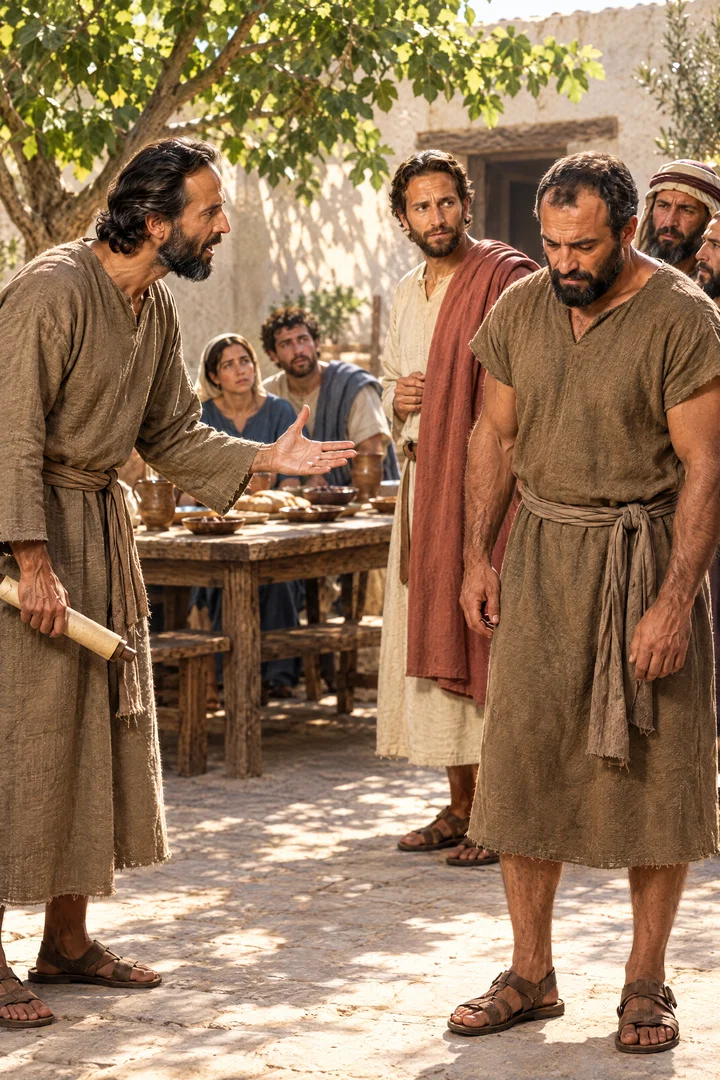
And the other Jews dissembled likewise with him; insomuch that Barnabas also was carried away with their dissimulation.
Translations
American King James Version, Webster Bible
And the other Jews dissembled likewise with him; so that Barnabas also was carried away with their dissimulation.
King James Version, KJV Cambridge Paragraph Bible
And the other Jews dissembled likewise with him; insomuch that Barnabas also was carried away with their dissimulation.
Revised Version, American Standard Version
And the rest of the Jews dissembled likewise with him; insomuch that even Barnabas was carried away with their dissimulation.
and dissemble with him also did the other Jews, so that also Barnabas was carried away by their dissimulation.
and the rest of the Jews also played the same dissembling part with him; so that even Barnabas was carried away too by their dissimulation.
And the rest of the Jews [also] used hypocrisy with him, so that, even Barnabas, was carried away by their hypocrisy.
Berean Standard Bible, Majority Standard Bible
The other Jews joined him in his hypocrisy, so that by their hypocrisy even Barnabas was led astray.
And the rest of the Jews joined him in his hypocrisy, so that even Barnabas was carried away with their hypocrisy.
And the rest of the Jews went after him, so that even Barnabas was overcome by their false ways.
And the other Iewes played the hypocrites likewise with him, in so much that Barnabas was led away with them by that their hypocrisie.
Douay-Rheims (Challoner revision)
And to his dissimulation the rest of the Jews consented, so that Barnabas also was led by them into that dissimulation.
Pictures
Cross-references
- Acts 15:1-29
And certain men which came down from Judæa taught the brethren, and said, Except ye be circumcised after the manner of Moses, ye cannot be saved.
The Jerusalem council’s decision about Gentile believers informs Peter’s conduct at Antioch.
- Acts 15:7
And when there had been much disputing, Peter rose up, and said unto them, Men and brethren, ye know how that a good while ago God made choice among us, that the Gentiles by my mouth should hear the word of the gospel, and believe.
Peter recalls that Gentiles heard and believed the gospel through him.
- Galatians 2:3
But neither Titus, who was with me, being a Greek, was compelled to be circumcised:
Titus was not compelled to be circumcised in the dispute over Gentiles.
- Acts 10:28
And he said unto them, Ye know how that it is an unlawful thing for a man that is a Jew to keep company, or come unto one of another nation; but God hath shewed me that I should not call any man common or unclean.
Peter explains that God showed him he could associate with Gentiles.
- Acts 11:3
Saying, Thou wentest in to men uncircumcised, and didst eat with them.
Peter had previously been criticized for eating with Gentiles.
- Acts 10:44-48
While Peter yet spake these words, the Holy Ghost fell on all them which heard the word.
The Spirit’s gift to Gentiles confirms their acceptance and inclusion.
- 1 Corinthians 9:20
And unto the Jews I became as a Jew, that I might gain the Jews; to them that are under the law, as under the law, that I might gain them that are under the law;
Paul identifies with Jewish customs to reach Jews, while Galatians describes others’ compromised imitation.
- Acts 11:24
For he was a good man, and full of the Holy Ghost and of faith: and much people was added unto the Lord.
Barnabas was Spirit-filled and faithful, yet later erred.
- Galatians 2:9
And when James, Cephas, and John, who seemed to be pillars, perceived the grace that was given unto me, they gave to me and Barnabas the right hands of fellowship; that we should go unto the heathen, and they unto the circumcision.
Pillars give Paul and Barnabas the right hand of fellowship.
- Acts 15:5
But there rose up certain of the sect of the Pharisees which believed, saying, That it was needful to circumcise them, and to command them to keep the law of Moses.
The council debated circumcision and keeping the law of Moses.
- Acts 15:28-29
For it seemed good to the Holy Ghost, and to us, to lay upon you no greater burden than these necessary things;
The Jerusalem council’s decision formed the setting for Peter’s earlier fellowship with Gentiles.
- Acts 15:39
And the contention was so sharp between them, that they departed asunder one from the other: and so Barnabas took Mark, and sailed unto Cyprus;
Both texts show sharp contention involving Barnabas.
- Luke 22:31-34
And the Lord said, Simon, Simon, behold, Satan hath desired to have you, that he may sift you as wheat:
Peter’s warning and earlier failure foreshadow his later failure.
- Acts 21:20-26
And when they heard it, they glorified the Lord, and said unto him, Thou seest, brother, how many thousands of Jews there are which believe; and they are all zealous of the law:
Paul accommodates concerns about Jewish law by joining in purification rites.
- Galatians 2:18
For if I build again the things which I destroyed, I make myself a transgressor.
Rebuilding what was destroyed makes one a transgressor.
- Acts 10:11-16
And saw heaven opened, and a certain vessel descending unto him, as it had been a great sheet knit at the four corners, and let down to the earth:
Peter’s vision challenged prejudice against Gentiles, though such prejudice persisted.
- 1 Corinthians 7:19
Circumcision is nothing, and uncircumcision is nothing, but the keeping of the commandments of God.
Both distinguish circumcision from faithful obedience to God.
- Acts 15:10
Now therefore why tempt ye God, to put a yoke upon the neck of the disciples, which neither our fathers nor we were able to bear?
Peter calls the disputed requirements a yoke.
Commentary
Each commentary is drawn from primary sources: the writings of Ellen G. White and Adventist pioneers and periodicals. Each commentary is separate. Its own words are not a quotation; follow the references to read the source passages.
Ellen G. White
12 sources
At Antioch Peter withdrew from table fellowship with Gentile converts, and the other Jewish believers followed his example until even Barnabas was carried away with the same pretense.AA 197.3–198.18RED 34.2–35.1SLP 71.2–72.1 Their conduct was hypocritical double-dealing that evaded integrity and the principles of the gospel, driven by fear of others and desire for esteem and by prejudice in favor of Jewish customs.AA 197.3–198.18RED 34.2–35.1SLP 71.2–72.1AA 199.2Ms 122, 1897, par. 14–15 It contradicted the welcome already given to the Gentiles without requiring the ceremonial law, and threatened the unity of the church with division and a subverting influence on minds and hearts.AA 197.3–198.18RED 34.2–35.1SLP 71.2–72.1ST Jun 26, 1879ST Jun 26, 1879 Paul therefore withstood Peter face to face and opposed him directly because he was acting in this way.Ms 122, 1897, par. 14–15Ms 18, 1897, par. 5–7SLP 213.2–214.1 The fall proves that even the best of men left to themselves will make grave blunders, leaving Peter with no ground for boasting and standing as a solemn warning that men in high places must keep close to principle and depend daily on the grace of Christ.ST Jun 26, 1879Ms 122, 1897, par. 14–15
Peter's Withdrawal at Antioch
At Antioch Peter withdrew from table fellowship with Gentile converts, and the other Jewish believers followed his example into the same dissimulation, insomuch that even Barnabas was carried away with it.AA 197.3–198.18RED 34.2–35.1SLP 71.2–72.13SP 377.1–2ST Jun 26, 1879 The spread of Peter's dissembling to other Jewish Christians, drawing in even Barnabas, showed a wavering departure from fellowship with Gentile believers.SLP 71.2–72.13SP 377.1–2AA 199.2
The failure was striking after Peter's fall and restoration, his long course of service, his intimate acquaintance with Christ and knowledge of Christ's pure, straightforward practice of principle, and after all the instruction, gifts, knowledge, and great influence he had in preaching and teaching the Word.Ms 122, 1897, par. 14–15 Peter was one of the pillars of the church and Paul's companion and fellow worker in labor, and Barnabas was the one who had first honored Paul with the right hand of fellowship when all the other Christians were afraid of him as a former persecutor of the church and questioned and doubted his fitness for the work.Ms 18, 1897, par. 5–7 Their conduct was hypocritical, inconsistent double-dealing and pretense, evading integrity and the principles of the gospel, wavering and two-sided in position.AA 197.3–198.18RED 34.2–35.1SLP 71.2–72.13SP 377.1–2ST Jun 26, 1879
It was driven by fear of men and of people, and by desire for esteem, reflecting prejudice in favor of Jewish customs.AA 199.2Ms 122, 1897, par. 14–15ST Jun 26, 1879 It contradicted the welcome Peter had already shown to the Gentiles and the council decision to accept Gentile converts without requiring them to keep the ceremonial law and without binding unnecessary burdens upon them.ST Jun 26, 1879ST Jun 26, 1879 It painfully threatened the unity of the church with division and left a painful impression on the Gentile believers, exercising a subverting influence that perverted minds and hearts.AA 197.3–198.18RED 34.2–35.13SP 377.1–2ST Jun 26, 1879Ms 122, 1897, par. 14–15
Paul therefore withstood Peter face to face and opposed him directly because he was acting in this way, taking his stand against Peter and Barnabas when even they were drawn into error.Ms 122, 1897, par. 14–15Ms 18, 1897, par. 5–7SLP 213.2–214.1 Peter afterward recognized his mistake and tried to repair it.ST Jun 26, 1879 In connection with the dispute over Gentile converts, Peter did not act as authoritative head over the church but stood on equality with his fellow apostles.3SP 374.3
Warnings and Doctrinal Lessons
Paul held fast to the inspired truth taught him by God that God's gifts come straight from God to all who seek Him with a whole heart, whether circumcised or uncircumcised, Barbarian, Scythian, bond or free, and therefore no unnecessary burdens must be bound upon Gentile Christians.Ms 18, 1897, par. 5–7 Though opposed by apostles who ought to have upheld him, withstood by his brethren, and accused of advocating theories contrary to the fundamental principles they had been taught, he firmly held his ground.Ms 18, 1897, par. 5–7 He stood dedicated with all his powers and talents to God, taught by God the truths of the gospel able to make men wise unto salvation.Ms 18, 1897, par. 5–7
Peter's weakness in being carried away shows he had no grounds for boasting, for he was a fallible human being, not someone above the other apostles nor entitled to prerogatives that belong only to God.ST Jun 26, 1879 It proves that even the best of men left to themselves will make grave blunders, and the more responsibilities placed upon the human agent and the higher his position to dictate and control, the more mischief he will do if he does not carefully follow the way of the Lord.Ms 122, 1897, par. 14–15 It is recorded that others may profit by it, as a solemn warning to men in high places not to fail in integrity but to keep close to principle.Ms 122, 1897, par. 14–15 It is meant to give every man a sense of personal helplessness to steer straight and safely, since the grace of Christ is essential every day and His matchless grace alone can keep feet from falling.Ms 122, 1897, par. 14–15
Sources
Pioneers and periodicals
57 sources
At Antioch Peter first ate freely with Gentile believers but withdrew and separated himself when men from James arrived, and the other Jewish believers followed him in the same hypocrisy until even Barnabas was swept along with them.ST Jul 22, 1913ST Dec 22, 1898ST May 27, 1875ST Sep 6, 1883ST Mar 13, 1884 In doing so from fear of those who favored circumcision they did not walk uprightly according to the truth of the gospel, but by separating from the uncircumcised effectively denied that salvation is through faith in Christ alone and pressured Gentiles to live as Jews.ST Jul 22, 1913ST Aug 22, 1900RH Jun 10, 1875RH Dec 27, 1853RH Apr 15, 1873 The eating and separation at issue concerned the ceremonial law about eating with Gentiles that the gospel set aside, not the Ten Commandments of the moral law, which is why Paul could argue that if a Jew could live as a Gentile, much more could Gentiles be free from that law.RH Jun 10, 1875ST May 27, 1875RH Apr 15, 1873ST May 27, 1875 Peter's fall proves he was fallible in conduct, not infallible and not pope or supreme head of the church, and Paul's open rebuke of him to his face before all shows that even a leading apostle is subject to correction.ST Mar 20, 1884ST Dec 3, 1894ST Jun 28, 1883ST Jul 5, 1910ST Apr 13, 1915 The lesson remains that a wrong example by great men does not make wrong conduct right, that double-dealing to suit company needs plain faithful reproof, and that deeply rooted prejudice is hard to throw off and still hinders the work of the gospel.ST Nov 19, 1902ST Feb 24, 1887RH Dec 5, 1865RH Jul 22, 1873
Setting and Background
The letter is addressed to a mixed body of Christians largely made up of Gauls.ST Nov 22, 1910 Galatia was the Gaul of the East, a comparatively small district of Asia Minor where Gauls or Celts had dwelt from about the third century before Christ, entering Asia Minor and establishing themselves west of Pontus and Cappadocia and north of Phrygia.ST Nov 22, 1910ST Nov 18, 1913 They were subjugated by the Romans in B.C. 189, becoming a Roman province which by 25 B.C. included not only this region but Lycaonia, Pisidia, Pamphylia and much of Phrygia.ST Nov 22, 1910ST Nov 18, 1913 Living on a great highway of commerce, they became mixed with Greeks and Romans and to some extent with the Hebrews.ST Nov 22, 1910 The church there was founded by Paul in A.D. 52.ST Nov 22, 1910
It belongs to the opening chapters read with Psalm 99 as the reading moves from 2 Corinthians into the first four chapters of Galatians.ST Nov 18, 1913 Paul shows exceptional sympathy to these churches in a strong letter written because during his absence Judaizing teachers had found access to them and some were falling back into old idolatry.ST Nov 18, 1913 It gives in wonderful condensation important truth with strong, rich arguments showing the relationship of Christ to the law, with emphasis upon justification by faith in Christ, while Romans treats of justification by faith.ST Nov 18, 1913
The verse belongs to the account of the Jerusalem conference about A.D. 51, seventeen years after Paul's conversion. The events surrounding it are connected with that conference, with its causes and results recorded in Acts 15. It belongs to the controversy over requiring Gentile converts to observe circumcision and keep the law of Moses, including the ceremonial law, as a condition of salvation.ST Jun 3, 1875 This was the same issue addressed at the Jerusalem council, whose decision was to accept Gentile converts without requiring them to keep the ceremonial law, and Peter in withdrawing from table fellowship with Gentile believers was acting contrary to that decision.ST Jun 26, 1879 This departure was part of the danger that threatened the Galatian believers.
Events at Antioch
At Antioch, where Paul and Barnabas had raised up a church, Peter at first mingled with the Gentile believers and ate freely with them.ST May 27, 1875ST Sep 6, 1883ST Apr 13, 1915 But when certain Jews came from James at Jerusalem, those of the circumcision, he withdrew and separated himself from eating with the Gentiles.ST Dec 22, 1898ST May 27, 1875ST Sep 6, 1883ST Sep 5, 1900ST Apr 13, 1915
His withdrawal was not done to protect a weak believer but out of fear of those who favored circumcision and insisted on Jewish separation.ST Aug 22, 1900RH Jun 10, 1875RH Dec 27, 1853ST Sep 6, 1883RH Apr 15, 1873 It was fear of Jewish accusations and of opposition from men and rulers, so that without being filled with the Holy Ghost he dodged the issue and yielded instead of standing for the right.ST Sep 6, 1883ST Dec 21, 1888RH Jun 11, 1901 It also sprang from bigoted attachment to the customs of his fathers and deeply rooted prejudice against Gentile neighbors.ST Dec 21, 1888
The other Jewish believers at Antioch followed Peter and withdrew in the same way, joining him in dissimulation and hypocrisy.ST Jul 22, 1913ST Aug 22, 1900ST Dec 22, 1898ST Sep 12, 1900ST Sep 15, 1887 Their conduct spread the fault beyond Peter through the whole group, and it did not accord with the truth of the gospel.ST Jul 22, 1913ST Aug 22, 1900ST Dec 22, 1898ST Sep 15, 1887ST Sep 15, 1909 It was so influential that it swept others along with it.ST Sep 12, 1900ST Sep 15, 1887ST Sep 15, 1909
Even Barnabas was carried away and swept along by their dissimulation, showing how strongly Peter's example and the group's conduct influenced others.ST Jun 26, 1879ST Jul 22, 1913ST Mar 13, 1884ST Aug 22, 1900 Their pretense contradicted the welcome Peter had shown the Gentiles and left a painful impression, threatening division in the church.ST Jun 26, 1879 It shook the faith of the Gentile believers and reflected prejudice against the equal standing of Gentiles in the gospel.ST Jul 22, 1913ST Mar 13, 1884
Gospel Truth Denied
Their conduct did not follow the truth of the gospel and did not accord with it, for withdrawing and separating from eating with Gentile believers at Antioch was not walking uprightly according to the truth.ST Jul 22, 1913ST Aug 22, 1900ST Dec 22, 1898ST Sep 6, 1883ST Sep 15, 1887 When certain Jews came from Jerusalem, those of the circumcision, Peter withdrew for fear of them after having mingled and eaten freely with Gentiles, and the other Jewish believers followed and withdrew in the same way in dissimulation and hypocrisy, insomuch that even Barnabas was carried away and swept along with them.ST Jul 22, 1913ST Aug 22, 1900ST Dec 22, 1898ST Sep 6, 1883ST Sep 15, 1887 That fearful withdrawal was not done to protect a weak believer but out of fear of Jewish accusations and opposition from the circumcision group, and the fault spread beyond Peter through the group and shook the faith of Gentile believers.ST Jul 22, 1913ST Aug 22, 1900ST Sep 6, 1883 By changing conduct toward Gentile believers when the certain Jews arrived, he violated a fundamental principle and stood condemned, so that faithfulness in an apparently small act involved a great principle, and hiding the gospel in this way compromised the truth.ST Jul 22, 1913ST Aug 22, 1900RH Jun 11, 1908
By separating from uncircumcised Gentile believers they effectively denied Christ and suggested that circumcision was needed for salvation, despite the gospel testimony that salvation comes through faith in Christ alone.ST Dec 22, 1898 That denial was unintentional, yet it publicly contradicted the gospel and stands as warning against the same sin.ST Dec 22, 1898 Their dissimulation did not match the freedom already practiced in eating with Gentiles, and it pressured Gentiles to live as do the Jews and to live by Jewish customs under a law treated as still in force and binding on Christians.RH Apr 15, 1873ST May 27, 1875 Peter freely eating with Gentiles was a direct violation of the ceremonial law of the Jews and not of any one of the Ten Commandments, and the rebuke that he being a Jew lived after the manner of Gentiles shows that if a Jew could disregard that ceremonial law much more could the Gentiles.RH Apr 15, 1873ST May 27, 1875 To act so would rebuild what the gospel had broken down.RH Apr 15, 1873ST Dec 22, 1898
Jews and Gentiles share the promises of God through Christ under the new covenant, so no promise can now be claimed by someone born Jewish that cannot also be claimed by someone born Gentile.RH Mar 25, 1873 Claiming such an exclusive promise rebuilds what has been broken down and makes those who do so transgressors.RH Mar 25, 1873
The failure to live by the truth known influenced other Jewish believers, and even Barnabas was swept into their dissembling, yet the teaching about the Gentiles remained true while the behavior was wrong.RH Aug 19, 1873RH Jan 4, 1906 Their conduct presented a false appearance about willingness to associate with Gentiles, contrary to actual practice.RH Aug 19, 1873RH Jan 4, 1906 Unlike participation in a Jewish ceremonial custom as Paul practiced it, this action was contrary to actual practice and therefore wrong.RH Aug 19, 1873
Ceremonial Law Issue
The dispute at Antioch concerned Jewish ceremonial rules about eating with Gentiles, including the law concerning eating that the gospel abrogated, and not any one of the Ten Commandments of the moral law.RH Jun 10, 1875ST May 27, 1875RH Apr 15, 1873ST Mar 20, 1879 Peter had at first eaten freely with the Gentile believers, which was a direct violation of the ceremonial law of the Jews.ST May 27, 1875ST May 27, 1875 When certain came from James, those who were of the circumcision and insisted on circumcision and Jewish separation, Peter withdrew and separated himself from eating with the Gentiles for fear of them.RH Jun 10, 1875ST May 27, 1875RH Apr 15, 1873 The other Jewish believers joined him in withdrawing from meals with Gentile believers in the same way, in dissimulation and hypocrisy that did not match the freedom Peter had already practiced, and even Barnabas was swept along and carried away by their conduct.RH Jun 10, 1875ST May 27, 1875RH Apr 15, 1873ST Mar 20, 1879 Their withdrawal treated Jewish ceremonial rules about eating with Gentiles as still in force and binding on Christians, and pressured Gentiles to live by Jewish customs, so Paul's rebuke of this conduct shows the dispute concerned the ceremonial law and not a commandment of the moral law.RH Jun 10, 1875RH Apr 15, 1873ST May 27, 1875
Paul's rebuke that Peter, a Jew, lived after the manner of Gentiles shows that if a Jew could disregard the ceremonial law, much more could the Gentiles disregard it.ST May 27, 1875ST May 27, 1875 His withdrawal put pressure on the Gentiles to live as do the Jews under that law, even though he himself had set it aside in practice.ST May 27, 1875 The incident proves the law under consideration in Galatians is the ceremonial law and not the moral law.RH Jun 10, 1875ST May 27, 1875ST May 27, 1875 It has direct bearing on Paul's argument only if the ceremonial law is meant, and would have no bearing whatever if the moral law were meant, since the act at issue is eating with Gentiles and not breaking any one of the ten commandments.ST May 27, 1875ST May 27, 1875
Circumcision was regarded by the Galatians as consequential because it belonged to the law given for that dispensation.RH Oct 8, 1857 That law was distinct from the moral commandments.RH Oct 8, 1857 The keeping of those moral commandments remained important.RH Oct 8, 1857
Peter Fallible, Not Pope
Peter's withdrawing from fellowship with Gentile believers, in which the other Jewish believers joined him and by which even Barnabas was influenced and carried along, reveals his human fallibility and shows that he could err in conduct and was not infallible.ST Mar 20, 1884ST Dec 3, 1894ST Jun 28, 1883ST Jul 22, 1913 His mistake was serious enough for Paul to rebuke him, and his weakness, which he recognized and tried to repair, shows that he had no grounds for boasting and was not above the other apostles or entitled to prerogatives belonging only to God.ST Jun 26, 1879ST Dec 3, 1894 Apostles could err in their conduct, and their practice was not authoritative when it departed from Christ's teaching.ST Jun 28, 1883
God never inspires anyone so as to make him infallible, for to do so would take away individuality and freedom of will and remove him from probation.ST Apr 15, 1875 Even those most highly gifted of the Spirit, like Peter, Paul and Barnabas, were not always under its immediate influence so as to be preserved from erring, but remained fallible and dependent upon Heaven for help and strength received only through faith and prayer.ST Apr 15, 1875 Without being filled with the Holy Ghost a person yields to rulers and elders and is carried away into compromise, as Peter at Antioch dodged the issue and failed to stand for the right because he feared opposition from men, whereas when filled with the Holy Ghost at Jerusalem he stood with all boldness before the combined power of church and state and feared no one.RH Jun 11, 1901 The lesson is to follow his Jerusalem example and not his Antioch example.RH Jun 11, 1901
Paul's withstanding Peter to the face, even before them all, because he was to be blamed, though Peter was one of the pillars, shows that Paul kept the faith and remained faithful to the truth and acted with integrity.RH Mar 5, 1901ST Feb 3, 1881RH Jul 15, 1862 That open rebuke over a matter of great importance proves Peter was not superior to the other apostles, refutes the claim that Peter was the first pope, means no rule of man is to be established in the church, and shows that even leading apostles are subject to just rebuke and correction when wrong.ST Jul 5, 1910RH Mar 5, 1901ST May 4, 1904
At Antioch, where Paul and Barnabas had raised up a church, Peter at first mingled with the Gentile believers and ate with them, but when Jews came from Jerusalem he separated himself and practiced Jewish exclusiveness, and Paul withstood him to the face before the whole church because his conduct was blameworthy.ST Apr 13, 1915 There Peter did not act as pope, as vicar of Christ on earth, supreme head of the church and infallible teacher in teaching.ST Apr 13, 1915RH Jun 13, 1871 His failure to do so shows he did not know himself to be pope, for to say he was pope requires saying he was unaware of it at the time, which no thinking mind can believe, and during the lifetime of the apostles the church never thought of the possibility of a pope, while Paul never regarded Peter as pope or head of the church.ST Apr 13, 1915RH Jun 13, 1871
Peter accepted the reproof as just, made no defense of his conduct and never blamed Paul for giving it, showing he received reproof and profited by it and never considered himself head of the church or above reproof.ST Apr 13, 1915 Paul wrote about eight years before Peter wrote his second epistle, so Peter knew how he had been placed before the church and the world, yet later he called Paul beloved brother and said only that some things in his writings are hard to be understood, refusing to wrest them or take unjust advantage.ST Apr 17, 1907 He did not retaliate by charging Paul with like inconsistency in having Timothy circumcised because of the Jews or in purifying himself and having an offering offered for him according to the ritual law though preaching that circumcision was nothing and the ceremonial law was abolished and its services vain.ST Apr 17, 1907 This restraint in naturally impetuous Peter proves great victory over natural tendencies and full development of faith, virtue, knowledge, temperance, patience, godliness, brotherly kindness and charity that lead into the everlasting kingdom.ST Apr 17, 1907
Paul acted as a leading prophet who possessed both the gift of apostleship and the gift of prophecy, and all other prophets and apostles were subject to the leading prophet.RH Aug 10, 1916 Paul's correction of Peter and those with him, including Barnabas, proves that lesser prophets are subject to the leading prophet.RH Aug 10, 1916
Lessons for Conduct
The withdrawal at Antioch was a public fault, and it received a public rebuke.RH Dec 27, 1853 Dissimulation is a cowardly, fawning wrong, while plain reproof to the face is wiser, better, and more faithful.RH Jul 6, 1868ST Oct 28, 1875 Faithful correction brings greater lasting love and honor than flattering conduct.ST Oct 28, 1875 Paul's sharp reproof was an unpleasant duty done from humility and faithfulness to God, for the truth and the good of others, not from self-importance.RH Mar 31, 1868
A wrong example does not make conduct right, nor does it establish a practice for Christians to follow.ST Feb 24, 1887 A wrong practice does not become right because apostles practiced it.ST Sep 6, 1883 Even close followers like Barnabas could be carried into wrong conduct and needed rebuke.RH Jul 22, 1873 Holding one standard of reform among friends and a different standard among strangers is wrong.ST Nov 19, 1902 Changing reform practice to suit company, eating with Gentiles when Jewish disciples were absent but declining when they were present, is double-dealing that needs the same direct reproof Paul gave.ST May 1, 1884ST Apr 17, 1907ST Nov 19, 1902 Becoming like a Jew means showing sympathy and solidarity, not yielding to unholy customs or compromising truth.ST Jul 28, 1909
Faithfulness in an apparently small act can involve a great principle, for the change in conduct toward Gentile believers was not small or harmless but violated a fundamental principle and stood condemned.RH Jun 11, 1908 Peter and Barnabas were still influenced by deeply rooted Jewish prejudice against Gentiles even at a later date, despite the commission to preach the gospel to every creature including the Gentiles. That wavering came from bigoted attachment to ancestral customs and prejudice against Gentile neighbors, which even an ardent and impulsive man could hardly overcome, and even the vision of the sheet let down from heaven impressively teaching a free gospel and a Gentile church did not fully keep him from stumbling on this subject before his brethren.RH Dec 5, 1865 Such prejudice proves how difficult it is to throw off, and national, sectional, and individual prejudice remains to this day an effectual hindrance to gospel work.
The later lapse after earlier repentance and service revealed that weakness and fear of people remained, for fear led to hypocrisy that drew other Jewish believers and even Barnabas into dissimulation.ST Dec 21, 1888 God permitted this further fall as an act of mercy, not wrath, to bring home the lesson of weakness.ST Dec 21, 1888 Without being filled with the Holy Ghost a person yields and is carried into compromise, while when filled with the Holy Ghost at Jerusalem Peter stood with boldness before combined church and state power and feared no one, whereas at Antioch he dodged the issue and yielded to rulers and elders for fear of opposition.RH Jun 11, 1901 The lesson is to follow the Jerusalem example and not the Antioch example.RH Jun 11, 1901
When the servant of the Lord exposes faults, the correction should be acknowledged as from the Lord and life reformed accordingly rather than rejected to perdition.ST Apr 17, 1907 Restraint under such reproof proves great victory over natural tendencies and full development of faith, virtue, knowledge, temperance, patience, godliness, brotherly kindness, and charity that lead into the everlasting kingdom.ST Apr 17, 1907 The episode is also an example of the same proud, self-righteous spirit found in the early church, linked to neglect and despising of the poor.RH Jun 30, 1863 It has also been taken by some who held it as if Paul used dissimulation to persuade Jewish Christians that circumcision was unnecessary, taking the reference to others' dissimulation as illustrating the use of means to achieve an end.ST Jun 10, 1889
Sources