Galatians 2:14
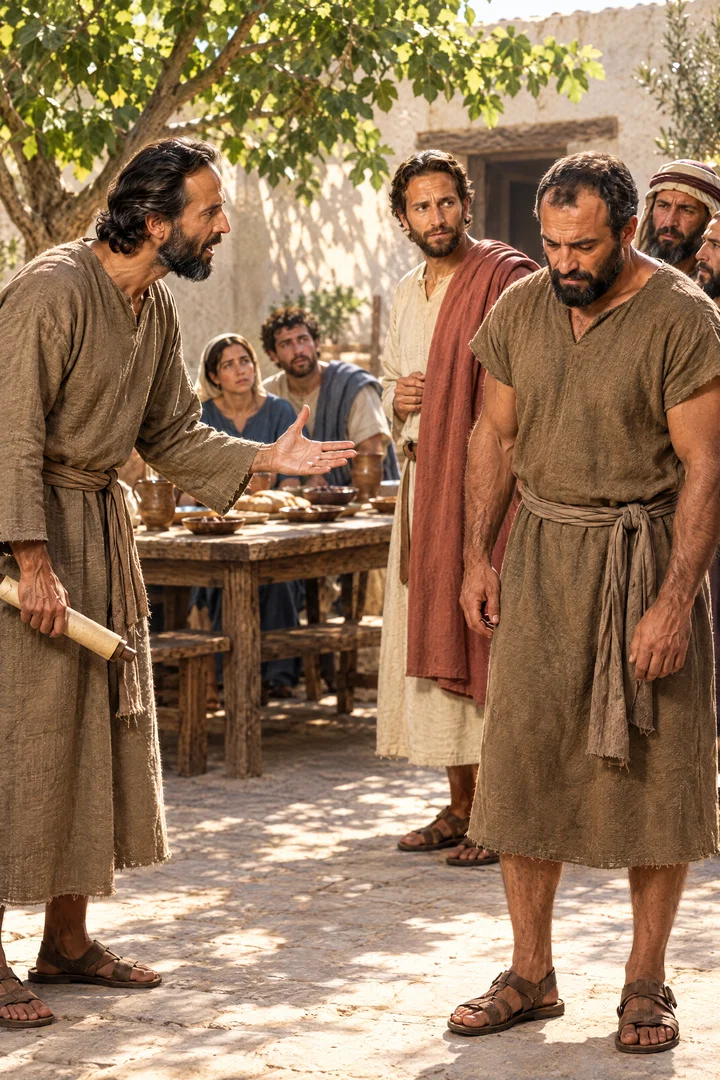
But when I saw that they walked not uprightly according to the truth of the gospel, I said unto Peter before them all, If thou, being a Jew, livest after the manner of Gentiles, and not as do the Jews, why compellest thou the Gentiles to live as do the Jews?
Translations
But when I saw that they walked not uprightly according to the truth of the gospel, I said to Peter before them all, If you, being a Jew, live after the manner of Gentiles, and not as do the Jews, why compel you the Gentiles to live as do the Jews?
King James Version, KJV Cambridge Paragraph Bible
But when I saw that they walked not uprightly according to the truth of the gospel, I said unto Peter before them all, If thou, being a Jew, livest after the manner of Gentiles, and not as do the Jews, why compellest thou the Gentiles to live as do the Jews?
But when I saw that they walked not uprightly according to the truth of the gospel, I said to Peter before them all, If thou, being a Jew, livest after the manner of Gentiles, and not as do the Jews, why compellest thou the Gentiles to live as do the Jews?
Revised Version, American Standard Version
But when I saw that they walked not uprightly according to the truth of the gospel, I said unto Cephas before them all, If thou, being a Jew, livest as do the Gentiles, and not as do the Jews, how compellest thou the Gentiles to live as do the Jews?
But when I saw that they are not walking uprightly to the truth of the good news, I said to Peter before all, 'If thou, being a Jew, in the manner of the nations dost live, and not in the manner of the Jews, how the nations dost thou compel to Judaize?
But when I saw that they do not walk straightforwardly, according to the truth of the glad tidings, I said to Peter before all, If thou, being a Jew, livest as the nations and not as the Jews, how dost thou compel the nations to Judaize?
But, when I saw that they were not walking with straightforwardness as regardeth the truth of the glad-message, I said unto Cephas, before all: If, thou, although, a Jew, like them of the nations, and not like the Jews, dost live, how dost thou compel, them of the nations, to live like Jews?
When I saw that they were not walking in line with the truth of the gospel, I said to Cephas in front of them all, “ If you, who are a Jew, live like a Gentile and not like a Jew, how can you compel the Gentiles to live like Jews?”
When I saw that they were not walking in line with the truth of the gospel, I said to Peter in front of them all, “ If you, who are a Jew, live like a Gentile and not like a Jew, how can you compel the Gentiles to live like Jews?”
But when I saw that they didn’ t walk uprightly according to the truth of the Good News, I said to Peter before them all, “ If you, being a Jew, live as the Gentiles do, and not as the Jews do, why do you compel the Gentiles to live as the Jews do?
But when I saw that they were not living uprightly in agreement with the true words of the good news, I said to Cephas before them all, If you, being a Jew, are living like the Gentiles, and not like the Jews, how will you make the Gentiles do the same as the Jews?
But when I saw, that they went not ye right way to the trueth of ye Gospel, I sayd vnto Peter before all men, If thou being a Iewe, liuest as the Gentiles, and not like the Iewes, why constrainest thou the Gentiles to doe like the Iewes?
Douay-Rheims (Challoner revision)
But when I saw that they walked not uprightly unto the truth of the gospel, I said to Cephas before them all: If thou, being a Jew, livest after the manner of the Gentiles, and not as the Jews do, how dost thou compel the Gentiles to live as do the Jews?
Pictures
Cross-references 20 of 42
- Acts 15:1-29
And certain men which came down from Judæa taught the brethren, and said, Except ye be circumcised after the manner of Moses, ye cannot be saved.
Records the Jerusalem conference about requiring Gentiles to keep Jewish customs.
- Acts 10:28
And he said unto them, Ye know how that it is an unlawful thing for a man that is a Jew to keep company, or come unto one of another nation; but God hath shewed me that I should not call any man common or unclean.
Peter knew God accepted Gentiles, yet later pressured them to live as Jews.
- Galatians 2:3
But neither Titus, who was with me, being a Greek, was compelled to be circumcised:
Titus was not compelled to be circumcised amid the dispute over Gentile believers.
- Acts 15:7-11
And when there had been much disputing, Peter rose up, and said unto them, Men and brethren, ye know how that a good while ago God made choice among us, that the Gentiles by my mouth should hear the word of the gospel, and believe.
Peter argues that Gentiles share salvation by grace without bearing the Jewish yoke.
- Acts 15:28-29
For it seemed good to the Holy Ghost, and to us, to lay upon you no greater burden than these necessary things;
The council rejects imposing the full Jewish law on Gentile believers, specifying only necessary requirements.
- Ephesians 2:15
Having abolished in his flesh the enmity, even the law of commandments contained in ordinances; for to make in himself of twain one new man, so making peace;
Christ abolished the law of ordinances, breaking down the division between Jews and Gentiles.
- Acts 11:3
Saying, Thou wentest in to men uncircumcised, and didst eat with them.
Peter’s fellowship with Gentiles had previously been challenged.
- Acts 15:5
But there rose up certain of the sect of the Pharisees which believed, saying, That it was needful to circumcise them, and to command them to keep the law of Moses.
Both concern demands that Gentile believers keep the law of Moses.
- 1 Corinthians 7:19
Circumcision is nothing, and uncircumcision is nothing, but the keeping of the commandments of God.
Circumcision is nothing; keeping God’s commandments is what matters.
- Galatians 5:2-3
Behold, I Paul say unto you, that if ye be circumcised, Christ shall profit you nothing.
Circumcision does not obligate Gentiles to keep the whole law.
- Acts 10:34-35
Then Peter opened his mouth, and said, Of a truth I perceive that God is no respecter of persons:
Peter recognizes that God accepts people from every nation.
- Acts 15:19-20
Wherefore my sentence is, that we trouble not them, which from among the Gentiles are turned to God:
James decides not to burden Gentile converts with the law.
- Galatians 2:9
And when James, Cephas, and John, who seemed to be pillars, perceived the grace that was given unto me, they gave to me and Barnabas the right hands of fellowship; that we should go unto the heathen, and they unto the circumcision.
Peter is named as a pillar who shared fellowship with Paul and Barnabas.
- Acts 15:10
Now therefore why tempt ye God, to put a yoke upon the neck of the disciples, which neither our fathers nor we were able to bear?
Peter calls the law’s requirements a yoke.
- Ephesians 3:6
That the Gentiles should be fellowheirs, and of the same body, and partakers of his promise in Christ by the gospel:
Gentiles are fellow heirs and share the same promises through the gospel.
- Matthew 16:18
And I say also unto thee, That thou art Peter, and upon this rock I will build my church; and the gates of hell shall not prevail against it.
Peter’s authority is contrasted with his failure to act according to the gospel.
- Luke 22:31-34
And the Lord said, Simon, Simon, behold, Satan hath desired to have you, that he may sift you as wheat:
Jesus warned Peter about a weakness he had not yet recognized.
- Acts 21:26
Then Paul took the men, and the next day purifying himself with them entered into the temple, to signify the accomplishment of the days of purification, until that an offering should be offered for every one of them.
Paul participates in a Jewish purification rite, contrasting with Peter’s conduct.
- Galatians 3:13-14
Christ hath redeemed us from the curse of the law, being made a curse for us: for it is written, Cursed is every one that hangeth on a tree:
Christ redeems from the law’s curse so Abraham’s blessing reaches the Gentiles.
- Acts 10:11-16
And saw heaven opened, and a certain vessel descending unto him, as it had been a great sheet knit at the four corners, and let down to the earth:
vision meant to convince Peter of free gospel
Commentary
Each commentary is drawn from primary sources: the writings of Ellen G. White and Adventist pioneers and periodicals. Each commentary is separate. Its own words are not a quotation; follow the references to read the source passages.
Ellen G. White
11 sources
At Antioch Peter had been eating and living with Gentile believers without observing Jewish customs, then withdrew from table fellowship with them when Jewish Christians arrived.AA 197.3–198.1SLP 71.2–72.18RED 34.2–35.13SP 377.1–2ST Jun 26, 1879 By withdrawing he walked not uprightly according to the truth of the gospel, acting inconsistently with his own practice and convictions through dissembling, wavering, and a double, two-sided part.AA 197.3–198.1SLP 71.2–72.18RED 34.2–35.13SP 377.1–2AA 199.2 His conduct pressured Gentile converts to live as Jews by adopting Jewish customs, making it appear that they had to do so.AA 197.3–198.1SLP 71.2–72.18RED 34.2–35.13SP 377.1–2ST Jun 26, 1879 His example influenced others, including Barnabas, and its misleading influence by a respected leader threatened division in the church.AA 197.3–198.1SLP 71.2–72.18RED 34.2–35.13SP 377.1–2ST Jun 26, 1879
When Paul saw this, he withstood Peter face to face and rebuked him publicly before them all for his inconsistency.AA 197.3–198.1SLP 71.2–72.18RED 34.2–35.13SP 377.1–2ST Jun 26, 1879 Peter's wavering came from fear of man and of people, desire for approval and esteem, and pressure from Jews zealous for the ceremonial law, showing that efforts to appease prejudice can compromise principle.SLP 71.2–72.1ST Jun 26, 1879AA 199.2Ms 122, 1897, par. 14–15SLP 213.2–214.1 The failure was grave because it came after his past failures, fall and restoration, long course of service, intimate acquaintance with Christ and knowledge of Christ's pure straightforward practice of principle, all the instruction he had received, and all his gifts, knowledge, and great influence in preaching and teaching the Word.Ms 122, 1897, par. 14–15
Paul openly took his position against Peter, a pillar of the church and his companion in labor, and against Barnabas, who had honored Paul with the right hand of fellowship when other Christians were afraid of him and questioned his fitness because he had persecuted the church.Ms 18, 1897, par. 5–7 Paul did so because the Holy Spirit had shown him that God's gifts come straight from God to all who seek Him with a whole heart, circumcised and uncircumcised, Barbarian, Scythian, bond and free.Ms 18, 1897, par. 5–7 Having been touched and made tender by the Spirit, placed under God's control, given increased light and taught by God the truths of the gospel able to make men wise unto salvation, he held to that inspired truth, dedicated himself and all his powers to God, firmly resisted binding unnecessary burdens on Gentile Christians, and held his ground when his brethren withstood him and protested that he advocated theories contrary to fundamental principles they had been taught, even though apostles who ought to have upheld him opposed him.Ms 18, 1897, par. 5–7
Peter's error shows he was human and fallible and could be corrected, with no authority above the other apostles and no claim to prerogatives belonging only to God, giving no support to claims that he was the church's supreme head or that later leaders inherited such authority.8RED 34.2–35.1ST Jun 26, 18793SP 374.3 The rebuke is recorded that others may profit by it as a solemn warning to men in high places to keep close to principle and not fail in integrity.Ms 122, 1897, par. 14–15 It proves that even the best of men left to themselves will make grave blunders, and that even a seasoned servant with knowledge, experience, and influence cannot guide himself safely without recognizing his helplessness.AA 199.2Ms 122, 1897, par. 14–15 The more responsibilities and the higher the position to dictate and control, the more mischief is done in perverting minds and hearts if the way of the Lord is not carefully followed, so every man needs a sense of personal helplessness to steer his vessel straight and safely into the harbor, and the grace of Christ is essential every day, for His matchless grace alone can save feet from falling.Ms 122, 1897, par. 14–15 Peter recognized his error and tried to repair the harm, showing that even apostles could err when not directly guided by the Spirit.ST Jun 26, 1879SLP 213.2–214.1
Sources
Pioneers and periodicals
66 sources
At Antioch Peter first ate freely with Gentile believers and then withdrew and separated himself when men from James came, and Paul withstood him before them all because he walked not uprightly according to the truth of the gospel.ST Aug 22, 1900ST May 27, 1875RH Dec 27, 1853RH Apr 21, 1851ST Aug 22, 1900 By withdrawing from fear of the circumcision party, though himself living after the manner of Gentiles, he pressured Gentiles to live as Jews and implied that faith in Christ alone was not enough for salvation.ST Jul 22, 1913RH Apr 29, 1862RH Apr 26, 1864ST Mar 20, 1884ST Dec 22, 1898 The truth of the gospel defended in the rebuke is that a man is not justified by the works of the law but by the faith of Jesus Christ, for by the works of the law shall no flesh be justified.RH Apr 29, 1862RH Apr 26, 1864ST Aug 8, 1900ST Dec 22, 1898RH Jan 2, 1900 The compulsion concerned the ceremonial law of Moses, including circumcision and separation over eating, not any precept of the moral law or Ten Commandments.RH Apr 29, 1862RH Jun 10, 1875ST May 27, 1875ST Mar 20, 1879 Though an apostle, Peter in this was to be blamed and stood condemned, showing he was human and fallible and not an infallible foundation, and a public fault affecting others was to be met by open, faithful reproof.ST Jul 22, 1913ST Mar 20, 1884RH Dec 27, 1853ST Dec 3, 1894ST Feb 3, 1881
Historical Setting and Background
The letter belongs to the churches in Galatia, a comparatively small district of Asia Minor lying on a great highway of commerce.ST Nov 22, 1910ST Nov 18, 1913 Its people were Gauls or Celts, called the Gaul of the East, dwelling there from about the third century before Christ and subjugated by Rome in B.C. 189, afterward mixed with Greeks and Romans and to some extent with Hebrews.ST Nov 22, 1910ST Nov 18, 1913 The church there was founded by Paul in A.D. 52.ST Nov 22, 1910
The epistle was written to correct difficulties caused by Judaizing teachers who taught that salvation depended on human works, meeting also a falling back into old idolatry.ST Aug 8, 1900ST Nov 18, 1913ST Nov 21, 1911 Its central teaching, especially in the first four chapters, is salvation through faith in Jesus Christ, with emphasis on the relation of Christ to the law.ST Nov 18, 1913ST Nov 21, 1911RH Feb 5, 1901 Galatians 2:6-16 is taken up together to keep the connection and to teach justification by the faith of Christ.ST Dec 22, 1898 Faith in Christ is the only way of salvation, and to teach that something else is necessary denies Christ and presents a false gospel.ST Aug 8, 1900RH Feb 5, 1901
The chapter belongs to the account of the Jerusalem conference recorded in Acts 15, about seventeen years after Paul's conversion, around A.D. 51. It concerns the same question considered at that council: whether Gentile converts had to accept circumcision and the ceremonial law of Moses as necessary for salvation.ST Jun 3, 1875 Peter acted contrary to that decision, and his conduct conflicted with the gospel Paul preached.
The incident occurred at Antioch, where Paul and Barnabas had raised up a church.ST Apr 13, 1915 Peter at first mingled with Gentile believers and ate with them, but when certain men came from James, associated with circumcision, he withdrew and separated himself from fear of them.ST Jun 26, 1879ST May 27, 1875RH Dec 27, 1853ST Aug 22, 1900ST Apr 13, 1915 The other Jews were carried away with the same course, and even Barnabas followed his example.ST May 27, 1875RH Dec 27, 1853ST Aug 22, 1900 The letter to the Galatians was written about eight years before Peter's second epistle, and Peter knew how Paul had set him in this light before the church and the world.ST Apr 17, 1907
Peter's Inconsistent Conduct
Peter's withdrawal from eating with Gentile believers was conduct that did not match or agree with the truth of the gospel, and his dissimulation in withdrawing was walking not uprightly according to that truth.ST Aug 22, 1900RH Apr 21, 1851ST Sep 6, 1883ST Sep 12, 1900ST Sep 15, 1887 When Jewish believers arrived he drew back from the Gentiles, after having eaten freely with them in their absence, and that turning aside contradicted the gospel he professed.RH Apr 21, 1851ST Sep 6, 1883 The inconsistency lay in practice, not merely in words, for his action treated forms and ceremonies as deciding acceptance with God when acceptance comes by faith in Christ.ST Sep 6, 1883
Though a Jew by birth, he had lived after the manner of Gentiles and not as do the Jews, yet by withdrawing he compelled Gentiles to live as do the Jews.RH Apr 29, 1862RH Apr 26, 1864RH Jun 10, 1875ST Mar 20, 1884RH Oct 21, 1851 Paul therefore challenged him openly before them all at Antioch, exposing the contradiction of requiring of Gentiles a way of life he himself had left behind.RH Apr 26, 1864RH Jun 10, 1875ST Mar 20, 1884RH Oct 21, 1851ST Aug 22, 1900 If a Jew could disregard the ceremonial separation and eating rules and live as Gentiles do, much more could Gentiles be free from them, so the rebuke established that they must not be compelled to live as Jews.RH Jun 10, 1875ST Mar 20, 1884
His example put pressure on Gentile believers to adopt Jewish customs, shook their faith, drew even Barnabas and other Jewish believers into imitation, and threatened division in the church.ST Jul 22, 1913ST Aug 22, 1900ST Dec 22, 1898RH Jan 2, 1900 By treating uncircumcised believers as if they must take up Jewish observance, the conduct implied that faith in Christ alone was not enough for salvation and that circumcision or works of the law were also required.ST Jul 22, 1913ST Dec 22, 1898RH Jan 2, 1900 That implication made circumcision appear to carry virtue and obligation under the gospel when it carries none.ST Mar 20, 1884
He acted a double part, keeping one standard of reform when among friends and a different standard when among strangers.ST May 1, 1884ST Nov 19, 1902RH Aug 19, 1873 By separating himself he acted as though too strict to share meals with Gentiles, although that strictness was not his true practice, and the pretense was effectively false.ST May 1, 1884RH Aug 19, 1873 Such double living calls for the same plain reproof Paul gave.ST Nov 19, 1902
The motive was fear of those associated with circumcision and fear of Jewish criticism, with pride and fear of people leading him to dissemble.ST Aug 22, 1900ST Jul 22, 1913ST Sep 6, 1883ST Dec 21, 1888 His earlier fall and later service had not yet removed that weakness of character, and this public reproof marked a further fall after which no more lapses are recorded.ST Dec 21, 1888
Gospel Truth and Justification
The truth of the gospel is that a person is not justified by works of law but by the faith of Jesus Christ, so that even those who are Jews by nature must believe in Jesus Christ to be justified by the faith of Christ and not by works of law, for by works of law no flesh shall be justified.RH Apr 29, 1862RH Apr 26, 1864RH Jan 2, 1900 Peter's course was wrong because, after himself living after the manner of Gentiles and not as do the Jews, he by withdrawal pressured Gentile believers to adopt Jewish practices and take up a way of life that even Jews had to leave behind in order to be justified.RH Apr 29, 1862RH Apr 26, 1864RH Jan 2, 1900 Those who try to be justified by deeds of law are under its curse and must escape from under it, but the rebuke has no application to those who are not trying to be justified by law in any sense whatever.RH Apr 26, 1864 The law in view is the ceremonial law of Moses associated with seeking pardon for sin, which could not justify anyone.RH Apr 29, 1862
Faith in Christ is the only way of salvation, and to teach that something else is necessary denies Christ and presents a false gospel.ST Aug 8, 1900ST Dec 22, 1898 By withdrawing from uncircumcised Gentile believers and treating them as though they needed circumcision or works of law in addition to faith, conduct implied that faith in Christ alone was not enough for salvation.ST Dec 22, 1898 Such fear-driven conduct can deny Christ and mislead others into imitation even when the denial is unintentional.ST Dec 22, 1898
The phrase Jews by nature, and not sinners of the Gentiles, distinguishes background and not guilt, for Jewish believers were sinners too and needed justification through faith in Christ.ST Dec 22, 1898 Jewish status, circumcision, and religious forms could not make them righteous or save them, while Gentiles could be saved directly by faith in Christ, since all stand alike as sinners before God.ST Dec 22, 1898 Forms and ceremonies do not determine acceptance with God; faith in Christ does.ST Sep 6, 1883 The gospel abrogated the law relating to eating, which belongs to the typical, ceremonial law of ordinances that pointed to Christ and ceased when He came, not to the Ten Commandments, the moral law of God.ST Sep 6, 1883ST Mar 20, 1879
To require Gentiles to live by Jewish customs after a Jewish believer has adopted Gentile ways contradicts the truth of the gospel.RH Mar 25, 1873RH Mar 25, 1873 It rebuilds the distinction removed by the new covenant, and those who do so make themselves transgressors.RH Mar 25, 1873RH Mar 25, 1873 Jews and Gentiles share the same promises through Christ, so claiming a distinct restoration for Israel according to the flesh would rebuild what the gospel has removed.RH Mar 25, 1873 The only acceptable life is Christ living in the believer, and to seek justification by any other means repudiates Christ and turns people back toward idolatry.ST Sep 15, 1909 Paul's open opposition to conduct that did not accord with that truth was a defense of the truth of the gospel so that it would continue among the believers.RH Feb 5, 1901
Ceremonial Law Not Moral
The question at Antioch was observance of the ceremonial law of Moses, including circumcision and the rules governing separation and eating with Gentiles, and not any precept of the moral law or Ten Commandments.RH Apr 29, 1862RH Jun 10, 1875ST May 27, 1875RH Apr 15, 1873 That ceremonial law was associated with seeking pardon for sin yet could not justify anyone, and it stands distinct from the moral law common to God's people in every age.RH Apr 29, 1862RH Oct 8, 1857 The eating law belongs to the typical, ceremonial law of ordinances that pointed to Christ and ceased when He came, and the gospel abrogated that law relating to eating rather than any part of the ten commandments.RH Apr 15, 1873ST Mar 20, 1879 The fault censured was attaching importance to circumcision as binding on Gentile believers, not keeping God's commandments.RH Jun 10, 1875RH Oct 8, 1857
Peter at first ate freely with Gentile believers, which broke the Jews' ceremonial law, then when zealous Jews and men associated with circumcision came from James and Jerusalem he withdrew and separated himself and would eat with them no more.RH Jun 10, 1875ST May 27, 1875RH Apr 15, 1873ST May 27, 1875 That withdrawal treated the ceremonial law as still in force and binding on Christians and pressured Gentiles to conform to Jewish practice and live as do the Jews.RH Jun 10, 1875RH Apr 15, 1873ST May 27, 1875 Paul's public question exposes the inconsistency of a Jew living after the manner of Gentiles and not as do the Jews while compelling Gentiles to live as do the Jews.RH Jun 10, 1875ST May 27, 1875RH Apr 15, 1873 If Peter, being a Jew, could disregard that law and live as the Gentiles do, much more could the Gentiles themselves do so.RH Apr 15, 1873ST May 27, 1875
Gentile believers must not be compelled to live as Jews, for circumcision carries no virtue or obligation under the gospel.RH Jun 10, 1875ST Mar 20, 1884RH Oct 8, 1857 Circumcision belonged to the law dispensation, and the rebuke proves Gentiles were not required to keep the ceremonial law.RH Jun 10, 1875ST May 27, 1875RH Oct 8, 1857 The rebuke has no application to those who are not trying to be justified by the deeds of the law in any sense whatever, but only to those trying to be justified by it and under its curse who must escape from under it.RH Apr 26, 1864
Christ redeemed believers from the added law by taking it out of the way and nailing it to the cross, which was distinct from redeeming them from all law.RH Jan 28, 1902 He came not to abolish the law of God but to abolish what is enmity against it and not subject to it, namely the carnal mind with its commandments and ordinances.ST Feb 21, 1906
Peter Fallible Not Pope
Though an apostle, Peter at Antioch made a serious mistake and was to be blamed, for he withdrew from eating with Gentile believers from fear of Jewish believers even though he had been living among them as Gentiles did, and his example pressured Gentiles to live as Jews and shook their faith.ST Jul 22, 1913ST Mar 20, 1884ST Dec 3, 1894 Paul publicly rebuked him before others for walking not uprightly according to the truth of the gospel, which shows that even a highly gifted apostle could act hypocritically, fail, err, and need correction.ST Jul 22, 1913ST Jun 28, 1883ST Apr 15, 1875ST Mar 20, 1884 Such fallibility proves Peter was human and not an infallible foundation for the church, and his conduct was no unquestionable rule to follow.ST Jul 22, 1913ST Mar 20, 1884ST Jun 28, 1883
Peter was not superior to the other apostles, was no higher than they, and had no claim to prerogatives belonging only to God.ST Jun 26, 1879ST Mar 20, 1884ST Jul 5, 1910 He was not the first pope, for Paul's rebuke in Galatians 2:7-14 proves he was not above the rest.ST Mar 20, 1884ST Jul 5, 1910 At Antioch he did not act as pope or as vicar of Christ on earth, just as he never once so acted on the day of Pentecost, at the council of Jerusalem, or in his two epistles.ST Apr 13, 1915RH Jun 13, 1871 If he had been pope he must have known it, and if he had known it he would have acted it there, so his failure to do so shows he was not aware of any such office and that the church during the lifetime of the apostles never thought of a pope.ST Apr 13, 1915RH Jun 13, 1871
No human authority is above God's Word, and a person is reliable only when in harmony with it.ST Jun 28, 1883ST May 4, 1904 Even an apostle's conduct is not infallible, and apostolic teaching has authority only when it agrees with Christ's teaching.ST Jun 28, 1883ST May 4, 1904
Peter knew the Spirit's teaching about the Gentiles' place in the church and their relation to the law, yet acted against that knowledge, so he stood condemned.RH Jan 4, 1906RH Jun 11, 1908 His conduct was wrong while his apostolic teaching had been true.RH Jan 4, 1906 Though withdrawal from eating could seem a small matter, it violated a fundamental principle of the gospel, showing that a seemingly minor act can compromise an important principle and that faithfulness is required even in small matters.RH Jun 11, 1908
Peter accepted the reproof as just, made no defense of his conduct, never found fault with Paul for reproving him, recognized his error and tried to repair the harm, and later called him beloved brother while saying only that his writings contain some things hard to be understood.ST Jun 26, 1879ST Apr 17, 1907RH Jul 6, 1868ST Apr 13, 1915 He did not retaliate, though he could have pointed to Paul having Timothy circumcised because of the Jews in those quarters and consenting to purify himself and have an offering offered for him according to the ritual law to avoid prejudice, even though Paul had for years preached that circumcision was nothing and the ceremonial law was abolished and its services vain.ST Apr 17, 1907 God alone knows all the circumstances that may have made a difference between Paul's conduct and Peter's beyond what the natural mind detects.ST Apr 17, 1907 For Peter, naturally impetuous, this restraint was evidence of great victory over natural tendencies and full development of faith, virtue, knowledge, temperance, patience, godliness, brotherly kindness, and charity leading into the everlasting kingdom, showing he was Christian enough to receive reproof and profit by it and never considered himself head of the church or above reproof, while Paul never looked upon him as pope or head of the church and even afterward Peter praised Paul's wisdom.ST Apr 17, 1907RH Jul 6, 1868ST Apr 13, 1915 When the servant of the Lord exposes faults that are not seen as just, the correction should be acknowledged as from the Lord and life reformed accordingly, rather than rejecting the counsel of God and going to perdition.ST Apr 17, 1907
Paul's public correction of Peter, though Peter was one of the pillars, supports that Paul was a leading prophet and apostle with authority to correct other church leaders.RH Aug 10, 1916RH Mar 5, 1901 He acted from his conscious direct calling of God, conferring not with flesh and blood to escape all hindrance, and sought to establish no rule of man.RH Aug 10, 1916RH Mar 5, 1901
Peter's pride or fear of people led him to dissemble, and his earlier fall and later service had not removed this weakness from his character nor fully taught him his weakness.ST Dec 21, 1888ST Dec 21, 1888 This later failure brought home the lesson, and after this reproof no more lapses by him are recorded.ST Dec 21, 1888ST Dec 21, 1888
Pattern for Christian Life
Public faults that affect others are to be rebuked publicly, and Paul kept the faith by confronting Peter face to face before them all because Peter was to be blamed.RH Dec 27, 1853ST Feb 3, 1881 At Antioch Peter had withdrawn from eating with Gentile believers when visitors from James arrived, leading other Jewish believers including Barnabas to follow his example.RH Dec 27, 1853 His conduct did not match the truth of the gospel, for although he himself lived as Gentiles did, his withdrawal pressured Gentiles to live as Jews.RH Dec 27, 1853
Faithful, plain, salt-like reproof is better than flattering, oil-like praise, and souls are wronged far more by the latter than by the former.RH Jul 6, 1868ST Oct 28, 1875 A flattering, fawning minister who from cowardice dares not deal plainly with conscience is a man's worst enemy, and cowardice in a minister is baser than in a soldier because the warfare is more honorable.RH Jul 6, 1868 True religion speaks directly against sin and vindicates what is right even when feelings may be hurt, and faithful reproof gains more love and honor at last than sinful, fawning dissimulation.RH Jul 6, 1868RH Jul 22, 1873 This holds even when confronting a respected fellow believer, as Paul openly reproved Peter's dissimulation before them all, and though reproved, Peter afterward praised Paul's wisdom.RH Jul 6, 1868RH Jul 22, 1873ST Oct 28, 1875
Humility and a sense of duty to God's cause, not a sense of self-importance, should move a person to speak plainly and not hold back from necessary reproof given in the right spirit.RH Mar 31, 1868 Paul himself was no dissembler who preached one doctrine in the synagogue and a different one afterward, so it would have been inconsistent for him to reprove Peter for dissimulation and then do the same.RH Mar 20, 1856RH Mar 31, 1868 Keeping one standard of reform when among friends and a different standard when among strangers is such double living, and it calls for the same plain reproof Paul gave Peter.ST Nov 19, 1902 Though withdrawal from eating could seem a small matter, it violated a fundamental principle of the gospel, for conduct not faithful to the gospel leaves one condemned; a seemingly minor act can compromise an important principle, and faithfulness is required even in small matters.RH Jun 11, 1908
Even at a later date Peter and Barnabas were still influenced by deeply rooted prejudice against the Gentiles, showing how difficult such prejudice is to throw off and how slow even apostles were to understand that Gentiles were included in the gospel call despite the commission to preach to every creature.RH Dec 5, 1865 They shared the converted Jews' bigoted attachment to ancestral customs and prejudice against Gentile neighbors, and could hardly believe Gentiles could come upon the platform of the newly established faith on the same footing with the favored children of Abraham, even after the vision of the sheet let down from heaven impressively conveying a free gospel and a Gentile church.RH Dec 5, 1865 National, sectional and individual prejudice remains an effectual hindrance to gospel work to this day. The confrontation illustrates the apostles' efforts to secure Christian unity through both practice and teaching, by addressing conduct that threatened unity in the church.RH Jan 13, 1874
The early church had to be rebuked both for neglecting the poor and for failing to live consistently with the truth of the gospel, and Peter's unequal treatment of Gentile believers illustrates the same wrong of treating people unequally rather than living out the gospel.RH Jun 30, 1863 A person's conduct can likewise fail to accord with the truth professed, as when church members support a group that rejected the name and faith or seek fellowship for its members without proper confession and steps to remove the reproach their actions brought on the cause.RH Mar 11, 1862 Becoming as a Jew means showing sympathy and solidarity with Jewish people, not compromising truth or joining unholy practices; Peter by contrast compromised truth by concealing the gospel and separating himself from Gentiles, though he himself lived as a Gentile while pressuring Gentiles to adopt Jewish customs.ST Jul 28, 1909
When the servant of the Lord exposes faults, the correction should be acknowledged as from the Lord and life reformed accordingly, rather than rejecting God's counsel.ST Apr 17, 1907 Peter did not retaliate when rebuked for dissimulation at Antioch — eating with Gentile disciples when Jewish disciples were absent but withdrawing when they were present — though he could have pointed to Paul having Timothy circumcised because of the Jews in those quarters and consenting to purify himself and have an offering offered for him according to the ritual law to avoid prejudice, even though Paul had for years preached that circumcision was nothing and the ceremonial law was abolished and its services vain.ST Apr 17, 1907 Instead Peter called Paul beloved brother and said only that his writings contain some things hard to be understood, refusing to wrest them or take unjust advantage of circumstances, and God alone knows all the circumstances that may have made a difference between Paul's conduct and Peter's beyond what the natural mind detects.ST Apr 17, 1907 For one naturally impetuous this restraint was evidence of great victory over natural tendencies and full development of faith, virtue, knowledge, temperance, patience, godliness, brotherly kindness and charity leading into the everlasting kingdom.ST Apr 17, 1907
Sources