Genesis 21:6
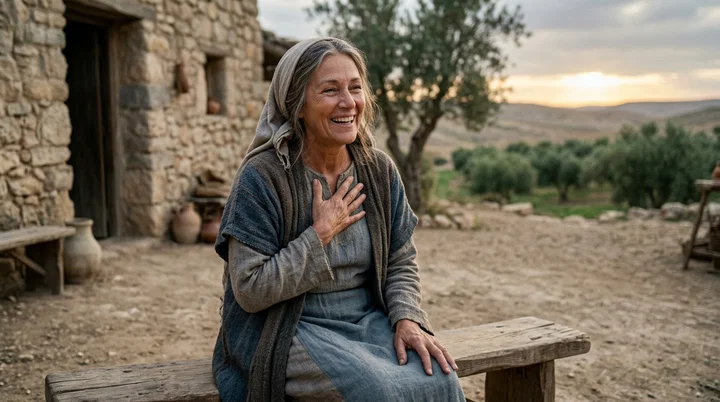
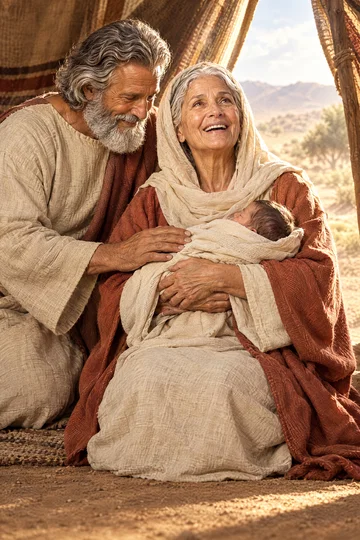
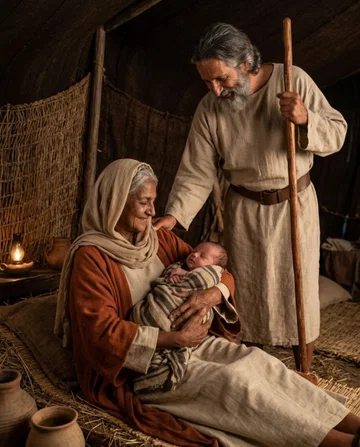
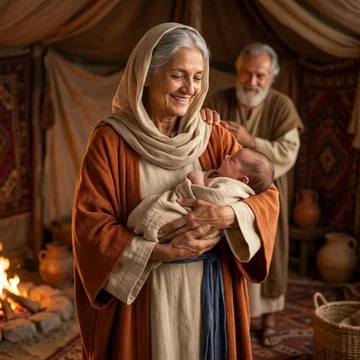
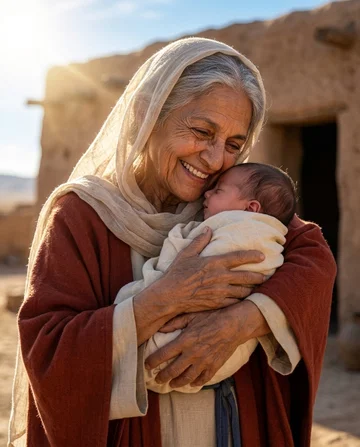
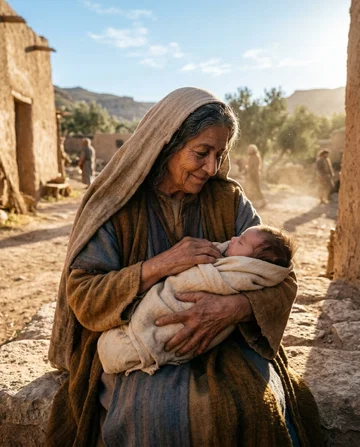
And Sarah said, God hath made me to laugh, so that all that hear will laugh with me.
Translations
And Sarah said, God has made me to laugh, so that all that hear will laugh with me.
King James Version, KJV Cambridge Paragraph Bible, Webster Bible
And Sarah said, God hath made me to laugh, so that all that hear will laugh with me.
Revised Version, American Standard Version
And Sarah said, God hath made me to laugh; every one that heareth will laugh with me.
and Sarah saith, 'God hath made laughter for me; every one who is hearing laugheth for me.'
And Sarah said, God has made me laugh: all that hear will laugh with me.
And Sarah said, A laughing, hath God made for me,—Everyone that heareth will laugh with me.
Berean Standard Bible, Majority Standard Bible
Then Sarah said, “God has made me laugh, and everyone who hears of this will laugh with me.”
Sarah said, “God has made me laugh. Everyone who hears will laugh with me.”
And Sarah said, God has given me cause for laughing, and everyone who has news of it will be laughing with me.
Then Sarah said, God hath made me to reioyce: all that heare will reioyce with me.
Douay-Rheims (Challoner revision)
And Sara said: God hath made a laughter for me: whosoever shall hear of it will laugh with me.
Pictures

Cross-references
- Galatians 4:22-23
For it is written, that Abraham had two sons, the one by a bondmaid, the other by a freewoman.
Isaac’s birth through promise contrasts with Ishmael’s birth according to the flesh.
- Genesis 16:1-4
Now Sarai Abram’s wife bare him no children: and she had an handmaid, an Egyptian, whose name was Hagar.
Sarah and Abraham’s attempt to secure an heir contrasts with Isaac’s miraculous birth.
- Genesis 18:9-15
And they said unto him, Where is Sarah thy wife? And he said, Behold, in the tent.
God promises Sarah a son despite her old age and addresses her laughter.
- Genesis 17:19-21
And God said, Sarah thy wife shall bear thee a son indeed; and thou shalt call his name Isaac: and I will establish my covenant with him for an everlasting covenant, and with his seed after him.
God promises Sarah will bear Isaac, through whom the covenant will be established.
- Genesis 15:4
And, behold, the word of the LORD came unto him, saying, This shall not be thine heir; but he that shall come forth out of thine own bowels shall be thine heir.
God promises Abraham an heir from his own body.
- Genesis 22:1-2
And it came to pass after these things, that God did tempt Abraham, and said unto him, Abraham: and he said, Behold, here I am.
The promised son’s offering further tests Abraham’s faith.
- Hebrews 11:11
Through faith also Sara herself received strength to conceive seed, and was delivered of a child when she was past age, because she judged him faithful who had promised.
Sarah received strength to conceive through faith in God’s promise.
- Galatians 4:28
Now we, brethren, as Isaac was, are the children of promise.
Believers, like Isaac, are children of promise.
- Matthew 1:1-2
The book of the generation of Jesus Christ, the son of David, the son of Abraham.
Christ’s genealogy names Abraham as his ancestor.
- Galatians 4:24
Which things are an allegory: for these are the two covenants; the one from the mount Sinai, which gendereth to bondage, which is Agar.
Isaac represents the new covenant.
- Genesis 17:1-7
And when Abram was ninety years old and nine, the LORD appeared to Abram, and said unto him, I am the Almighty God; walk before me, and be thou perfect.
God renews the covenant and promises Abraham many descendants.
- Romans 9:8
That is, They which are the children of the flesh, these are not the children of God: but the children of the promise are counted for the seed.
Distinguishes the children of promise from the children of the flesh.
- Genesis 12:2-3
And I will make of thee a great nation, and I will bless thee, and make thy name great; and thou shalt be a blessing:
God promises blessing through Abram, fulfilled in Sarah’s joyful laughter.
Commentary
Each commentary is drawn from primary sources: the writings of Ellen G. White and Adventist pioneers and periodicals. Each commentary is separate. Its own words are not a quotation; follow the references to read the source passages.
Pioneers and periodicals
19 sources
God turned Sarah's laughter into gladness at the birth of Isaac in her old age at the time He had promised, so that all who hear would laugh and rejoice with her.RH Dec 28, 1916ST Mar 1, 1905ST Aug 28, 1901 His birth was wholly a miraculous work by God's power and word, impossible by nature for barren Sarah past childbearing to bear, received through faith in God's faithfulness apart from human wisdom or scheming.ST Apr 11, 1900ST Mar 1, 1905ST Sep 28, 1915 Isaac, whose name means laughter and rejoicing, was the promised heir through Sarah, Abraham's lawful free wife, and the promised seed and blessing were to come through her and not through Ishmael born of Hagar.ST Apr 11, 1900ST Mar 1, 1905ST Aug 28, 1901ST Sep 8, 1898 As son of the freewoman, begotten of the Word and born of the Spirit by promise, he represents the children of the covenant of promise who are born anew with changed hearts as miraculous children of God to freedom, in contrast to Ishmael born according to the flesh.RH May 29, 1900ST Mar 1, 1905ST Sep 28, 1915 The promised Seed and Messiah was to come through Isaac as the miraculous child of promise in the line of Abraham, fulfilled in Jesus Christ, illustrating both the birth of Christ and how believers are born from above by that same word and rejoice in God's salvation.ST Mar 1, 1905ST Aug 28, 1901RH Nov 18, 1862RH Jul 5, 1915ST Sep 8, 1898
Isaac's Birth and Laughter
Sarah's words record her rejoicing at the birth of Isaac in her old age at the time God had promised.RH Dec 28, 1916ST Mar 1, 1905ST Aug 28, 1901ST Jan 6, 1909ST Sep 8, 1898 God had turned her laughter into gladness, so that all who hear of it will laugh and rejoice with her.RH Dec 28, 1916ST Mar 1, 1905ST Aug 28, 1901ST Jan 6, 1909ST Sep 8, 1898 His name Isaac means laughter or rejoicing.ST Aug 28, 1901ST Sep 8, 1898
His birth was a miraculous work wholly by God's power and word, impossible by nature for Abraham to beget and for barren Sarah past childbearing to bear.ST Apr 11, 1900ST Mar 1, 1905ST Sep 28, 1915ST Apr 29, 1908ST Mar 22, 1899 It came apart from human wisdom, scheming, or plans and contrary to human expectations, with all power and all glory belonging to God.ST Apr 11, 1900ST Mar 1, 1905ST Sep 28, 1915ST Apr 29, 1908 It was received through faith in God's faithfulness, as the promised outcome of Abraham learning to trust God.ST Mar 22, 1899ST Jun 15, 1904
The birth occurred just after the destruction of Sodom, twenty-five years after the promise.ST Jun 4, 1885ST Oct 4, 1883 Isaac was weaned at about five years old, and Ishmael's mocking at the weaning marked the beginning of the four hundred years of affliction foretold for Abraham's descendants, thirty years after the promise.ST Jun 4, 1885 The celebration of Isaac's birth is connected with that mockery, which Sarah saw and which led her to demand that Hagar and Ishmael be sent away.ST Jan 24, 1900
In Genesis the account belongs to the Isaac section among the events of Abraham's life.STST Aug 9, 1905 It belongs to God's providential dealings with the chosen family through which the promised Seed would come.ST It was a step in the fulfillment of God's promise to Abraham, not its final fulfillment, which will bring the everlasting inheritance of righteousness at Christ's coming and the resurrection.
Covenant Promise and Seed
Isaac was the promised heir, born to Sarah at the time God had promised as the son God had given her, and the promised seed and its blessing came through Sarah, Abraham's lawful free wife, according to God's promise, while Ishmael, born through Hagar, was not to share that heirship.ST Apr 11, 1900ST Mar 1, 1905 His birth was wholly by God's power and not by human schemes, proving that the seed must come through the lawful free wife according to God's law and not by fleshly scheming.ST Apr 11, 1900ST Mar 1, 1905 He was duly named Isaac and circumcised as the covenant heir, begotten of the Word and born of the Spirit by promise.ST Mar 1, 1905
Sarah, as the freewoman, represents God's order and the new covenant resting on God's promises rather than human schemes or works.RH May 29, 1900ST Sep 28, 1915 Her son Isaac, as son of the freewoman, represents the children of the covenant of promise, those who receive freedom through Christ.RH May 29, 1900ST Sep 28, 1915 He was born through promise and the Spirit in contrast to Ishmael, who was born according to the flesh, for though Sarah was past the age of childbearing, faith in God's faithfulness enabled her to conceive.ST Apr 29, 1908ST Mar 22, 1899 His birth was a miraculous work impossible by nature for Abraham to beget and for Sarah to bear, brought about wholly by the power of God apart from any human wisdom, interfering, or scheming, so that all power and all glory belong to God.ST Sep 28, 1915ST Apr 29, 1908 As son of Sarah the free woman he represents the new covenant by which hearts are changed and men and women are born anew as miraculous children of God and children of promise born to freedom.ST Mar 1, 1905ST Apr 29, 1908
The two sons and their two mothers illustrate the two covenants, testaments, or dispensations.ST Jan 24, 1900 They illustrate the two systems, typical and antitypical, and the two peoples, literal Israel and true Israel, or Jews and Gentiles, as representatives of the Lord and His work in two special periods of its development in the earth.ST Jan 24, 1900 Every particular of Isaac's birth therefore calls for close examination for its significance in that contrast.ST Jan 24, 1900
Isaac's birth by God's word illustrates that believers are born from above by that same word.ST Mar 1, 1905ST Aug 28, 1901 His name means laughter, and Sarah's rejoicing because God fulfilled His promise and gave her Isaac in her old age would be shared by everyone who heard, even as all born again as Isaac was are children of promise born to freedom who rejoice in God's salvation.ST Mar 1, 1905ST Aug 28, 1901
The promised Seed and Messiah was to come through Isaac as the miraculous child of promise in the Abrahamic line.RH Nov 18, 1862RH Jul 5, 1915 Messiah was to be the son of Abraham, the father of the faithful and friend of God, and Jesus Christ fulfills that line by direct descent from Abraham.RH Nov 18, 1862 Isaac's birth illustrates the birth of Christ.ST Sep 8, 1898 It was the promised outcome of Abraham learning to trust God, and it prepared the further lesson of faith in the offering of Isaac.ST Jun 15, 1904
Sources