Genesis 21:7
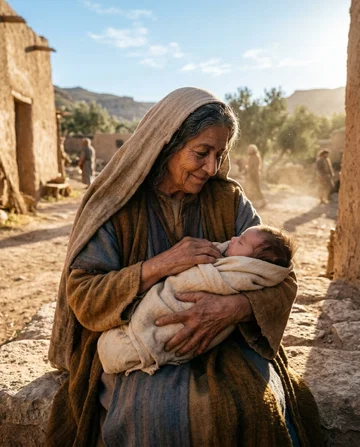
And she said, Who would have said unto Abraham, that Sarah should have given children suck? for I have born him a son in his old age.
Translations
And she said, Who would have said to Abraham, that Sarah should have given children suck? for I have born him a son in his old age.
King James Version, KJV Cambridge Paragraph Bible
And she said, Who would have said unto Abraham, that Sarah should have given children suck? for I have born him a son in his old age.
And she said, Who would have said to Abraham, that Sarah shall nurse children? for I have borne him a son in his old age.
Revised Version, American Standard Version
And she said, Who would have said unto Abraham, that Sarah should give children suck? for I have borne him a son in his old age.
She saith also, 'Who hath said to Abraham, Sarah hath suckled sons, that I have born a son for his old age?'
And she said, Who would have said to Abraham, Sarah will suckle children? For I have borne [ him] a son in his old age.
And she said—Who would have announced to Abraham, Sarah hath suckled children? yet have I borne a son, for his old age!
Berean Standard Bible, Majority Standard Bible
She added, “ Who would have told Abraham that Sarah would nurse children? Yet I have borne him a son in his old age.”
She said, “ Who would have said to Abraham that Sarah would nurse children? For I have borne him a son in his old age.”
And she said, Who would have said to Abraham that Sarah would have a child at her breast? for see, I have given him a son now when he is old.
Againe she said, Who would haue saide to Abraham, that Sarah shoulde haue giuen children sucke? for I haue borne him a sonne in his olde age.
Douay-Rheims (Challoner revision)
And again she said: Who would believe that Abraham should hear that Sara gave suck to a son, whom she bore to him in his old age.
Pictures
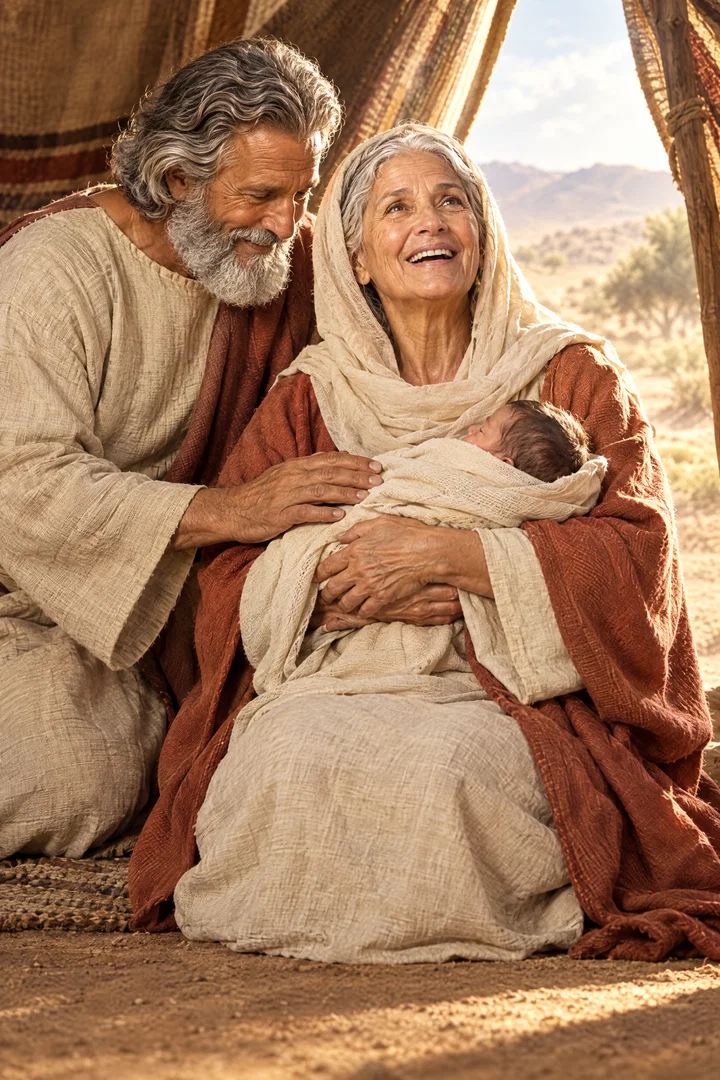
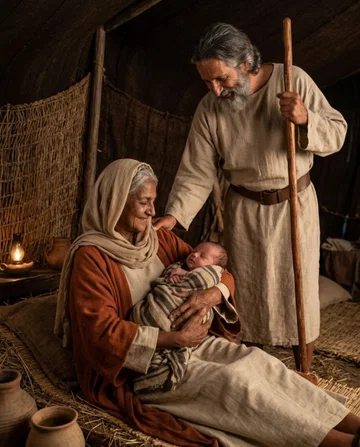
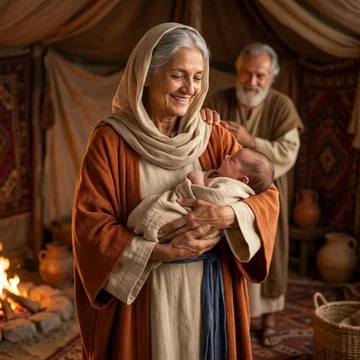

Cross-references
- Galatians 4:22-23
For it is written, that Abraham had two sons, the one by a bondmaid, the other by a freewoman.
Isaac’s birth to Sarah is contrasted with Ishmael’s birth after the flesh as birth by promise.
- Genesis 15:2-4
And Abram said, Lord GOD, what wilt thou give me, seeing I go childless, and the steward of my house is this Eliezer of Damascus?
God promises Abraham that his heir will come from his own body.
- Genesis 17:19
And God said, Sarah thy wife shall bear thee a son indeed; and thou shalt call his name Isaac: and I will establish my covenant with him for an everlasting covenant, and with his seed after him.
God promises that Sarah will bear Isaac.
- Genesis 16:1-4
Now Sarai Abram’s wife bare him no children: and she had an handmaid, an Egyptian, whose name was Hagar.
Sarah and Abraham’s plan through Hagar contrasts with Isaac’s promised birth.
- Genesis 18:10-14
And he said, I will certainly return unto thee according to the time of life; and, lo, Sarah thy wife shall have a son. And Sarah heard it in the tent door, which was behind him.
God announces the appointed time for Sarah to bear Isaac.
- Genesis 22:2
And he said, Take now thy son, thine only son Isaac, whom thou lovest, and get thee into the land of Moriah; and offer him there for a burnt offering upon one of the mountains which I will tell thee of.
Abraham’s trial tests his trust in God’s promised son.
- Genesis 12:1-3
Now the LORD had said unto Abram, Get thee out of thy country, and from thy kindred, and from thy father’s house, unto a land that I will shew thee:
The promise to Abraham preceded Isaac’s birth by twenty-five years.
- Hebrews 11:11
Through faith also Sara herself received strength to conceive seed, and was delivered of a child when she was past age, because she judged him faithful who had promised.
Sarah bore a child in old age through faith in God’s promise.
- Genesis 21:12
And God said unto Abraham, Let it not be grievous in thy sight because of the lad, and because of thy bondwoman; in all that Sarah hath said unto thee, hearken unto her voice; for in Isaac shall thy seed be called.
God confirms that Abraham’s promised seed will be called through Isaac.
- Galatians 4:29
But as then he that was born after the flesh persecuted him that was born after the Spirit, even so it is now.
Ishmael’s mocking of Isaac is identified as persecution.
- Matthew 1:1-2
The book of the generation of Jesus Christ, the son of David, the son of Abraham.
Jesus’ genealogy traces his descent from Abraham.
- Romans 9:8
That is, They which are the children of the flesh, these are not the children of God: but the children of the promise are counted for the seed.
Distinguishes children of promise from children of the flesh.
Commentary
Each commentary is drawn from primary sources: the writings of Ellen G. White and Adventist pioneers and periodicals. Each commentary is separate. Its own words are not a quotation; follow the references to read the source passages.
Pioneers and periodicals
19 sources
Sarah bore Abraham a son in their old age at the appointed time, Abraham being a hundred and Sarah being ninety, wholly by God's promise, power and word and not by human ability or by the earlier plan to gain an heir through Hagar.ST Apr 11, 1900ST Mar 1, 1905ST Sep 28, 1915 It was a wonderful surprise that filled her with joy in God, the child was named Isaac for rejoicing and she herself nursed him though bearing children had once seemed impossible.ST Apr 11, 1900ST Mar 1, 1905ST Sep 8, 1898 The promised Seed was to come through Isaac by the free lawful wife and not through Ishmael, preserving the chosen family line from which the Messiah would descend.ST Apr 11, 1900ST Mar 1, 1905ST Isaac was the child of promise born of the Spirit through trust in Him who promised, in contrast to Ishmael born after the flesh as the fruit of unbelief and human devising.ST Mar 1, 1905RH Jul 5, 1915ST Sep 28, 1915 Sarah as the freewoman mother of Isaac set against Hagar the bondwoman mother of Ishmael portrays the two covenants and the two peoples, while Ishmael's mocking and exclusion shows that the son of the bondwoman was not to share the heirship, for in Isaac the seed was to be called.ST Apr 11, 1900ST Mar 1, 1905RH May 29, 1900ST Jan 24, 1900ST Jan 24, 1900
Miraculous Birth in Old Age
Sarah bore Abraham a son in their old age at the time God had appointed, despite her former barrenness.ST Apr 11, 1900ST Mar 1, 1905ST Jan 24, 1900ST Apr 29, 1908ST Mar 22, 1899 Abraham was a hundred years old and Sarah was ninety when the promised son was born.ST Jan 24, 1900 The birth came wholly by God's promise, purpose, plan, power and creative word, for the flesh had no power to bring him forth until God's all-powerful word was given.ST Apr 11, 1900ST Mar 1, 1905ST Sep 28, 1915ST Apr 29, 1908ST Mar 22, 1899 It was not by human planning, ability or schemes, such as the arrangement thirteen years earlier between Abraham and Sarah to provide an heir through Hagar to meet a seeming failure on God's part, which did not fulfill the promise or meet the situation at all.ST Apr 11, 1900ST Mar 1, 1905ST Sep 28, 1915ST Jan 24, 1900ST Apr 29, 1908
The birth was a surprising, wonderful event that caused Sarah great joy and rejoicing in God.ST Apr 11, 1900ST Mar 1, 1905ST Sep 8, 1898RH Mar 12, 1901 The son was duly named Isaac, meaning laughter or rejoicing, and circumcised.ST Mar 1, 1905ST Sep 8, 1898 Sarah herself nursed him, though bearing children had once seemed impossible, and the event brought wonder at God's dealings with Abraham and Sarah.ST Mar 1, 1905ST Apr 29, 1908RH Mar 12, 1901
The birth occurred just after Sodom was destroyed.ST Oct 4, 1883 The feast when Isaac was weaned came about five years after his birth.ST Mar 1, 1905ST Jun 4, 1885 Since he was born twenty-five years after the promise to Abraham, Ishmael's mocking at the feast occurred thirty years after the promise, marks the beginning of the four hundred years of affliction, and is called persecution.ST Mar 1, 1905ST Jun 4, 1885
Promised Seed and Covenants
The promised Seed was to come through Isaac rather than Ishmael, through Abraham's lawful, free wife according to God's law and promise, not by human devising.ST Apr 11, 1900ST Mar 1, 1905RH Jul 5, 1915 Sarah bore the promised son at the time God had appointed despite her old age and former barrenness, wholly by God's promise, purpose, plan, power and all-powerful creative word, and the flesh had no power to bring him forth until that word was given.ST Apr 11, 1900ST Mar 1, 1905 This preserved the chosen line through Abraham's own family, whose providential role was to preserve that line, and Abraham's fatherhood of Isaac establishes him as ancestor of the Messiah as traced in Matthew's genealogy.STRH Nov 18, 1862 The son was duly named Isaac and circumcised, confirming the true seed comes only in this way.ST Mar 1, 1905
Isaac was the miraculous child of promise, begotten of the Word and born of the Spirit, not a child of the flesh.ST Mar 1, 1905ST Apr 29, 1908ST Mar 22, 1899 Sarah received power to conceive when past age because she trusted the One who had promised, so the glory for his birth belonged to God and his birth was contrary to human expectations, planning and ability.ST Sep 28, 1915ST Apr 29, 1908ST Mar 22, 1899 This contrasts with Ishmael, born after the flesh as the fruit of unbelief and human devising, such as Abraham's arrangement to provide an heir through Hagar, which did not fulfill the promise.ST Mar 1, 1905ST Sep 28, 1915ST Mar 22, 1899 Isaac's birth therefore represents the freedom given to those who trust God's promises.ST Sep 28, 1915
Sarah the freewoman as mother of Isaac, in contrast to Hagar the maidservant as mother of Ishmael, gives the basis for the account of Abraham's family as the two covenants.RH May 29, 1900ST Jan 24, 1900 The sons of Sarah and Hagar represent the children of the two covenants, testaments or dispensations.RH May 29, 1900ST Jan 24, 1900 They set forth the two systems, typical and antitypical, and the two peoples, literal Israel and true Israel, Jews and Gentiles, as representatives of the Lord and His work in two special periods of its development in the earth.ST Jan 24, 1900
Isaac's birth displaced Ishmael from succeeding to Abraham's titles and inheritance.ST Jan 24, 1900 Ishmael had been born through Hagar thirteen years earlier by arrangement between Abraham and Sarah to meet a seeming failure on God's part, when Abraham was a hundred years old at Isaac's birth and Sarah was ninety, and that earlier birth did not fulfill the promise or meet the situation at all.ST Jan 24, 1900 When Ishmael mocked Isaac at the feast celebrating his birth, Sarah perceived more clearly that Ishmael must not share the heirship and break up the home, and demanded that the bondwoman and her son be cast out.ST Mar 1, 1905ST Jan 24, 1900 That casting out broke Ishmael's bond of heirship and left him and his mother in bondage indeed, and God commanded Abraham to hearken to Sarah's voice because in Isaac his seed would be called.ST Apr 11, 1900ST Mar 1, 1905ST Jan 24, 1900
The account belongs to God's progressive and providential dealings with Abraham, called the father of the faithful, presenting repeated lessons in faith and to be read with the Promised Seed in mind.ST Dec 20, 1910ST Isaac's birth in Abraham's old age was a surprising cause for Sarah's joy, his name means laughter or rejoicing, and his birth illustrates the birth of Christ.ST Sep 8, 1898 Like Christ's birth, it was a step toward fulfillment of the promise to Abraham but not its completion, which comes when Christ returns and the dead are raised.
Faith Lessons for Life
Trust in the word of God is taught when barren Sarah gives birth to Abraham's promised child through his own family in old age, schooling Abraham to trust what God had spoken.ST Sep 28, 1915ST Jun 15, 1904 The birth came by the power and promise of God contrary to human expectation, not by human ability or planning.ST Sep 28, 1915ST Jun 15, 1904 It was not the result of human schemes such as the attempt thirteen years earlier to provide an heir through Hagar, but it fulfilled God's promise and represents the freedom given to those who trust God's promises.ST Sep 28, 1915 The surrounding history stands as an example of the unhappiness caused by polygamy in Abraham's family.RH Mar 1, 1870 The verse belongs among the biblical examples recognizing the worth of children, with Isaac's life demonstrating the value of true education and proper training.ST Nov 19, 1902
Sources