Genesis 40:6
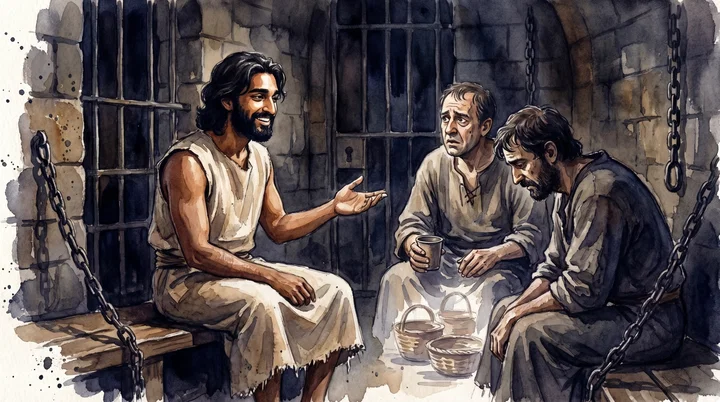
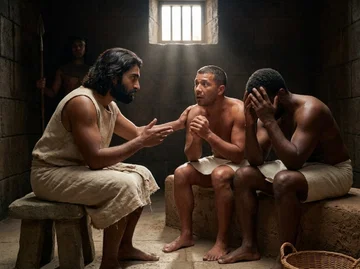
And Joseph came in unto them in the morning, and looked upon them, and, behold, they were sad.
Translations
And Joseph came in to them in the morning, and looked on them, and, behold, they were sad.
And Joseph came in unto them in the morning, and looked upon them, and, behold, they were sad.
And Joseph came in unto them in the morning, and looked upon them, and behold, they were sad.
And Joseph came to them in the morning, and looked upon them, and behold, they were sad.
Revised Version, American Standard Version
And Joseph came in unto them in the morning, and saw them, and, behold, they were sad.
And Joseph cometh in unto them in the morning, and seeth them, and lo, they [are] morose;
And Joseph came in to them in the morning, and looked on them, and behold, they were sad.
And Joseph came in unto them in the morning,—and looked at them, and lo! they were sad.
Berean Standard Bible, Majority Standard Bible
When Joseph came to them in the morning, he saw that they were distraught.
Joseph came in to them in the morning, and saw them, and saw that they were sad.
And in the morning when Joseph came to them he saw that they were looking sad.
And when Ioseph came in vnto them in the morning, and looked vpon them, beholde, they were sad.
Douay-Rheims (Challoner revision)
And when Joseph was come in to them in the morning, and saw them sad,
Pictures
Cross-references
- Genesis 40:12-13
And Joseph said unto him, This is the interpretation of it: The three branches are three days:
Joseph interprets the butler’s dream and foretells his restoration.
- Genesis 40:18-22
And Joseph answered and said, This is the interpretation thereof: The three baskets are three days:
Joseph interprets the baker’s dream, and both predictions come true.
- Genesis 41:8
And it came to pass in the morning that his spirit was troubled; and he sent and called for all the magicians of Egypt, and all the wise men thereof: and Pharaoh told them his dream; but there was none that could interpret them unto Pharaoh.
Pharaoh is troubled by dreams that Egypt’s wise men cannot explain.
Commentary
Each commentary is drawn from primary sources: the writings of Ellen G. White and Adventist pioneers and periodicals. Each commentary is separate. Its own words are not a quotation; follow the references to read the source passages.
Ellen G. White
4 sources
Joseph was still confined in prison at a turning point in his life, when Pharaoh's chief butler and chief baker had been cast into prison for offending Pharaoh and placed under his especial care.ST Jan 15, 1880 One morning he came in unto them, bringing them food, and looked upon them and saw that they were sad, very sad.PP 219.1ST Jan 15, 18801SP 134.1–2ST Jan 8, 1880
He kindly asked them what was wrong and why they looked so sad that day.PP 219.1ST Jan 15, 18801SP 134.1–2 That question led them to tell him their dreams for him to interpret.ST Jan 15, 1880 Even while himself suffering injustice in prison, he did not turn inward to dwell only on his own troubles, but attended to his fellow prisoners' distress with sympathy and concern for others.PP 219.1ST Jan 8, 1880
Sources
Pioneers and periodicals
13 sources
Joseph was confined in prison with charge over Pharaoh's chief butler and chief baker, and coming to them in the morning he saw that both were sad.ST Jan 15, 1880ST Jan 3, 1911ST Apr 9, 1894ST Nov 3, 1898 They were troubled because each had dreamed in the night a mysterious dream with no interpretation, leaving them cut off from help and uncertain of their fate.ST Apr 9, 1894ST Nov 3, 1898ST Oct 9, 1901 He kindly asked why they looked so sad, and their answer opened the way for him to interpret each dream, and both interpretations came to pass.ST Jan 15, 1880ST Apr 9, 1894ST Nov 3, 1898 Though himself degraded, imprisoned and suffering injustice with his own dreams of exaltation still unfulfilled, he did not turn inward upon his own troubles or distrust dreams, but from sympathy and trust in God as the interpreter of dreams he noticed their sadness and sought to help them.ST Jan 8, 1880ST Feb 22, 1899ST Oct 9, 1901
Prison Morning Encounter
The verse belongs to the story of Joseph in Egypt during his confinement in prison, at a turning-point in his life.ST Jan 15, 1880ST Jan 3, 1911 His time in prison was a discipline that prepared him for the position God later gave him in Egypt.ST Jan 3, 1911 Pharaoh's chief butler and chief baker had been cast into prison for offending Pharaoh and had been placed under Joseph's especial care.ST Jan 15, 1880
In the morning Joseph came in to the two imprisoned officers of Pharaoh, the chief butler and the chief baker, looked upon them, and discerned that both were sad.ST Jan 15, 1880ST Apr 9, 1894ST Nov 3, 1898 He kindly asked them why they looked so sad that day.ST Jan 15, 1880ST Nov 3, 1898 That question led them to tell him their dreams for interpretation.ST Jan 15, 1880ST Apr 9, 1894
They were sad because in the same night each had dreamed a dream, mysterious and apparently significant, that had no interpretation.ST Apr 9, 1894ST Nov 3, 1898ST Oct 9, 1901 As Egyptian officials cut off from the professional interpreters, they could not consult them.ST Oct 9, 1901 Not knowing what fate the king might decide for them, they had reason to be deeply troubled.ST Oct 9, 1901 Joseph interpreted each dream, and both interpretations came to pass.ST Apr 9, 1894
Their distress after dreams they could not understand was a trouble like the one Pharaoh himself later experienced when he could not understand his dreams.ST Mar 24, 1887
Joseph's Character and Example
Joseph himself when he met the two officers in the morning was reduced to the condition of a culprit, degraded, imprisoned, humbled and exiled among strangers and enemies.ST Feb 22, 1899 His own earlier dreams of being elevated to a superior position and exalted among his brethren were still unfulfilled, and his experience was the opposite of glory.ST Feb 22, 1899 Yet he did not lose confidence in dreams or call them uncertain and deceptive, because his trust was in God the interpreter of dreams.ST Feb 22, 1899 He looked at the invisible and knew his dreams would sometime be fulfilled though outward and present appearances seemed forbidding.ST Feb 22, 1899
Even while suffering injustice in prison, he did not turn inward or dwell only on his own troubles.ST Jan 8, 1880 While attending to the prisoners in the morning he noticed their sadness, felt sympathy for men in distress, and asked what troubled them from a desire to help them through God.ST Jan 8, 1880ST Oct 9, 1901 His concern in coming to them and marking their distress led him to offer them kind sympathy.ST Jan 8, 1880ST Oct 9, 1901
His history proves that whatever God has intended a person for, He may be safely trusted to bring them to it, leading them roundabout yet guiding them right.RH Jan 19, 1860 In his youth he stands as one guided and saved by God, holding up the God of Israel as the friend every child and youth needs so that angels will guard him in time of trouble.RH Nov 24, 1874
His experiences disclose underlying principles designed to guide in dealing with the various contingencies of life.ST Nov 29, 1905 The verse gives a counterpart to human experience that should be as familiar as one's own name, so that those called to pass through similar experiences may be helped and guided by his example.ST Nov 29, 1905 From it are to be learned practical lessons for the soul's good and for counseling others in similar difficulties, with the Bible as a guidebook to be trusted more and more every day till the very end.ST Nov 29, 1905
Joseph in Egypt is an example of what God wants His workers to be in the closing act of the world.RH Dec 20, 1906 He exemplifies workers in the world, like those in the medical missionary cause, who are led individually by God in fulfillment of the new covenant promise.RH Dec 20, 1906
Sources