Genesis 41:40
Thou shalt be over my house, and according unto thy word shall all my people be ruled: only in the throne will I be greater than thou.
Translations
You shall be over my house, and according to your word shall all my people be ruled: only in the throne will I be greater than you.
Thou shalt be over my house, and according unto thy word shall all my people be ruled: only in the throne will I be greater than thou.
KJV Cambridge Paragraph Bible, Revised Version, American Standard Version
thou shalt be over my house, and according unto thy word shall all my people be ruled: only in the throne will I be greater than thou.
Thou shalt be over my house, and according to thy word shall all my people be ruled: only in the throne will I be greater than thou.
thou — thou art over my house, and at thy mouth do all my people kiss; only in the throne I am greater than thou.'
Thou shalt be over my house, and according to thy commandment shall all my people regulate themselves; only concerning the throne will I be greater than thou.
Thou, shalt be over my house, and on thy mouth, shall all my people kiss,—only as to the throne, will I be greater than thou.
Berean Standard Bible, Majority Standard Bible
You shall be in charge of my house, and all my people are to obey your commands. Only with regard to the throne will I be greater than you.”
You shall be over my house. All my people will be ruled according to your word. Only in the throne I will be greater than you.”
You, then, are to be over my house, and all my people will be ruled by your word: only as king will I be greater than you.
Thou shalt be ouer mine house, and at thy word shall all my people be armed, onely in the kings throne will I be aboue thee.
Douay-Rheims (Challoner revision)
Thou shalt be over my house, and at the commandment of thy mouth all the people shall obey: only in the kingly throne will I be above thee.
Pictures

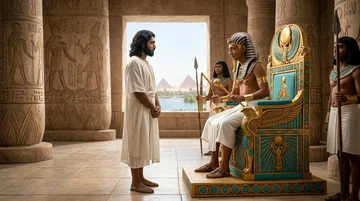
Cross-references 20 of 29
- Genesis 39:20-23
And Joseph’s master took him, and put him into the prison, a place where the king’s prisoners were bound: and he was there in the prison.
Joseph’s unjust imprisonment precedes his elevation to authority.
- Psalms 105:21-22
He made him lord of his house, and ruler of all his substance:
Joseph is made lord over Pharaoh’s house and teaches the rulers wisdom.
- Genesis 41:29-30
Behold, there come seven years of great plenty throughout all the land of Egypt:
Joseph foretells seven years of plenty followed by seven years of famine.
- Genesis 41:54-57
And the seven years of dearth began to come, according as Joseph had said: and the dearth was in all lands; but in all the land of Egypt there was bread.
Joseph’s rule provides food for Egypt and other countries during the famine.
- Genesis 39:9
There is none greater in this house than I; neither hath he kept back any thing from me but thee, because thou art his wife: how then can I do this great wickedness, and sin against God?
Joseph’s integrity in resisting sin foreshadows his later exaltation.
- Genesis 37:5-11
And Joseph dreamed a dream, and he told it his brethren: and they hated him yet the more.
Joseph’s brothers bow to him, fulfilling his dreams after his exaltation.
- Genesis 39:2-4
And the LORD was with Joseph, and he was a prosperous man; and he was in the house of his master the Egyptian.
God’s presence prospers Joseph and earns him trust and authority.
- Genesis 39:21-23
But the LORD was with Joseph, and shewed him mercy, and gave him favour in the sight of the keeper of the prison.
The Lord remained with Joseph in prison, prospering him and entrusting him with responsibility before his rise to authority.
- Daniel 2:48
Then the king made Daniel a great man, and gave him many great gifts, and made him ruler over the whole province of Babylon, and chief of the governors over all the wise men of Babylon.
Like Joseph, Daniel is elevated after interpreting a king’s dream and helps his companions.
- Genesis 45:8-9
So now it was not you that sent me hither, but God: and he hath made me a father to Pharaoh, and lord of all his house, and a ruler throughout all the land of Egypt.
God made Joseph ruler over Pharaoh’s house and all Egypt.
- Genesis 50:20
But as for you, ye thought evil against me; but God meant it unto good, to bring to pass, as it is this day, to save much people alive.
God turned the brothers’ evil toward good, preserving many lives.
- Genesis 37:28
Then there passed by Midianites merchantmen; and they drew and lifted up Joseph out of the pit, and sold Joseph to the Ishmeelites for twenty pieces of silver: and they brought Joseph into Egypt.
sale began testing that led to throne
- Genesis 41:55
And when all the land of Egypt was famished, the people cried to Pharaoh for bread: and Pharaoh said unto all the Egyptians, Go unto Joseph; what he saith to you, do.
Pharaoh directs the people to obey Joseph during the famine.
- Psalms 105:17
He sent a man before them, even Joseph, who was sold for a servant:
God sent Joseph ahead of his people.
- Genesis 41:1-7
And it came to pass at the end of two full years, that Pharaoh dreamed: and, behold, he stood by the river.
Egyptian dream led to promotion
- Genesis 41:33-36
Now therefore let Pharaoh look out a man discreet and wise, and set him over the land of Egypt.
Joseph advises Pharaoh to store grain for the famine.
- Genesis 39:6
And he left all that he had in Joseph’s hand; and he knew not ought he had, save the bread which he did eat. And Joseph was a goodly person, and well favoured.
Both show all entrusted to Joseph’s care.
- Genesis 41:16
And Joseph answered Pharaoh, saying, It is not in me: God shall give Pharaoh an answer of peace.
Joseph disclaims his own power before his elevation.
- Genesis 41:45
And Pharaoh called Joseph’s name Zaphnath-paaneah; and he gave him to wife Asenath the daughter of Poti-pherah priest of On. And Joseph went out over all the land of Egypt.
Joseph receives an Egyptian name meaning “the bread of life.”
- Genesis 37:4
And when his brethren saw that their father loved him more than all his brethren, they hated him, and could not speak peaceably unto him.
Joseph’s brothers hated him before he was raised to rule.
Commentary
Each commentary is drawn from primary sources: the writings of Ellen G. White and Adventist pioneers and periodicals. Each commentary is separate. Its own words are not a quotation; follow the references to read the source passages.
Ellen G. White
22 sources
Pharaoh set Joseph over his household with authority for all the people to be ruled by his word, with only the throne itself remaining greater than he.1SP 138.1SG3 151.3ST Jan 15, 1880 He was chosen because he was recognized as wise and discerning above all others, with the Spirit of God in him and with God-given insight into coming plenty and famine and the plan to store food for the preservation of the nation.1SP 138.1SG3 151.3ST Jan 15, 1880PP 221.1–2 His sudden lifting from prison and the dungeon to wealth, honor and responsibility beside the throne of the world's greatest empire was not accident but ordered by Providence, which overruled temptation, false accusation and malice for good.5T 321.1–24T 544.1–26T 219.3ST Jan 8, 1880SG3 145.1 God used temptation, adversity and prison discipline to prepare him to govern, teaching him obedience, humility and self-government through cheerful service until firm principle, purity of motive and trust in God had formed solidity of character.5T 321.1–2ST Jan 8, 18801SP 133.24MR 220.3–222.4 Exalted, he carried his religion with him in faithfulness, humility and continual dependence on God, so that through his wisdom, justice, purity and benevolence among an idolatrous people God might manifest Himself to Egypt and to all connected nations, even though such prosperity tests character as searchingly as adversity and makes living faith and victory over self continually necessary.4T 544.1–26T 219.3ED 51.3–4Ms 18, 1897, par. 10Ms 59, 1897, par. 11–14
Appointment Over Egypt
Pharaoh set Joseph over his house and household with authority to direct it, and all the people were to be ruled according to Joseph's word.1SP 138.1SG3 151.3ST Jan 15, 18804T 544.1–2PP 221.1–2 Only Pharaoh's royal throne itself remained greater than Joseph, so that Joseph stood second only to the king in rank and honor.1SP 138.1SG3 151.3ST Jan 15, 18804T 544.1–2HPMMW 6.2–3 The appointment was made because Pharaoh recognized Joseph as wise and discerning above all others, with wisdom given by God who had revealed the coming events to him and with the Spirit of God in him.1SP 138.1SG3 151.3ST Jan 15, 1880PP 221.1–26T 219.3
Joseph alone had wisdom to point out the danger ahead and the preparation needed, and his evident wisdom and sound judgment marked him as discreet and wise above all the officers of state.PP 221.1–2 That wisdom was joined to pre-eminent administrative ability already proved in managing the prison, with divine power with him.PP 221.1–2 His being a Hebrew and a slave counted for little against such evident wisdom and sound judgment, and Pharaoh regarded him as the most suitable person to govern.SG3 151.3PP 221.1–2 The appointment was to carry out the plan of storing food in the plenteous years against the famine, a choice on which the preservation of the nation depended.PP 221.1–2
The appointment was confirmed by putting Pharaoh's ring upon Joseph's hand and arraying him in fine linen with a gold chain about his neck.PP 221.1–2 Pharaoh made him to ride in the second chariot and commanded all to kneel before him with the cry, Bow the knee.PP 221.1–2
Prophecy Fulfilled in Time
The setting of the appointment carries a prediction of seven years of plenty to be followed by seven years of famine in Egypt, made known through Pharaoh's dreams in Genesis 41:28-54.GC 323.2–324.2GC88 323.2 What was at first only prophecy was afterward fulfilled exactly in accordance with the prediction.GC 323.2–324.2GC88 323.2 It is one instance of a predicted event bound to a given time occurring within that appointed time.GC 323.2–324.2GC88 323.2
This fulfillment stands together with many other scriptural examples of time-limited events taking place within their given times.GC 323.2–324.2GC88 323.2 Such cases show that the chronological portions of the Bible are as certain as any other portion and as worthy of serious consideration.GC 323.2–324.2GC88 323.2 They give ground to expect that the chronological periods reaching to the second coming of Christ will likewise be fulfilled.GC 323.2–324.2GC88 323.2
Providence, Character, and Witness
Joseph was lifted in a single day from prison and the dungeon, where he had served as a servant of captives, to sudden wealth, honor, responsibility and usefulness at the side of the throne of the world's greatest empire.5T 321.1–24T 544.1–26T 219.3ST Jan 8, 18804MR 220.3–222.4 He was set over the household with authority over the people, with rank second only to the king.4T 544.1–26T 219.3SG3 145.1 His rise came after false accusation, wicked revenge, and the malice and ingratitude of enemies had brought him low, and his faithfulness in temptation and prison prepared him to govern.ST Jan 8, 1880SG3 145.14MR 220.3–222.4
That exaltation was no accident but was ordered by Providence, with the eye of God upon him and the hand of God leading him.5T 321.1–21SP 138.2–139.1 God overruled temptation, hardship, false accusation, wicked revenge, and the malice and ingratitude of enemies for good, raising him after he had been brought low and exalting the faithful in His own time.5T 321.1–2ST Jan 8, 1880SG3 145.1 Joseph himself knew he was a stranger in a strange land, separated from his father and brethren, yet firmly believed God's hand had overruled his course to bring him there.1SP 138.2–139.1
God designed that experience of temptation, adversity, hardship and prison discipline to prepare him to fill the exalted position second only to the throne.ST Jan 8, 18801SP 133.2 He first learned obedience and humility, learning to govern himself by obeying God, bearing the yoke in his youth, and humbling himself in order to learn to govern.4MR 220.3–222.4Lt 58, 1880, par. 18 In prison he brought his principles into active exercise by making himself useful to others, entering cheerfully and with sympathy and courtesy into the troubles of his fellow prisoners, and being willing to learn the lessons God would teach him.Lt 58, 1880, par. 18
God could use him to carry out His purposes because he was a youth of firm principle, solidity of character, courage, uprightness, wisdom, purity of motive, purpose of heart and simple trust in God.5T 321.1–2 Careful training in early years enabled him to consult duty rather than inclination, to remain favored under great responsibility, and then to trust God without discouragement when unjustly accused and cast into prison without fault, so that the purity and trust of the boy bore fruit in the deeds of the man.5T 321.1–2 His character bore the precious fruits of God's Spirit, in contrast to those who lack those graces and fail to bear the fruit God seeks.
Exalted beside the throne he showed the same lofty and sacred regard for God's will as in the prisoner's cell, carrying his religion with him wherever he went with an all-pervading power that gave tone to everything he did.4T 544.1–25T 124.1–2Ms 59, 1897, par. 11–14Ms 14, 1889, par. 13–14 He did not forget God but depended on Him continually, performed all the duties of his office with faithfulness, kept humble, remembered God as his strength, and would suffer any temporal loss rather than sin.Ms 59, 1897, par. 11–141SP 138.2–139.1Ms 14, 1889, par. 13–14 His rise was sudden, but his faithfulness remained unchanged in prosperity.4T 544.1–2
That lofty height was full of danger, for fierce temptations that leave the lowly untouched assail the exalted, and prosperity tests character as searchingly as adversity.ED 51.3–4Ms 59, 1897, par. 11–14 As the tempest spares the modest flowers of the valley while it wrestles with the lofty tree on the mountain, so the more difficult the position the more Jesus is needed.Ms 59, 1897, par. 11–14Ms 14, 1889, par. 13–14 Safety there requires living faith connecting the soul with God and complete consecration, hiding in Jesus and holding His hand, guarding against presumption and self-sufficiency and trust in own strength and wisdom, gaining the precious victory over self, and letting selfish ambition and desire for supremacy die.Ms 14, 1889, par. 13–14
God placed him over the house and substance with authority to bind princes and teach senators wisdom after much affliction, as a sacred trust to work in the line God had chosen so that the knowledge of God might shine forth in Egypt.6T 219.3Ms 18, 1897, par. 10 The position was given so God could manifest Himself not to Egypt alone but through Joseph to all nations connected with that kingdom, making him a light-bearer to extend heavenly illumination far and near.6T 219.3 By his wisdom and justice, by the purity and benevolence of his daily life, and by his devotion to the interests of the people though they were idolaters, he was a representative of Christ, so that in their benefactor to whom all Egypt turned with gratitude and praise the people and through them all connected nations were to behold the love of their Creator and Redeemer.6T 219.3
His life therefore calls parents to educate children and young men to gain such character that they may be fitted for usefulness and share in the earnest work to be done in this age.5T 321.1–2 His role in Egypt serves as a model for how an institution of God's people is to stand before the world.HPMMW 6.2–3 Training that uses the physical powers as well as the mental powers in an all-round education leads to being assigned various positions of trust as Joseph was, and sets the pattern for ministers today.Lt 28, 1909, par. 10
Sources
Pioneers and periodicals
78 sources
Pharaoh set Joseph over his household and commanded all his people to be governed by his word, reserving to himself superiority only by the throne.ST Apr 9, 1894ST Nov 10, 1898ST Oct 16, 1901 He was thus raised from prison to stand second to Pharaoh as ruler over all Egypt.RH May 5, 1859RH Jan 20, 1916ST Jun 11, 1894 The trust was given because he was found discreet and wise, with the Spirit of God in him revealing what was to come.ST Jan 15, 1880ST Nov 10, 1898ST Dec 25, 1901 His way to honor lay through hatred, slavery, false accusation and chains, yet God was with him, prospered him, disciplined him in humility and patience, and turned what was meant for evil into good.ST Jan 3, 1911RH Jan 20, 1916ST Aug 25, 1909ST Exalted after suffering, he stored food in plenty to preserve Egypt, Canaan and Jacob's house alive in famine, and in this he foreshadows Christ, to whom after suffering the Father gives authority over all while remaining himself greater.RH May 5, 1859ST Jan 1, 1885ST Apr 16, 1894ST Jan 21, 1913RH May 5, 1859
Appointment Over Egypt
Pharaoh placed Joseph over his household and ordered that all his people should be ruled and directed according to Joseph's word, with only Pharaoh himself remaining above him by virtue of the throne and its rank.ST Apr 9, 1894ST Nov 10, 1898ST Oct 16, 1901ST Nov 10, 1898ST Oct 16, 1901 The appointment gave Joseph high executive authority to direct the people, while Pharaoh retained supremacy only in the throne.ST Jan 15, 1880ST Nov 10, 1898ST Oct 16, 1901ST Nov 10, 1898ST Oct 16, 1901
That appointment made Joseph second only to Pharaoh, as prime minister and practical ruler over all Egypt and over his house, raised from prison and jail to the palace.RH May 5, 1859RH Jan 20, 1916ST Jun 11, 1894ST Apr 16, 1894ST Jun 21, 1905 The authority described extends over all the land, bringing a wider field of usefulness and responsibility in which he could serve as a great blessing to his father's household and all Israel.RH May 5, 1859ST Apr 16, 1894ST Jun 21, 1905ST Feb 17, 1909 His rise shows faithfulness coming before honor, for those who honor God in trial God honors, and it proves that a high officer of civil government can be a servant of God not through politics but through ability and personal integrity gained by faith in God.ST Jun 11, 1894ST Jun 21, 1905
Pharaoh gave him this place because he judged him discreet, wise and capable, and recognized that the Spirit of God was in him and that God had revealed coming events to him.ST Jan 15, 1880ST Nov 10, 1898ST Dec 25, 1901ST Oct 16, 1901ST Apr 9, 1894 Through the Spirit of prophecy Joseph interpreted Pharaoh's dreams and gave wise counsel for the time of need, giving the God of heaven credit for the wisdom shown, so that when Pharaoh saw the necessity of placing a discreet and wise man over the affairs of the kingdom he could think of none so well qualified.ST Dec 25, 1901ST Oct 16, 1901 That God-given wisdom is greater than all the wisdom of the world, and Pharaoh knew Joseph would be faithful in all duties with God's blessing attending his plans and deeds.ST Oct 16, 1901ST Apr 9, 1894 His wisdom in managing the kingdom appeared especially in preparing for the long years of famine, storing abundant food so Egypt had enough while other nations perished and greatly enriching the kingdom.ST Feb 12, 1880
The account around the promotion is thoroughly Egyptian in form and dress, and the elevation to high office of a Semitic foreigner in the Egyptian court is historically accurate in customs, manners and history rather than romance.ST Dec 14, 1915RH Nov 9, 1916 The dreams that led to it, with the Nile River, kine, grain and the sacred seven, are significantly Egyptian even in some of the words used, and the details of prison and palace fit Egypt: grape juice was a chief offering whose preparation was the duty of the chief butler, the chief baker was beheaded in accordance with Egyptian custom, and Joseph shaved himself before appearing before the ruler though that custom was abhorred by Semitic peoples.ST Dec 14, 1915 To make the position sure Pharaoh placed his own signet ring on Joseph's finger and arrayed him in a garment of fine linen as token of the dignity conferred, and the collar of gold given with his exaltation was one of the marks of distinction among the Egyptians.RH Dec 15, 1910ST Dec 14, 1915 Monuments provide evidence for the exaltation, and Egyptian records from Tell el-Amarna include two letters by a Semite named Dudu who held a similar court position, answering the claim that such an elevation was unparalleled.RH Nov 9, 1916
The full authority placed Pharaoh's authority otherwise under Joseph's control, including authority to make and seal laws and to govern the kingdom and the people by his word.RH May 5, 1859RH Nov 30, 1905 He was made lord of his house and ruler of all his substance to bind his princes at his pleasure and to teach his elders and senators wisdom.RH Nov 30, 1905ST Jul 28, 1881 That absolute authority was essential to his work because many of the people would receive his interpretation of the dream with hesitancy.ST Oct 16, 1901 The great emphasis on his elevation was also necessary to impress Joseph himself with the fact of his position, for he had learned humbleness of mind without which he would not have been permitted to be so exalted, and because of that humility it would be difficult for him to assume the authority the position required.ST Oct 16, 1901
Path Through Suffering
Joseph came to the throne only after hatred from his brothers over his father's favoritism led them to try to kill him and then sell him as a slave into Egypt among the descendants of Ham, robbed of his birthright, with the iron entering his soul and his feet hurt with fetters.ST Jan 3, 1911RH Dec 15, 1910ST Jul 28, 1881 In Egypt he was at first favored and entrusted with responsibility for all that his master possessed, yet then without fault was falsely accused and cast into prison, where he remained two years in chains and iron as an innocent prisoner until the time that his word came and he was called out.ST Mar 24, 1887ST Jan 3, 1911ST Jul 28, 1881 That call was from prison to palace, from slavery and prison to authority over Pharaoh's house and people by his word, second only to the throne, with Pharaoh bringing him to share his own ruling seat and making that dignity sure by the signet ring and a garment of fine linen.RH Jan 20, 1916RH Dec 15, 1910RH Nov 30, 1905ST Jul 28, 1881 The promotion gave a wider field of usefulness and responsibility in the mighty empire of the Pharaohs, where he could serve as a great blessing to his father's household and all Israel, to bind princes at his pleasure and teach elders and senators wisdom, standing with his confession that it is not in him and with the coming of Jacob's sons to buy corn.RH Jan 20, 1916RH Nov 30, 1905ST Feb 17, 1909ST Jul 28, 1881
God did not leave him to go into Egypt alone, for angels prepared the way for his reception, the Lord was with him, prospered him, and gave him favor so that confidence was placed in him even as his circumstances changed from slavery to prison to royal service.ST Mar 24, 1887ST Aug 25, 1909 His prosperity under God's presence rested on unswerving allegiance to right, with purpose of heart and purity of motive made manifest and not discouraged even by unjust accusation for refusing to yield integrity.ST Aug 25, 1909ST Mar 24, 1887 God safely guarded the reputation blackened by a wicked accuser and in His own good time caused it to shine, delivering His own up from the pit of death and out from the king's dungeon into the corridors of the palace with jewels of gold instead of fetters of brass.ST Mar 24, 1887ST Dec 23, 1913 No pit is so deep and no dungeon so black that the eye of the Eternal fails to pierce it, and He made even the prison the way to elevation, letting light arise in darkness for the upright after suffering as the innocent victim of his brothers' cruel vindictiveness and then of the caprice and revenge of a vicious and designing woman.ST Mar 24, 1887ST Dec 23, 1913 The elevation was not accident but ordered by Providence, with the eye of God upon him and a divine hand leading him, overruling the enemy's devices for good so that those debased for a while by wicked revenge are exalted much higher and virtue in time brings its own reward.ST Mar 24, 1887
The affliction was permitted for a time to prepare him to fill an important position, testing courage, uprightness, purity and integrity until the word of the Lord tried him, when the king sent and loosed him and let him go free.ST Jul 28, 1881ST Mar 24, 1887 Principles of integrity and purity instilled by his father appeared in him, yet pride fostered by being the petted child of his father's old age required humbling, so two years of innocent imprisonment served as needed discipline, and his experience of temptation, hardship and false accusation prepared him for exalted usefulness.ST Jan 8, 1880ST Jan 3, 1911 Without first being made a slave and then a prisoner in iron in a dungeon he could never have done the work of that high station, for slavery and imprisonment taught him patience, humility and submission, and he then governed in the fear of God and faithfully carried out the trust Providence assigned him.ST Jul 28, 1881RH Mar 9, 1869ST Dec 16, 1880 This shows the wisdom of God that before honor comes humility, that those who seek honor from God spend their lives in deepest self-abasement before Him, and that firmness of character, uprightness and wisdom fit for usefulness come from careful training in early years, consulting duty rather than inclination, so that the purity and simple trust of the boy bear fruit in the deeds of the man.ST Dec 16, 1880
What his brothers meant for evil God turned to good, for the pit they put him in became the first step toward his authority, contrary to their attempt to prevent his rise.ST Nov 29, 1905RH Mar 20, 1900 The evil meant to make his life miserable instead helped move him toward rule in Egypt over Pharaoh's household and people, with Pharaoh alone greater.RH Nov 17, 1910RH Mar 20, 1900 His rise from prison to Egypt's throne fulfilled the dreams that had aroused their envy and for which they hated him, when his brothers unknowingly came to buy corn and humbly bowed before him.ST Jan 3, 1911STRH Nov 17, 1910 In this God turned their evil into good and prepared the way for Abraham's descendants to go to Egypt.ST Nov 29, 1905RH Nov 17, 1910
Famine Foretold and Preservation
God made known beforehand through Pharaoh's dreams, as interpreted by Joseph, that seven years of plenty would be followed by seven years of famine.RH Apr 18, 1854RH Jul 25, 1854RH Mar 31, 1868RH Jun 23, 1903ST Oct 16, 1901 Those years were a definite predicted period, once only prophecy and then fulfilled exactly as foretold.RH Apr 18, 1854RH Mar 31, 1868 That advance notice of a great event to come identifies Joseph as a prophet, and shows that the Bible gives definite periods of time reaching even to the coming of the Saviour.RH Jul 25, 1854RH Mar 31, 1868RH Jun 23, 1903 It was that revelation of the coming famine that brought Jacob and his family to Egypt and stands behind Joseph's rise to authority.ST May 9, 1878ST Oct 16, 1901
Raised to rule over the house and land with only Pharaoh greater in rank, Joseph used the seven years of abundance to store grain in preparation for the famine.ST Apr 16, 1894ST Oct 16, 1901 That stored provision meant Egypt had food while other nations perished, and multitudes in Egypt, Canaan and other lands were saved from starvation.ST Feb 12, 1880ST Oct 16, 1901ST Mar 23, 1882 His wise management in preparing for the long years greatly enriched the kingdom, carried it through overflowing harvests followed by devastating famine, and established wise systems of agriculture and magnanimous dealings with needy peoples that gained their goodwill and gave many years of peace and prosperity.ST Feb 12, 1880ST Aug 3, 1904 The work continued through all the eighty years Joseph lived after becoming ruler, until a new dynasty disregarded the principles he had established, and in this providing of food against famine to save the people from death he foreshadowed Christ the true Bread of Life from heaven who saves from spiritual famine.ST Jan 1, 1885ST Aug 3, 1904 Egypt in this owed its very existence to the Hebrews, and Pharaoh acknowledged his debt to Joseph's God and to Joseph.ST Feb 12, 1880
The exaltation was the Lord's preparing of Joseph to preserve the holy Seed.ST Jan 21, 1913 God overruled the brothers' selling of him and used him to sustain Jacob's family, Israel, Egypt and other countries through the seven-year famine, and thereby thwarted the effort to destroy Israel and cut off the promised Seed.RH Nov 28, 1912 His rise from prison to a place beside the throne fulfilled the dreams that had provoked his brothers' envy, turning what they meant for evil into good and preparing the way for Abraham's descendants to go to Egypt.RH Nov 17, 1910 God thus raised a captive to authority where he could help his companions and preserve Jacob's family from famine, bringing deliverance and blessing through events that seemed harmful or insignificant.ST Jan 21, 1889
The deliverance was designed not only for salvation from famine but to bring the knowledge of the true God to a nation of idolaters by the godly lives of His people and their miraculous deliverance. Because Joseph was God's servant, God's blessing rested on the land of Egypt for his sake.RH Jul 28, 1904 Placed beside the throne at the very seat of the world's empire, where God's people under monarchy could do the most possible good, Joseph with Moses after him beside the throne and Israel among the people held the knowledge of God before all nations.ST Aug 9, 1899 During the famine peoples from many lands came to Egypt for grain and could learn of Israel's God and carry that knowledge home, illustrating how God uses a person brought into prominence even through hardship to make His truth known to rulers and through their influence to many others.RH Jun 10, 1902ST Aug 9, 1899ST Oct 12, 1904
Type of Christ
Pharaoh set Joseph over his household and his people, so that all were ruled according to his word, while Pharaoh himself remained greater only by the throne.RH May 5, 1859RH May 5, 1859 That authority extended over all Egypt and placed even Pharaoh's own authority under Joseph's control, including power to make and seal laws.RH May 5, 1859RH May 5, 1859 Given after suffering and captivity, it illustrates the exaltation of Jesus after suffering and death, when the Father gave Him authority over all things to rule from the throne in heaven while the Father Himself remained greater in the throne.RH May 5, 1859RH May 5, 1859
The elevation came after Joseph had provided food against famine and saved the people, and that provision makes him a type of Christ as the true Bread of Life.ST Jan 1, 1885 As Joseph saved from bodily famine and death, so Christ came from heaven to save from spiritual famine and death and to be the life of the world.ST Jan 1, 1885
The second place under Pharaoh is the same second-place honor afterward held by Daniel under Nebuchadnezzar and by Mordecai under Ahasuerus.RH Jul 6, 1868 It stands higher than the third place Belshazzar could offer, because Belshazzar himself was second to Nabonadius.RH Jul 6, 1868
Providence and Divine Rule
The verse shows the Most High ruling even in idolatrous Egypt, then the foremost government on earth, directing the kingdoms of men for the one leading purpose to preserve life.ST Oct 28, 1897RH Mar 14, 1865ST Nov 18, 1897 God is not confined to His own people nor works exclusively with them, but gives instruction even to heathen rulers by dreams, while still connecting His work to His people by requiring Joseph to give the interpretation, so that nothing He does is without concern for them.RH Mar 14, 1865 Because His people were obliged to live under monarchy anyhow, He placed Joseph beside the throne at the very seat of the world's empire to stand next to it and practically rule the country, putting one of His own where he could do the most possible good, wield influence for the furtherance of His cause and the honor of His name, bring relief to his own people, and hold before all nations the knowledge of Himself through Joseph and Moses beside the throne and Israel among the people during Egypt's supremacy.ST Oct 28, 1897ST Aug 9, 1899ST Nov 18, 1897 The foretelling of the extensive famine was the means of that promotion, prepared in providence even while Joseph was in captivity.ST Oct 28, 1897ST Nov 18, 1897
God's thoughts and ways are not as human thoughts and ways, and He selects His own agencies to accomplish His benevolent designs.ST Mar 17, 1887 He chooses the weak and unlikely and world-rejected things to confound the mighty, as in taking Joseph from prison and setting him over Egypt as governor and ruler and savior of life, rising from rejected brother and Egyptian prisoner and slave made prime minister to bring life and salvation to those who follow His providence.ST Mar 17, 1887ST Jul 21, 1909 By this He stains human pride and teaches that the world is saved not by human wisdom and power but by the power of God, so that the excellency of the power appears to be of God and not of men, since men and means are nothing except as He condescends to use them.ST Mar 17, 1887ST Jul 21, 1909
God's judgment waited long and then reversed man's judgment on Joseph.ST Mar 24, 1887ST Nov 29, 1905RH Dec 24, 1867 Man's judgment censured him as though chief of sinners for refusing to yield his integrity, cast him low and sent the just to prison through wicked accusation and wicked revenge, but God safely guarded the reputation thus blackened, permitted affliction for a time to prepare him to fill an important position, made even the prison the way to elevation, and in His own good time caused his character to shine and lifted the fallen and debased up to height of power over Pharaoh's house to rule Egypt with only the throne greater than he.ST Mar 24, 1887RH Dec 24, 1867 Providence thus overrules the enemy's devices for good, so that virtue in time brings its own reward and the outcome vindicates right and principle, though Joseph could not see how events would work out as they happened and could only trust that it would come in God's time.ST Mar 24, 1887ST Nov 29, 1905
Before honor is humility.ST Dec 16, 1880ST Jul 28, 1881 The exaltation to a high station for a particular work God gave him to do required his first being made a slave and then a prisoner in iron in a dungeon, which fitted him to do a work he could never otherwise have done, showing the wisdom of God.ST Dec 16, 1880ST Jul 28, 1881 Those who seek honor from God spend their lives in deepest self-abasement before Him; those who humble themselves God will exalt, and those who exalt themselves He will certainly abase.ST Dec 16, 1880ST Jul 28, 1881 Those He exalts shall finally sit down with Christ upon His throne, while those He abases shall suffer shame and everlasting contempt.ST Dec 16, 1880ST Jul 28, 1881
God-given advancement may take different forms, but unswerving allegiance to right brings the prosperity, confidence and honor God appoints, visible even as circumstances change from slavery to prison to royal service.ST Aug 25, 1909 He may lead a person by a winding path yet guide him rightly, promoting from slavery and prison to authority in Egypt for a wider field of usefulness and responsibility as a great blessing to a father's household and to all Israel.RH Jan 19, 1860ST Feb 17, 1909 He leads by painful and slow degrees to the place where the appointed work lies, the way there being to do with might whatever the hands find to do every day just where one is until in due time promotion comes, and He can use circumstances and even wicked persons as steps, giving free transportation to Egypt the field of future greatness, so that difficult guidance becomes the means by which a person recognizes and takes up the appointed work or place.ST Feb 17, 1909RH Jan 28, 1902ST Nov 29, 1905
Faithfulness and Present Application
Genesis 41:40 shows Joseph taken from jail and made ruler over all Egypt, set over Pharaoh's house with all the people ruled by his word while Pharaoh alone remained greater in the throne, and the meaning is that faithfulness comes before honor and those who honor God in trial God will honor.ST Jun 11, 1894ST Aug 25, 1909ST Dec 25, 1901 His advancement to that place followed unswerving allegiance to right with God present with him, so that prosperity and the confidence others placed in him were visible as his circumstances changed from slavery to prison to royal service.ST Aug 25, 1909ST Dec 25, 1901 Through the Spirit of prophecy he interpreted Pharaoh's dreams and gave wise counsel for the time of need, giving the God of heaven credit for the wisdom shown, and when Pharaoh saw the necessity of placing a discreet and wise man over the kingdom he could think of none so well qualified.ST Dec 25, 1901RH May 2, 1865 By wisdom he saved himself from pollution and by forecast prevented famine, and going into Egypt in chains, destitute of strength and without influence, he rose from unfavorable surroundings to moral greatness by purity and close association with God until he became a giant whom the whole world feared and honored.RH May 2, 1865RH Mar 2, 1905 His cheerful, willing service in difficult circumstances without complaint helped win trust, and God counted that service worthy of the highest position below the throne, teaching that gladly fulfilling present duties leads to greater responsibility.RH Apr 11, 1907
The same faithfulness shown in prison continued in the court, for serving faithfully as prisoner and as prime minister did not change his integrity or sense of duty.RH Jan 11, 1912ST Aug 15, 1916ST May 11, 1904 He remained devoted to God after being raised to authority second only to Pharaoh and placed among the honors of the land, so his faithfulness did not depend on circumstances.ST May 11, 1904RH Jul 11, 1871 Enduring slavery and unjust imprisonment while keeping integrity and faith prepared him to preserve life, including that of his brothers, and made him a witness to the living God before all the empire, revealing God's wondrous delivering hand.RH Jan 11, 1912ST Aug 15, 1916 The gate to royal honors was opened by kindly service to two downcast fellow prisoners while he himself was innocent, mistreated, and in prison, showing that one who belongs to the Lord stays on duty in bonds or free instead of wrapping up in personal troubles, since the road of highest service is not always known.RH Jan 11, 1912 That small act of kindly concern for a fellow prisoner began the chain of events that brought him to rule Pharaoh's household and people and made him a benefactor to his people.ST Nov 29, 1905 The way there was doing with his might whatever his hands found to do every day just where he was until in due time he was promoted, led by painful and slow degrees to the place where his appointed work lay, with even wicked persons used as steps giving him free transportation to Egypt, the field of his future greatness.ST Nov 29, 1905
The elevation from prison to share the throne of Egypt was not accident but ordered by Providence, with the eye of God upon him and a divine hand leading him after full testing of courage and uprightness. Sold into Egypt, at first favored and entrusted with great responsibilities, then without fault unjustly accused and cast into prison, yet not discouraged but trusting in God, his purpose of heart and purity of motive were made manifest. The firmness of character, uprightness, and wisdom that fitted him for such usefulness were the result of careful training in early years, consulting duty rather than inclination, so that the purity and simple trust of the boy bore fruit in the deeds of the man. His example therefore teaches parents to educate children and young men to gain solidity of character to share in the earnest work of the age, since the most brilliant talents are of no value unless improved, and God gives opportunities but success depends on industrious habits, force of character, and quickly discerning and eagerly seizing the openings of Providence. The God of Israel befriends and keeps youth who seek Him early, guarding them by angels in time of trouble, which stands as encouragement for every child and youth to seek Him early and find Him.RH Nov 24, 1874
His character bore the precious fruits of God's Spirit, in contrast to those who lack those graces and fail to bear the fruit God seeks. As youthful ruler over Egypt holding the bread needed in famine, each day upon the yellow Nile he cast forth wheat that it might float to the feet of his sad old father Jacob, who believed him dead, as a sign that in Egypt there was bread, to lure the patriarch past desert sands and scant oasis fringed with thirsty green toward the love that yearned unseen for him.ST Feb 10, 1881 This pictures missionary work, in which small tokens flung and scattered by dear hands drift down on the swift rushing invisible tide from far fair lands to those who bide in the desert, saying to the athirst that here is fullness and sheaves to bind and calling them to follow on and find it.ST Feb 10, 1881 Brought before Egypt's king and placed in influence even through hardship, his experience shows how God uses a person brought into prominence to make truth known to rulers and through their influence to many others.ST Oct 12, 1904 God sent him into the inner circle of the kingly court second only to the throne itself by deliberate design to give His work advantage to make itself widely known, not as sharing the throne of civil power as the ambitious church of former times did, and that same design means His work today should have like advantage near the capital of the nation.RH Jan 21, 1904 He is the example of what God wants His workers to be in the closing act, holding the light higher in their own place, knowing the general work and how their little part fits in the grand whole, carrying truth beyond institutions to thousands perishing spiritually and physically who cannot be reached by an institution.RH Dec 20, 1906
The path of the just is radiant with glory from within given by God, so placed anywhere he shines and cannot but shine, as Joseph shone out on all Egypt after imprisonment.RH Jul 24, 1856 Darkness for God's faithful servants turns to light, for after going into Egypt as a slave and being cast into chains in prison in distress, he came forth to rule next to the king and to preserve Egypt and his own family.RH Aug 21, 1856 Carried as a boy unaccustomed to leaving home, weeping as he rode under a hot sun into slavery in a strange land with every plan and ambition blighted, he remained true to God amid temptation and sin, and when fountains of comfort and hope dried up God's salvation flowed fullest and freshest.RH May 25, 1916 The things that seemed to be against him were for him, and from the dungeon of adversity he rose to become the greatest man in Egypt, a statesman of note greater in reality than Pharaoh who sat on the throne.RH May 25, 1916 Being sold to the Ishmaelites was God sending him into Egypt, and being cast into prison on false accusation was the way God chose to exalt him, though neither he nor Jacob understood it at the time when he saw only one affliction upon another. That exaltation was designed not only for salvation from seven years of famine but to bring knowledge of the true God to idolaters by godly lives and miraculous deliverance from affliction, showing that the darkest night is followed by the brightest day, that adverse circumstances bring greater victories, and that exclusion of visible help teaches men to lean on God and trust overruling providence until the fiery ordeal brings forth pure gold.
Pharaoh brought Joseph to share his own ruling seat after years of sale and prison because he saw wisdom in him that held the life of all Egypt, putting him in charge of the household to teach elders wisdom and to govern the people by his word.RH Nov 30, 1905 A ruler who recognizes that his own life and his people's life depend on God's messenger's message should therefore honor that messenger with his own authority and send him quickly to every town and village instead of jailing him.RH Nov 30, 1905 Jailing such a messenger holds back the life-giving message and cuts off the ruler's own life and dooms the people to death.RH Nov 30, 1905 A messenger treated this way should not speak harsh words against the officers but stay kind, patient, and enduring, bless them, and pray God to forgive them because they act without knowing what they do.RH Nov 30, 1905 The advancement of Joseph, an Israelite and Pharaoh's favorite, to the highest position second only to the throne was a Jewish elevation so high that no Israelite since reached so high in Egypt, and his reigning after being unpopular among his brethren means that the doctrine that a man may not live in luxurious splendor and win the reward of a philanthropist with gifts from superfluity, though unpopular now, will reign and be acknowledged by and by.ST Mar 11, 1880ST Jan 20, 1881
Sources