Genesis 37:4
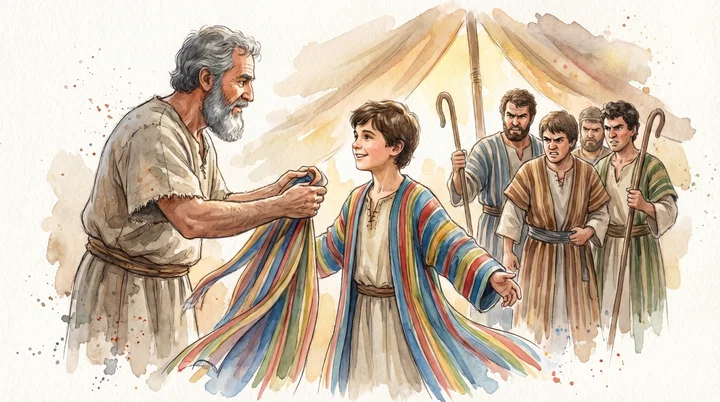
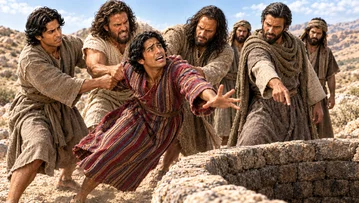
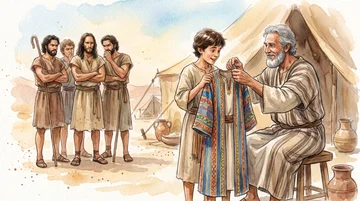
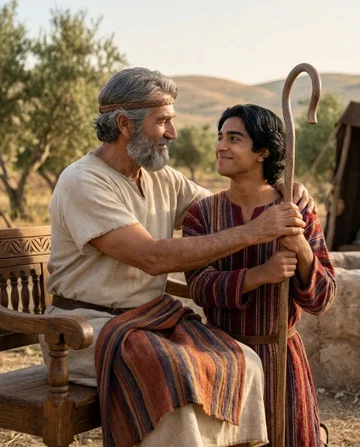
And when his brethren saw that their father loved him more than all his brethren, they hated him, and could not speak peaceably unto him.
Translations
And when his brothers saw that their father loved him more than all his brothers, they hated him, and could not speak peaceably to him.
King James Version, KJV Cambridge Paragraph Bible
And when his brethren saw that their father loved him more than all his brethren, they hated him, and could not speak peaceably unto him.
And when his brethren saw that their father loved him more than all his brethren, they hated him, and could not speak peaceably to him.
Revised Version, American Standard Version
And his brethren saw that their father loved him more than all his brethren; and they hated him, and could not speak peaceably unto him.
and his brethren see that their father hath loved him more than any of his brethren, and they hate him, and have not been able to speak [to] him peaceably.
And his brethren saw that their father loved him more than all his brethren, and they hated him, and could not greet him with friendliness.
So his brethren saw that their father loved him, more than any of his brethren, and they hated him, and could not bid him prosper,
Berean Standard Bible, Majority Standard Bible
When Joseph’s brothers saw that their father loved him more than any of them, they hated him and could not speak a kind word to him.
His brothers saw that their father loved him more than all his brothers, and they hated him, and couldn’t speak peaceably to him.
And because his brothers saw that Joseph was dearer to his father than all the others, they were full of hate for him, and would not say a kind word to him.
So when his brethren sawe that their father loued him more then all his brethren, then they hated him, and could not speake peaceably vnto him.
Douay-Rheims (Challoner revision)
And his brethren seeing that he was loved by his father, more than all his sons, hated him, and could not speak peaceably to him.
Pictures
Cross-references
- Genesis 4:8
And Cain talked with Abel his brother: and it came to pass, when they were in the field, that Cain rose up against Abel his brother, and slew him.
Cain’s hatred of Abel parallels the brothers’ hostility toward Joseph.
- Acts 7:9
And the patriarchs, moved with envy, sold Joseph into Egypt: but God was with him,
The brothers’ hatred of Joseph is described as envy leading to his sale.
- Genesis 37:18-20
And when they saw him afar off, even before he came near unto them, they conspired against him to slay him.
The brothers’ hatred leads them to plot Joseph’s death.
- Genesis 37:28
Then there passed by Midianites merchantmen; and they drew and lifted up Joseph out of the pit, and sold Joseph to the Ishmeelites for twenty pieces of silver: and they brought Joseph into Egypt.
The brothers’ hatred leads them to sell Joseph into Egypt.
- Genesis 42:6
And Joseph was the governor over the land, and he it was that sold to all the people of the land: and Joseph’s brethren came, and bowed down themselves before him with their faces to the earth.
bowing fulfills the dreams
- Genesis 37:11
And his brethren envied him; but his father observed the saying.
His second dream led his brothers to envy him.
- 1 John 3:12
Not as Cain, who was of that wicked one, and slew his brother. And wherefore slew he him? Because his own works were evil, and his brother’s righteous.
Both show evil hating what is good.
- Genesis 45:24
So he sent his brethren away, and they departed: and he said unto them, See that ye fall not out by the way.
Jacob later warns his brothers not to quarrel on their journey.
- Galatians 4:29
But as then he that was born after the flesh persecuted him that was born after the Spirit, even so it is now.
Joseph’s brothers’ hostility illustrates persecution of the one born after the Spirit.
Commentary
Each commentary is drawn from primary sources: the writings of Ellen G. White and Adventist pioneers and periodicals. Each commentary is separate. Its own words are not a quotation; follow the references to read the source passages.
Ellen G. White
10 sources
Jacob loved Joseph more than all his other sons because Joseph was pure and excellent in character, cheerful and happy and full of love for his father, so that his father's heart was bound up in him, while his other sons pursued a wicked course that grieved their father, brought him shame, and made his life bitter.ST Dec 18, 1879ST Dec 18, 1879 Jacob expressed this preference openly and unwisely, manifesting a partiality that was wrong.PP 209.1ST Dec 18, 1879ST Dec 18, 1879PP 209.2–3PP 213.1–2 The brothers believed Joseph had taken their father's affection from them and felt unfairly deprived of his confidence and love.ST Dec 18, 1879
Their awareness that their father loved Joseph more stirred envy that grew and deepened into hatred, destroying their ability to speak peaceably to him.PP 209.11SP 126.2SG3 138.1PP 209.2–3PP 239.2–4 That hatred was further angered by Joseph's faithful obedience and by his remonstrating with them over their wicked course and daring to reprove those much older than himself, for which they accused him of spying on their actions.1SP 126.2SG3 138.1ST Dec 18, 1879 When his entreaties only excited wrath he laid their evil plans and purposes before his father, giving Jacob knowledge he otherwise would not have had, and their resentment grew at this exposure of their wrongdoing.1SP 126.2SG3 138.1ST Dec 18, 1879PP 209.2–3
They hated him because he was innocent, righteous, and beloved of his father while they were wicked and a source of grief to him.ST Dec 18, 1879ST Dec 18, 1879ST Dec 18, 1879 They recognized and even admired his purity and goodness but would not leave their wicked course to become virtuous and noble like him, overlooking that their own conduct caused their father's estrangement and brought shame upon him.ST Dec 18, 1879ST Dec 18, 1879 Their hatred called out a revengeful disposition and was concealed under apparent repentance while they hid their bitterness.ST Dec 18, 1879PP 209.2–3 It grew into murderous hatred and was the same spirit that moved Cain against his brother.1SP 126.2SG3 138.1ST Dec 18, 1879
Jacob's partiality angered the brothers and helped provoke their cruel treatment of Joseph, while it also encouraged faults in Joseph, including self-sufficiency and being exacting.PP 213.1–2 Their envy led them to sell Joseph in hope of keeping him from becoming greater than they were, but God overruled their plan so that Joseph's dreams would be fulfilled.PP 239.2–4 For God had chosen Joseph while young to do a special work for His people.Ms 38, 1895, par. 38–40
Sources
Pioneers and periodicals
29 sources
Jacob's greater love for Joseph was open and visible, and seeing it his other sons hated him and could not speak kindly to him.ST Mar 26, 1894ST Jun 11, 1894ST Mar 26, 1894RH Nov 18, 1915 He favored Joseph as the son of his beloved Rachel and child of his old age, marking him out by the special coat, while Joseph's pure and obedient character made him more worthy of love than his brothers whose wicked course grieved their father.ST Dec 18, 1879ST Jan 3, 1911ST Apr 20, 1888ST Feb 18, 1913ST Oct 2, 1901 Their hatred grew not from any wrong in Joseph but from envy and jealousy in their own hearts, the same spirit that moved Cain against Abel, and it went downward to plot murder, sale into Egypt, and long sorrow for their father.ST Dec 18, 1879ST Oct 27, 1898ST Jan 3, 1911RH Jun 8, 1916ST Apr 20, 1888 Yet their wrath did not defeat God's purpose, for He overruled the selling and imprisoning to lead Joseph to the place prepared for him to preserve life.ST Jan 16, 1912ST Jan 21, 1913RH Jan 19, 1860 In this Joseph foreshadows Christ, the beloved Son hated and rejected by His own brethren and sold to enemies not for Himself but to deliver others.ST Oct 27, 1898ST Apr 20, 1888 The account therefore warns against envy that brings discord and urges parents to love by principle rather than preference lest partiality awaken jealousy and estrangement.ST Dec 18, 1879ST Jun 11, 1894ST Oct 27, 1898ST Aug 1, 1916
Father's Favoritism and Setting
Jacob's greater love for Joseph was open and visible to his other sons, and seeing it they hated him, treated him badly, and could not speak to him peaceably or kindly.ST Mar 26, 1894ST Mar 26, 1894RH Nov 18, 1915 He favored Joseph as the son of his favorite wife Rachel, as his firstborn by the wife he loved most, and as the petted child of his old age, while giving too little affection to his other sons.ST Jan 3, 1911ST Oct 2, 1901 That favor was displayed conspicuously in the special coat he prepared for him, which made his preference visible and stirred envy and hatred.ST Feb 18, 1913ST Oct 2, 1901
The partiality exposes the evils of having more than one wife, with jealousies between the wives and between their families bearing sad fruit among the children.ST Jan 3, 1911ST From those marital mistakes came partiality, and from partiality came jealousy, envy, low moral standards, and crime.ST Jan 3, 1911ST
The open manifestation of preference was unwise, cruel, and imprudent, and partiality inevitably brings discord in family or school.ST Dec 18, 1879ST Oct 27, 1898 Favoritism can lead a favored child to suppose his superiority is recognized, while parental love should embrace all the children and be guided by principle rather than preference. Parents should therefore treat children impartially so as not to awaken jealousy, unhappiness, and estrangement among them.ST Aug 1, 1916
Jacob loved Joseph more because Joseph was more worthy of love, cheerful and happy with great love for his father, pure and excellent in character, having the fear of God before his eyes, one of the few Bible characters concerning whom no evil is recorded.ST Dec 18, 1879ST Dec 18, 1879ST Apr 20, 1888 His other sons pursued a wicked course that shamed their father, made his life bitter, and was a source of grief to him.ST Dec 18, 1879ST Dec 18, 1879ST Dec 18, 1879 They believed Joseph had taken their father's affection and confidence from them and felt unfairly deprived of his love, overlooking that their own conduct caused the difference, and though they admired his purity and goodness they would not leave their wicked course to become virtuous and noble like him.ST Dec 18, 1879ST Dec 18, 1879
Their resentment was sharpened by Joseph reporting their wrongdoing to his father, by the distinguishing coat, by his dreams seeming to promise authority and pre-eminence over them, and by their suspicion that Jacob meant to give him the birthright.ST Oct 2, 1901ST Oct 2, 1901ST When Joseph remonstrated with them and dared to reprove those much older than himself, they accused him of spying on their actions.ST Dec 18, 1879 When his entreaties only excited wrath he laid their evil plans and purposes before his father, giving Jacob knowledge he otherwise would not have had, and the dreams whose fulfilment later became part of his story in Egypt further connected their hatred to what followed.ST Dec 18, 1879ST
The account belongs to a Genesis story set in Egypt whose whole color agrees with Egypt at that time.ST Nov 20, 1884 Its background is illustrated by pictures and accounts of slaves with Hebrew features making bricks, by pictures, stories, and books showing the habits, land, and people of the Nile, and by the city of Pithom with its great windowless brick storehouses for grain in war or famine.ST Nov 20, 1884 Kings record no disasters, so monuments give no record of Bible miracles but only clues to history.ST Nov 20, 1884 The same history of Joseph in Genesis 37-50 is also told in the Koran in an expanded story form different from the simple Scripture narrative.RH Jan 11, 1912
Brothers' Envy and Outcome
The hatred of the brothers was the fruit of envy and jealousy at the father's greater love for Joseph.ST Mar 26, 1894ST Nov 18, 1880ST Oct 20, 1914 Marked preference provoked envy until they hated him and treated him badly.ST Jun 11, 1894ST Oct 2, 1901 Their hostility was so complete that they refused to speak kindly to him and could not speak peaceably to him.ST Jun 11, 1894ST Mar 26, 1894ST Nov 18, 1880ST Oct 20, 1914
That hatred was unjust and was not caused by any tale-bearing or wrongdoing on Joseph's part.ST Apr 20, 1888 It grew only out of their own wicked hearts, since a corrupt heart is the only soil in which envy can grow.ST Apr 20, 1888 Envy is malice, ill-will, spite, and discontent at another's excellence and good.ST Oct 27, 1898 Even when Joseph stood before them with beautiful countenance lighted by inspiration so that they could not withhold admiration, they hated his purity because it reproved their sins which they would not renounce.ST Oct 27, 1898
Their hatred was the same spirit that moved Cain to kill Abel, because their own works were evil while his were righteous.ST Dec 18, 1879ST Oct 27, 1898ST Apr 20, 1888 They admired his purity and goodness but would not leave their wicked course to become virtuous and noble like him.ST Dec 18, 1879 This proves the principle that he that is after the flesh persecutes him that is after the Spirit, that the wicked persecute the righteous.RH Jun 8, 1916 Good people are persecuted because they are good while the persecutors' own works are evil, and the hostility illustrates the unregenerate heart's hatred and jealousy toward people blessed by the Lord for sincere faithfulness.RH Jun 8, 1916ST Oct 20, 1914
Hatred was the second downward step after envy, leading onward to persecution, a scheme of murder, deceit, and fearful expectation of wrath to be visited upon them.ST Oct 27, 1898 It first moved them to attempt to slay him and then to sell him as a slave into Egypt.ST Jan 3, 1911ST Apr 20, 1888 That hatred bore bitter fruit in days, weeks, months and years of mourning and long years of sorrow for their father. It also made Joseph's home life painful and helps explain the loneliness and heartache he faced when sent to find them.ST Feb 18, 1913
Their wrath and jealousy did not prevent God from overruling human actions for good.ST Jan 16, 1912 Though the brothers' hatred set Joseph's life on a roundabout course through being sold, imprisoned, and then made ruler, God guided him right to what He had intended for him.RH Jan 19, 1860RH Nov 19, 1908 God led him by the hand even when tender and hated and living in a foreign land, and guarded him by angels.ST Nov 18, 1880RH Nov 24, 1874 He was preparing him to preserve the holy Seed and the lives of God's people.ST Jan 21, 1913RH Nov 19, 1908 Whatever God has intended a person for, that person may safely trust Him to bring them to it.RH Jan 19, 1860
Christ Type and Lessons
Joseph hated by his brothers is in some respects a type of Christ.ST Apr 20, 1888 As Joseph was hated by his brothers, so Christ came to His own and His own received Him not, and His brethren did not believe in Him.ST Apr 20, 1888 As Joseph was sold into slavery, so Christ was sold to His enemies, and both suffered not on their own account but that they might deliver others.ST Apr 20, 1888 Joseph is not on the same plane with Christ, yet his experience resembles Christ's.ST Apr 20, 1888 Joseph was the tender, most-beloved son of his father, through whom his father desired communication with his children, prefiguring Jesus as the only-begotten Son of God through whom God poured infinite love upon fallen men.ST Oct 27, 1898 The brothers sold Joseph for twenty pieces of silver as the Jews later sold Jesus for thirty pieces of silver, marking the beginning of Israel's history with envious hatred against the younger brother just as its end was marked by bitter hatred unto death against the Elder Brother.ST Oct 27, 1898 That envy is one before which none can stand, for it is malice, ill-will, spite, and discontent at another's excellence and good, so that even when Joseph stood before them with beautiful countenance lighted by inspiration they could not withhold admiration yet hated his purity because it reproved their sins they would not renounce, with the same spirit that moved Cain kindling in them.ST Oct 27, 1898
The verse illustrates the wickedness of envy and the discord it brings within a family, for open preference stirred envy and hatred until the brothers could not speak peaceably to him.ST Jun 11, 1894 That envy of brothers can bring trouble upon themselves even if it does not harm the one envied.
The harm of parental partiality is cruel and imprudent, and favoritism can lead a favored child to suppose superiority, so parental love should embrace all the children and be guided by principle rather than preference. Unequal treatment made the older brothers unhappy and estranged from Joseph, so parents should treat children impartially in order not to awaken jealousy among them.ST Aug 1, 1916
The verse belongs to Joseph's early life as a petted boy, followed by a life in which righteousness became part of his character, and their wrath and jealousy did not prevent God from overruling human actions for good.ST Jan 16, 1912 Jacob's special love made visible in the coat stirred envy and hatred until they were unable to speak peaceably, and their hostility made Joseph's home life painful and helps explain the loneliness and heartache he faced when sent to find them.ST Feb 18, 1913 The boy Joseph, envied and hated because his father loved him more so they could not speak peaceably to him, is presented as a child whom God used, whose envy by his brothers led to being sold into Egypt, becoming a prisoner then a ruler, and preserving the lives of God's people.RH Nov 19, 1908 He stands as a beloved example of God's dealings with His chosen people in earlier times, chosen in youth for a special work for His people.ST Apr 23, 1912 Children and youth who seek God early and take the God of Israel for their friend are guarded by angels in trouble, as shown in Joseph's youth when God guided and saved him.RH Nov 24, 1874 His story shows him truthful, obedient, noble, spirited, and willing to do right, and is recommended for families to read.RH Nov 19, 1908
Sources