Translations
American King James Version, King James Version, KJV Cambridge Paragraph Bible, Webster Bible
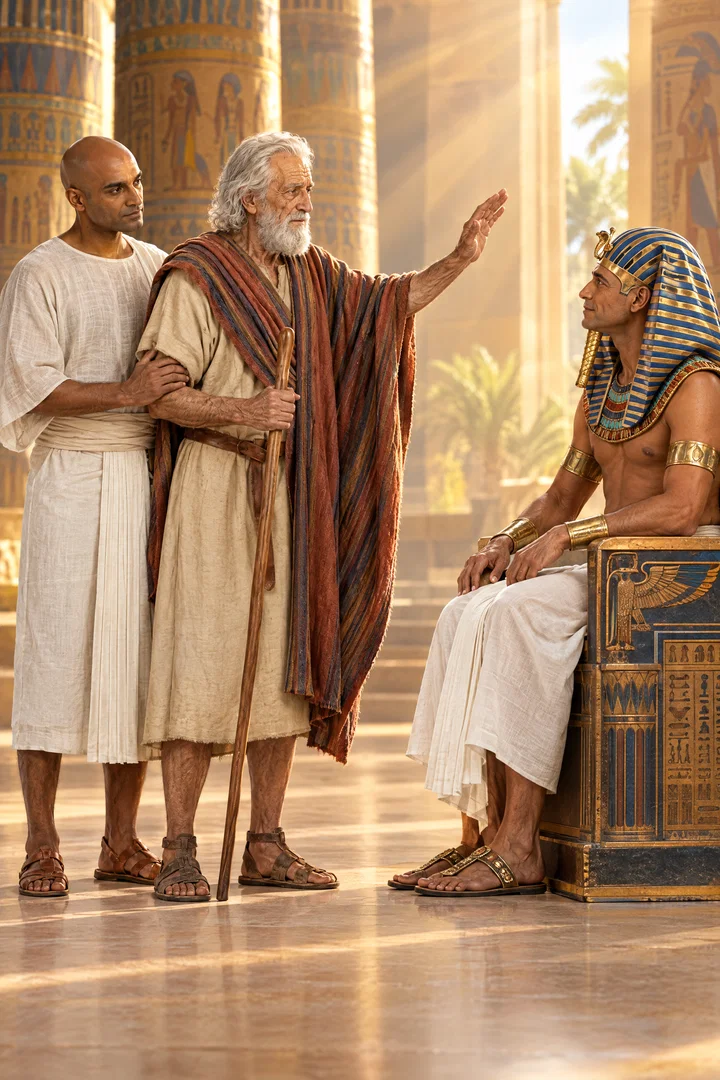
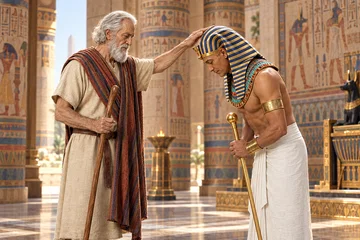
And Jacob blessed Pharaoh, and went out from before Pharaoh.
Revised Version, American Standard Version
And Jacob blessed Pharaoh, and went out from the presence of Pharaoh.
And Jacob blesseth Pharaoh, and goeth out from before Pharaoh.
And Jacob blessed Pharaoh, and went out from Pharaoh.
And Jacob blessed Pharaoh,—and came forth from the presence of Pharaoh.
Berean Standard Bible, Majority Standard Bible
Then Jacob blessed Pharaoh and departed from his presence.
Jacob blessed Pharaoh, and went out from the presence of Pharaoh.
And Jacob gave Pharaoh his blessing, and went out from before him.
And Iaakob tooke leaue of Pharaoh, and departed from the presence of Pharaoh.
Douay-Rheims (Challoner revision)
And blessing the king, he went out.
Pictures
Cross-references
- Hebrews 7:7
And without all contradiction the less is blessed of the better.
The greater blesses the lesser.
- Genesis 47:5-6
And Pharaoh spake unto Joseph, saying, Thy father and thy brethren are come unto thee:
Pharaoh grants the family’s settlement before Jacob is presented to him.
- 1 Kings 8:66
On the eighth day he sent the people away: and they blessed the king, and went unto their tents joyful and glad of heart for all the goodness that the LORD had done for David his servant, and for Israel his people.
Both describe blessing the king when departing.
- Genesis 49:33
And when Jacob had made an end of commanding his sons, he gathered up his feet into the bed, and yielded up the ghost, and was gathered unto his people.
dates Jacob's death seventeen years after entry
- Exodus 1:8-14
Now there arose up a new king over Egypt, which knew not Joseph.
Jacob blesses Pharaoh, contrasting with the later affliction of Israel in Egypt.
- Genesis 12:3
And I will bless them that bless thee, and curse him that curseth thee: and in thee shall all families of the earth be blessed.
Jacob blesses Pharaoh, reflecting the promise that blessing would come through Abraham’s family.
- Genesis 47:27
And Israel dwelt in the land of Egypt, in the country of Goshen; and they had possessions therein, and grew, and multiplied exceedingly.
shows possessions and growth without bondage
Commentary
Each commentary is drawn from primary sources: the writings of Ellen G. White and Adventist pioneers and periodicals. Each commentary is separate. Its own words are not a quotation; follow the references to read the source passages.
Ellen G. White
2 sources
Not long after their arrival in Egypt, Joseph brought his father to be presented to Pharaoh.ST Feb 5, 1880 Though a stranger in royal courts, Jacob was unawed by the pomp of royalty and the surrounding magnificence, because amid the sublime scenes of nature he had communed with a mightier Monarch.ST Feb 5, 1880PP 233.1–3 In conscious spiritual superiority he raised his hands and blessed Pharaoh.ST Feb 5, 1880PP 233.1–3
He was crippled and weakened after wrestling with the covenant Angel, yet he had gained the victory of conquering faith. The proud Pharaoh stooped to seek Jacob's blessing, which Jacob gave before departing from before him. The scene shows that surrender to God does not destroy the will but purifies it, and that spiritual strength and victory can come through weakness and suffering.
Sources
Pioneers and periodicals
9 sources
Genesis 47:10 belongs to the Book of Beginnings and to the closing story of Joseph and his brethren in Genesis 46 to 50, telling Israel's journey to Egypt and reception by Joseph and Pharaoh.RH Jan 20, 1916 It comes after Joseph tests his brothers and makes himself known to them, as part of the joy of Jacob and the settlement in Goshen.RH Jan 20, 1916 It records Israel's own meeting with Pharaoh, distinct from the meeting of Joseph's brethren with Pharaoh.ST Dec 1, 1898 Joseph brought his father to be presented to Pharaoh not long after their arrival in Egypt.ST Feb 5, 1880ST Dec 1, 1898
The entry of Jacob and his family into Egypt took place in 1706 B.C., two hundred and fifteen years after Abram left Haran in 1921 B.C., when Israel was not yet in bondage.RH May 14, 1901 Israel remained free from slavery through Jacob's death seventeen years later in 1689 B.C. and through Joseph's death in 1635 B.C., seventy-one years after the entry.RH May 14, 1901 Pharaoh welcomed Jacob and gave Israel a possession in the best of the land in Goshen, where Joseph nourished his father and brethren and all his household with bread through the famine years, called seven years of terrible famine.RH May 14, 1901RH May 14, 1901 While the Egyptians had to give money and cattle and land and themselves to Pharaoh and pay him a fifth of the increase and were left in slavery to Pharaoh, Israel dwelt in Goshen with possessions and grew and multiplied exceedingly without being compelled to sell or serve.RH May 14, 1901 This favored beginning with nourishment and possession stands in sharp contrast to the later hard bondage under a new king who knew not Joseph.RH May 14, 1901
The Hebrew word Bah-rach translated bless is also used in the sense of farewell when someone leaves or departs.RH Jan 23, 1913 Jacob's blessing of Pharaoh was a farewell spoken when he went out from before Pharaoh.RH Jan 23, 1913 Jacob the shepherd patriarch is superior to Pharaoh the Egyptian king, because Jacob blessed Pharaoh and without contradiction the less is blessed of the better.ST Dec 1, 1898 Jacob was unawed by the pomp of royalty and surrounding magnificence because amid the sublime scenes of nature he had communed with a mightier Monarch, and in conscious superiority he raised his hands and blessed Pharaoh.ST Feb 5, 1880 The verse means that the only true greatness is goodness, not kingly rank or power.ST Dec 1, 1898
The verse shows God's care for the preservation of the progenitors of the Seed. It is included in the history of Joseph, which shows that God may lead a person by a roundabout route while still guiding that person to the end He intends.RH Jan 19, 1860 The verse is part of the experiences of Joseph that are full of lessons on the surface as well as deeper ones and contain principles designed to guide dealing with the contingencies of life.ST Nov 29, 1905 Those underlying principles recognized in Bible characters provide a counterpart to human experience, with practical lessons to be as familiar as our own names for the good of the soul and for counseling others in similar difficulties, making the Bible the guidebook to be trusted with confidence to the very end.ST Nov 29, 1905
Sources