Genesis 48:14
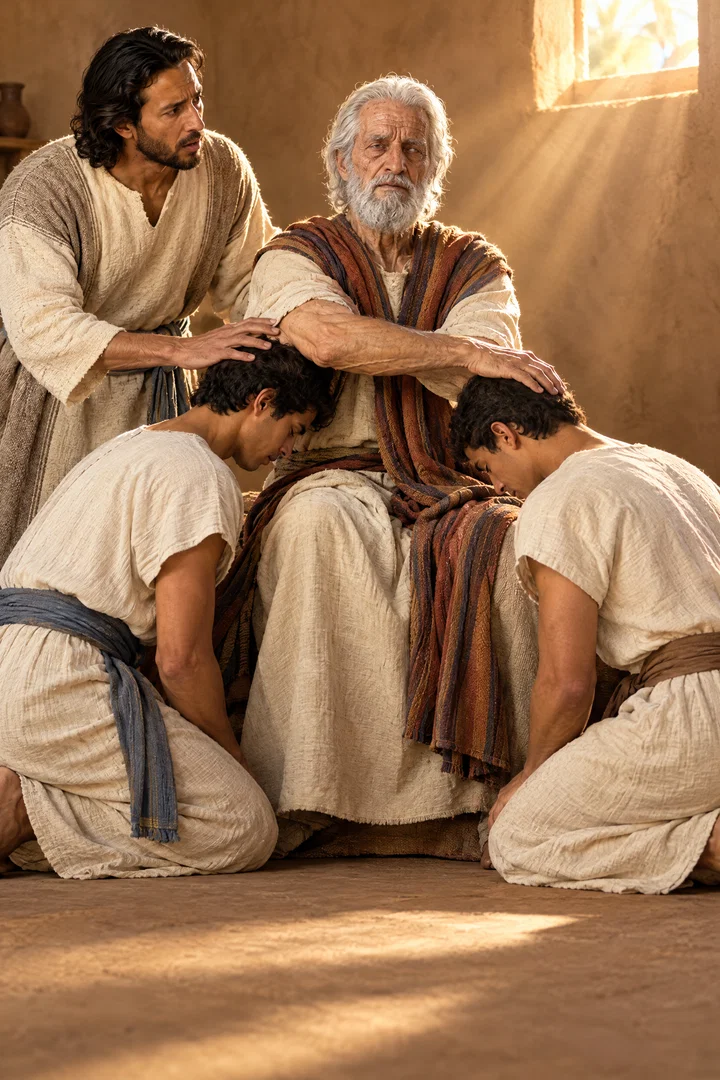
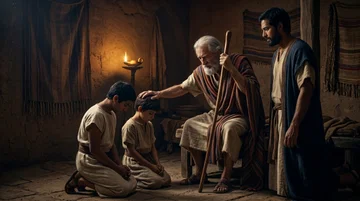
And Israel stretched out his right hand, and laid it upon Ephraim’s head, who was the younger, and his left hand upon Manasseh’s head, guiding his hands wittingly; for Manasseh was the firstborn.
Translations
And Israel stretched out his right hand, and laid it on Ephraim’s head, who was the younger, and his left hand on Manasseh’s head, guiding his hands wittingly; for Manasseh was the firstborn.
King James Version, KJV Cambridge Paragraph Bible, Revised Version
And Israel stretched out his right hand, and laid it upon Ephraim’s head, who was the younger, and his left hand upon Manasseh’s head, guiding his hands wittingly; for Manasseh was the firstborn.
And Israel stretched out his right hand, and laid it upon Ephraim's head, who was the younger, and his left hand upon Manasseh's head, guiding his hands by design; for Manasseh was the first-born.
And Israel stretched out his right hand, and laid it upon Ephraim’s head, who was the younger, and his left hand upon Manasseh’s head, guiding his hands wittingly; for Manasseh was the first-born.
And Israel putteth out his right hand, and placeth [it] upon the head of Ephraim, who [is] the younger, and his left hand upon the head of Manasseh; he hath guided his hands wisely, for Manasseh [is] the first-born.
But Israel stretched out his right hand, and laid [ it] on Ephraim's head — now he was the younger — and his left hand on Manasseh's head; guiding his hands intelligently, for Manasseh was the firstborn.
Then Israel put forth his right hand and laid it upon the head of Ephraim, though, he, was the younger, and his left hand upon the head of Manasseh,—crossing his hands, although, Manasseh, was the first-born.
Berean Standard Bible, Majority Standard Bible
But Israel stretched out his right hand and put it on the head of Ephraim, the younger; and crossing his hands, he put his left on Manasseh’s head, although Manasseh was the firstborn.
Israel stretched out his right hand, and laid it on Ephraim’s head, who was the younger, and his left hand on Manasseh’s head, guiding his hands knowingly, for Manasseh was the firstborn.
And Israel, stretching out his right hand, put it on the head of Ephraim, the younger, and his left hand on the head of Manasseh, crossing his hands on purpose, for Manasseh was the older.
But Israel stretched out his right hand, and layde it on Ephraims head, which was the yonger, and his left hande vpon Manassehs head (directing his handes of purpose) for Manasseh was the elder.
Douay-Rheims (Challoner revision)
But he stretching forth his right hand, put it upon the head of Ephraim the younger brother; and the left upon the head of Manasses who was the elder, changing his hands.
Pictures
Cross-references
- Exodus 4:22
And thou shalt say unto Pharaoh, Thus saith the LORD, Israel is my son, even my firstborn:
Both texts show firstborn status conferred by choice rather than birth order.
- Jeremiah 31:9
They shall come with weeping, and with supplications will I lead them: I will cause them to walk by the rivers of waters in a straight way, wherein they shall not stumble: for I am a father to Israel, and Ephraim is my firstborn.
Ephraim is called firstborn despite being younger than Manasseh.
- 1 Chronicles 5:1
Now the sons of Reuben the firstborn of Israel, (for he was the firstborn; but, forasmuch as he defiled his father’s bed, his birthright was given unto the sons of Joseph the son of Israel: and the genealogy is not to be reckoned after the birthright.
Joseph received the birthright despite Manasseh being the firstborn and Ephraim the younger.
- Acts 13:3
And when they had fasted and prayed, and laid their hands on them, they sent them away.
Both describe laying on of hands to bless and set apart.
- Genesis 48:20
And he blessed them that day, saying, In thee shall Israel bless, saying, God make thee as Ephraim and as Manasseh: and he set Ephraim before Manasseh.
Confirms Ephraim was set before Manasseh.
- Genesis 27:19
And Jacob said unto his father, I am Esau thy firstborn; I have done according as thou badest me: arise, I pray thee, sit and eat of my venison, that thy soul may bless me.
Both texts show a younger son receiving the blessing over the firstborn.
- Mark 10:16
And he took them up in his arms, put his hands upon them, and blessed them.
Jesus blesses children by laying his hands on them.
- Psalms 89:27
Also I will make him my firstborn, higher than the kings of the earth.
Christ is made Firstborn in rank, though not earliest born.
- Leviticus 1:4
And he shall put his hand upon the head of the burnt offering; and it shall be accepted for him to make atonement for him.
Both describe placing a hand upon the head.
Commentary
Each commentary is drawn from primary sources: the writings of Ellen G. White and Adventist pioneers and periodicals. Each commentary is separate. Its own words are not a quotation; follow the references to read the source passages.
Ellen G. White
7 sources
This crossing belongs to the history of Joseph and his brothers told in Genesis 42-50, opening after the seven years of dearth began just as Joseph had predicted, when dearth lay upon all lands yet bread remained in Egypt.PP 224.3–225.1 Famine reached Canaan where Jacob lived, so ten of Jacob's sons journeyed to Egypt to buy grain and bowed with their faces to the earth before Joseph the ruler, whom they did not recognize because his Hebrew name had been changed and he no longer looked like the youth they had sold, though he knew them.PP 224.3–225.1 Laying hands reverently upon the head was the Jewish custom by which a father blessed his children.8RED 6.3–7.1RH May 11, 1911GW 442.1–2SLP 44.1ST Jun 12, 1879 Israel's action here is an example of that practice.3SP 349.1–2RH May 11, 1911
He placed his hands upon their heads deliberately.3SP 349.1–2 The form was significant as an acknowledged way of asking God to bestow His blessing upon those devoted to the specific work to which they had been appointed and which God had chosen for them.GW 442.1–2SLP 44.1ST Jun 12, 1879 It carries the same meaning as when the ministers at Antioch laid their hands upon Paul and Barnabas, also called Saul, for the specific work God had chosen them to do.SLP 44.1ST Jun 12, 1879
The gesture expressed blessing and conveyed no power by the act itself.3SP 349.1–2 Like the hand of one with priestly authority laid upon the head of an animal devoted to sacrifice, the act added no new grace or qualification but set the seal of blessing and designation upon a commission already given by God.ST Jun 12, 1879
Sources
Pioneers and periodicals
16 sources
Israel knowingly crossed his hands to place his right hand on the younger Ephraim and his left on the firstborn Manasseh, and his failing sight did not mislead him.ST Dec 1, 1898ST Nov 10, 1914ST Aug 21, 1884 By that laying on of hands he blessed and adopted Joseph's sons as his own, setting God's seal of designation upon the work God had already chosen for them.RH May 11, 1911ST Jun 12, 1879RH Oct 20, 1874ST Oct 13, 1881ST Apr 23, 1894 The greater blessing went to the younger because birth order does not decide the birthright, for firstborn often means pre-eminence in standing rather than priority in time.ST Jan 10, 1911ST Nov 15, 1910ST Jul 18, 1900ST Apr 9, 1902 So Ephraim was counted firstborn by God's appointment, which shows how Jesus Christ is the First-born from the dead and the first-fruits by virtue of His work, though others rose before Him.ST Nov 15, 1910ST Apr 9, 1902ST Oct 29, 1902 The crossing of Jacob's hands displays God's providence guiding lives by His purpose rather than by human expectation, even through winding paths.RH Jan 19, 1860RH Oct 3, 1907
Setting and Deliberate Action
The verse stands in the closing chapters of Genesis, the Book of Beginnings, in Jacob's prophetic blessing upon Joseph's sons. It belongs to the rest of the story of Joseph and his brothers, full of surface and deeper lessons, and shows God's care for the preservation of the forefathers of the promised Seed. It was given after Jacob went down into Egypt, as part of his adoption of Joseph's sons and his blessing of his sons with prophecy concerning them before his death, and manifests God's care for the Seed.
Jacob guided his hands wittingly and deliberately crossed them, laying his right hand upon Ephraim's head, who was the younger, and his left hand upon Manasseh's head, who was the firstborn.ST Dec 1, 1898ST Nov 10, 1914ST Aug 21, 1884 He knew which son was older and which hand he was placing on each, and knowingly placed Ephraim first, so the blessing was not given according to birth order.ST Dec 1, 1898ST Aug 21, 1884 His dim eyesight did not cause a mistake, for he acted to give Ephraim preeminence and to deliver the message entrusted to him by God.ST Nov 10, 1914
The laying on of hands was the reverent practice of a Jewish father when blessing his children, laying his hands reverently upon their heads.RH May 11, 1911ST Jun 12, 1879 The form was significant as asking God to bestow His blessing upon those devoted to the specific work God had chosen them to do, as when the ministers at Antioch laid their hands upon Barnabas and Saul.ST Jun 12, 1879 Like the hand of one with priestly authority laid upon the head of an animal devoted to sacrifice, the act added no new grace or qualification but set the seal of blessing and designation upon a commission already given by God.ST Jun 12, 1879 Hands are emblems of human actions, and the hand in general is the symbol of power and strength, with the right hand particularly so, as the continual emblem of favor, protection, and power, and by laying his right hand on Ephraim's head Jacob preferred Ephraim before Manasseh.RH Oct 20, 1874
In blessing Joseph's sons Jacob adopted both sons as his own and gave Ephraim preference over Manasseh.ST Apr 23, 1894 The act established Ephraim and Manasseh as two separate tribes with fixed descent.ST Oct 13, 1881 A descendant of Ephraim remains an Ephraimite and cannot become a Manassehite, nor can a Manassehite become an Ephraimite.ST Oct 13, 1881 Moving from England to America and crossing the Atlantic does not turn a child of Ephraim into a child of Manasseh, nor the reverse.ST Oct 13, 1881
Birthright Beyond Birth Order
Jacob laid his right hand upon Ephraim who was the younger and his left hand upon Manasseh who was the firstborn, so the blessing was not given according to birth order.ST Jan 10, 1911ST Nov 15, 1910ST Jul 18, 1900 Birth order did not guarantee favor or the birthright, for Manasseh lost it while Ephraim received the greater blessing and preference.ST Jan 10, 1911 Ephraim though younger was counted as firstborn, and Israel and Ephraim were counted the firstborn.ST Jul 18, 1900ST Apr 9, 1902 First-born and first-begotten do not always mean priority of time, and first-born and first-fruits do not necessarily mean priority of time or first in date, but frequently denote pre-eminence in character or status rather than first in age or time.ST Jul 18, 1900ST Apr 9, 1902 God made Ephraim the firstborn in pre-eminence by guiding Israel to lay his right hand on Ephraim's head though Ephraim was the younger and Manasseh was Joseph's firstborn by birth.ST Jul 18, 1900ST Apr 9, 1902
The birthright belongs by God's appointment and pre-eminence and not by order of birth, with the younger chosen over the elder.ST Nov 15, 1910ST Oct 29, 1902 The birthright and the title firstborn do not depend on order of birth but on God's appointment, so that Ephraim received the birthright though Manasseh was the firstborn by age and the elder.ST Nov 15, 1910ST Oct 29, 1902
This shows how Jesus is the First-born of the dead and the first-fruits, holding first place by pre-eminence by virtue of His offering and work and life by which all others are brought from the dead and raised from the dead.ST Nov 15, 1910ST Apr 9, 1902ST Oct 29, 1902 He holds that place even though others were raised before Him in time.ST Nov 15, 1910ST Apr 9, 1902ST Oct 29, 1902
Providence and Present Guidance
Genesis 48:14 belongs to Jacob's prophetic blessing upon Joseph's sons in the closing chapters of Genesis, the Book of Beginnings, as part of the rest of the story of Joseph and his brothers. That story is full of surface lessons and deeper lessons. The blessing shows God's care for the preservation of the forefathers of the promised Seed. It illustrates God's providence, for Jacob deliberately crossed his arms to place his right hand on the younger Ephraim and his left on the firstborn Manasseh, showing that God's purposes can guide events despite ordinary human expectations and plans.RH Oct 3, 1907
As part of Joseph's history, it shows that God can lead a person by a winding route while still guiding him to the purpose God intends.RH Jan 19, 1860 As part of the life of Joseph, it holds principles designed to guide the various contingencies of life.ST Nov 29, 1905 It records human experience with practical surface and deeper lessons, to be known as familiarly as one's own name for personal good and for counseling others in similar difficulties.ST Nov 29, 1905 It gives an example whose underlying principles help and guide those called to pass through similar experiences, showing the Bible as a guidebook to be trusted to the very end.ST Nov 29, 1905
Sources