Translations
American King James Version, Webster Bible
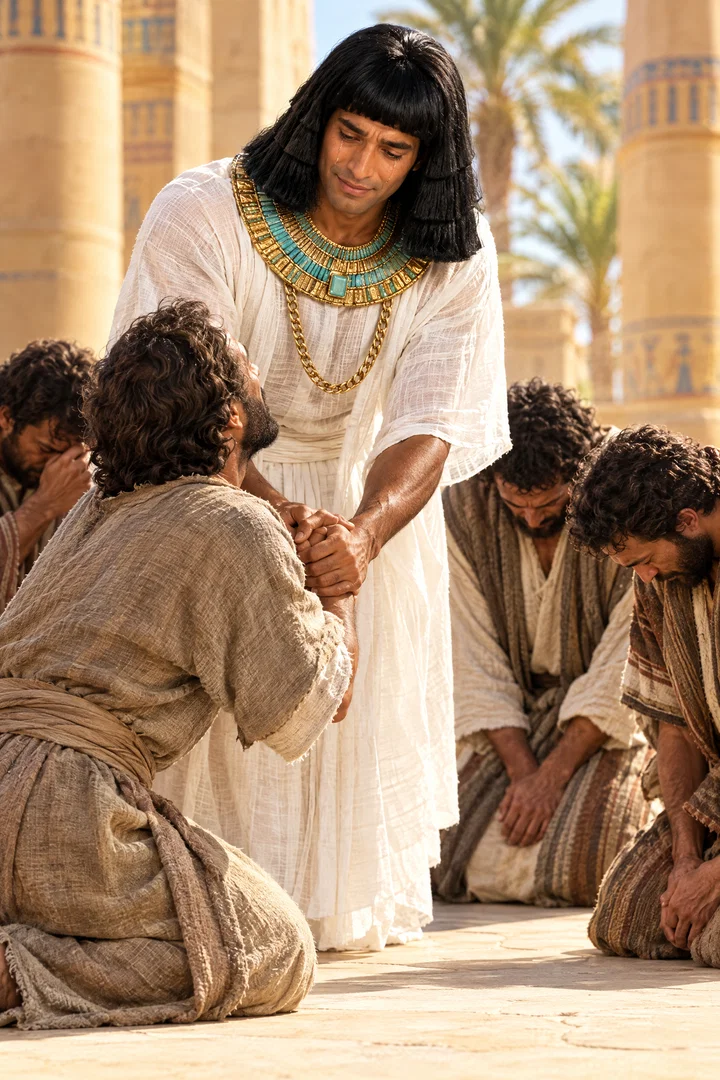
And Joseph said to them, Fear not: for am I in the place of God?
King James Version, KJV Cambridge Paragraph Bible, Revised Version, American Standard Version
And Joseph said unto them, Fear not: for am I in the place of God?
And Joseph saith unto them, 'Fear not, for [am] I in the place of God?
And Joseph said to them, Fear not: am I then in the place of God?
And Joseph said unto them—Do not fear,—although in place of God, I am.
Berean Standard Bible, Majority Standard Bible
But Joseph replied, “Do not be afraid. Am I in the place of God?
Joseph said to them, “Don’t be afraid, for am I in the place of God?
And Joseph said, Have no fear: am I in the place of God?
To whome Ioseph sayde, Feare not: for am not I vnder God?
Douay-Rheims (Challoner revision)
And he answered them: Fear not: can we resist the will of God?
Pictures
Cross-references
- Luke 23:34
Then said Jesus, Father, forgive them; for they know not what they do. And they parted his raiment, and cast lots.
Both forgive those who wronged them.
- Romans 8:28
And we know that all things work together for good to them that love God, to them who are the called according to his purpose.
God overrules harmful acts to bring good for those who love him.
- 1 Peter 2:23
Who, when he was reviled, reviled not again; when he suffered, he threatened not; but committed himself to him that judgeth righteously:
Joseph and Christ entrusted their cause to the one who judges righteously.
- Genesis 45:5-8
Now therefore be not grieved, nor angry with yourselves, that ye sold me hither: for God did send me before you to preserve life.
Joseph reassures his brothers and recognizes God’s hand in what happened to him.
- Romans 12:19
Dearly beloved, avenge not yourselves, but rather give place unto wrath: for it is written, Vengeance is mine; I will repay, saith the Lord.
Joseph leaves repayment to the Lord rather than taking revenge.
- Acts 7:60
And he kneeled down, and cried with a loud voice, Lord, lay not this sin to their charge. And when he had said this, he fell asleep.
Both Joseph and Stephen refuse to hold wrongdoing against their persecutors.
- 1 Samuel 24:10-12
Behold, this day thine eyes have seen how that the LORD had delivered thee to day into mine hand in the cave: and some bade me kill thee: but mine eye spared thee; and I said, I will not put forth mine hand against my lord; for he is the LORD’s anointed.
David spares Saul and leaves judgment to the Lord.
- 2 Samuel 16:10-12
And the king said, What have I to do with you, ye sons of Zeruiah? so let him curse, because the LORD hath said unto him, Curse David. Who shall then say, Wherefore hast thou done so?
David bears Shimei’s curses without retaliation, leaving judgment to the LORD.
Commentary
Each commentary is drawn from primary sources: the writings of Ellen G. White and Adventist pioneers and periodicals. Each commentary is separate. Its own words are not a quotation; follow the references to read the source passages.
Ellen G. White
7 sources
After Jacob died, the brothers were filled with gloom and distress because they thought Joseph had concealed resentment out of respect for their father and would now hate them and repay all the evil they did to him, including selling him.SG3 173.1–174.1ST Feb 5, 1880 They sent a messenger pleading for forgiveness as servants of the God of their father, and then fell down before Joseph offering to be his servants.SG3 173.1–174.1ST Feb 5, 1880 Joseph wept at their distrust because he loved them deeply and could not bear to be thought vengeful or to harbor a spirit of revenge.SG3 173.1–174.1ST Feb 5, 1880 By asking if he is in the place of God, he refuses to take God's place as judge to punish or avenge them, leaving judging and punishing to God.1SP 156.2–157.1SG3 173.1–174.1ST Feb 5, 1880PP 239.1SG3 174.2–176.1
After they acknowledged and confessed their sin, he freely forgave them, held no resentful feeling for their former cruelty, and treated them with love, kindness and benevolence rather than as deserving punishment.1SP 156.2–157.1PP 239.1SG3 174.2–176.11SP 159.1ST Feb 5, 1880 He told them not to fear, comforted and reassured them, spoke kindly to them, and promised to nourish and care for them and their little ones and children.1SP 156.2–157.1SG3 173.1–174.1ST Feb 5, 1880PP 239.1SG3 174.2–176.1 Although they thought and intended evil against him, God meant it for good to save many people alive, so they need not fear.ST Feb 5, 1880PP 239.1 His forgiveness illustrates Christ, who came to his own and was rejected, hated, falsely accused and put to a shameful death for his righteous life, yet meekly forgave his murderers while suffering, rose to receive all power and authority, now receives into favor and freely pardons all who come repentant confessing their sins, and if they remain true will exalt them to his throne as heirs of the inheritance purchased with his blood.SG3 174.2–176.1
Sources
Pioneers and periodicals
22 sources
After Jacob died Joseph's brothers feared he had only held back revenge for their father's sake and would now pay them back for selling him, so they begged forgiveness and bowed before him offering to be his servants.ST Apr 23, 1894ST Oct 30, 1901ST Jan 28, 1913 In answering them he refused to take God's place as judge to condemn, punish or take revenge for their wrong against him, recognizing that God had overruled what happened for His own purposes.ST Apr 23, 1894ST Dec 25, 1901ST Apr 23, 1894 Though they meant evil against him, God meant it for good to preserve many people alive and protect the promised Seed.ST Feb 5, 1880ST Jan 10, 1911 Though he had the power to repay their cruelty, he answered his guilty, trembling brothers with tears, pity, benevolence and love rather than retaliation, entrusting his cause to the righteous Judge in the Spirit of Christ.ST Feb 5, 1880ST Feb 5, 1880ST Nov 29, 1905ST Apr 23, 1894RH Dec 5, 1865 That forgiveness freed them from their past cruel offenses, reflecting the forgiveness God grants and the merciful, harmless spirit all who belong to Christ will show to one another.ST Sep 5, 1895ST Dec 12, 1892
Context and Meaning
After Jacob died his sons feared Joseph had only held back revenge for their father's sake and would now pay them back for selling him, so they sent word begging forgiveness and then bowed before him offering to be his servants, and his answer was fear not, for he was not in God's place.ST Feb 5, 1880ST Apr 23, 1894ST Oct 30, 1901ST Jan 28, 1913ST Aug 15, 1916 Their fear and submission came after their father's death, and his reassurance that they need not fear his retaliation led into his explanation that God had turned their evil intent toward good.ST Apr 23, 1894ST Oct 30, 1901ST Jan 28, 1913ST Jan 23, 1912 He wept at their distrust because he loved them and could not bear to be thought vengeful.ST Feb 5, 1880ST Aug 15, 1916 With tears he comforted and reassured them, promising to care for them and their little ones.ST Feb 5, 1880ST Aug 15, 1916
By saying he was not in the place of God he refused to take God's place as judge to condemn, punish, exact revenge, or requite his brothers for their wrongdoing.ST Dec 25, 1901ST Oct 30, 1901ST Nov 29, 1905 Judgment belongs to God and not to him, and his calming of their fear of revenge reflected kindness toward his erring brothers even though he had power to repay their earlier cruelty.ST Dec 25, 1901ST Nov 29, 1905RH Oct 1, 1901 He recognized that God had overruled what had happened, so it was not his place to condemn the people God had used in carrying out His purposes.ST Apr 23, 1894ST Apr 23, 1894 The reassurance belongs together with his explanation that though they meant evil against him, God meant it for good, preserving many people alive and protecting the promised Seed.ST Feb 5, 1880ST Jan 10, 1911
In the Septuagint the saying is rendered as I am God's, meaning he belongs to God and acknowledges His ownership, assuring his brothers that he will do them no injustice.ST Sep 5, 1895 The verse belongs to the account of Joseph's last days, and the disposition he showed in youth grew stronger throughout his life.ST Jun 11, 1894
Teaching and Application
Joseph met his guilty brothers with pity, benevolence, and love rather than retaliation or revenge, and though he had power to repay their earlier cruelty he refused to punish them or claim God's place as judge.ST Feb 5, 1880ST Nov 29, 1905RH Dec 5, 1865 He forgave them without resentment after they confessed their sin, and his kindness subdued them and removed their fear as they trembled before him.ST Feb 5, 1880ST Nov 29, 1905RH Dec 5, 1865 That forgiveness of his brothers is greater than his work in filling the storehouses.RH Jun 30, 1903
His response reflects the Spirit of Christ, for like Christ he entrusted his cause to the righteous Judge instead of judging the people God had used in carrying out His purposes.ST Apr 23, 1894 He was confident that God works all things together for good for those who love Him.ST Apr 23, 1894 His forgiveness without taking God's place as judge freed them from their past cruel treatment and offenses against him, reflecting the forgiveness God grants and the forgiving spirit Christians are to show.ST Dec 12, 1892 The same assurance belongs to those who belong to Christ and have His Spirit dwelling in them, for they will do one another no harm and no injustice because God directs His servants to acts of mercy and love.ST Sep 5, 1895
The confession in Genesis 50:16-20, in which the sons in later life acknowledged the wrong of selling Joseph and bringing terrible grief upon Jacob their father, proves they counted it sin against their father and knew the command to honor father and mother, so the fifth commandment was known and binding long before Sinai.ST Jun 6, 1906 His history also shows that God may lead a person by a roundabout path while guiding him to the purpose He intends.RH Jan 19, 1860 Since man is not in the place of God, when death takes a fellow worker God knows best and the right response is to bow in submission to His will.RH Sep 3, 1903
Sources