Hosea 3:2
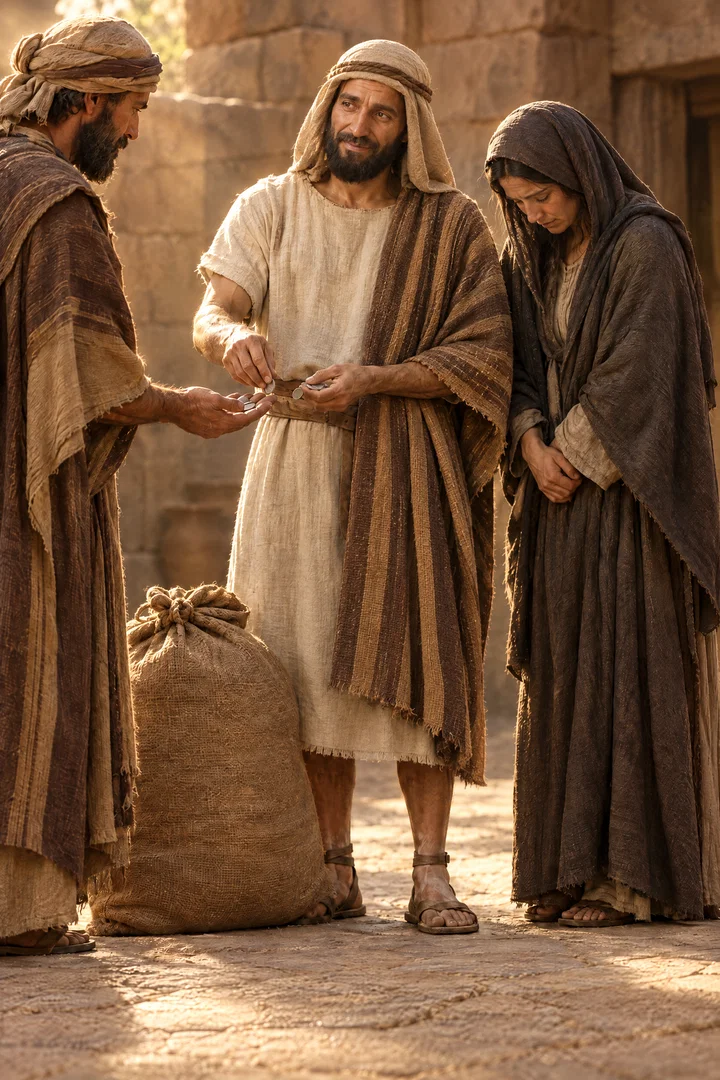
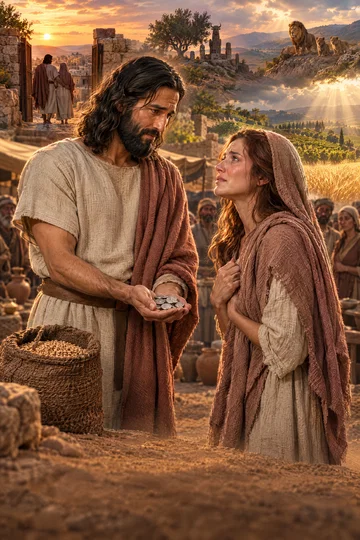
So I bought her to me for fifteen pieces of silver, and for an homer of barley, and an half homer of barley:
Translations
American King James Version, King James Version
So I bought her to me for fifteen pieces of silver, and for an homer of barley, and an half homer of barley:
KJV Cambridge Paragraph Bible, Webster Bible
So I bought her to me for fifteen pieces of silver, and for a homer of barley, and a half homer of barley:
So I bought her to me for fifteen pieces of silver, and an homer of barley, and an half homer of barley:
So I bought her to me for fifteen pieces of silver, and a homer of barley, and a half-homer of barley;
And I buy her to me for fifteen silverlings, and a homer and a letech of barley;
So I bought her to me for fifteen silver [pieces], and for a homer of barley, and a half-homer of barley.
So I secured her to me, for fifteen pieces of silver,—and a homer of barley, and a half-homer of barley;
Berean Standard Bible, Majority Standard Bible
So I bought her for fifteen shekels of silver and a homer and a lethech of barley.
So I bought her for myself for fifteen pieces of silver and a homer and a half of barley.
So I got her for myself for fifteen shekels of silver and a homer and a half of barley;
So I bought her to me for fifteene pieces of siluer, and for an homer of barlie and an halfe homer of barlie.
Douay-Rheims (Challoner revision)
And I bought her to me for fifteen pieces of silver, and for a core of barley, and for half a core of barley.
Pictures
Cross-references
- Ruth 4:10
Moreover Ruth the Moabitess, the wife of Mahlon, have I purchased to be my wife, to raise up the name of the dead upon his inheritance, that the name of the dead be not cut off from among his brethren, and from the gate of his place: ye are witnesses this day.
Both describe a wife purchased with money.
- Genesis 29:18-27
And Jacob loved Rachel; and said, I will serve thee seven years for Rachel thy younger daughter.
Jacob serves and gives value to obtain a wife.
- Genesis 34:12
Ask me never so much dowry and gift, and I will give according as ye shall say unto me: but give me the damsel to wife.
Both describe payment offered to obtain a woman as a wife.
Commentary
Each commentary is drawn from primary sources: the writings of Ellen G. White and Adventist pioneers and periodicals. Each commentary is separate. Its own words are not a quotation; follow the references to read the source passages.
Pioneers and periodicals
6 sources
Hosea stands first among the minor prophets, and his name means salvation.ST Oct 28, 1908ST Dec 1, 1909 He was the last of the great prophets of the northern kingdom of Israel, writing about 750 B.C., about two hundred years before Daniel.ST Oct 28, 1908ST Dec 1, 1909 He was contemporary with Isaiah and prophesied during the reigns of Uzziah, Jotham, Ahaz, and Hezekiah, kings of Judah, and of Jeroboam II in Israel.ST Oct 28, 1908 The verse stands in Hosea 1-3, within Hosea 1-7, and its interest grows when the prophets who lived at the same time and the condition in Israel during the period of the prophecy are known.ST Dec 1, 1914ST Oct 28, 1908 It reflects the moral condition of the Israelites, with people, priests, and princes all guilty of gross iniquity.ST Oct 28, 1908
In the verse Hosea buys back his wife, paying part of the price in silver and the balance in barley, with silver and barley together forming the price.RH Mar 17, 1863ST Sep 2, 1913 The transaction shows that it was a common thing to purchase wives and that wives were bought with money.RH Mar 17, 1863 Since a wife bought with money was not a chattel slave, buying with money does not constitute or prove chattel slavery, so the fact that servants were bought with money does not prove that they were slaves.RH Mar 17, 1863 Hosea's painful personal history symbolizes Jehovah's separation from His people.ST Sep 2, 1913
The prophecy predicts the coming captivity and certain desolation of the nation with great definiteness and warns against wicked alliances.ST Oct 28, 1908ST Dec 1, 1909 Beyond apostasy and desolation, the prophecy looks forward to the time when the Lord shall restore His people, and it is full of hopeful remonstrance, tender expostulation, and earnest entreaty, with fine passages, moral precepts of great worth, and prophecy of the future.ST Oct 28, 1908ST Dec 1, 1909 The prophecy stands for the prediction that the children of Israel would be without a king during the days of their dispersion.RH May 6, 1852
Sources