Ruth 4:10
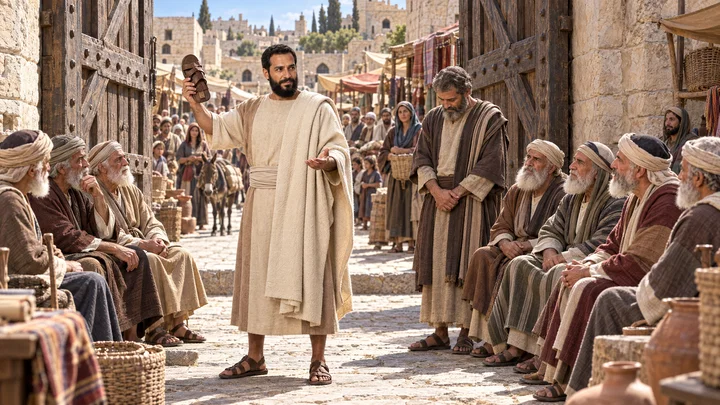
Moreover Ruth the Moabitess, the wife of Mahlon, have I purchased to be my wife, to raise up the name of the dead upon his inheritance, that the name of the dead be not cut off from among his brethren, and from the gate of his place: ye are witnesses this day.
Translations
Moreover Ruth the Moabitess, the wife of Mahlon, have I purchased to be my wife, to raise up the name of the dead on his inheritance, that the name of the dead be not cut off from among his brothers, and from the gate of his place: you are witnesses this day.
King James Version, KJV Cambridge Paragraph Bible, Revised Version, American Standard Version
Moreover Ruth the Moabitess, the wife of Mahlon, have I purchased to be my wife, to raise up the name of the dead upon his inheritance, that the name of the dead be not cut off from among his brethren, and from the gate of his place: ye are witnesses this day.
Moreover, Ruth the Moabitess, the wife of Mahlon, have I purchased to be my wife, to raise up the name of the dead upon his inheritance, that the name of the dead be not cut off from among his brethren, and from the gate of his place: ye are witnesses this day.
and also Ruth the Moabitess, wife of Mahlon, I have bought to myself for a wife, to raise up the name of the dead over his inheritance; and the name of the dead is not cut off from among his brethren, and from the gate of his place; witnesses ye [are] to-day.'
moreover Ruth the Moabitess, the wife of Mahlon, have I purchased to be my wife, to raise up the name of the dead upon his inheritance, that the name of the dead be not cut off from among his brethren and from the gate of his place: ye are witnesses this day.
Moreover, Ruth the Moabitess, wife of Mahlon, have I taken over, to be my wife, to raise up the name of the dead upon his inheritance, that the name of the dead be not cut off—from among his brethren, and from the gate of his dwelling- place,—Witnesses, are ye to-day!
Berean Standard Bible, Majority Standard Bible
Moreover, I have acquired Ruth the Moabitess, Mahlon’s widow, as my wife, to raise up the name of the deceased through his inheritance, so that his name will not disappear from among his brothers or from the gate of his home. You are witnesses today.”
Moreover, Ruth the Moabitess, the wife of Mahlon, I have purchased to be my wife, to raise up the name of the dead on his inheritance, that the name of the dead may not be cut off from among his brothers and from the gate of his place. You are witnesses today.”
And, further, I have taken Ruth, the Moabitess, who was the wife of Mahlon, to be my wife, to keep the name of the dead man living in his heritage, so that his name may not be cut off from among his countrymen, and from the memory of his town: you are witnesses this day.
And moreouer, Ruth the Moabitesse the wife of Mahlon, haue I bought to be my wife, to stirre vp the name of the dead vpon his inheritance, and that the name of the dead be not put out from among his brethren, and from the gate of his place: ye are witnesses this day.
Douay-Rheims (Challoner revision)
And have taken to wife Ruth the Moabitess, the wife of Mahalon, to raise up the name of the deceased in his inheritance lest his name be cut off, from among his family and his brethren and his people. You, I say, are witnesses of this thing.
Pictures
Cross-references
- Matthew 1:5
And Salmon begat Booz of Rachab; and Booz begat Obed of Ruth; and Obed begat Jesse;
Ruth and Boaz’s descendants lead through David to Christ.
- Leviticus 25:25
If thy brother be waxen poor, and hath sold away some of his possession, and if any of his kin come to redeem it, then shall he redeem that which his brother sold.
Sets out redemption of lost land by a near relative.
- Ruth 2:20
And Naomi said unto her daughter in law, Blessed be he of the LORD, who hath not left off his kindness to the living and to the dead. And Naomi said unto her, The man is near of kin unto us, one of our next kinsmen.
Identifies Boaz as a near relative with a role in redemption.
- Deuteronomy 25:5-6
If brethren dwell together, and one of them die, and have no child, the wife of the dead shall not marry without unto a stranger: her husband’s brother shall go in unto her, and take her to him to wife, and perform the duty of an husband’s brother unto her.
Sets out the widow-marriage duty to preserve a dead kinsman’s name.
- Ruth 3:12-13
And now it is true that I am thy near kinsman: howbeit there is a kinsman nearer than I.
Shows the nearer relative’s redemption right and Boaz’s willingness to act.
- Leviticus 25:49
Either his uncle, or his uncle’s son, may redeem him, or any that is nigh of kin unto him of his family may redeem him; or if he be able, he may redeem himself.
A near kinsman may redeem a relative, as Boaz redeems Ruth.
- Deuteronomy 25:7-10
And if the man like not to take his brother’s wife, then let his brother’s wife go up to the gate unto the elders, and say, My husband’s brother refuseth to raise up unto his brother a name in Israel, he will not perform the duty of my husband’s brother.
Describes the public reproach for refusing to preserve a brother’s house.
- Genesis 38:8-9
And Judah said unto Onan, Go in unto thy brother’s wife, and marry her, and raise up seed to thy brother.
Both describe the duty to raise up offspring for a deceased brother.
- Hosea 3:2
So I bought her to me for fifteen pieces of silver, and for an homer of barley, and an half homer of barley:
Both describe a woman being purchased as a wife.
Commentary
Each commentary is drawn from primary sources: the writings of Ellen G. White and Adventist pioneers and periodicals. Each commentary is separate. Its own words are not a quotation; follow the references to read the source passages.
Pioneers and periodicals
12 sources
Boaz publicly takes Ruth the Moabitess, the widow of Mahlon, to be his wife, redeeming the family possession and inheritance to raise up the name of the dead upon his inheritance so it is not cut off among his brethren and from the gate, before the elders and people as witnesses this day.RH Mar 12, 1908ST Nov 10, 1898ST Apr 8, 1913 From their union came Obed, then Jesse, then David, and through David's line Christ, giving Ruth a place in the ancestry of Jesus.ST Nov 10, 1898ST Mar 31, 1909 The transaction enacts the law of redemption, by which when an Israelite lost his inheritance or fell into bondage and could not redeem himself, the right fell to the nearest of kin by blood who was able to redeem the land and take the widow's hand.ST Nov 5, 1896RH Dec 25, 1900ST Jul 23, 1912 Mankind has lost his inheritance and lies in bondage unable to redeem himself, so the right falls to the nearest of kin who is able, and Jesus by taking the very flesh and blood of men became the nearest of kin, the only one in the universe able to rescue the lost.ST Nov 5, 1896ST Jun 15, 1904 As Boaz bought back Mahlon's lost possession, Jesus as next of kin and elder brother has purchased the possession forfeited by sin and redeems lost men through the sacrifice of His life.ST Jul 23, 1912
Narrative Meaning and Setting
Ruth 4:10 stands at the close of a short pastoral story set in the time of the judges, recording the marriage of Ruth, a Moabite woman, to Boaz.ST Mar 31, 1909 In it Boaz publicly purchases and takes Ruth the Moabitess, the widow of Mahlon, to be his wife.RH Mar 12, 1908ST Nov 10, 1898ST Jul 23, 1912 He does so in fulfillment of a kinsman's duty to redeem the family possession and inheritance, in order to raise up the name of the dead upon his inheritance so that it is not cut off from among his brethren and from the gate of his place.RH Mar 12, 1908ST Nov 10, 1898ST Apr 8, 1913ST Jul 23, 1912 The agreement is made before the elders and people at the town gate, who serve as witnesses this day to the transaction of redemption and marriage.RH Mar 12, 1908ST Nov 10, 1898ST Apr 8, 1913ST May 4, 1904
Marriage was publicly declared before witnesses, with formal declarations and pledges and covenants.ST May 4, 1904 The declarations at the gate both take Ruth as wife and attest the act of preserving the dead man's name and inheritance through maintaining his family line and inheritance among his people.ST Apr 8, 1913ST May 4, 1904 The near kinsman's role in restoring the family line belongs to the law of Moses, by which the one next of kin should redeem his kinsman's land and receive the hand of her who had been his wife.ST Jul 23, 1912
Purchased in the verse means bought, and it is one of the common examples showing that wives were bought with money.RH Mar 17, 1863 Boaz bought Ruth to be his wife without making her property as a chattel slave.RH Oct 1, 1861RH Mar 17, 1863 Being called bought with money does not by itself imply ownership and possession as a chattel slave, for if servants were chattel slaves because they were bought, wives would be chattel slaves because they were bought.RH Oct 1, 1861RH Mar 17, 1863
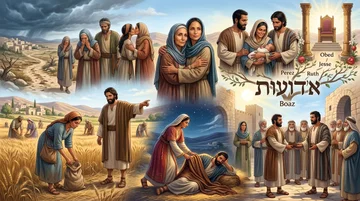
From the union of Ruth and Boaz came Obed, then Jesse, then David, and through David's line Christ.ST Nov 10, 1898 This gives Ruth a place in the ancestry of Jesus.ST Mar 31, 1909
Redemption Foreshadowing Christ
The verse enacts the law for redeeming people and their inheritances under Moses, where if an Israelite lost his inheritance or fell into bondage and could not redeem himself, the right of redemption passed to the one nearest of kin by blood-relationship who was able to redeem the kinsman's land and take the widow as wife.ST Nov 5, 1896RH Dec 25, 1900ST Jul 23, 1912 Boaz fulfills that office by buying back the possession of the dead Mahlon and taking Ruth the Moabitess to be his wife in order to raise up the name of the dead upon his inheritance.RH Dec 25, 1900ST Jul 23, 1912ST Jun 15, 1904 That kinship-based redemption, restoring the family line, possession, and name so it is not cut off, was given to show Jesus, the hope of ages.ST Apr 8, 1913ST Jul 23, 1912
The near kinsman's work of redeeming the dead man's possession and marrying Ruth to continue his name with his inheritance serves as a type of Christ and points forward to Christ the Redeemer.ST Apr 8, 1913RH Dec 25, 1900ST Jun 15, 1904 Mankind has lost his inheritance and is himself in bondage and cannot redeem himself nor his inheritance, so the right falls to the nearest of kin who is able.ST Nov 5, 1896ST Jun 15, 1904 Jesus Christ is the only one in all the universe who is able, and by taking the very flesh and blood of men He became not only near of kin but the nearest of kin by blood-relationship, even one with mankind, and thus the rightful Redeemer, with no other being able to rescue the lost.ST Nov 5, 1896ST Jun 15, 1904
As Boaz bought back the lost possession of Mahlon, Jesus as next of kin and elder brother has purchased the lost possession forfeited by sin and redeems lost men.ST Jul 23, 1912 He had the right to redeem and did so through the sacrifice of His life. Ruth's leaving home and kindred to join God's people was rewarded in this marriage with the lot women longed for, to bear a son in the birth line of the wonderful Coming One, and her place in the line leading to Christ shows that God chose a woman from a despised nation for His great plan.ST Jul 23, 1912
Boaz as Ruth's redeemer and husband illustrates trusting Christ as Redeemer, relying on him to meet every need rather than remaining anxious or doubtful about redemption and promised grace.ST Oct 28, 1889
Sources