Isaiah 14:10
All they shall speak and say unto thee, Art thou also become weak as we? art thou become like unto us?
Translations
All they shall speak and say to you, Are you also become weak as we? are you become like to us?
King James Version, KJV Cambridge Paragraph Bible
All they shall speak and say unto thee, Art thou also become weak as we? art thou become like unto us?
All they shall speak and say to thee, Art thou also become weak as we? Art thou become like us?
Revised Version, American Standard Version
All they shall answer and say unto thee, Art thou also become weak as we? art thou become like unto us?
All of them answer and say unto thee, Even thou hast become weak like us! Unto us thou hast become like!
All of them shall answer and say unto thee, Art thou also become powerless as we; art thou become like unto us!
All of them, answer, and say to thee,—Thou too, made strengthless, as we! Unto us, art thou like!
Berean Standard Bible, Majority Standard Bible
They will all respond to you, saying,
“ You too have become weak, as we are;
you have become like us!”They all will answer and ask you, “ Have you also become as weak as we are? Have you become like us?”
They all make answer and say to you, Have you become feeble like us? have you been made even as we are?
All they shall crie, and saie vnto thee, Art thou become weake also as we? art thou become like vnto vs?
Douay-Rheims (Challoner revision)
All shall answer, and say to thee: Thou also art wounded as well as we, thou art become like unto us.
Pictures
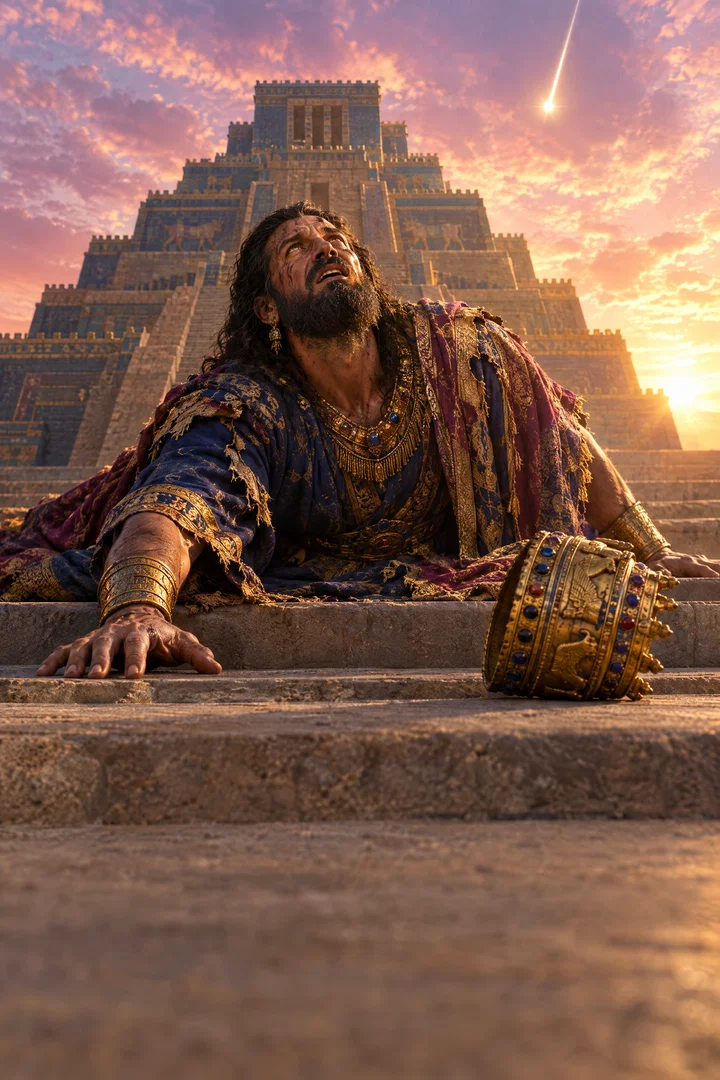
Cross-references
- Ezekiel 32:21
The strong among the mighty shall speak to him out of the midst of hell with them that help him: they are gone down, they lie uncircumcised, slain by the sword.
The mighty dead speak from Sheol, as in Isaiah’s portrayal of the dead speaking.
- Ezekiel 31:16-18
I made the nations to shake at the sound of his fall, when I cast him down to hell with them that descend into the pit: and all the trees of Eden, the choice and best of Lebanon, all that drink water, shall be comforted in the nether parts of the earth.
Both depict the dead speaking from Sheol beneath the earth.
- Genesis 11:4
And they said, Go to, let us build us a city and a tower, whose top may reach unto heaven; and let us make us a name, lest we be scattered abroad upon the face of the whole earth.
The builders’ ambition to make a name for themselves begins Babylon’s organized rebellion.
- Isaiah 14:4
That thou shalt take up this proverb against the king of Babylon, and say, How hath the oppressor ceased! the golden city ceased!
Introduces the taunt against Babylon’s king.
- Jeremiah 51:39
In their heat I will make their feasts, and I will make them drunken, that they may rejoice, and sleep a perpetual sleep, and not wake, saith the LORD.
Both describe Babylon’s downfall and the fate of its rulers.
- Jeremiah 51:57
And I will make drunk her princes, and her wise men, her captains, and her rulers, and her mighty men: and they shall sleep a perpetual sleep, and not wake, saith the King, whose name is the LORD of hosts.
Both describe Babylon’s overthrow and the fate of its rulers.
- Isaiah 5:14
Therefore hell hath enlarged herself, and opened her mouth without measure: and their glory, and their multitude, and their pomp, and he that rejoiceth, shall descend into it.
both place sheol beneath in the earth
- Jonah 2:2
And said, I cried by reason of mine affliction unto the LORD, and he heard me; out of the belly of hell cried I, and thou heardest my voice.
both place sheol down in the depths
Commentary
Each commentary is drawn from primary sources: the writings of Ellen G. White and Adventist pioneers and periodicals. Each commentary is separate. Its own words are not a quotation; follow the references to read the source passages.
Pioneers and periodicals
44 sources
Isaiah 14:10 is part of the taunt of triumph over the king of Babylon in Isaiah 14:3-23, who is Lucifer become Satan, the true spiritual head behind apostate Babylon.ST Feb 13, 1907ST Oct 7, 1930RH Jan 10, 1856STST Jul 26, 1899 It pictures him brought down to sheol in the nether earth, where the dead chief ones and kings he had conquered are stirred up and rise from their thrones to meet him with derisive greeting, telling him he is overthrown and made weak and like them.ST Feb 13, 1907ST Mar 18, 1875ST Mar 20, 1879ST Jun 23, 1881 The thrones and speaking are figurative personification to portray his defeat vividly, not proof that the dead are conscious, for the dead in hades are silent and unconscious without thought or utterance until the resurrection.RH Mar 28, 1865RH May 5, 1874ST Mar 15, 1877ST Jun 23, 1881RH May 19, 1874 His fall came from proud self-exaltation to ascend above heaven and be like the Most High, choosing his own selfish way instead of God's way of love, and it foreshadows his final powerlessness when the wicked dead greet him on the desolated earth at the beginning of the thousand years, showing that separation from God brings abasement, bondage and death.ST Feb 13, 1907STST Aug 9, 1905ST Jul 26, 1899ST Aug 8, 1900
Context and King Identified
The verse belongs to the proverb and taunt and ode of triumph taken up against the king of Babylon in Isaiah 13-14, especially Isaiah 14:3-23, a poetic passage and burden of prophecy foretelling the destruction and overthrow of Babylon.ST Oct 7, 1930ST Jun 4, 1912RH Sep 13, 1915 It is the proverb Israel takes up after God chooses Israel again the second time and gives them rest from sorrow and fear and hard bondage, when the oppressor has ceased, the staff of the wicked and sceptre of the rulers are broken, he who smote the people and ruled the nations in anger is laid down, the whole earth is at rest and quiet, and no feller comes up against God's people.RH Jan 10, 1856 In that setting the Papal king of Mystery Babylon is laid down and persecuted with none hindering.RH Jan 10, 1856 The burden was spoken many years before the fall, before the city reached its height, and its judgment was fulfilled through Babylon's decline, desolation and downfall as the head of gold, before the silver Persian empire took its place in succession.RH Nov 11, 1862
The king addressed is Lucifer, son of the morning, the day-star and light-bearer who became Satan the adversary by rebellion.ST Feb 13, 1907STST Jul 26, 1899ST Jun 4, 1912RH Sep 13, 1915 He is portrayed as the invisible, first and true king and head of Babylon's apostate religious system, who inspired Babylon in all her wickedness, and the prophecy rises from the earthly king of Babylon to him.STST Jun 4, 1912RH Sep 13, 1915 He sought to take God's throne and rule universally, and his fall from heaven and desire to be like the Most High was the beginning of his apostasy.ST Feb 13, 1907ST Unable to take Christ's place as head of the church, he leads the opposing system and seeks through it to direct civil governments against Christianity, and the greatness of ancient Babylon was the outward expression of his effort to establish his dominion upon this earth and defeat God's plan to save the world.STRH Sep 13, 1915 The empire was under Satanic control, and as the first head of the beast it made the beast a Babylonian beast while it lasted, since the head gives character to the whole.ST Nov 19, 1896 He worked through Babylon against the truth of God and endeavored to destroy God's captive people, as in the burning of the three Hebrews in the fiery furnace which would have been followed by destruction of all the faithful had God not interposed.ST Nov 19, 1896
The earthly rulers of Babylon are distinct from the spiritual ruler behind them, but they served him and acted out the will of Lucifer, the first king of Babylon.ST Apr 22, 1897ST Dec 14, 1904 Ancient Babylon's destruction serves as a type of what will come upon Satan and all his children in the end.ST Apr 22, 1897
Humiliation Depicted in Verse
The overthrown king goes down to sheol in the nether parts of the earth, where the dead chief ones and kings of the nations are stirred up to meet him at his coming.ST Jun 23, 1881RH Sep 3, 1872 They are the rulers he had conquered and destroyed in his prosperity, and they rise from their thrones to greet him.ST Mar 20, 1879ST Jun 23, 1881RH Sep 3, 1872 Their rising is a feigned, derisive obeisance offered in mockery, set in place of the real homage rendered in life.ST Mar 20, 1879ST Jun 23, 1881RH Sep 3, 1872 Onlookers look narrowly upon him as the man who made the earth tremble and shook kingdoms.ST Jun 23, 1881
Those who meet him speak and say that he has become weak and has become like them.RH Mar 28, 1865RH May 5, 1874ST Mar 20, 1879ST Jun 23, 1881 The question declares his utter overthrow and the collapse of his former power and ambition.ST Feb 13, 1907ST Jul 26, 1899ST Jul 1, 1903 He who aspired to rise above all is brought low to share the weakness and fate of the dead.ST Mar 18, 1875ST Jul 26, 1899ST Jul 1, 1903 Death reduces the proud king to the same level as his subjects and prisoners and those who came before him, made powerless and mortal like those he once weakened and ruled.ST Mar 18, 1875RH Mar 28, 1865RH May 5, 1874ST Mar 15, 1877RH Sep 3, 1872
The thrones and the rising and the taunting speech are not literal, for there are no literal thrones in sheol and no literal conversation among the dead.RH Mar 28, 1865RH May 5, 1874ST Mar 15, 1877ST Jun 23, 1881RH Sep 3, 1872 The dead cannot physically address one coming down into the grave, but imagined words are put into their mouths to portray the king's defeat and humiliation vividly and to make the prophecy striking.ST Jun 23, 1881ST Aug 19, 1880RH Sep 3, 1872 The language is figurative personification in which unconscious things are represented as living and acting and speaking, like the rejoicing fir trees and cedars of Lebanon.ST Jun 23, 1881 The same figure appears where the dead speak and act as though alive concerning the facts of their case, proving that such speech does not mean the dead are conscious.ST Jun 23, 1881ST Jun 30, 1881
Reason for the Fall
The fall arose from self-exaltation and a settled plot to take God's throne and rule universally.ST Feb 13, 1907STST Aug 9, 1905ST Jul 26, 1899 In his heart he purposed to ascend into heaven, to exalt his throne above the angels, to sit upon the mount of the congregation in the sides of the north, to ascend above the clouds, and to be like the Most High.ST Feb 13, 1907STST Jul 26, 1899 Unable to take Christ's place as head of the church, he became the apostate head of the opposing system and sought through it to direct earthly powers against Christianity.ST That rebellion was a plot to destroy the universe itself, even to dethrone God and overthrow Christ's kingdom.ST Feb 13, 1907ST Aug 9, 1905
Its cause was free choice of his own selfish, proud way instead of God's unselfish way of love.ST Jul 26, 1899ST Jun 27, 1906ST Jul 16, 1902 Proud of the glory and beauty placed upon him as though his own, he rebelled in selfishness and aspired to the throne of Eternal Goodness.ST Jul 26, 1899ST Jun 27, 1906 His brightness and wisdom were corrupted when he chose unbelief and self-advancement, turning from God to self until he became the adversary, a mighty power for evil, and rejecting offers to reform.ST Jun 27, 1906ST Jul 16, 1902 In that rebellion he charged God with injustice and falsehood, perverting righteous law into sin and life into death.ST Jun 27, 1906ST Jul 16, 1902 He sought exaltation, freedom and life by opposing God, but separation from God brought abasement, bondage and death, with sin's ripened results of suffering, destruction and death exposing the evil of rebellion.ST Aug 8, 1900ST Jul 16, 1902
That same spirit of self-exaltation and departure from God was manifest in the origination of historical Babylon at Babel and dominates every departure from God.ST Jul 26, 1899 The same spirit of charging God with falsehood and injustice was then brought to this world.ST Jun 27, 1906 The ambition and unholy greed of the earthly king of Babylon resemble Lucifer's desire to rule in God's place.ST Dec 16, 1903 Because of rebellious envy he was removed from the heavenly courts, showing the fall of the highest created being in all the universe.ST Aug 9, 1905ST Jun 27, 1906ST Oct 19, 1915
Prophetic Fulfilment Over Time
The burden against Babylon was uttered before the city reached its height, many years before its fall, and its judgment was fulfilled through decline and eventual desolation.RH Nov 11, 1862 The downfall it foretells is the fall of Babylon as the head of gold, before the silver Persian empire takes its place in succession.
The proverb is taken up after God chooses Israel again the second time and gives them rest from sorrow and fear and hard bondage.RH Jan 10, 1856 Then the oppressor has ceased, for the Papal king of Mystery Babylon is laid down, the staff of the wicked and sceptre of the rulers are broken, and he who smote the people and ruled the nations in anger is persecuted with none hindering.RH Jan 10, 1856 So the whole earth is at rest and quiet, and no feller comes up against God's people.RH Jan 10, 1856
Ancient Babylon's destruction serves as a type of what will come upon Satan and all his children in the end.ST Apr 22, 1897 The earthly king of Babylon acted out the will of Lucifer, the first and true king of Babylon, originally the light-bearer who became Satan the adversary by rebellion.ST Apr 22, 1897ST Nov 19, 1896RH Sep 13, 1915 He was the invisible king of Babylon, and the greatness of ancient Babylon was the outward expression of his effort to establish his dominion upon this earth and defeat God's plan to save the world.RH Sep 13, 1915 The empire of Babylon was under Satanic control, and as the first head of the beast it made the beast a Babylonian beast while it lasted, since the head gives character to the whole.ST Nov 19, 1896 Satan acting through Babylon made it the first head of the beast, the abnormal church-and-state system that corrupts the truth of God and wars against God, His Christ, and His church.ST Jun 27, 1911ST Jul 6, 1915 His power works through pagan empires and religious apostasy to direct civil governments against Christianity and endeavored to destroy God's captive people in their captivity, as in the burning of the three Hebrews in the fiery furnace, which would have been followed by destruction of all the faithful had God not interposed.ST Nov 19, 1896ST Jun 27, 1911ST Mar 30, 1915
The fallen ruler is confronted by those who have also become weak and dead.ST Apr 22, 1897 The verse portrays the wicked dead greeting Satan when he is cast onto the desolated earth at the beginning of the thousand years.ST Mar 18, 1875 They recognize that he has become powerless and mortal like them, despite his former power and rule over the nations.ST Mar 18, 1875
State of the Dead
Sheol is identical with hades, the region of the dead beneath in the interior, bosom, heart and nether parts of the earth, the place of every grave holding the dead until resurrection.ST Jun 23, 1881RH May 19, 1874RH May 5, 1874RH Feb 22, 1870 It is a place of thickest darkness, silence, secrecy, forgetfulness and death, where there is no work nor device nor knowledge nor wisdom, no remembrance of God and no thanksgiving.ST Jun 23, 1881ST Aug 25, 1881 The overthrown king of Babylon goes down there, where the dead chief ones and kings of the nations he conquered and destroyed are stirred up to meet him at his coming and rise from their thrones to greet him with feigned obeisance in place of the real homage of life.ST Jun 23, 1881RH Sep 3, 1872 They taunt him that he has become weak and like them, while onlookers look narrowly on him as the man who made the earth tremble and shook kingdoms.ST Jun 23, 1881RH Sep 3, 1872
Its inhabitants are dead, not living souls in conscious bliss, and the dead are silent, unconscious, without life, thought or power of utterance.RH Mar 28, 1865ST Jun 23, 1881RH May 19, 1874ST Aug 25, 1881RH Apr 25, 1865 The kings are not literally seated on thrones in sheol, nor do they literally rise and speak and mock there.RH Mar 28, 1865ST Jun 23, 1881ST Aug 25, 1881RH Apr 25, 1865 Their thrones and rising and taunting speech are not literal, for sheol is the dark abode in the earth beneath holding only unconscious dead who cannot literally sit or speak or mock.ST Jun 23, 1881ST Aug 25, 1881
Their speech is purely poetic personification, a figure in which unconscious and inanimate things are represented as living, acting and speaking to bring truth forcibly before the living and before the mind.ST Jun 23, 1881RH Dec 23, 1862ST Aug 19, 1880ST Aug 25, 1881 It is like the rejoicing fir trees and cedars of Lebanon, like Pharaoh comforted among slaughtered armies lying with swords under their heads, like Rachel weeping for her children long after her death, and like God speaking of things that in His purpose shall surely be as though they already exist.ST Jun 23, 1881 Prophets may give speech and actions to fictional or impossible characters in figurative writing without asserting that the dead are conscious, and the dead cannot physically address someone descending into the grave, but their imagined words portray the king's humiliation vividly and mean that death reduces the proud king to the same level with his subjects and prisoners.ST Aug 19, 1880RH Sep 3, 1872 The personified conversation therefore does not teach that the dead are conscious, intelligent and active, exist as disembodied spirits, enjoy bliss or suffer in death.RH Dec 23, 1862ST Aug 19, 1880RH Sep 3, 1872ST Aug 25, 1881ST Jul 22, 1886 It gives the same answer that explains the parable of Dives and Lazarus and the rich man and Lazarus, which concern that very place and show that personified conversation of the dead in sheol does not teach consciousness, and that recompense and punishment of wicked men come only after the day of judgment.ST Jun 23, 1881RH May 19, 1874RH Sep 3, 1872
Those who held a different reading taught that the dead in sheol speak consciously to the fallen king and recognize his weakness, as part of his entrance into the unseen realm of departed spirits, which is distinguished from the grave where the body is buried.RH Feb 11, 1873 In that same line the chapter was taken as an example of an early view in which good and bad dead dwell together in the underworld, with differences of rank but no clear separation into places for the righteous and the wicked.RH Oct 12, 1869
Scripture Links and Application
The verse belongs to an Old Testament metaphorical illustration and stands as an example of the figurative forms used in teaching, not as a literal account of the condition of the dead.RH Sep 3, 1872ST Feb 26, 1902RH Jan 7, 1873 It shows the dead in sheol in the nether parts of the earth stirred up to meet the overthrown king of Babylon when he goes down to join them, with kings he destroyed sitting on thrones beneath and rising up to mock him with feigned obeisance like the real homage they gave in life, taunting him that he has become weak and like them.RH Sep 3, 1872ST Jun 30, 1881ST Jun 30, 1881 They do not literally act or speak thus, for the dead are not alive and hades is in the interior of the earth as a place of utter darkness, silence, secrecy, forgetfulness, deep sleep and death where there is no knowledge, thought, life, consciousness or power of utterance.RH Sep 3, 1872ST Jun 30, 1881ST Jun 30, 1881RH May 12, 1874 The speech is striking personification in which unconscious persons who have no life are represented as talking and acting just as they would under the existing circumstances were they indeed alive and capable of thought and utterance, to bring truth forcibly to bear on the living, even as God speaks of things that in His purpose shall surely be as though they already exist.RH Jan 7, 1873ST Jun 30, 1881ST Jun 30, 1881RH May 12, 1874 Its meaning is that death reduces the proud king to the same level with his subjects and prisoners, and it gives the prophetic pattern for the rich man and Lazarus and for Dives and Lazarus, which concern that very place, showing that personified conversation of the dead in sheol does not teach that the dead are conscious, intelligent and active, and that recompense and punishment of wicked men come only after the day of judgment.RH Sep 3, 1872RH Jan 7, 1873ST Jun 30, 1881ST Jun 30, 1881RH May 12, 1874
The fallen ruler is thus brought low and reduced to the weakness of those who came before him and who share his fate.ST Aug 8, 1900ST Jul 16, 1902 In its application of Isaiah 14:4-14 and Isaiah 14:4-15, Lucifer sought exaltation, freedom and life by opposing God and turning from God to self, becoming Satan the adversary and a mighty power for evil, but separation from God brought abasement, bondage and death.ST Aug 8, 1900ST Jul 16, 1902 His brightness and wisdom were corrupted when he chose unbelief and self-advancement and rejected God's offers to reform, and sin's ripened results include suffering, destruction and death, exposing the evil of rebellion against God.ST Aug 8, 1900ST Jul 16, 1902
The king's ambition and unholy greed resemble Lucifer's desire to rule in God's place.ST Dec 16, 1903ST Jul 24, 1901 Lucifer, as king of Babylon, proposed to reign even to the dethroning of God, being puffed up with his wisdom perverted by wine, not only of the bottle but of ambition and unholy greed, the wine of Babylon.ST Dec 16, 1903ST Jul 24, 1901 That same intoxication deadens human sensibility and is the cause of inhuman oppression in which man swallows up his fellow.ST Jul 24, 1901
Sources