Isaiah 36:11
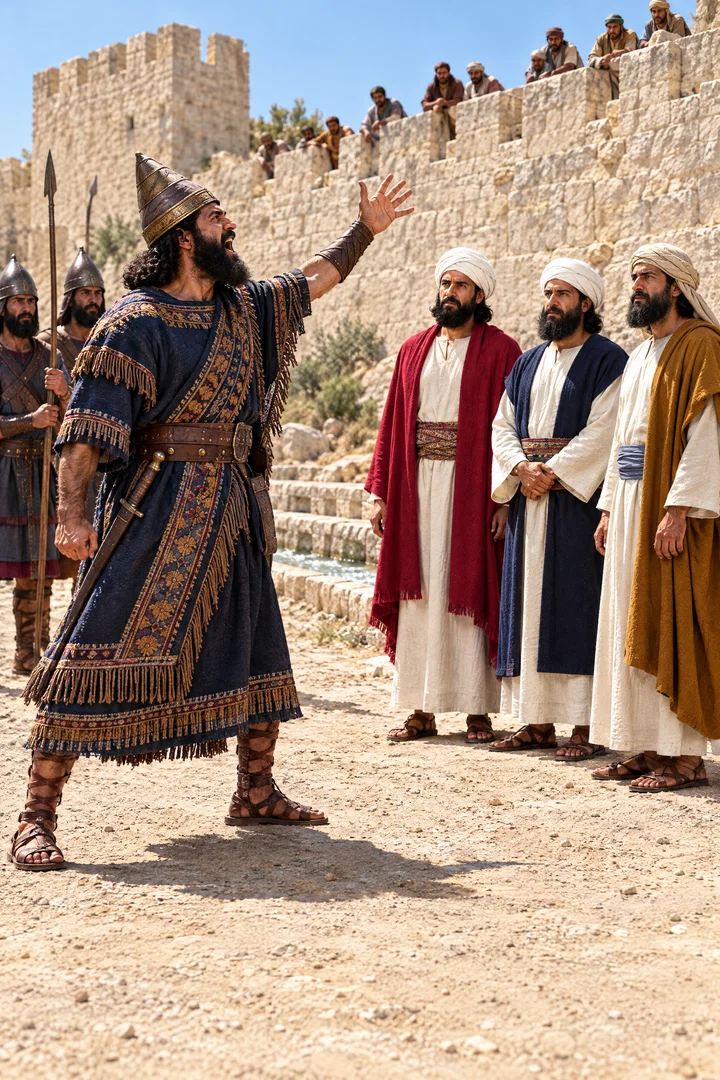
Then said Eliakim and Shebna and Joah unto Rabshakeh, Speak, I pray thee, unto thy servants in the Syrian language; for we understand it: and speak not to us in the Jews’ language, in the ears of the people that are on the wall.
Translations
Then said Eliakim and Shebna and Joah to Rabshakeh, Speak, I pray you, to your servants in the Syrian language; for we understand it: and speak not to us in the Jews’ language, in the ears of the people that are on the wall.
King James Version, KJV Cambridge Paragraph Bible, Revised Version, American Standard Version
Then said Eliakim and Shebna and Joah unto Rabshakeh, Speak, I pray thee, unto thy servants in the Syrian language; for we understand it: and speak not to us in the Jews’ language, in the ears of the people that are on the wall.
Then said Eliakim and Shebna and Joah to Rabshakeh, Speak, I pray thee, to thy servants in the Syrian language; for we understand it: and speak not to us in the Jew's language, in the ears of the people that are on the wall.
And Eliakim saith — and Shebna and Joah — unto Rabshakeh, 'Speak, we pray thee, unto thy servants [in] Aramaean, for we are understanding; and do not speak unto us [in] Jewish, in the ears of the people who [are] on the wall.'
And Eliakim and Shebna and Joah said to Rab-shakeh, Speak, we pray thee, to thy servants in Syriac, for we understand it; and speak not to us in the Jewish [ language] in the ears of the people that are upon the wall.
Then said Eliakim, and Shebna, and Joah, unto Rabshakeh—Speak we pray thee unto thy servants in the Syrian language, for we, can, understand, it,—and do not speak unto us in the Jews’ language, in the ears of the people who are upon the wall.
Berean Standard Bible, Majority Standard Bible
Then Eliakim, Shebna, and Joah said to the Rabshakeh, “ Please speak to your servants in Aramaic, since we understand it. Do not speak to us in Hebrew in the hearing of the people on the wall.”
Then Eliakim, Shebna and Joah said to Rabshakeh, “ Please speak to your servants in Aramaic, for we understand it. Don’t speak to us in the Jews’ language in the hearing of the people who are on the wall.”
Then Eliakim and Shebna and Joah said to the Rab-shakeh, Please make use of the Aramaean language in talking to your servants, for we are used to it, and do not make use of the Jews' language in the hearing of the people on the wall.
Then sayd Eliakim and Shebna and Ioah vnto Rabshakeh, Speake, I pray thee, to thy seruants in the Aramites language, (for we vnderstand it) and talke not with vs in the Iewes tongue, in the audience of the people that are on the wall.
Douay-Rheims (Challoner revision)
And Eliacim, and Sobna, and Joahe said to Rabsaces: Speak to thy servants in the Syrian tongue: for we understand it: speak not to us in the Jews’ language in the hearing of the people, that are upon the wall.
Pictures
Cross-references
- 2 Chronicles 32:18
Then they cried with a loud voice in the Jews’ speech unto the people of Jerusalem that were on the wall, to affright them, and to trouble them; that they might take the city.
The Assyrians shouted in the Jews’ language to frighten Jerusalem’s defenders.
- 2 Kings 18:26
Then said Eliakim the son of Hilkiah, and Shebna, and Joah, unto Rab-shakeh, Speak, I pray thee, to thy servants in the Syrian language; for we understand it: and talk not with us in the Jews’ language in the ears of the people that are on the wall.
Both record the officials’ request to speak in Aramaic rather than Hebrew.
- 2 Kings 19
And it came to pass, when king Hezekiah heard it, that he rent his clothes, and covered himself with sackcloth, and went into the house of the LORD.
The passage identifies this chapter with Isaiah 36.
- 2 Kings 18:13-19
Now in the fourteenth year of king Hezekiah did Sennacherib king of Assyria come up against all the fenced cities of Judah, and took them.
Parallel account of the Assyrian invasion and Jerusalem’s deliverance.
Commentary
Each commentary is drawn from primary sources: the writings of Ellen G. White and Adventist pioneers and periodicals. Each commentary is separate. Its own words are not a quotation; follow the references to read the source passages.
Pioneers and periodicals
7 sources
Eliakim and Shebna and Joah asked Rabshakeh to speak to them in the Syrian language, that is Aramaic, which they understood, rather than in the Jews' language, that is Hebrew or the language of Judah.RH Jul 6, 1916ST Jun 21, 1905RH May 21, 1908 They made this request so that the people listening from the city wall of Jerusalem would not understand or hear his words.RH Jul 6, 1916ST Jun 21, 1905RH May 21, 1908
The request came during the Assyrian officers' direct appeal to the people of Jerusalem.ST Jun 21, 1905 In that siege the envoy deliberately spoke in Hebrew to frighten, discourage, and unsettle the defenders on the wall.ST Jun 21, 1905RH May 21, 1908
The verse belongs to the historical account of Assyria's threat against Judah during Hezekiah's reign, when the king of Assyria threatened the land.ST Oct 6, 1909ST Oct 6, 1909 It is part of the account of Sennacherib's invasion and campaign against the land, including the capture of Judah's cities and the threat to Jerusalem, ending in Hezekiah's triumph.RH Jun 29, 1916RH Jun 11, 1857 That same account records Hezekiah's humility, God's message through the prophet, and the Lord's deliverance from Assyria by His angel.ST Oct 6, 1909 The biblical history of that campaign is confirmed by records recovered from the ruins of Nineveh.RH Jun 11, 1857
Sources