Isaiah 36:4
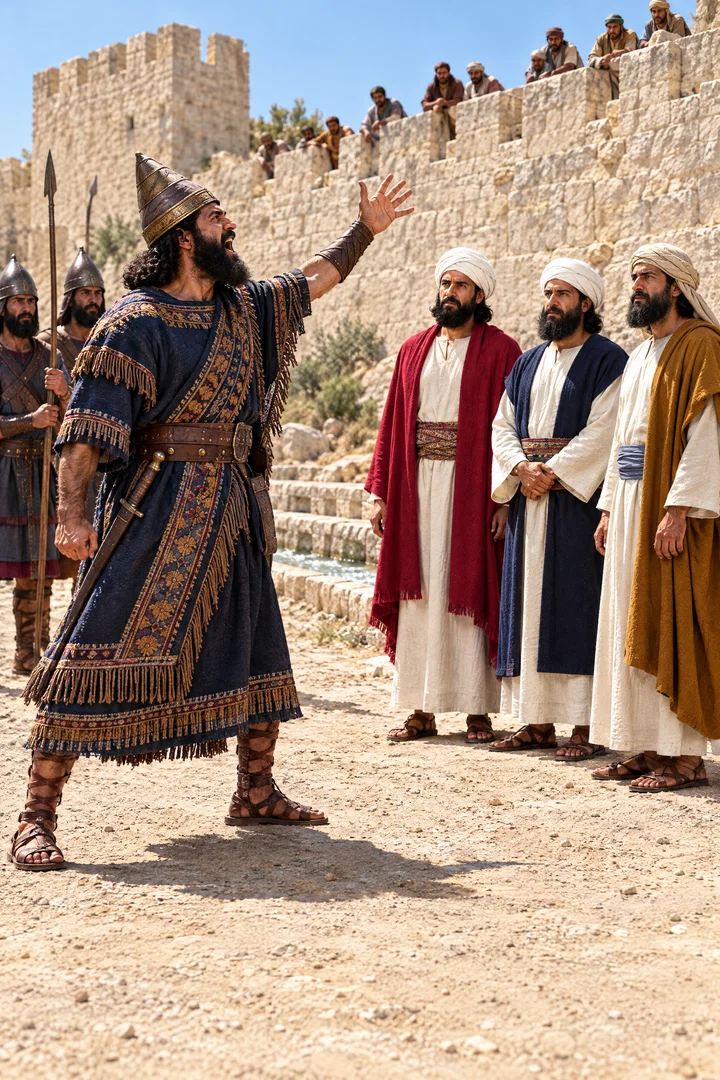
And Rabshakeh said unto them, Say ye now to Hezekiah, Thus saith the great king, the king of Assyria, What confidence is this wherein thou trustest?
Translations
And Rabshakeh said to them, Say you now to Hezekiah, Thus says the great king, the king of Assyria, What confidence is this wherein you trust?
King James Version, American Standard Version
And Rabshakeh said unto them, Say ye now to Hezekiah, Thus saith the great king, the king of Assyria, What confidence is this wherein thou trustest?
And Rabshakeh said unto them, Say ye now to Hezekiah, Thus saith the great king, the king of Assyria, What confidence is this where in thou trustest?
And Rabshakeh said to them, Say ye now to Hezekiah, Thus saith the great king, the king of Assyria, What confidence is this in which thou trustest?
And Rabshakeh said unto them, Say ye now to Hezekiah, Thus saith the great king, the king of Assyria, what confidence is this wherein thou trustest?
And Rabshakeh saith unto them, 'Say ye, I pray you, unto Hezekiah, 'Thus said the great king, the king of Asshur, What [is] this confidence in which thou hast confided?
And Rab-shakeh said to them, Say now to Hezekiah, Thus says the great king, the king of Assyria: What confidence is this in which thou trustest?
And Rabshakeh said unto them, Pray you say unto Hezekiah,—Thus, saith the great king, the king of Assyria, What is this trust, wherewith thou dost trust?
Berean Standard Bible, Majority Standard Bible
The Rabshakeh said to them, “ Tell Hezekiah that this is what the great king, the king of Assyria, says: What is the basis of this confidence of yours?
Rabshakeh said to them, “ Now tell Hezekiah, ‘ The great king, the king of Assyria, says, “ What confidence is this in which you trust?
And the Rab-shakeh said to them, Say now to Hezekiah, These are the words of the great king, the king of Assyria: In what are you placing your hope?
And Rabshakeh sayde vnto them, Tell you Hezekiah, I pray you, Thus sayth the great King, the King of Asshur, What confidence is this, wherein thou trustest?
Douay-Rheims (Challoner revision)
And Rabsaces said to them: Tell Ezechias: Thus saith the great king, the king of the Assyrians: What is this confidence wherein thou trustest?
Pictures
Cross-references
- 2 Kings 18:19
And Rab-shakeh said unto them, Speak ye now to Hezekiah, Thus saith the great king, the king of Assyria, What confidence is this wherein thou trustest?
Rabshakeh challenges Hezekiah’s confidence and asks whom he trusts.
- 2 Chronicles 32:9-15
After this did Sennacherib king of Assyria send his servants to Jerusalem, (but he himself laid siege against Lachish, and all his power with him,) unto Hezekiah king of Judah, and unto all Judah that were at Jerusalem, saying,
Sennacherib challenges Judah’s confidence in God and threatens them with defeat.
- Isaiah 37:33-36
Therefore thus saith the LORD concerning the king of Assyria, He shall not come into this city, nor shoot an arrow there, nor come before it with shields, nor cast a bank against it.
God promises to defend Jerusalem and destroys the Assyrian army.
- 2 Kings 19
And it came to pass, when king Hezekiah heard it, that he rent his clothes, and covered himself with sackcloth, and went into the house of the LORD.
The Assyrian threat ends with the Lord striking the invading army.
- Isaiah 36:10
And am I now come up without the LORD against this land to destroy it? the LORD said unto me, Go up against this land, and destroy it.
The chapter citation illustrates destroying the land.
Commentary
Each commentary is drawn from primary sources: the writings of Ellen G. White and Adventist pioneers and periodicals. Each commentary is separate. Its own words are not a quotation; follow the references to read the source passages.
Pioneers and periodicals
9 sources
The verse stands in the historical portion of Isaiah 36–39 within the first thirty-nine chapters, which record history and prophetic messages from Isaiah's active ministry among rulers and people.RH Jul 6, 1916ST May 28, 1912 Isaiah's prophetic work began in Uzziah's reign and continued through Hezekiah's reign in a critical period for Judah that foreshadowed future days.ST May 28, 1912 Its setting is the Assyrian invasion led by Sennacherib during Hezekiah's reign, when Assyria threatened Judah and Jerusalem and Hezekiah ultimately triumphed.ST Oct 6, 1909RH Jun 29, 1916RH Jun 11, 1857
The surrounding history includes the siege of Lachish, the tribute Hezekiah paid, the dispatch of an Assyrian force against Jerusalem, its destruction in one night, and Sennacherib's later killing by his sons.RH Jun 11, 1857 Assyrian records found at Nineveh confirm the siege of Lachish and the tribute from Hezekiah.RH Jun 11, 1857 The verse records the great king of Assyria speaking through his Rabshakeh or spokesman to Hezekiah, his representatives, his people, and Jerusalem, demanding the basis of their confidence and what or whom they trusted for deliverance from Assyria.RH Jul 6, 1916RH Jun 29, 1916ST Jun 21, 1905ST Oct 6, 1909ST Jun 7, 1910 That demand to Hezekiah and Jerusalem asked what basis they had for trusting anyone to save them from Assyria.RH May 21, 1908
The question was a threatening boast meant to frighten the people into surrender, expressing Sennacherib's confidence in his victories and his contemptuous assumption that Jehovah was no stronger than the gods of the nations Assyria had conquered, so that trust in Jerusalem's God was useless.ST Jun 21, 1905RH May 21, 1908 It expressed the king's boast that his power — and the power of the nations he had conquered — made such trust useless.RH May 21, 1908 The challenge precipitated God's message and Jerusalem's rescue by direct intervention through His angel, proving that confidence in God was not misplaced because God is mightier than Assyria.ST Oct 6, 1909RH May 21, 1908
Sources