Translations
American King James Version, Webster Bible
Then came the word of the LORD to Jeremiah in Tahpanhes, saying,
King James Version, Revised Version
Then came the word of the LORD unto Jeremiah in Tahpanhes, saying,
Then came the word of the Lord unto Jeremiah in Tahpanhes, saying,
Then came the word of Jehovah unto Jeremiah in Tahpanhes, saying,
And there is a word of Jehovah unto Jeremiah in Tahpanhes, saying,
And the word of Jehovah came to Jeremiah in Tahpanhes, saying,
Then came the word of Yahweh unto Jeremiah, in Tahpanhes, saying:
Berean Standard Bible, Majority Standard Bible
Then the word of the LORD came to Jeremiah at Tahpanhes:
Then the LORD’s word came to Jeremiah in Tahpanhes, saying,
Then the word of the Lord came to Jeremiah in Tahpanhes, saying,
Then came the worde of the Lord vnto Ieremiah in Tahpanhes, saying,
Douay-Rheims (Challoner revision)
And the word of the Lord came to Jeremias in Taphnis, saying:
Pictures
Cross-references
- Jeremiah 43:1-3
And it came to pass, that when Jeremiah had made an end of speaking unto all the people all the words of the LORD their God, for which the LORD their God had sent him to them, even all these words,
The leaders reject Jeremiah’s warning and accuse Baruch of influencing him.
- Jeremiah 42:15-17
And now therefore hear the word of the LORD, ye remnant of Judah; Thus saith the LORD of hosts, the God of Israel; If ye wholly set your faces to enter into Egypt, and go to sojourn there;
God warns that going to Egypt will bring sword, famine, and pestilence.
- Jeremiah 42:10-12
If ye will still abide in this land, then will I build you, and not pull you down, and I will plant you, and not pluck you up: for I repent me of the evil that I have done unto you.
God urges the remnant to remain in the land and promises blessing and protection.
- Jeremiah 42:1-6
Then all the captains of the forces, and Johanan the son of Kareah, and Jezaniah the son of Hoshaiah, and all the people from the least even unto the greatest, came near,
The remnant sought God’s guidance, then went to Egypt anyway.
Commentary
Each commentary is drawn from primary sources: the writings of Ellen G. White and Adventist pioneers and periodicals. Each commentary is separate. Its own words are not a quotation; follow the references to read the source passages.
Pioneers and periodicals
10 sources
The word of the LORD came to Jeremiah while he was in Tahpanhes, Egypt, as part of the account of his personal experiences and going into Egypt.ST Aug 19, 1886RH May 31, 1870ST Nov 3, 1909ST Oct 27, 1909ST Nov 25, 1886 Its setting is after the Jews who were left in Judea fled to Egypt following Zedekiah's captivity, going down to Egypt contrary to God's direction.ST Sep 23, 1908RH Dec 13, 1870RH May 31, 1870 That direction had been given through Jeremiah that they should remain in the land, even after they had inquired of him.ST Sep 23, 1908RH Dec 13, 1870 Their choice to seek Egypt's protection would bring sword, famine, and pestilence upon the fugitives, because Egypt was soon to fall to the king of Babylon.RH May 31, 1870
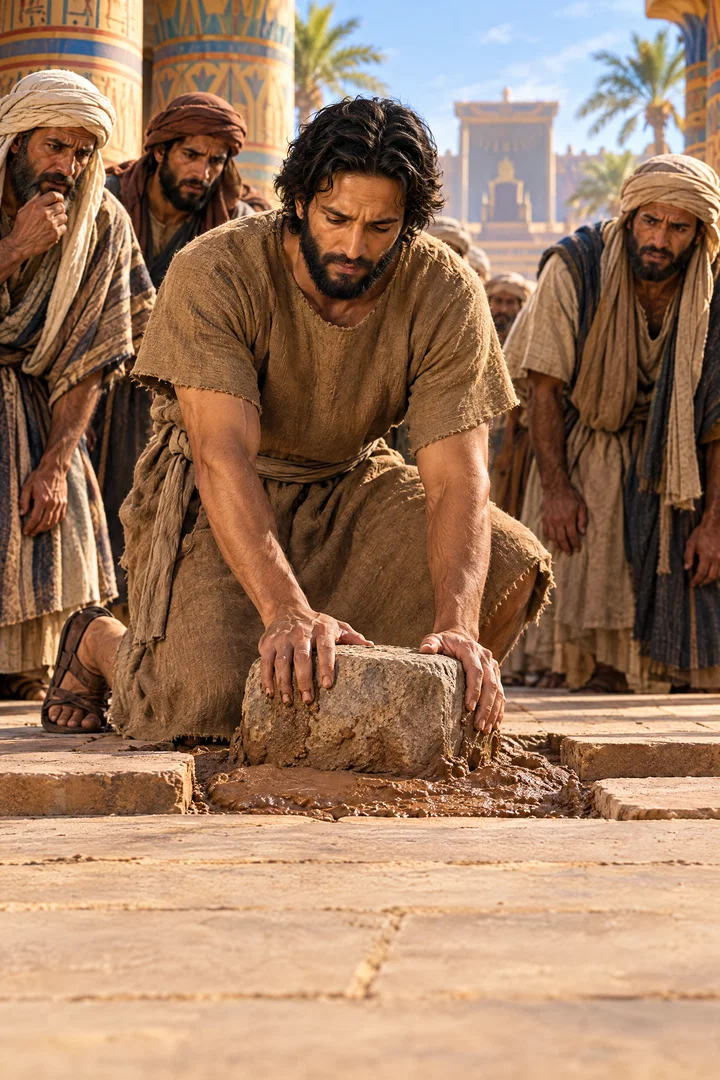
In chronological order the chapter belongs after chapters 40-42, following the events recorded there.ST Jul 12, 1910ST Oct 27, 1909 It stands among chapters 40-45 in the arrangement of Jeremiah's prophecies.ST Oct 27, 1909 The verse introduces the command and prophecy that follow, in which Jeremiah was to hide large stones in the brickwork at the entrance to Pharaoh's house.ST Aug 19, 1886 This was as a sign that Nebuchadnezzar would set his throne there and spread his royal pavilion over them.ST Aug 19, 1886
Together with the verses that follow, it is one of the Bible's prophecies concerning Egypt and its future history.RH Nov 11, 1862 It is presented as part of the prophetic evidence that Egypt would be invaded and ruled by foreign powers.RH Nov 11, 1862 The brickwork found facing the entrance of the ancient palace is the place described in the following verses where Nebuchadnezzar would spread his royal pavilion.ST Aug 19, 1886 Egyptian inscriptions identify the site as the place where he did so, confirming the prophecy and showing that fulfilled prophecy strengthens faith and hope.ST Aug 19, 1886
The account shows accurate knowledge of the architectural details of Pharaoh's palace, and excavations at Tahpanhes confirm its historical setting.ST Nov 25, 1886 Baruch was very intimately connected with Jeremiah in God's work there.RH Dec 13, 1870 The people's charge that Jeremiah was speaking not God's word but what Baruch influenced him to speak against them was a great and serious sin of suspicion and unbelief that denied Jeremiah as a true prophet, for which God punished those wicked men with utter destruction.RH Dec 13, 1870 God never chooses a medium through whom to speak directly to a people and then lets another and contrary human influence step in and palm itself off as the manifestation of His Spirit and work.RH Dec 13, 1870
Sources