Jeremiah 44:19
And when we burned incense to the queen of heaven, and poured out drink offerings unto her, did we make her cakes to worship her, and pour out drink offerings unto her, without our men?
Translations
And when we burned incense to the queen of heaven, and poured out drink offerings to her, did we make her cakes to worship her, and pour out drink offerings to her, without our men?
And when we burned incense to the queen of heaven, and poured out drink offerings unto her, did we make her cakes to worship her, and pour out drink offerings unto her, without our men?
And when we burnt incense to the queen of heaven, and poured out drink offerings unto her, did we make her cakes to worship her, and pour out drink offerings unto her, without our men?
And when we burned incense to the queen of heaven, and poured out drink-offerings to her, did we make for her cakes to worship her, and pour out drink-offerings to her, without our men?
And when we burned incense to the queen of heaven, and poured out drink offerings unto her, did we make her cakes to worship her, and pour out drink offerings unto her, without our husbands?
And when we burned incense to the queen of heaven, and poured out drink-offerings unto her, did we make her cakes to worship her, and pour out drink-offerings unto her, without our husbands?
and when we are making perfume to the queen of the heavens, and pouring out to her libations — without our husbands have we made for her cakes to idolize her, and to pour out to her libations?'
And when we burned incense to the queen of the heavens and poured out drink-offerings to her, did we make for her cakes to portray her, and pour out drink-offerings to her, without our husbands?
And, though we are burning incense to the queen of the heavens and pouring out to her drink-offerings, is it, without our men that we have made to her sacrificial cakes as images of her and poured out to her, drink-offerings?
Berean Standard Bible, Majority Standard Bible
“ Moreover,” said the women, “ when we burned incense to the Queen of Heaven and poured out drink offerings to her, was it without our husbands’ knowledge that we made sacrificial cakes in her image and poured out drink offerings to her?”
The women said, “ When we burned incense to the queen of the sky and poured out drink offerings to her, did we make her cakes to worship her, and pour out drink offerings to her, without our husbands?”
And the women said, When we were burning perfumes to the queen of heaven and draining out drink offerings to her, did we make cakes in her image and give her our drink offerings without the knowledge of our husbands?
And when we burnt incense to ye Queene of heauen, and powred out drinke offerings vnto her, did wee make her cakes to make her glad, and powre out drinke offerings vnto her without our husbands?
Douay-Rheims (Challoner revision)
And if we offer sacrifice to the queen of heaven, and pour out drink offerings to her: did we make cakes to worship her, to pour out drink offerings to her, without our husbands?
Pictures
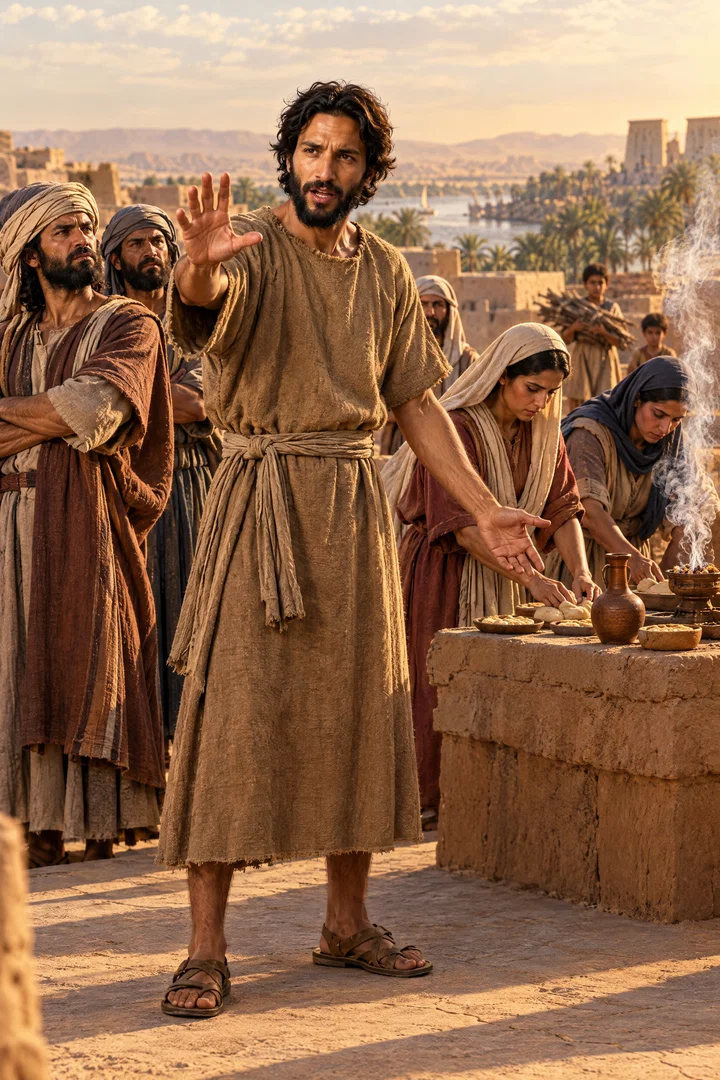
Cross-references
- Jeremiah 7:18
The children gather wood, and the fathers kindle the fire, and the women knead their dough, to make cakes to the queen of heaven, and to pour out drink offerings unto other gods, that they may provoke me to anger.
Both describe offerings to the queen of heaven.
- Jeremiah 44:15
Then all the men which knew that their wives had burned incense unto other gods, and all the women that stood by, a great multitude, even all the people that dwelt in the land of Egypt, in Pathros, answered Jeremiah, saying,
The people in Egypt answer Jeremiah about worship of the queen of heaven.
- 1 Kings 11:5
For Solomon went after Ashtoreth the goddess of the Zidonians, and after Milcom the abomination of the Ammonites.
It names Ashtoreth, identified with the queen of heaven.
- Deuteronomy 17:3
And hath gone and served other gods, and worshipped them, either the sun, or moon, or any of the host of heaven, which I have not commanded;
Condemns worship of the sun, moon, or stars.
- Jeremiah 44:9
Have ye forgotten the wickedness of your fathers, and the wickedness of the kings of Judah, and the wickedness of their wives, and your own wickedness, and the wickedness of your wives, which they have committed in the land of Judah, and in the streets of Jerusalem?
Condemns the wickedness of Judah’s people, including their idolatry.
Commentary
Each commentary is drawn from primary sources: the writings of Ellen G. White and Adventist pioneers and periodicals. Each commentary is separate. Its own words are not a quotation; follow the references to read the source passages.
Pioneers and periodicals
17 sources
The verse records Jews who had fled to Egypt after the Babylonian captivity openly persisting in worship of the queen of heaven by burning incense, pouring drink offerings and making unbloody cakes to her, with the women insisting their husbands knew of and shared in the household worship.ST Sep 23, 1908ST Apr 3, 1884ST Oct 18, 1883RH Dec 31, 1914RH Aug 3, 1916 That queen is the moon, worshiped as Ashtereth or Astarte, the female counterpart of Baal and goddess of the female principle in generation whose rites were lascivious, though some identified her with the sun.ST Oct 18, 1883ST Oct 30, 1884ST Apr 3, 1884 The worshipers defended themselves by claiming they had peace, prosperity and plenty while they served her and suffered want only when they ceased, thus judging religious duty by supply of bread rather than by obedience to God.ST Apr 3, 1884ST Apr 3, 1884ST Apr 3, 1884 That plea sets aside the moral law, with Jeremiah standing for the first commandment against its deniers, the same self-serving appeal to numbers, popularity and prosperity later used to uphold Sunday and other heathen customs in Christian worship.ST Apr 3, 1884ST Apr 3, 1884ST Apr 29, 1897
Historical Setting and Context
The verse belongs to the account of the Jews who fled to Egypt after the Babylonian captivity, where many of them turned to idolatry.ST Sep 23, 1908 It falls within the section of Jeremiah that records the history of the two years before Jerusalem fell.RH Jul 27, 1916 It stands in a part of Jeremiah that is not arranged in time order, for up to chapter 20 the book runs in fairly chronological order, but chapters 20 to 46 are out of place, with material from Zedekiah's reign set before material from the days of Jehoiakim through transposing of the ancient scrolls when gathered together.ST Jul 12, 1910
In true time order Jeremiah 44 comes late, after chapters 40, 41, 42 and 43 and before chapter 46, in the sequence 20, 22, 23, 25, 26, 35, 36, 45, 24, 29, 30, 31, 27, 28, 21, 34, 37, 32, 33, 38, 39:15-18, 39:1-14, 40, 41, 42, 43, 44, 46.ST Jul 12, 1910 The surrounding passage shows Judah's persistent false worship and false education among the people and their kings, continuing in idolatry after warning.ST This evil sowing produced captivity and enforced exile, with beloved Zion lying in utter ruin as the sad fruit reaped by Daniel's generation.ST
Idolatrous Worship Described
The verse depicts the people openly persisting in worship of the queen of heaven by burning incense to her and pouring out drink offerings to her and making cakes to worship her.RH Dec 31, 1914 The cakes were offerings without blood, an unbloody sacrifice.RH Dec 31, 1914
The verse records the women's claim that this worship, including making cakes and pouring out drink offerings, was done with their husbands' knowledge and participation, showing that the idolatrous worship involved the household.ST Apr 3, 1884ST Oct 18, 1883RH Aug 3, 1916ST Dec 5, 1911ST Mar 4, 1913 The same household involvement is shown in the women's statement that their husbands knew of and joined in the practice of incense, drink offerings, and cakes.RH Aug 3, 1916ST Dec 5, 1911RH Jul 27, 1916 The verse is connected with a ceremony in which priests burned incense and invoked the queen of heaven.RH Jul 27, 1916
The queen of heaven is the moon, identified as Ashtereth, also called Astarte and Venus in other nations.ST Oct 30, 1884ST Apr 3, 1884 She was the female counterpart of Baal, associated with the moon and the female principle in generation, and her worship was characterized by lasciviousness and was practiced alongside Baal worship.ST Oct 30, 1884 Those who held otherwise identified her here with the sun.ST Oct 18, 1883
The goddess is connected with Semiramis and with other goddesses of a similar cult, including Diana of the Ephesians, while the historical traditions about Semiramis and her relation to Nimrod are uncertain.ST Mar 4, 1913 The queen of heaven is an idol worshiped by the heathen with wicked and abominable rites and ceremonies.RH Nov 19, 1914 Jeremiah's reply links this sun worship and disregard of the Sabbath to the desolation of the land and Jerusalem's destruction.ST Oct 18, 1883
False Plea and Parallels
The verse records the worshipers' plea that peace, prosperity and plenty came while they worshiped the queen of heaven, but all went wrong as soon as they stopped, which they used as proof that their worship was right.ST Apr 3, 1884ST Apr 3, 1884 Their appeal to the practice and its supposed connection with prosperity shows a self-serving, bread-and-butter policy rule of judging religious conduct by material well-being and supply of bread rather than by obedience to God and His commandments.ST Apr 3, 1884ST Apr 3, 1884 That prosperity argument is weak, because wicked Babylon, Nineveh, Rome and Carthage also enjoyed peace, plenty and world rule without their ways pleasing God.ST Apr 3, 1884 Popularity and prosperity do not decide truth, as seen in the life of Christ and the apostles and in Paul losing all the world could give as a persecutor and being driven from place to place after becoming a Christian.ST Apr 3, 1884
The verse means the moral law, the point at issue, is laid aside and trodden down, with Jeremiah standing up for the first commandment and his opposers denying it.ST Apr 3, 1884 Their reliance on great numbers and popularity is the same line followed by advocates of Sunday, who deny the first commandment virtually and the fourth positively.ST Apr 3, 1884 Keeping the sun's day is worship of the sun, just as bowing before an image is worship despite the claim of worshiping God and not Mary.ST Apr 3, 1884
God showed His abhorrence of this departing-Israel worship as a dishonor to His holy name, placing it with the worship of Baal, Ashtoreth and Astarte.ST Apr 29, 1897 That ancient false worship is no different from the greater part of the Christian world singing praises to Easter, the Saxon goddess of spring, with pagan offerings of flowers, eggs and other customs, which profanes the worship of God and any celebration of the resurrection of Jesus with heathen names and customs.ST Apr 29, 1897 The words about women invoking the queen of heaven in worship rebuke women who apply that title to Mary and worship her.RH Nov 19, 1914
Sources