1 Kings 19:11
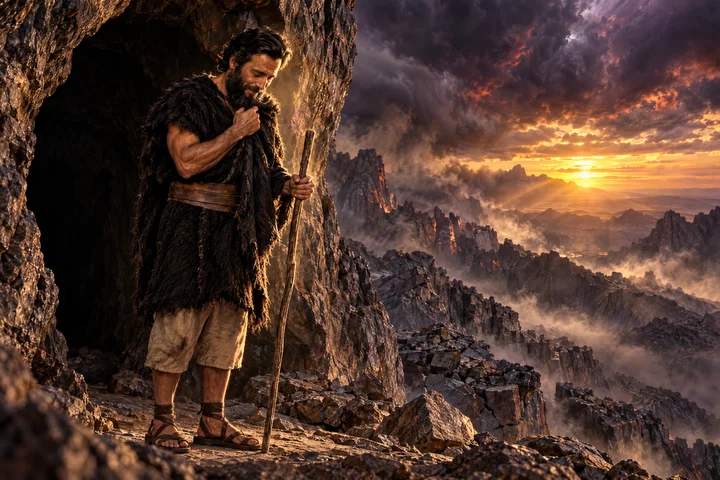
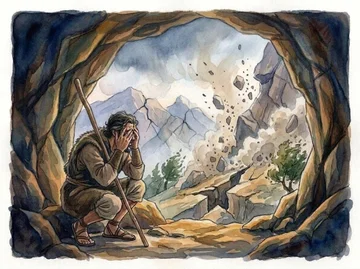
And he said, Go forth, and stand upon the mount before the LORD. And, behold, the LORD passed by, and a great and strong wind rent the mountains, and brake in pieces the rocks before the LORD; but the LORD was not in the wind: and after the wind an earthquake; but the LORD was not in the earthquake:
Translations
And he said, Go forth, and stand on the mount before the LORD. And, behold, the LORD passed by, and a great and strong wind rent the mountains, and broke in pieces the rocks before the LORD; but the LORD was not in the wind: and after the wind an earthquake; but the LORD was not in the earthquake:
King James Version, Revised Version
And he said, Go forth, and stand upon the mount before the LORD. And, behold, the LORD passed by, and a great and strong wind rent the mountains, and brake in pieces the rocks before the LORD; but the LORD was not in the wind: and after the wind an earthquake; but the LORD was not in the earthquake:
And he said, Go forth, and stand upon the mount before the Lord. And behold, the Lord passed by, and a great and strong wind rent the mountains, and brake in pieces the rocks before the Lord; but the Lord was not in the wind: and after the wind an earthquake; but the Lord was not in the earthquake:
And he said, Go forth, and stand upon the mount before the LORD. And behold, the LORD passed by, and a great and strong wind rent the mountains, and broke in pieces the rocks before the LORD; but the LORD was not in the wind: and after the wind an earthquake; but the LORD was not in the earthquake:
And he said, Go forth, and stand upon the mount before Jehovah. And, behold, Jehovah passed by, and a great and strong wind rent the mountains, and brake in pieces the rocks before Jehovah; but Jehovah was not in the wind: and after the wind an earthquake; but Jehovah was not in the earthquake:
And He saith, 'Go out, and thou hast stood in the mount before Jehovah.' And lo, Jehovah is passing by, and a wind — great and strong — is rending mountains, and shivering rocks before Jehovah: — not in the wind [is] Jehovah; and after the wind a shaking: — not in the shaking [is] Jehovah;
And he said, Go forth, and stand upon the mount before Jehovah. And behold, Jehovah passed by, and a great and strong wind rent the mountains, and broke in pieces the rocks before Jehovah: Jehovah was not in the wind. And after the wind, an earthquake: Jehovah was not in the earthquake.
And he said—Go forth to-morrow, and stand in the mountain, before Yahweh. And lo! Yahweh, passing by, and a great and strong wind—rending the mountains, and breaking in pieces the crags, before Yahweh, Not, in the wind, was, Yahweh,—And, after the wind, an, earthquake, Not, in the earthquake, was, Yahweh;
Berean Standard Bible, Majority Standard Bible
Then the LORD said, “ Go out and stand on the mountain before the LORD. Behold, the LORD is about to pass by.”And a great and mighty wind tore into the mountains and shattered the rocks before the LORD, but the LORD was not in the wind.After the wind there was an earthquake, but the LORD was not in the earthquake.
He said, “ Go out and stand on the mountain before the LORD.”Behold, the LORD passed by, and a great and strong wind tore the mountains and broke in pieces the rocks before the LORD; but the LORD was not in the wind. After the wind there was an earthquake; but the LORD was not in the earthquake.
Then he said, Go out and take your place on the mountain before the Lord. Then the Lord went by, and mountains were parted by the force of a great wind, and rocks were broken before the Lord; but the Lord was not in the wind. And after the wind there was an earth-shock, but the Lord was not in the earth-shock.
And he saide, Come out, and stand vpon the mount before the Lord. And beholde, the Lord went by, and a mightie strong winde rent the mountaines, and brake the rockes before the Lord: but the Lord was not in the winde: and after the wind came an earthquake: but the Lord was not in the earthquake:
Douay-Rheims (Challoner revision)
And he said to him: Go forth, and stand upon the mount before the Lord: and behold the Lord passeth, and a great and strong wind before the Lord over throwing the mountains, and breaking the rocks in pieces: the Lord is not in the wind, and after the wind an earthquake: the Lord is not in the earthquake.
Pictures
Cross-references
- 1 Kings 18
And it came to pass after many days, that the word of the LORD came to Elijah in the third year, saying, Go, shew thyself unto Ahab; and I will send rain upon the earth.
Part of the account of Jezebel’s opposition to the Lord’s prophets and support for Baal worship.
- 2 Kings 2:11
And it came to pass, as they still went on, and talked, that, behold, there appeared a chariot of fire, and horses of fire, and parted them both asunder; and Elijah went up by a whirlwind into heaven.
Elijah, discouraged in the wilderness, is later taken up to heaven.
- 1 Kings 19:4
But he himself went a day’s journey into the wilderness, and came and sat down under a juniper tree: and he requested for himself that he might die; and said, It is enough; now, O LORD, take away my life; for I am not better than my fathers.
Elijah’s wish to die sets up the lesson at Horeb.
- Exodus 19:18
And mount Sinai was altogether on a smoke, because the LORD descended upon it in fire: and the smoke thereof ascended as the smoke of a furnace, and the whole mount quaked greatly.
Places the giving of the moral law at Horeb.
- Exodus 3:2
And the angel of the LORD appeared unto him in a flame of fire out of the midst of a bush: and he looked, and, behold, the bush burned with fire, and the bush was not consumed.
The burning bush appeared to Moses at Horeb.
- Exodus 33:22
And it shall come to pass, while my glory passeth by, that I will put thee in a clift of the rock, and will cover thee with my hand while I pass by:
God’s glory passes by as Moses is sheltered in the cleft of the rock.
- Romans 11:4
But what saith the answer of God unto him? I have reserved to myself seven thousand men, who have not bowed the knee to the image of Baal.
God’s answer to Elijah preserves a faithful remnant among Israel.
- Malachi 4:5
Behold, I will send you Elijah the prophet before the coming of the great and dreadful day of the LORD:
Elijah’s experience is applied to God’s people before the Lord’s coming.
- 1 Kings 19:2-3
Then Jezebel sent a messenger unto Elijah, saying, So let the gods do to me, and more also, if I make not thy life as the life of one of them by to morrow about this time.
Jezebel’s threat prompts Elijah to flee after God’s earlier manifestation of power.
- Matthew 17:1-5
And after six days Jesus taketh Peter, James, and John his brother, and bringeth them up into an high mountain apart,
disciples' mountain vision grouped with Elijah's
- Exodus 34:5-6
And the LORD descended in the cloud, and stood with him there, and proclaimed the name of the LORD.
Both describe the LORD passing by and revealing his nature and attributes.
- 1 Kings 19:15-17
And the LORD said unto him, Go, return on thy way to the wilderness of Damascus: and when thou comest, anoint Hazael to be king over Syria:
The Lord appoints agents to bring judgment against idolatrous Israel.
- Exodus 14:21
And Moses stretched out his hand over the sea; and the LORD caused the sea to go back by a strong east wind all that night, and made the sea dry land, and the waters were divided.
Both texts use the Hebrew word translated “wind.”
- Ezekiel 37:9
Then said he unto me, Prophesy unto the wind, prophesy, son of man, and say to the wind, Thus saith the Lord GOD; Come from the four winds, O breath, and breathe upon these slain, that they may live.
Both verses use the Hebrew word *ruach*, translated as “wind.”
Commentary
Each commentary is drawn from primary sources: the writings of Ellen G. White and Adventist pioneers and periodicals. Each commentary is separate. Its own words are not a quotation; follow the references to read the source passages.
Ellen G. White
35 sources
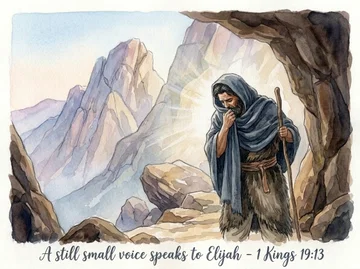
Elijah had fled in discouragement to a cave at Horeb after his stand on Carmel, and there God asked what he was doing and told him to go out and stand on the mount before Him.Lt 62, 1900, par. 3–6PK 166.2PK 167.1ED 151.1–2PK 168.1 A great wind tearing mountains and breaking rocks, then an earthquake and fire, passed before Him, but He was in none of them, and afterward He spoke in a still small voice before which Elijah covered his face.3T 291.3–292.1GW92 266.1–2PK 168.3RH Oct 7, 1873Lt 154, 1894, par. 2 This teaches that God is not revealed in overwhelming force and outward display, and His work and kingdom are not built by spectacle, political upheaval, or powerful presentation, but by gentle influence on the heart through mercy and the quiet, sure working of His Spirit.MH 36.1–2Lt 62, 1900, par. 11–16DA 217.3–218.2GW92 266.1–2PK 169.1 It teaches quiet trust and reliance on Him as a present help, with the storm and broken rock going before as the breaking up of self-righteousness and self-sufficiency that must prepare the heart for His coming.3T 291.3–292.1PK 168.4RH Oct 7, 1873Lt 104, 1911, par. 6–12 The command to go forth calls all who hide in the cave of doubt, grief, and despondency to come out by faith, stand under His guidance, and listen to what He says.Ms 42, 1890, par. 72–7814MR 174.2Lt 40, 1890, par. 15–16Lt 19, 1895, par. 11–12Lt 19, 1895, par. 29
Elijah At Mount Horeb
The setting is Horeb, reached after a journey of forty days and nights on the strength of food provided, where shelter was taken in a cave.PK 166.2 The flight there followed the stand against idolatry on Mount Carmel, where divine power had been publicly revealed in the defeat of the prophets of Baal, yet the threat of Jezebel caused loss of courage and flight into the wilderness.Lt 62, 1900, par. 3–6ED 151.1–2 In weakness and weariness there was a prayer to die, a failure of faith that cut short the life-work so that another prophet was bidden to continue it.ED 151.1–2
The triumph on Carmel had opened further opportunities for work, but Jezebel's threat turned the prophet away from them.PK 167.2 The encounter at Horeb therefore belongs to the need to learn to trust wholly in God before completing the work among those led into Baal-worship.PK 167.2 At Horeb the discouraged prophet was met, with angelic attendance to make known the divine purpose for Israel.PK 167.1 The hasty flight was confronted by the question what is being done there, a reminder of being sent and strengthened for work in Israel, including facing the priests at Carmel and guiding the king's chariot to Jezreel.PK 168.1
The command was to go forth out of the cave and stand upon the mount before the Lord as the Lord passed by.RH Oct 7, 1873 In obedience there was a going out from the cave to meet with God, who met and spoke there.RH Oct 7, 1873Lt 154, 1894, par. 2 First came a great and strong wind rending the mountains and breaking the rocks in pieces, in which the Lord was not, then an earthquake and a fire, in which He also was not, and then a still small voice.RH Oct 7, 1873 At that voice the face was wrapped in the mantle and the stand was taken in the entrance of the cave.RH Oct 7, 1873
The surrounding account also holds the answer to the appeal against Israel, that seven thousand had been reserved who had not worshiped Baal.WAJP 2.1–2 Widespread unfaithfulness therefore did not mean that all the people had been abandoned, for a faithful remnant remained.WAJP 2.1–2
God Beyond Outward Display
The Lord was not in the great and strong wind that rent the mountains and broke the rocks in pieces, nor in the earthquake that followed, for those mighty displays preceded His manifestation but did not reveal His presence, and His message came afterward in a still small voice.3T 291.3–292.1GW92 266.1–2PK 168.3 This shows that His work is not accomplished through overwhelming force, outward spectacle, political overthrow, armed conflict, or upheaval, but His kingdom and Christ's kingdom are established by gentle influence on the heart, by mercy and self-sacrifice, and by the inward work of His Spirit in reaching hearts.MH 36.1–2DA 217.3–218.2 Loud, forceful displays and even the most powerful presentation by voice or pen do not necessarily accomplish the best results, for His purpose is not always accomplished through the greatest display of power, while the still small voice can subdue and soften and achieve great things.Lt 62, 1900, par. 11–16PK 168.3
That quiet voice represents the Spirit of God, whose power convicts and converts the soul.GW92 266.1–2 The Spirit works quietly but surely to change the heart and develop character, and this quiet influence can reach people more deeply than eloquence or logic.PK 169.1 The manifestation was given to teach quiet trust and firm reliance upon Him, which softened Elijah and will ever find Him a present help in time of need.3T 291.3–292.1PK 168.4RH Oct 7, 1873 The storm and broken rocks going before His coming mean the preparatory heart work that must go before His coming to a person: the transforming of the heart, the casting down of evil imaginations, and the breaking up of the fallow ground of self-righteousness and self-sufficiency, without which the person is not yet ready for Him to come.Lt 104, 1911, par. 6–12
In these last days His voice is to be heard with reverence and godly fear in storm and rolling thunder and in permitted calamities in earthquakes, breaking forth of waters, destructive elements sweeping all before them, ships going down, and whirlwind speaking to families refusing to recognize Him, sometimes face to face as with Moses and again whispering love to the little trusting child and the aged.21MR 62.3–4 The great wind and tempest moving rocks comes first, but God is very near in the succeeding still small voice.21MR 62.3–4Ms 84b, 1897, par. 27–28 That voice calls all to cover the face, to wait in bowed attitude, and to hide in Jesus Christ as hiding place, sheltered in the cleft of the rock by His pierced hand.21MR 62.3–4Ms 84b, 1897, par. 27–28 Elijah's covering his face when God spoke in the still small voice teaches that people stand in God's presence when receiving light and knowledge communicated through Scripture, and should approach it with reverence rather than presume to judge what is inspired.Ms 16, 1888, par. 9–10
Call Out Of Discouragement
Elijah had borne a heavy burden for Israel, warning faithfully against national idolatry and watching with deep solicitude through three and a half years of famine for repentance, and standing alone for God on Carmel where idolatry was cast down and the returning rain testified to waiting showers of blessing.ST Nov 17, 1909 Then in weakness and weariness he fled before Jezebel's threats and prayed alone in the desert to die, and by that one failure of faith he cut short his life-work so that he was not to complete what he had begun but was bidden to anoint another to be prophet in his stead.ST Nov 17, 1909 Yet God had marked the heart-service of His servant, and Elijah was not left to perish in discouragement and solitude in the wilderness nor to descend to the tomb, but was taken up with God's angels to the presence of His glory.ST Nov 17, 1909 This declares that sin brings only shame and loss and unbelief means failure, but that mercy reaches to the deepest depths and faith lifts the repenting soul to share the adoption of the sons of God.ST Nov 17, 1909
God's dealing with Elijah at Horeb encourages all who spend their lives in self-sacrificing labor and are tempted to despondency and distrust, giving hope and courage in His watchful care, love, and power.RH Oct 30, 1913 It is nothing strange or new for men of spiritual power, pressed beyond measure under trying circumstances, to become discouraged and see nothing desirable in life, especially when zeal is misunderstood or unappreciated, counsels and reproofs are slighted, efforts at reform are repaid with hatred and opposition, and those from whom help was expected add to the burden.RH Oct 30, 1913 When hope was gone and his life-work seemed threatened with defeat, Elijah learned one of the deepest lessons of his life, and in the hour of his greatest weakness he learned the need and the possibility of trusting God under the most forbidding circumstances.RH Oct 30, 1913 Heaven will never forsake such a one while he maintains his integrity.RH Oct 30, 1913
The command to go forth and stand upon the mount before the Lord calls Elijah out of the cave to speak with God, and the same call comes to those fixed on discouragement and their own weakness, overwhelmed by grief, or hiding in the cave.Ms 42, 1890, par. 72–78Lt 19, 1895, par. 11–12Lt 19, 1895, par. 29 By faith they are to leave the darkness of doubt, come out and speak with God, turn to Him who gives grace to meet the trial, and look to Jesus as Helper and Saviour.Ms 42, 1890, par. 72–78Lt 19, 1895, par. 11–12Lt 19, 1895, par. 29 They are to place themselves under divine guidance and listen to what He says, turning from discouragement to communion.Ms 42, 1890, par. 72–78Lt 40, 1890, par. 15–16Lt 19, 1895, par. 29 That standing with God to hear what He will say means coming under divine guidance where the Comforter leads into all truth, taking the things of Christ as they fall from His lips and infusing them as living principles into hearts opened to receive them, so that both Father and Son are known.14MR 174.2 It is a call to come out of hiding, place oneself under God's guidance, and listen.14MR 174.2Lt 40, 1890, par. 15–16
Elijah's retreat into the cave warns against withdrawing from the work, for Christians should not seek attention or praise nor make painful efforts to attract notice, but should come out of discouragement, stand with God, and let their moral light shine into the world's darkness.Ms 40, 1890, par. 42–43Ms 40a, 1890, par. 50–52 The question of what he does there calls God's children back when voices have been silenced or work has been left, to preach the gospel and prepare people for the day of God.PK 171.3 It calls Christian families and individuals to carry their influence and ministry into places in spiritual darkness, even when answering requires self-sacrifice.PK 172.2 Joined to the call to come out of the cave, stand with God, and listen to what He will say, it urges God's people to leave division behind and seek unity and love.Lt 10, 1892, par. 18–21 The history of Elijah in difficulty after Jezebel's threat shows that God works for His tempted and tried servants, teaching those in difficulty to trust the Lord rather than human wisdom, remain in the way of duty without fear, and wait patiently and prayerfully for His defense and power.13MR 362.1Ms 6, 1889, par. 57
Sources
Pioneers and periodicals
98 sources
God told Elijah to go out and stand on the mount before Him as He passed by.ST Aug 20, 1885ST Aug 24, 1904 A great strong wind tore the mountains and broke the rocks in pieces before Him, and after the wind came an earthquake, but He was not in the wind and not in the earthquake.ST Aug 20, 1885ST Mar 12, 1894ST Aug 24, 1904 Those displays have no power to save and cannot serve as a test of truth or of His presence, for His work is not established through upheaval and outward spectacle.ST Jul 18, 1916RH Oct 23, 1913ST Aug 24, 1904ST Jun 27, 1906ST Sep 7, 1904 While those who held it taught that the wind, earthquake and fire were Satan's deceptive attempt to bewilder Elijah, the weight holds that God permits and controls such agencies yet is not in them.ST Jul 20, 1915ST Aug 24, 1904ST Sep 7, 1904ST Aug 8, 1906ST Mar 5, 1902 His presence came afterward in a still small voice that wrapped Elijah's face in his mantle, showing that He speaks to hearts and changes life through quiet mercy, self-sacrifice and love rather than through force.ST Jul 18, 1916RH Oct 7, 1873ST Mar 12, 1894RH Feb 13, 1900
Text and Mountain Setting
The command was to go out and take a stand on the mountain in the presence of the Lord at the moment of His passing by.ST Aug 20, 1885ST Aug 24, 1904ST Aug 24, 1904ST Jul 7, 1898 A great and strong wind tore at the mountains and shattered the rocks in pieces before the Lord, and after the wind came an earthquake, yet the Lord was not in the wind and He was not in the earthquake.ST Aug 20, 1885ST Mar 12, 1894ST Aug 24, 1904ST Jul 7, 1898ST Jul 7, 1898 These mighty natural events were distinct from His presence and came before the quieter way in which He made Himself known.ST Aug 24, 1904ST Aug 24, 1904ST Jul 7, 1898ST Jul 7, 1898ST Aug 8, 1906 Dramatic displays of power of this kind can distract from His quiet, reliable word.ST Aug 24, 1904
The earthquake was real, for the Hebrew word is consistently rendered earthquake.RH Nov 9, 1869 Wind, tempest, and fire accompanying such a quake can occur in the natural order, yet the exciting cause on this occasion was supernatural.RH Nov 9, 1869 The scene was at Horeb, the mount of God, where Elijah lodged in a cave.ST Dec 2, 1889ST Oct 16, 1884 There his eyes and heart were gladdened by a celestial vision.RH Nov 17, 1859 It came after forty days of communing with God without eating or drinking, and about ten years before his ascension.STST Aug 27, 1896
The account belongs to the extraordinary ministry of Elijah recorded in 1 Kings 12 to 22.RH May 25, 1916 That section gives the history of the two separate kingdoms of Judah and Israel for about eighty years, from the revolt of the ten tribes to the death of Jehoshaphat.RH May 25, 1916 The vision gives exalted views of the divine nature through its images. It is a dramatic, soul-shaking representation of glory, largeness, infinity, eternity, power, and majesty, one of the Old Testament's vivid portrayals of greatness.ST Mar 25, 1880RH Jun 16, 1874
Together with fire and the still small voice, the signs in nature at Horeb preach an ancient message calling people to tremble and rejoice. They share the same divine power and spiritual life later shown at Sinai and at Pentecost. Against such transcendent revelation of grandeur, patience, kindness, and gentleness are seen not as weakness but as attributes of sovereign power.ST Mar 25, 1880 Such Old Testament grandeur is the stem and background from which Christ blossoms, giving full meaning to gentleness, meekness, patience, and kindness.RH Jun 16, 1874 The encounter on the barren mountain is one of God's chosen ways to reveal Himself to man, as also seen by Moses and the disciples.ST Feb 4, 1903 Beyond His thoughts expressed in mountains, trees, flowers, grasses, and the sea lies this diviner, spiritual holy-of-holies revelation reflected in a human life.ST Feb 4, 1903
Elijah's Flight and Commission
After the defeat and slaying of Jezebel's false prophets and prayer for rain on the drought-smitten land, Elijah ran ahead of Ahab's chariot twenty-five miles from Carmel to Jezreel, at least sixteen miles to the entrance of Jezreel.ST May 13, 1908 Then discouraged at Israel's spiritual apathy and frightened by Jezebel's threat to take his life in payment for their destruction, he became fearful unlike his usual manner and fled for his life to the southern border of Judah.ST May 13, 1908ST May 20, 1913 He left his servant, cast himself down under a desert broom tree or juniper tree and prayed to die because he was no better than his fathers.ST Aug 19, 1889 Twice fed by an angel in the night, he journeyed in that food's strength forty days and nights through the desert of Sinai to Horeb the Mount of God, where he lodged in a cave hiding from the wrath of Jezebel and seeking audience with heaven.RH Jul 24, 1913ST Dec 2, 1889RH Jun 3, 1873 There he was commanded to go forth and stand upon the mount before Jehovah as Jehovah passed by, with a great and strong wind rending the mountains and breaking the rocks in pieces before Jehovah, followed by earthquake and fire in which Jehovah was not, and then a still small voice before which he wrapped his face in his mantle and stood in the cave entrance.RH Jul 24, 1913ST Dec 2, 1889RH Jun 3, 1873
At Horeb he complained that he had been very jealous for Jehovah, that Israel had forsaken the covenant, thrown down the altars and slain the prophets, and that he alone was left and they sought his life. He felt almost discouraged and heart-broken, believing himself alone in faithfulness and alone in Israel still true to God, yet determined to stand faithful.RH Feb 21, 1865RH Jul 24, 1913RH Dec 24, 1861 Widespread visible apostasy to Baal did not mean God's church had been destroyed, for seven thousand in Israel had not bowed to Baal nor worshiped him, though he did not know of them.RH Feb 21, 1865RH Dec 24, 1861RH Jun 3, 1873 God's disclosure corrected his humanly limited view and gave renewed courage for his commission.RH Dec 24, 1861
His flight was failure after triumph on Carmel, when even a faithful servant overcome by weariness and fear looked away from God, fled when threatened by Jezebel, cast himself down in discouragement and wished to die.ST Nov 17, 1909ST Aug 19, 1889ST May 20, 1913 Alone he had stood for God upon Carmel through the power of faith, idolatry had been cast down, and the blessed rain had testified to showers of blessing waiting for Israel after three and a half years of famine watched in solicitude for repentance.ST Nov 17, 1909 Then in weakness and weariness his faith failed, and by one failure of faith he cut short his life-work so that the work he had begun he was not to complete, for God bade him anoint another to be prophet in his stead.ST Nov 17, 1909
God did not forsake him but aroused and strengthened him for the journey, taught him at Horeb through wind, earthquake, fire and still small voice, and set him to work again.ST Aug 19, 1889ST May 13, 1908ST May 24, 1905 The still small voice strengthened him and prepared him to return to service, sending the weary prophet back to work instead of rest to return on his way by the wilderness of Damascus to anoint Hazael and Jehu, to connect Elisha with him, and to instruct him about his future work.ST Aug 19, 1889ST May 13, 1908RH Jun 3, 1873ST Aug 8, 1906ST Aug 8, 1906 This shows God's mercy in coming to the discouraged with new work, that the remedy for sorrow prolonged until it borders on selfishness is to find other employment for the mind, and that it is a blessed privilege to forget personal sorrow in carrying forward God's broader plans.ST Aug 19, 1889 The voice blended reproof with encouragement that seven thousand had not bowed to Baal, and he obeyed at once without hesitancy or delay, trusting the mighty God of Israel to sustain him against Jezebel.RH Jun 3, 1873
God had marked the heart-service of His servant, so despite discouragement Elijah was not to perish in discouragement and solitude in the wilderness nor descend to the tomb but to be translated and ascend with God's angels to the presence of His glory.ST Nov 17, 1909ST May 20, 1913 This declares that sin can bring only shame and loss, that unbelief means failure, but that God's mercy reaches to the deepest depths and faith lifts the repenting soul to share the adoption of the sons of God.ST Nov 17, 1909 God may also give extraordinary signs to strengthen the weakness of His servants, as shown with Elijah.ST Aug 7, 1901
Wind Earthquake and Fire
The wind, the earthquake and the fire have no power to save and cannot serve as a test of truth or of God's presence.ST Aug 24, 1904ST Jun 27, 1906ST Sep 7, 1904RH Sep 16, 1902ST Feb 10, 1904 Great displays of power do not necessarily come from God, and dramatic spectacle can distract from His quiet, reliable word.ST Aug 24, 1904ST Sep 7, 1904RH Sep 16, 1902ST Feb 10, 1904ST Aug 24, 1904 Impressive phenomena can lead people to mistake their source and to seek instruction from the wrong power.ST Aug 24, 1904ST May 2, 1906ST Aug 24, 1904 The lesson is to look beyond such displays to God's saving power, which speaks to the soul and changes life and character.RH Oct 23, 1913ST Jun 27, 1906
The windstorm, earthquake and fire were Satan's work, sent as a mighty destructive whirlwind that broke rocks, then an earthquake and fire, in anticipation of Elijah's coming as a deceptive attempt to bewilder him.ST Aug 24, 1904ST Sep 7, 1904ST May 2, 1906ST Mar 5, 1902 God was absent from them, though for some reason He permits and uses such great destructive agencies.ST Aug 24, 1904ST Sep 7, 1904ST Aug 8, 1906ST Mar 5, 1902 Spectacular signs and displays of power are not a substitute for attending to God's calm, sure instruction, and right conclusions about what to do next are reached by listening for the still small voice.ST Aug 8, 1906ST Aug 24, 1904 Jehovah passed by before the wind, earthquake and fire came, but Elijah did not know it and shrank back afraid into the cave. The trembling soul perplexed with doubt and fear must wrap the mantle round, because no one can bear His awful righteous gaze.RH Aug 21, 1913
Fierce winds rending, quaking earth and fearful blazing fires pass first, but the Lord is not in them, and after them comes a calm in which the soul stands before the Maker and hears His still small voice asking what he does there and assuring him that God is his defender and he is not left alone.RH Aug 21, 1913 These agencies come in consequence of sin as results of perverted law. They are permitted so man may learn how evil sin is, how destructive its power is, what an enemy to mankind it is, and may learn his own helplessness, nothingness and pitiful weakness before perverted forces of nature. They destroy crops with wind, storm, tempest and tornado and wreck noble buildings with earthquake and fire, leaving earthly hopes in ashes and helpless humanity discouraged and despairing on the ruins. They can frighten people and awaken them to helplessness, but they have no power to save nor do they themselves accomplish God's purpose.RH Oct 23, 1913ST Jun 27, 1906
God is not in everything, even though He permits and controls all things.ST Mar 5, 1902 He has His way in storm and earthquake, restraining and repressing evil for His glory and turning wrath to His praise while restraining what cannot be so used.ST Mar 5, 1902 He is not in the works of Satan and evil men today.ST Mar 5, 1902 God was not in the great strong wind that rent the rocks nor in the earthquake that shook the hills and bowed the trees and tossed dust into the air, and the same is true in time of war when the earth is darkened by smoke and demons seek blood and the world is paralyzed with fear: God is not in that dark carnage and bloodshed and He does not lead armies at the front.ST Jul 20, 1915
The strong wind and earthquake are not themselves the Lord's presence or might.RH May 28, 1872RH Oct 24, 1871 The wind, earthquake and fire represent earthly power that destroys itself through violence, while holiness, meekness, patience, humility, self-sacrifice, faith and love endure as true might.RH May 28, 1872 The wind's force pictures threats that bow a stubborn heart, while the lowly experience God's love gently.RH Oct 24, 1871 The Lord reigns even in earthquakes and fire, as in every circumstance.RH Jun 14, 1906 The wind and whirlwind, the earthquake and the fire are the terrible punishment deserved by sins of enormity and aggravation, but the Lord is not in them.ST Aug 10, 1904
God's Quiet Voice and Working
God's presence is not always accompanied by striking manifestations, for though a powerful wind tore mountains apart and shattered rocks, He was not in the wind, nor in the earthquake afterward, nor in the fire that followed.RH Oct 23, 1913ST Mar 12, 1894RH May 30, 1865 His nearness came afterward in a still, small, gentle voice, a satisfying influence like the quiet whisper of conscience, with solitude serving as a sure token of His presence.ST Mar 12, 1894RH Feb 13, 1900RH May 30, 1865 At that voice Elijah wrapped his face in his mantle and stood in the entrance of the cave to hear and to recognize God, covering his head before the Lord.RH Oct 23, 1913RH Oct 7, 1873RH May 30, 1865 His work is not established or advanced through upheaval, outward display, or forceful spectacle, for as He spoke to Elijah after the wind, earthquake, and fire, so Christ established His kingdom by speaking to hearts through mercy and self-sacrifice, quieting petulance, softening the spirit, and teaching quiet trust and firm reliance that will ever find Him a present help in need.ST Jul 18, 1916RH Oct 23, 1913RH Oct 7, 1873RH Jun 13, 1865
The greatest outward demonstration is not evidence of the greatest power, for God works through small and quiet means, so that the smallest act performed or sacrifice made in Christ's name with unselfish motive and in love cannot fail to accomplish good and will receive its reward, and no one is excused from working because he can devote only little time or do only little.ST Feb 8, 1892 The Creator's still small voice uttered in love has greater power than wind or earthquake, a quiet life-power of the Holy Spirit that works within people, seeming slow because sin is deeply rooted yet able when allowed to remove its last root, cleansing souls from sin, creating obedient hearts, making men honest, true, sincere, constant and stable, and issuing in righteousness for souls that can hear and are willing to obey however quietly He speaks.ST Mar 15, 1910ST May 5, 1898 When He speaks to guilty sinners His voice is mercy and not vengeance, for wind and whirlwind, earthquake, and fire are the terrible punishment deserved by sins of enormity and aggravation, but after the whirlwind has spent its force and the rocking earth is still and the fire has ceased to burn, He comes in the still small voice announcing that He has blotted out transgressions as a thick cloud and sins as a cloud.ST Aug 10, 1904
Through this manifestation Elijah learned divine gentleness and paternal promptness under Heaven's direct supervision after vindicating Jehovah's authority, finding God more than a severe judge of human action and knowing Him as a loving Father.ST Jul 6, 1915ST Nov 19, 1902 His life moves everywhere, His light shines over all and His love scatters care more gently than a feather's fall, His whispers of love sweet and His counsels of wisdom calm, His work and way and word complete, His omniscience serenely kind and His omnipotence supremely mild, revealing the Father as gracious, pitiful, patient and tender in contrast to frightening images, as in the invitation to consider the lilies.ST Nov 19, 1902ST Feb 3, 1904 The verse shows the glory of God in concealing Himself and His ways, not by keeping men in ignorance of heavenly light and knowledge but by surpassing the utmost human capacity to know, so that humanity comprehends only in part, and such Old Testament grandeur of glory, largeness, infinity, eternity, power, sovereignty and majesty controlling the universe for a future kingdom provides the stem and background from which Christ as Messiah blossoms, so that gentleness, meekness, patience, long-suffering and kindness carry full meaning only against it.ST Jan 1, 1894RH Jun 16, 1874 His presence and work are not necessarily found in dramatic displays, for marvelous manifestations may occur but are not the ordinary evidence of the Spirit's work, whose usual way is the still small voice, as illustrated by the Atlantic cable transmitting messages with an extraordinarily small electrical current rather than requiring a stroke of lightning.RH Jan 11, 1912
Remnant Church and Prophecy
The verse belongs to the time of Israel's apostasy to Baal, when Elijah believed he alone remained faithful to the true God.RH Nov 30, 1869RH Feb 21, 1865RH Dec 24, 1861RH Oct 5, 1905 God corrected that humanly limited view by revealing seven thousand in Israel who had not bowed to Baal nor worshiped him, and that disclosure gave Elijah renewed courage for his commission.RH Feb 21, 1865RH Dec 24, 1861RH Oct 5, 1905 Widespread visible apostasy did not mean God's church had been destroyed, for He restored His church from backsliding by finding a faithful remnant who responded to His prophet's call.RH Feb 21, 1865 That remnant was to be called out to escape the coming judgment on Babylon.RH Nov 30, 1869
While Elijah supposed God had ceased working because events no longer matched the display at Carmel, God was carrying on a gentler ministry through that remnant. That quiet work showed He was still present among His people, and the remnant embodied the hope of Israel's future. The account parallels the time when people turn from God's commandments and blame God's faithful messenger for the troubles that follow.RH Dec 3, 1901 In such a time God's commandment-keeping people may become the focus of public hostility, though they are not the cause of the crisis.RH Dec 3, 1901
Chapters 18, 19 and 21 supply the history of Jezebel, Ahab's wife, who had the Lord's prophets killed, led Ahab into idolatry, and supported the prophets of Baal.RH Jun 17, 1862RH Aug 7, 1860ST Jan 15, 1880 That history makes her a fitting figure and model for the figurative Jezebel of Thyatira and Revelation, which names the papal system whose abominations resemble hers.RH Jun 17, 1862RH Aug 7, 1860ST Jan 15, 1880 As God's glory passed before Moses and Elijah amid earthshaking upheaval, yet God was not in the wind or earthquake, so the shaking of the world and the fall of false religions and institutions prepare the way for God's coming kingdom and future harvest.RH Nov 10, 1863 The upheaval and suffering of the European war with unrest in financial and labor affairs are signs that the end is near and that little time remains to prepare, for when conscience and providence are not heard, calamities such as cyclones, floods, earthquakes and war call men to attention as means God uses though not as things He brings.RH Nov 10, 1863RH Dec 14, 1916
Elijah's experience illustrates God's dealing after the Pacific Press earthquake and fire: such disasters are not themselves the Lord's voice, though God may turn their results to good.STST Aug 8, 1906RH Aug 16, 1906ST Aug 8, 1906ST Aug 8, 1906 After wind, earthquake and fire came the still small voice asking Elijah what he was doing there, and so after calamity God speaks in a new way to be listened for, removes discouragement, and prepares workers for greater usefulness and ultimately translation.STST Aug 8, 1906RH Aug 16, 1906ST Aug 8, 1906ST Aug 8, 1906 Some must pass through that discipline in which storm-struggle comes before the still small voice.RH Jun 10, 1875 Some minds must be convulsed with doubt before resting in faith, some hearts broken with disappointment before rising into hope, and some like Job must have all things taken away before finding all things again in God.RH Jun 10, 1875 The approaching upheaval of labor and capital is such a storm passing before God, driving people back to the cave at Sinai while the storms rage past.ST May 3, 1899
Practical Application for Believers
The lesson is to look beyond destructive displays to saving power that speaks to the soul and changes life and character, for frightful judgments can awaken people to helplessness yet have no power to save.ST Jun 27, 1906ST Aug 8, 1906 Right conclusions about what to do next are reached by listening for guidance in the still small voice, since the Lord passed by yet was not in the great wind that broke rocks, nor in the earthquake nor in the fire.ST Aug 8, 1906ST Aug 8, 1906 To hear Him a person must get past the noise of nature and the voices of men and selfish ambition until reaching the place where that voice is heard, the voice which the sheep know, and must not be content until it has been heard, refusing to mistake loud impressive events for leading.RH Jul 16, 1914
God works in quiet ways, not in noise and demonstration, and believers should cultivate quietness, learn to be still and know that He is over all.RH Jul 24, 1913RH Jul 24, 1913 They should withdraw often at stated times from the busy throng to sit alone with Him, opening the heart to His Spirit and the ear to His words in the quiet seclusion of the closet, and those who do so will receive messages to the soul as Elijah did.ST Jan 14, 1889RH Jul 24, 1913 The more quietness in everyday life the more perfect the communion, which is not sitting idle with folded hands but a humble quiet mind at peace amid business, abiding in perfect peace.ST Jan 14, 1889 Time alone with Him brings peace and refreshment to return to hardships better able to bear them, not to avoid them, and in that communion they enter into joy and go forth with strength for joyful service; no heart grows strong in rush and noise but only in solitude, separateness and rest, where truth is revealed and potential power matures strength to carry life through to the end.RH Sep 21, 1916ST Aug 1, 1911RH Jul 24, 1913ST Jan 28, 1913
Divine power is in quiet repose rather than loud excitement, so everything connected with worship should be done with reverence without noise, explosiveness or outward display.RH Feb 1, 1912ST Mar 15, 1910 Worship should be with a clear, resonant, kindly, moderate voice making melody rather than discord, for the secret of moving people is to be moved oneself.RH Feb 1, 1912ST May 6, 1875 The whirlwind, explosions and earthquake are to be left with God, while Christians pray for the quiet life-power of the Spirit that cleanses souls, creates obedient hearts, makes men honest, true, sincere, constant and stable, and issues in righteousness in souls that hear and obey however quietly He speaks.ST Mar 15, 1910
Noise is no evidence of power, and a wonderful flow of words from a preacher is no evidence the Spirit is with him, for tongues of men or angels without love that keeps every known precept are only sounding brass.ST Dec 2, 1889 Loud noisy words may arouse, excite and alarm the sensational, excitable and timid for a time, but they often lack truth and the Spirit and give no abiding result.ST Dec 2, 1889ST Dec 2, 1889 By contrast a few quiet words spoken in love to the hardened or repentant sinner or the almost discouraged saint, fastened by the Spirit upon memory and heart so they cannot be thrown off, germinate, grow and bring forth fruit to His glory; wind, earthquake and fire could inspire fear, dread and excitement, but the still small voice brought the effectual message.ST Dec 2, 1889ST Dec 2, 1889
Elijah was not brought into a right frame of mind by wind, earthquake or fire but by the still small voice, and he encountered storm and earthquake before learning humility and feeling his need for gentleness to remove pride.ST Jun 20, 1911RH Jun 13, 1865 God's work is not advanced by forceful noisy displays, for meekness and a quiet manner guide people more effectively.RH Jun 13, 1865 In work among people accustomed to noise and excitement, quiet Christian witness can arrest attention.RH Aug 25, 1910
He comes to believers in whispers of love heard amid earthly turmoil when hearts are troubled, speaking through the quiet whisper of His Spirit.RH May 30, 1865RH May 30, 1865 A quiet and calm heart can hear His presence amid life's struggles, and time alone with Him brings peace and refreshment to return to hardships better able to bear them, not to avoid them.RH Sep 21, 1916 The tumult was followed by the voice in which He spoke, for displays of power did not carry His message; the scene points beyond power to the quiet encounter in which the longing heart finds Him and finds answer, and upheavals prepare the way for the quiet voice that brings reassurance.ST Sep 27, 1899ST Jul 8, 1930ST Jul 24, 1879RH Dec 10, 1872
His dealing with Elijah on Horeb encourages all who spend lives in self-sacrificing labor and are tempted to despondency and distrust, showing it is nothing strange for men of spiritual power pressed beyond measure to become discouraged and see nothing desirable in life.RH Oct 30, 1913 This applies when zeal is misunderstood or unappreciated, counsels slighted, reform repaid with hatred and opposition, and expected helpers add burdens; when hope was gone and life-work seemed threatened with defeat, Elijah learned one of life's deepest lessons, learning in greatest weakness the need and possibility of trusting under most forbidding circumstances.RH Oct 30, 1913 Heaven will never forsake such a one while he maintains integrity, and communion renewed courage and prepared him to stand again, while the record of the lonely complaint corrected by seven thousand faithful encourages those who feel alone in the battle.RH Oct 30, 1913RH Oct 5, 1905ST Aug 7, 1901
Mercy comes to the discouraged with new work, for after Elijah cast himself down under the juniper tree wishing to die, he was aroused and strengthened for the journey to Horeb and then set to work to anoint Hazael and Jehu.ST Aug 19, 1889 The remedy for sorrow prolonged until it borders on selfishness is to find other employment for the mind, and it is a blessed privilege to forget personal sorrow in carrying forward broader plans.ST Aug 19, 1889 Quiet solitude gives potential power and matured strength to carry life through to the end.ST Jan 28, 1913
Elijah was trained in the mountains and met God there, hastening weary and disheartened from hate to the mount to commune with his Maker, and the mountains' stillness and grandeur provided a place to seek Him.ST Apr 24, 1901ST Sep 10, 1902 This illustrates the need for a private place of communion where account is rendered, leaving noise behind to cultivate inward lasting responsiveness and quiet obedience to His commandments.ST Oct 16, 1884RH Oct 2, 1856 His presence through the still small voice was experienced as a gentle melting influence of the Spirit that moved people to confess as Elijah did.RH Oct 26, 1869 His quiet pleadings reach people through conscience and providence, and when they cannot hear these, calamities such as cyclones, floods, earthquakes and war can also call them to attention as means He uses, not as things brought by Him.RH Dec 14, 1916
He is not in dark carnage and bloodshed and does not lead armies at the front, even when earth is darkened by smoke and men sacrifice all for nothing and the world is paralyzed with fear; instead He speaks in a still small voice to the soul, marking the way and telling the hearer what to do.ST Jul 20, 1915 Beyond years of strife, wretchedness, widows' groans, orphans' cries and clash of weapons, His promise stands that peace will come when the Prince of Peace comes and earthly kingdoms fall and the earth rises from ruin to greet her King.ST Jul 20, 1915 After devastating war and judgments His voice calls people to be still and recognize Him as God.RH May 20, 1915 His passing presence is also a holy wind working unseen yet felt, bringing spiritual renewal, courage to speak and hope for fruitful labor.ST Jun 28, 1905
Sources